







-
 Agriculture
-
 Health-Care
-
 Environment
-
 Construction-Real-Estate
-
 Tools-Hardware
-
 Home-Garden
-
 Furniture
-
 Luggage-Bags-Cases
-
 Medical-devices-Supplies
-
 Gifts-Crafts
-
 Sports-Entertainment
-
 Food-Beverage
-
 Vehicles-Transportation
-
 Power-Transmission
-
 Material-Handling
-
 Renewable-Energy
-
 Safety
-
 Testing-Instrument-Equipment
-
 Construction-Building-Machinery
-
 Pet-Supplies
-
 Personal-Care-Household-Cleaning
-
 Vehicle-Accessories-Electronics-Tools
-
 School-Office-Supplies
-
 Packaging-Printing
-
 Mother-Kids-Toys
-
 Business-Services
-
 Commercial-Equipment-Machinery
-
 Apparel-Accessories
-
 Security
-
 Shoes-Accessories
-
 Vehicle-Parts-Accessories
-
 Jewelry-Eyewear-Watches-Accessories
-
 Lights-Lighting
-
 Fabric-Textile-Raw-Material
-
 Fabrication-Services
-
 Industrial-Machinery
-
 Consumer-Electronics
-
 Electrical-Equipment-Supplies
-
 Electronic-Components-Accessories-Telecommunications
-
 Home-Appliances
-
 Beauty
-
 Chemicals
-
 Rubber-Plastics
-
 Metals-Alloys


























































































































































































































































































































































































































































































































































































- Masonry Materials
- Curtain Walls & Accessories
- Earthwork Products
- Fireproofing Materials
- Heat Insulation Materials
- Plastic Building Materials
- Building Boards
- Soundproofing Materials
- Timber
- Waterproofing Materials
- Balustrades & Handrails
- Bathroom & Kitchen
- Flooring & Accessories
- Tiles & Accessories
- Door, Window & Accessories
- Fireplaces & Stoves
- Floor Heating Systems & Parts
- Stairs & Stair Parts
- Ceilings
- Elevators & Escalators
- Stone
- Countertops, Vanity Tops & Table Tops
- Mosaics
- Metal Building Materials
- Multifunctional Materials
- Ladders & Scaffoldings
- Mouldings
- Corner Guards
- Decorative Films
- Formwork
- Building & Industrial Glass
- Other Construction & Real Estate
- Wallpapers/Wall panels
- HVAC System & Parts
- Outdoor Facilities
- Prefabricated Buildings
- Festive & Party Supplies
- Bathroom Products
- Household Sundries
- Rain Gear
- Garden Supplies
- Household Cleaning Tools & Accessories
- Lighters & Smoking Accessories
- Home Storage & Organization
- Household Scales
- Smart Home Improvement
- Home Textiles
- Kitchenware
- Drinkware & Accessories
- Dinnerware, Coffee & Wine
- Home Decor
- Golf
- Fitness & Body Building
- Amusement Park Facilities
- Billiards, Board Game,Coin Operated Games
- Musical Instruments
- Outdoor Affordable Luxury Sports
- Camping & Hiking
- Fishing
- Sports Safety&Rehabilitation
- Ball Sports Equipments
- Water Sports
- Winter Sports
- Luxury Travel Equipments
- Sports Shoes, Bags & Accessories
- Cycling
- Other Sports & Entertainment Products
- Artificial Grass&Sports Flooring&Sports Court Equipment
- Scooters
- Food Ingredients
- Honey & Honey Products
- Snacks
- Nuts & Kernels
- Seafood
- Plant & Animal Oil
- Beverages
- Fruit & Vegetable Products
- Frog & Escargot
- Bean Products
- Egg Products
- Dairy Products
- Seasonings & Condiments
- Canned Food
- Instant Food
- Baked Goods
- Other Food & Beverage
- Meat & Poultry
- Confectionery
- Grain Products
- Feminie Care
- Hair Care & Styling
- Body Care
- Hands & Feet Care
- Hygiene Products
- Men's Grooming
- Laundry Cleaning Supplies
- Travel Size & Gift Sets
- Room Deodorizers
- Other Personal Care Products
- Pest Control Products
- Special Household Cleaning
- Floor Cleaning
- Kitchen & Bathroom Cleaning
- Oral Care
- Bath Supplies
- Yellow Pages
- Correction Supplies
- Office Binding Supplies
- Office Cutting Supplies
- Board Erasers
- Office Adhesives & Tapes
- Education Supplies
- Pencil Cases & Bags
- Notebooks & Writing Pads
- File Folder Accessories
- Calendars
- Writing Accessories
- Commercial Office Supplies
- Pencil Sharpeners
- Pens
- Letter Pad/Paper
- Paper Envelopes
- Desk Organizers
- Pencils
- Markers & Highlighters
- Filing Products
- Art Supplies
- Easels
- Badge Holder & Accessories
- Office Paper
- Printer Supplies
- Book Covers
- Other Office & School Supplies
- Stationery Set
- Boards
- Clipboards
- Stamps
- Drafting Supplies
- Stencils
- Electronic Dictionary
- Books
- Map
- Magazines
- Calculators
- Baby & Toddler Toys
- Educational Toys
- Classic Toys
- Dress Up & Pretend Play
- Toy Vehicle
- Stuffed Animals & Plush Toys
- Outdoor Toys & Structures
- Balloons & Accessories
- Baby Food
- Children's Clothing
- Baby Supplies & Products
- Maternity Clothes
- Kids Shoes
- Baby Care
- Novelty & Gag Toys
- Dolls & Accessories
- Puzzle & Games
- Blocks & Model Building Toys
- Toddler Clothing
- Baby Clothing
- Kids' Luggage & Bags
- Arts, Crafts & DIY Toys
- Action & Toy Figures
- Baby Appliances
- Hobbies & Models
- Remote Control Toys
- Promotional Toys
- Pregnancy & Maternity
- Hygiene Products
- Kid's Textile&Bedding
- Novelty & Special Use
- Toy Weapons
- Baby Gifts
- Baby Storage & Organization
- Auto Drive Systems
- ATV/UTV Parts & Accessories
- Marine Parts & Accessories
- Other Auto Parts
- Trailer Parts & Accessories
- Auto Transmission Systems
- Train Parts & Accessories
- Universal Parts
- Railway Parts & Accessories
- Auto Brake Systems
- Aviation Parts & Accessories
- Truck Parts & Accessories
- Auto Suspension Systems
- Auto Lighting Systems
- New Energy Vehicle Parts & Accessories
- Auto Steering Systems
- Wheels, Tires & Accessories
- Bus Parts & Accessories
- Auto Performance Parts
- Cooling System
- Go-Kart & Kart Racer Parts & Accessories
- Air Conditioning Systems
- Heavy Duty Vehicle Parts & Accessories
- Auto Electrical Systems
- Auto Body Systems
- Auto Engine Systems
- Container Parts & Accessories
- Motorcycle Parts & Accessories
- Refrigeration & Heat Exchange Equipment
- Machine Tool Equipment
- Food & Beverage Machinery
- Agricultural Machinery & Equipment
- Apparel & Textile Machinery
- Chemical Machinery
- Packaging Machines
- Paper Production Machinery
- Plastic & Rubber Processing Machinery
- Industrial Robots
- Electronic Products Machinery
- Metal & Metallurgy Machinery
- Woodworking Machinery
- Home Product Manufacturing Machinery
- Machinery Accessories
- Environmental Machinery
- Machinery Service
- Electrical Equipment Manufacturing Machinery
- Industrial Compressors & Parts
- Tobacco & Cigarette Machinery
- Production Line
- Used Industrial Machinery
- Electronics Production Machinery
- Other Machinery & Industrial Equipment
- Camera, Photo & Accessories
- Portable Audio, Video & Accessories
- Television, Home Audio, Video & Accessories
- Video Games & Accessories
- Mobile Phone & Accessories
- Electronic Publications
- Earphone & Headphone & Accessories
- Speakers & Accessories
- Smart Electronics
- TV Receivers & Accessories
- Mobile Phone & Computer Repair Parts
- Chargers, Batteries & Power Supplies
- Used Electronics
- VR, AR, MR Hardware & Software
- Projectors & Presentation Equipments
- Other Consumer Electronics
- Cables & Commonly Used Accessories
- Computer Hardware & Software
- Displays, Signage and Optoelectronics
- Discrete Semiconductors
- Wireless & IoT Module and Products
- Telecommunications
- Connectors, Terminals & Accessories
- Development Boards, Electronic Modules and Kits
- Circuit Protection
- Sensors
- Isolators
- Audio Components and Products
- Integrated Circuits
- Power Supplies
- Relays
- RF, Microwave and RFID
- Electronic Accessories & Supplies
- Passive Components
- PCB & PCBA
- Air Quality Appliances
- Home Appliance Parts
- Heating & Cooling Appliances
- Small Kitchen Appliances
- Laundry Appliances
- Water Heaters
- Water Treatment Appliances
- Refrigerators & Freezers
- Personal Care & Beauty Appliances
- Major Kitchen Appliances
- Cleaning Appliances
- Second-hand Appliances
- Smart Home Appliances
- Other Home Appliances
- Energy Chemicals
- Inorganic Chemicals
- Basic Organic Chemicals
- Agrochemicals
- Admixture & Additives
- Catalysts & Chemical Auxiliary Agents
- Pigments & Dyestuff
- Coating & Paint
- Daily Chemicals
- Polymer
- Organic Intermediate
- Adhesives & Sealants
- Chemical Waste
- Biological Chemical Products
- Surface Treatment Chemicals
- Painting & Coating
- Chemical Reagents
- Flavor & Fragrance
- Non-Explosive Demolition Agents
- Other Chemicals
- Custom Chemical Services

A Complete Guide to Extra Freight Charges When Importing Custom Rat-Killing Products
When sourcing custom rodent control solutions from overseas suppliers, focusing solely on the base manufacturing price can lead to unexpected financial surprises. Accurately determining your total landed cost requires a thorough understanding of ancillary shipping expenses—including Terminal Handling Charges (THC), export documentation, inland drayage, customs clearance fees, fuel surcharges, and potential hazardous materials processing. Clear agreement on trade terms like FOB, CIF, or DDP ensures cost transparency between manufacturers and importers from day one.
Key Logistics Considerations for Buyers
- Factory Drayage & Terminal Expenses: Land transportation from the manufacturing site to the export port, combined with origin Terminal Handling Charges (THC) and bill of lading documentation, must be factored into pre-order cost calculations.
- Customs Formalities & Duties: Regulatory inspections, certificate of origin issuance, and country-specific import tariffs vary by destination port and directly impact final margin calculations.
- Demurrage & Storage Avoidance: Administrative delays during port clearance lead to costly daily demurrage and detention fees. Preparing clearance paperwork in advance is essential for large volume shipments.
- Packaging & Volume Optimization: High-density distribution for commercial warehouses, food service operations, agricultural storage, and pest control professionals requires carefully engineered outer carton sizes to maximize container load factor and lower per-unit freight costs.

Analyzing the Full Freight Lifecycle for Custom Sourcing
Procuring custom OEM or ODM pest control hardware internationally involves costs far beyond the initial quote for goods. While factory-gate pricing covers raw materials and basic packaging, total shipping costs are divided into three sequential operational stages: origin expenses, main transit costs, and destination fees.
Origin fees encompass inland trucking from the workshop to the port of departure, export declaration filings, packaging integrity verification, and port terminal fees (THC). The primary transit stage varies depending on the chosen freight mode—Ocean Shipping, Air Freight, Rail Transport, or Road Drayage. Sea shipping provides the lowest cost per unit for high-volume orders, whereas air freight is ideal for emergency restocks and fast-turnaround sampling.
Unforeseen fees most commonly arise during destination handling. Importers may face destination THC, import processing charges, local administrative fees, customs hold fees, and final door-to-door delivery. Delays in customs clearance can quickly generate expensive port storage and container detention charges. Importers must explicitly clarify whether prices are quoted under FOB (Free on Board), CIF (Cost, Insurance, and Freight), or DDP (Delivered Duty Paid) frameworks.
Optimizing Packaging & Container Space Utilization
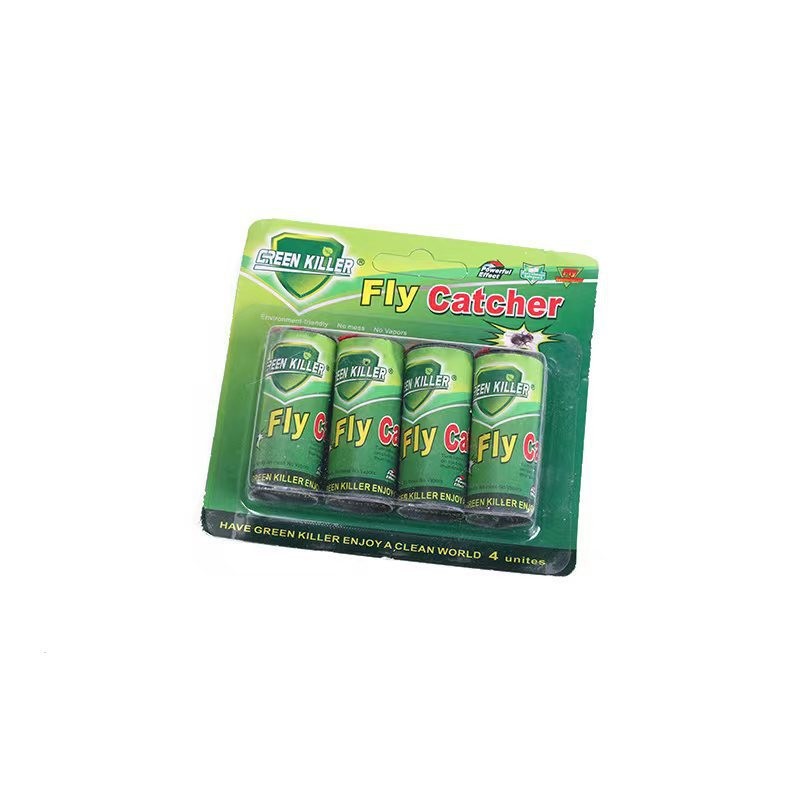
Container load factor is a driving financial metric in international logistics. Standard minimum order quantities (MOQs)—such as 10,000 mouse traps, 28,800 fly trap cards, 300,000 fly paper sheets, or 120,000 cockroach bait stations—are meticulously planned around standard container dimensions. Matching package geometry to ocean container dimensions minimizes unused space, significantly reducing shipping cost per item. Additionally, holding valid trademark registration and copyright documentation prevents administrative holds at customs border checkpoints.

Executing high-volume supply orders—such as shipments of 1.8 million pest control units to Peru, 617,000 units to Brazil, or 40,000 units to India—proves the necessity of structured logistical planning. Precise container loading calculations eliminate dimensional dead space, while rigorous quality inspection across raw materials, assembly lines, and master packaging ensures products comply with destination market standards.
Comparison of International Shipping Options
| Logistics Channel | Expense Profile | Common Extra Charges | Average Lead Time | Recommended Application |
|---|---|---|---|---|
| Sea Freight Shipping | Lowest per-unit expense for full container loads | Origin/Destination THC, Demurrage, Port Surcharges, ISF Filing | 20 - 45 Days | High-volume commercial shipments, bulk distribution |
| Air Freight Shipping | Higher cost based on chargeable volumetric weight | Fuel Surcharge (FSC), Security Charges, Terminal Handling, Express Brokerage | 3 - 7 Days | Urgent inventory replenishment, quick samples, prototype evaluation |
| Railway Transportation | Moderate balance between speed and expenditure | Border Transfer Fees, Rail Waybill Issuance, Customs Inspection | 12 - 20 Days | Transcontinental overland routes across Europe & Central Asia |
| Truck Transportation | Flexible door-to-door regional transport | Highway Tolls, Border Crossing Fees, Driver Waiting Surcharges | 3 - 10 Days | Regional cross-border distribution and regional drayage |
Frequently Asked Questions
How do FOB and DDP terms differ when ordering custom pest control products?
Under FOB terms, the seller handles local trucking, export customs clearance, and origin port charges, while the buyer covers main freight, import duties, destination clearance, and final delivery. Under DDP terms, the manufacturer manages the entire journey, paying all transport costs, tariffs, duties, and door-to-door delivery fees to the buyer's warehouse.
In what ways do custom box dimensions influence total shipping costs?
Custom master cartons change volumetric density ratios. If customized outer boxes increase cubic volume without adding proportional weight, carriers charge based on dimensional volume rather than physical weight, leading to higher overall freight bills.
What is the standard procedure if goods suffer transit damage or adhesive degradation?
Manufacturing defects must be reported within 15 days of shipment arrival by providing batch numbers along with photo or video evidence. Verified production issues are eligible for replacement or credit deductions. Damage resulting from improper storage conditions or prolonged environmental exposure during transit is typically excluded from manufacturer warranties.
Actionable Recommendations & Summary
To avoid unbudgeted shipping fees, buyers should evaluate every stage of the supply chain—from origin terminal fees to customs clearance and final drayage. Sourcing via structured OEM or ODM contracts ensures clarity on MOQs, carton metrics, and quality benchmarks. We recommend establishing clear payment terms, such as a 30% deposit before production and the remaining 70% balance paid prior to dispatch, secured through T/T or Alibaba Trade Assurance. For tailored technical guidance or product inquiries, contact our team directly at bob@jinwen-goods.com.
About Us
Yiwu Jinli Commodity Co., Ltd. is a specialized manufacturer of pest control products established in 2010. Operating with a team of 80 skilled professionals across modern manufacturing facilities, the plant achieves a daily capacity of 80,000 units with an export ratio of 70%. The company provides full OEM and ODM customization services across South America, the Middle East, Southeast Asia, Africa, and Europe, adhering to strict quality controls across raw materials, assembly lines, and final product packaging.

REPORT