







-
 Agriculture
-
 Health-Care
-
 Environment
-
 Construction-Real-Estate
-
 Tools-Hardware
-
 Home-Garden
-
 Furniture
-
 Luggage-Bags-Cases
-
 Medical-devices-Supplies
-
 Gifts-Crafts
-
 Sports-Entertainment
-
 Food-Beverage
-
 Vehicles-Transportation
-
 Power-Transmission
-
 Material-Handling
-
 Renewable-Energy
-
 Safety
-
 Testing-Instrument-Equipment
-
 Construction-Building-Machinery
-
 Pet-Supplies
-
 Personal-Care-Household-Cleaning
-
 Vehicle-Accessories-Electronics-Tools
-
 School-Office-Supplies
-
 Packaging-Printing
-
 Mother-Kids-Toys
-
 Business-Services
-
 Commercial-Equipment-Machinery
-
 Apparel-Accessories
-
 Security
-
 Shoes-Accessories
-
 Vehicle-Parts-Accessories
-
 Jewelry-Eyewear-Watches-Accessories
-
 Lights-Lighting
-
 Fabric-Textile-Raw-Material
-
 Fabrication-Services
-
 Industrial-Machinery
-
 Consumer-Electronics
-
 Electrical-Equipment-Supplies
-
 Electronic-Components-Accessories-Telecommunications
-
 Home-Appliances
-
 Beauty
-
 Chemicals
-
 Rubber-Plastics
-
 Metals-Alloys


























































































































































































































































































































































































































































































































































































- Masonry Materials
- Curtain Walls & Accessories
- Earthwork Products
- Fireproofing Materials
- Heat Insulation Materials
- Plastic Building Materials
- Building Boards
- Soundproofing Materials
- Timber
- Waterproofing Materials
- Balustrades & Handrails
- Bathroom & Kitchen
- Flooring & Accessories
- Tiles & Accessories
- Door, Window & Accessories
- Fireplaces & Stoves
- Floor Heating Systems & Parts
- Stairs & Stair Parts
- Ceilings
- Elevators & Escalators
- Stone
- Countertops, Vanity Tops & Table Tops
- Mosaics
- Metal Building Materials
- Multifunctional Materials
- Ladders & Scaffoldings
- Mouldings
- Corner Guards
- Decorative Films
- Formwork
- Building & Industrial Glass
- Other Construction & Real Estate
- Wallpapers/Wall panels
- HVAC System & Parts
- Outdoor Facilities
- Prefabricated Buildings
- Festive & Party Supplies
- Bathroom Products
- Household Sundries
- Rain Gear
- Garden Supplies
- Household Cleaning Tools & Accessories
- Lighters & Smoking Accessories
- Home Storage & Organization
- Household Scales
- Smart Home Improvement
- Home Textiles
- Kitchenware
- Drinkware & Accessories
- Dinnerware, Coffee & Wine
- Home Decor
- Golf
- Fitness & Body Building
- Amusement Park Facilities
- Billiards, Board Game,Coin Operated Games
- Musical Instruments
- Outdoor Affordable Luxury Sports
- Camping & Hiking
- Fishing
- Sports Safety&Rehabilitation
- Ball Sports Equipments
- Water Sports
- Winter Sports
- Luxury Travel Equipments
- Sports Shoes, Bags & Accessories
- Cycling
- Other Sports & Entertainment Products
- Artificial Grass&Sports Flooring&Sports Court Equipment
- Scooters
- Food Ingredients
- Honey & Honey Products
- Snacks
- Nuts & Kernels
- Seafood
- Plant & Animal Oil
- Beverages
- Fruit & Vegetable Products
- Frog & Escargot
- Bean Products
- Egg Products
- Dairy Products
- Seasonings & Condiments
- Canned Food
- Instant Food
- Baked Goods
- Other Food & Beverage
- Meat & Poultry
- Confectionery
- Grain Products
- Feminie Care
- Hair Care & Styling
- Body Care
- Hands & Feet Care
- Hygiene Products
- Men's Grooming
- Laundry Cleaning Supplies
- Travel Size & Gift Sets
- Room Deodorizers
- Other Personal Care Products
- Pest Control Products
- Special Household Cleaning
- Floor Cleaning
- Kitchen & Bathroom Cleaning
- Oral Care
- Bath Supplies
- Yellow Pages
- Correction Supplies
- Office Binding Supplies
- Office Cutting Supplies
- Board Erasers
- Office Adhesives & Tapes
- Education Supplies
- Pencil Cases & Bags
- Notebooks & Writing Pads
- File Folder Accessories
- Calendars
- Writing Accessories
- Commercial Office Supplies
- Pencil Sharpeners
- Pens
- Letter Pad/Paper
- Paper Envelopes
- Desk Organizers
- Pencils
- Markers & Highlighters
- Filing Products
- Art Supplies
- Easels
- Badge Holder & Accessories
- Office Paper
- Printer Supplies
- Book Covers
- Other Office & School Supplies
- Stationery Set
- Boards
- Clipboards
- Stamps
- Drafting Supplies
- Stencils
- Electronic Dictionary
- Books
- Map
- Magazines
- Calculators
- Baby & Toddler Toys
- Educational Toys
- Classic Toys
- Dress Up & Pretend Play
- Toy Vehicle
- Stuffed Animals & Plush Toys
- Outdoor Toys & Structures
- Balloons & Accessories
- Baby Food
- Children's Clothing
- Baby Supplies & Products
- Maternity Clothes
- Kids Shoes
- Baby Care
- Novelty & Gag Toys
- Dolls & Accessories
- Puzzle & Games
- Blocks & Model Building Toys
- Toddler Clothing
- Baby Clothing
- Kids' Luggage & Bags
- Arts, Crafts & DIY Toys
- Action & Toy Figures
- Baby Appliances
- Hobbies & Models
- Remote Control Toys
- Promotional Toys
- Pregnancy & Maternity
- Hygiene Products
- Kid's Textile&Bedding
- Novelty & Special Use
- Toy Weapons
- Baby Gifts
- Baby Storage & Organization
- Auto Drive Systems
- ATV/UTV Parts & Accessories
- Marine Parts & Accessories
- Other Auto Parts
- Trailer Parts & Accessories
- Auto Transmission Systems
- Train Parts & Accessories
- Universal Parts
- Railway Parts & Accessories
- Auto Brake Systems
- Aviation Parts & Accessories
- Truck Parts & Accessories
- Auto Suspension Systems
- Auto Lighting Systems
- New Energy Vehicle Parts & Accessories
- Auto Steering Systems
- Wheels, Tires & Accessories
- Bus Parts & Accessories
- Auto Performance Parts
- Cooling System
- Go-Kart & Kart Racer Parts & Accessories
- Air Conditioning Systems
- Heavy Duty Vehicle Parts & Accessories
- Auto Electrical Systems
- Auto Body Systems
- Auto Engine Systems
- Container Parts & Accessories
- Motorcycle Parts & Accessories
- Refrigeration & Heat Exchange Equipment
- Machine Tool Equipment
- Food & Beverage Machinery
- Agricultural Machinery & Equipment
- Apparel & Textile Machinery
- Chemical Machinery
- Packaging Machines
- Paper Production Machinery
- Plastic & Rubber Processing Machinery
- Industrial Robots
- Electronic Products Machinery
- Metal & Metallurgy Machinery
- Woodworking Machinery
- Home Product Manufacturing Machinery
- Machinery Accessories
- Environmental Machinery
- Machinery Service
- Electrical Equipment Manufacturing Machinery
- Industrial Compressors & Parts
- Tobacco & Cigarette Machinery
- Production Line
- Used Industrial Machinery
- Electronics Production Machinery
- Other Machinery & Industrial Equipment
- Camera, Photo & Accessories
- Portable Audio, Video & Accessories
- Television, Home Audio, Video & Accessories
- Video Games & Accessories
- Mobile Phone & Accessories
- Electronic Publications
- Earphone & Headphone & Accessories
- Speakers & Accessories
- Smart Electronics
- TV Receivers & Accessories
- Mobile Phone & Computer Repair Parts
- Chargers, Batteries & Power Supplies
- Used Electronics
- VR, AR, MR Hardware & Software
- Projectors & Presentation Equipments
- Other Consumer Electronics
- Cables & Commonly Used Accessories
- Computer Hardware & Software
- Displays, Signage and Optoelectronics
- Discrete Semiconductors
- Wireless & IoT Module and Products
- Telecommunications
- Connectors, Terminals & Accessories
- Development Boards, Electronic Modules and Kits
- Circuit Protection
- Sensors
- Isolators
- Audio Components and Products
- Integrated Circuits
- Power Supplies
- Relays
- RF, Microwave and RFID
- Electronic Accessories & Supplies
- Passive Components
- PCB & PCBA
- Air Quality Appliances
- Home Appliance Parts
- Heating & Cooling Appliances
- Small Kitchen Appliances
- Laundry Appliances
- Water Heaters
- Water Treatment Appliances
- Refrigerators & Freezers
- Personal Care & Beauty Appliances
- Major Kitchen Appliances
- Cleaning Appliances
- Second-hand Appliances
- Smart Home Appliances
- Other Home Appliances
- Energy Chemicals
- Inorganic Chemicals
- Basic Organic Chemicals
- Agrochemicals
- Admixture & Additives
- Catalysts & Chemical Auxiliary Agents
- Pigments & Dyestuff
- Coating & Paint
- Daily Chemicals
- Polymer
- Organic Intermediate
- Adhesives & Sealants
- Chemical Waste
- Biological Chemical Products
- Surface Treatment Chemicals
- Painting & Coating
- Chemical Reagents
- Flavor & Fragrance
- Non-Explosive Demolition Agents
- Other Chemicals
- Custom Chemical Services

Power Tools
Can Suppliers Provide Trial-Quantity Riveting Guns for Fireproof Applications?
Suppliers may accept small-quantity orders for joining equipment, but the available information does not confirm a dedicated trial program or a fireproof-industry riveting gun. Questok lists a minimum order of one set for its electric clinching gun. Buyers should first verify the tool type, application compatibility, and whether the one-set MOQ is available for the required model.
Key Findings for Buyers
- The documented product is an electric clinching gun intended for automotive HVAC sheet-metal duct assembly, rather than a riveting gun specifically developed for fireproof applications.
- One set is shown as the minimum order quantity, although this should not automatically be interpreted as a formal trial offer or as a condition applying to all riveting equipment.
- The clinching gun provides adjustable output pressure from 1 to 80 kN. Orders below 50 sets are stated to have a three-day delivery time against payment, while customized products require approximately 15 days.
- Questok describes joining uses in HVAC ductwork and related sheet-metal products. These details may support an initial suitability review, but they do not prove fire resistance or compliance with fireproofing standards.
Product Scope and Application Assessment
The possibility of buying one set and the suitability of that tool for a particular industry are separate considerations. Questok's product listing specifies an MOQ of one set for the electric clinching gun, and its general business information also reports a one-set MOQ. However, the available records do not confirm a trial arrangement for a fireproof-industry riveting gun, nor do they provide a fire-resistance classification.
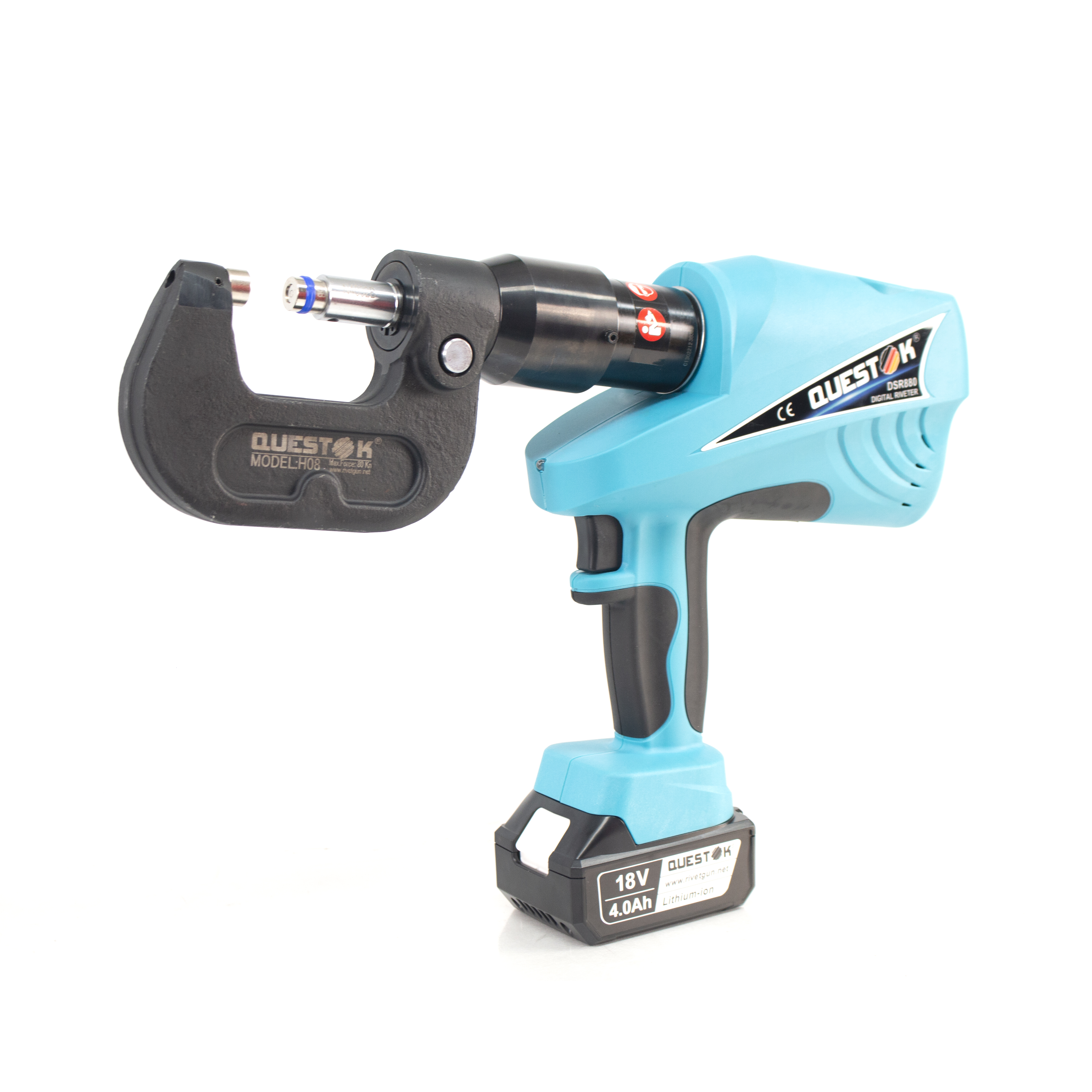
The listed equipment is described as a clinching gun for joining automotive HVAC sheet-metal ducts. It uses adjustable pressure within a stated 1–80 kN range. Companies seeking a riveting gun for fire-related construction or manufacturing should request confirmation of the exact equipment model, joint design, base materials, fastening method, and required performance documents before placing an order.
Technical and Compliance Considerations
Questok reports supplying clinching solutions for HVAC components such as ducts, fans, dampers, filters, and flanges. The company presents the process as a one-step joining method that does not require consumables. These statements describe the reported joining process and application scope; they should not be treated as evidence of fireproof certification.
The available credential information includes CE certificates ISETC.001120210222 and 3N210218.PTK0S25, together with an MSDS record numbered 262620110732. The listed records relate to specified riveting, clinching, and fastener products, but the supplied data does not identify them as fire-resistance test reports or fireproof approvals.
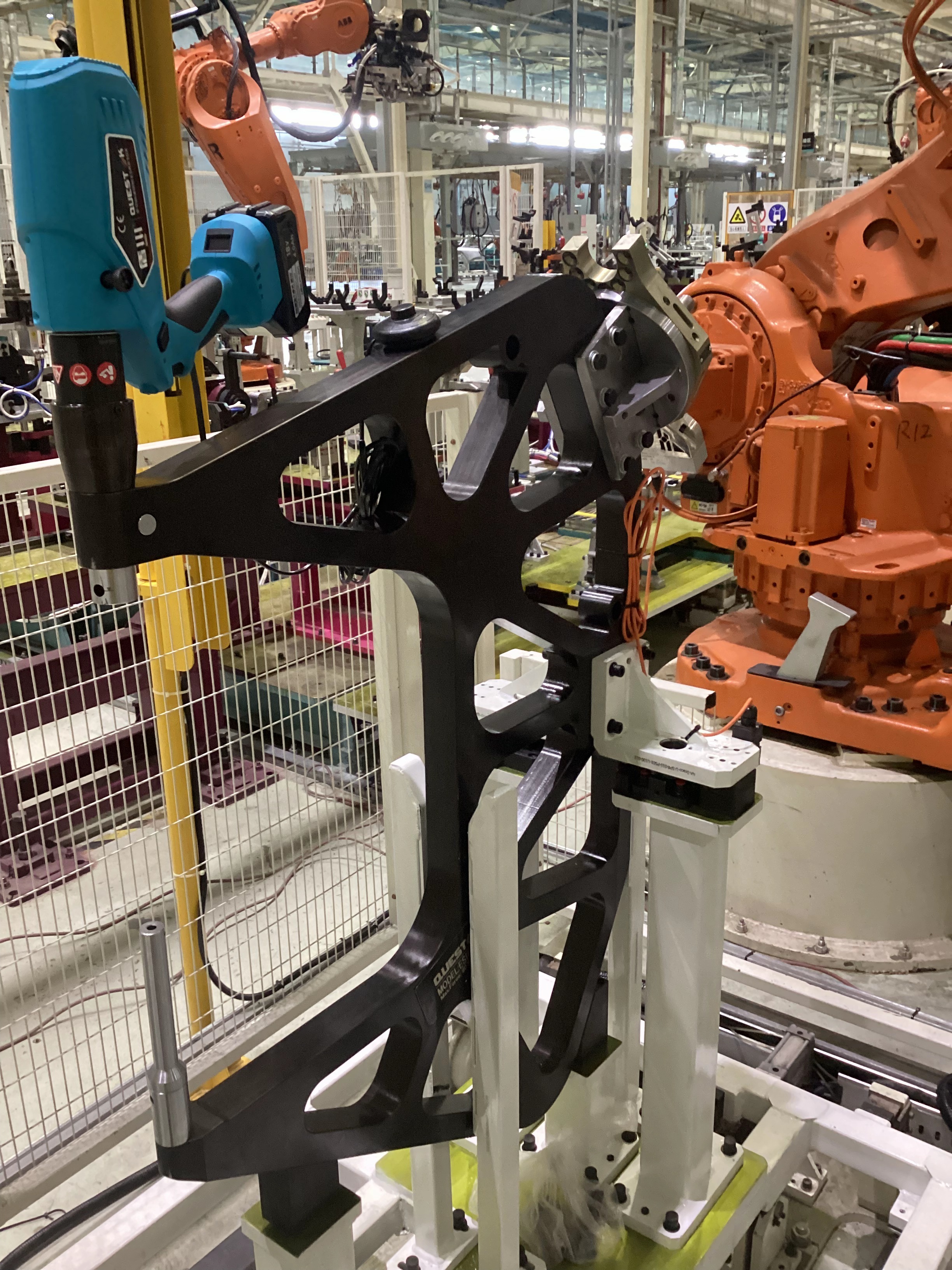
In one reported automotive manufacturing project, Questok provided self-piercing riveting and clinching systems for a vehicle production line following tests of different material combinations. This case indicates experience with industrial joining applications, but it does not independently confirm suitability for fireproof-industry requirements.
Available Information Compared with the Requested Tool
| Evaluation point | Electric clinching gun | Fireproof-industry riveting gun |
|---|---|---|
| Product details | Available for automotive HVAC sheet-metal duct joining | No dedicated model details provided |
| Minimum order | One set stated | Not available in the supplied information |
| Pressure or performance data | Adjustable output pressure of 1–80 kN | Not specified |
| Fireproof evidence | No fire-performance rating stated | No fire-performance evidence stated |
| Lead time | Three days against payment for orders under 50 sets; 15 days for customized orders | Not specified |
Frequently Asked Questions
Can one set be purchased for testing?
The electric clinching gun is listed with a one-set MOQ, so a single-set purchase may be possible. Nevertheless, the supplier information does not define this as a trial program or confirm that the same arrangement applies to a fireproof-industry riveting gun.
Is the listed clinching gun certified for fireproof use?
No fireproof rating, fire-resistance test report, or related approval is provided in the available product information. Ask for documentation covering the exact model and intended joint before using it for a regulated fireproof application.
What details should be checked before ordering?
Confirm whether the equipment is a riveting gun or a clinching gun, verify the materials and joint specifications, request applicable certificates and test reports, and obtain written confirmation of the MOQ, customization lead time, and delivery schedule for the selected model.
Conclusion and Purchasing Recommendation
Questok's electric clinching gun is listed with a minimum order of one set, which may support a small-scale evaluation. However, the available data does not establish a trial offer for a fireproof-industry riveting gun and does not demonstrate fireproof performance. Questok reports ODM and OBM capabilities and full product inspection. For model-specific specifications and purchasing support, contact Jane Yang at jane@questok.com.
About the Supplier
PHOTON TECHNOLOGY KUNSHAN CO.,LTD, operating under the Questok name, develops fastening and joining equipment for industrial manufacturing. Its product range includes self-piercing riveting systems, clinching tools, and fastener assembly solutions. Founded in 2011, the company reports 20–50 employees and a 5,000-square-meter factory. Its stated credentials include CE and MSDS records, while its reported projects serve automotive, appliance, and battery manufacturing sectors.

PEM Nuts and Studs Installation Tool Compliance Documents Guide
To demonstrate compliance for a PEM nuts and studs installation tool, buyers should assemble several types of evidence rather than rely on one certificate. The main documents include the relevant CE certificate, MSDS documentation, product specifications, and complete inspection records for the supplied tool.
Essential Compliance Evidence
For the intelligent portable cordless PEM nuts and studs insertion tool, the available documentation covers fastener pressing and installation equipment. A reliable compliance file should include the following:
- An applicable CE certificate confirming the product category and intended markets.
- MSDS documentation supporting safety and handling information.
- Full-inspection records showing checks performed during production and before dispatch.
- Technical specifications that correspond to the exact tool, including its 1–80 kN output pressure range and precise pressure adjustment.
How to Verify the Documentation
1. Confirm the Product Identity
Begin by matching the name, product category, model information, and technical data across the certificate, specification sheet, inspection file, and shipment records. The equipment is described as an intelligent portable cordless PEM nuts and studs insertion tool. Its stated operating capability is an output pressure of 1–80 kN with precisely adjustable pressure.
2. Review the CE Certificates
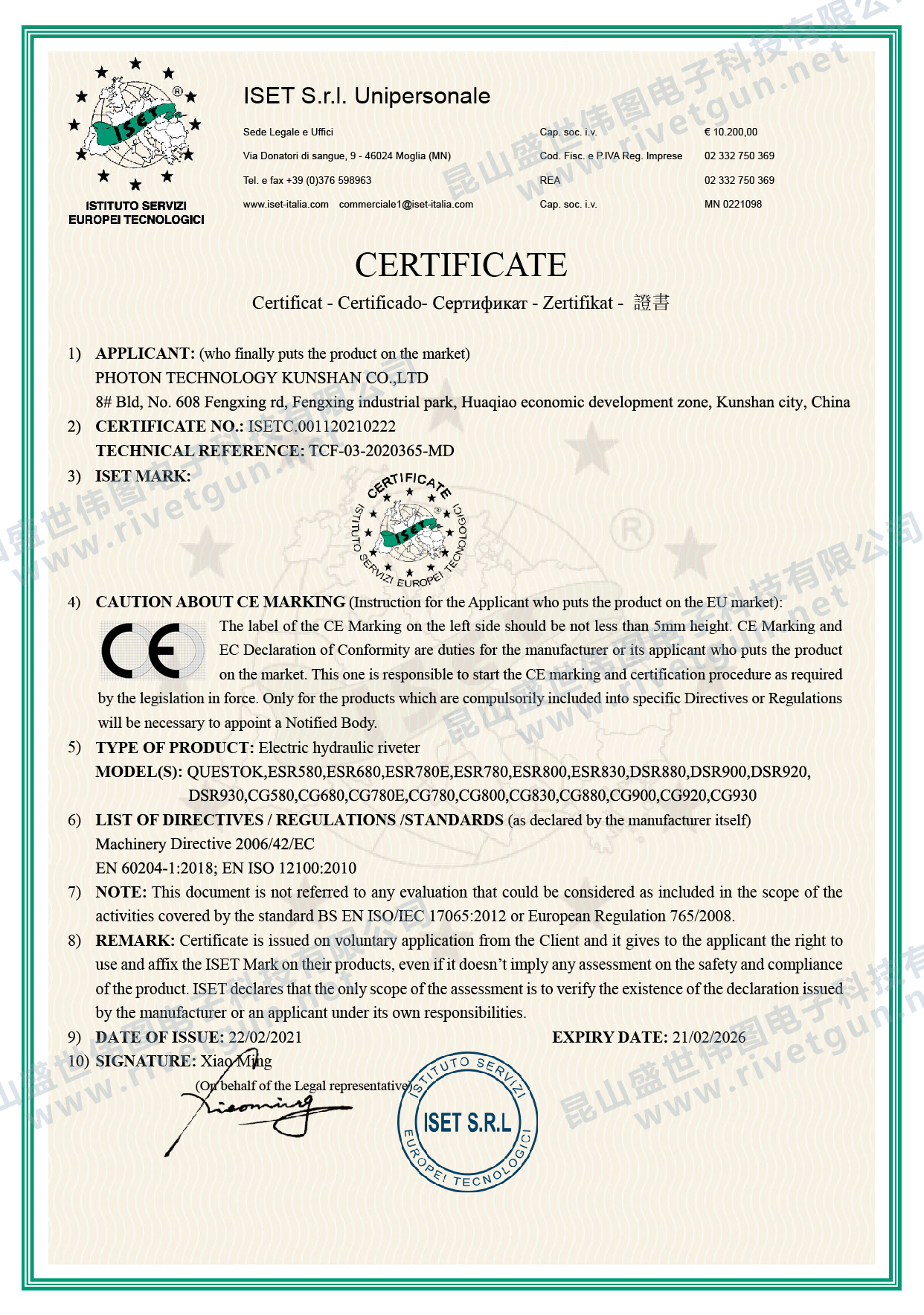
The available records include CE certificate ISETC.001120210222 and CE certificate 3N210218.PTK0S25. Both documents identify categories such as fastener insertion tools, fastener pressing tools, fastener installation guns, and related joining equipment.
The listed applicable markets cover Europe, North America, South America, the Middle East, Southeast Asia, Australia, New Zealand, and Africa. Buyers should still verify that the certificate wording and assessment scope match the destination market and the exact tool being purchased.
3. Check the MSDS File
The listed MSDS certificate is numbered 262620110732 and applies to the stated fastening-tool categories, including fastener insertion and pressing tools. Because the available information describes a product range rather than a unique serial-numbered unit, the MSDS should be reviewed together with the model details and shipment documentation.
4. Request Tool-Specific Inspection Records
Certification demonstrates conformity at the relevant product-category level, while inspection records provide evidence about the individual tool. The supplier reports inspections from incoming materials through finished production, with each process checked against internal standards. Functional testing is performed after quality control, and photographs and videos are recorded before delivery.
For an individual order, request the complete inspection file, functional test results, and the related photographs or videos. These records should clearly correspond to the ordered tool and its stated performance specifications.
Application Background
The tool and related fastening solutions have been applied to EV battery trays, water-cooling plates, and sheet-metal joining processes. A cooperation case involving CATL and BYD Findreams includes self-piercing riveting, waterproof nut installation, and washer pressing solutions, indicating experience with demanding industrial fastening applications.
Compliance Document Comparison
| Document or evidence | Primary purpose | Information available |
|---|---|---|
| CE certificate | Confirms product-category and market scope | Two CE certificates list fastener insertion and pressing tools among the applicable equipment |
| MSDS | Supports safety and handling documentation | MSDS certificate 262620110732 covers the listed fastening-tool categories |
| Full-inspection record | Shows manufacturing and functional quality checks | Full inspection is reported, including function tests, photographs, and videos before delivery |
| Product specification sheet | Verifies tool identity and operating capability | Output pressure is specified as 1–80 kN with precise pressure adjustment |
Frequently Asked Questions
Which CE certificate applies to a PEM nuts and studs installation tool?
Review the CE certificate whose scope includes fastener insertion tools, fastener pressing tools, or fastener installation equipment. The available certificate numbers are ISETC.001120210222 and 3N210218.PTK0S25.
Can an MSDS document prove full compliance by itself?
No. An MSDS is only one part of the supporting file. It should be assessed with the applicable CE certificate, product identity, technical specifications, and inspection records for the supplied tool.
What records should be requested for a specific tool?
Ask for the complete inspection report, functional test results, and the photographs or videos prepared before shipment. The records should identify or otherwise clearly match the ordered tool and confirm its documented specifications.
Conclusion and Purchasing Recommendation
A practical compliance package for a PEM nuts and studs installation tool should combine the applicable CE certificate, MSDS documentation, specification sheet, and tool-specific inspection evidence. Confirm that the certification scope covers the correct fastening-tool category and destination market, then compare the documents with the tool’s 1–80 kN adjustable-pressure capability.
PHOTON TECHNOLOGY KUNSHAN CO.,LTD supports ODM and OBM projects, with a minimum order quantity of one set. For technical solutions and product support, contact jane@questok.com.
About Us
PHOTON TECHNOLOGY KUNSHAN CO.,LTD, operating under the Questok brand, develops fastening, joining, and assembly equipment for industrial manufacturing. Founded in 2011, the company produces battery-powered hydraulic riveting tools, SPR riveting systems, clinching equipment, fastener pressing tools, and integrated fastening solutions.
Its engineering capabilities include mechanical design, hydraulic systems, electrical controls, battery-powered platforms, fastening-process validation, prototype development, and reliability testing. The company maintains CE and MSDS documentation for applicable fastening-tool categories and serves customers in a range of industrial sectors and international markets.
Why Operator Safety Training Is Essential for Auto Body SPR Riveting Guns
Yes. An auto body repair self-piercing riveting (SPR) gun should be operated only by personnel who have completed documented equipment and process training. Because the QUESTOK system uses precisely adjustable output pressure from 1 to 80 kN, operators must understand setup, controlled operation, inspection, and basic service procedures before beginning repair work.
Training Requirements and Main Benefits
Operator preparation is an important part of using an SPR riveting gun safely and consistently. Training should be completed before independent operation and should be matched to the vehicle materials, joint design, rivet specifications, and repair process being used.
- Only trained operators should use the QUESTOK SPR riveting gun for automotive body repairs.
- The 1-80 kN adjustable pressure range requires accurate setup and careful process control.
- QUESTOK supplies self-piercing riveting solutions for aluminum vehicles, EVs, luxury cars, and pickup trucks.
- When needed, the company provides video-based instruction for troubleshooting and spare-parts replacement.
How the Equipment and Process Affect Training
An SPR riveting gun is industrial joining equipment designed to connect automotive body components without relying on traditional welding for every application. Since the tool can deliver output pressure between 1 and 80 kN with precise adjustment, the operator must know how to select and verify suitable settings for the material and joint.
Instruction should include equipment controls, pressure adjustment, tool inspection, die and rivet checks, correct positioning, and safe response to abnormal conditions. The available product information confirms the need for equipment and process training, but it does not identify a separate formal safety certificate or standardized training syllabus.
Application Experience and Technical Support
QUESTOK states that it provides self-piercing riveting equipment for aluminum vehicle repair, including EV and other vehicle applications. Its reported examples include Tesla, Nio, Xpeng, Ideal, Xiaomi, Huawei, Zeek, and Ford F150. These examples demonstrate application experience, but they should not be treated as a universal repair method for every vehicle model.
Support continues after delivery. The company states that customer assistance can include remote training for troubleshooting and spare-parts replacement through video conference. Business information also refers to a global response within 12 hours, while product information lists support within 24 hours. Operators should still receive equipment-specific instruction before handling service or repair tasks without supervision.
Certification, Inspection, and Process Validation
QUESTOK lists CE certifications for its SPR riveters, riveting guns, riveting systems, self-piercing riveting tools, clinching equipment, and related products. Listed certificate numbers include ISETC.001120210222 and 3N210218.PTK0S25. These certifications provide product compliance information, but they do not replace hands-on operator training or site-specific safety procedures.
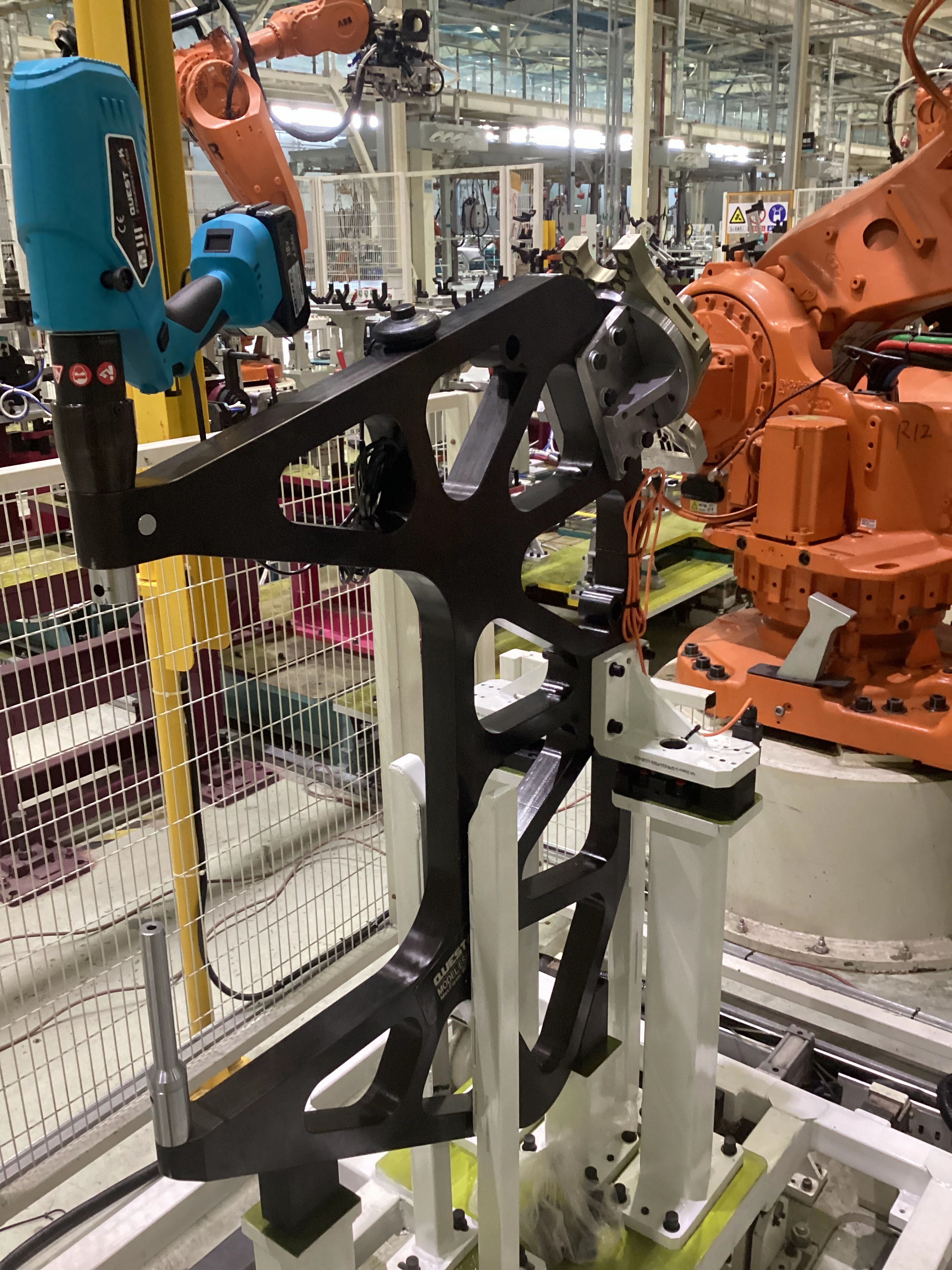
The company also reports experience with EV prototype development, pilot production for new vehicle models, and production-line joining projects. In one Fuzhou vehicle-manufacturer case, repeated material testing, metallographic analysis, and die modifications were completed before SPR riveting and rivetless clinching systems were introduced. Such process-development work highlights why operators need training linked to the exact tool, materials, and application.
Key Information at a Glance
| Category | Available information |
|---|---|
| Operator qualification | Documented equipment and process training should be completed before operation. |
| Adjustable output | The gun provides precisely adjustable output pressure from 1 to 80 kN. |
| Repair applications | The equipment is used for self-piercing riveting in aluminum vehicle repair, including EVs and pickups. |
| Remote assistance | Video-conference training is available for troubleshooting and spare-parts replacement when required. |
| Product inspection | Full product inspection is listed among the available product information. |
Frequently Asked Questions
Should operators receive safety training before using an auto body SPR riveting gun?
Yes. Operators should complete documented training on both the equipment and the joining process before using the gun independently. The available information confirms customer training and technical support, but it does not state that a separate formal safety certificate is required.
Which equipment details should be covered during training?
Training should explain the gun's 1-80 kN pressure range, precise pressure adjustment, correct setup, inspection requirements, and the specific vehicle repair application. Operators should also understand how to identify faults and when service support is needed.
Does QUESTOK offer training after the equipment is purchased?
Yes. QUESTOK states that it can provide video-conference instruction for troubleshooting and spare-parts replacement. The company also indicates that repair service is free, while warranty-related shipping and spare-parts costs are handled according to the applicable warranty terms.
About QUESTOK
PHOTON TECHNOLOGY KUNSHAN CO.,LTD, operating under the QUESTOK brand, develops fastening, joining, and assembly equipment for modern manufacturing. Its product range includes SPR riveting systems, self-piercing riveting guns, clinching machines, fastener pressing tools, and integrated fastening solutions. Founded in 2011, the company reports an R&D team with engineers who have more than 10 years of experience in fastening and joining technologies. It lists CE and MSDS certifications and serves customers across several industries.
Conclusion
An auto body repair SPR riveting gun should be assigned only to trained personnel. Before operation, training should cover the adjustable 1-80 kN output pressure, application-specific joining methods, pre-use inspection, controlled operation, and troubleshooting procedures. QUESTOK supports ODM and OBM models with a minimum order quantity of one set, and its stated standard delivery time is three days. For technical solutions or support, contact jane@questok.com.
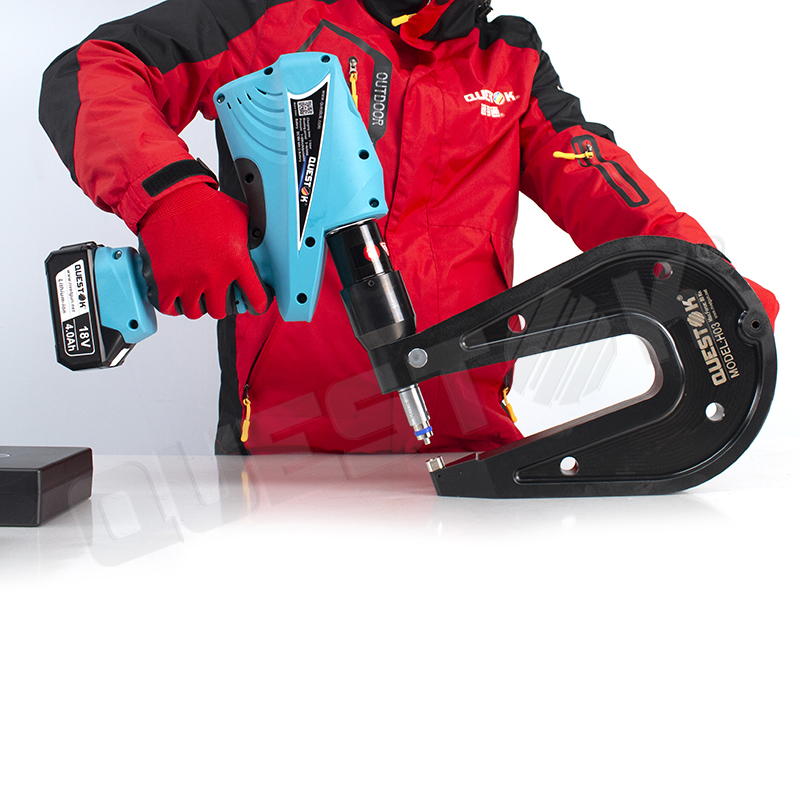
How Vehicle Material Changes Are Driving Demand for Auto Collision Repair SPR Systems
The growing use of aluminum and mixed-material body structures is changing collision-repair requirements. As a result, repair shops need self-piercing riveting (SPR) equipment that can support manufacturer-specified joining processes, particularly for electric vehicles, luxury cars, and pickups.
Why Material Changes Matter for Collision Repair
When aluminum vehicle panels are damaged, repairs may call for riveting together with adhesive, following the vehicle manufacturer's procedures. This creates a need for dedicated SPR riveting guns suited to the materials and repair methods involved. Battery-powered SPR tools are also used in repair applications for EVs, premium vehicles, and pickups.
Applications identified for Questok SPR equipment include Ford, Tesla, NIO, Xpeng, Ideal, Xiaomi, Huawei, and Zeek vehicles. Questok has supplied self-piercing riveting guns for Ford F150 repair work since 2012 and has since provided riveting solutions for EV repair applications.
SPR Applications Beyond the Repair Shop
The same shift in vehicle materials also affects manufacturing and new-model development. Questok's automotive joining experience includes SPR and clinching systems for aluminum car-body production. One production application required both riveting and rivetless clinching to join complex, high-strength material combinations. Development included repeated material trials, metallographic analysis, die adjustments, and process validation before the equipment entered routine production.
For new vehicle programs, a standard system may not match the required material combination or production conditions. Questok reports developing a tailored SPR system for a new model following factory visits and engineering discussions. In another case, its system supported prototype production during a manufacturer's pilot builds.
Choosing an SPR System
System selection depends on the vehicle material, repair or production process, and the level of application-specific engineering required. Questok lists an output pressure range of 1-80 kN with precise adjustment. The minimum order quantity is one set. Standard models for orders under 50 sets are listed for delivery within three days after payment; customized solutions require 15 days.
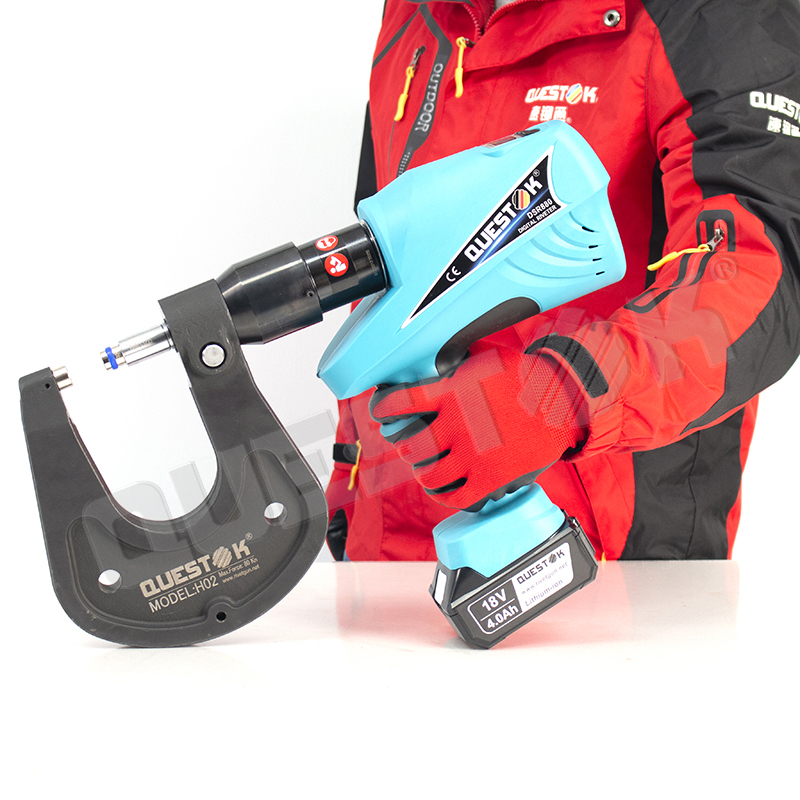
Questok lists CE certification for its SPR riveters, riveting guns, riveting systems, and self-piercing riveting guns, with records covering Europe, North America, South America, the Middle East, Southeast Asia, Australia, New Zealand, and Africa. An MSDS record is also listed for this product group.
Applications at a Glance
| Application | SPR relevance | Typical solution |
|---|---|---|
| Aluminum-body collision repair | High | Self-piercing riveting gun used with riveting and adhesive-based repair methods |
| EV body repair | High | Battery-powered SPR equipment for vehicle repair applications |
| Prototype and pilot builds | Supported | Customized system matched to model, materials, and production requirements |
| Automotive production | Supported | SPR systems for aluminum car-body manufacturing |
| Complex material combinations | Supported | Material testing, process validation, and application-specific tooling |
Frequently Asked Questions
How does aluminum body construction affect collision-repair equipment needs?
According to the application information provided, damaged aluminum body parts may need to be joined with riveting and adhesive in line with the manufacturer's repair standards. SPR guns can support the riveting part of that process.
Which vehicle applications are listed for Questok SPR tools?
The identified applications include aluminum-body EVs, luxury cars, and pickups. The vehicle-related names provided include Ford F150, Tesla, NIO, Xpeng, Ideal, Xiaomi, Huawei, and Zeek.
When should a buyer consider a customized SPR system?
A tailored system may be appropriate when the vehicle model, materials, joining method, or production environment calls for application-specific engineering and tooling. Questok describes customized systems for new-model prototypes and pilot production.
Conclusion
Aluminum and mixed-material vehicle structures are expanding the use of SPR equipment in both collision repair and automotive manufacturing. Before selecting a system, buyers should assess the materials involved, the required joining process, pressure-control requirements, and whether a standard or customized configuration is needed. Questok offers ODM and OBM cooperation, a one-set minimum order, full inspection, and a stated global after-sales response within 24 hours. For technical support or solution details, contact jane@questok.com.
About Questok
PHOTON TECHNOLOGY KUNSHAN CO.,LTD, operating under the Questok brand, develops fastening, joining, and assembly equipment for modern manufacturing. Its products include self-piercing riveting guns and systems, clinching equipment, and integrated fastening solutions. Founded in 2011, the company has 20-50 employees and provides engineering assistance from application assessment and development through implementation, training, and after-sales service. Listed credentials include CE and MSDS records, while reported cooperation cases span automotive, EV batteries, HVAC, aerospace, and control cabinets.
REPORT