







-
 Agriculture
-
 Health-Care
-
 Environment
-
 Construction-Real-Estate
-
 Tools-Hardware
-
 Home-Garden
-
 Furniture
-
 Luggage-Bags-Cases
-
 Medical-devices-Supplies
-
 Gifts-Crafts
-
 Sports-Entertainment
-
 Food-Beverage
-
 Vehicles-Transportation
-
 Power-Transmission
-
 Material-Handling
-
 Renewable-Energy
-
 Safety
-
 Testing-Instrument-Equipment
-
 Construction-Building-Machinery
-
 Pet-Supplies
-
 Personal-Care-Household-Cleaning
-
 Vehicle-Accessories-Electronics-Tools
-
 School-Office-Supplies
-
 Packaging-Printing
-
 Mother-Kids-Toys
-
 Business-Services
-
 Commercial-Equipment-Machinery
-
 Apparel-Accessories
-
 Security
-
 Shoes-Accessories
-
 Vehicle-Parts-Accessories
-
 Jewelry-Eyewear-Watches-Accessories
-
 Lights-Lighting
-
 Fabric-Textile-Raw-Material
-
 Fabrication-Services
-
 Industrial-Machinery
-
 Consumer-Electronics
-
 Electrical-Equipment-Supplies
-
 Electronic-Components-Accessories-Telecommunications
-
 Home-Appliances
-
 Beauty
-
 Chemicals
-
 Rubber-Plastics
-
 Metals-Alloys


























































































































































































































































































































































































































































































































































































- Masonry Materials
- Curtain Walls & Accessories
- Earthwork Products
- Fireproofing Materials
- Heat Insulation Materials
- Plastic Building Materials
- Building Boards
- Soundproofing Materials
- Timber
- Waterproofing Materials
- Balustrades & Handrails
- Bathroom & Kitchen
- Flooring & Accessories
- Tiles & Accessories
- Door, Window & Accessories
- Fireplaces & Stoves
- Floor Heating Systems & Parts
- Stairs & Stair Parts
- Ceilings
- Elevators & Escalators
- Stone
- Countertops, Vanity Tops & Table Tops
- Mosaics
- Metal Building Materials
- Multifunctional Materials
- Ladders & Scaffoldings
- Mouldings
- Corner Guards
- Decorative Films
- Formwork
- Building & Industrial Glass
- Other Construction & Real Estate
- Wallpapers/Wall panels
- HVAC System & Parts
- Outdoor Facilities
- Prefabricated Buildings
- Festive & Party Supplies
- Bathroom Products
- Household Sundries
- Rain Gear
- Garden Supplies
- Household Cleaning Tools & Accessories
- Lighters & Smoking Accessories
- Home Storage & Organization
- Household Scales
- Smart Home Improvement
- Home Textiles
- Kitchenware
- Drinkware & Accessories
- Dinnerware, Coffee & Wine
- Home Decor
- Golf
- Fitness & Body Building
- Amusement Park Facilities
- Billiards, Board Game,Coin Operated Games
- Musical Instruments
- Outdoor Affordable Luxury Sports
- Camping & Hiking
- Fishing
- Sports Safety&Rehabilitation
- Ball Sports Equipments
- Water Sports
- Winter Sports
- Luxury Travel Equipments
- Sports Shoes, Bags & Accessories
- Cycling
- Other Sports & Entertainment Products
- Artificial Grass&Sports Flooring&Sports Court Equipment
- Scooters
- Food Ingredients
- Honey & Honey Products
- Snacks
- Nuts & Kernels
- Seafood
- Plant & Animal Oil
- Beverages
- Fruit & Vegetable Products
- Frog & Escargot
- Bean Products
- Egg Products
- Dairy Products
- Seasonings & Condiments
- Canned Food
- Instant Food
- Baked Goods
- Other Food & Beverage
- Meat & Poultry
- Confectionery
- Grain Products
- Feminie Care
- Hair Care & Styling
- Body Care
- Hands & Feet Care
- Hygiene Products
- Men's Grooming
- Laundry Cleaning Supplies
- Travel Size & Gift Sets
- Room Deodorizers
- Other Personal Care Products
- Pest Control Products
- Special Household Cleaning
- Floor Cleaning
- Kitchen & Bathroom Cleaning
- Oral Care
- Bath Supplies
- Yellow Pages
- Correction Supplies
- Office Binding Supplies
- Office Cutting Supplies
- Board Erasers
- Office Adhesives & Tapes
- Education Supplies
- Pencil Cases & Bags
- Notebooks & Writing Pads
- File Folder Accessories
- Calendars
- Writing Accessories
- Commercial Office Supplies
- Pencil Sharpeners
- Pens
- Letter Pad/Paper
- Paper Envelopes
- Desk Organizers
- Pencils
- Markers & Highlighters
- Filing Products
- Art Supplies
- Easels
- Badge Holder & Accessories
- Office Paper
- Printer Supplies
- Book Covers
- Other Office & School Supplies
- Stationery Set
- Boards
- Clipboards
- Stamps
- Drafting Supplies
- Stencils
- Electronic Dictionary
- Books
- Map
- Magazines
- Calculators
- Baby & Toddler Toys
- Educational Toys
- Classic Toys
- Dress Up & Pretend Play
- Toy Vehicle
- Stuffed Animals & Plush Toys
- Outdoor Toys & Structures
- Balloons & Accessories
- Baby Food
- Children's Clothing
- Baby Supplies & Products
- Maternity Clothes
- Kids Shoes
- Baby Care
- Novelty & Gag Toys
- Dolls & Accessories
- Puzzle & Games
- Blocks & Model Building Toys
- Toddler Clothing
- Baby Clothing
- Kids' Luggage & Bags
- Arts, Crafts & DIY Toys
- Action & Toy Figures
- Baby Appliances
- Hobbies & Models
- Remote Control Toys
- Promotional Toys
- Pregnancy & Maternity
- Hygiene Products
- Kid's Textile&Bedding
- Novelty & Special Use
- Toy Weapons
- Baby Gifts
- Baby Storage & Organization
- Auto Drive Systems
- ATV/UTV Parts & Accessories
- Marine Parts & Accessories
- Other Auto Parts
- Trailer Parts & Accessories
- Auto Transmission Systems
- Train Parts & Accessories
- Universal Parts
- Railway Parts & Accessories
- Auto Brake Systems
- Aviation Parts & Accessories
- Truck Parts & Accessories
- Auto Suspension Systems
- Auto Lighting Systems
- New Energy Vehicle Parts & Accessories
- Auto Steering Systems
- Wheels, Tires & Accessories
- Bus Parts & Accessories
- Auto Performance Parts
- Cooling System
- Go-Kart & Kart Racer Parts & Accessories
- Air Conditioning Systems
- Heavy Duty Vehicle Parts & Accessories
- Auto Electrical Systems
- Auto Body Systems
- Auto Engine Systems
- Container Parts & Accessories
- Motorcycle Parts & Accessories
- Refrigeration & Heat Exchange Equipment
- Machine Tool Equipment
- Food & Beverage Machinery
- Agricultural Machinery & Equipment
- Apparel & Textile Machinery
- Chemical Machinery
- Packaging Machines
- Paper Production Machinery
- Plastic & Rubber Processing Machinery
- Industrial Robots
- Electronic Products Machinery
- Metal & Metallurgy Machinery
- Woodworking Machinery
- Home Product Manufacturing Machinery
- Machinery Accessories
- Environmental Machinery
- Machinery Service
- Electrical Equipment Manufacturing Machinery
- Industrial Compressors & Parts
- Tobacco & Cigarette Machinery
- Production Line
- Used Industrial Machinery
- Electronics Production Machinery
- Other Machinery & Industrial Equipment
- Camera, Photo & Accessories
- Portable Audio, Video & Accessories
- Television, Home Audio, Video & Accessories
- Video Games & Accessories
- Mobile Phone & Accessories
- Electronic Publications
- Earphone & Headphone & Accessories
- Speakers & Accessories
- Smart Electronics
- TV Receivers & Accessories
- Mobile Phone & Computer Repair Parts
- Chargers, Batteries & Power Supplies
- Used Electronics
- VR, AR, MR Hardware & Software
- Projectors & Presentation Equipments
- Other Consumer Electronics
- Cables & Commonly Used Accessories
- Computer Hardware & Software
- Displays, Signage and Optoelectronics
- Discrete Semiconductors
- Wireless & IoT Module and Products
- Telecommunications
- Connectors, Terminals & Accessories
- Development Boards, Electronic Modules and Kits
- Circuit Protection
- Sensors
- Isolators
- Audio Components and Products
- Integrated Circuits
- Power Supplies
- Relays
- RF, Microwave and RFID
- Electronic Accessories & Supplies
- Passive Components
- PCB & PCBA
- Air Quality Appliances
- Home Appliance Parts
- Heating & Cooling Appliances
- Small Kitchen Appliances
- Laundry Appliances
- Water Heaters
- Water Treatment Appliances
- Refrigerators & Freezers
- Personal Care & Beauty Appliances
- Major Kitchen Appliances
- Cleaning Appliances
- Second-hand Appliances
- Smart Home Appliances
- Other Home Appliances
- Energy Chemicals
- Inorganic Chemicals
- Basic Organic Chemicals
- Agrochemicals
- Admixture & Additives
- Catalysts & Chemical Auxiliary Agents
- Pigments & Dyestuff
- Coating & Paint
- Daily Chemicals
- Polymer
- Organic Intermediate
- Adhesives & Sealants
- Chemical Waste
- Biological Chemical Products
- Surface Treatment Chemicals
- Painting & Coating
- Chemical Reagents
- Flavor & Fragrance
- Non-Explosive Demolition Agents
- Other Chemicals
- Custom Chemical Services

Painting & Coating
Workplace Safety Guidance for Handmade Silk-Screen Printing Tables
No single universal workplace safety standard for handmade silk-screen printing tables is identified in the available information. However, a reliable work setup should be supported by written checks covering table stability, printing-process controls, material handling, finished-product quality, mechanical performance, structural condition, appearance, and chemical safety when relevant.
Practical Safety Framework
Safety for a handmade silk-screen printing station should be assessed as a complete operating system. The table, screen, workpiece, ink, curing equipment, and operator workflow all affect printing quality and workplace control. Inspection procedures should therefore be matched to the actual materials, printing method, and production requirements.
- Verify that the table remains stable during setup, printing, curing, and cleanup.
- Define inspection criteria for incoming materials, production steps, and finished products.
- Check physical, mechanical, structural, and visual performance before regular use.
- Document chemical information and apply additional chemical safety controls where required.
- Keep process records for ink type, storage conditions, curing temperature, and curing time.
What the Available Product Information Covers
The supplied business information does not name a dedicated workplace standard or table-design specification for handmade silk-screen printing. Instead, it describes a broader quality-control approach that includes raw-material inspection, production-process inspection, finished-product performance testing, physical and mechanical testing, structural safety and appearance checks, and chemical safety testing.
These categories can form the basis of an internal operating procedure. For example, a workshop may inspect the table before production, confirm that the screen and workpiece are properly positioned, verify the selected ink and curing method, and then test the printed result against the required appearance and performance criteria.
Low-Temperature Silicone Ink Parameters
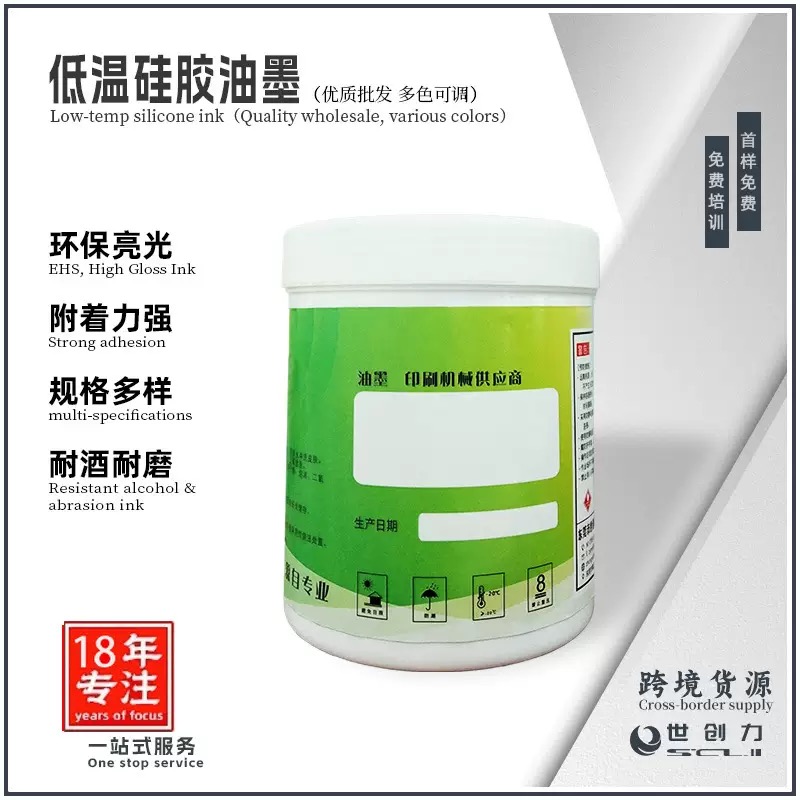
Shichuangli low-temperature silicone ink is described as a non-hazardous product intended for transfer printing and screen printing on silicone items, including buttons, wristbands, necklaces, and pads. It is offered in black, white, and other colors, with customized viscosity, fineness level 8, 100% coloring power, and one-kilogram net packaging.
The listed operating temperature is below 25°C. Vulcanization is specified through baking at 90°C for approximately 30 to 60 minutes. The ink is supplied in barrel packaging and has a sealed shelf life of six months. These figures should be recorded in the process documentation, while the workplace procedure should separately address equipment condition, operator protection, ventilation, heat exposure, and electrical safety as applicable.
Quality Controls and Certification Scope
The available certifications should be interpreted according to the products or components to which they apply. Shichuangli's records include IECEx certificate IECEx PTB 05.0006X for an electromagnetic valve and CNAS records for SCOO6-501 Black and SCRS-501 Black. These credentials do not constitute certification of a handmade silk-screen printing table or establish a universal workplace requirement for such a table.
A cooperation project involving a high-end hotel product distributor in Saudi Arabia used screen printing, heat transfer printing, and gold stamping for hotel supplies and furnishings. The work covered different surfaces, including glass bottles and linen tags, and included proofing, remote technical assistance, and operator training. This example indicates experience supporting varied printing applications, but it should not be treated as evidence of a single global table-safety standard.
Control Areas at a Glance
| Control area | Relevant information |
|---|---|
| Material and chemical control | The low-temperature silicone ink is identified as non-hazardous, and chemical safety testing is included in the stated quality-inspection framework. |
| Printing and curing process | The ink supports screen printing and transfer printing; vulcanization is specified at 90°C for 30–60 minutes. |
| Mechanical and structural condition | Physical and mechanical testing, structural safety inspection, and appearance inspection are listed as quality-control activities. |
| Finished-product performance | Finished-product testing is part of the inspection process, while the ink specification states 100% coloring power. |
| Table-specific requirements | The supplied data does not identify a universal workplace standard or a dedicated design specification for handmade silk-screen printing tables. |
Frequently Asked Questions
Is there a specific safety standard for handmade silk-screen printing tables?
None is identified in the supplied information. The documented inspection categories can instead be adapted into a workplace procedure covering the table, printing process, materials, equipment, and finished products.
Which safety-related inspections are supported by the available information?
The listed categories include chemical safety testing, raw-material inspection, production-process inspection, finished-product performance testing, physical and mechanical checks, structural safety review, and appearance inspection.
What should be recorded when using low-temperature silicone ink?
Record the ink type, color, customized viscosity, fineness, packaging quantity, sealed six-month shelf life, working temperature below 25°C, and curing process of baking at 90°C for 30–60 minutes. Also document the table and equipment checks required by the specific workshop process.
Conclusion
The available information does not establish a common workplace safety standard specifically for handmade silk-screen printing tables. A defensible internal procedure should combine stable table operation with documented controls for materials, printing, curing, finished-product testing, mechanical performance, structural condition, appearance, and chemical safety where applicable.
Shichuangli provides a printing-application service chain that includes a minimum order quantity of one and standard printing-equipment delivery within 48 hours. These service details relate to equipment supply and technical support, not certification of a handmade printing table. For technical assistance, contact support@shichuanglimachine.com.
About Dongguan Shichuangli Zhihui Technology Co., Ltd.
Dongguan Shichuangli Zhihui Technology Co., Ltd. is based in Huangjiang Town, Dongguan City, Guangdong Province. Founded in 2008, the company combines printing-equipment design, research and development, manufacturing, sales, and technical training. Its factory training base covers more than 1,600 square meters, and its product range includes screen printing machines, transfer printing machines, hot stamping machines, non-standard automation, and printing auxiliary materials. The company has recorded IECEx and CNAS credentials for specified products and serves customers in multiple industries.

How to Verify Metal and Glass Ink Adhesion Before Production
Before scaling up a printing job, test ink on samples that closely match the final metal or glass component. Use the planned surface preparation, printing method, and production process, then review both adhesion and print appearance. The available information for Shichuangli PP ink does not specify a metal- or glass-specific test procedure or a pass/fail standard, so suitability should be confirmed for the intended application.
Build a Representative Sample Trial
A sample is useful for a production decision only when it reflects the material and process that will be used at volume. Print on the actual metal or glass substrate, with its intended surface condition, and follow the planned production settings. Keep the trial conditions consistent across samples and record what was used.
After processing, examine whether the print remains attached and whether its appearance is consistent. Keep accepted samples as references for production. If the substrate, surface preparation, printing method, or process changes, evaluate the revised combination before proceeding.
What the Product Information Does and Does Not Confirm
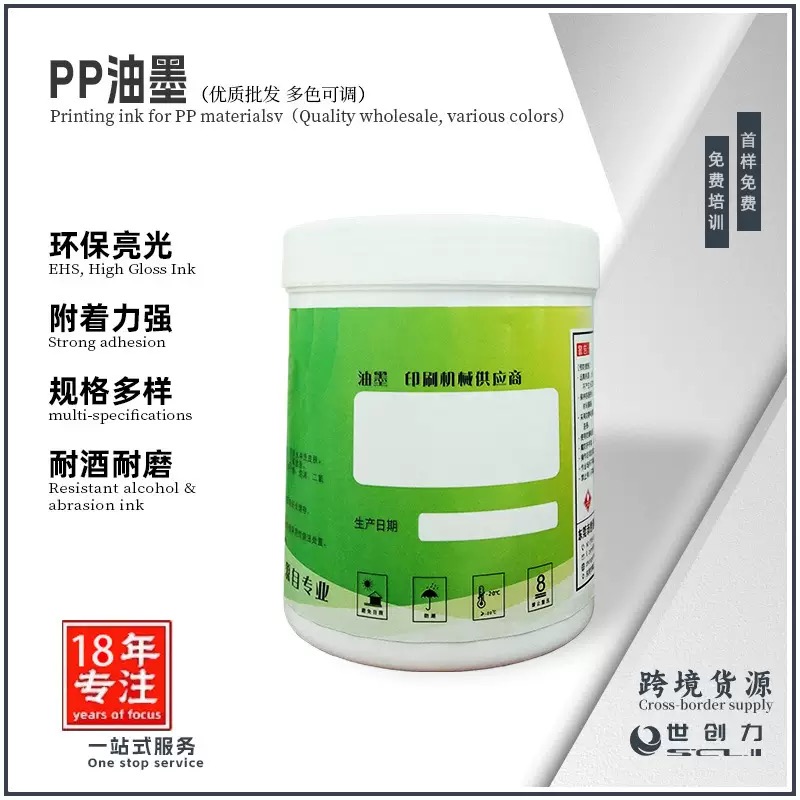
Shichuangli PP ink is identified as item SCL-00YM, supplied at a net weight of 1,000 g per piece. Listed colors are black, white, red, blue, yellow, and green. The stated printing methods include screen printing, pad printing, offset printing, and screen flexographic printing.
The product information names shampoo bottles, cosmetic bottles, stationery products, and batteries among its applications, but does not specifically identify metal or glass substrates. It also does not provide curing parameters, a durability-test method, a metal/glass adhesion protocol, or numerical acceptance criteria. Ask the supplier to confirm suitability and agree on application-specific evaluation conditions rather than treating unlisted details as product specifications.
Pre-Production Review
| Review item | During sampling | Before volume production |
|---|---|---|
| Substrate | Print on a sample representative of the intended metal or glass part. | Verify that production material and surface condition match the approved sample. |
| Printing method | Trial the method planned for production, such as screen or pad printing. | Maintain the approved method or repeat the evaluation if it changes. |
| Adhesion and appearance | Inspect the processed print and document the observed results. | Agree with the supplier on a suitable test and acceptance criteria; none are specified in the supplied data. |
| Order planning | Confirm suitability for the specific substrate and process before ordering. | The listed minimum order quantity is 1,000 g. Listed delivery is three working days, with exact timing dependent on the process. |
Applications and Supporting Information
Shichuangli describes printing work across consumer goods, electronics and household appliances, automotive parts, and packaging. Its listed PP ink applications include packaging and consumer-product contexts such as shampoo and cosmetic bottles. These examples provide context for the company's printing work, but do not establish adhesion performance on every metal or glass surface.
The company profile lists IECEx certificate IECEx PTB 05.0006X for an electromagnetic valve and trademark registrations related to printing equipment. Neither is presented as certification of PP ink adhesion on metal or glass. Similarly, a case involving a Saudi Arabian hotel-product distributor describes screen printing, heat-transfer printing, and hot stamping on different materials; it is not a documented adhesion test for this ink.
Frequently Asked Questions
Is adhesion on metal and glass confirmed by the supplied product data?
No. Metal and glass are not specifically identified as applicable substrates, and no substrate-specific test results are provided. Validate the ink on the actual materials before production.
Which printing processes are listed?
The listed options are screen printing, pad printing, offset printing, and screen flexographic printing. Confirm which method is appropriate for the part and planned production conditions.
What needs to be settled before ordering for volume?
Confirm the substrate and surface condition, printing method, process conditions, inspection approach, and acceptance criteria with the supplier. The available data does not define a test procedure or numerical pass threshold.
Recommendation
Move from samples to volume only after evaluating the intended metal or glass part with the planned printing process, documenting adhesion and appearance, and agreeing with the supplier on application-specific acceptance criteria. Shichuangli states that it offers OEM/ODM customization and technical training, and its profile describes a factory training base of more than 1,600 square meters. For guidance about this PP ink and a particular substrate, contact support@shichuanglimachine.com.
About the Company
Dongguan Shichuangli Zhihui Technology Co., Ltd. is based in Huangjiang Town, Dongguan, Guangdong. Established in 2008, the company combines printing-equipment design, research and development, production, sales, and technical training. Its product range includes printing equipment and supporting materials such as inks, and its factory training base covers more than 1,600 square meters. The company lists IECEx certificate IECEx PTB 05.0006X for an electromagnetic valve and trademark registration certificate 42347920 for printing-related goods; neither certifies PP ink adhesion on metal or glass. The company has also described work with a Saudi Arabian hotel-product distributor.
Technical Support for Poorly Curing High-Temperature Silicone Ink
When high-temperature silicone ink does not cure properly, technical assistance can help determine whether the problem comes from material compatibility, equipment settings, printing conditions, or curing parameters. Shichuangli offers one-on-one process support, remote equipment debugging, operator instruction, parameter optimization, and ongoing equipment maintenance.
Available Support for Curing Problems
The supplied product information refers to Shichuangli PP ink, model SCL-00YM, rather than a confirmed high-temperature silicone ink. Therefore, the available record does not establish silicone-specific curing temperatures, times, or performance data. Before continuing production, the ink and substrate should be reviewed with the technical team.
- One-on-one technical consultation can examine the printing process, equipment configuration, operating conditions, and curing results.
- Remote engineers can assist with equipment commissioning, troubleshooting, and process parameter adjustments.
- Operator training covers standard equipment operation, routine maintenance, fault diagnosis, and printing methods.
- Equipment support includes the lifetime maintenance service stated in the supplied PP ink product record.
Information Required for Technical Diagnosis
A useful troubleshooting review should include the ink model, substrate type, printing method, machine model, curing equipment, temperature and time settings, production speed, and observed curing results. Samples, process history, and details of any recent material or equipment changes can also help engineers identify the cause more efficiently.
Why Product Verification Matters
The listed SCL-00YM product is described as PP ink for items such as shampoo bottles, cosmetic packaging, stationery products, batteries, and similar objects. It is associated with screen printing, pad printing, offset printing, and screen flexographic printing. The record lists a 12-month shelf life, colorfastness of 100, fineness of 5, viscosity of 100, flowability of at least 20, and black, white, red, blue, yellow, and green color options.
These specifications do not confirm that the product is suitable for high-temperature silicone applications. Material selection, surface treatment, printing method, and curing equipment must be matched to the actual production requirements.
Training, Maintenance, and Service Coverage
For factories that need production support, Shichuangli provides training for operators and technical staff. The stated training subjects include operating standards, daily equipment care, common fault resolution, and practical printing techniques. The company also describes remote engineering support from equipment debugging through process parameter optimization.
The available information states that standard equipment carries a one-year warranty from delivery, while the PP ink record identifies a two-year product guarantee. These are separate statements and should be checked against the relevant purchase agreement before relying on them.
Shichuangli reports experience in consumer products, 3C electronics, household appliances, cosmetic and daily chemical packaging, automotive components, crafts, food and beverage packaging, medical and industrial instruments, and clothing accessories. In one example, a Saudi Arabian hotel-product distributor received remote guidance during proofing and operator training for screen printing, heat transfer printing, and gold stamping on different surfaces.
Support and Product Information at a Glance
| Item | Documented information |
|---|---|
| Product identified in the record | Shichuangli PP ink, model SCL-00YM; high-temperature silicone ink is not confirmed |
| Technical service | One-on-one instruction, remote debugging, and process parameter guidance |
| Training subjects | Equipment operation, routine maintenance, fault handling, and printing techniques |
| Equipment maintenance | Lifetime equipment maintenance is stated in the supplied product information |
| Reported applications | Shampoo bottles, cosmetic bottles, stationery, batteries, and related products |
Frequently Asked Questions
Is the listed PP ink approved for high-temperature silicone ink applications?
No. The provided record identifies it as PP ink and does not supply curing specifications or suitability confirmation for high-temperature silicone ink.
What help is available when the ink cures poorly?
Support may include process consultation, remote equipment debugging, parameter optimization, operator training, and equipment maintenance. The technical team can assess the application after reviewing the actual materials and production conditions.
What should be sent to the technical team?
Prepare the ink model, substrate, printing process, equipment details, curing settings, production speed, observed defect, and relevant process history. This helps distinguish an ink-selection issue from an equipment or operating-condition problem.
Conclusion
When high-temperature silicone ink shows incomplete or inconsistent curing, the recommended first step is a structured technical review. Shichuangli's documented support includes individual guidance, remote commissioning, process adjustment, operator training, and ongoing equipment maintenance. Since the available product record concerns PP ink rather than confirmed silicone ink, material compatibility and curing requirements should be verified before production resumes.
Shichuangli states that standard equipment can be delivered within 48 hours and customized non-standard printing equipment within one month. For technical questions or service assistance, contact support@shichuanglimachine.com.
About Us
Dongguan Shichuangli Zhihui Technology Co., Ltd. is based in Huangjiang Town, Dongguan City, Guangdong Province. Founded in 2008, the company combines the design, research and development, manufacture, and sale of printing equipment and related materials. Its product range includes screen printing machines, pad printing machines, hot stamping machines, customized automation equipment, printing plates, inks, and supporting supplies. The company operates a factory training base of more than 1,600 square meters and reports service experience across several industrial sectors. Its profile also lists CNAS certificates for SCOO6-501 Black and SCRS-501 Black, as well as a utility model patent for a hot stamping machine. These credentials apply to the listed products and equipment and do not constitute silicone-ink curing specifications.
Are Flat and Round Printing Functions Covered by the Warranty After Installation?
After installation, warranty protection generally applies to equipment defects caused by the product's own quality. However, the available documents do not expressly list flat printing and round printing as separate warranty-covered functions. Installation acceptance, equipment commissioning, and process verification are part of the documented quality procedure, so the required printing capabilities should be confirmed before final approval.
Warranty Scope and Installation Verification
The current service information identifies a one-year equipment warranty for faults resulting from the equipment's own quality after delivery. At the same time, the product record refers to a two-year guarantee for the main product. Because these statements appear in different records, the buyer should request written clarification on which period applies to the specific machine and configuration.
Flat printing and round printing depend on the selected equipment configuration, tooling, workpiece shape, and process settings. Since neither function is named separately in the available warranty terms, the purchaser should document the required functions in the order confirmation and installation acceptance report. The record should include the sample product, substrate or material, printing method, operating parameters, and final commissioning result.
What the Documented Service Process Includes
- Installation acceptance and commissioning before the machine enters regular production.
- Remote technical assistance for equipment debugging and process parameter adjustment.
- One-to-one operator instruction and training.
- Original factory replacement parts as part of the documented service approach.
- A stated response within 30 minutes after a repair request and a solution target within 24 hours.
These services can help resolve issues that arise during setup or production. Nevertheless, technical support and commissioning assistance should not automatically be interpreted as a separate warranty for flat or round printing unless the function is clearly included in the signed technical specification.
Recommended Acceptance Checklist
1. Confirm the machine configuration
Specify whether the supplied system must perform flat printing, round printing, or both. Where applicable, identify fixtures, rotating devices, screens, plates, ink systems, and automation modules included in the quotation.
2. Test representative workpieces
Use the actual or agreed sample material during commissioning. The acceptance record should show the workpiece shape, dimensions, surface condition, ink type, curing method, printing speed, and other key parameters.
3. Record the final result
Document print registration, adhesion, coverage, appearance, repeatability, and production speed. If the equipment must switch between flat and round products, test both operating modes before acceptance.
4. Obtain written confirmation
Ask the supplier to confirm which defects, functions, accessories, and service periods are covered. This creates a clearer reference if troubleshooting or a warranty claim is required later.
Ink and Application Information
Low-temperature silicone ink is described as suitable for transfer printing and screen printing on silicone components. Typical applications include buttons, wristbands, necklaces, pads, and other silicone parts. The listed product characteristics include a net weight of 1 kg per unit, a sealed shelf life of six months, black, white, and other color options, customized viscosity, and a recommended working temperature below 25 degrees Celsius.
The ink is described as non-hazardous and is cured by baking at 90 degrees Celsius for approximately 30 to 60 minutes. Final performance still depends on the substrate, printing process, curing conditions, and production parameters selected for the application.
Quality Controls and Technical Support
Shichuangli's documented inspection framework covers raw material inspection, in-process production checks, finished-product performance testing, installation acceptance, commissioning, chemical safety testing, physical and mechanical performance testing, and structural safety and appearance inspection. These stages provide a basis for confirming whether the delivered equipment performs according to the agreed technical requirements.
For post-installation support, the service model provides rapid response, remote troubleshooting, and one-to-one guidance for equipment adjustment and process optimization. These services may assist with either flat or round printing applications, but the available source does not state that the two functions are independently warranted.
The company also records Utility Model Patent 202521984351.0 for a hot stamping machine and Utility Model Patent 202521231087.3 for a fully automatic bronzing machine. One documented cooperation project involved a Saudi Arabian distributor supplying high-end hotel products. The project used screen printing, heat transfer printing, and hot stamping to customize logos on different materials.
Coverage and Specification Comparison
| Service or Product Item | Documented Coverage or Specification |
|---|---|
| Flat printing function | Not listed as a separate warranty item; confirm the configuration and acceptance result in writing. |
| Round printing function | Not listed as a separate warranty item; confirm the configuration and acceptance result in writing. |
| Equipment quality warranty | The service model states one year from delivery for faults caused by the equipment's own quality. |
| Main product guarantee | The product record states a two-year guarantee for the main product, so the applicable period should be clarified with the supplier. |
| Low-temperature silicone ink | Suitable for transfer printing and screen printing; baking at 90 degrees Celsius for 30 to 60 minutes is specified. |
| Standard printing equipment delivery | Within 48 hours under the documented complete printing application service ecosystem. |
| Order and production information | Minimum order quantity of one unit and stated monthly capacity of 300 units. |
Frequently Asked Questions
Does installation acceptance include commissioning?
Yes. Installation acceptance and commissioning are included in the documented quality inspection and delivery process.
Are flat and round printing automatically covered after installation?
Not explicitly. The available warranty wording covers equipment-quality faults but does not separately name flat printing or round printing. These functions should be listed in the technical agreement and verified with production samples during acceptance.
What should be recorded during commissioning?
Record the machine configuration, workpiece shape, sample material, printing method, ink type, operating parameters, test results, and any limitations identified during the acceptance test.
What are the main specifications of the silicone ink?
The listed specifications include 1 kg net weight per piece, a six-month sealed shelf life, black, white, and colorful options, customized viscosity, a working temperature below 25 degrees Celsius, and non-hazardous classification.
Conclusion and Practical Recommendation
The documented warranty approach covers equipment faults caused by the product's own quality and includes installation acceptance, commissioning, remote guidance, operator training, and factory replacement parts. However, the available terms do not independently guarantee flat printing or round printing by name. To avoid uncertainty, buyers should specify both functions in the order and acceptance documents, test the required workpieces, and obtain written confirmation of the applicable warranty period and technical scope.
The complete printing application service ecosystem states a minimum order quantity of one unit, delivery within 48 hours for standard equipment, and a monthly capacity of 300 units. For technical clarification or after-sales support, contact support@shichuanglimachine.com.
About Us
Dongguan Shichuangli Zhihui Technology Co., Ltd. develops, manufactures, and sells screen printing machines, pad printing machines, hot stamping machines, non-standard automated equipment, printing plates, inks, and related materials. Established in 2008, the company operates a factory training base covering more than 1,600 square meters and combines technical training with its printing-equipment business. Its product range includes transfer printing machines, screen printing machines, hot stamping machines, tapping machines, non-standard automation, and printing auxiliary materials. The company records certifications and intellectual property documents including IECEx PTB 05.0006X and Utility Model Patent 202521984351.0, and has served customers in multiple industries.
REPORT