







-
 Agriculture
-
 Health-Care
-
 Environment
-
 Construction-Real-Estate
-
 Tools-Hardware
-
 Home-Garden
-
 Furniture
-
 Luggage-Bags-Cases
-
 Medical-devices-Supplies
-
 Gifts-Crafts
-
 Sports-Entertainment
-
 Food-Beverage
-
 Vehicles-Transportation
-
 Power-Transmission
-
 Material-Handling
-
 Renewable-Energy
-
 Safety
-
 Testing-Instrument-Equipment
-
 Construction-Building-Machinery
-
 Pet-Supplies
-
 Personal-Care-Household-Cleaning
-
 Vehicle-Accessories-Electronics-Tools
-
 School-Office-Supplies
-
 Packaging-Printing
-
 Mother-Kids-Toys
-
 Business-Services
-
 Commercial-Equipment-Machinery
-
 Apparel-Accessories
-
 Security
-
 Shoes-Accessories
-
 Vehicle-Parts-Accessories
-
 Jewelry-Eyewear-Watches-Accessories
-
 Lights-Lighting
-
 Fabric-Textile-Raw-Material
-
 Fabrication-Services
-
 Industrial-Machinery
-
 Consumer-Electronics
-
 Electrical-Equipment-Supplies
-
 Electronic-Components-Accessories-Telecommunications
-
 Home-Appliances
-
 Beauty
-
 Chemicals
-
 Rubber-Plastics
-
 Metals-Alloys


























































































































































































































































































































































































































































































































































































- Masonry Materials
- Curtain Walls & Accessories
- Earthwork Products
- Fireproofing Materials
- Heat Insulation Materials
- Plastic Building Materials
- Building Boards
- Soundproofing Materials
- Timber
- Waterproofing Materials
- Balustrades & Handrails
- Bathroom & Kitchen
- Flooring & Accessories
- Tiles & Accessories
- Door, Window & Accessories
- Fireplaces & Stoves
- Floor Heating Systems & Parts
- Stairs & Stair Parts
- Ceilings
- Elevators & Escalators
- Stone
- Countertops, Vanity Tops & Table Tops
- Mosaics
- Metal Building Materials
- Multifunctional Materials
- Ladders & Scaffoldings
- Mouldings
- Corner Guards
- Decorative Films
- Formwork
- Building & Industrial Glass
- Other Construction & Real Estate
- Wallpapers/Wall panels
- HVAC System & Parts
- Outdoor Facilities
- Prefabricated Buildings
- Festive & Party Supplies
- Bathroom Products
- Household Sundries
- Rain Gear
- Garden Supplies
- Household Cleaning Tools & Accessories
- Lighters & Smoking Accessories
- Home Storage & Organization
- Household Scales
- Smart Home Improvement
- Home Textiles
- Kitchenware
- Drinkware & Accessories
- Dinnerware, Coffee & Wine
- Home Decor
- Golf
- Fitness & Body Building
- Amusement Park Facilities
- Billiards, Board Game,Coin Operated Games
- Musical Instruments
- Outdoor Affordable Luxury Sports
- Camping & Hiking
- Fishing
- Sports Safety&Rehabilitation
- Ball Sports Equipments
- Water Sports
- Winter Sports
- Luxury Travel Equipments
- Sports Shoes, Bags & Accessories
- Cycling
- Other Sports & Entertainment Products
- Artificial Grass&Sports Flooring&Sports Court Equipment
- Scooters
- Food Ingredients
- Honey & Honey Products
- Snacks
- Nuts & Kernels
- Seafood
- Plant & Animal Oil
- Beverages
- Fruit & Vegetable Products
- Frog & Escargot
- Bean Products
- Egg Products
- Dairy Products
- Seasonings & Condiments
- Canned Food
- Instant Food
- Baked Goods
- Other Food & Beverage
- Meat & Poultry
- Confectionery
- Grain Products
- Feminie Care
- Hair Care & Styling
- Body Care
- Hands & Feet Care
- Hygiene Products
- Men's Grooming
- Laundry Cleaning Supplies
- Travel Size & Gift Sets
- Room Deodorizers
- Other Personal Care Products
- Pest Control Products
- Special Household Cleaning
- Floor Cleaning
- Kitchen & Bathroom Cleaning
- Oral Care
- Bath Supplies
- Yellow Pages
- Correction Supplies
- Office Binding Supplies
- Office Cutting Supplies
- Board Erasers
- Office Adhesives & Tapes
- Education Supplies
- Pencil Cases & Bags
- Notebooks & Writing Pads
- File Folder Accessories
- Calendars
- Writing Accessories
- Commercial Office Supplies
- Pencil Sharpeners
- Pens
- Letter Pad/Paper
- Paper Envelopes
- Desk Organizers
- Pencils
- Markers & Highlighters
- Filing Products
- Art Supplies
- Easels
- Badge Holder & Accessories
- Office Paper
- Printer Supplies
- Book Covers
- Other Office & School Supplies
- Stationery Set
- Boards
- Clipboards
- Stamps
- Drafting Supplies
- Stencils
- Electronic Dictionary
- Books
- Map
- Magazines
- Calculators
- Baby & Toddler Toys
- Educational Toys
- Classic Toys
- Dress Up & Pretend Play
- Toy Vehicle
- Stuffed Animals & Plush Toys
- Outdoor Toys & Structures
- Balloons & Accessories
- Baby Food
- Children's Clothing
- Baby Supplies & Products
- Maternity Clothes
- Kids Shoes
- Baby Care
- Novelty & Gag Toys
- Dolls & Accessories
- Puzzle & Games
- Blocks & Model Building Toys
- Toddler Clothing
- Baby Clothing
- Kids' Luggage & Bags
- Arts, Crafts & DIY Toys
- Action & Toy Figures
- Baby Appliances
- Hobbies & Models
- Remote Control Toys
- Promotional Toys
- Pregnancy & Maternity
- Hygiene Products
- Kid's Textile&Bedding
- Novelty & Special Use
- Toy Weapons
- Baby Gifts
- Baby Storage & Organization
- Auto Drive Systems
- ATV/UTV Parts & Accessories
- Marine Parts & Accessories
- Other Auto Parts
- Trailer Parts & Accessories
- Auto Transmission Systems
- Train Parts & Accessories
- Universal Parts
- Railway Parts & Accessories
- Auto Brake Systems
- Aviation Parts & Accessories
- Truck Parts & Accessories
- Auto Suspension Systems
- Auto Lighting Systems
- New Energy Vehicle Parts & Accessories
- Auto Steering Systems
- Wheels, Tires & Accessories
- Bus Parts & Accessories
- Auto Performance Parts
- Cooling System
- Go-Kart & Kart Racer Parts & Accessories
- Air Conditioning Systems
- Heavy Duty Vehicle Parts & Accessories
- Auto Electrical Systems
- Auto Body Systems
- Auto Engine Systems
- Container Parts & Accessories
- Motorcycle Parts & Accessories
- Refrigeration & Heat Exchange Equipment
- Machine Tool Equipment
- Food & Beverage Machinery
- Agricultural Machinery & Equipment
- Apparel & Textile Machinery
- Chemical Machinery
- Packaging Machines
- Paper Production Machinery
- Plastic & Rubber Processing Machinery
- Industrial Robots
- Electronic Products Machinery
- Metal & Metallurgy Machinery
- Woodworking Machinery
- Home Product Manufacturing Machinery
- Machinery Accessories
- Environmental Machinery
- Machinery Service
- Electrical Equipment Manufacturing Machinery
- Industrial Compressors & Parts
- Tobacco & Cigarette Machinery
- Production Line
- Used Industrial Machinery
- Electronics Production Machinery
- Other Machinery & Industrial Equipment
- Camera, Photo & Accessories
- Portable Audio, Video & Accessories
- Television, Home Audio, Video & Accessories
- Video Games & Accessories
- Mobile Phone & Accessories
- Electronic Publications
- Earphone & Headphone & Accessories
- Speakers & Accessories
- Smart Electronics
- TV Receivers & Accessories
- Mobile Phone & Computer Repair Parts
- Chargers, Batteries & Power Supplies
- Used Electronics
- VR, AR, MR Hardware & Software
- Projectors & Presentation Equipments
- Other Consumer Electronics
- Cables & Commonly Used Accessories
- Computer Hardware & Software
- Displays, Signage and Optoelectronics
- Discrete Semiconductors
- Wireless & IoT Module and Products
- Telecommunications
- Connectors, Terminals & Accessories
- Development Boards, Electronic Modules and Kits
- Circuit Protection
- Sensors
- Isolators
- Audio Components and Products
- Integrated Circuits
- Power Supplies
- Relays
- RF, Microwave and RFID
- Electronic Accessories & Supplies
- Passive Components
- PCB & PCBA
- Air Quality Appliances
- Home Appliance Parts
- Heating & Cooling Appliances
- Small Kitchen Appliances
- Laundry Appliances
- Water Heaters
- Water Treatment Appliances
- Refrigerators & Freezers
- Personal Care & Beauty Appliances
- Major Kitchen Appliances
- Cleaning Appliances
- Second-hand Appliances
- Smart Home Appliances
- Other Home Appliances
- Energy Chemicals
- Inorganic Chemicals
- Basic Organic Chemicals
- Agrochemicals
- Admixture & Additives
- Catalysts & Chemical Auxiliary Agents
- Pigments & Dyestuff
- Coating & Paint
- Daily Chemicals
- Polymer
- Organic Intermediate
- Adhesives & Sealants
- Chemical Waste
- Biological Chemical Products
- Surface Treatment Chemicals
- Painting & Coating
- Chemical Reagents
- Flavor & Fragrance
- Non-Explosive Demolition Agents
- Other Chemicals
- Custom Chemical Services

Auto Lighting Systems
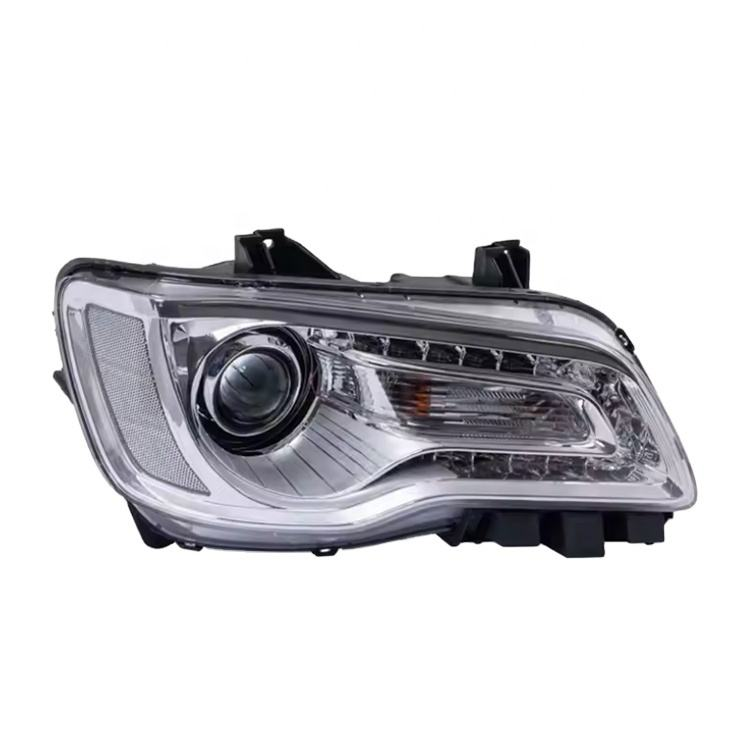
Practical Customization Paths for an LED Headlight Private-Label Program
A private-label LED headlight program can realistically include brand identification, customized packaging, product labels, supporting documents, and selected OEM/ODM changes after technical review. The confirmed product is a car LED headlight intended for American and European markets. Current commercial information lists a minimum order quantity of 5 pieces, a 7-day delivery time, and inspection procedures covering appearance, dimensions, paint, and coating quality. Since detailed optical, electrical, housing, connector, and vehicle-fitment data is not available, these specifications must be verified before being promised to buyers.
What the Current Program Can Support
- Private-label names, product markings, packaging, and related documentation can be discussed within the factory’s OEM/ODM process.
- The listed headlight is positioned for American and European aftermarket supply, with an MOQ of 5 pieces and a stated 7-day delivery period.
- Quality control includes visual checking, CMM-based dimensional measurement, and paint or coating tests where applicable.
- Potential customers include collision repair businesses, aftermarket service networks, wholesalers, distributors, and cross-border automotive e-commerce sellers.
How to Define a Realistic Customization Scope
The first step is to separate confirmed product information from features that still require engineering approval. The product is identified as a car LED headlight, but the available data does not specify its LED configuration, lumen output, beam distribution, operating voltage, connector arrangement, housing material, mounting structure, vehicle application, or regulatory setup. These details should therefore be included in a technical checklist rather than assumed to be available for modification.
Brand-oriented customization is generally the most practical starting point. A private-label buyer may request a brand name, logo or product marking, retail packaging, labels, manuals, and other sales materials, subject to factory confirmation. The supplier states that it provides OEM and ODM services and has 18 years of OEM/ODM experience. Its custom-development information specifically references car bumper assemblies, which supports an OEM/ODM discussion but does not prove that every headlight component can be redesigned.
Inspection and Production Verification
A private-label order should include an agreed inspection standard before production begins. Visual inspection can be used to identify visible defects and finish problems. CMM dimensional measurement helps verify critical dimensions, while paint and coating tests apply to relevant finished surfaces. The company also reports that finished products undergo 100% final inspection before loading and that inspection photographs or videos can be supplied before shipment.
Certification and Market Requirements
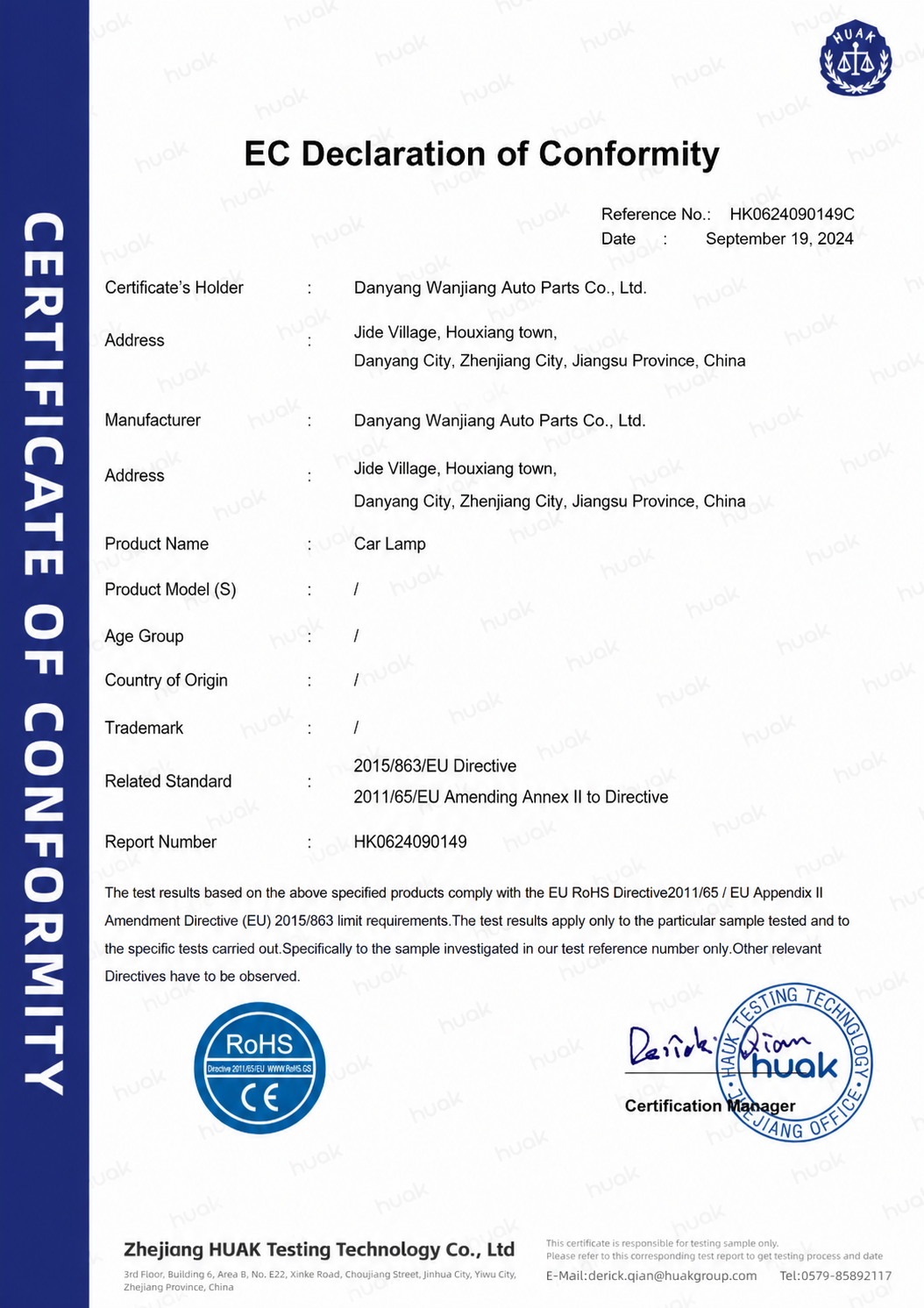
Compliance documents must be reviewed against the exact headlight configuration and destination market. The available information lists CE certificate HK0624090149C for car lamps in Europe, together with an EPR certificate covering car bumpers, car lamps, car hood bonnets, car fenders, and car grilles in Europe. The supplier also states that its products meet CE and DOT standards. However, buyers should confirm that the final private-label LED headlight, including any technical changes, is covered by the applicable approval and documentation.
Commercial Applications and Supply Fit
The supplier reports experience serving North American and European automotive aftermarket channels. Its cooperation examples involve international wholesalers, regional distributors, collision repair chains, and cross-border automotive e-commerce brands. These customers use bumpers, grilles, headlights, engine hoods, and fenders for accident repair, exterior refurbishment, retail sales, and inventory distribution.
Customization and Supply Comparison
| Program element | Information currently available | Items to confirm |
|---|---|---|
| Private-label branding | The company offers OEM/ODM services at the business level | Logo format, marking method, location, and artwork approval |
| Packaging and documents | No LED-headlight-specific packaging details are provided | Carton design, labels, manuals, barcodes, and export paperwork |
| Optical and electrical changes | No detailed specifications are listed | Beam pattern, brightness, voltage, connectors, wiring, and related performance targets |
| Housing and fitment | Headlight housing and vehicle compatibility are not specified | Vehicle series, dimensions, mounting points, materials, and installation compatibility |
| Quality control | Visual inspection, CMM measurement, and paint and coating testing are listed | Acceptance criteria, sampling method, inspection records, and report format |
| Order and lead time | MOQ is 5 pieces and the stated delivery time is 7 days | Inventory availability, customization lead time, and confirmed shipping schedule |
Frequently Asked Questions
What parts of an LED headlight can be customized?
The confirmed scope supports discussions about private-label branding, packaging, documentation, and possible OEM/ODM development. Specific changes to optics, electronics, housing, connectors, or vehicle fitment are not defined in the available product data and must be approved technically before ordering.
What are the MOQ and delivery time?
The listed minimum order quantity is 5 pieces, with a stated delivery time of 7 days. Stock items may be loaded and dispatched within one week, while customized orders can require additional time depending on tooling, production complexity, and quantity.
What quality checks are available?
The stated inspection process includes visual examination, CMM dimensional measurement, and paint and coating testing. The company also indicates that all finished goods receive a final inspection before delivery, with inspection images or videos available before shipment.
Conclusion: Build the Program Around Confirmed Requirements
A dependable LED headlight private-label project should begin with brand identity, packaging, documentation, and a written review of every requested technical change. The currently confirmed commercial points are a 5-piece MOQ, a 7-day stated delivery time, American and European market coverage, and defined inspection activities. Stock purchasing and OEM/ODM cooperation are both possible business routes, while CE car-lamp certification and European EPR documentation should be checked against the final product configuration. For technical assistance or a tailored quotation, contact sales01@cnkebel.com.
About the Supplier
Danyang Wanjiang Auto Parts Co., Ltd. operates from Danyang, Jiangsu Province, and exports automotive body parts to overseas customers. With 18 years of experience, the company specializes in car bumpers and also supplies grilles, headlights, engine hoods, and fenders. It reports OEM/ODM capabilities, custom-development experience for car bumper assemblies, and a 10,000-square-meter factory. Its principal markets are America and Europe, and its listed certifications include CE certification for car lamps and EPR coverage for car lamps and related body parts. The company serves customers across several automotive aftermarket sectors.

What Documentation Supports a Warranty Claim for a Car Front Fender?
A warranty replacement request for a car front fender should clearly show the reported defect or fitment concern and connect it to the relevant order and vehicle information. Clear photos or videos, the purchase details, and the exact vehicle model help the supplier determine whether the problem came from manufacturing or from an incorrect model selection.
Evidence Checklist for a Front Fender Claim
- Take clear photos or videos of cracks, scratches, deformation, damage, or gaps during installation.
- Submit the order number, product information, and vehicle make, model, year, or other compatibility details.
- Show the fender before installation whenever possible, as well as any areas that do not align correctly with the vehicle.
- Compare the received part with pre-shipping inspection pictures or videos if those records are available.
How the Cause of the Problem Affects the Remedy
The available business information does not require a specific warranty form or prescribe a fixed number of images. Instead, the review focuses on the condition of the car front fender, its compatibility with the intended vehicle, and the cause of the issue.
If the problem results from a manufacturing defect or a production-related fitment issue, the supplier states that replacement, re-shipping, and related expenses are covered by the supplier. If the wrong vehicle model or specification was selected by the customer, replacement parts and remote technical assistance may still be provided, but at factory cost.
Information That Helps Technical Verification
Photos and videos should be taken in good lighting and should show the complete part as well as close views of the defect or alignment problem. Installation images can help demonstrate gaps, mounting-point differences, or other fitment concerns. Order records and vehicle-model information allow the supplier to confirm whether the supplied fender matches the requested application.
Danyang Wanjiang Auto Parts Co., Ltd. reports that its quality-control process includes raw-material checks, ongoing mold and molding-process monitoring, and 100% final inspection before loading. The company also indicates that pre-shipment pictures or videos may be provided. These materials can help establish the product’s condition before dispatch and compare it with the condition found after delivery.
Claim Evidence by Situation
| Reported situation | Useful evidence and stated handling |
|---|---|
| Manufacturing defect | Submit clear photos or videos of the defect along with order and vehicle details. When manufacturing is responsible, the supplier covers replacement, re-shipping, and related costs. |
| Fitment concern | Provide installation images or video showing the alignment issue, plus the vehicle model and order specification. Production controls and final inspection records may support the review. |
| Incorrect model selection | Share the ordered specification and the actual vehicle information so the selection can be checked. Replacement parts and remote technical support are available at factory cost. |
| Condition dispute after delivery | Compare the received fender with available pre-shipment inspection photos or videos to clarify whether the issue existed before dispatch. |
Supplier Scope and Compliance Information
The company’s product range includes car bumpers, grilles, headlights, engine hoods, and car fenders. Its services cover stock wholesale, OEM/ODM customization, and shipping-agent support. For a front fender claim, the most relevant factors remain the part’s condition, the requested vehicle application, the order details, and the cause of the reported problem.
Danyang Wanjiang lists CE certification for car bumpers and car lamps, as well as EPR coverage for car bumpers, car lamps, car hood bonnets, car fenders, and car grilles. These credentials relate to product and market compliance, but they do not replace the photos, videos, and order information needed for an individual warranty assessment.
The company describes cooperation with international auto body parts wholesalers, regional aftermarket distributors, collision repair chains, and cross-border automotive e-commerce businesses in the United States, Germany, and other markets serving American vehicle series. Its stated focus includes fitment review, inspection transparency, OEM/ODM support, and logistics coordination.
Frequently Asked Questions
How many photos are required for a front fender warranty claim?
The supplied information does not specify a mandatory number or file format. Submit enough clear photos or videos to show the complete part, the defect, and any fitment problem, together with the order and vehicle details.
Does the supplier pay for a manufacturing-related replacement?
When the issue is confirmed to result from manufacturing, the supplier states that replacement, re-shipping, and associated expenses are covered by the supplier.
What if the wrong vehicle model was ordered?
An incorrect model selection is treated as a customer-side selection issue. Replacement parts and remote technical support can be offered at factory cost rather than as a fully supplier-paid warranty replacement.
Recommended Claim Process
Before contacting the supplier, collect the order number, vehicle-model information, and well-lit photos or videos of the front fender. If the part has not been installed, record its condition before installation. If it has been fitted, document the mounting points and visible alignment gaps without modifying the part. This organized evidence can help distinguish a manufacturing issue from a compatibility or selection error.
For technical assistance or a detailed review, contact Danyang Wanjiang Auto Parts Co., Ltd. at sales01@cnkebel.com.
About Us
Danyang Wanjiang Auto Parts Co., Ltd. is a factory in Danyang, Jiangsu Province, specializing in car bumpers and supplying other auto body parts, including grilles, headlights, engine hoods, and fenders, with 18 years of export experience. The company operates a 10,000-square-meter factory and serves American and European markets, with an export ratio of 95%. It lists CE certifications for car bumpers and car lamps and EPR coverage for car bumpers, car lamps, car hood bonnets, car fenders, and car grilles. The company has served clients across multiple industries.
REPORT