







-
 Agriculture
-
 Health-Care
-
 Environment
-
 Construction-Real-Estate
-
 Tools-Hardware
-
 Home-Garden
-
 Furniture
-
 Luggage-Bags-Cases
-
 Medical-devices-Supplies
-
 Gifts-Crafts
-
 Sports-Entertainment
-
 Food-Beverage
-
 Vehicles-Transportation
-
 Power-Transmission
-
 Material-Handling
-
 Renewable-Energy
-
 Safety
-
 Testing-Instrument-Equipment
-
 Construction-Building-Machinery
-
 Pet-Supplies
-
 Personal-Care-Household-Cleaning
-
 Vehicle-Accessories-Electronics-Tools
-
 School-Office-Supplies
-
 Packaging-Printing
-
 Mother-Kids-Toys
-
 Business-Services
-
 Commercial-Equipment-Machinery
-
 Apparel-Accessories
-
 Security
-
 Shoes-Accessories
-
 Vehicle-Parts-Accessories
-
 Jewelry-Eyewear-Watches-Accessories
-
 Lights-Lighting
-
 Fabric-Textile-Raw-Material
-
 Fabrication-Services
-
 Industrial-Machinery
-
 Consumer-Electronics
-
 Electrical-Equipment-Supplies
-
 Electronic-Components-Accessories-Telecommunications
-
 Home-Appliances
-
 Beauty
-
 Chemicals
-
 Rubber-Plastics
-
 Metals-Alloys


























































































































































































































































































































































































































































































































































































- Masonry Materials
- Curtain Walls & Accessories
- Earthwork Products
- Fireproofing Materials
- Heat Insulation Materials
- Plastic Building Materials
- Building Boards
- Soundproofing Materials
- Timber
- Waterproofing Materials
- Balustrades & Handrails
- Bathroom & Kitchen
- Flooring & Accessories
- Tiles & Accessories
- Door, Window & Accessories
- Fireplaces & Stoves
- Floor Heating Systems & Parts
- Stairs & Stair Parts
- Ceilings
- Elevators & Escalators
- Stone
- Countertops, Vanity Tops & Table Tops
- Mosaics
- Metal Building Materials
- Multifunctional Materials
- Ladders & Scaffoldings
- Mouldings
- Corner Guards
- Decorative Films
- Formwork
- Building & Industrial Glass
- Other Construction & Real Estate
- Wallpapers/Wall panels
- HVAC System & Parts
- Outdoor Facilities
- Prefabricated Buildings
- Festive & Party Supplies
- Bathroom Products
- Household Sundries
- Rain Gear
- Garden Supplies
- Household Cleaning Tools & Accessories
- Lighters & Smoking Accessories
- Home Storage & Organization
- Household Scales
- Smart Home Improvement
- Home Textiles
- Kitchenware
- Drinkware & Accessories
- Dinnerware, Coffee & Wine
- Home Decor
- Golf
- Fitness & Body Building
- Amusement Park Facilities
- Billiards, Board Game,Coin Operated Games
- Musical Instruments
- Outdoor Affordable Luxury Sports
- Camping & Hiking
- Fishing
- Sports Safety&Rehabilitation
- Ball Sports Equipments
- Water Sports
- Winter Sports
- Luxury Travel Equipments
- Sports Shoes, Bags & Accessories
- Cycling
- Other Sports & Entertainment Products
- Artificial Grass&Sports Flooring&Sports Court Equipment
- Scooters
- Food Ingredients
- Honey & Honey Products
- Snacks
- Nuts & Kernels
- Seafood
- Plant & Animal Oil
- Beverages
- Fruit & Vegetable Products
- Frog & Escargot
- Bean Products
- Egg Products
- Dairy Products
- Seasonings & Condiments
- Canned Food
- Instant Food
- Baked Goods
- Other Food & Beverage
- Meat & Poultry
- Confectionery
- Grain Products
- Feminie Care
- Hair Care & Styling
- Body Care
- Hands & Feet Care
- Hygiene Products
- Men's Grooming
- Laundry Cleaning Supplies
- Travel Size & Gift Sets
- Room Deodorizers
- Other Personal Care Products
- Pest Control Products
- Special Household Cleaning
- Floor Cleaning
- Kitchen & Bathroom Cleaning
- Oral Care
- Bath Supplies
- Yellow Pages
- Correction Supplies
- Office Binding Supplies
- Office Cutting Supplies
- Board Erasers
- Office Adhesives & Tapes
- Education Supplies
- Pencil Cases & Bags
- Notebooks & Writing Pads
- File Folder Accessories
- Calendars
- Writing Accessories
- Commercial Office Supplies
- Pencil Sharpeners
- Pens
- Letter Pad/Paper
- Paper Envelopes
- Desk Organizers
- Pencils
- Markers & Highlighters
- Filing Products
- Art Supplies
- Easels
- Badge Holder & Accessories
- Office Paper
- Printer Supplies
- Book Covers
- Other Office & School Supplies
- Stationery Set
- Boards
- Clipboards
- Stamps
- Drafting Supplies
- Stencils
- Electronic Dictionary
- Books
- Map
- Magazines
- Calculators
- Baby & Toddler Toys
- Educational Toys
- Classic Toys
- Dress Up & Pretend Play
- Toy Vehicle
- Stuffed Animals & Plush Toys
- Outdoor Toys & Structures
- Balloons & Accessories
- Baby Food
- Children's Clothing
- Baby Supplies & Products
- Maternity Clothes
- Kids Shoes
- Baby Care
- Novelty & Gag Toys
- Dolls & Accessories
- Puzzle & Games
- Blocks & Model Building Toys
- Toddler Clothing
- Baby Clothing
- Kids' Luggage & Bags
- Arts, Crafts & DIY Toys
- Action & Toy Figures
- Baby Appliances
- Hobbies & Models
- Remote Control Toys
- Promotional Toys
- Pregnancy & Maternity
- Hygiene Products
- Kid's Textile&Bedding
- Novelty & Special Use
- Toy Weapons
- Baby Gifts
- Baby Storage & Organization
- Auto Drive Systems
- ATV/UTV Parts & Accessories
- Marine Parts & Accessories
- Other Auto Parts
- Trailer Parts & Accessories
- Auto Transmission Systems
- Train Parts & Accessories
- Universal Parts
- Railway Parts & Accessories
- Auto Brake Systems
- Aviation Parts & Accessories
- Truck Parts & Accessories
- Auto Suspension Systems
- Auto Lighting Systems
- New Energy Vehicle Parts & Accessories
- Auto Steering Systems
- Wheels, Tires & Accessories
- Bus Parts & Accessories
- Auto Performance Parts
- Cooling System
- Go-Kart & Kart Racer Parts & Accessories
- Air Conditioning Systems
- Heavy Duty Vehicle Parts & Accessories
- Auto Electrical Systems
- Auto Body Systems
- Auto Engine Systems
- Container Parts & Accessories
- Motorcycle Parts & Accessories
- Refrigeration & Heat Exchange Equipment
- Machine Tool Equipment
- Food & Beverage Machinery
- Agricultural Machinery & Equipment
- Apparel & Textile Machinery
- Chemical Machinery
- Packaging Machines
- Paper Production Machinery
- Plastic & Rubber Processing Machinery
- Industrial Robots
- Electronic Products Machinery
- Metal & Metallurgy Machinery
- Woodworking Machinery
- Home Product Manufacturing Machinery
- Machinery Accessories
- Environmental Machinery
- Machinery Service
- Electrical Equipment Manufacturing Machinery
- Industrial Compressors & Parts
- Tobacco & Cigarette Machinery
- Production Line
- Used Industrial Machinery
- Electronics Production Machinery
- Other Machinery & Industrial Equipment
- Camera, Photo & Accessories
- Portable Audio, Video & Accessories
- Television, Home Audio, Video & Accessories
- Video Games & Accessories
- Mobile Phone & Accessories
- Electronic Publications
- Earphone & Headphone & Accessories
- Speakers & Accessories
- Smart Electronics
- TV Receivers & Accessories
- Mobile Phone & Computer Repair Parts
- Chargers, Batteries & Power Supplies
- Used Electronics
- VR, AR, MR Hardware & Software
- Projectors & Presentation Equipments
- Other Consumer Electronics
- Cables & Commonly Used Accessories
- Computer Hardware & Software
- Displays, Signage and Optoelectronics
- Discrete Semiconductors
- Wireless & IoT Module and Products
- Telecommunications
- Connectors, Terminals & Accessories
- Development Boards, Electronic Modules and Kits
- Circuit Protection
- Sensors
- Isolators
- Audio Components and Products
- Integrated Circuits
- Power Supplies
- Relays
- RF, Microwave and RFID
- Electronic Accessories & Supplies
- Passive Components
- PCB & PCBA
- Air Quality Appliances
- Home Appliance Parts
- Heating & Cooling Appliances
- Small Kitchen Appliances
- Laundry Appliances
- Water Heaters
- Water Treatment Appliances
- Refrigerators & Freezers
- Personal Care & Beauty Appliances
- Major Kitchen Appliances
- Cleaning Appliances
- Second-hand Appliances
- Smart Home Appliances
- Other Home Appliances
- Energy Chemicals
- Inorganic Chemicals
- Basic Organic Chemicals
- Agrochemicals
- Admixture & Additives
- Catalysts & Chemical Auxiliary Agents
- Pigments & Dyestuff
- Coating & Paint
- Daily Chemicals
- Polymer
- Organic Intermediate
- Adhesives & Sealants
- Chemical Waste
- Biological Chemical Products
- Surface Treatment Chemicals
- Painting & Coating
- Chemical Reagents
- Flavor & Fragrance
- Non-Explosive Demolition Agents
- Other Chemicals
- Custom Chemical Services

Building Boards
How to Protect Your Payment When Buying an Expandable Container House
Buying a prefabricated expandable container house from an overseas supplier requires more than checking the product price. To reduce the risk of paying for a unit that is delayed or never shipped, verify the supplier's legal details, factory capacity, product specifications, delivery obligation, inspection procedure, shipping plan, and warranty before placing an order. A clear contract and milestone-based payment arrangement should connect the final payment to documented proof that the products are complete and ready for ocean transport.
Essential Steps Before Placing an Order
- List the supplier's registered company name, factory address, product model, dimensions, quantity, delivery date, minimum order quantity, and responsible sales contact in the contract.
- Require regular production updates together with factory photographs, inspection records, packing details, and confirmation that the units have been allocated to a 20FT or 40HQ shipping container.
- Use staged payments. The stated terms are a 50% advance deposit followed by a 50% balance paid before shipment.
- Confirm that the supplier's products match the intended application, such as construction camps, worker dormitories, emergency housing, tourism developments, commercial areas, or rural villa projects.
How to Verify the Product and Supplier
Document consistency is one of the most practical safeguards in an international purchase. The quotation, sales contract, invoice, product specification, packing list, and shipping documents should show the same supplier identity, product description, quantity, destination, and transport method. Pay particular attention to the product name. The available product information describes a folding container house, while the buyer may be seeking an expandable container house. This difference should be clarified in writing before any deposit is transferred.
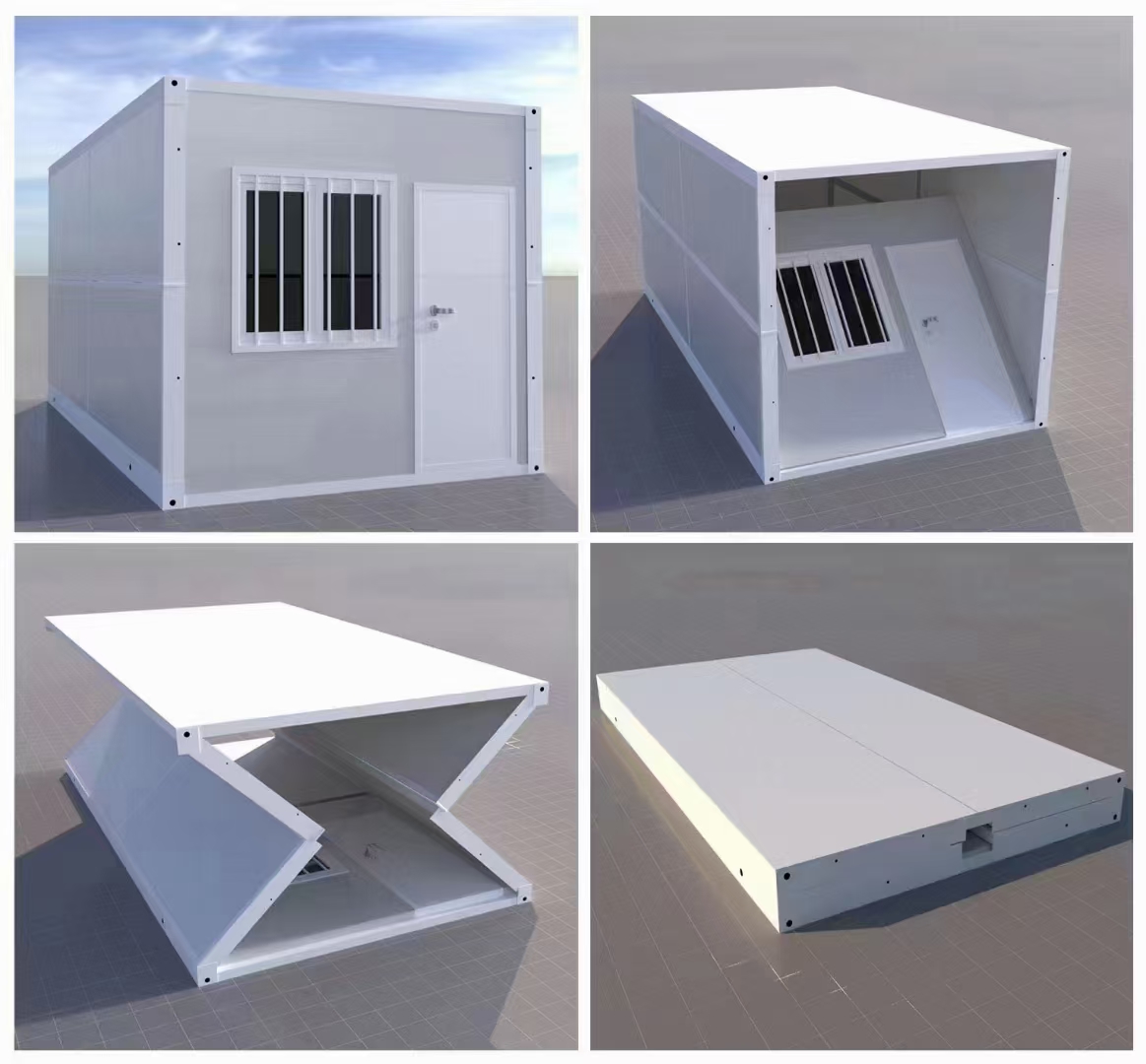
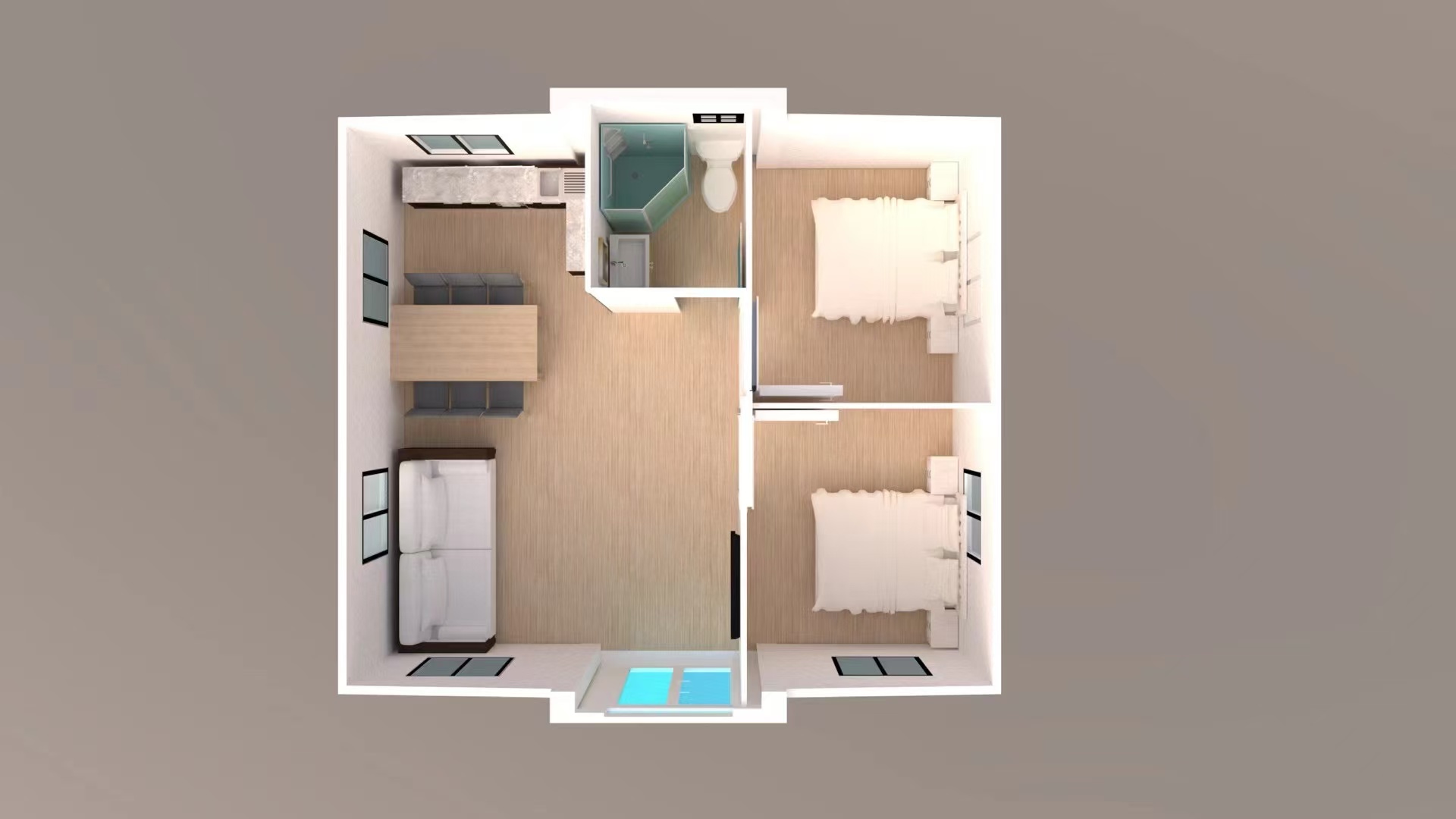
The documented folding container house has standard outside dimensions of 6055 mm long, 2435 mm wide, and 2800 mm high, with an interior clear height of 2500 mm. Available configurations include 3 m x 6 m and 4 m x 6 m units, double-wing expandable folding houses, and combined layouts reaching 12 m in length. The selected configuration, layout, materials, and quantity should be attached to the purchase contract so the delivered goods can be compared with the original order.
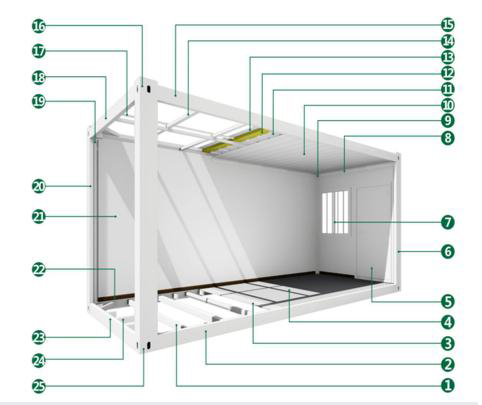
The structural specification includes a hot-dip galvanized steel frame and Q355 high-strength steel intended for export applications. The components are connected with bolts, eliminating the need for on-site welding. Other listed features include reinforced cast-steel hinges, eight corner castings per set, and corrosion protection involving pickling, phosphating, and electrostatic powder coating. Hidden roof drainage channels and downpipes integrated into the four corner posts should also be recorded in the technical specification and checked during the pre-shipment inspection.
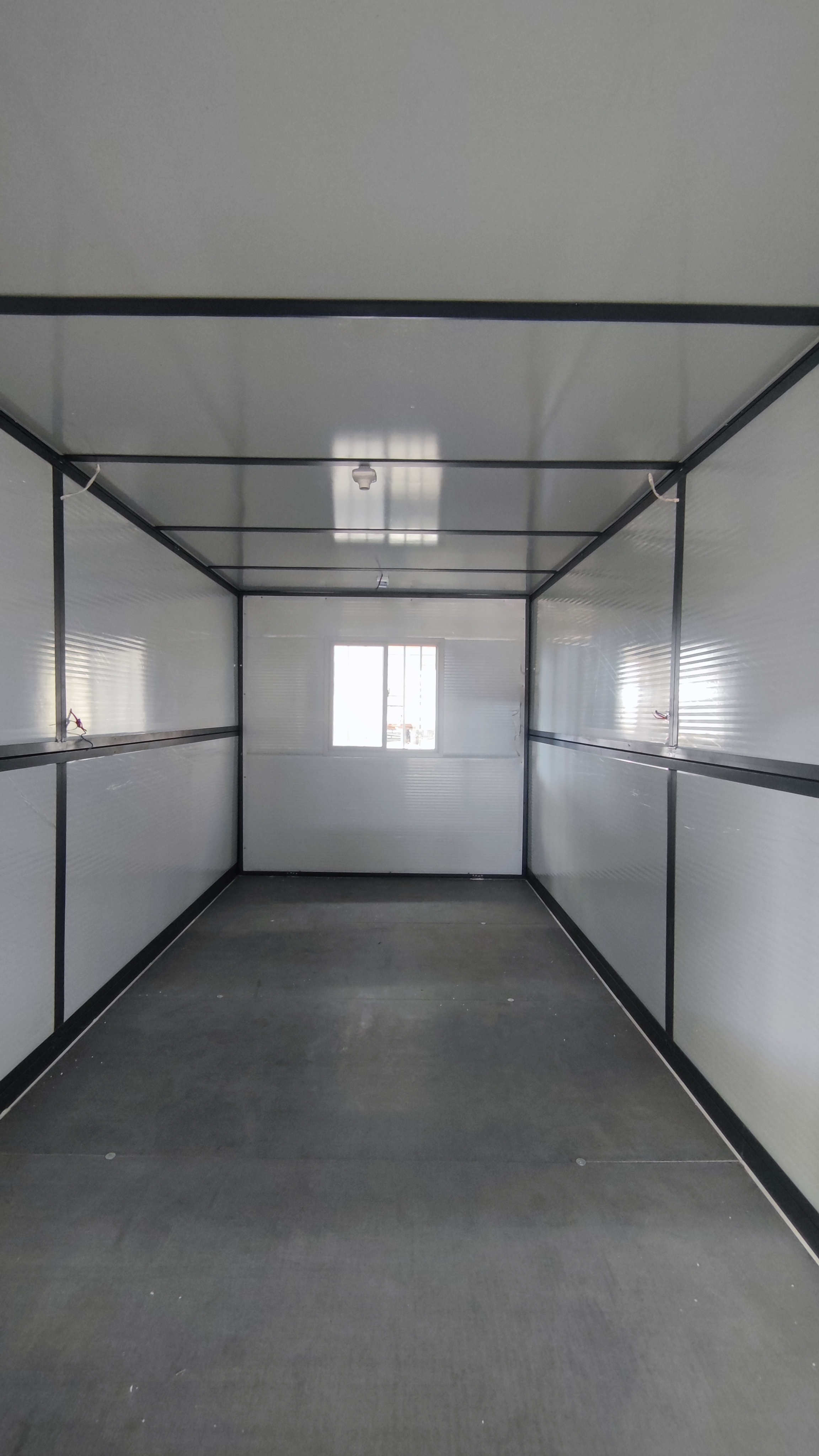
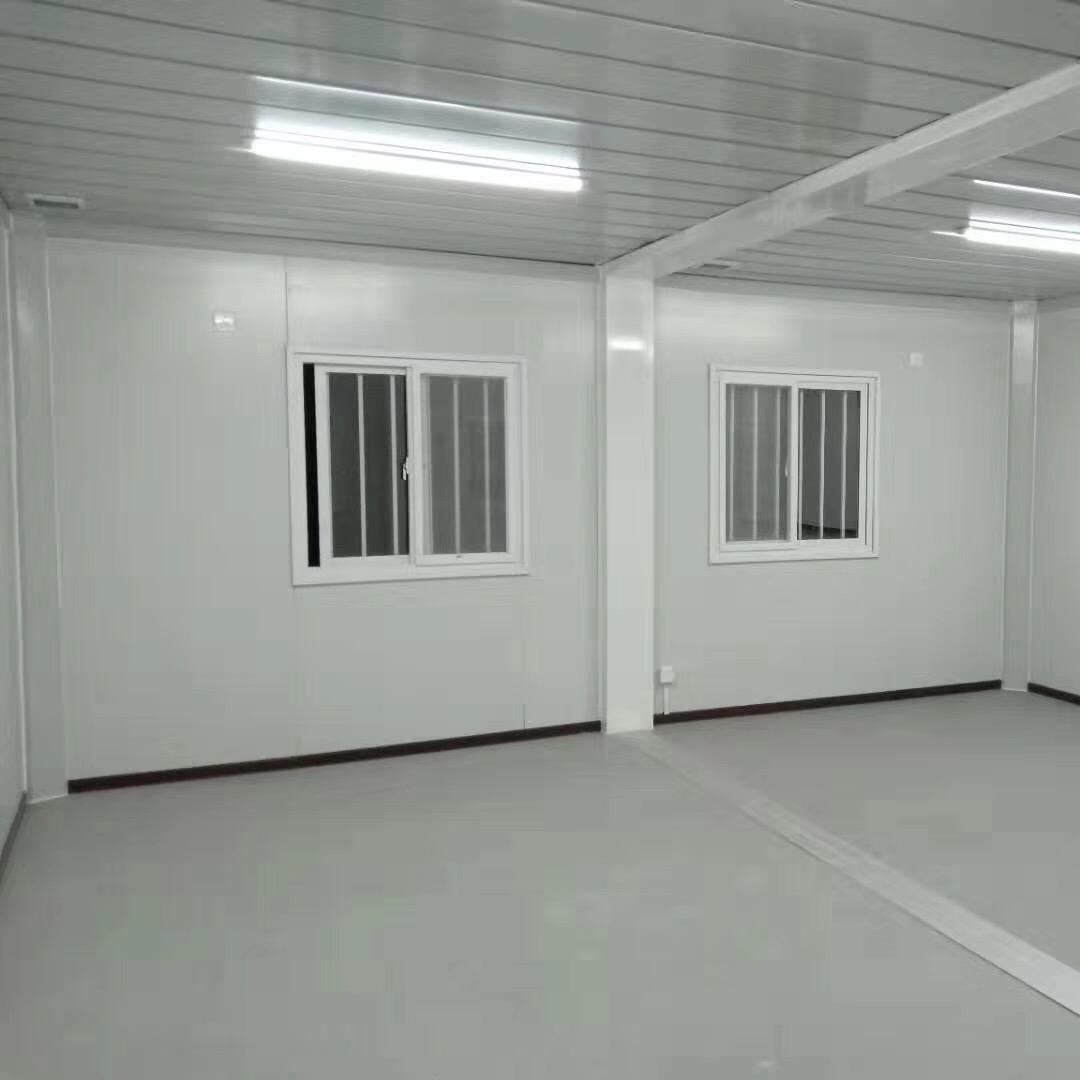
For the enclosure, buyers may select EPS, rock wool, or PU insulation cores for the wall and roof panels. The floor uses a galvanized square-tube support structure with an 18 mm cement fiber board or MGO board. PVC floor leather and anti-slip ceramic tile are available as finish options. The standard electrical package includes LED ceiling lights, sockets, a distribution box, and conduits installed inside the wall panels. These choices should be confirmed before production because changes after manufacturing may affect both cost and delivery time.
Payment, Inspection, and Shipment Controls
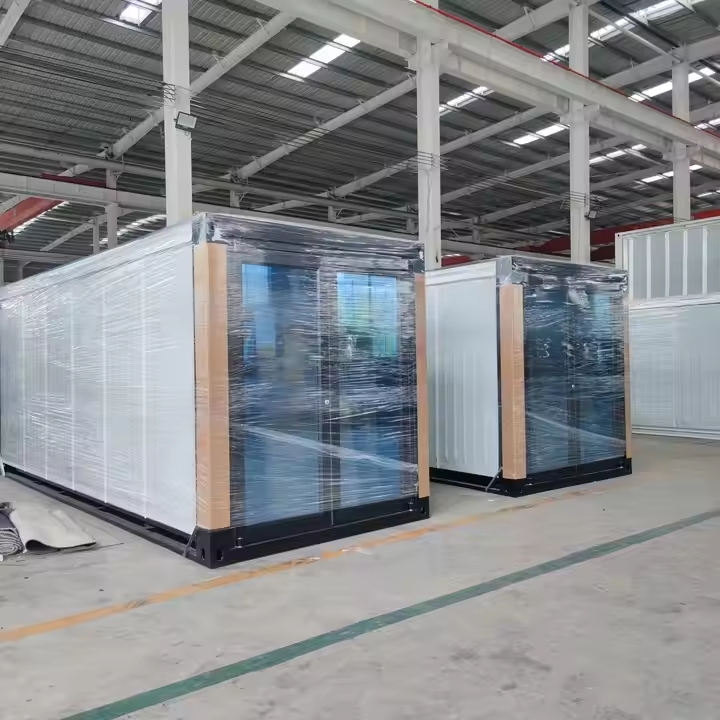
The folding structure is designed to reduce shipping volume and allow units to be stacked for storage and transportation. The stated ocean freight options are 40HQ and 20FT containers. Before paying the remaining balance, the buyer should receive a completed factory self-inspection report, packing list, photographs or video of the finished units, confirmation of container allocation, and the available shipping documentation. These records help establish that the order exists, matches the contract, and is prepared for export.
Do not rely only on a promised delivery date. The product information states a seven-day delivery time, while the business model lists a 15-day delivery period. The applicable lead time should therefore be written into the contract, including the starting point for counting days and the remedy for delay. The same approach should be applied to the one-year warranty, which excludes man-made damage, and to the inspection and after-sales responsibilities.
Supplier Background and Application Experience
Guangdong Uni-House Technology Co., Ltd. is described as a foreign trade company operating under the Guizu Group. Its stated services cover design, research and development, manufacturing, installation, and after-sales support through several group factories. Established in 2008, the company reports an annual capacity of 10,000 sets and a 100% export ratio, with Australia, the Middle East, North America, and Southeast Asia listed among its main markets.
The company lists CE certification No. 3N240819.GUTQO66 for applicable modular container house products. Its reported project experience includes an Indonesian coal mine living area used as accommodation for mining workers. Other cooperation cases involve engineering projects, cultural and tourism businesses, and community facilities. Buyers should still verify that the certification and project references apply to the exact model and configuration being purchased.
Verification Checklist
| Item to Verify | Required Evidence or Contract Detail |
|---|---|
| Product type | The available record identifies a folding container house. Confirm in writing whether the order is folding, expandable, or a combined configuration. |
| Order quantity and lead time | The minimum order is listed as 1 set. The product record states 7 days, while the business model states 15 days; obtain one binding delivery commitment. |
| Payment schedule | 50% deposit in advance and 50% balance before shipment, subject to completion and shipment-readiness evidence. |
| Shipping method | Confirm whether the order will use a 40HQ or 20FT ocean freight container and identify the destination and responsible shipping party. |
| Pre-shipment inspection | Request the factory self-inspection report, packing list, product photographs, and container loading confirmation before paying the balance. |
| Warranty | The listed warranty is one year and excludes damage caused by people. Confirm claim procedures and after-sales contacts. |
| Export information | The product data mentions Southeast Asia, North America, and South America, while the company profile lists Australia, the Middle East, North America, and Southeast Asia. Clarify the actual destination support. |
Frequently Asked Questions
What should be checked before paying the deposit?
Confirm the supplier's legal name, factory location, exact model, dimensions, materials, quantity, delivery deadline, payment terms, inspection process, shipping arrangement, warranty, and designated contact. If you need an expandable unit, obtain written confirmation because the supplied technical record primarily describes a folding container house.
Is it safe to pay the remaining 50% before shipment?
The stated terms require the full balance before shipment. Reduce exposure by making the payment conditional on receiving the factory self-inspection report, packing confirmation, finished-product evidence, container allocation details, and relevant shipping documents. The contract should also define what happens if the supplier misses the agreed delivery date.
How can I confirm that the order is ready for ocean transport?
Compare the finished units with the contract, drawings, specifications, quantity, and packing list. Ask the supplier to confirm whether the goods are assigned to a 40HQ or 20FT container and request container loading evidence and shipping paperwork before authorizing the final payment.
Conclusion
The most effective way to avoid paying for an unshipped expandable container house is to connect every payment to verifiable documents. Confirm the supplier identity and product model, resolve the seven-day versus 15-day delivery discrepancy, define the specifications in the contract, and require inspection and loading evidence before releasing the balance. The listed business model supports an order of one set, while the product information includes a one-year warranty excluding man-made damage and CE certification No. 3N240819.GUTQO66 for applicable modular products. For technical consultation or supplier support, contact guizugroup@outlook.com.
About the Supplier
Guangdong Uni-House Technology Co., Ltd. operates under the Guizu Group and reports capabilities in product design, research and development, production, installation, and after-sales service. Founded in 2008, the company states that it has an annual production capacity of 10,000 sets and serves international markets including Australia, the Middle East, North America, and Southeast Asia. Its published company information includes CE certification No. 3N240819.GUTQO66 and project experience across engineering, mining, tourism, and community applications.

How Much Can the Unit Price of Ten K-Houses Change?
It is not possible to determine the unit-price difference for an order of ten K-Houses from the available information. The source material does not include a standard K-House price, a ten-unit quotation, or a volume-discount policy. The available product details instead describe expandable container houses, which have a minimum order quantity of one set and an indicated lead time of 15 days. A direct quotation from the supplier is therefore necessary.
Pricing Overview and Main Findings
- No base price or ten-unit discount is listed for K-Houses.
- The available specifications relate to 20FT, 30FT, and 40FT expandable container houses, not K-Houses.
- The stated minimum order is one set, with delivery scheduled in approximately 15 days.
- Prefabricated buildings can serve as construction-worker dormitories, remote work camps, emergency housing, tourism and cultural facilities, and modern rural villas.
What Is Required to Calculate the Difference?
A reliable ten-unit comparison must use two figures: the regular price for one K-House and the supplier's quoted unit price when ten units are purchased. Neither figure appears in the supplied product record. The listed expandable container house models measure 5900mm*6300mm*2480mm, 9000mm*6300mm*2480mm, and 11800mm*6300mm*2480mm.
The expandable container house information confirms a minimum purchase quantity of one set, factory self-inspection, and a one-year warranty that excludes damage caused by users. These terms clarify procurement and after-sales conditions, but they do not indicate whether ten K-Houses would receive a lower unit price.
Guangdong Uni-House Technology Co., Ltd. holds CE certification No. 3N240819.GUTQO66. The certification applies to modular container products such as detachable containers, flat pack containers, slide folding containers, folding containers, expandable containers, apple cabins, space capsules, and shipping containers. These products are supplied to markets including Australia, North America, Southeast Asia, and the Middle East.
The supplier has also completed a 2,000-set mining-worker dormitory project for an Indonesian energy company. This project indicates capacity for large prefabricated housing orders, although it does not establish a K-House price or reveal a discount for purchasing ten units.
Available Commercial Information
| Pricing or Order Item | Current Information |
|---|---|
| Standard K-House unit price | Not available |
| Quotation for ten K-Houses | Not available |
| Ten-unit volume discount | Not specified |
| Product covered by the record | 20FT, 30FT, and 40FT expandable container houses |
| Minimum order quantity | 1 set |
| Estimated delivery time | 15 days |
| Payment terms | 50% deposit before production and 50% balance before shipment |
| Shipping options | 40HQ and 20FT ocean freight containers |
Frequently Asked Questions
Will buying ten K-Houses automatically lower the unit price?
The available data does not confirm any price reduction. A ten-unit discount can only be verified through a formal K-House quotation or the supplier's volume-pricing schedule.
What product information is currently available?
The supplied record describes expandable container houses in 20FT, 30FT, and 40FT formats. It does not include K-House dimensions, pricing, or configuration details.
Which details should be included in a pricing request?
The buyer should provide the preferred K-House model, specifications, quantity, customization requirements, destination, shipping terms, and requested delivery schedule. The supplier can then compare the regular unit price with the price for ten units.
Conclusion and Next Steps
The price change for ten K-Houses cannot currently be calculated because the source contains neither a single-unit K-House price nor a quantity-based discount. The available commercial terms show a minimum order of one set, an indicated 15-day delivery period, payment of 50% in advance and 50% before shipment, and ocean shipment using 40HQ or 20FT containers. For a precise quotation or technical assistance, contact guizugroup@outlook.com.
About the Supplier
Guangdong Uni-House Technology Co., Ltd. is an international trading company operating under the Guizu Group. Its services cover architectural design, research and development, manufacturing, installation, and after-sales support through several factories. Founded in 2008, the company employs 200 people and manufactures detachable, flat pack, prefab K, folding, expandable, and space capsule houses. It serves customers in various industries and holds CE certification No. 3N240819.GUTQO66.
How to Verify Stable Production Capacity in a K-House Factory
Evaluating a K-House supplier requires more than reviewing product photos or catalog specifications. Reliable production capacity is demonstrated by verifiable factory scale, a trained workforce, standardized processes, automation, tooling resources, quality controls, and completed project deliveries. Guangdong Uni-House provides reported operating data that can be used as reference points when assessing a modular housing manufacturer.
Key Indicators of a Reliable K-House Manufacturing Base
A factory's physical resources are a practical starting point for capacity verification. Guangdong Uni-House reports a 30,000-square-meter single-plant manufacturing base, a workforce of more than 200 employees, and an annual output capability of 10,000 sets. The company also states an annual output value of RMB 500 million.
These figures matter because they connect production space, labor availability, and planned output. Buyers considering recurring orders or large accommodation projects should compare these metrics with their required quantities, delivery schedule, and product configuration.
Manufacturing Systems That Support Consistent Output
Dedicated Production Lines and Process Coverage
Stable capacity depends on whether key components can be manufactured through coordinated processes rather than improvised assembly. The factory reports more than 10 advanced production lines, including dedicated processes for sandwich panels, welding and assembly, doors, windows, and related accessories. This arrangement supports a more continuous workflow from steel components through final modular house assembly.
Its reported equipment includes laser cutting systems, robotic welding arms, automatic spraying equipment, and full-process CNC control. Automation can help maintain repeatable dimensions, weld quality, surface treatment, and production efficiency across batches.
Tooling, Engineering, and Product Standardization
Tooling availability is another useful sign of manufacturing readiness. Guangdong Uni-House reports more than 200 sets of molds, alongside a technical team of over 30 R&D engineers and designers. The company also reports holding 150 utility model patents.
Its engineering work covers structural optimization, installation-efficiency improvement, weather-resistance studies, enclosure modal analysis, structural fatigue-life testing, and airtightness testing. Together, these activities support standardized products that can be repeatedly manufactured and adapted for different project conditions.
Product Details That Demonstrate Repeatable Manufacturing
The detachable prefab container house is presented with standardized export specifications, including defined external dimensions, galvanized steel structural elements, cast-steel corner fittings, bolted installation, concealed drainage channels, and factory self-inspection. Clearly defined components and assembly methods are important because they reduce variation between units and simplify site installation.
The stated minimum order quantity for this product is one set, making the offering suitable for both individual procurement and larger project purchasing. The product delivery time is listed as seven days, while the company-level delivery information states 15 days; buyers should confirm the applicable lead time according to model, quantity, customization, and destination.
Delivery History and International Compliance
Completed projects provide an additional operational reference beyond factory equipment and output claims. One cooperation case describes a 2,000-set mining-worker dormitory project for an Indonesian local energy company at an Indonesian coal mine living area. This type of project indicates experience in supplying modular accommodation at scale.
Customer feedback referenced by the company covers engineering projects, tourism guesthouses, and community facilities. The reported comments focus on rapid assembly, consistent quality, reusability, and after-sales responsiveness.
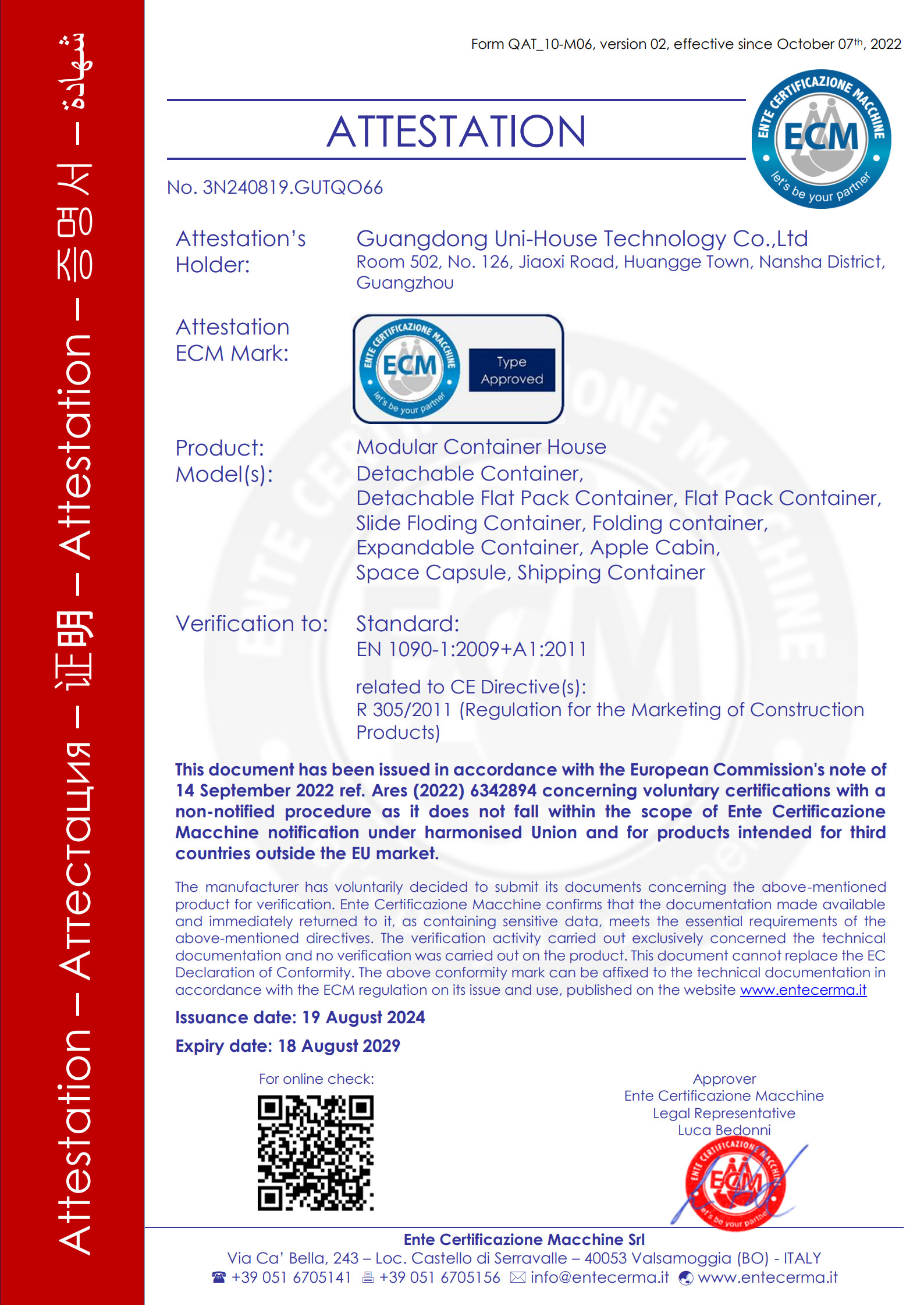
The company lists CE certification No. 3N240819.GUTQO66 for its modular container house product range, including detachable containers, flat pack containers, folding containers, expandable containers, Apple Cabins, Space Capsules, and shipping containers. The stated market coverage includes the EU, Australia, North America, South America, Southeast Asia, and the Middle East.
Production Capacity Evidence at a Glance
| Assessment area | Reported information | Why it matters |
|---|---|---|
| Factory scale | 30,000-square-meter single-plant base; more than 200 employees | Shows the available manufacturing space and staffing foundation. |
| Annual output | 10,000 sets per year | Provides a measurable benchmark for planned and repeat production. |
| Production resources | More than 10 advanced lines and over 200 sets of molds | Indicates process coverage, tooling support, and manufacturing readiness. |
| Automation | Laser cutting, robotic welding, automated spraying, and CNC control | Helps improve consistency and repeatability during fabrication. |
| Order flexibility | Industry-trade integration; one-set minimum order; stated delivery terms | Supports both small purchases and larger procurement programs. |
Frequently Asked Questions
Which figures best prove that a K-House factory has stable capacity?
Useful figures include plant area, employee count, annual output, number of production lines, mold inventory, automation equipment, and documented delivery cases. For Guangdong Uni-House, the reported figures are a 30,000-square-meter plant, more than 200 employees, 10,000 sets of annual capacity, over 10 production lines, and more than 200 molds.
Why is automation important for prefabricated K-House production?
Laser cutting, robotic welding, automated spraying, and CNC-controlled processing can improve consistency across structural frames, wall systems, and finishing components. These systems are particularly valuable when a manufacturer needs to produce standardized units repeatedly.
Can buyers place a small order?
Yes. The company states that its industry-trade integration model supports orders from one set, and the detachable prefab container house also lists a one-set minimum order quantity.
Conclusion: What Buyers Should Verify Before Ordering
To assess a K-House factory accurately, review its production area, workforce, annual capacity, line configuration, mold inventory, automation systems, product specifications, inspection practices, certificates, and completed project record as a whole. Guangdong Uni-House reports a 10,000-set annual capacity, a 30,000-square-meter production base, more than 200 employees, over 10 advanced lines, factory self-inspection, and one-set order support. Its CE certification and Indonesian mining accommodation case offer further reference for international buyers. For technical solutions or project support, contact guizugroup@outlook.com.
About Us
Guangdong Uni-House Technology Co., Ltd. is a foreign trade company established under the Guizu Group, providing design, research and development, production, installation, and after-sales support through multiple factories. The company reports a 30,000-square-meter single-plant base, 200 employees, and annual production capacity of 10,000 sets. Its product range includes detachable, expandable, folding, and flat pack container houses, prefab K houses, and space capsule houses. It holds CE certification for listed modular container house products and has served clients across multiple industries.
How to Confirm an Expandable Container House Supplier Owns Its Factory
Before placing an order with an expandable container house supplier, buyers should verify more than a product catalog or online company profile. A reliable review should connect the supplier’s registered business identity with a real factory, visible production resources, qualified employees, inspection procedures, certifications, and completed projects. Guangdong Uni-House Technology Co., Ltd. lists a production site in Foshan, Guangdong, along with automated manufacturing equipment, approximately 200 employees, and a reported annual capacity of 10,000 sets. These claims should be checked against independent and on-site evidence.
What Buyers Should Verify First
- Obtain a precise factory address and confirm that active manufacturing takes place there.
- Compare the supplier’s stated workforce, machinery, molds, production lines, and output with the products it sells.
- Request quality-control records, certificates, warranty conditions, and delivery information for the exact model being purchased.
- Review completed projects to determine whether the supplier has genuine experience in worker accommodation, construction camps, temporary housing, and other prefabricated building applications.
Linking the Company to a Physical Manufacturing Site
A factory-owning manufacturer should be able to demonstrate a clear relationship between its legal company name and its production facility. Guangdong Uni-House Technology Co., Ltd. identifies its factory at No. 9, Junhe Road, Junan Town, Shunde District, Foshan, Guangdong, China. The company was established in 2008 and reports a workforce of 200 people.
Buyers should verify the address through an in-person visit, a live video tour, or an independent inspection service. During the review, ask to see production areas, raw-material storage, finished-product inventory, employee activity, company signage, and records that link the site to the supplier’s registered identity. A website address or rented office alone does not prove that the supplier owns or directly controls a factory.
Reviewing Equipment, Processes, and Production Capability
Manufacturing credibility is best assessed through visible equipment and repeatable production processes rather than marketing descriptions. Uni-House reports dedicated lines for sandwich panels, welding assembly, doors and windows, and accessories. It also describes automated robotic arms for welding and spraying, more than 10 advanced production lines, over 200 sets of molds, and a research and development team of 30 engineers and designers.
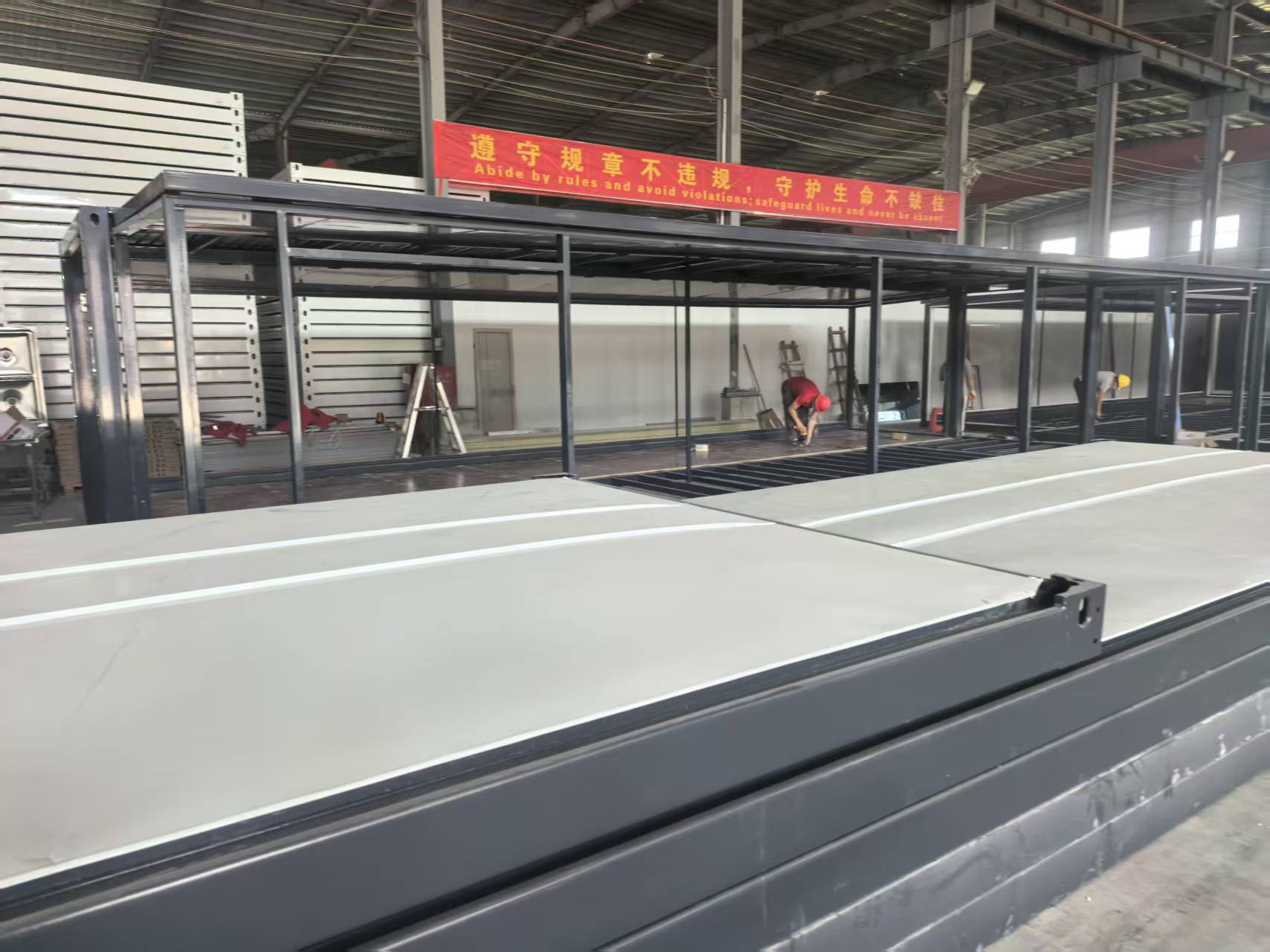
These claims should be compared with current factory footage, equipment lists, maintenance records, staffing information, and the supplier’s ability to explain how the selected expandable container house is assembled. The product’s structural drawings, material specifications, welding method, panel composition, electrical arrangement, packaging process, and installation instructions should also be available for review.
Cross-Checking Capacity and Delivery Claims
Production capacity provides another useful test of whether a supplier operates a substantial manufacturing base. The company states that its single-plant facility covers 30,000 square meters, has an annual capacity of 10,000 sets, and produces an annual output value of 500 million RMB. Buyers should not accept these figures without supporting evidence. Compare them with current production schedules, order history, loading activity, shipping records, and the number of units that can realistically be completed at the same time.
For the listed detachable prefab container house, the supplied information indicates factory self-inspection, a one-year warranty excluding man-made damage, a minimum order quantity of one set, and a stated delivery period of seven days. However, delivery times can differ by model, customization level, order quantity, season, and destination. The final contract should confirm the exact product, production schedule, inspection deadline, and shipping plan. At the broader business-model level, Uni-House also states a 15-day delivery time, so buyers should clarify which lead time applies to their order.
Checking Certifications and Quality Documentation
Certification records can support a supplier-identity check, but they should be authenticated independently. Guangdong Uni-House reports CE certificate No. 3N240819.GUTQO66. The stated coverage includes the European Union, Australia, North America, South America, Southeast Asia, and the Middle East, with product categories including detachable containers, flat pack containers, folding containers, expandable containers, apple cabins, space capsules, and shipping containers.
Ask for a complete copy of each certificate and verify the certificate number, issuing organization, certificate holder, validity period, product scope, and applicable markets. Quality verification should also include approved drawings, incoming-material checks, process inspection records, final inspection reports, packing photographs, and pre-shipment inspection procedures.
Using Project Experience as Supporting Evidence
Real project records can help demonstrate that a supplier has manufactured and delivered products at commercial scale. Uni-House reports a project for an Indonesian local energy company involving 2,000 sets used as dormitories for mining workers. Buyers should request references, purchase documentation, shipping records, installation reports, or customer confirmation that directly connects the project to the supplier and its manufacturing facilities.
Project evidence is especially valuable when the proposed order involves a construction camp, workforce accommodation, emergency housing, or another large temporary-building application. Confirm the delivered quantity, project location, product specification, installation responsibility, and completion date rather than relying only on photographs.
Supplier Factory Verification Checklist
| Verification Category | Supplier Information | Recommended Buyer Action |
|---|---|---|
| Factory location | Factory address in Foshan, Guangdong, China | Use a factory visit, live video inspection, or independent third-party verification |
| People and equipment | 200 employees, more than 10 production lines, and over 200 sets of molds | Request updated factory footage, an equipment inventory, and evidence of current staffing |
| Manufacturing scale | 30,000-square-meter single-plant base and reported annual capacity of 10,000 sets | Compare the figures with production plans, historical orders, and shipment records |
| Quality control | Factory self-inspection for the listed detachable prefab container house | Review inspection forms, approved drawings, testing procedures, and pre-shipment controls |
| Certification | CE certificate No. 3N240819.GUTQO66 | Authenticate the number, holder, product range, issuing body, and market coverage |
| Order fulfillment | Minimum order of one set and a stated seven-day delivery time for the listed product | Confirm the lead time, customization limits, contract terms, and shipping arrangement for the selected model |
Frequently Asked Questions
Which documents should I request from an expandable container house supplier?
Request the supplier’s registered company details, factory address, production-line description, equipment list, product drawings, material specifications, inspection records, certification documents, warranty terms, and project or shipment evidence. Documents should use consistent company names and product information.
Does providing a factory address prove ownership?
No. An address only identifies a location for investigation. Proof of ownership or direct manufacturing responsibility requires additional evidence, such as a site inspection, company signage, equipment visibility, employee information, production records, factory permits, and documentation that links the facility to the supplier.
What manufacturing evidence does Guangdong Uni-House report?
The supplied information identifies a Foshan factory, approximately 200 employees, more than 10 advanced production lines, over 200 sets of molds, 30 professional R&D engineers and designers, a 30,000-square-meter single-plant base, and an annual capacity of 10,000 sets. It also lists factory self-inspection, CE certification, and a 2,000-set Indonesian mining-worker dormitory project.
Conclusion: Use Multiple Sources of Evidence
The safest way to verify whether an expandable container house supplier owns or directly operates a factory is to compare several independent evidence sources. Check the registered company identity, physical site, machinery, workforce, production capacity, quality system, certificates, delivery records, and project history. No single claim is conclusive, but consistent information across these categories provides a much stronger basis for purchasing decisions.
Guangdong Uni-House Technology Co., Ltd. describes itself as an industry-and-trade integration company with a minimum order quantity of one set. For technical solutions, product details, or support, contact guizugroup@outlook.com.
About Guangdong Uni-House Technology Co., Ltd.
Guangdong Uni-House Technology Co., Ltd. is a foreign trade company established under the Guizu Group. Its reported services include design, research and development, manufacturing, installation, and after-sales support through multiple group factories. Established in 2008, the company reports 200 employees and a 30,000-square-meter single-plant production base with an annual capacity of 10,000 sets. Its product range includes detachable, expandable, folding, prefab K house, flat pack, and space capsule housing. The company reports CE certification and experience serving customers across multiple industries.
REPORT