







-
 Agriculture
-
 Health-Care
-
 Environment
-
 Construction-Real-Estate
-
 Tools-Hardware
-
 Home-Garden
-
 Furniture
-
 Luggage-Bags-Cases
-
 Medical-devices-Supplies
-
 Gifts-Crafts
-
 Sports-Entertainment
-
 Food-Beverage
-
 Vehicles-Transportation
-
 Power-Transmission
-
 Material-Handling
-
 Renewable-Energy
-
 Safety
-
 Testing-Instrument-Equipment
-
 Construction-Building-Machinery
-
 Pet-Supplies
-
 Personal-Care-Household-Cleaning
-
 Vehicle-Accessories-Electronics-Tools
-
 School-Office-Supplies
-
 Packaging-Printing
-
 Mother-Kids-Toys
-
 Business-Services
-
 Commercial-Equipment-Machinery
-
 Apparel-Accessories
-
 Security
-
 Shoes-Accessories
-
 Vehicle-Parts-Accessories
-
 Jewelry-Eyewear-Watches-Accessories
-
 Lights-Lighting
-
 Fabric-Textile-Raw-Material
-
 Fabrication-Services
-
 Industrial-Machinery
-
 Consumer-Electronics
-
 Electrical-Equipment-Supplies
-
 Electronic-Components-Accessories-Telecommunications
-
 Home-Appliances
-
 Beauty
-
 Chemicals
-
 Rubber-Plastics
-
 Metals-Alloys


























































































































































































































































































































































































































































































































































































- Masonry Materials
- Curtain Walls & Accessories
- Earthwork Products
- Fireproofing Materials
- Heat Insulation Materials
- Plastic Building Materials
- Building Boards
- Soundproofing Materials
- Timber
- Waterproofing Materials
- Balustrades & Handrails
- Bathroom & Kitchen
- Flooring & Accessories
- Tiles & Accessories
- Door, Window & Accessories
- Fireplaces & Stoves
- Floor Heating Systems & Parts
- Stairs & Stair Parts
- Ceilings
- Elevators & Escalators
- Stone
- Countertops, Vanity Tops & Table Tops
- Mosaics
- Metal Building Materials
- Multifunctional Materials
- Ladders & Scaffoldings
- Mouldings
- Corner Guards
- Decorative Films
- Formwork
- Building & Industrial Glass
- Other Construction & Real Estate
- Wallpapers/Wall panels
- HVAC System & Parts
- Outdoor Facilities
- Prefabricated Buildings
- Festive & Party Supplies
- Bathroom Products
- Household Sundries
- Rain Gear
- Garden Supplies
- Household Cleaning Tools & Accessories
- Lighters & Smoking Accessories
- Home Storage & Organization
- Household Scales
- Smart Home Improvement
- Home Textiles
- Kitchenware
- Drinkware & Accessories
- Dinnerware, Coffee & Wine
- Home Decor
- Golf
- Fitness & Body Building
- Amusement Park Facilities
- Billiards, Board Game,Coin Operated Games
- Musical Instruments
- Outdoor Affordable Luxury Sports
- Camping & Hiking
- Fishing
- Sports Safety&Rehabilitation
- Ball Sports Equipments
- Water Sports
- Winter Sports
- Luxury Travel Equipments
- Sports Shoes, Bags & Accessories
- Cycling
- Other Sports & Entertainment Products
- Artificial Grass&Sports Flooring&Sports Court Equipment
- Scooters
- Food Ingredients
- Honey & Honey Products
- Snacks
- Nuts & Kernels
- Seafood
- Plant & Animal Oil
- Beverages
- Fruit & Vegetable Products
- Frog & Escargot
- Bean Products
- Egg Products
- Dairy Products
- Seasonings & Condiments
- Canned Food
- Instant Food
- Baked Goods
- Other Food & Beverage
- Meat & Poultry
- Confectionery
- Grain Products
- Feminie Care
- Hair Care & Styling
- Body Care
- Hands & Feet Care
- Hygiene Products
- Men's Grooming
- Laundry Cleaning Supplies
- Travel Size & Gift Sets
- Room Deodorizers
- Other Personal Care Products
- Pest Control Products
- Special Household Cleaning
- Floor Cleaning
- Kitchen & Bathroom Cleaning
- Oral Care
- Bath Supplies
- Yellow Pages
- Correction Supplies
- Office Binding Supplies
- Office Cutting Supplies
- Board Erasers
- Office Adhesives & Tapes
- Education Supplies
- Pencil Cases & Bags
- Notebooks & Writing Pads
- File Folder Accessories
- Calendars
- Writing Accessories
- Commercial Office Supplies
- Pencil Sharpeners
- Pens
- Letter Pad/Paper
- Paper Envelopes
- Desk Organizers
- Pencils
- Markers & Highlighters
- Filing Products
- Art Supplies
- Easels
- Badge Holder & Accessories
- Office Paper
- Printer Supplies
- Book Covers
- Other Office & School Supplies
- Stationery Set
- Boards
- Clipboards
- Stamps
- Drafting Supplies
- Stencils
- Electronic Dictionary
- Books
- Map
- Magazines
- Calculators
- Baby & Toddler Toys
- Educational Toys
- Classic Toys
- Dress Up & Pretend Play
- Toy Vehicle
- Stuffed Animals & Plush Toys
- Outdoor Toys & Structures
- Balloons & Accessories
- Baby Food
- Children's Clothing
- Baby Supplies & Products
- Maternity Clothes
- Kids Shoes
- Baby Care
- Novelty & Gag Toys
- Dolls & Accessories
- Puzzle & Games
- Blocks & Model Building Toys
- Toddler Clothing
- Baby Clothing
- Kids' Luggage & Bags
- Arts, Crafts & DIY Toys
- Action & Toy Figures
- Baby Appliances
- Hobbies & Models
- Remote Control Toys
- Promotional Toys
- Pregnancy & Maternity
- Hygiene Products
- Kid's Textile&Bedding
- Novelty & Special Use
- Toy Weapons
- Baby Gifts
- Baby Storage & Organization
- Auto Drive Systems
- ATV/UTV Parts & Accessories
- Marine Parts & Accessories
- Other Auto Parts
- Trailer Parts & Accessories
- Auto Transmission Systems
- Train Parts & Accessories
- Universal Parts
- Railway Parts & Accessories
- Auto Brake Systems
- Aviation Parts & Accessories
- Truck Parts & Accessories
- Auto Suspension Systems
- Auto Lighting Systems
- New Energy Vehicle Parts & Accessories
- Auto Steering Systems
- Wheels, Tires & Accessories
- Bus Parts & Accessories
- Auto Performance Parts
- Cooling System
- Go-Kart & Kart Racer Parts & Accessories
- Air Conditioning Systems
- Heavy Duty Vehicle Parts & Accessories
- Auto Electrical Systems
- Auto Body Systems
- Auto Engine Systems
- Container Parts & Accessories
- Motorcycle Parts & Accessories
- Refrigeration & Heat Exchange Equipment
- Machine Tool Equipment
- Food & Beverage Machinery
- Agricultural Machinery & Equipment
- Apparel & Textile Machinery
- Chemical Machinery
- Packaging Machines
- Paper Production Machinery
- Plastic & Rubber Processing Machinery
- Industrial Robots
- Electronic Products Machinery
- Metal & Metallurgy Machinery
- Woodworking Machinery
- Home Product Manufacturing Machinery
- Machinery Accessories
- Environmental Machinery
- Machinery Service
- Electrical Equipment Manufacturing Machinery
- Industrial Compressors & Parts
- Tobacco & Cigarette Machinery
- Production Line
- Used Industrial Machinery
- Electronics Production Machinery
- Other Machinery & Industrial Equipment
- Camera, Photo & Accessories
- Portable Audio, Video & Accessories
- Television, Home Audio, Video & Accessories
- Video Games & Accessories
- Mobile Phone & Accessories
- Electronic Publications
- Earphone & Headphone & Accessories
- Speakers & Accessories
- Smart Electronics
- TV Receivers & Accessories
- Mobile Phone & Computer Repair Parts
- Chargers, Batteries & Power Supplies
- Used Electronics
- VR, AR, MR Hardware & Software
- Projectors & Presentation Equipments
- Other Consumer Electronics
- Cables & Commonly Used Accessories
- Computer Hardware & Software
- Displays, Signage and Optoelectronics
- Discrete Semiconductors
- Wireless & IoT Module and Products
- Telecommunications
- Connectors, Terminals & Accessories
- Development Boards, Electronic Modules and Kits
- Circuit Protection
- Sensors
- Isolators
- Audio Components and Products
- Integrated Circuits
- Power Supplies
- Relays
- RF, Microwave and RFID
- Electronic Accessories & Supplies
- Passive Components
- PCB & PCBA
- Air Quality Appliances
- Home Appliance Parts
- Heating & Cooling Appliances
- Small Kitchen Appliances
- Laundry Appliances
- Water Heaters
- Water Treatment Appliances
- Refrigerators & Freezers
- Personal Care & Beauty Appliances
- Major Kitchen Appliances
- Cleaning Appliances
- Second-hand Appliances
- Smart Home Appliances
- Other Home Appliances
- Energy Chemicals
- Inorganic Chemicals
- Basic Organic Chemicals
- Agrochemicals
- Admixture & Additives
- Catalysts & Chemical Auxiliary Agents
- Pigments & Dyestuff
- Coating & Paint
- Daily Chemicals
- Polymer
- Organic Intermediate
- Adhesives & Sealants
- Chemical Waste
- Biological Chemical Products
- Surface Treatment Chemicals
- Painting & Coating
- Chemical Reagents
- Flavor & Fragrance
- Non-Explosive Demolition Agents
- Other Chemicals
- Custom Chemical Services

Men's Clothing
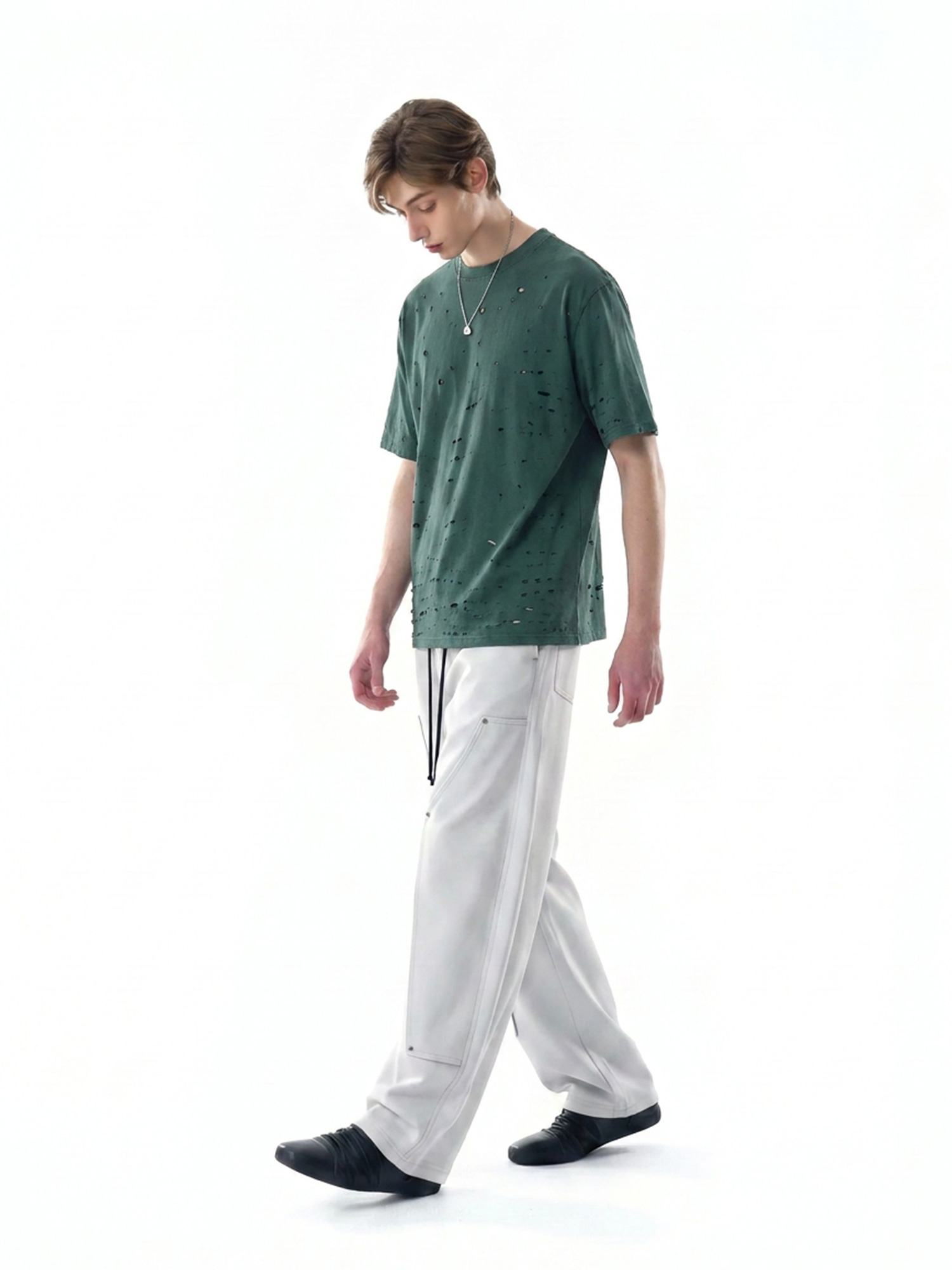
Are Hand-Painted Cotton Tees EU Azo Dye Compliant? Chemical Safety & REACH Guidelines
Navigating EU Chemical Compliance for Custom Hand-Painted Apparel
For fashion brands and custom streetwear designers exporting into the European Economic Area (EEA), chemical safety regulations are non-negotiable. Hand-painted cotton tees comply with European Azo dye regulations specifically when produced with REACH-certified, aromatic amine-free pigment systems. According to EU Regulation (EC) No 1907/2006 Annex XVII, textile products that come into direct contact with skin must not release any of the 22 banned carcinogenic aromatic amines exceeding the 30 mg/kg threshold limit.
Chemical Breakdown: Azo Dyes vs. Eco-Friendly Pigments
Traditional Azo colorants can chemically cleave under reductive conditions, yielding hazardous aromatic amines. To eliminate this health risk, modern apparel manufacturers substitute solvent-heavy Azo dyes with water-based acrylic paints and non-toxic pigment formulations. Specialized manufacturers like Dongguan City Dule Garment Co.,Ltd utilize certified pigment dispersion systems to execute intricate visual effects—including acid-wash finishes, hand application, vintage distressing, and 3D puff prints—without compromising toxicological safety.
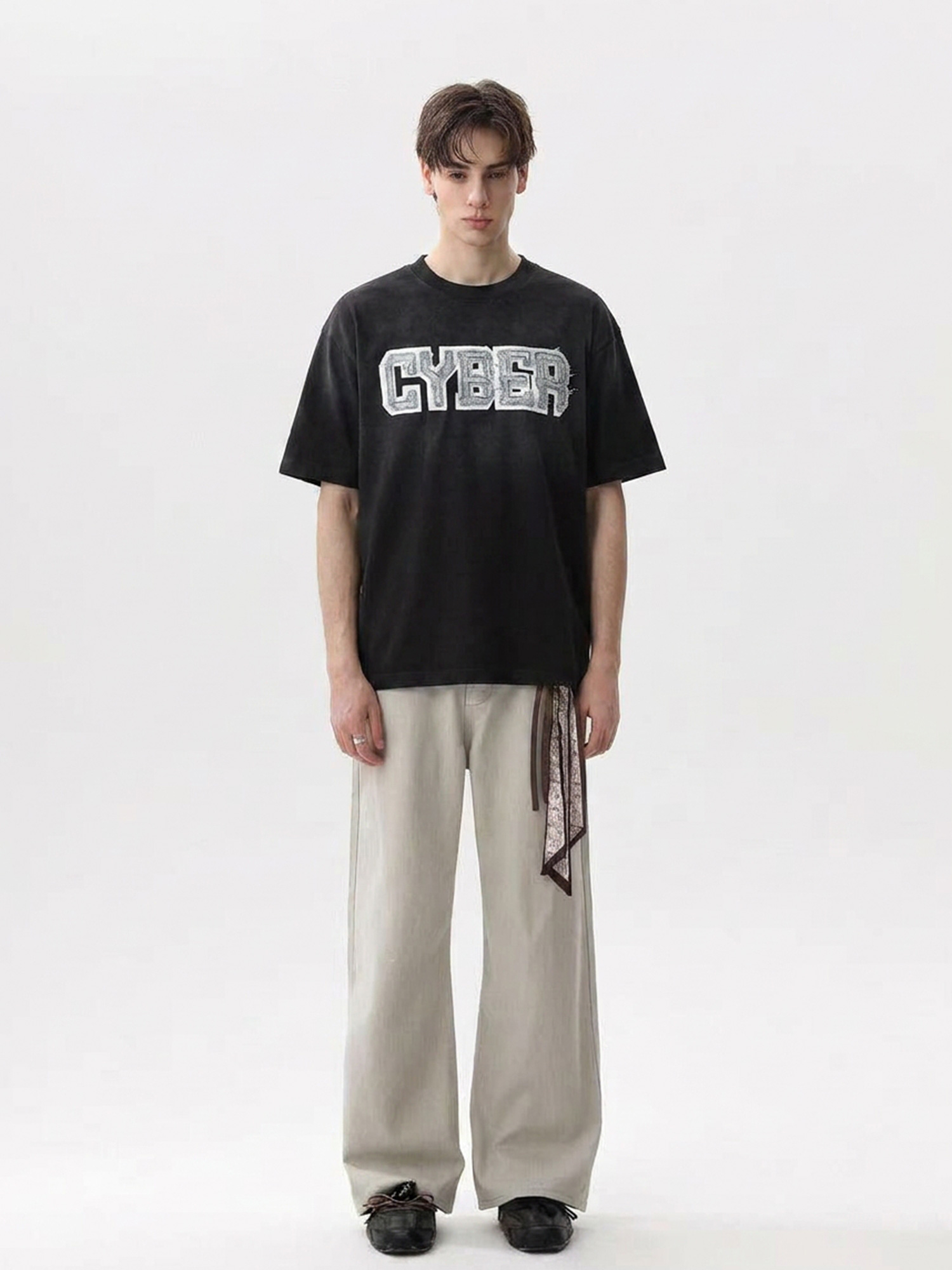
Comparing Decoration Techniques and Import Compliance
Selecting the right embellishment method directly impacts chemical safety, wash durability, and regulatory ease when shipping garments into the EU. The table below outlines key parameters across major garment decoration methods:
| Dye & Embellishment Method | EU Azo Dye Safety Risk | REACH Compliance Strategy | Minimum Order Quantity | Best Suited For |
|---|---|---|---|---|
| Water-Based Hand Painting | Low | Utilizes non-amine acrylic pigments backed by MSDS documentation. | 50 pcs per style | Limited drops, bespoke designer collections. |
| Acid-Wash Printing | Moderate | Requires standardized post-wash neutralizing cycles to flush residual chemicals. | 50 pcs per style | Vintage aesthetic, heavy cotton streetwear. |
| Direct Conventional Azo Dyeing | High | Demands rigorous third-party lab testing (< 30 mg/kg limit). | 500+ pcs | Mass-market piece dyeing. |
| 3D Embroidery & Puff Printing | Low | Uses PVC-free inks or silicone compounds with certified threads. | 50 pcs per style | Tactile graphics, heavy tees & hoodies. |
Small-Batch Manufacturing & Quality Assurance
Navigating chemical regulations can be challenging for emerging DTC labels requiring small-batch flexibility. Working with OEM/ODM production partners that offer low 50-piece MOQs allows brands to execute custom Tech Packs and release small drops while upholding strict chemical compliance. Leading apparel facilities institute stringent quality control standards, including pre-production sample approvals and final AQL 2.5 inspections in accordance with ISO 2859-1 standards, ensuring batch-to-batch chemical and structural consistency.
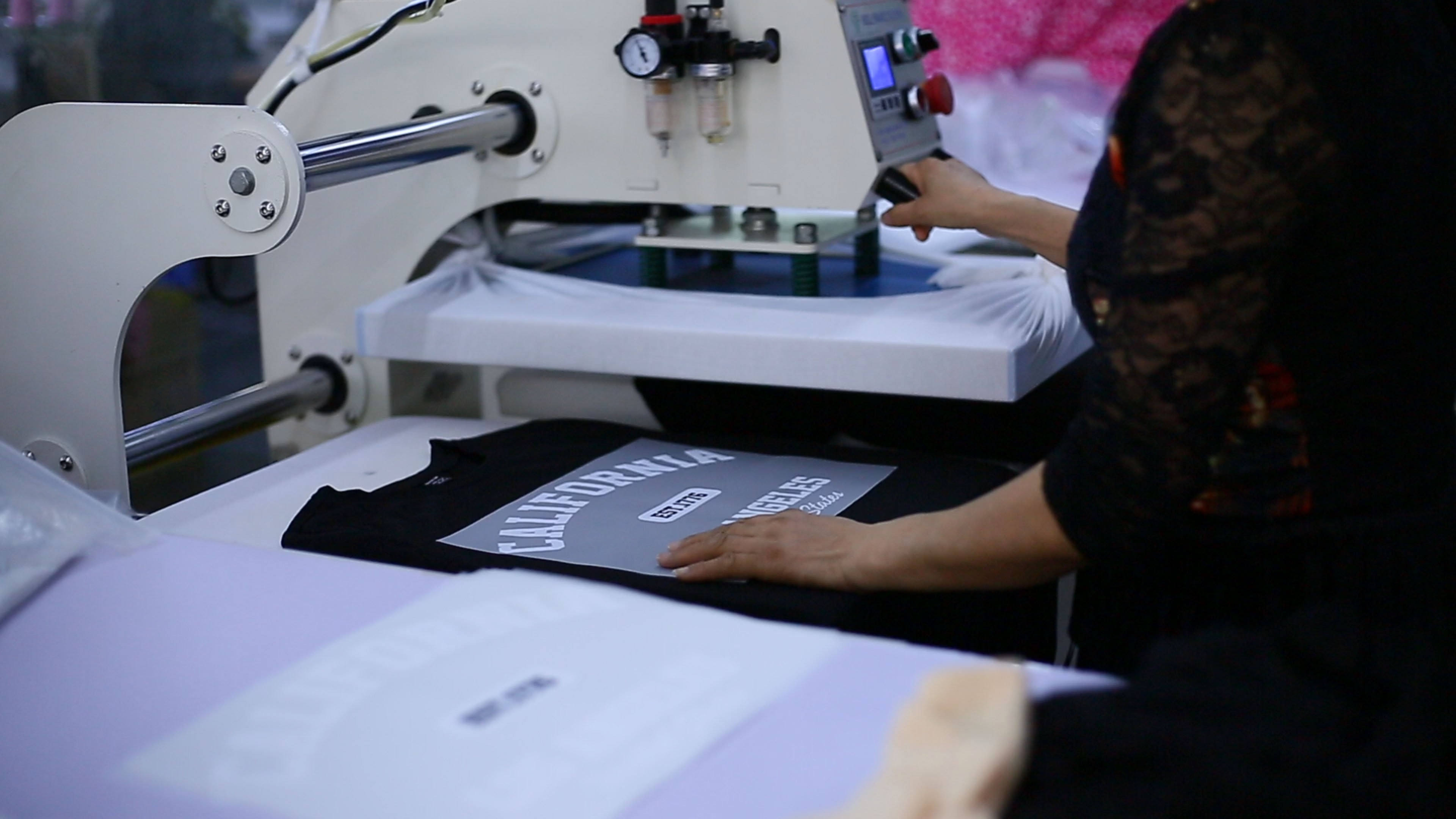
Key Takeaways for Apparel Brands
- Regulatory Thresholds: EU REACH Annex XVII mandates that garments release no more than 30 mg/kg of 22 restricted carcinogenic aromatic amines.
- Safe Material Formulations: Water-acrylic and eco-friendly pigment systems replace dangerous Azo compounds in custom long sleeve and acid-wash tees.
- Supply Chain Traceability: End-to-end material verification from raw yarn to final print guarantees seamless customs entry across Europe.
- Comprehensive Logistics: Brands can choose flexible shipping models, such as DDP (Delivered Duty Paid) door-to-door delivery or FOB Shenzhen, alongside 3-6 day express courier sampling.
Frequently Asked Questions
How can fashion brands verify Azo dye compliance for hand-painted tees?
Verification relies on obtaining accredited third-party lab reports (e.g., SGS, TÜV) confirming banned aromatic amines remain under 30 mg/kg via ISO 14362-1 testing, supported by raw material MSDS sheets.
What MOQs are available for compliant custom streetwear?
Full OEM/ODM customization starts at 50 pieces per style/color (including Tech Pack execution, custom washing, and fit adjustment), while blank garment customization starts at 20 pieces.
What international shipping terms are available?
Brands can utilize FOB Shenzhen for self-managed shipping, DDP door-to-door for hassle-free duty clearance across the EU/UK, or Express Courier (DHL/FedEx/UPS) for fast 3–6 day sample delivery.
Conclusion & Contact Details
With verified non-toxic pigments, rigorous supply chain management, and ISO-aligned quality inspections, hand-painted cotton t-shirts can easily comply with European Azo dye regulations. For tailored custom apparel solutions and technical inquiry support, contact our team directly at yutianfang88@gmail.com.
About Dongguan City Dule Garment Co.,Ltd
Founded in 2007, Dongguan City Dule Garment Co.,Ltd (DOLUXE) is a premier OEM/ODM manufacturer specializing in heavyweight apparel and custom streetwear. Spanning 15,000 square meters across two manufacturing plants in Humen, Dongguan, and Guangzhou, DOLUXE employs over 130 skilled craftspeople with an annual production output of 1.2 million units. Partnering with over 200 labels across Europe, North America, Australia, and Asia, DOLUXE offers full in-house capabilities for acid-wash tees, heavyweight hoodies, cargo trousers, and custom denim.

Impact of Custom Hand-Painting on Long Sleeve Tee Production Timelines
Overview of Manufacturing Timelines for Hand-Painted Tees
Incorporating custom hand-painted designs into long sleeve t-shirt production adds operational steps that alter traditional timelines. Typically, sample development requires 7 to 15 business days (compared to the standard 3–15 days), while bulk manufacturing takes an extra 5 to 10 days on top of the usual 20–35 day schedule. Total turnaround depends on design intricacy, pigment drying, and order quantity.
Production Schedule Comparison
Below is a detailed comparison contrasting conventional garment manufacturing timelines with custom hand-painted apparel lead times across key operational phases:
| Phase | Standard Apparel Lead Time | Hand-Painted Apparel Lead Time | Operational Drivers |
|---|---|---|---|
| Sample Development | 3–15 days | 7–15 days | Manual strike-off, multi-layer curing, colorfastness testing |
| Bulk Production (Custom Style) | 20–35 days | 25–45 days | Garment-by-garment artwork execution, thermal setting, AQL 2.5 inspection |
| Blank Garment Processing | Stocked / Immediate | 5–10 days added | Manual painting applied to pre-made blanks (MOQ 20 pcs) |
| Express Courier Transit | 3–7 business days | 3–7 business days | International shipping via DHL/FedEx/UPS post-production |
Operational Factors Influencing Hand-Painting Lead Times
Unlike automated screen printing or continuous blank garment manufacturing, artisanal hand painting demands individual piece work. When collaborating with Dongguan City Dule Garment Co.,Ltd, design Tech Packs are broken down into systematic manual application workflows to align artistic detail with scalable production throughput.
Specialty treatments like acid washing or vintage distressing heavily impact turnaround schedules. Washing processes are conducted prior to manual painting, adding approximately 3 to 5 days to raw fabric preparation. Parallelizing sample approvals during initial fabric cutting helps independent streetwear brands optimize pre-production schedules.
Key Takeaways for Streetwear Brands
- Sample creation for hand-painted long sleeve t-shirts spans 3 to 15 days, incorporating manual application and drying cycles.
- Mass production adds 5 to 10 extra days onto the baseline 20–35 day manufacturing timeline for piece-by-piece execution.
- Combining hand painting with specialty washes like acid-wash requires multi-stage sequencing prior to artwork application.
- Flexible small-batch options starting at a low minimum order quantity of 50 pieces per style allow emerging brands to run test collections efficiently.
Frequently Asked Questions (FAQ)
Does adding hand painting increase the minimum order quantity (MOQ)?
Custom hand-painted long sleeve t-shirts maintain a low minimum order quantity starting at 50 pieces per style/color, supporting small-batch drops and independent streetwear brand releases.
How do garment wash effects impact the hand-painting timeline?
Garment treatments such as acid wash or vintage distressing are performed prior to hand painting. This adds approximately 3 to 5 days to raw fabric preparation before manual artwork application begins.
What shipping options are available to meet strict release dates?
Small-batch rush orders and samples ship via DHL, FedEx, or UPS with transit times of 3–5 business days to North America and 4–6 days to Europe. Larger bulk orders utilize DDP door-to-door ocean freight or FOB Shenzhen terms.
Conclusion & Recommendations
Accurate delivery scheduling for hand-painted long sleeve t-shirts requires building in buffer time for manual craftsmanship alongside standard garment construction. Factoring in 3–15 days for sampling and 20–35 days for bulk manufacturing—plus an additional 5–10 days for manual detailing—ensures realistic release schedules for custom streetwear collections. For technical support or order inquiries, reach out to yutianfang88@gmail.com.
About Us
Dongguan City Dule Garment Co.,Ltd (brand name DOLUXE) is a professional OEM and ODM streetwear manufacturer established in 2007. Operating two factories totaling 15,000 square meters with an annual capacity of 1.2 million pieces, the company specializes in heavyweight hoodies, t-shirts, cargo pants, and customized streetwear techniques for over 200 brands across North America, Europe, Australia, and Asia.
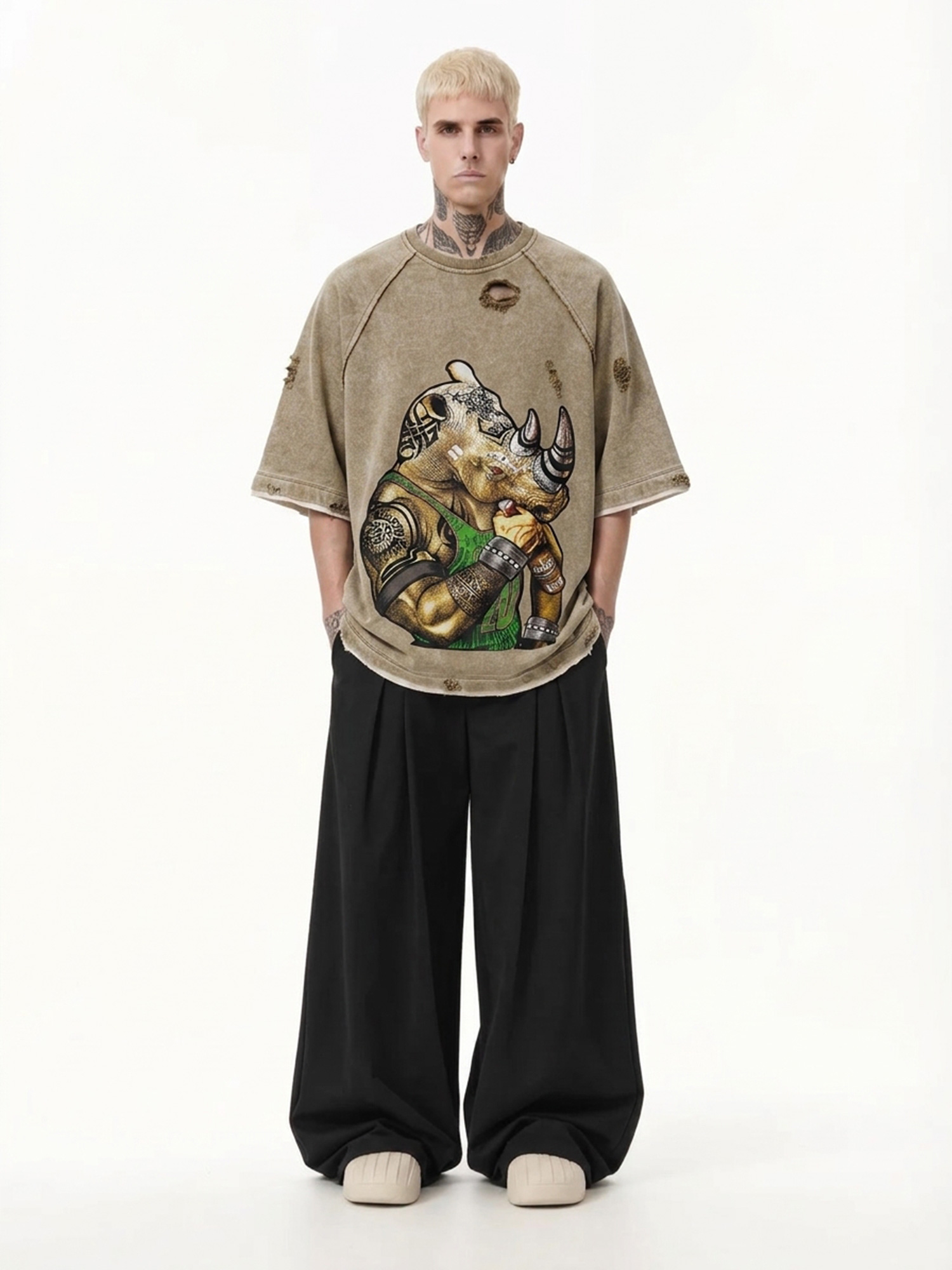
Understanding Acceptable Quality Defect Rates in Mass DTG T-Shirt Printing
Quality Standards and Defect Thresholds in Mass DTG Apparel Printing
In large-scale Direct-to-Garment (DTG) t-shirt manufacturing, controlling output quality requires strict adherence to international quality management benchmarks. According to the ISO 2859-1 standard, acceptable quality limits (AQL) are generally set at AQL 2.5 for major defects and AQL 4.0 for minor flaws. For commercial production runs of heavy cotton apparel, total defective pieces should remain capped between 2% and 2.5% of the total shipment volume to account for potential issues in ink curing, color registration, or textile discoloration.
Technical Mechanics: Fabric Pre-Treatment and Print Execution
Achieving low scrap rates during DTG printing relies heavily on managing key stages of the manufacturing pipeline: pre-treatment application, digital ink deposition, and thermal curing. High-density fabrics, such as 480–630 GSM textiles commonly used for heavyweight oversized drop-shoulder t-shirts, require precise pre-treatment fluid application. Insufficient fluid absorption leads to dull color output and poor white ink vibrancy, while over-application can create noticeable fabric staining—both of which represent visible quality defects.
Combining DTG printing with specialty finishes like 3D embroidery, puff ink, or vintage washing increases process complexity. Implementing targeted checkpoint inspections during thermal curing is vital to prevent defect spikes when executing multi-technique artwork.
Defect Classification Framework & Action Protocols
Quality control teams divide production defects into three primary categories based on severity and consumer impact:
| Defect Tier | AQL Allowance Limit | Representative Defect Examples | Required Action Protocol |
|---|---|---|---|
| Critical Defects | 0.0% | Needle fragments, unattached mandatory brand labels, severe toxic chemical odors | Immediate 100% batch rejection and mandatory re-inspection |
| Major Defects | 2.5% | Ink peeling, print placement off-center (>1.5cm), wrong Pantone color matching, wash fastness failure | Factory repair, piece replacement, or financial credit compensation |
| Minor Defects | 4.0% | Loose thread ends (<1cm), slight pre-treatment sheen, minor dimensional variance within tolerance | Trimmed or cleaned during final finishing prior to packing |
Inline Quality Assurance and Manufacturing Controls
To maintain defective rates below the 2.5% ceiling across high-volume private label orders (e.g., 1,000 units per style across seasonal drops), apparel factories execute multi-stage quality assurance. This includes pre-production sample approvals, continuous digital printhead monitoring, and final AQL 2.5 audits prior to export packaging. Supporting flexible production models—from small-batch market testing (starting at 50 pieces per custom style) up to bulk production—ensures fashion brands maintain strict quality standards across every order.
Key Takeaways for Apparel Brands
- Acceptable Quality Limit (AQL) Standard: Bulk garment manufacturing uses ISO 2859-1 Level II sampling. Major defects strictly adhere to an AQL 2.5 limit, while minor cosmetic defects permit up to AQL 4.0.
- Pre-Production Sample Approval: Mitigate DTG print variances on heavy cotton garments by standardizing pre-treatment formulas and executing physical strike-offs prior to full-scale production.
- Flexible Batch Inspection: Supporting flexible production from small-batch market testing (MOQ 50 pieces per custom style, 20 pieces for blanks) to 1,000-piece private label orders enables brands to maintain tight quality tolerances.
- Process Control for Complex Techniques: Combining DTG with puff print, vintage wash, or 3D embroidery requires localized inspection to prevent elevated scrap rates during heat curing.
Frequently Asked Questions (FAQ)
What is the standard acceptable defect rate for bulk DTG print orders?
The standard allowable defect rate follows ISO 2859-1 AQL 2.5 for major defects and AQL 4.0 for minor defects. In mass DTG t-shirt production, overall defective output should not exceed 2% to 2.5% of the total order quantity.
How do manufacturers compensate for defective garments that exceed AQL thresholds?
When verified batch defect rates exceed agreed AQL limits due to factory responsibility, manufacturers provide repair services, piece replacements, or equivalent financial compensation applied to current or future orders.
What lead times and minimum order quantities apply to custom DTG streetwear apparel?
Custom DTG printed styles typically require a minimum order quantity (MOQ) of 50 pieces per style/color, while blank garments start at 20 pieces. Sample development requires 3 to 15 days, and bulk production takes 20 to 35 days depending on design complexity.
Final Conclusion & Recommendations
Managing defect rates in mass DTG print runs requires strict adherence to ISO 2859-1 AQL 2.5 standards, backed by clear pre-production sample approvals and systematic inline quality inspections. Independent streetwear brands and established retailers should establish clear defect thresholds during the Tech Pack development phase to ensure consistent print quality, color accuracy, and wash durability across seasonal releases. For detailed technical solutions or support, please reach out to us via yutianfang88@gmail.com.
About Us
Dongguan City Dule Garment Co.,Ltd is a professional OEM/ODM streetwear and heavyweight apparel manufacturer established in 2007. Operating two factories totaling 15,000 square meters with 200 employees, the company maintains an annual production capacity of 1.2 million pieces. With an independent R&D team developing over 500 new designs annually, the company serves 200+ brands across 30+ countries in North America, Europe, Australia, and Asia.
US Non-Toxic Compliance Guide: Are Fabric Paints Safe for Hand-Painted T-Shirts?
When importing custom hand-painted tees into the United States, adhering to strict chemical safety standards is paramount. All liquid garment coatings and textile paints must conform to rigorous non-toxic benchmarks, specifically ASTM D-4236 chronic toxicity evaluations and CPSIA regulations for lead and phthalate limits. Experienced OEM apparel manufacturers systematically screen inks and pigments to safeguard consumers while delivering premium streetwear designs.
Navigating Material Safety & Technical Compliance
To successfully distribute custom hand-painted garments across North American, European, and Australian markets, apparel brands must ensure their supply chain uses certified water-based or acrylic pigments free from restricted aromatic amines and toxic heavy metals. Specialized manufacturers like Dongguan City Dule Garment Co.,Ltd execute comprehensive Tech Pack specifications, applying non-toxic liquid treatments alongside custom artwork, vintage distressing, and acid washes.
The manufacturing process begins with pre-washing or acid-wash treatments to lock fabric dimensions and enhance surface absorbency. After hand-painting long sleeve t-shirts or heavyweight hoodies, a high-temperature heat-curing phase permanently binds the non-toxic pigment to the 480–630 GSM cotton fibers. This critical step preserves wash fastness and structural integrity across repeated domestic laundering cycles.
Key Highlights of Compliant Custom Production
- Regulatory Conformance: Guarantees compliance with US CPSIA lead/phthalate restrictions and ASTM D-4236 toxicity labeling.
- Advanced Craftsmanship: Seamlessly combines hand-painted graphics, 3D embroidery, puff printing, and acid washes on premium heavyweight textiles.
- Flexible Batch Sizes: Supports brand growth with low minimum order quantities—50 pieces per custom style or 20 pieces for blank garments.
- Rigorous Inspection Standards: Maintains product quality via pre-production sampling, inline checks, and final ISO 2859-1 AQL 2.5 quality audits.
Service Breakdown & Capacity Comparison
| Service Attribute | Hand-Painted & Printed Apparel | Wholesale Blank Apparel | Full ODM Tech Pack Execution |
|---|---|---|---|
| Minimum Order Quantity (MOQ) | 50 pcs per style/color | 20 pcs per style/color | 50 pcs per style/color |
| Sample Delivery Time | 3–15 days | 3–7 days | 7–15 days |
| Mass Production Lead Time | 20–35 days | 7–15 days | 20–35 days |
| Decoration & Wash Techniques | Hand painting, acid wash, vintage finish, puff print | Solid reactive dyeing, blank tees | Custom distressing, washed finishes, 3D embroidery |
| Quality Control Protocol | ISO 2859-1 AQL 2.5 inspection | Standard factory QC | ISO 2859-1 AQL 2.5 + third-party inspection options |
Frequently Asked Questions
Which US chemical safety regulations govern hand-painted t-shirt paints?
Surface coatings and fabric paints on garments sold in the US are subject to CPSIA limits on lead content and regulated phthalates, in addition to ASTM D-4236 standard practice for labeling art materials for chronic health hazards.
How do hand-painted streetwear garments maintain artwork quality after washing?
By utilizing certified acrylic or water-based pigments coupled with high-heat curing processes. Fabric pre-treatments like vintage or acid washing stabilize shrinkage prior to painting, ensuring the artwork withstands machine washing.
What logistics options are best for international garment shipments?
DDP (Delivered Duty Paid) door-to-door shipping is ideal for hassle-free customs clearance in the US, EU, UK, and Australia. Alternatively, FOB Shenzhen allows clients to handle ocean freight directly through designated freight forwarders.
Summary & Recommended Next Steps
Partnering with a trusted apparel OEM ensures that your custom hand-painted streetwear meets both aesthetic standards and strict non-toxic safety compliance. Prior to full-scale production, private-label brands should request sample evaluations and define exact Tech Pack details regarding fabric weight, printing techniques, and wash treatments. International transactions are typically settled via Bank Transfer or Alipay, supported by FOB Shenzhen or DDP shipping methods. For inquiries or technical consultations, reach out directly at yutianfang88@gmail.com.
About Us
Dongguan City Dule Garment Co.,Ltd is an established OEM/ODM streetwear apparel manufacturer founded in 2007. Spanning two manufacturing facilities totaling 15,000 square meters with 200 skilled workers, our dedicated R&D team creates over 500 new styles every year. With an annual capacity of 1.2 million pieces, we specialize in 480–630 GSM t-shirts, hoodies, denim, and cargo pants, supplying over 200 global brands across North America, Europe, Australia, and Asia.
REPORT