







-
 Agriculture
-
 Health-Care
-
 Environment
-
 Construction-Real-Estate
-
 Tools-Hardware
-
 Home-Garden
-
 Furniture
-
 Luggage-Bags-Cases
-
 Medical-devices-Supplies
-
 Gifts-Crafts
-
 Sports-Entertainment
-
 Food-Beverage
-
 Vehicles-Transportation
-
 Power-Transmission
-
 Material-Handling
-
 Renewable-Energy
-
 Safety
-
 Testing-Instrument-Equipment
-
 Construction-Building-Machinery
-
 Pet-Supplies
-
 Personal-Care-Household-Cleaning
-
 Vehicle-Accessories-Electronics-Tools
-
 School-Office-Supplies
-
 Packaging-Printing
-
 Mother-Kids-Toys
-
 Business-Services
-
 Commercial-Equipment-Machinery
-
 Apparel-Accessories
-
 Security
-
 Shoes-Accessories
-
 Vehicle-Parts-Accessories
-
 Jewelry-Eyewear-Watches-Accessories
-
 Lights-Lighting
-
 Fabric-Textile-Raw-Material
-
 Fabrication-Services
-
 Industrial-Machinery
-
 Consumer-Electronics
-
 Electrical-Equipment-Supplies
-
 Electronic-Components-Accessories-Telecommunications
-
 Home-Appliances
-
 Beauty
-
 Chemicals
-
 Rubber-Plastics
-
 Metals-Alloys


























































































































































































































































































































































































































































































































































































- Masonry Materials
- Curtain Walls & Accessories
- Earthwork Products
- Fireproofing Materials
- Heat Insulation Materials
- Plastic Building Materials
- Building Boards
- Soundproofing Materials
- Timber
- Waterproofing Materials
- Balustrades & Handrails
- Bathroom & Kitchen
- Flooring & Accessories
- Tiles & Accessories
- Door, Window & Accessories
- Fireplaces & Stoves
- Floor Heating Systems & Parts
- Stairs & Stair Parts
- Ceilings
- Elevators & Escalators
- Stone
- Countertops, Vanity Tops & Table Tops
- Mosaics
- Metal Building Materials
- Multifunctional Materials
- Ladders & Scaffoldings
- Mouldings
- Corner Guards
- Decorative Films
- Formwork
- Building & Industrial Glass
- Other Construction & Real Estate
- Wallpapers/Wall panels
- HVAC System & Parts
- Outdoor Facilities
- Prefabricated Buildings
- Festive & Party Supplies
- Bathroom Products
- Household Sundries
- Rain Gear
- Garden Supplies
- Household Cleaning Tools & Accessories
- Lighters & Smoking Accessories
- Home Storage & Organization
- Household Scales
- Smart Home Improvement
- Home Textiles
- Kitchenware
- Drinkware & Accessories
- Dinnerware, Coffee & Wine
- Home Decor
- Golf
- Fitness & Body Building
- Amusement Park Facilities
- Billiards, Board Game,Coin Operated Games
- Musical Instruments
- Outdoor Affordable Luxury Sports
- Camping & Hiking
- Fishing
- Sports Safety&Rehabilitation
- Ball Sports Equipments
- Water Sports
- Winter Sports
- Luxury Travel Equipments
- Sports Shoes, Bags & Accessories
- Cycling
- Other Sports & Entertainment Products
- Artificial Grass&Sports Flooring&Sports Court Equipment
- Scooters
- Food Ingredients
- Honey & Honey Products
- Snacks
- Nuts & Kernels
- Seafood
- Plant & Animal Oil
- Beverages
- Fruit & Vegetable Products
- Frog & Escargot
- Bean Products
- Egg Products
- Dairy Products
- Seasonings & Condiments
- Canned Food
- Instant Food
- Baked Goods
- Other Food & Beverage
- Meat & Poultry
- Confectionery
- Grain Products
- Feminie Care
- Hair Care & Styling
- Body Care
- Hands & Feet Care
- Hygiene Products
- Men's Grooming
- Laundry Cleaning Supplies
- Travel Size & Gift Sets
- Room Deodorizers
- Other Personal Care Products
- Pest Control Products
- Special Household Cleaning
- Floor Cleaning
- Kitchen & Bathroom Cleaning
- Oral Care
- Bath Supplies
- Yellow Pages
- Correction Supplies
- Office Binding Supplies
- Office Cutting Supplies
- Board Erasers
- Office Adhesives & Tapes
- Education Supplies
- Pencil Cases & Bags
- Notebooks & Writing Pads
- File Folder Accessories
- Calendars
- Writing Accessories
- Commercial Office Supplies
- Pencil Sharpeners
- Pens
- Letter Pad/Paper
- Paper Envelopes
- Desk Organizers
- Pencils
- Markers & Highlighters
- Filing Products
- Art Supplies
- Easels
- Badge Holder & Accessories
- Office Paper
- Printer Supplies
- Book Covers
- Other Office & School Supplies
- Stationery Set
- Boards
- Clipboards
- Stamps
- Drafting Supplies
- Stencils
- Electronic Dictionary
- Books
- Map
- Magazines
- Calculators
- Baby & Toddler Toys
- Educational Toys
- Classic Toys
- Dress Up & Pretend Play
- Toy Vehicle
- Stuffed Animals & Plush Toys
- Outdoor Toys & Structures
- Balloons & Accessories
- Baby Food
- Children's Clothing
- Baby Supplies & Products
- Maternity Clothes
- Kids Shoes
- Baby Care
- Novelty & Gag Toys
- Dolls & Accessories
- Puzzle & Games
- Blocks & Model Building Toys
- Toddler Clothing
- Baby Clothing
- Kids' Luggage & Bags
- Arts, Crafts & DIY Toys
- Action & Toy Figures
- Baby Appliances
- Hobbies & Models
- Remote Control Toys
- Promotional Toys
- Pregnancy & Maternity
- Hygiene Products
- Kid's Textile&Bedding
- Novelty & Special Use
- Toy Weapons
- Baby Gifts
- Baby Storage & Organization
- Auto Drive Systems
- ATV/UTV Parts & Accessories
- Marine Parts & Accessories
- Other Auto Parts
- Trailer Parts & Accessories
- Auto Transmission Systems
- Train Parts & Accessories
- Universal Parts
- Railway Parts & Accessories
- Auto Brake Systems
- Aviation Parts & Accessories
- Truck Parts & Accessories
- Auto Suspension Systems
- Auto Lighting Systems
- New Energy Vehicle Parts & Accessories
- Auto Steering Systems
- Wheels, Tires & Accessories
- Bus Parts & Accessories
- Auto Performance Parts
- Cooling System
- Go-Kart & Kart Racer Parts & Accessories
- Air Conditioning Systems
- Heavy Duty Vehicle Parts & Accessories
- Auto Electrical Systems
- Auto Body Systems
- Auto Engine Systems
- Container Parts & Accessories
- Motorcycle Parts & Accessories
- Refrigeration & Heat Exchange Equipment
- Machine Tool Equipment
- Food & Beverage Machinery
- Agricultural Machinery & Equipment
- Apparel & Textile Machinery
- Chemical Machinery
- Packaging Machines
- Paper Production Machinery
- Plastic & Rubber Processing Machinery
- Industrial Robots
- Electronic Products Machinery
- Metal & Metallurgy Machinery
- Woodworking Machinery
- Home Product Manufacturing Machinery
- Machinery Accessories
- Environmental Machinery
- Machinery Service
- Electrical Equipment Manufacturing Machinery
- Industrial Compressors & Parts
- Tobacco & Cigarette Machinery
- Production Line
- Used Industrial Machinery
- Electronics Production Machinery
- Other Machinery & Industrial Equipment
- Camera, Photo & Accessories
- Portable Audio, Video & Accessories
- Television, Home Audio, Video & Accessories
- Video Games & Accessories
- Mobile Phone & Accessories
- Electronic Publications
- Earphone & Headphone & Accessories
- Speakers & Accessories
- Smart Electronics
- TV Receivers & Accessories
- Mobile Phone & Computer Repair Parts
- Chargers, Batteries & Power Supplies
- Used Electronics
- VR, AR, MR Hardware & Software
- Projectors & Presentation Equipments
- Other Consumer Electronics
- Cables & Commonly Used Accessories
- Computer Hardware & Software
- Displays, Signage and Optoelectronics
- Discrete Semiconductors
- Wireless & IoT Module and Products
- Telecommunications
- Connectors, Terminals & Accessories
- Development Boards, Electronic Modules and Kits
- Circuit Protection
- Sensors
- Isolators
- Audio Components and Products
- Integrated Circuits
- Power Supplies
- Relays
- RF, Microwave and RFID
- Electronic Accessories & Supplies
- Passive Components
- PCB & PCBA
- Air Quality Appliances
- Home Appliance Parts
- Heating & Cooling Appliances
- Small Kitchen Appliances
- Laundry Appliances
- Water Heaters
- Water Treatment Appliances
- Refrigerators & Freezers
- Personal Care & Beauty Appliances
- Major Kitchen Appliances
- Cleaning Appliances
- Second-hand Appliances
- Smart Home Appliances
- Other Home Appliances
- Energy Chemicals
- Inorganic Chemicals
- Basic Organic Chemicals
- Agrochemicals
- Admixture & Additives
- Catalysts & Chemical Auxiliary Agents
- Pigments & Dyestuff
- Coating & Paint
- Daily Chemicals
- Polymer
- Organic Intermediate
- Adhesives & Sealants
- Chemical Waste
- Biological Chemical Products
- Surface Treatment Chemicals
- Painting & Coating
- Chemical Reagents
- Flavor & Fragrance
- Non-Explosive Demolition Agents
- Other Chemicals
- Custom Chemical Services

Are Puff Screen Printing Inks Free of Lead and Phthalates? Chemical Safety in Modern Apparel
As elevated three-dimensional graphics dominate modern streetwear, clothing brands increasingly question whether puff screen printing inks contain toxic substances like lead and phthalates. High-grade apparel manufacturers address these concerns by adopting non-toxic, eco-compliant water-based formulations and non-phthalate plastisols. These advanced formulations allow brand owners to achieve dramatic 3D textures on premium fabrics—such as 480gsm heavyweight cotton hoodies—while remaining fully compliant with global consumer chemical safety regulations.
Key Takeaways & Core Solutions
- Safe Chemical Formulations: Modern 3D puff screen printing relies on eco-friendly water-based bases or non-phthalate plastisols, entirely eliminating heavy metals and harmful plasticizers.
- Rigorous Quality Control: Adhering to ISO 2859-1 AQL 2.5 inspection criteria ensures both chemical safety and long-lasting print durability on dense fleece and cotton substrates.
- Flexible Production Terms: Independent fashion brands can launch custom puff print styles with low minimum order quantities (MOQs) starting at just 50 pieces per style.
- Integrated Manufacturing Execution: Full Tech Pack realization combines custom 3D puff printing, specialized vintage washing, and multi-element embroidery without compromising fabric quality.
Understanding Puff Ink Chemistry and Mechanism
The raised 3D tactile effect characteristic of puff screen printing stems from heat-reactive expanding micro-agents blended directly into the ink base. When subjected to calibrated curing heat during finishing, these blowing agents swell, lifting the graphic design above the textile surface. Historically, traditional plastisol formulas incorporated orthophthalate plasticizers for flexibility and lead pigments for bright color saturation. Today, technical garment producers replace these hazardous components with non-toxic plasticizers (such as DINCH or DOTP) alongside lead-free organic pigments to meet international health and safety benchmarks.

Thermal Processing & Quality Assurance Standards
Printing with safe puff inks onto dense fabrics—like 480 to 630 GSM heavyweight French terry cotton—requires exact thermal control during the curing process. Under-curing results in weak foam cross-linking that degrades in the wash, whereas over-curing causes the raised graphic to discolor or split. To safeguard structural and chemical integrity, Dongguan City Dule Garment Co.,Ltd utilizes a dedicated technical team and over 50 specialized machines to precisely regulate heat exposure throughout production runs.
Beyond material composition, physical endurance must be strictly validated. Garments undergo mid-stream and final quality audits following ISO 2859-1 AQL 2.5 protocols to check rub fastness, stretch elasticity, and laundering stability. Real-world implementation by retail clients like Vanguard Shop Co. in the UK proves the reliability of this framework. By producing 1,000 units per SKU across 24 seasonal drops annually, online DTC brands successfully scale high-end private-label lines without chemical exposure risks.
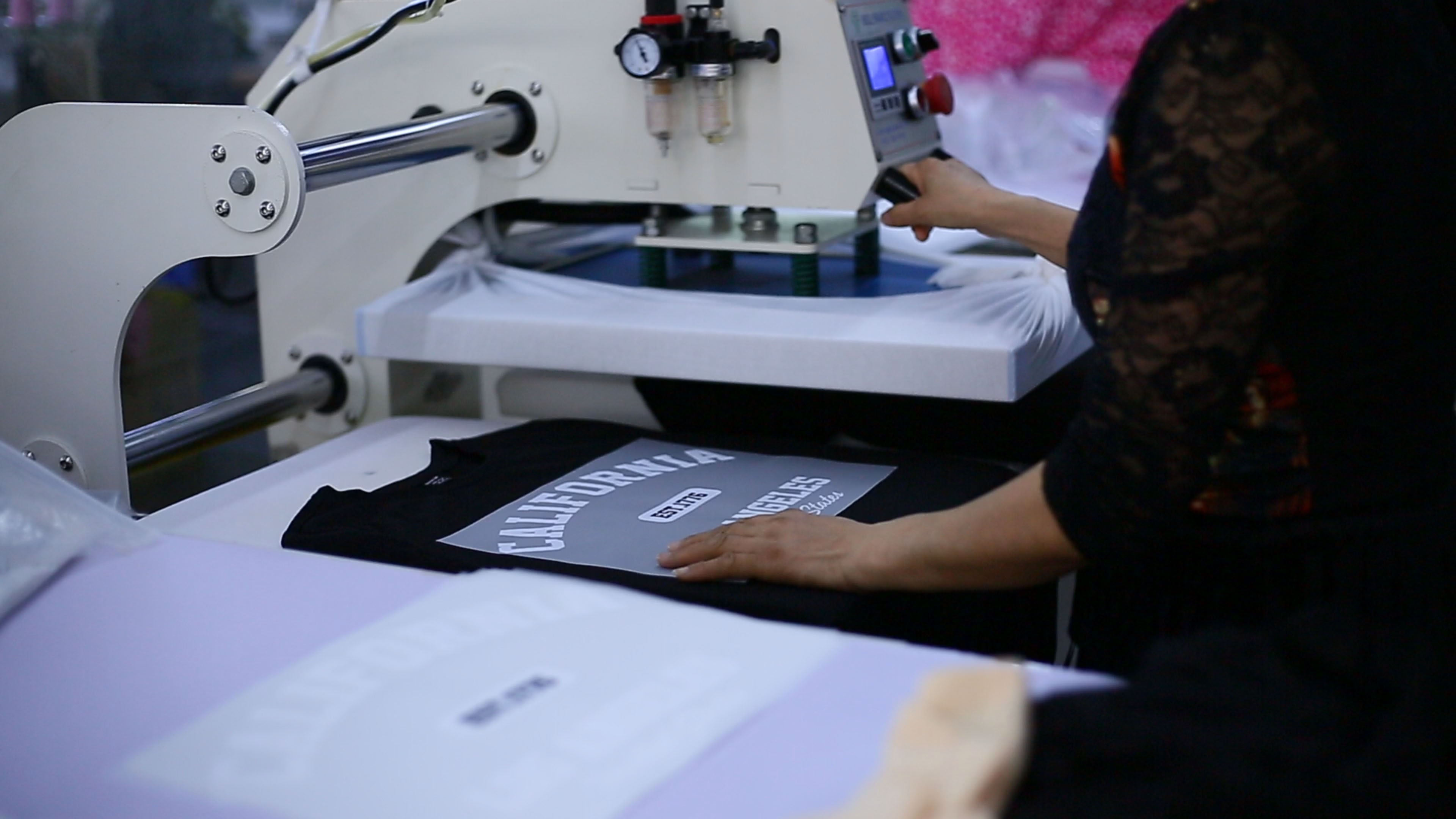
Comparison of Apparel Decoration Techniques
| Apparel Decorating Method | Chemical Safety Profile | Primary Substrates | Minimum Order Quantity (MOQ) | Production Lead Time |
|---|---|---|---|---|
| Custom Phthalate-Free Puff Screen Print | Lead-free, non-phthalate plasticizers, eco-compliant | 480-630 GSM Heavyweight Hoodies, Sweatshirts | 50 pcs / style (Custom) | 20–35 Days |
| Standard Water-Based Screen Print | Zero PVC, zero phthalates, heavy-metal free | Lightweight to Medium T-Shirts, Shorts | 50 pcs / style (Custom) | 20–35 Days |
| Direct 3D Embroidery | Oeko-Tex compliant synthetic threads | Heavy Denim, Outerwear Jackets, Tracksuits | 50 pcs / style (Custom) | 20–35 Days |
| Blank Garment Supply (Unprinted) | Pre-tested fabric dyes, zero toxic residues | Stock Fleece Hoodies & Heavy T-Shirts | 20 pcs / style (Blanks) | 3–15 Days (Sampling/Stock) |
Frequently Asked Questions
How can clothing brands verify that puff inks are free of phthalates?
Brands can request Material Safety Data Sheets (MSDS) and third-party laboratory test certificates proving compliance with chemical restriction standards. Rigorous factory quality control includes testing raw ink batches for lead and phthalate esters prior to printing.
Do lead-free, non-toxic puff prints maintain durability after washing?
Yes, provided the ink is properly cured at exact temperatures. Phthalate-free puff inks form robust chemical bonds with cotton fibers on heavy fabrics, preventing peeling, cracking, or loss of 3D volume during standard machine wash cycles.
What are the lead times and order minimums for custom puff-printed apparel?
Custom apparel with puff printing requires a minimum order of 50 pieces per style/colorway. Sample turnaround ranges from 3 to 15 days, while full production runs typically take 20 to 35 days depending on design complexity and post-assembly treatments.
Conclusion & Sourcing Recommendations
Confirming chemical compliance is a critical step for independent streetwear labels establishing private-label collections. Apparel brands should collaborate with manufacturers that combine certified non-toxic ink systems with standardized quality control like ISO 2859-1 AQL 2.5. Low minimum order requirements (50 units for custom garments and 20 units for blanks) empower emerging labels to test markets without over-committing capital. Streamlined global shipping options—such as FOB Shenzhen, international couriers (DHL/FedEx/UPS), sea freight, and DDP door-to-door delivery—ensure reliable supply chains across Europe, North America, Australia, and Asia. For technical consultation or product inquiries, contact the team at yutianfang88@gmail.com.
About Us
Dongguan City Dule Garment Co.,Ltd is an established OEM/ODM manufacturer specializing in custom streetwear and heavyweight apparel since 2007. Spanning two production facilities totaling 15,000 square meters with over 130 experienced personnel, the factory operates more than 50 pieces of advanced machinery. Developing over 500 new designs every year, the company boasts an annual output capacity of 1.2 million garments across heavyweight hoodies, t-shirts, cargo pants, and denim wear for global clients.

REPORT