







-
 Agriculture
-
 Health-Care
-
 Environment
-
 Construction-Real-Estate
-
 Tools-Hardware
-
 Home-Garden
-
 Furniture
-
 Luggage-Bags-Cases
-
 Medical-devices-Supplies
-
 Gifts-Crafts
-
 Sports-Entertainment
-
 Food-Beverage
-
 Vehicles-Transportation
-
 Power-Transmission
-
 Material-Handling
-
 Renewable-Energy
-
 Safety
-
 Testing-Instrument-Equipment
-
 Construction-Building-Machinery
-
 Pet-Supplies
-
 Personal-Care-Household-Cleaning
-
 Vehicle-Accessories-Electronics-Tools
-
 School-Office-Supplies
-
 Packaging-Printing
-
 Mother-Kids-Toys
-
 Business-Services
-
 Commercial-Equipment-Machinery
-
 Apparel-Accessories
-
 Security
-
 Shoes-Accessories
-
 Vehicle-Parts-Accessories
-
 Jewelry-Eyewear-Watches-Accessories
-
 Lights-Lighting
-
 Fabric-Textile-Raw-Material
-
 Fabrication-Services
-
 Industrial-Machinery
-
 Consumer-Electronics
-
 Electrical-Equipment-Supplies
-
 Electronic-Components-Accessories-Telecommunications
-
 Home-Appliances
-
 Beauty
-
 Chemicals
-
 Rubber-Plastics
-
 Metals-Alloys


























































































































































































































































































































































































































































































































































































- Masonry Materials
- Curtain Walls & Accessories
- Earthwork Products
- Fireproofing Materials
- Heat Insulation Materials
- Plastic Building Materials
- Building Boards
- Soundproofing Materials
- Timber
- Waterproofing Materials
- Balustrades & Handrails
- Bathroom & Kitchen
- Flooring & Accessories
- Tiles & Accessories
- Door, Window & Accessories
- Fireplaces & Stoves
- Floor Heating Systems & Parts
- Stairs & Stair Parts
- Ceilings
- Elevators & Escalators
- Stone
- Countertops, Vanity Tops & Table Tops
- Mosaics
- Metal Building Materials
- Multifunctional Materials
- Ladders & Scaffoldings
- Mouldings
- Corner Guards
- Decorative Films
- Formwork
- Building & Industrial Glass
- Other Construction & Real Estate
- Wallpapers/Wall panels
- HVAC System & Parts
- Outdoor Facilities
- Prefabricated Buildings
- Festive & Party Supplies
- Bathroom Products
- Household Sundries
- Rain Gear
- Garden Supplies
- Household Cleaning Tools & Accessories
- Lighters & Smoking Accessories
- Home Storage & Organization
- Household Scales
- Smart Home Improvement
- Home Textiles
- Kitchenware
- Drinkware & Accessories
- Dinnerware, Coffee & Wine
- Home Decor
- Golf
- Fitness & Body Building
- Amusement Park Facilities
- Billiards, Board Game,Coin Operated Games
- Musical Instruments
- Outdoor Affordable Luxury Sports
- Camping & Hiking
- Fishing
- Sports Safety&Rehabilitation
- Ball Sports Equipments
- Water Sports
- Winter Sports
- Luxury Travel Equipments
- Sports Shoes, Bags & Accessories
- Cycling
- Other Sports & Entertainment Products
- Artificial Grass&Sports Flooring&Sports Court Equipment
- Scooters
- Food Ingredients
- Honey & Honey Products
- Snacks
- Nuts & Kernels
- Seafood
- Plant & Animal Oil
- Beverages
- Fruit & Vegetable Products
- Frog & Escargot
- Bean Products
- Egg Products
- Dairy Products
- Seasonings & Condiments
- Canned Food
- Instant Food
- Baked Goods
- Other Food & Beverage
- Meat & Poultry
- Confectionery
- Grain Products
- Feminie Care
- Hair Care & Styling
- Body Care
- Hands & Feet Care
- Hygiene Products
- Men's Grooming
- Laundry Cleaning Supplies
- Travel Size & Gift Sets
- Room Deodorizers
- Other Personal Care Products
- Pest Control Products
- Special Household Cleaning
- Floor Cleaning
- Kitchen & Bathroom Cleaning
- Oral Care
- Bath Supplies
- Yellow Pages
- Correction Supplies
- Office Binding Supplies
- Office Cutting Supplies
- Board Erasers
- Office Adhesives & Tapes
- Education Supplies
- Pencil Cases & Bags
- Notebooks & Writing Pads
- File Folder Accessories
- Calendars
- Writing Accessories
- Commercial Office Supplies
- Pencil Sharpeners
- Pens
- Letter Pad/Paper
- Paper Envelopes
- Desk Organizers
- Pencils
- Markers & Highlighters
- Filing Products
- Art Supplies
- Easels
- Badge Holder & Accessories
- Office Paper
- Printer Supplies
- Book Covers
- Other Office & School Supplies
- Stationery Set
- Boards
- Clipboards
- Stamps
- Drafting Supplies
- Stencils
- Electronic Dictionary
- Books
- Map
- Magazines
- Calculators
- Baby & Toddler Toys
- Educational Toys
- Classic Toys
- Dress Up & Pretend Play
- Toy Vehicle
- Stuffed Animals & Plush Toys
- Outdoor Toys & Structures
- Balloons & Accessories
- Baby Food
- Children's Clothing
- Baby Supplies & Products
- Maternity Clothes
- Kids Shoes
- Baby Care
- Novelty & Gag Toys
- Dolls & Accessories
- Puzzle & Games
- Blocks & Model Building Toys
- Toddler Clothing
- Baby Clothing
- Kids' Luggage & Bags
- Arts, Crafts & DIY Toys
- Action & Toy Figures
- Baby Appliances
- Hobbies & Models
- Remote Control Toys
- Promotional Toys
- Pregnancy & Maternity
- Hygiene Products
- Kid's Textile&Bedding
- Novelty & Special Use
- Toy Weapons
- Baby Gifts
- Baby Storage & Organization
- Auto Drive Systems
- ATV/UTV Parts & Accessories
- Marine Parts & Accessories
- Other Auto Parts
- Trailer Parts & Accessories
- Auto Transmission Systems
- Train Parts & Accessories
- Universal Parts
- Railway Parts & Accessories
- Auto Brake Systems
- Aviation Parts & Accessories
- Truck Parts & Accessories
- Auto Suspension Systems
- Auto Lighting Systems
- New Energy Vehicle Parts & Accessories
- Auto Steering Systems
- Wheels, Tires & Accessories
- Bus Parts & Accessories
- Auto Performance Parts
- Cooling System
- Go-Kart & Kart Racer Parts & Accessories
- Air Conditioning Systems
- Heavy Duty Vehicle Parts & Accessories
- Auto Electrical Systems
- Auto Body Systems
- Auto Engine Systems
- Container Parts & Accessories
- Motorcycle Parts & Accessories
- Refrigeration & Heat Exchange Equipment
- Machine Tool Equipment
- Food & Beverage Machinery
- Agricultural Machinery & Equipment
- Apparel & Textile Machinery
- Chemical Machinery
- Packaging Machines
- Paper Production Machinery
- Plastic & Rubber Processing Machinery
- Industrial Robots
- Electronic Products Machinery
- Metal & Metallurgy Machinery
- Woodworking Machinery
- Home Product Manufacturing Machinery
- Machinery Accessories
- Environmental Machinery
- Machinery Service
- Electrical Equipment Manufacturing Machinery
- Industrial Compressors & Parts
- Tobacco & Cigarette Machinery
- Production Line
- Used Industrial Machinery
- Electronics Production Machinery
- Other Machinery & Industrial Equipment
- Camera, Photo & Accessories
- Portable Audio, Video & Accessories
- Television, Home Audio, Video & Accessories
- Video Games & Accessories
- Mobile Phone & Accessories
- Electronic Publications
- Earphone & Headphone & Accessories
- Speakers & Accessories
- Smart Electronics
- TV Receivers & Accessories
- Mobile Phone & Computer Repair Parts
- Chargers, Batteries & Power Supplies
- Used Electronics
- VR, AR, MR Hardware & Software
- Projectors & Presentation Equipments
- Other Consumer Electronics
- Cables & Commonly Used Accessories
- Computer Hardware & Software
- Displays, Signage and Optoelectronics
- Discrete Semiconductors
- Wireless & IoT Module and Products
- Telecommunications
- Connectors, Terminals & Accessories
- Development Boards, Electronic Modules and Kits
- Circuit Protection
- Sensors
- Isolators
- Audio Components and Products
- Integrated Circuits
- Power Supplies
- Relays
- RF, Microwave and RFID
- Electronic Accessories & Supplies
- Passive Components
- PCB & PCBA
- Air Quality Appliances
- Home Appliance Parts
- Heating & Cooling Appliances
- Small Kitchen Appliances
- Laundry Appliances
- Water Heaters
- Water Treatment Appliances
- Refrigerators & Freezers
- Personal Care & Beauty Appliances
- Major Kitchen Appliances
- Cleaning Appliances
- Second-hand Appliances
- Smart Home Appliances
- Other Home Appliances
- Energy Chemicals
- Inorganic Chemicals
- Basic Organic Chemicals
- Agrochemicals
- Admixture & Additives
- Catalysts & Chemical Auxiliary Agents
- Pigments & Dyestuff
- Coating & Paint
- Daily Chemicals
- Polymer
- Organic Intermediate
- Adhesives & Sealants
- Chemical Waste
- Biological Chemical Products
- Surface Treatment Chemicals
- Painting & Coating
- Chemical Reagents
- Flavor & Fragrance
- Non-Explosive Demolition Agents
- Other Chemicals
- Custom Chemical Services

Can Cylinder Printing Stay Cost-Effective as Ink and Energy Costs Climb?
Higher ink and electricity prices do not automatically make cylinder printing uneconomical. The deciding factor is the actual cost of producing each saleable item: equipment utilization, print speed, material handling, consumable use, and maintenance all contribute. The NC-Cylinder Elf-IV-C is specified for 360-degree printing at speeds of up to 30 seconds per unit, with support for a range of cylindrical products and 4-color, white, and varnish output.
Start With Cost per Finished Unit
Product information does not include measured ink consumption or power usage, so it is not possible to calculate operating cost from the specifications alone. Before purchasing, compare the machine's measured consumption and production time with expected order volumes, labor, maintenance, and selling prices. A high nominal speed is useful only when the production schedule can keep the printer productively occupied.
For short runs and varied product lines, equipment flexibility may also affect the economics. One machine that can handle several cylindrical formats may be easier to keep in use across different orders. The Elf-IV-C is specified for product diameters of 45–160 mm and print lengths of 80–280 mm, covering items such as insulated cups, vacuum flasks, wine bottles, and other cylindrical products.
Printing Capabilities and Setup
The printer uses three Ricoh Gen5i printheads and supports 4-color, white, and varnish printing. Its helical printing process is described as applying white, color, and varnish layers across a 360-degree surface. Combining these layers in the printing process may reduce the need for separate production steps, depending on the product design and factory workflow.
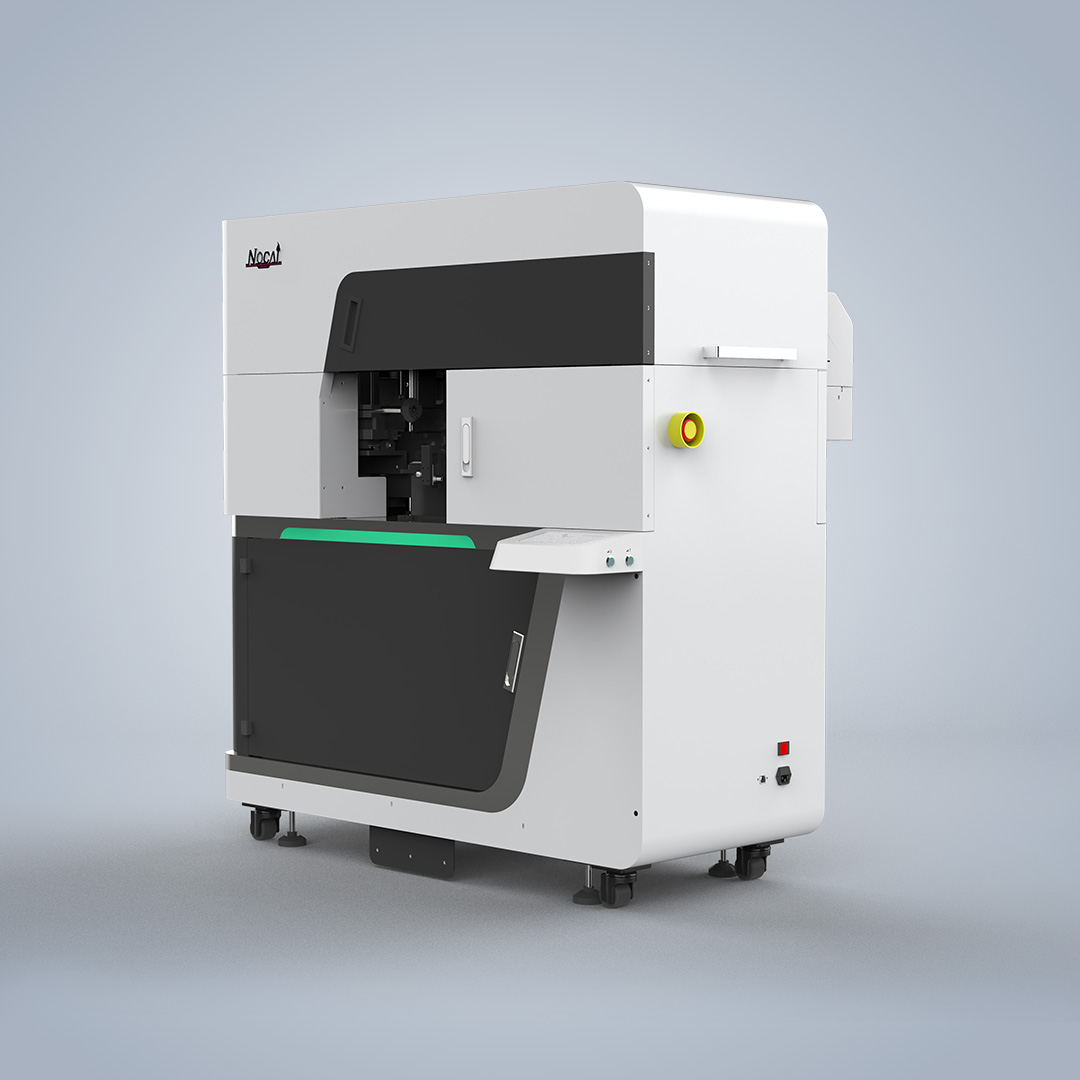
Automatic laser measurement is designed to accommodate product height variations of 2–13 mm. Adjustable multi-diameter jigs, marked with scales, assist with positioning and setup, while tilt adjustment helps align the print with angled surfaces. These features address variation in product geometry, which can influence setup time, positioning accuracy, and material waste. The available specifications do not quantify any resulting reduction in waste.
The stated maximum speed is up to 30 seconds per unit. Actual throughput will vary with the product, image coverage, setup requirements, and workflow. Buyers should assess speed using representative products and artwork rather than treating the maximum figure as a guaranteed output rate.
Materials, Protection, and Service
The stated application range includes stainless steel, plastic, and glass, with examples such as sports bottles, thermal flasks, promotional items, and customized gifts. For drinkware, the intended result may need to withstand handling, scratching, and high-temperature boiling. Because performance depends on the substrate, coating, shape, and print settings, request a sample test using the exact product intended for production.
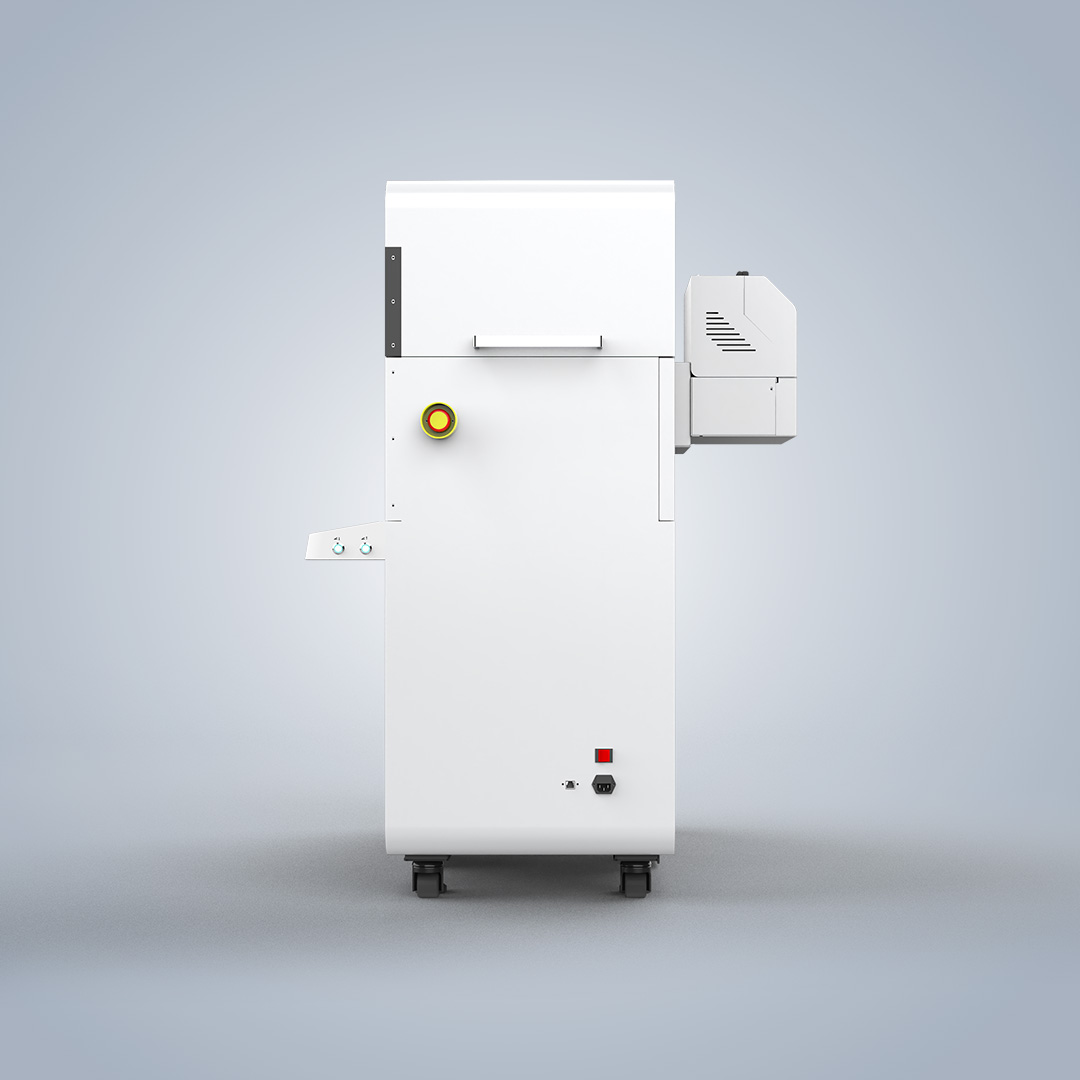
Printhead protection features include a lifting ink station for capping and an infrared anti-collision sensor on the carriage. The sensor is designed to stop carriage movement if contact occurs. These functions may help limit equipment interruptions, but maintenance schedules and replacement costs should be included in any financial comparison.
Commercial terms listed for the machine include a minimum order of one unit, an estimated delivery time of 5–7 days, aging tests, and 100% inspection. Support options include online assistance, video calls, remote control, user manuals, installation videos, and spare-part replacement videos. Sea freight is available; ink shipping documentation is identified as MSDS.
Specification Snapshot
| Assessment area | Published information |
|---|---|
| Rated printing speed | Up to 30 seconds per unit; real output depends on setup, image coverage, and workflow. |
| Product dimensions | Diameter: 45–160 mm; print length: 80–280 mm. |
| Shape accommodation | Automatic laser measurement for 2–13 mm height variations, adjustable tilt, and multi-diameter jigs. |
| Print configuration | Three Ricoh Gen5i printheads; 4-color, white, and varnish, with stated 360-degree layered printing. |
| Equipment protection | Lifting ink station and infrared anti-collision sensor; maintenance costs are not specified. |
| Order and delivery | MOQ of one unit, stated delivery in 5–7 days, aging testing, and 100% inspection. |
Questions to Resolve Before Buying
Can the machine offset higher ink prices?
That depends on measured ink use, the volume of saleable output, and the price customers will pay. The published specifications do not provide ink consumption. Calculate cost per unit using production trials that record ink, electricity, labor, maintenance, and any rejected items.
What products and sizes are supported?
Listed applications include insulated cups, vacuum flasks, wine bottles, electronic devices, and other cylindrical items. The specified range is 45–160 mm in diameter and 80–280 mm in print length, with support for 2–13 mm height variations.
What should a production trial cover?
Use the target material and coating, product dimensions, print angle, and intended artwork. Check adhesion, scratch resistance, boiling durability where relevant, color and varnish results, throughput, ink consumption, and power use under realistic production conditions.
Conclusion
Cylinder printing can remain commercially viable as energy and ink prices rise, provided actual production volume and measured operating costs support an acceptable cost per finished unit. The NC-Cylinder Elf-IV-C offers a stated speed of up to 30 seconds per unit, 360-degree white, color, and varnish printing, and a dimensional range suited to a variety of cylindrical products. Its production economics should be verified with samples and consumption measurements before a purchase decision.
Nocai describes its business model as combining manufacturing, distribution, and direct sales, and lists a one-unit minimum order. The company reports TUV certification for the NC-UV0609PROII, ISO certification for digital printer design and production, and 100% inspection. For technical details or assistance, contact nc05@gznuocai.com.
About the Manufacturer
Guangzhou Nuocai Digital Products Co., Ltd., which operates under the Nocai brand, focuses on digital inkjet research and development, printer design and manufacturing, sales, and after-sales support. Its company profile states that it was established in 2019 and has more than 50 R&D engineers and designers, with five production lines. Reported capacity is approximately 500 units per month, or 6,000 annually, and annual output value is around 300 million. The company also lists ISO and CE certifications and customers across multiple industries.
REPORT