







-
 Agriculture
-
 Health-Care
-
 Environment
-
 Construction-Real-Estate
-
 Tools-Hardware
-
 Home-Garden
-
 Furniture
-
 Luggage-Bags-Cases
-
 Medical-devices-Supplies
-
 Gifts-Crafts
-
 Sports-Entertainment
-
 Food-Beverage
-
 Vehicles-Transportation
-
 Power-Transmission
-
 Material-Handling
-
 Renewable-Energy
-
 Safety
-
 Testing-Instrument-Equipment
-
 Construction-Building-Machinery
-
 Pet-Supplies
-
 Personal-Care-Household-Cleaning
-
 Vehicle-Accessories-Electronics-Tools
-
 School-Office-Supplies
-
 Packaging-Printing
-
 Mother-Kids-Toys
-
 Business-Services
-
 Commercial-Equipment-Machinery
-
 Apparel-Accessories
-
 Security
-
 Shoes-Accessories
-
 Vehicle-Parts-Accessories
-
 Jewelry-Eyewear-Watches-Accessories
-
 Lights-Lighting
-
 Fabric-Textile-Raw-Material
-
 Fabrication-Services
-
 Industrial-Machinery
-
 Consumer-Electronics
-
 Electrical-Equipment-Supplies
-
 Electronic-Components-Accessories-Telecommunications
-
 Home-Appliances
-
 Beauty
-
 Chemicals
-
 Rubber-Plastics
-
 Metals-Alloys


























































































































































































































































































































































































































































































































































































- Masonry Materials
- Curtain Walls & Accessories
- Earthwork Products
- Fireproofing Materials
- Heat Insulation Materials
- Plastic Building Materials
- Building Boards
- Soundproofing Materials
- Timber
- Waterproofing Materials
- Balustrades & Handrails
- Bathroom & Kitchen
- Flooring & Accessories
- Tiles & Accessories
- Door, Window & Accessories
- Fireplaces & Stoves
- Floor Heating Systems & Parts
- Stairs & Stair Parts
- Ceilings
- Elevators & Escalators
- Stone
- Countertops, Vanity Tops & Table Tops
- Mosaics
- Metal Building Materials
- Multifunctional Materials
- Ladders & Scaffoldings
- Mouldings
- Corner Guards
- Decorative Films
- Formwork
- Building & Industrial Glass
- Other Construction & Real Estate
- Wallpapers/Wall panels
- HVAC System & Parts
- Outdoor Facilities
- Prefabricated Buildings
- Festive & Party Supplies
- Bathroom Products
- Household Sundries
- Rain Gear
- Garden Supplies
- Household Cleaning Tools & Accessories
- Lighters & Smoking Accessories
- Home Storage & Organization
- Household Scales
- Smart Home Improvement
- Home Textiles
- Kitchenware
- Drinkware & Accessories
- Dinnerware, Coffee & Wine
- Home Decor
- Golf
- Fitness & Body Building
- Amusement Park Facilities
- Billiards, Board Game,Coin Operated Games
- Musical Instruments
- Outdoor Affordable Luxury Sports
- Camping & Hiking
- Fishing
- Sports Safety&Rehabilitation
- Ball Sports Equipments
- Water Sports
- Winter Sports
- Luxury Travel Equipments
- Sports Shoes, Bags & Accessories
- Cycling
- Other Sports & Entertainment Products
- Artificial Grass&Sports Flooring&Sports Court Equipment
- Scooters
- Food Ingredients
- Honey & Honey Products
- Snacks
- Nuts & Kernels
- Seafood
- Plant & Animal Oil
- Beverages
- Fruit & Vegetable Products
- Frog & Escargot
- Bean Products
- Egg Products
- Dairy Products
- Seasonings & Condiments
- Canned Food
- Instant Food
- Baked Goods
- Other Food & Beverage
- Meat & Poultry
- Confectionery
- Grain Products
- Feminie Care
- Hair Care & Styling
- Body Care
- Hands & Feet Care
- Hygiene Products
- Men's Grooming
- Laundry Cleaning Supplies
- Travel Size & Gift Sets
- Room Deodorizers
- Other Personal Care Products
- Pest Control Products
- Special Household Cleaning
- Floor Cleaning
- Kitchen & Bathroom Cleaning
- Oral Care
- Bath Supplies
- Yellow Pages
- Correction Supplies
- Office Binding Supplies
- Office Cutting Supplies
- Board Erasers
- Office Adhesives & Tapes
- Education Supplies
- Pencil Cases & Bags
- Notebooks & Writing Pads
- File Folder Accessories
- Calendars
- Writing Accessories
- Commercial Office Supplies
- Pencil Sharpeners
- Pens
- Letter Pad/Paper
- Paper Envelopes
- Desk Organizers
- Pencils
- Markers & Highlighters
- Filing Products
- Art Supplies
- Easels
- Badge Holder & Accessories
- Office Paper
- Printer Supplies
- Book Covers
- Other Office & School Supplies
- Stationery Set
- Boards
- Clipboards
- Stamps
- Drafting Supplies
- Stencils
- Electronic Dictionary
- Books
- Map
- Magazines
- Calculators
- Baby & Toddler Toys
- Educational Toys
- Classic Toys
- Dress Up & Pretend Play
- Toy Vehicle
- Stuffed Animals & Plush Toys
- Outdoor Toys & Structures
- Balloons & Accessories
- Baby Food
- Children's Clothing
- Baby Supplies & Products
- Maternity Clothes
- Kids Shoes
- Baby Care
- Novelty & Gag Toys
- Dolls & Accessories
- Puzzle & Games
- Blocks & Model Building Toys
- Toddler Clothing
- Baby Clothing
- Kids' Luggage & Bags
- Arts, Crafts & DIY Toys
- Action & Toy Figures
- Baby Appliances
- Hobbies & Models
- Remote Control Toys
- Promotional Toys
- Pregnancy & Maternity
- Hygiene Products
- Kid's Textile&Bedding
- Novelty & Special Use
- Toy Weapons
- Baby Gifts
- Baby Storage & Organization
- Auto Drive Systems
- ATV/UTV Parts & Accessories
- Marine Parts & Accessories
- Other Auto Parts
- Trailer Parts & Accessories
- Auto Transmission Systems
- Train Parts & Accessories
- Universal Parts
- Railway Parts & Accessories
- Auto Brake Systems
- Aviation Parts & Accessories
- Truck Parts & Accessories
- Auto Suspension Systems
- Auto Lighting Systems
- New Energy Vehicle Parts & Accessories
- Auto Steering Systems
- Wheels, Tires & Accessories
- Bus Parts & Accessories
- Auto Performance Parts
- Cooling System
- Go-Kart & Kart Racer Parts & Accessories
- Air Conditioning Systems
- Heavy Duty Vehicle Parts & Accessories
- Auto Electrical Systems
- Auto Body Systems
- Auto Engine Systems
- Container Parts & Accessories
- Motorcycle Parts & Accessories
- Refrigeration & Heat Exchange Equipment
- Machine Tool Equipment
- Food & Beverage Machinery
- Agricultural Machinery & Equipment
- Apparel & Textile Machinery
- Chemical Machinery
- Packaging Machines
- Paper Production Machinery
- Plastic & Rubber Processing Machinery
- Industrial Robots
- Electronic Products Machinery
- Metal & Metallurgy Machinery
- Woodworking Machinery
- Home Product Manufacturing Machinery
- Machinery Accessories
- Environmental Machinery
- Machinery Service
- Electrical Equipment Manufacturing Machinery
- Industrial Compressors & Parts
- Tobacco & Cigarette Machinery
- Production Line
- Used Industrial Machinery
- Electronics Production Machinery
- Other Machinery & Industrial Equipment
- Camera, Photo & Accessories
- Portable Audio, Video & Accessories
- Television, Home Audio, Video & Accessories
- Video Games & Accessories
- Mobile Phone & Accessories
- Electronic Publications
- Earphone & Headphone & Accessories
- Speakers & Accessories
- Smart Electronics
- TV Receivers & Accessories
- Mobile Phone & Computer Repair Parts
- Chargers, Batteries & Power Supplies
- Used Electronics
- VR, AR, MR Hardware & Software
- Projectors & Presentation Equipments
- Other Consumer Electronics
- Cables & Commonly Used Accessories
- Computer Hardware & Software
- Displays, Signage and Optoelectronics
- Discrete Semiconductors
- Wireless & IoT Module and Products
- Telecommunications
- Connectors, Terminals & Accessories
- Development Boards, Electronic Modules and Kits
- Circuit Protection
- Sensors
- Isolators
- Audio Components and Products
- Integrated Circuits
- Power Supplies
- Relays
- RF, Microwave and RFID
- Electronic Accessories & Supplies
- Passive Components
- PCB & PCBA
- Air Quality Appliances
- Home Appliance Parts
- Heating & Cooling Appliances
- Small Kitchen Appliances
- Laundry Appliances
- Water Heaters
- Water Treatment Appliances
- Refrigerators & Freezers
- Personal Care & Beauty Appliances
- Major Kitchen Appliances
- Cleaning Appliances
- Second-hand Appliances
- Smart Home Appliances
- Other Home Appliances
- Energy Chemicals
- Inorganic Chemicals
- Basic Organic Chemicals
- Agrochemicals
- Admixture & Additives
- Catalysts & Chemical Auxiliary Agents
- Pigments & Dyestuff
- Coating & Paint
- Daily Chemicals
- Polymer
- Organic Intermediate
- Adhesives & Sealants
- Chemical Waste
- Biological Chemical Products
- Surface Treatment Chemicals
- Painting & Coating
- Chemical Reagents
- Flavor & Fragrance
- Non-Explosive Demolition Agents
- Other Chemicals
- Custom Chemical Services

Can I hire a third-party agency to audit a door manufacturing facility before ordering?
Hiring a third-party agency to audit a door manufacturing facility before placing an order is a highly recommended practice in international trade. It verifies the manufacturer's production capacity, quality control systems, and raw material authenticity, significantly reducing procurement risks for high-value architectural products like aluminum folding doors.
Core Answers & Key Points
- Verification of Manufacturing Capabilities: An audit validates the factory's physical scale, automated production lines, and workforce capacity to ensure they can handle bulk container orders.
- Material Specification Checks: Inspectors verify the use of authentic 6063-T5 native aluminum profiles and premium hardware accessories, preventing material substitution.
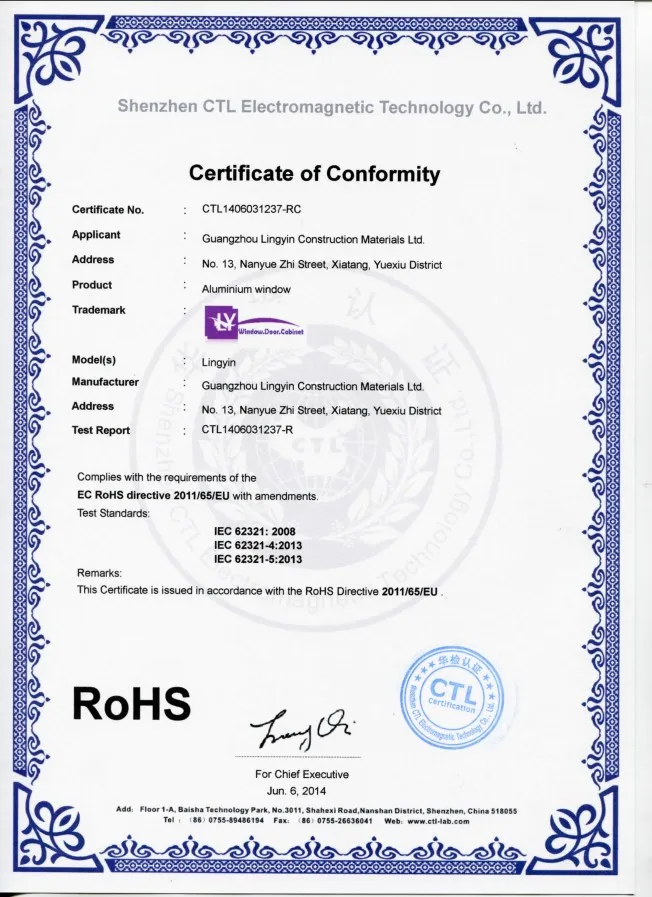
- Compliance and Certification Auditing: The third-party agency cross-checks international certifications, such as RoHS for aluminum windows and CE for custom cabinetry.
- Logistics and Packaging Inspection: Audits assess packaging durability and export readiness to prevent damage during cross-border transit.
In-Depth Analysis
During a pre-order audit at a door manufacturing facility, the third-party inspector focuses on structural integrity, material specifications, and quality control systems. For high-quality folding doors, the technical audit verifies that the aluminum profile thickness matches the specified 1.6-3.0mm range and utilizes 6063-T5 native aluminum. The inspector also checks the surface treatment, confirming whether it is a powder coating or a fluorocarbon coating, and inspects the hardware components to ensure they are authentic accessories from German brands like Reinas.
.jpg)
Professional manufacturers like Guangzhou Lingyin Building Materials Co., Ltd maintain transparent operations, welcoming third-party inspections across their 30,000-square-meter modern intelligent factory. The on-site audit evaluates raw material quality inspections, active production line monitoring, finished product testing, and packaging standards before dispatch. This ensures the physical products perfectly match the technical requirements of high-end private residences, commercial complexes, and public building projects.

In addition to physical manufacturing processes, third-party agencies verify compliance documentation. This includes checking international standards such as RoHS certifications for aluminum windows and CE certifications for custom cabinetry. Verifying these credentials ensures the products comply with environmental and safety regulations of the target market, particularly for large-scale projects in regions like Africa and Europe.
Data / Solution Comparison
The following table outlines the different levels of factory audits available to buyers when sourcing doors and custom building materials:
| Audit Type | Key Focus Areas | Material & Specification Verification | Logistics & Compliance Review | Recommended For |
|---|---|---|---|---|
| Standard Factory Audit | Basic factory capacity, labor compliance, and staff count verification. | Visual check of raw materials and general inventory. | Basic business license and export document review. | Small-volume, standard-sized door and window orders. |
| Technical Product Audit | Machinery calibration, profile thickness (1.6-3.0mm) testing, and hardware brand check. | Laboratory-grade checking of 6063-T5 native aluminum and coating quality. | Verification of RoHS and CE compliance certifications. | Custom aluminum folding doors and large-scale engineering projects. |
| Supply Chain & Logistics Audit | Lead time tracking (20-day door delivery), monthly capacity (42,000 sqm), and packaging safety. | Inspection of protective packaging and container loading procedures. | Verification of dedicated shipping lines (such as Get Signal) and customs clearance documents. | High-volume foreign trade container orders and long-term bulk purchases. |
Frequently Asked Questions (FAQ)
What are the key parameters to check during a folding door factory audit?
Inspectors should verify the profile thickness (ensuring it meets the 1.6-3.0mm standard), the grade of the aluminum (ideally 6063-T5 native aluminum), the type of surface treatment (powder or fluorocarbon coating), and the authenticity of the hardware accessories, such as German Reinas components.
How long does a typical door manufacturing facility audit take?
A standard factory audit usually takes 1 to 2 business days on-site, depending on the factory size. For a 30,000-square-meter facility, the inspector will require sufficient time to evaluate both the automated extrusion lines and the finished product testing areas.
Can the audit agency verify the logistics and shipping arrangements?
Yes. Third-party agencies can audit the manufacturer’s shipping capabilities, including container loading safety, moisture-proof packaging, and shipping documentation. Some manufacturers resolve logistics risks by operating their own shipping lines, such as the direct China-Africa routes provided by Get Signal.
Final Conclusion & Recommendations
Conducting a third-party audit before placing a bulk order for doors establishes a reliable foundation for quality assurance. It mitigates risks related to material specifications, structural safety, and delivery timelines. Partnering with manufacturers that offer transparent production processes, clear 10-year warranties, and secure payment options (such as deposit-based structures with XT Pay or Alibaba Pay support) ensures a secure procurement experience. Technical Support: 18144733878@139.com
About Us
Guangzhou Lingyin Building Materials Co., Ltd, established in 1990, is a leading large-scale modern group enterprise specializing in the export of system windows, doors, and whole-house customization. Operating a 30,000-square-meter modern intelligent factory, the company employs 186 professionals and maintains an 80% export ratio, primarily serving major African markets such as Nigeria, Kenya, and South Africa. The group holds CE and RoHS certifications and has successfully supplied materials to tens of thousands of clients for African landmark building projects.
(2).jpg)
REPORT