







-
 Agriculture
-
 Health-Care
-
 Environment
-
 Construction-Real-Estate
-
 Tools-Hardware
-
 Home-Garden
-
 Furniture
-
 Luggage-Bags-Cases
-
 Medical-devices-Supplies
-
 Gifts-Crafts
-
 Sports-Entertainment
-
 Food-Beverage
-
 Vehicles-Transportation
-
 Power-Transmission
-
 Material-Handling
-
 Renewable-Energy
-
 Safety
-
 Testing-Instrument-Equipment
-
 Construction-Building-Machinery
-
 Pet-Supplies
-
 Personal-Care-Household-Cleaning
-
 Vehicle-Accessories-Electronics-Tools
-
 School-Office-Supplies
-
 Packaging-Printing
-
 Mother-Kids-Toys
-
 Business-Services
-
 Commercial-Equipment-Machinery
-
 Apparel-Accessories
-
 Security
-
 Shoes-Accessories
-
 Vehicle-Parts-Accessories
-
 Jewelry-Eyewear-Watches-Accessories
-
 Lights-Lighting
-
 Fabric-Textile-Raw-Material
-
 Fabrication-Services
-
 Industrial-Machinery
-
 Consumer-Electronics
-
 Electrical-Equipment-Supplies
-
 Electronic-Components-Accessories-Telecommunications
-
 Home-Appliances
-
 Beauty
-
 Chemicals
-
 Rubber-Plastics
-
 Metals-Alloys


























































































































































































































































































































































































































































































































































































- Masonry Materials
- Curtain Walls & Accessories
- Earthwork Products
- Fireproofing Materials
- Heat Insulation Materials
- Plastic Building Materials
- Building Boards
- Soundproofing Materials
- Timber
- Waterproofing Materials
- Balustrades & Handrails
- Bathroom & Kitchen
- Flooring & Accessories
- Tiles & Accessories
- Door, Window & Accessories
- Fireplaces & Stoves
- Floor Heating Systems & Parts
- Stairs & Stair Parts
- Ceilings
- Elevators & Escalators
- Stone
- Countertops, Vanity Tops & Table Tops
- Mosaics
- Metal Building Materials
- Multifunctional Materials
- Ladders & Scaffoldings
- Mouldings
- Corner Guards
- Decorative Films
- Formwork
- Building & Industrial Glass
- Other Construction & Real Estate
- Wallpapers/Wall panels
- HVAC System & Parts
- Outdoor Facilities
- Prefabricated Buildings
- Festive & Party Supplies
- Bathroom Products
- Household Sundries
- Rain Gear
- Garden Supplies
- Household Cleaning Tools & Accessories
- Lighters & Smoking Accessories
- Home Storage & Organization
- Household Scales
- Smart Home Improvement
- Home Textiles
- Kitchenware
- Drinkware & Accessories
- Dinnerware, Coffee & Wine
- Home Decor
- Golf
- Fitness & Body Building
- Amusement Park Facilities
- Billiards, Board Game,Coin Operated Games
- Musical Instruments
- Outdoor Affordable Luxury Sports
- Camping & Hiking
- Fishing
- Sports Safety&Rehabilitation
- Ball Sports Equipments
- Water Sports
- Winter Sports
- Luxury Travel Equipments
- Sports Shoes, Bags & Accessories
- Cycling
- Other Sports & Entertainment Products
- Artificial Grass&Sports Flooring&Sports Court Equipment
- Scooters
- Food Ingredients
- Honey & Honey Products
- Snacks
- Nuts & Kernels
- Seafood
- Plant & Animal Oil
- Beverages
- Fruit & Vegetable Products
- Frog & Escargot
- Bean Products
- Egg Products
- Dairy Products
- Seasonings & Condiments
- Canned Food
- Instant Food
- Baked Goods
- Other Food & Beverage
- Meat & Poultry
- Confectionery
- Grain Products
- Feminie Care
- Hair Care & Styling
- Body Care
- Hands & Feet Care
- Hygiene Products
- Men's Grooming
- Laundry Cleaning Supplies
- Travel Size & Gift Sets
- Room Deodorizers
- Other Personal Care Products
- Pest Control Products
- Special Household Cleaning
- Floor Cleaning
- Kitchen & Bathroom Cleaning
- Oral Care
- Bath Supplies
- Yellow Pages
- Correction Supplies
- Office Binding Supplies
- Office Cutting Supplies
- Board Erasers
- Office Adhesives & Tapes
- Education Supplies
- Pencil Cases & Bags
- Notebooks & Writing Pads
- File Folder Accessories
- Calendars
- Writing Accessories
- Commercial Office Supplies
- Pencil Sharpeners
- Pens
- Letter Pad/Paper
- Paper Envelopes
- Desk Organizers
- Pencils
- Markers & Highlighters
- Filing Products
- Art Supplies
- Easels
- Badge Holder & Accessories
- Office Paper
- Printer Supplies
- Book Covers
- Other Office & School Supplies
- Stationery Set
- Boards
- Clipboards
- Stamps
- Drafting Supplies
- Stencils
- Electronic Dictionary
- Books
- Map
- Magazines
- Calculators
- Baby & Toddler Toys
- Educational Toys
- Classic Toys
- Dress Up & Pretend Play
- Toy Vehicle
- Stuffed Animals & Plush Toys
- Outdoor Toys & Structures
- Balloons & Accessories
- Baby Food
- Children's Clothing
- Baby Supplies & Products
- Maternity Clothes
- Kids Shoes
- Baby Care
- Novelty & Gag Toys
- Dolls & Accessories
- Puzzle & Games
- Blocks & Model Building Toys
- Toddler Clothing
- Baby Clothing
- Kids' Luggage & Bags
- Arts, Crafts & DIY Toys
- Action & Toy Figures
- Baby Appliances
- Hobbies & Models
- Remote Control Toys
- Promotional Toys
- Pregnancy & Maternity
- Hygiene Products
- Kid's Textile&Bedding
- Novelty & Special Use
- Toy Weapons
- Baby Gifts
- Baby Storage & Organization
- Auto Drive Systems
- ATV/UTV Parts & Accessories
- Marine Parts & Accessories
- Other Auto Parts
- Trailer Parts & Accessories
- Auto Transmission Systems
- Train Parts & Accessories
- Universal Parts
- Railway Parts & Accessories
- Auto Brake Systems
- Aviation Parts & Accessories
- Truck Parts & Accessories
- Auto Suspension Systems
- Auto Lighting Systems
- New Energy Vehicle Parts & Accessories
- Auto Steering Systems
- Wheels, Tires & Accessories
- Bus Parts & Accessories
- Auto Performance Parts
- Cooling System
- Go-Kart & Kart Racer Parts & Accessories
- Air Conditioning Systems
- Heavy Duty Vehicle Parts & Accessories
- Auto Electrical Systems
- Auto Body Systems
- Auto Engine Systems
- Container Parts & Accessories
- Motorcycle Parts & Accessories
- Refrigeration & Heat Exchange Equipment
- Machine Tool Equipment
- Food & Beverage Machinery
- Agricultural Machinery & Equipment
- Apparel & Textile Machinery
- Chemical Machinery
- Packaging Machines
- Paper Production Machinery
- Plastic & Rubber Processing Machinery
- Industrial Robots
- Electronic Products Machinery
- Metal & Metallurgy Machinery
- Woodworking Machinery
- Home Product Manufacturing Machinery
- Machinery Accessories
- Environmental Machinery
- Machinery Service
- Electrical Equipment Manufacturing Machinery
- Industrial Compressors & Parts
- Tobacco & Cigarette Machinery
- Production Line
- Used Industrial Machinery
- Electronics Production Machinery
- Other Machinery & Industrial Equipment
- Camera, Photo & Accessories
- Portable Audio, Video & Accessories
- Television, Home Audio, Video & Accessories
- Video Games & Accessories
- Mobile Phone & Accessories
- Electronic Publications
- Earphone & Headphone & Accessories
- Speakers & Accessories
- Smart Electronics
- TV Receivers & Accessories
- Mobile Phone & Computer Repair Parts
- Chargers, Batteries & Power Supplies
- Used Electronics
- VR, AR, MR Hardware & Software
- Projectors & Presentation Equipments
- Other Consumer Electronics
- Cables & Commonly Used Accessories
- Computer Hardware & Software
- Displays, Signage and Optoelectronics
- Discrete Semiconductors
- Wireless & IoT Module and Products
- Telecommunications
- Connectors, Terminals & Accessories
- Development Boards, Electronic Modules and Kits
- Circuit Protection
- Sensors
- Isolators
- Audio Components and Products
- Integrated Circuits
- Power Supplies
- Relays
- RF, Microwave and RFID
- Electronic Accessories & Supplies
- Passive Components
- PCB & PCBA
- Air Quality Appliances
- Home Appliance Parts
- Heating & Cooling Appliances
- Small Kitchen Appliances
- Laundry Appliances
- Water Heaters
- Water Treatment Appliances
- Refrigerators & Freezers
- Personal Care & Beauty Appliances
- Major Kitchen Appliances
- Cleaning Appliances
- Second-hand Appliances
- Smart Home Appliances
- Other Home Appliances
- Energy Chemicals
- Inorganic Chemicals
- Basic Organic Chemicals
- Agrochemicals
- Admixture & Additives
- Catalysts & Chemical Auxiliary Agents
- Pigments & Dyestuff
- Coating & Paint
- Daily Chemicals
- Polymer
- Organic Intermediate
- Adhesives & Sealants
- Chemical Waste
- Biological Chemical Products
- Surface Treatment Chemicals
- Painting & Coating
- Chemical Reagents
- Flavor & Fragrance
- Non-Explosive Demolition Agents
- Other Chemicals
- Custom Chemical Services

Can Manual Screen Printing Tables Compete with Automation for Small-Batch Orders?
For small-batch work, a handmade screen-printing table can remain a practical choice when low investment, frequent changes, and direct operator control are more important than speed. Automated equipment is generally preferable when consistent results, repeatable setup, material versatility, and reduced operator variation are required. Shichuangli’s SCL-P1 4×6 fully automatic single-color transfer printing machine accepts an order of one unit and is designed for plastic, wood board, fabric, hardware, and silicone applications.
Choosing Between Manual and Automated Printing
The right solution depends on more than the number of pieces in an order. A manual table may be the better fit for occasional production, custom designs, or jobs that require frequent adjustments from one workpiece to the next. Automation becomes more valuable when the same process must be repeated reliably across a batch or when the operator needs a structured workflow.
- Handmade screen-printing tables offer flexible, hands-on control for customized and irregular small orders.
- Automated machines establish a more repeatable process and can operate in either fully automatic or semi-automatic modes.
- The SCL-P1 provides monochrome transfer printing for plastic, wood board, fabric, hardware, and silicone.
- Potential application areas include consumer products, 3C electronics and home appliances, cosmetics packaging, automotive components, crafts, food packaging, and clothing accessories.
How the Two Approaches Work
Manual table operation
A handmade screen-printing table depends on the operator to align the product, apply ink, control pressure, and maintain registration. This hands-on method is useful when every order is different or when production volume is limited. It can also reduce the initial equipment commitment. However, consistency is closely tied to the operator’s experience, especially when several materials or repeated impressions are involved.
Automated transfer printing
Automated equipment combines a fixed mechanical structure, pneumatic operation, and selectable working modes to make the production sequence more defined. Shichuangli describes the SCL-P1 as a fully automatic and semi-automatic single-color transfer printing machine. Its best printing area is 120 × 70 mm. The machine measures 740 × 430 × 1350 mm and has a listed weight of 92 kg.
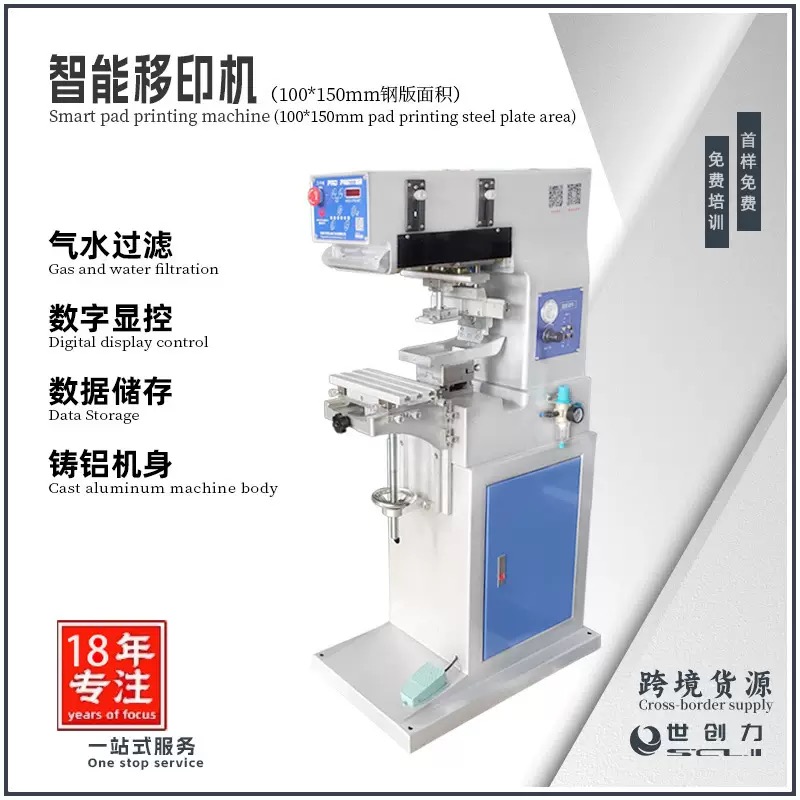
For a small order, the main question is whether manual variation is acceptable. If designs change continually and the operator must make individual adjustments, a handmade table may provide sufficient flexibility. If the buyer wants a repeatable machine sequence, support for multiple substrates, and a more standardized setup, the SCL-P1 may offer greater value even at a low volume. The stated minimum order quantity is one unit, while delivery is listed as three to five working days depending on the process.
Quality, Training, and Service Support
Shichuangli states that its production process includes in-process quality inspection, finished-product performance testing, installation acceptance and commissioning, physical and mechanical performance checks, and structural safety and appearance inspection. The product information also lists a two-year warranty, one-on-one instruction, and lifetime equipment maintenance.
One reported cooperation case involved a Saudi Arabian distributor of premium hotel products. The project combined screen printing, heat transfer printing, and gold stamping for hotel supplies made from different materials. Custom logos were required for tableware, linen, bath products, room decorations, and staff uniforms. According to the case description, the cooperation included remote technical assistance, operator training, proofing support, transparent pricing, and one-year warranty coverage.
Shichuangli also lists CNAS certificates for SCOO6-501 Black and SCRS-501 Black, with applicable economies identified as ILAC-MRA member economies. Buyers should confirm that any listed certification applies to the specific material, process, and product being evaluated.
Comparison for Small-Order Production
| Evaluation factor | Handmade screen-printing table | SCL-P1 automated transfer printing machine |
|---|---|---|
| Suitability for small orders | Works well when manual handling and adjustment are acceptable | Available with a minimum order quantity of one unit |
| Production control | Managed directly by the operator | Fully automatic or semi-automatic operation |
| Supported materials | Varies according to the tools, table, and operator method | Plastic, wood board, fabric, hardware, and silicone |
| Printing specification | Determined by the manual setup and screen selected | Single-color printing with a best printing area of 120 × 70 mm |
| Repeatability | Depends on alignment skill and operator technique | Uses a defined machine process with production and finished-product checks |
| After-sales assistance | Depends on internal knowledge or the supplier | Two-year warranty, one-on-one training, and lifetime maintenance |
| Stated delivery | Not included in the supplied information | Three to five working days, depending on the process |
Frequently Asked Questions
When is a handmade screen-printing table a good option?
It is suitable when the work involves highly customized products, frequent design changes, or limited production and the operator can manage differences between impressions. The supplied information does not include purchase or running costs for a handmade table, so those factors should be calculated separately.
Why consider automation for only a small order?
A small order can still benefit from a consistent operating sequence, selectable automatic modes, material flexibility, technical training, and after-sales coverage. The SCL-P1 is available from one unit, making the machine relevant to buyers who are starting small but want a more controlled process.
Is the SCL-P1 a screen-printing machine?
The supplied product description identifies the SCL-P1 as a 4×6 fully automatic single-color transfer printing machine. Shichuangli offers screen-printing equipment within its broader product portfolio, but this particular model is described as transfer printing equipment.
Conclusion
A handmade table can still compete effectively for flexible, low-volume work where hands-on adjustment and a lower initial commitment are priorities. Automated equipment is the stronger choice when repeatability, multiple-material capability, process control, training, inspection, and warranty support are important. The SCL-P1 supports the listed materials and applications, can be ordered as a single unit, and has a stated delivery period of three to five working days.
Shichuangli provides a broader printing application service ecosystem, including standard equipment delivery within 48 hours and customized non-standard printing equipment delivery within one month. For technical consultation or application support, contact support@shichuanglimachine.com.
About Shichuangli
Dongguan Shichuangli Zhihui Technology Co., Ltd. is based in Huangjiang Town, Dongguan City, Guangdong Province, and operates a factory training base covering more than 1,600 square meters. Founded in 2008, the company combines the design, research and development, manufacturing, and sales of printing equipment and related materials. Its product range includes transfer printing machines, screen printing machines, hot stamping machines, non-standard automation, and printing auxiliaries. Shichuangli reports service to more than 15,000 enterprises, exports to over 100 countries and regions, and provides OEM and ODM customization. The company lists IECEx and CNAS credentials and serves customers across several industries.

REPORT