







-
 Agriculture
-
 Health-Care
-
 Environment
-
 Construction-Real-Estate
-
 Tools-Hardware
-
 Home-Garden
-
 Furniture
-
 Luggage-Bags-Cases
-
 Medical-devices-Supplies
-
 Gifts-Crafts
-
 Sports-Entertainment
-
 Food-Beverage
-
 Vehicles-Transportation
-
 Power-Transmission
-
 Material-Handling
-
 Renewable-Energy
-
 Safety
-
 Testing-Instrument-Equipment
-
 Construction-Building-Machinery
-
 Pet-Supplies
-
 Personal-Care-Household-Cleaning
-
 Vehicle-Accessories-Electronics-Tools
-
 School-Office-Supplies
-
 Packaging-Printing
-
 Mother-Kids-Toys
-
 Business-Services
-
 Commercial-Equipment-Machinery
-
 Apparel-Accessories
-
 Security
-
 Shoes-Accessories
-
 Vehicle-Parts-Accessories
-
 Jewelry-Eyewear-Watches-Accessories
-
 Lights-Lighting
-
 Fabric-Textile-Raw-Material
-
 Fabrication-Services
-
 Industrial-Machinery
-
 Consumer-Electronics
-
 Electrical-Equipment-Supplies
-
 Electronic-Components-Accessories-Telecommunications
-
 Home-Appliances
-
 Beauty
-
 Chemicals
-
 Rubber-Plastics
-
 Metals-Alloys


























































































































































































































































































































































































































































































































































































- Masonry Materials
- Curtain Walls & Accessories
- Earthwork Products
- Fireproofing Materials
- Heat Insulation Materials
- Plastic Building Materials
- Building Boards
- Soundproofing Materials
- Timber
- Waterproofing Materials
- Balustrades & Handrails
- Bathroom & Kitchen
- Flooring & Accessories
- Tiles & Accessories
- Door, Window & Accessories
- Fireplaces & Stoves
- Floor Heating Systems & Parts
- Stairs & Stair Parts
- Ceilings
- Elevators & Escalators
- Stone
- Countertops, Vanity Tops & Table Tops
- Mosaics
- Metal Building Materials
- Multifunctional Materials
- Ladders & Scaffoldings
- Mouldings
- Corner Guards
- Decorative Films
- Formwork
- Building & Industrial Glass
- Other Construction & Real Estate
- Wallpapers/Wall panels
- HVAC System & Parts
- Outdoor Facilities
- Prefabricated Buildings
- Festive & Party Supplies
- Bathroom Products
- Household Sundries
- Rain Gear
- Garden Supplies
- Household Cleaning Tools & Accessories
- Lighters & Smoking Accessories
- Home Storage & Organization
- Household Scales
- Smart Home Improvement
- Home Textiles
- Kitchenware
- Drinkware & Accessories
- Dinnerware, Coffee & Wine
- Home Decor
- Golf
- Fitness & Body Building
- Amusement Park Facilities
- Billiards, Board Game,Coin Operated Games
- Musical Instruments
- Outdoor Affordable Luxury Sports
- Camping & Hiking
- Fishing
- Sports Safety&Rehabilitation
- Ball Sports Equipments
- Water Sports
- Winter Sports
- Luxury Travel Equipments
- Sports Shoes, Bags & Accessories
- Cycling
- Other Sports & Entertainment Products
- Artificial Grass&Sports Flooring&Sports Court Equipment
- Scooters
- Food Ingredients
- Honey & Honey Products
- Snacks
- Nuts & Kernels
- Seafood
- Plant & Animal Oil
- Beverages
- Fruit & Vegetable Products
- Frog & Escargot
- Bean Products
- Egg Products
- Dairy Products
- Seasonings & Condiments
- Canned Food
- Instant Food
- Baked Goods
- Other Food & Beverage
- Meat & Poultry
- Confectionery
- Grain Products
- Feminie Care
- Hair Care & Styling
- Body Care
- Hands & Feet Care
- Hygiene Products
- Men's Grooming
- Laundry Cleaning Supplies
- Travel Size & Gift Sets
- Room Deodorizers
- Other Personal Care Products
- Pest Control Products
- Special Household Cleaning
- Floor Cleaning
- Kitchen & Bathroom Cleaning
- Oral Care
- Bath Supplies
- Yellow Pages
- Correction Supplies
- Office Binding Supplies
- Office Cutting Supplies
- Board Erasers
- Office Adhesives & Tapes
- Education Supplies
- Pencil Cases & Bags
- Notebooks & Writing Pads
- File Folder Accessories
- Calendars
- Writing Accessories
- Commercial Office Supplies
- Pencil Sharpeners
- Pens
- Letter Pad/Paper
- Paper Envelopes
- Desk Organizers
- Pencils
- Markers & Highlighters
- Filing Products
- Art Supplies
- Easels
- Badge Holder & Accessories
- Office Paper
- Printer Supplies
- Book Covers
- Other Office & School Supplies
- Stationery Set
- Boards
- Clipboards
- Stamps
- Drafting Supplies
- Stencils
- Electronic Dictionary
- Books
- Map
- Magazines
- Calculators
- Baby & Toddler Toys
- Educational Toys
- Classic Toys
- Dress Up & Pretend Play
- Toy Vehicle
- Stuffed Animals & Plush Toys
- Outdoor Toys & Structures
- Balloons & Accessories
- Baby Food
- Children's Clothing
- Baby Supplies & Products
- Maternity Clothes
- Kids Shoes
- Baby Care
- Novelty & Gag Toys
- Dolls & Accessories
- Puzzle & Games
- Blocks & Model Building Toys
- Toddler Clothing
- Baby Clothing
- Kids' Luggage & Bags
- Arts, Crafts & DIY Toys
- Action & Toy Figures
- Baby Appliances
- Hobbies & Models
- Remote Control Toys
- Promotional Toys
- Pregnancy & Maternity
- Hygiene Products
- Kid's Textile&Bedding
- Novelty & Special Use
- Toy Weapons
- Baby Gifts
- Baby Storage & Organization
- Auto Drive Systems
- ATV/UTV Parts & Accessories
- Marine Parts & Accessories
- Other Auto Parts
- Trailer Parts & Accessories
- Auto Transmission Systems
- Train Parts & Accessories
- Universal Parts
- Railway Parts & Accessories
- Auto Brake Systems
- Aviation Parts & Accessories
- Truck Parts & Accessories
- Auto Suspension Systems
- Auto Lighting Systems
- New Energy Vehicle Parts & Accessories
- Auto Steering Systems
- Wheels, Tires & Accessories
- Bus Parts & Accessories
- Auto Performance Parts
- Cooling System
- Go-Kart & Kart Racer Parts & Accessories
- Air Conditioning Systems
- Heavy Duty Vehicle Parts & Accessories
- Auto Electrical Systems
- Auto Body Systems
- Auto Engine Systems
- Container Parts & Accessories
- Motorcycle Parts & Accessories
- Refrigeration & Heat Exchange Equipment
- Machine Tool Equipment
- Food & Beverage Machinery
- Agricultural Machinery & Equipment
- Apparel & Textile Machinery
- Chemical Machinery
- Packaging Machines
- Paper Production Machinery
- Plastic & Rubber Processing Machinery
- Industrial Robots
- Electronic Products Machinery
- Metal & Metallurgy Machinery
- Woodworking Machinery
- Home Product Manufacturing Machinery
- Machinery Accessories
- Environmental Machinery
- Machinery Service
- Electrical Equipment Manufacturing Machinery
- Industrial Compressors & Parts
- Tobacco & Cigarette Machinery
- Production Line
- Used Industrial Machinery
- Electronics Production Machinery
- Other Machinery & Industrial Equipment
- Camera, Photo & Accessories
- Portable Audio, Video & Accessories
- Television, Home Audio, Video & Accessories
- Video Games & Accessories
- Mobile Phone & Accessories
- Electronic Publications
- Earphone & Headphone & Accessories
- Speakers & Accessories
- Smart Electronics
- TV Receivers & Accessories
- Mobile Phone & Computer Repair Parts
- Chargers, Batteries & Power Supplies
- Used Electronics
- VR, AR, MR Hardware & Software
- Projectors & Presentation Equipments
- Other Consumer Electronics
- Cables & Commonly Used Accessories
- Computer Hardware & Software
- Displays, Signage and Optoelectronics
- Discrete Semiconductors
- Wireless & IoT Module and Products
- Telecommunications
- Connectors, Terminals & Accessories
- Development Boards, Electronic Modules and Kits
- Circuit Protection
- Sensors
- Isolators
- Audio Components and Products
- Integrated Circuits
- Power Supplies
- Relays
- RF, Microwave and RFID
- Electronic Accessories & Supplies
- Passive Components
- PCB & PCBA
- Air Quality Appliances
- Home Appliance Parts
- Heating & Cooling Appliances
- Small Kitchen Appliances
- Laundry Appliances
- Water Heaters
- Water Treatment Appliances
- Refrigerators & Freezers
- Personal Care & Beauty Appliances
- Major Kitchen Appliances
- Cleaning Appliances
- Second-hand Appliances
- Smart Home Appliances
- Other Home Appliances
- Energy Chemicals
- Inorganic Chemicals
- Basic Organic Chemicals
- Agrochemicals
- Admixture & Additives
- Catalysts & Chemical Auxiliary Agents
- Pigments & Dyestuff
- Coating & Paint
- Daily Chemicals
- Polymer
- Organic Intermediate
- Adhesives & Sealants
- Chemical Waste
- Biological Chemical Products
- Surface Treatment Chemicals
- Painting & Coating
- Chemical Reagents
- Flavor & Fragrance
- Non-Explosive Demolition Agents
- Other Chemicals
- Custom Chemical Services

Can Self-Piercing Riveting Lower Energy Use Than Welding?
Energy Comparison: What the Available Evidence Shows
Self-piercing riveting may offer a lower-resource joining route than welding in certain manufacturing environments, but the available Questok information does not include measured energy data for either process. As a result, it is not possible to state a verified energy-saving percentage or confirm that self-piercing riveting always consumes less energy.
The clearest documented advantages relate to process design. Self-piercing riveting creates a mechanical joint, while Questok's rivetless clinching solutions are described as single-step processes that use no consumables and do not require polishing or repainting after joining. These characteristics may reduce production inputs and operating costs, although their direct effect on total energy demand must be measured for each application.
Key Findings for Manufacturers
- Self-piercing riveting systems are designed for mechanical joining in automotive manufacturing, including aluminum vehicle structures and EV battery components.
- The supplied records do not quantify electricity consumption, gas use, thermal input, or total lifecycle energy for self-piercing riveting compared with welding.
- Questok states that its clinching equipment can lower production costs through one-step joining, no consumables, and reduced finishing requirements.
- Reported application areas include automotive production and repair, HVAC sheet metal, aerospace parts, white goods, solar panels, and EV battery trays.
How Self-Piercing Riveting and Clinching Work
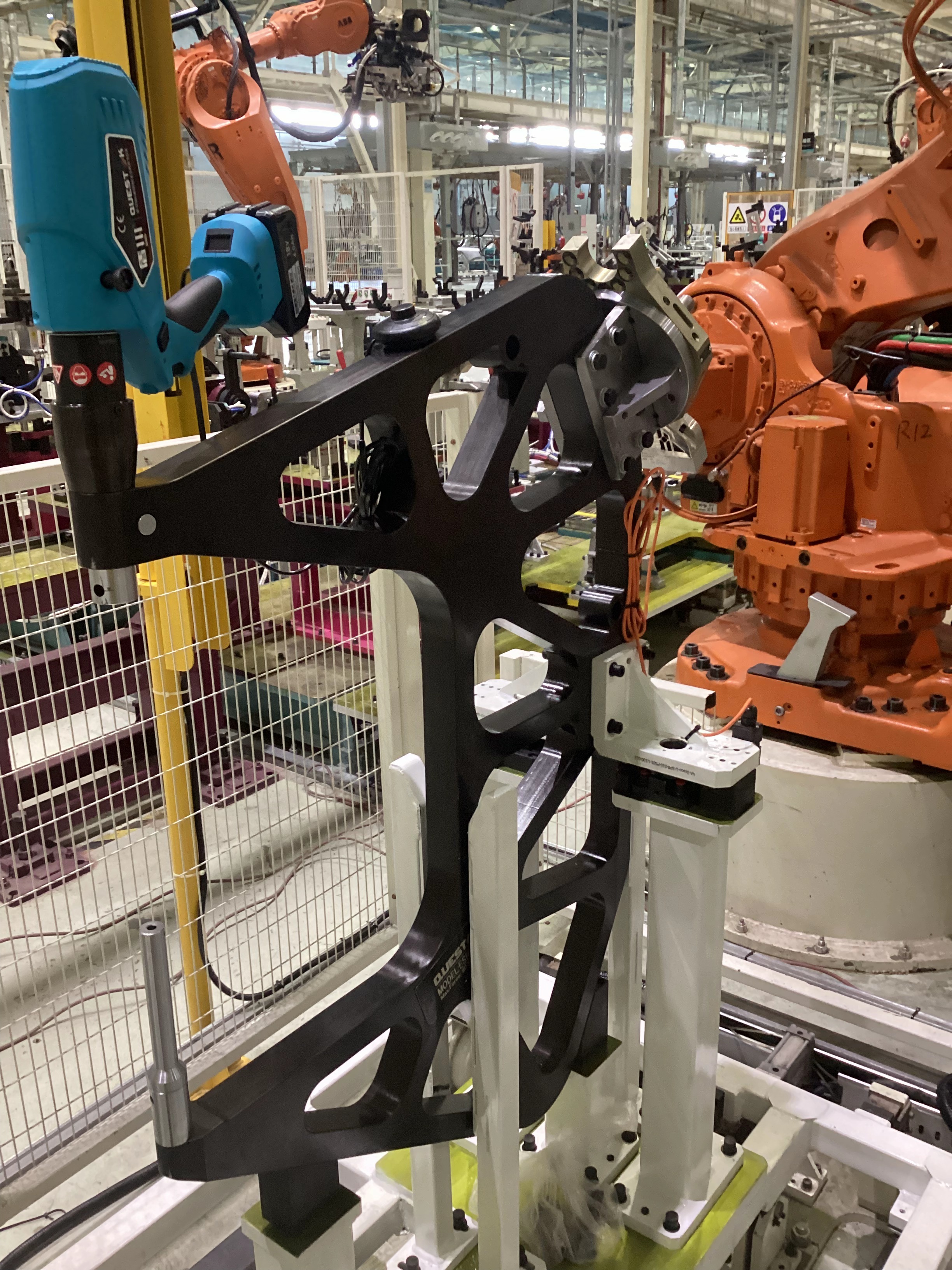
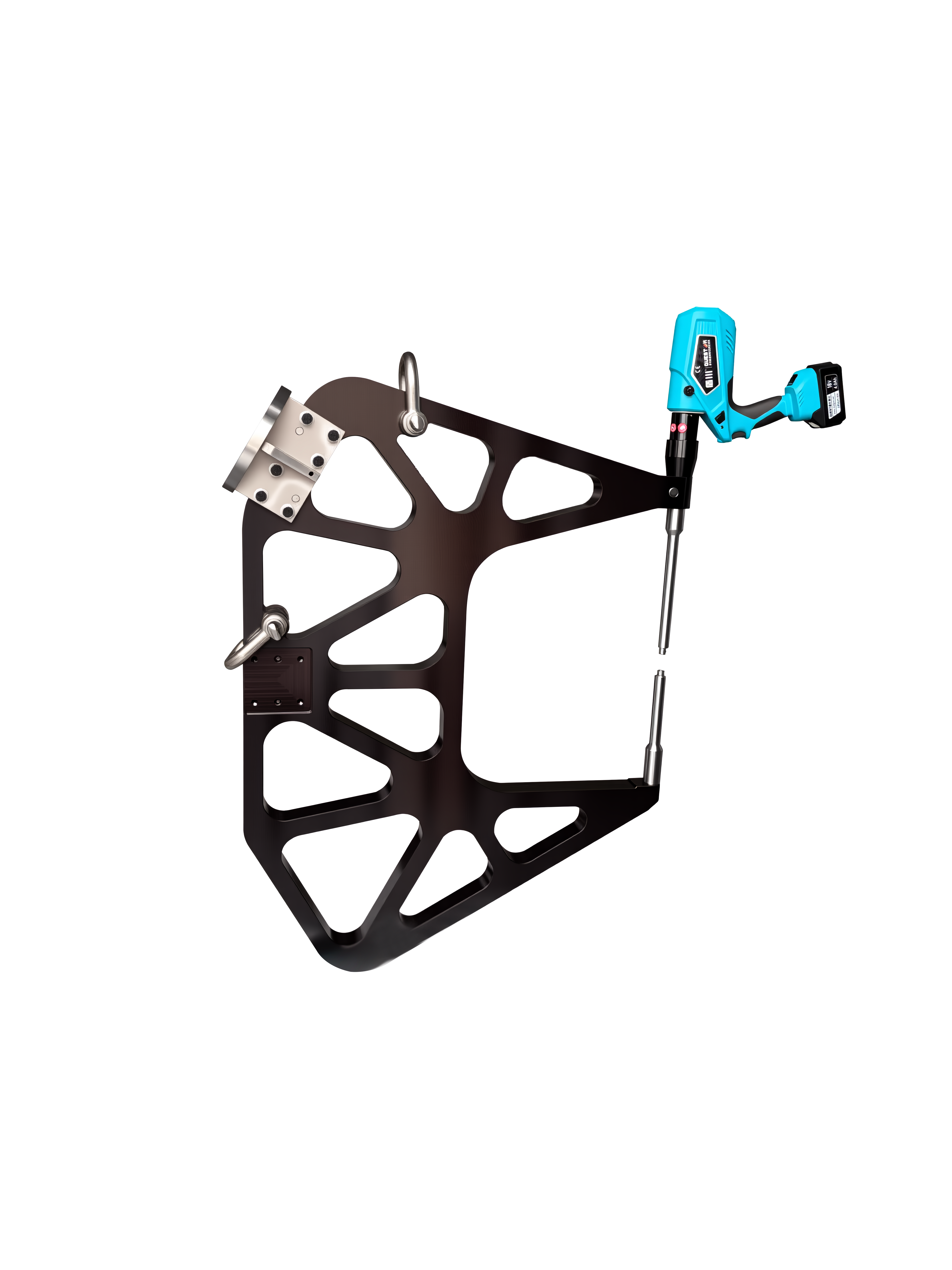
Self-piercing riveting joins multiple material layers by driving a rivet through the upper sheets and forming it within the lower material. The rivet remains in the joint, creating a mechanical connection without relying on a conventional weld. Questok's industrial fastening range includes SPR riveting systems, self-piercing riveting guns, and SPR riveters.
Although this mechanical method may avoid some of the heat generation and associated operations found in welding, the supplied information does not provide a controlled, side-by-side energy study. Factors such as material thickness, cycle time, equipment power, joint design, compressed air demand, and downstream finishing would all need to be included in a reliable comparison.
Questok provides more specific process claims for rivetless clinching. Its clinching guns are described for HVAC ducts, air fans, dampers, filters, and flanges. The process can be completed in one step, requires no consumable joining material, and avoids the need for polishing or repainting after clinching. These features may reduce handling, material use, and production time, but they should not be treated as proof of lower energy consumption without application data.
Industrial Applications and Validation
In automotive production, Questok reports the use of self-piercing riveting systems for aluminum car bodies. Its described project and customer applications include Mercedes-Benz in Fuzhou, Geely, NIO, Leapmotor, and SAIC. The wider EV joining portfolio includes self-piercing riveting, waterproof nut installation, and washer pressing for battery trays and water cooling plates.
A reported Mercedes-Benz project in Fuzhou required both self-piercing riveting and rivetless clinching for combinations of high-strength materials. Questok states that its engineers carried out repeated material trials, metallographic inspections, die adjustments, and production validation before the equipment was introduced into regular manufacturing. This information demonstrates structured process qualification, but it does not represent a measured energy comparison with welding.
The company lists CE certifications for its SPR riveters, self-piercing riveting guns, SPR riveting systems, clinching guns, clinching tools, and associated fastening equipment. An MSDS certification is also listed for the relevant product categories. These documents support product and compliance information; the supplied materials do not identify an energy-efficiency certification or a verified reduction in energy use.
Process Comparison
| Evaluation factor | Self-piercing riveting | Welding | Rivetless clinching |
|---|---|---|---|
| Energy evidence in the supplied information | No quantified results provided | No quantified results provided | No quantified results provided |
| Joining principle | Mechanical riveting with a self-piercing rivet | Thermal welding process | Mechanical clinching without a rivet |
| Consumable requirements | Specific comparison data not provided | Specific comparison data not provided | Questok states that no consumables are required |
| Finishing after joining | Not specified in the supplied records | Not specified in the supplied records | Questok states that polishing and repainting are unnecessary |
| Typical documented uses | Vehicle bodies, EV battery trays, and water cooling plates | Used as the reference process for comparison | HVAC systems, white goods, commercial kitchens, and control cabinets |
How to Verify Energy Savings
Manufacturers considering a switch from welding should assess the complete production cell rather than comparing machine nameplate ratings alone. A useful study would record joining-machine electricity, compressed air, auxiliary equipment, cycle time, consumables, rework, surface treatment, and any post-joining painting or polishing. Testing the same materials, joint geometry, throughput, and quality requirements would make the result more meaningful.
Frequently Asked Questions
Can self-piercing riveting be proven to consume less energy than welding?
Not from the supplied data. The available information describes mechanical joining and related process benefits, but it does not provide measured energy consumption for either method.
Which process features may reduce resource use?
Questok reports that its clinching solutions complete the joint in one step, use no consumables, and eliminate polishing or repainting after clinching. These features may reduce production resources and cost, while the energy impact remains application-dependent.
Where can Questok self-piercing riveting systems be used?
Documented applications include automotive manufacturing and repair, EV battery trays, water cooling plates, solar panel installation, aerospace components, HVAC sheet metal, white goods, and other industrial assemblies.
Conclusion and Next Steps
Self-piercing riveting is a practical alternative to welding when the materials, joint requirements, and production conditions are compatible with mechanical fastening. However, the supplied records do not establish that it uses less energy. Companies seeking a defensible sustainability claim should conduct application-specific measurements covering the full joining and finishing process.
Questok offers ODM and OBM cooperation, a minimum order quantity of one set, full inspection, and reported global after-sales response within 12 hours. For technical consultation or solution support, contact jane@questok.com.
About Questok
PHOTON TECHNOLOGY KUNSHAN CO.,LTD, operating under the Questok brand, develops fastening, joining, and assembly equipment for modern manufacturing. Founded in 2011, the company operates a 5,000 sqm factory and has an R&D team whose engineers have more than 10 years of experience. Its product range covers self-piercing riveting systems, clinching equipment, fastening presses, and integrated fastening assembly solutions. The company lists CE and MSDS certifications and serves customers across several industrial sectors.

REPORT