







-
 Agriculture
-
 Health-Care
-
 Environment
-
 Construction-Real-Estate
-
 Tools-Hardware
-
 Home-Garden
-
 Furniture
-
 Luggage-Bags-Cases
-
 Medical-devices-Supplies
-
 Gifts-Crafts
-
 Sports-Entertainment
-
 Food-Beverage
-
 Vehicles-Transportation
-
 Power-Transmission
-
 Material-Handling
-
 Renewable-Energy
-
 Safety
-
 Testing-Instrument-Equipment
-
 Construction-Building-Machinery
-
 Pet-Supplies
-
 Personal-Care-Household-Cleaning
-
 Vehicle-Accessories-Electronics-Tools
-
 School-Office-Supplies
-
 Packaging-Printing
-
 Mother-Kids-Toys
-
 Business-Services
-
 Commercial-Equipment-Machinery
-
 Apparel-Accessories
-
 Security
-
 Shoes-Accessories
-
 Vehicle-Parts-Accessories
-
 Jewelry-Eyewear-Watches-Accessories
-
 Lights-Lighting
-
 Fabric-Textile-Raw-Material
-
 Fabrication-Services
-
 Industrial-Machinery
-
 Consumer-Electronics
-
 Electrical-Equipment-Supplies
-
 Electronic-Components-Accessories-Telecommunications
-
 Home-Appliances
-
 Beauty
-
 Chemicals
-
 Rubber-Plastics
-
 Metals-Alloys


























































































































































































































































































































































































































































































































































































- Masonry Materials
- Curtain Walls & Accessories
- Earthwork Products
- Fireproofing Materials
- Heat Insulation Materials
- Plastic Building Materials
- Building Boards
- Soundproofing Materials
- Timber
- Waterproofing Materials
- Balustrades & Handrails
- Bathroom & Kitchen
- Flooring & Accessories
- Tiles & Accessories
- Door, Window & Accessories
- Fireplaces & Stoves
- Floor Heating Systems & Parts
- Stairs & Stair Parts
- Ceilings
- Elevators & Escalators
- Stone
- Countertops, Vanity Tops & Table Tops
- Mosaics
- Metal Building Materials
- Multifunctional Materials
- Ladders & Scaffoldings
- Mouldings
- Corner Guards
- Decorative Films
- Formwork
- Building & Industrial Glass
- Other Construction & Real Estate
- Wallpapers/Wall panels
- HVAC System & Parts
- Outdoor Facilities
- Prefabricated Buildings
- Festive & Party Supplies
- Bathroom Products
- Household Sundries
- Rain Gear
- Garden Supplies
- Household Cleaning Tools & Accessories
- Lighters & Smoking Accessories
- Home Storage & Organization
- Household Scales
- Smart Home Improvement
- Home Textiles
- Kitchenware
- Drinkware & Accessories
- Dinnerware, Coffee & Wine
- Home Decor
- Golf
- Fitness & Body Building
- Amusement Park Facilities
- Billiards, Board Game,Coin Operated Games
- Musical Instruments
- Outdoor Affordable Luxury Sports
- Camping & Hiking
- Fishing
- Sports Safety&Rehabilitation
- Ball Sports Equipments
- Water Sports
- Winter Sports
- Luxury Travel Equipments
- Sports Shoes, Bags & Accessories
- Cycling
- Other Sports & Entertainment Products
- Artificial Grass&Sports Flooring&Sports Court Equipment
- Scooters
- Food Ingredients
- Honey & Honey Products
- Snacks
- Nuts & Kernels
- Seafood
- Plant & Animal Oil
- Beverages
- Fruit & Vegetable Products
- Frog & Escargot
- Bean Products
- Egg Products
- Dairy Products
- Seasonings & Condiments
- Canned Food
- Instant Food
- Baked Goods
- Other Food & Beverage
- Meat & Poultry
- Confectionery
- Grain Products
- Feminie Care
- Hair Care & Styling
- Body Care
- Hands & Feet Care
- Hygiene Products
- Men's Grooming
- Laundry Cleaning Supplies
- Travel Size & Gift Sets
- Room Deodorizers
- Other Personal Care Products
- Pest Control Products
- Special Household Cleaning
- Floor Cleaning
- Kitchen & Bathroom Cleaning
- Oral Care
- Bath Supplies
- Yellow Pages
- Correction Supplies
- Office Binding Supplies
- Office Cutting Supplies
- Board Erasers
- Office Adhesives & Tapes
- Education Supplies
- Pencil Cases & Bags
- Notebooks & Writing Pads
- File Folder Accessories
- Calendars
- Writing Accessories
- Commercial Office Supplies
- Pencil Sharpeners
- Pens
- Letter Pad/Paper
- Paper Envelopes
- Desk Organizers
- Pencils
- Markers & Highlighters
- Filing Products
- Art Supplies
- Easels
- Badge Holder & Accessories
- Office Paper
- Printer Supplies
- Book Covers
- Other Office & School Supplies
- Stationery Set
- Boards
- Clipboards
- Stamps
- Drafting Supplies
- Stencils
- Electronic Dictionary
- Books
- Map
- Magazines
- Calculators
- Baby & Toddler Toys
- Educational Toys
- Classic Toys
- Dress Up & Pretend Play
- Toy Vehicle
- Stuffed Animals & Plush Toys
- Outdoor Toys & Structures
- Balloons & Accessories
- Baby Food
- Children's Clothing
- Baby Supplies & Products
- Maternity Clothes
- Kids Shoes
- Baby Care
- Novelty & Gag Toys
- Dolls & Accessories
- Puzzle & Games
- Blocks & Model Building Toys
- Toddler Clothing
- Baby Clothing
- Kids' Luggage & Bags
- Arts, Crafts & DIY Toys
- Action & Toy Figures
- Baby Appliances
- Hobbies & Models
- Remote Control Toys
- Promotional Toys
- Pregnancy & Maternity
- Hygiene Products
- Kid's Textile&Bedding
- Novelty & Special Use
- Toy Weapons
- Baby Gifts
- Baby Storage & Organization
- Auto Drive Systems
- ATV/UTV Parts & Accessories
- Marine Parts & Accessories
- Other Auto Parts
- Trailer Parts & Accessories
- Auto Transmission Systems
- Train Parts & Accessories
- Universal Parts
- Railway Parts & Accessories
- Auto Brake Systems
- Aviation Parts & Accessories
- Truck Parts & Accessories
- Auto Suspension Systems
- Auto Lighting Systems
- New Energy Vehicle Parts & Accessories
- Auto Steering Systems
- Wheels, Tires & Accessories
- Bus Parts & Accessories
- Auto Performance Parts
- Cooling System
- Go-Kart & Kart Racer Parts & Accessories
- Air Conditioning Systems
- Heavy Duty Vehicle Parts & Accessories
- Auto Electrical Systems
- Auto Body Systems
- Auto Engine Systems
- Container Parts & Accessories
- Motorcycle Parts & Accessories
- Refrigeration & Heat Exchange Equipment
- Machine Tool Equipment
- Food & Beverage Machinery
- Agricultural Machinery & Equipment
- Apparel & Textile Machinery
- Chemical Machinery
- Packaging Machines
- Paper Production Machinery
- Plastic & Rubber Processing Machinery
- Industrial Robots
- Electronic Products Machinery
- Metal & Metallurgy Machinery
- Woodworking Machinery
- Home Product Manufacturing Machinery
- Machinery Accessories
- Environmental Machinery
- Machinery Service
- Electrical Equipment Manufacturing Machinery
- Industrial Compressors & Parts
- Tobacco & Cigarette Machinery
- Production Line
- Used Industrial Machinery
- Electronics Production Machinery
- Other Machinery & Industrial Equipment
- Camera, Photo & Accessories
- Portable Audio, Video & Accessories
- Television, Home Audio, Video & Accessories
- Video Games & Accessories
- Mobile Phone & Accessories
- Electronic Publications
- Earphone & Headphone & Accessories
- Speakers & Accessories
- Smart Electronics
- TV Receivers & Accessories
- Mobile Phone & Computer Repair Parts
- Chargers, Batteries & Power Supplies
- Used Electronics
- VR, AR, MR Hardware & Software
- Projectors & Presentation Equipments
- Other Consumer Electronics
- Cables & Commonly Used Accessories
- Computer Hardware & Software
- Displays, Signage and Optoelectronics
- Discrete Semiconductors
- Wireless & IoT Module and Products
- Telecommunications
- Connectors, Terminals & Accessories
- Development Boards, Electronic Modules and Kits
- Circuit Protection
- Sensors
- Isolators
- Audio Components and Products
- Integrated Circuits
- Power Supplies
- Relays
- RF, Microwave and RFID
- Electronic Accessories & Supplies
- Passive Components
- PCB & PCBA
- Air Quality Appliances
- Home Appliance Parts
- Heating & Cooling Appliances
- Small Kitchen Appliances
- Laundry Appliances
- Water Heaters
- Water Treatment Appliances
- Refrigerators & Freezers
- Personal Care & Beauty Appliances
- Major Kitchen Appliances
- Cleaning Appliances
- Second-hand Appliances
- Smart Home Appliances
- Other Home Appliances
- Energy Chemicals
- Inorganic Chemicals
- Basic Organic Chemicals
- Agrochemicals
- Admixture & Additives
- Catalysts & Chemical Auxiliary Agents
- Pigments & Dyestuff
- Coating & Paint
- Daily Chemicals
- Polymer
- Organic Intermediate
- Adhesives & Sealants
- Chemical Waste
- Biological Chemical Products
- Surface Treatment Chemicals
- Painting & Coating
- Chemical Reagents
- Flavor & Fragrance
- Non-Explosive Demolition Agents
- Other Chemicals
- Custom Chemical Services

Can the SC-5070M/S Screen Printer Reliably Handle Flat and Round Products?
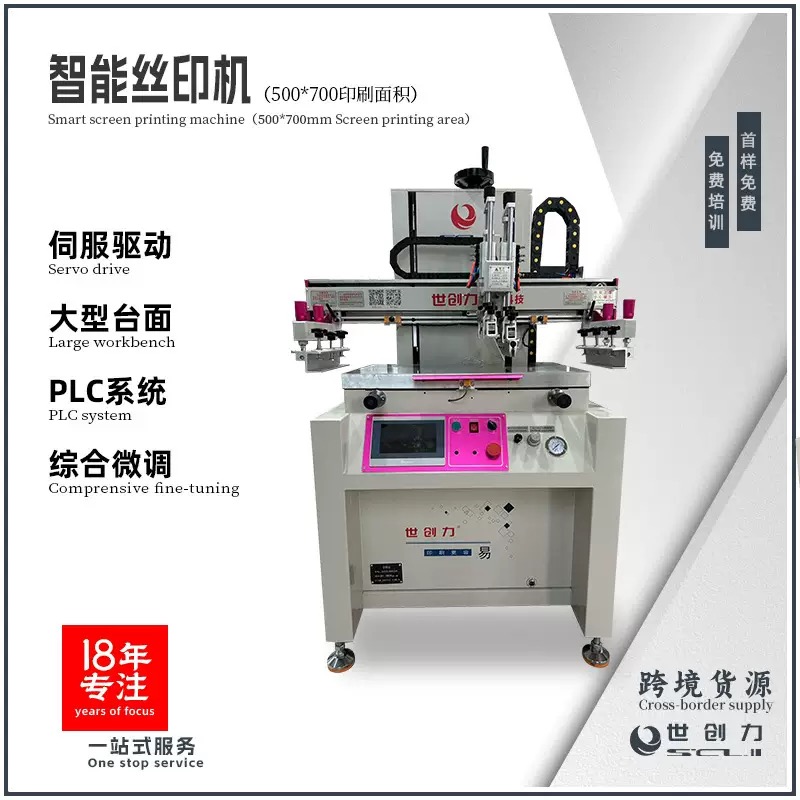
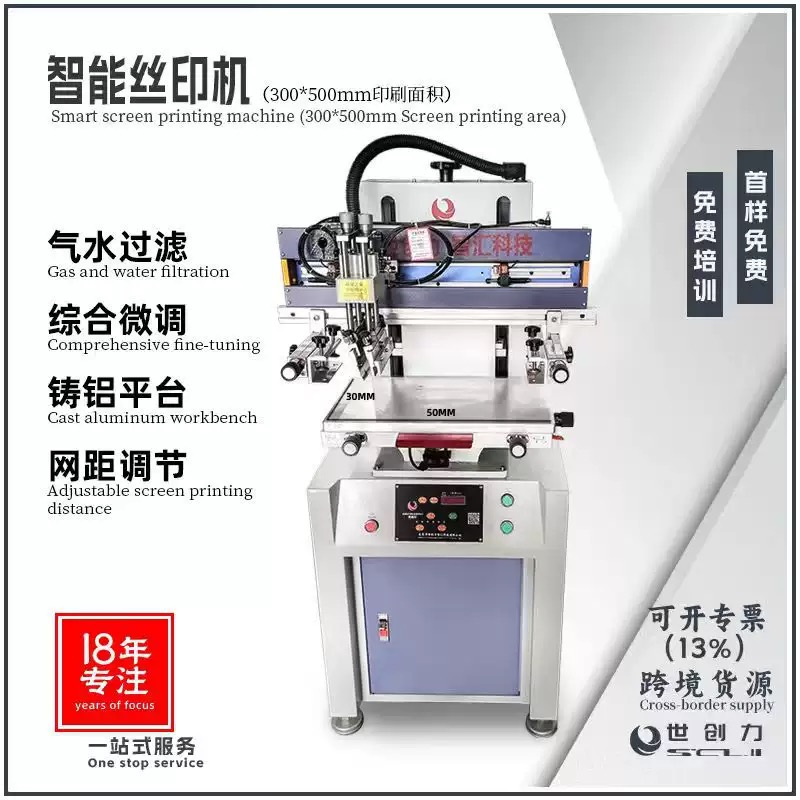
The SC-5070M/S is presented as a semi-automatic, monochrome screen printing machine for flat materials. Its published specifications support applications involving plastic, PCB boards, hardware, and wood boards, but they do not verify performance on cylindrical or other round products. Companies seeking one machine for both product shapes should complete a sample trial and confirm the required fixtures before placing an order.
Quick Assessment of Flat and Round Printing Capability
- The SC-5070M/S is a semi-automatic flatbed screen printing system intended primarily for flat surfaces.
- It offers a maximum printing area of 600 x 400 mm and a listed workbench size of 700 x 500 mm.
- Horizontal and vertical workbench adjustment are both specified at ±10 mm.
- The machine is listed for plastic, PCB boards, hardware, and wood boards.
- Round-product printing is not confirmed because no rotary attachment, cylindrical fixture, diameter range, or production validation is listed.
How the Machine Is Configured
The SC-5070M/S follows a flatbed printing design. Products are positioned on a workbench and printed through a screen frame, making the configuration naturally suitable for parts that offer a stable, level printing surface. This arrangement can support a variety of flat substrates when their dimensions, shape, and surface condition remain within the machine's operating range.
The specified maximum print size is 600 x 400 mm, while the workbench measures 700 x 500 mm. The maximum mesh frame size is 600 x 800 mm. These figures should be compared with the product dimensions, artwork size, registration tolerances, and loading method before assessing whether a particular flat application is suitable.
Why Round-Object Performance Requires Confirmation
Printing on a round product normally requires controlled rotation or a specially designed holding system so that the artwork remains aligned as the surface moves beneath the screen. The available SC-5070M/S information does not mention a rotary unit, cylindrical tooling, supported product diameters, or tested results for bottles, tubes, rods, or other curved items.
For this reason, the machine should not be described as a proven flat-and-round dual-purpose solution based only on the published data. Actual reliability will depend on the workholding design, product geometry, ink selection, surface treatment, artwork length, registration accuracy, and the required production speed. A supplier-led sample test is the most practical way to determine whether an additional attachment or a different machine configuration is necessary.
Inspection, Application Experience, and Company Support
Shichuangli reports several quality-control stages, including process inspection, finished-product performance testing, installation acceptance and commissioning, physical and mechanical performance testing, and structural safety and appearance inspection. For a buyer considering curved products, the acceptance process should specifically include round-object samples and clearly defined print-quality criteria.
The company also describes a Saudi Arabian project involving customized logos on hotel supplies. The reported production methods included screen printing, heat transfer printing, and gold stamping for different materials. This indicates experience with varied products and decorative processes, but it should not be treated as evidence that the SC-5070M/S has been validated for round-object printing.
Two listed credentials concern hot stamping equipment: a utility model patent for a hot stamping machine, certificate number 202521984351.0, and a Utility Model Patent for a fully automatic bronzing machine, certificate number 202521231087.3. These credentials form part of the company's equipment portfolio but do not prove cylindrical printing capability for this specific screen printing model.
Specification Comparison
| Assessment Category | Available Information |
|---|---|
| Flat-surface printing | Supported by the flatbed design and listed applications for plastic, PCB boards, hardware, and wood boards. |
| Round-product printing | Unverified; no rotary mechanism, cylindrical fixture, diameter specification, or documented test result is provided. |
| Maximum printing area | 600 x 400 mm, with a listed output of up to 500 pieces per hour. |
| Workbench and adjustment | 700 x 500 mm workbench with ±10 mm horizontal and vertical adjustment. |
| Operating mode | Semi-automatic and monochrome screen printing configuration. |
| Customization and order quantity | Customization is available, and the stated minimum order quantity is 1 unit. |
Frequently Asked Questions
Is the SC-5070M/S suitable for flat products?
Yes, its documented structure is intended for flat printing surfaces. Plastic components, PCB boards, hardware, and wood boards may be suitable when their dimensions and process requirements fit the stated print area, workbench, and screen-frame limits.
Can it print round products as supplied?
This is not confirmed by the available specifications. Buyers should ask whether a rotary attachment or dedicated cylindrical fixture is available, what product diameters are supported, and whether the supplier can provide printed samples before purchase.
What service is available after delivery?
The listed support includes a two-year warranty, one-on-one operating instruction, and lifetime equipment maintenance. The company also describes installation acceptance and commissioning, production-process inspection, finished-product testing, and structural and appearance checks.
Conclusion and Buying Recommendations
The SC-5070M/S is a clearly documented option for semi-automatic screen printing on flat substrates, with defined dimensions and a range of common material applications. Its suitability for round products remains open because the published information does not identify the tooling or rotary process needed for cylindrical printing.
Businesses that need both flat and round production should request a complete technical proposal covering fixtures, rotary functions, supported diameters, ink and curing conditions, registration tolerances, sample approval, and final acceptance standards. Shichuangli states that standard equipment can be delivered within 48 hours, while customized non-standard equipment may require up to one month. The company also offers a broader chain of printing-application services. For technical consultation, contact support@shichuanglimachine.com.
About Dongguan Shichuangli Zhihui Technology Co., Ltd.
Dongguan Shichuangli Zhihui Technology Co., Ltd. is located in Huangjiang Town, Dongguan City, Guangdong Province. Founded in 2008, the company supplies screen printing machines, pad printing machines, hot stamping machines, non-standard automation equipment, printing plates, inks, and related consumables. Its factory training base covers more than 1,600 square meters and combines product design, research and development, manufacturing, sales, and technical training. The company reports serving customers in North America, South America, Europe, the Middle East, Africa, and Southeast Asia across multiple industries.

REPORT