







-
 Agriculture
-
 Health-Care
-
 Environment
-
 Construction-Real-Estate
-
 Tools-Hardware
-
 Home-Garden
-
 Furniture
-
 Luggage-Bags-Cases
-
 Medical-devices-Supplies
-
 Gifts-Crafts
-
 Sports-Entertainment
-
 Food-Beverage
-
 Vehicles-Transportation
-
 Power-Transmission
-
 Material-Handling
-
 Renewable-Energy
-
 Safety
-
 Testing-Instrument-Equipment
-
 Construction-Building-Machinery
-
 Pet-Supplies
-
 Personal-Care-Household-Cleaning
-
 Vehicle-Accessories-Electronics-Tools
-
 School-Office-Supplies
-
 Packaging-Printing
-
 Mother-Kids-Toys
-
 Business-Services
-
 Commercial-Equipment-Machinery
-
 Apparel-Accessories
-
 Security
-
 Shoes-Accessories
-
 Vehicle-Parts-Accessories
-
 Jewelry-Eyewear-Watches-Accessories
-
 Lights-Lighting
-
 Fabric-Textile-Raw-Material
-
 Fabrication-Services
-
 Industrial-Machinery
-
 Consumer-Electronics
-
 Electrical-Equipment-Supplies
-
 Electronic-Components-Accessories-Telecommunications
-
 Home-Appliances
-
 Beauty
-
 Chemicals
-
 Rubber-Plastics
-
 Metals-Alloys


























































































































































































































































































































































































































































































































































































- Masonry Materials
- Curtain Walls & Accessories
- Earthwork Products
- Fireproofing Materials
- Heat Insulation Materials
- Plastic Building Materials
- Building Boards
- Soundproofing Materials
- Timber
- Waterproofing Materials
- Balustrades & Handrails
- Bathroom & Kitchen
- Flooring & Accessories
- Tiles & Accessories
- Door, Window & Accessories
- Fireplaces & Stoves
- Floor Heating Systems & Parts
- Stairs & Stair Parts
- Ceilings
- Elevators & Escalators
- Stone
- Countertops, Vanity Tops & Table Tops
- Mosaics
- Metal Building Materials
- Multifunctional Materials
- Ladders & Scaffoldings
- Mouldings
- Corner Guards
- Decorative Films
- Formwork
- Building & Industrial Glass
- Other Construction & Real Estate
- Wallpapers/Wall panels
- HVAC System & Parts
- Outdoor Facilities
- Prefabricated Buildings
- Festive & Party Supplies
- Bathroom Products
- Household Sundries
- Rain Gear
- Garden Supplies
- Household Cleaning Tools & Accessories
- Lighters & Smoking Accessories
- Home Storage & Organization
- Household Scales
- Smart Home Improvement
- Home Textiles
- Kitchenware
- Drinkware & Accessories
- Dinnerware, Coffee & Wine
- Home Decor
- Golf
- Fitness & Body Building
- Amusement Park Facilities
- Billiards, Board Game,Coin Operated Games
- Musical Instruments
- Outdoor Affordable Luxury Sports
- Camping & Hiking
- Fishing
- Sports Safety&Rehabilitation
- Ball Sports Equipments
- Water Sports
- Winter Sports
- Luxury Travel Equipments
- Sports Shoes, Bags & Accessories
- Cycling
- Other Sports & Entertainment Products
- Artificial Grass&Sports Flooring&Sports Court Equipment
- Scooters
- Food Ingredients
- Honey & Honey Products
- Snacks
- Nuts & Kernels
- Seafood
- Plant & Animal Oil
- Beverages
- Fruit & Vegetable Products
- Frog & Escargot
- Bean Products
- Egg Products
- Dairy Products
- Seasonings & Condiments
- Canned Food
- Instant Food
- Baked Goods
- Other Food & Beverage
- Meat & Poultry
- Confectionery
- Grain Products
- Feminie Care
- Hair Care & Styling
- Body Care
- Hands & Feet Care
- Hygiene Products
- Men's Grooming
- Laundry Cleaning Supplies
- Travel Size & Gift Sets
- Room Deodorizers
- Other Personal Care Products
- Pest Control Products
- Special Household Cleaning
- Floor Cleaning
- Kitchen & Bathroom Cleaning
- Oral Care
- Bath Supplies
- Yellow Pages
- Correction Supplies
- Office Binding Supplies
- Office Cutting Supplies
- Board Erasers
- Office Adhesives & Tapes
- Education Supplies
- Pencil Cases & Bags
- Notebooks & Writing Pads
- File Folder Accessories
- Calendars
- Writing Accessories
- Commercial Office Supplies
- Pencil Sharpeners
- Pens
- Letter Pad/Paper
- Paper Envelopes
- Desk Organizers
- Pencils
- Markers & Highlighters
- Filing Products
- Art Supplies
- Easels
- Badge Holder & Accessories
- Office Paper
- Printer Supplies
- Book Covers
- Other Office & School Supplies
- Stationery Set
- Boards
- Clipboards
- Stamps
- Drafting Supplies
- Stencils
- Electronic Dictionary
- Books
- Map
- Magazines
- Calculators
- Baby & Toddler Toys
- Educational Toys
- Classic Toys
- Dress Up & Pretend Play
- Toy Vehicle
- Stuffed Animals & Plush Toys
- Outdoor Toys & Structures
- Balloons & Accessories
- Baby Food
- Children's Clothing
- Baby Supplies & Products
- Maternity Clothes
- Kids Shoes
- Baby Care
- Novelty & Gag Toys
- Dolls & Accessories
- Puzzle & Games
- Blocks & Model Building Toys
- Toddler Clothing
- Baby Clothing
- Kids' Luggage & Bags
- Arts, Crafts & DIY Toys
- Action & Toy Figures
- Baby Appliances
- Hobbies & Models
- Remote Control Toys
- Promotional Toys
- Pregnancy & Maternity
- Hygiene Products
- Kid's Textile&Bedding
- Novelty & Special Use
- Toy Weapons
- Baby Gifts
- Baby Storage & Organization
- Auto Drive Systems
- ATV/UTV Parts & Accessories
- Marine Parts & Accessories
- Other Auto Parts
- Trailer Parts & Accessories
- Auto Transmission Systems
- Train Parts & Accessories
- Universal Parts
- Railway Parts & Accessories
- Auto Brake Systems
- Aviation Parts & Accessories
- Truck Parts & Accessories
- Auto Suspension Systems
- Auto Lighting Systems
- New Energy Vehicle Parts & Accessories
- Auto Steering Systems
- Wheels, Tires & Accessories
- Bus Parts & Accessories
- Auto Performance Parts
- Cooling System
- Go-Kart & Kart Racer Parts & Accessories
- Air Conditioning Systems
- Heavy Duty Vehicle Parts & Accessories
- Auto Electrical Systems
- Auto Body Systems
- Auto Engine Systems
- Container Parts & Accessories
- Motorcycle Parts & Accessories
- Refrigeration & Heat Exchange Equipment
- Machine Tool Equipment
- Food & Beverage Machinery
- Agricultural Machinery & Equipment
- Apparel & Textile Machinery
- Chemical Machinery
- Packaging Machines
- Paper Production Machinery
- Plastic & Rubber Processing Machinery
- Industrial Robots
- Electronic Products Machinery
- Metal & Metallurgy Machinery
- Woodworking Machinery
- Home Product Manufacturing Machinery
- Machinery Accessories
- Environmental Machinery
- Machinery Service
- Electrical Equipment Manufacturing Machinery
- Industrial Compressors & Parts
- Tobacco & Cigarette Machinery
- Production Line
- Used Industrial Machinery
- Electronics Production Machinery
- Other Machinery & Industrial Equipment
- Camera, Photo & Accessories
- Portable Audio, Video & Accessories
- Television, Home Audio, Video & Accessories
- Video Games & Accessories
- Mobile Phone & Accessories
- Electronic Publications
- Earphone & Headphone & Accessories
- Speakers & Accessories
- Smart Electronics
- TV Receivers & Accessories
- Mobile Phone & Computer Repair Parts
- Chargers, Batteries & Power Supplies
- Used Electronics
- VR, AR, MR Hardware & Software
- Projectors & Presentation Equipments
- Other Consumer Electronics
- Cables & Commonly Used Accessories
- Computer Hardware & Software
- Displays, Signage and Optoelectronics
- Discrete Semiconductors
- Wireless & IoT Module and Products
- Telecommunications
- Connectors, Terminals & Accessories
- Development Boards, Electronic Modules and Kits
- Circuit Protection
- Sensors
- Isolators
- Audio Components and Products
- Integrated Circuits
- Power Supplies
- Relays
- RF, Microwave and RFID
- Electronic Accessories & Supplies
- Passive Components
- PCB & PCBA
- Air Quality Appliances
- Home Appliance Parts
- Heating & Cooling Appliances
- Small Kitchen Appliances
- Laundry Appliances
- Water Heaters
- Water Treatment Appliances
- Refrigerators & Freezers
- Personal Care & Beauty Appliances
- Major Kitchen Appliances
- Cleaning Appliances
- Second-hand Appliances
- Smart Home Appliances
- Other Home Appliances
- Energy Chemicals
- Inorganic Chemicals
- Basic Organic Chemicals
- Agrochemicals
- Admixture & Additives
- Catalysts & Chemical Auxiliary Agents
- Pigments & Dyestuff
- Coating & Paint
- Daily Chemicals
- Polymer
- Organic Intermediate
- Adhesives & Sealants
- Chemical Waste
- Biological Chemical Products
- Surface Treatment Chemicals
- Painting & Coating
- Chemical Reagents
- Flavor & Fragrance
- Non-Explosive Demolition Agents
- Other Chemicals
- Custom Chemical Services

Energy-Efficient Alternatives to Conventional Food Packaging Machinery
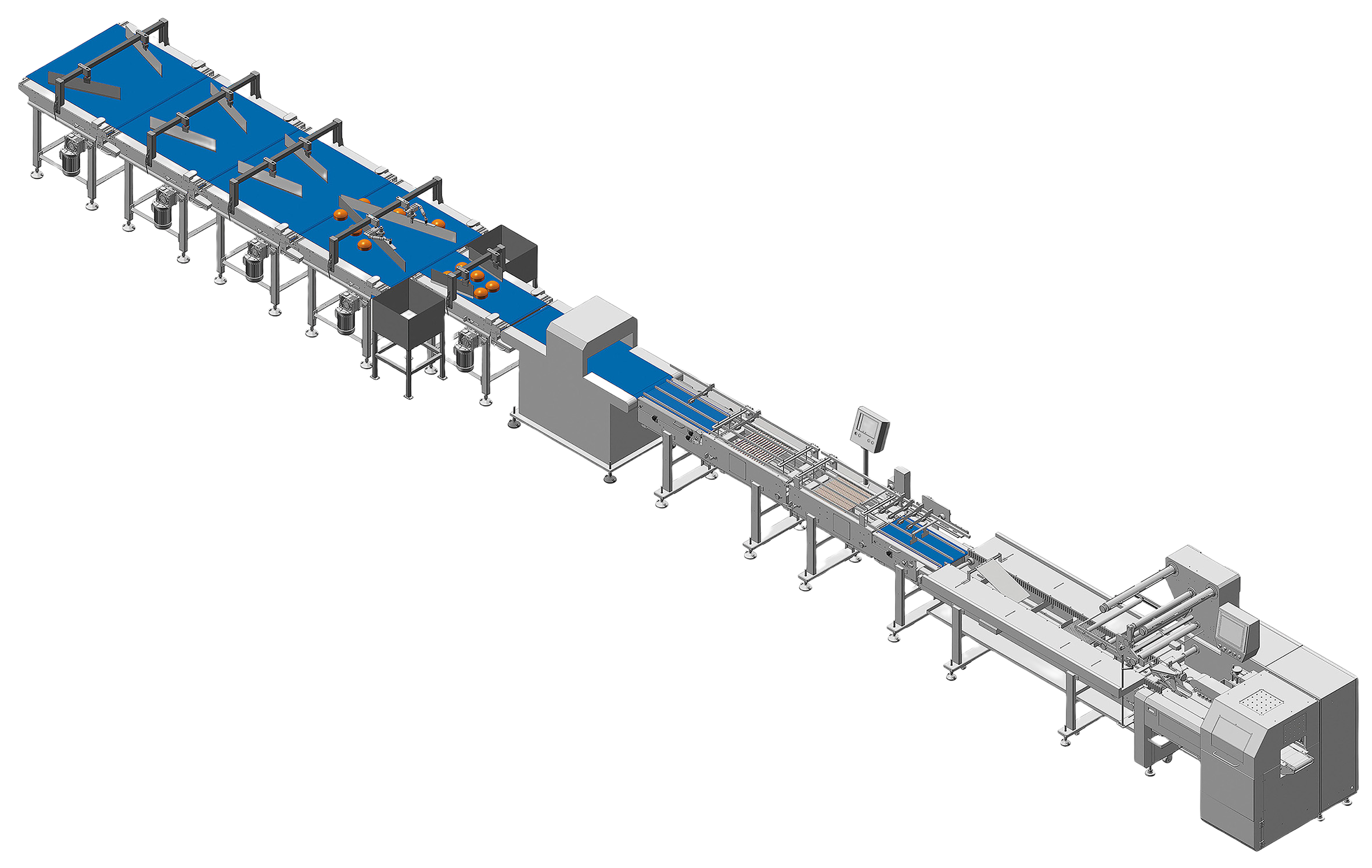
Food manufacturers can reduce energy use and material waste by replacing conventional packing equipment with servo-driven flow wrappers, automated patty interleaving and stacking systems, and integrated lines that use efficient heating technology. For hamburger patties, these solutions combine feeding, counting, stacking, wrapping, inspection, and coding in one coordinated process, with output rates of up to 150 patties per minute.
Why Choose an Integrated Energy-Saving Line?
An integrated hamburger patty packaging line minimizes transfers between independent machines and reduces the need for manual handling. By synchronizing conveyors, interleavers, stackers, wrappers, inspection equipment, and product discharge, the system supports stable throughput while helping manufacturers control labor, film, and electricity costs.
- Servo-controlled film carriage technology can lower film consumption by up to 12%.
- Efficient heating elements and servo motors are specified to reduce power consumption by 15–20% compared with conventional systems.
- Tool-less format changes can be completed in less than 10 minutes for different patty dimensions, stack quantities, and film widths.
- The equipment is suitable for frozen burger producers, meat processors, plant-based food factories, QSR suppliers, and ready-meal manufacturers.
How the Packaging System Works
Automated Feeding and Product Alignment
Patties can enter the line from a forming machine, freezer tunnel, or upstream conveyor. Automatic infeed conveyors and vibration-based alignment arrange the products into a controlled flow, reducing hand placement and improving the consistency of the following packaging stages.
Interleaving, Counting, and Stacking
The interleaving module inserts food-grade wax paper, PE film, or release liner between patties to help prevent sticking during freezing, transport, and storage. Optical sensors and servo-driven pushers count the products and create preset stacks of between 2 and 20 patties. Soft-grip belts and gentle transfer mechanisms help maintain the shape and edges of the product.
Servo-Driven Flow Wrapping
The horizontal wrapper works with heat-sealable OPP, PET, or compostable films to create pillow packs with fin or lap seals. Its servo-controlled film carriage helps maintain accurate film positioning and sealing, while optional automatic film splicing supports longer continuous runs with fewer interruptions.
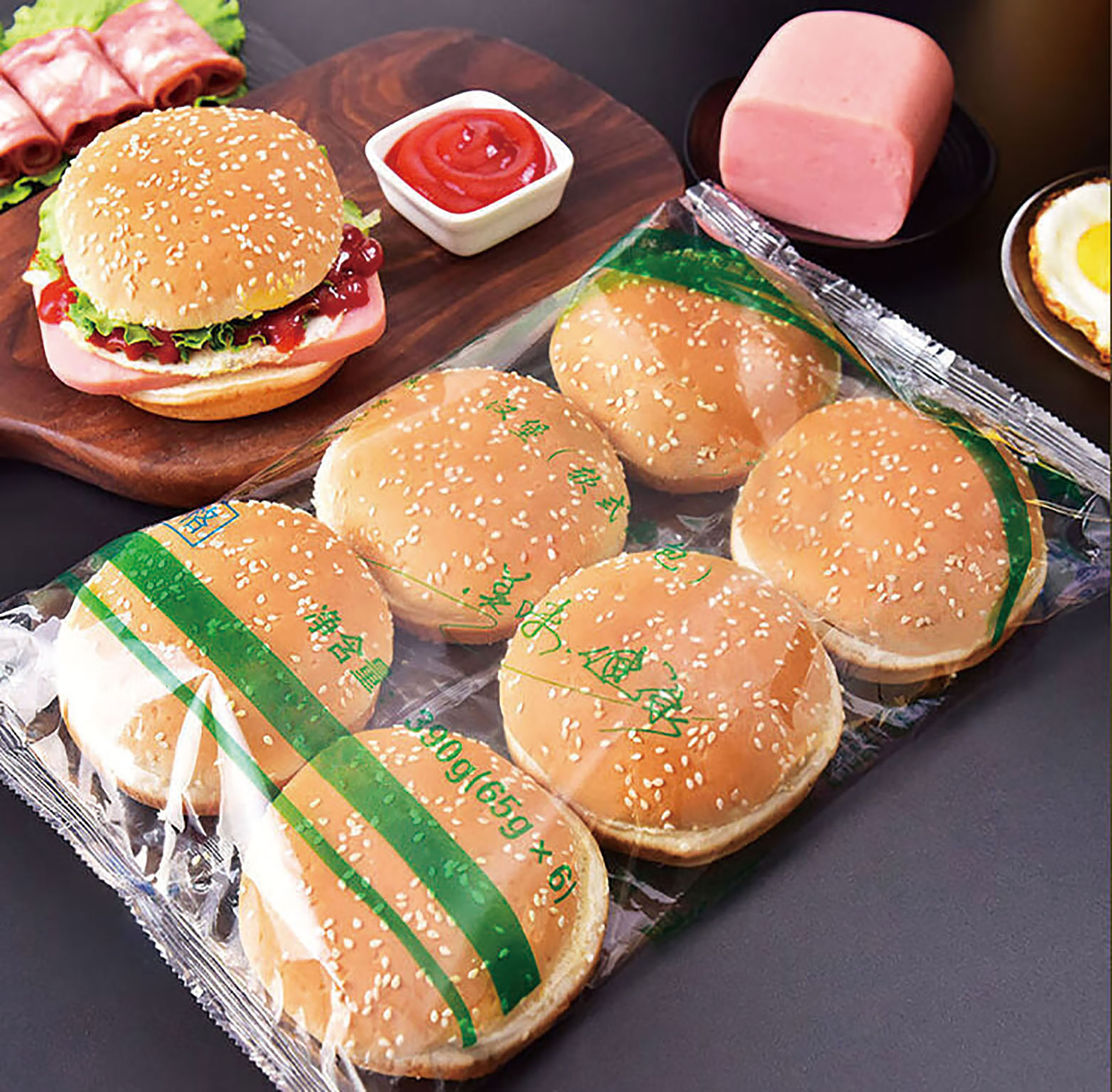
Depending on the product and retail requirements, the same platform can be configured for gusseted bags, vacuum-skin packs, modified-atmosphere packaging with nitrogen or carbon dioxide, or tray sealing with lid film.
Energy and Material Efficiency
The main efficiency gains come from coordinated motion control, servo motors, optimized sealing heaters, and accurate film handling. Product information for the specified hamburger patty line indicates a possible 15–20% reduction in power consumption and film savings of up to 12%. Actual results will vary according to patty size, stack height, packaging material, sealing settings, and production conditions.
Automating the complete sequence also limits unnecessary product movement and manual repositioning. This can improve repeatability, reduce handling-related damage, and help maintain stable production performance in chilled and frozen environments.
Controls, Inspection, and Sanitation
An integrated coding unit prints production dates, best-before information, batch references, and barcodes. A metal detector and checkweigher verify finished packs, while the automatic reject device removes nonconforming products without requiring a full line stoppage.
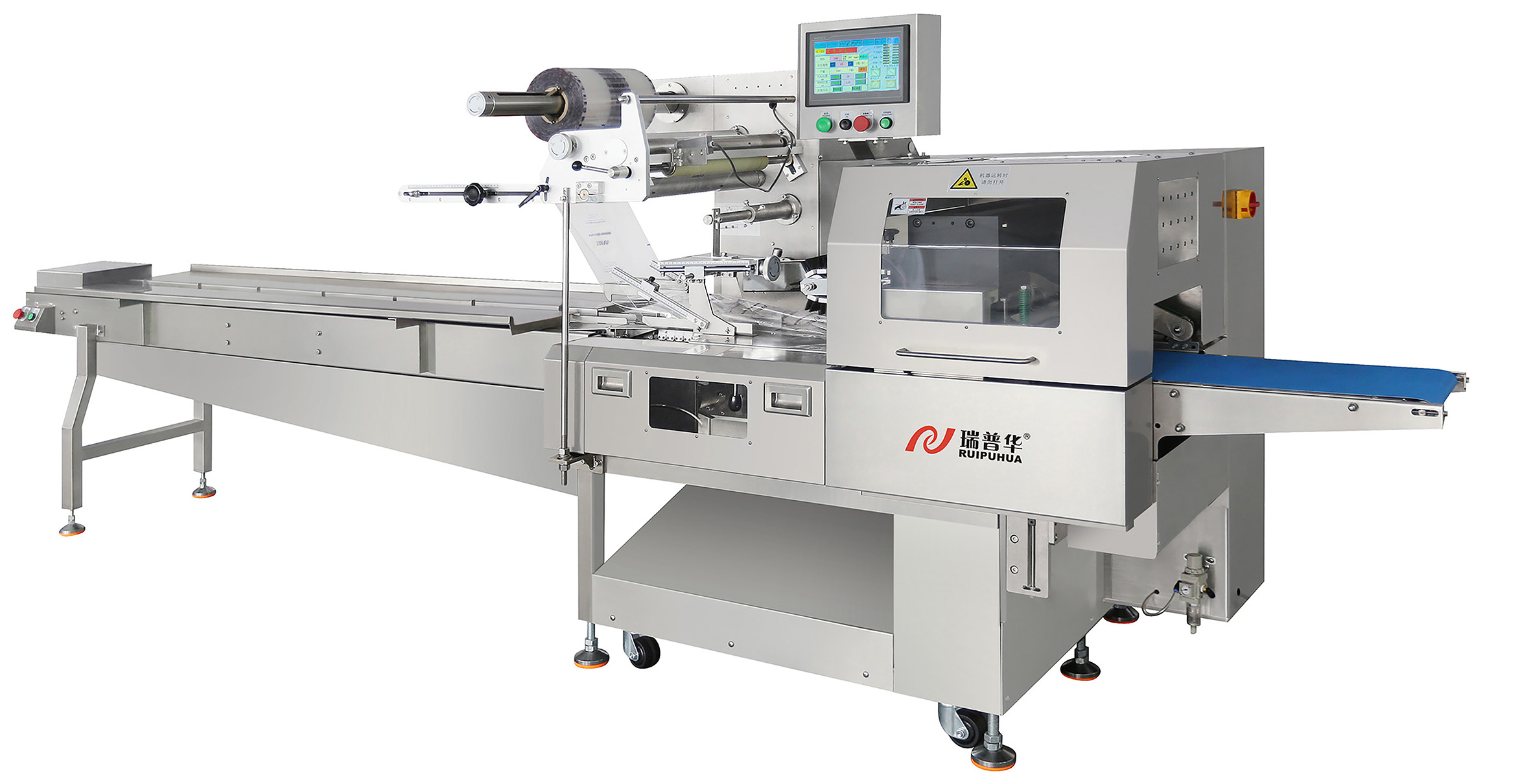
The PLC and 10-inch HMI touchscreen can store up to 100 recipes, show operating data and fault information, and provide optional remote access. The line is specified for working temperatures from -10°C to +40°C. An AISI 304 stainless steel frame, IP65 washdown protection, and accessible cleaning panels support hygiene requirements for food processing environments.
The specified system lists CE, UL, and HACCP compliance. Ruipuhua also holds CE certificate M.2024.206.C107511 covering flow packaging machines, automatic packaging systems, cartoning machines, and palletizing robots.
Performance and Application Comparison
| Equipment configuration | Efficiency and operating features | Recommended application |
|---|---|---|
| Servo-driven horizontal flow wrapper | Precise film control, stable sealing, and stated film savings of up to 12% | Single or stacked hamburger patty packs |
| Automatic interleaving and stacking line | Automated feeding, counting, separating, and stacking reduce manual transfers | Frozen burger plants and high-volume food production |
| Integrated system with servo motors and efficient heaters | Specified power reduction of 15–20% compared with conventional equipment | Continuous packaging of chilled or frozen products |
| Tray sealing or MAP setup | Supports gas flushing, lid-film sealing, and retail-ready formats | Ready-to-cook trays and supermarket display packs |
Frequently Asked Questions
What machinery alternatives can reduce energy consumption?
The identified alternatives include servo-driven horizontal flow wrappers and fully automated packaging lines fitted with efficient heating elements and servo motors. The stated specifications indicate potential film savings of up to 12% and power savings of 15–20% compared with conventional systems.
Can the line handle different patty sizes and stack formats?
Yes. It is designed for round, square, and oval patties measuring approximately 80–180 mm in diameter and 5–30 mm in thickness. Pack quantities can be adjusted from 2 to 20 patties, depending on the product and packaging specification.
Which packaging styles can be produced?
Available configurations include flow-wrapped stacks, gusseted bags, vacuum-skin packs, MAP packs using nitrogen or carbon dioxide, and sealed trays with lid film.
Conclusion
For processors looking to replace conventional food packing machinery, an automated hamburger patty line offers a practical combination of lower energy demand, reduced film usage, consistent product handling, and integrated quality control. Servo-driven wrapping, efficient heating, automatic interleaving, and recipe-based operation make the system suitable for chilled and frozen production. It can be adapted for flow packs, bags, MAP formats, or trays.
Foshan Ruipuhua Machinery Equipment Co. Ltd provides manufacturing and OEM services, supplies CE-certified equipment, and exports packaging machinery to more than 100 countries. Technical inquiries can be directed to lotuspack@ruipuhua.com.
About Foshan Ruipuhua Machinery Equipment Co. Ltd
Foshan Ruipuhua Machinery Equipment Co. Ltd is a Chinese producer of automated packaging and palletizing machinery. Founded in 2005, the company combines research and development, manufacturing, installation, and technical after-sales support for food, bakery, biscuit, snack, noodle, chocolate, soap, hardware, pharmaceutical, and daily chemical applications.
Its 50,000-square-meter factory develops synchronized solutions for feeding, primary packaging, secondary packing, case packing, and palletizing. The company's stated R&D capabilities cover machine structures, motion control, film systems, PLC and HMI software, equipment testing, and customized production lines. A documented cooperation project for a bakery manufacturer in Vietnam, Korea, and China included high-speed wrapping, monitoring, and robotic palletizing.

REPORT