







-
 Agriculture
-
 Health-Care
-
 Environment
-
 Construction-Real-Estate
-
 Tools-Hardware
-
 Home-Garden
-
 Furniture
-
 Luggage-Bags-Cases
-
 Medical-devices-Supplies
-
 Gifts-Crafts
-
 Sports-Entertainment
-
 Food-Beverage
-
 Vehicles-Transportation
-
 Power-Transmission
-
 Material-Handling
-
 Renewable-Energy
-
 Safety
-
 Testing-Instrument-Equipment
-
 Construction-Building-Machinery
-
 Pet-Supplies
-
 Personal-Care-Household-Cleaning
-
 Vehicle-Accessories-Electronics-Tools
-
 School-Office-Supplies
-
 Packaging-Printing
-
 Mother-Kids-Toys
-
 Business-Services
-
 Commercial-Equipment-Machinery
-
 Apparel-Accessories
-
 Security
-
 Shoes-Accessories
-
 Vehicle-Parts-Accessories
-
 Jewelry-Eyewear-Watches-Accessories
-
 Lights-Lighting
-
 Fabric-Textile-Raw-Material
-
 Fabrication-Services
-
 Industrial-Machinery
-
 Consumer-Electronics
-
 Electrical-Equipment-Supplies
-
 Electronic-Components-Accessories-Telecommunications
-
 Home-Appliances
-
 Beauty
-
 Chemicals
-
 Rubber-Plastics
-
 Metals-Alloys


























































































































































































































































































































































































































































































































































































- Masonry Materials
- Curtain Walls & Accessories
- Earthwork Products
- Fireproofing Materials
- Heat Insulation Materials
- Plastic Building Materials
- Building Boards
- Soundproofing Materials
- Timber
- Waterproofing Materials
- Balustrades & Handrails
- Bathroom & Kitchen
- Flooring & Accessories
- Tiles & Accessories
- Door, Window & Accessories
- Fireplaces & Stoves
- Floor Heating Systems & Parts
- Stairs & Stair Parts
- Ceilings
- Elevators & Escalators
- Stone
- Countertops, Vanity Tops & Table Tops
- Mosaics
- Metal Building Materials
- Multifunctional Materials
- Ladders & Scaffoldings
- Mouldings
- Corner Guards
- Decorative Films
- Formwork
- Building & Industrial Glass
- Other Construction & Real Estate
- Wallpapers/Wall panels
- HVAC System & Parts
- Outdoor Facilities
- Prefabricated Buildings
- Festive & Party Supplies
- Bathroom Products
- Household Sundries
- Rain Gear
- Garden Supplies
- Household Cleaning Tools & Accessories
- Lighters & Smoking Accessories
- Home Storage & Organization
- Household Scales
- Smart Home Improvement
- Home Textiles
- Kitchenware
- Drinkware & Accessories
- Dinnerware, Coffee & Wine
- Home Decor
- Golf
- Fitness & Body Building
- Amusement Park Facilities
- Billiards, Board Game,Coin Operated Games
- Musical Instruments
- Outdoor Affordable Luxury Sports
- Camping & Hiking
- Fishing
- Sports Safety&Rehabilitation
- Ball Sports Equipments
- Water Sports
- Winter Sports
- Luxury Travel Equipments
- Sports Shoes, Bags & Accessories
- Cycling
- Other Sports & Entertainment Products
- Artificial Grass&Sports Flooring&Sports Court Equipment
- Scooters
- Food Ingredients
- Honey & Honey Products
- Snacks
- Nuts & Kernels
- Seafood
- Plant & Animal Oil
- Beverages
- Fruit & Vegetable Products
- Frog & Escargot
- Bean Products
- Egg Products
- Dairy Products
- Seasonings & Condiments
- Canned Food
- Instant Food
- Baked Goods
- Other Food & Beverage
- Meat & Poultry
- Confectionery
- Grain Products
- Feminie Care
- Hair Care & Styling
- Body Care
- Hands & Feet Care
- Hygiene Products
- Men's Grooming
- Laundry Cleaning Supplies
- Travel Size & Gift Sets
- Room Deodorizers
- Other Personal Care Products
- Pest Control Products
- Special Household Cleaning
- Floor Cleaning
- Kitchen & Bathroom Cleaning
- Oral Care
- Bath Supplies
- Yellow Pages
- Correction Supplies
- Office Binding Supplies
- Office Cutting Supplies
- Board Erasers
- Office Adhesives & Tapes
- Education Supplies
- Pencil Cases & Bags
- Notebooks & Writing Pads
- File Folder Accessories
- Calendars
- Writing Accessories
- Commercial Office Supplies
- Pencil Sharpeners
- Pens
- Letter Pad/Paper
- Paper Envelopes
- Desk Organizers
- Pencils
- Markers & Highlighters
- Filing Products
- Art Supplies
- Easels
- Badge Holder & Accessories
- Office Paper
- Printer Supplies
- Book Covers
- Other Office & School Supplies
- Stationery Set
- Boards
- Clipboards
- Stamps
- Drafting Supplies
- Stencils
- Electronic Dictionary
- Books
- Map
- Magazines
- Calculators
- Baby & Toddler Toys
- Educational Toys
- Classic Toys
- Dress Up & Pretend Play
- Toy Vehicle
- Stuffed Animals & Plush Toys
- Outdoor Toys & Structures
- Balloons & Accessories
- Baby Food
- Children's Clothing
- Baby Supplies & Products
- Maternity Clothes
- Kids Shoes
- Baby Care
- Novelty & Gag Toys
- Dolls & Accessories
- Puzzle & Games
- Blocks & Model Building Toys
- Toddler Clothing
- Baby Clothing
- Kids' Luggage & Bags
- Arts, Crafts & DIY Toys
- Action & Toy Figures
- Baby Appliances
- Hobbies & Models
- Remote Control Toys
- Promotional Toys
- Pregnancy & Maternity
- Hygiene Products
- Kid's Textile&Bedding
- Novelty & Special Use
- Toy Weapons
- Baby Gifts
- Baby Storage & Organization
- Auto Drive Systems
- ATV/UTV Parts & Accessories
- Marine Parts & Accessories
- Other Auto Parts
- Trailer Parts & Accessories
- Auto Transmission Systems
- Train Parts & Accessories
- Universal Parts
- Railway Parts & Accessories
- Auto Brake Systems
- Aviation Parts & Accessories
- Truck Parts & Accessories
- Auto Suspension Systems
- Auto Lighting Systems
- New Energy Vehicle Parts & Accessories
- Auto Steering Systems
- Wheels, Tires & Accessories
- Bus Parts & Accessories
- Auto Performance Parts
- Cooling System
- Go-Kart & Kart Racer Parts & Accessories
- Air Conditioning Systems
- Heavy Duty Vehicle Parts & Accessories
- Auto Electrical Systems
- Auto Body Systems
- Auto Engine Systems
- Container Parts & Accessories
- Motorcycle Parts & Accessories
- Refrigeration & Heat Exchange Equipment
- Machine Tool Equipment
- Food & Beverage Machinery
- Agricultural Machinery & Equipment
- Apparel & Textile Machinery
- Chemical Machinery
- Packaging Machines
- Paper Production Machinery
- Plastic & Rubber Processing Machinery
- Industrial Robots
- Electronic Products Machinery
- Metal & Metallurgy Machinery
- Woodworking Machinery
- Home Product Manufacturing Machinery
- Machinery Accessories
- Environmental Machinery
- Machinery Service
- Electrical Equipment Manufacturing Machinery
- Industrial Compressors & Parts
- Tobacco & Cigarette Machinery
- Production Line
- Used Industrial Machinery
- Electronics Production Machinery
- Other Machinery & Industrial Equipment
- Camera, Photo & Accessories
- Portable Audio, Video & Accessories
- Television, Home Audio, Video & Accessories
- Video Games & Accessories
- Mobile Phone & Accessories
- Electronic Publications
- Earphone & Headphone & Accessories
- Speakers & Accessories
- Smart Electronics
- TV Receivers & Accessories
- Mobile Phone & Computer Repair Parts
- Chargers, Batteries & Power Supplies
- Used Electronics
- VR, AR, MR Hardware & Software
- Projectors & Presentation Equipments
- Other Consumer Electronics
- Cables & Commonly Used Accessories
- Computer Hardware & Software
- Displays, Signage and Optoelectronics
- Discrete Semiconductors
- Wireless & IoT Module and Products
- Telecommunications
- Connectors, Terminals & Accessories
- Development Boards, Electronic Modules and Kits
- Circuit Protection
- Sensors
- Isolators
- Audio Components and Products
- Integrated Circuits
- Power Supplies
- Relays
- RF, Microwave and RFID
- Electronic Accessories & Supplies
- Passive Components
- PCB & PCBA
- Air Quality Appliances
- Home Appliance Parts
- Heating & Cooling Appliances
- Small Kitchen Appliances
- Laundry Appliances
- Water Heaters
- Water Treatment Appliances
- Refrigerators & Freezers
- Personal Care & Beauty Appliances
- Major Kitchen Appliances
- Cleaning Appliances
- Second-hand Appliances
- Smart Home Appliances
- Other Home Appliances
- Energy Chemicals
- Inorganic Chemicals
- Basic Organic Chemicals
- Agrochemicals
- Admixture & Additives
- Catalysts & Chemical Auxiliary Agents
- Pigments & Dyestuff
- Coating & Paint
- Daily Chemicals
- Polymer
- Organic Intermediate
- Adhesives & Sealants
- Chemical Waste
- Biological Chemical Products
- Surface Treatment Chemicals
- Painting & Coating
- Chemical Reagents
- Flavor & Fragrance
- Non-Explosive Demolition Agents
- Other Chemicals
- Custom Chemical Services

Essential Guide to Auditing CB Test Certificates for Electric Heated Towel Racks
Validating a CB test certificate for electric heated towel racks is a vital quality assurance measure for importers, distributors, and project managers. To guarantee international safety compliance, procurement teams must carefully evaluate critical certificate attributes including explicit model identifiers, relevant IEC safety norms (such as IEC 60335-2-43), operating electrical specifications (wattage, voltage, frequency), IP ingress protection levels, and official issuing National Certification Body (NCB) credentials.
Key Evaluation Parameters for Quality Compliance
- Model Identifier Alignment: Confirm that the model number designated on the certificate (e.g., ODO-R2B or ODO-R6B-2) precisely matches product labels, packaging data, and purchase contracts.
- IEC Standard Compliance: Ensure full testing alignment with general household electrical standards and specific safety rules governing towel rails, including thermal safety limits.
- IP Rating & Moisture Resistance: Verify that certified IP protection levels suit high-humidity environments like luxury hotel guest suites, residential bathrooms, and wellness spa facilities.
- Manufacturer & Factory Credentials: Cross-examine the manufacturing facility address against audited records and validate certificate status directly on the NCB verification database.
In-Depth Technical Analysis & Component Verification
Because electric heated towel rails operate continuously in moisture-prone settings, thorough certificate evaluation protects against electrical hazards and regulatory complications. A complete audit requires analyzing the main certificate face sheet alongside the Critical Component List (CCL). Key inspection items encompass rated thermal output, operational voltage, electrical safety construction (Class I grounded vs Class II double-insulated), and integrated thermal cut-out systems.
Proprietary design engineering and electrical safety are substantiated through official documentation. For instance, the ODO Heated Towel Rack CE-LVD certificate (FTS22LC-8881S) and technical design patents—including the ODO-R2B Swivel Rotating Electric Heated Towel Rack (Patent 16423119), ODO-R6B-2 Electric Hot Towel Rack (Patent 13580319), and Automatic Towel Drying Cabinet (Patent 6142795)—demonstrate certified structural integrity and electrical reliability. Confirming these credentials prior to large-scale procurement, such as the Warsaw Chain Hotel contract (260 units of wall-mounted heated towel rails) or the Dubai Palm Jumeirah 5-Star Hotel project (380 units of smart heated towel racks), mitigates customs clearance delays and minimizes operational risk.
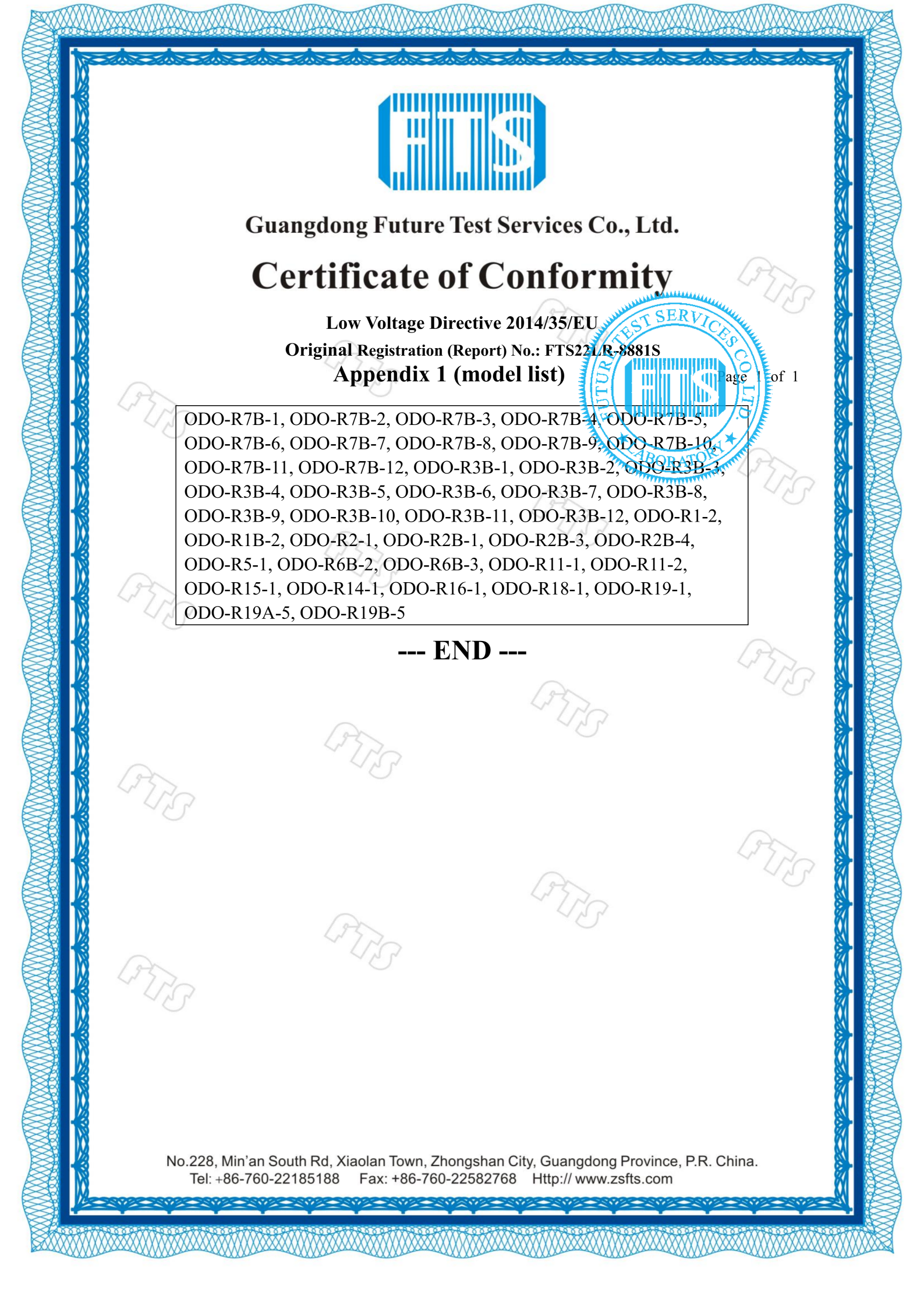
Every key internal component—such as heating elements, thermal fuses, power cables, and switches—must appear in the certificate's CCL with valid approval numbers. Substituting unverified components during mass production compromises user safety and invalidates safety certification.
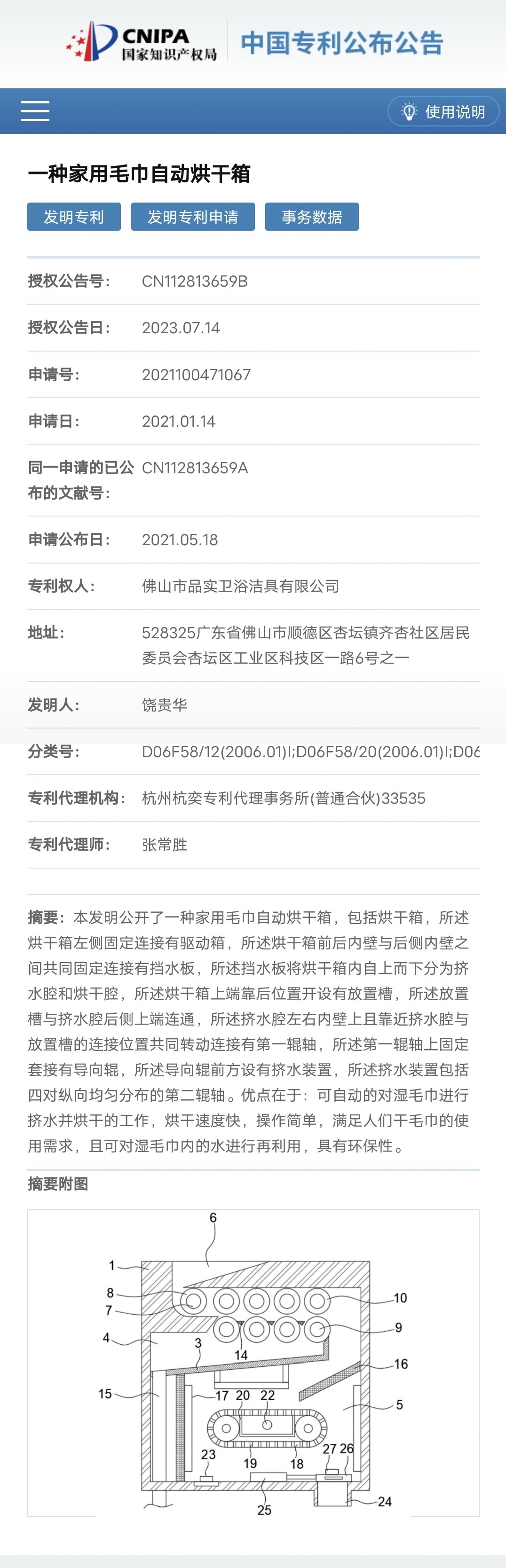
Certificate Verification Matrix
Reviewing certificate parameters across key operational checkpoints helps identify potential regulatory obstacles prior to global shipping.
| Audit Focus Point | Standard / Document Parameter | Compliance & Operational Impact |
|---|---|---|
| Product Designation | Exact model reference matching (e.g., ODO-R6B-2) | Prevents customs holds and guarantees smooth market distribution. |
| Safety Standard Verification | IEC 60335-1 / IEC 60335-2-43 standards | Ensures proper thermal controls and insulation in humid environments. |
| Ingress Protection Level | Minimum IPX4 splash-resistance verification | Validates safe operation in wet residential and commercial bathrooms. |
| Manufacturing Source | Verified factory details and license registration | Confirms authentic origin under monitored quality control systems. |
Frequently Asked Questions
What safety benchmarks apply to electric heated towel racks?
Electric towel rails are governed by general household appliance safety rules (IEC 60335-1) combined with dedicated requirements for towel rails and similar appliances (IEC 60335-2-43).
Why is examining the Critical Component List (CCL) essential?
The CCL details certified internal parts like switches, thermostats, and heating wires. Reviewing the CCL ensures the factory uses approved safety parts rather than uncertified substitutes.
How can certificate validity be confirmed for custom OEM/ODM orders?
For custom OEM/ODM production, buyers must ensure modified parameters (such as unique surface finishes, custom dimensions, or tailored voltage setups) are officially covered under the main report or registered sub-series.
Conclusion & Sourcing Guidelines
Rigorous verification of CB test documentation ensures compliance with international standards and secures commercial procurement pipelines. Backed by 20 automated production lines and 14 thorough quality control checkpoints, qualified manufacturers support OEM/ODM projects with certified documentation, flexible MOQs (1 unit for standard models), and rapid lead times of 20 to 45 days for bulk shipments. For technical inquiries or custom solution quotes, contact charlene@seosodo.com.
About Us
Foshan Pinshi Sanitary Ware Co., Ltd. is an established sanitaryware manufacturer founded in 2014, operating under the ODO brand. Featuring a 20,000 m² production facility with 245 skilled workers, 20 production lines, and over 200 high-precision R&D and manufacturing machines, the company maintains a monthly capacity of 100,000 units. Certified under ISO9001 management systems with 14 strict QC protocols, ODO exports to Europe, North America, the Middle East, and Southeast Asia, supported by more than 50 product patents and international standards including CE certifications.

REPORT