







-
 Agriculture
-
 Health-Care
-
 Environment
-
 Construction-Real-Estate
-
 Tools-Hardware
-
 Home-Garden
-
 Furniture
-
 Luggage-Bags-Cases
-
 Medical-devices-Supplies
-
 Gifts-Crafts
-
 Sports-Entertainment
-
 Food-Beverage
-
 Vehicles-Transportation
-
 Power-Transmission
-
 Material-Handling
-
 Renewable-Energy
-
 Safety
-
 Testing-Instrument-Equipment
-
 Construction-Building-Machinery
-
 Pet-Supplies
-
 Personal-Care-Household-Cleaning
-
 Vehicle-Accessories-Electronics-Tools
-
 School-Office-Supplies
-
 Packaging-Printing
-
 Mother-Kids-Toys
-
 Business-Services
-
 Commercial-Equipment-Machinery
-
 Apparel-Accessories
-
 Security
-
 Shoes-Accessories
-
 Vehicle-Parts-Accessories
-
 Jewelry-Eyewear-Watches-Accessories
-
 Lights-Lighting
-
 Fabric-Textile-Raw-Material
-
 Fabrication-Services
-
 Industrial-Machinery
-
 Consumer-Electronics
-
 Electrical-Equipment-Supplies
-
 Electronic-Components-Accessories-Telecommunications
-
 Home-Appliances
-
 Beauty
-
 Chemicals
-
 Rubber-Plastics
-
 Metals-Alloys






























































































































































































































































































































































































































- Masonry Materials
- Curtain Walls & Accessories
- Earthwork Products
- Fireproofing Materials
- Heat Insulation Materials
- Plastic Building Materials
- Building Boards
- Soundproofing Materials
- Timber
- Waterproofing Materials
- Balustrades & Handrails
- Bathroom & Kitchen
- Flooring & Accessories
- Tiles & Accessories
- Door, Window & Accessories
- Fireplaces & Stoves
- Floor Heating Systems & Parts
- Stairs & Stair Parts
- Ceilings
- Elevators & Escalators
- Stone
- Countertops, Vanity Tops & Table Tops
- Mosaics
- Metal Building Materials
- Multifunctional Materials
- Ladders & Scaffoldings
- Mouldings
- Corner Guards
- Decorative Films
- Formwork
- Building & Industrial Glass
- Other Construction & Real Estate
- Wallpapers/Wall panels
- HVAC System & Parts
- Outdoor Facilities
- Prefabricated Buildings
- Festive & Party Supplies
- Bathroom Products
- Household Sundries
- Rain Gear
- Garden Supplies
- Household Cleaning Tools & Accessories
- Lighters & Smoking Accessories
- Home Storage & Organization
- Household Scales
- Smart Home Improvement
- Home Textiles
- Kitchenware
- Drinkware & Accessories
- Dinnerware, Coffee & Wine
- Home Decor
- Golf
- Fitness & Body Building
- Amusement Park Facilities
- Billiards, Board Game,Coin Operated Games
- Musical Instruments
- Outdoor Affordable Luxury Sports
- Camping & Hiking
- Fishing
- Sports Safety&Rehabilitation
- Ball Sports Equipments
- Water Sports
- Winter Sports
- Luxury Travel Equipments
- Sports Shoes, Bags & Accessories
- Cycling
- Other Sports & Entertainment Products
- Artificial Grass&Sports Flooring&Sports Court Equipment
- Scooters
- Food Ingredients
- Honey & Honey Products
- Snacks
- Nuts & Kernels
- Seafood
- Plant & Animal Oil
- Beverages
- Fruit & Vegetable Products
- Frog & Escargot
- Bean Products
- Egg Products
- Dairy Products
- Seasonings & Condiments
- Canned Food
- Instant Food
- Baked Goods
- Other Food & Beverage
- Meat & Poultry
- Confectionery
- Grain Products
- Feminie Care
- Hair Care & Styling
- Body Care
- Hands & Feet Care
- Hygiene Products
- Men's Grooming
- Laundry Cleaning Supplies
- Travel Size & Gift Sets
- Room Deodorizers
- Other Personal Care Products
- Pest Control Products
- Special Household Cleaning
- Floor Cleaning
- Kitchen & Bathroom Cleaning
- Oral Care
- Bath Supplies
- Yellow Pages
- Correction Supplies
- Office Binding Supplies
- Office Cutting Supplies
- Board Erasers
- Office Adhesives & Tapes
- Education Supplies
- Pencil Cases & Bags
- Notebooks & Writing Pads
- File Folder Accessories
- Calendars
- Writing Accessories
- Commercial Office Supplies
- Pencil Sharpeners
- Pens
- Letter Pad/Paper
- Paper Envelopes
- Desk Organizers
- Pencils
- Markers & Highlighters
- Filing Products
- Art Supplies
- Easels
- Badge Holder & Accessories
- Office Paper
- Printer Supplies
- Book Covers
- Other Office & School Supplies
- Stationery Set
- Boards
- Clipboards
- Stamps
- Drafting Supplies
- Stencils
- Electronic Dictionary
- Books
- Map
- Magazines
- Calculators
- Baby & Toddler Toys
- Educational Toys
- Classic Toys
- Dress Up & Pretend Play
- Toy Vehicle
- Stuffed Animals & Plush Toys
- Outdoor Toys & Structures
- Balloons & Accessories
- Baby Food
- Children's Clothing
- Baby Supplies & Products
- Maternity Clothes
- Kids Shoes
- Baby Care
- Novelty & Gag Toys
- Dolls & Accessories
- Puzzle & Games
- Blocks & Model Building Toys
- Toddler Clothing
- Baby Clothing
- Kids' Luggage & Bags
- Arts, Crafts & DIY Toys
- Action & Toy Figures
- Baby Appliances
- Hobbies & Models
- Remote Control Toys
- Promotional Toys
- Pregnancy & Maternity
- Hygiene Products
- Kid's Textile&Bedding
- Novelty & Special Use
- Toy Weapons
- Baby Gifts
- Baby Storage & Organization
- Auto Drive Systems
- ATV/UTV Parts & Accessories
- Marine Parts & Accessories
- Other Auto Parts
- Trailer Parts & Accessories
- Auto Transmission Systems
- Train Parts & Accessories
- Universal Parts
- Railway Parts & Accessories
- Auto Brake Systems
- Aviation Parts & Accessories
- Truck Parts & Accessories
- Auto Suspension Systems
- Auto Lighting Systems
- New Energy Vehicle Parts & Accessories
- Auto Steering Systems
- Wheels, Tires & Accessories
- Bus Parts & Accessories
- Auto Performance Parts
- Cooling System
- Go-Kart & Kart Racer Parts & Accessories
- Air Conditioning Systems
- Heavy Duty Vehicle Parts & Accessories
- Auto Electrical Systems
- Auto Body Systems
- Auto Engine Systems
- Container Parts & Accessories
- Motorcycle Parts & Accessories
- Refrigeration & Heat Exchange Equipment
- Machine Tool Equipment
- Food & Beverage Machinery
- Agricultural Machinery & Equipment
- Apparel & Textile Machinery
- Chemical Machinery
- Packaging Machines
- Paper Production Machinery
- Plastic & Rubber Processing Machinery
- Industrial Robots
- Electronic Products Machinery
- Metal & Metallurgy Machinery
- Woodworking Machinery
- Home Product Manufacturing Machinery
- Machinery Accessories
- Environmental Machinery
- Machinery Service
- Electrical Equipment Manufacturing Machinery
- Industrial Compressors & Parts
- Tobacco & Cigarette Machinery
- Production Line
- Used Industrial Machinery
- Electronics Production Machinery
- Other Machinery & Industrial Equipment
- Camera, Photo & Accessories
- Portable Audio, Video & Accessories
- Television, Home Audio, Video & Accessories
- Video Games & Accessories
- Mobile Phone & Accessories
- Electronic Publications
- Earphone & Headphone & Accessories
- Speakers & Accessories
- Smart Electronics
- TV Receivers & Accessories
- Mobile Phone & Computer Repair Parts
- Chargers, Batteries & Power Supplies
- Used Electronics
- VR, AR, MR Hardware & Software
- Projectors & Presentation Equipments
- Other Consumer Electronics
- Cables & Commonly Used Accessories
- Computer Hardware & Software
- Displays, Signage and Optoelectronics
- Discrete Semiconductors
- Wireless & IoT Module and Products
- Telecommunications
- Connectors, Terminals & Accessories
- Development Boards, Electronic Modules and Kits
- Circuit Protection
- Sensors
- Isolators
- Audio Components and Products
- Integrated Circuits
- Power Supplies
- Relays
- RF, Microwave and RFID
- Electronic Accessories & Supplies
- Passive Components
- PCB & PCBA
- Air Quality Appliances
- Home Appliance Parts
- Heating & Cooling Appliances
- Small Kitchen Appliances
- Laundry Appliances
- Water Heaters
- Water Treatment Appliances
- Refrigerators & Freezers
- Personal Care & Beauty Appliances
- Major Kitchen Appliances
- Cleaning Appliances
- Second-hand Appliances
- Smart Home Appliances
- Other Home Appliances
- Energy Chemicals
- Inorganic Chemicals
- Basic Organic Chemicals
- Agrochemicals
- Admixture & Additives
- Catalysts & Chemical Auxiliary Agents
- Pigments & Dyestuff
- Coating & Paint
- Daily Chemicals
- Polymer
- Organic Intermediate
- Adhesives & Sealants
- Chemical Waste
- Biological Chemical Products
- Surface Treatment Chemicals
- Painting & Coating
- Chemical Reagents
- Flavor & Fragrance
- Non-Explosive Demolition Agents
- Other Chemicals
- Custom Chemical Services

Factory Visit Checklist for Custom Insulated Cooler Bags
A visit to a custom insulated cooler bag factory should go beyond a visual review of the finished product. Buyers need to verify the bag’s construction, insulation layers, food-contact film, print quality, seals, handle attachment, dimensions, inspection procedures, and production planning. The factory should also provide physical samples, structural drawings, material verification records, process inspection reports, final AQL results, and confirmed lead times for the approved design.
What to Check First: Structure, Materials, and Intended Use
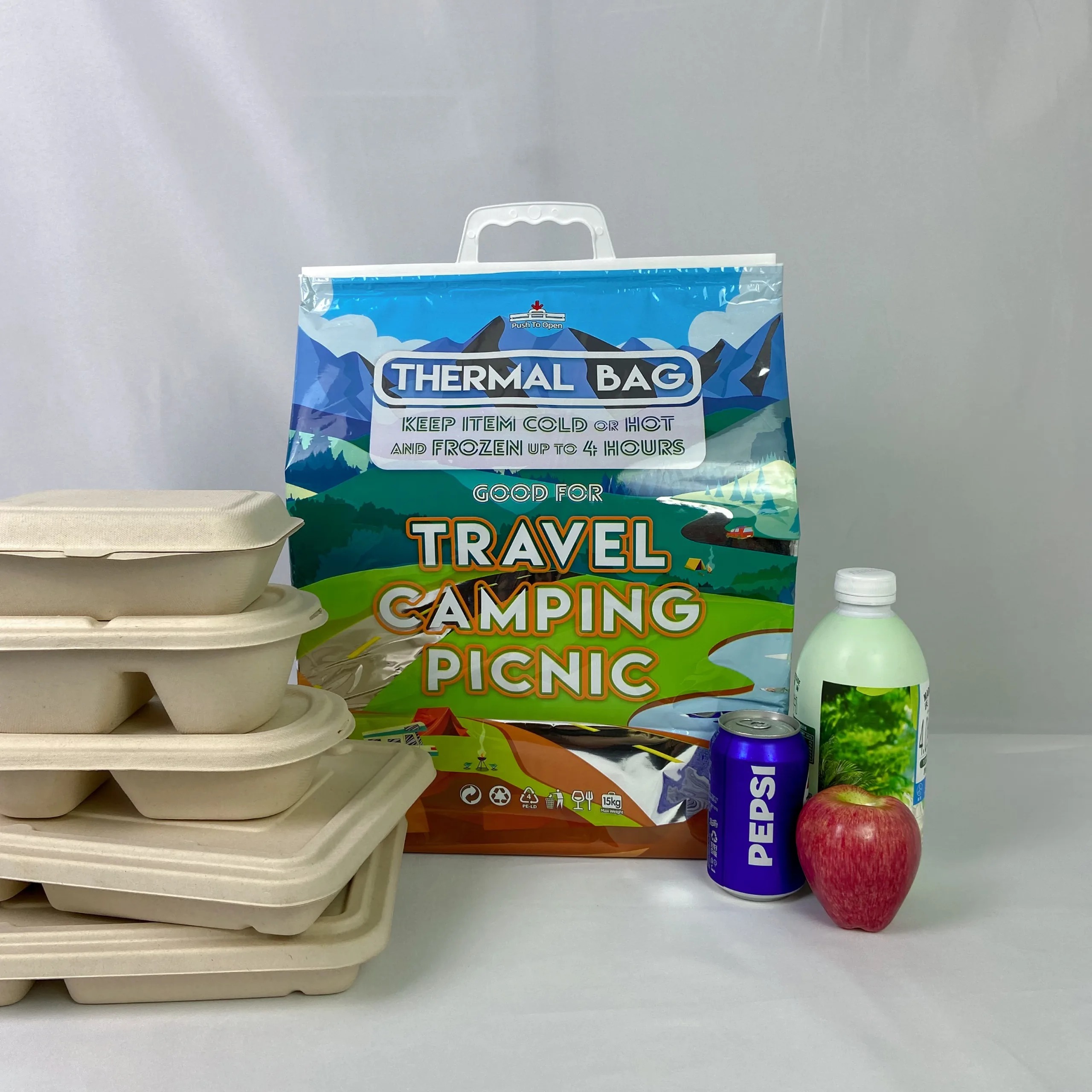
Begin the inspection with the bag architecture. This square-bottom cooler bag is formed with two side gussets and a folded base panel. Measure the base depth against the approved specification, whether the selected option is 10, 12, or 15 cm, or whether a custom depth has been developed to match the gusset design.
Request a cutaway sample or an approved construction sample so the factory can identify every layer. The standard configuration uses an aluminium foil laminate on the outside, a 2–5 mm closed-cell EPE foam insulation core, and a food-grade PE sealing layer. If air-bubble insulation is approved for the project, confirm that the material being used in production matches the signed sample and technical specification.
Inspect Seals, Closures, and Handle Strength
Test the bag as it will be handled in daily operation. The flat seal should be continuous, even, and free from weak areas, wrinkles, pinholes, or delamination. Where specified, operate the slider zip or tear notch several times. Pay close attention to the corners, gusset folds, folded base, and the junction between the moulded handle and the upper band, since these areas can experience higher stress during transport.
The inspection should reflect the intended application. Hot-food delivery designs require a stable flat base and an effective foil-lined barrier. Grocery and cold-chain programs may need a gel-pack compartment and a waterproof inner membrane. For pharmacy or 2–8°C shipments, ask how the bag can accommodate temperature-monitoring devices, batch labels, and other logistics markings.
Printing and Artwork Verification
Review every printed panel rather than checking only the front face. The bag can be printed on the front, back, and both side gussets. Compare the production sample with the approved artwork and physical colour reference, checking Pantone accuracy, print registration, coverage, sharpness, and alignment across gusset folds. Unprinted silver foil may also be selected where the design requires a metallic appearance.
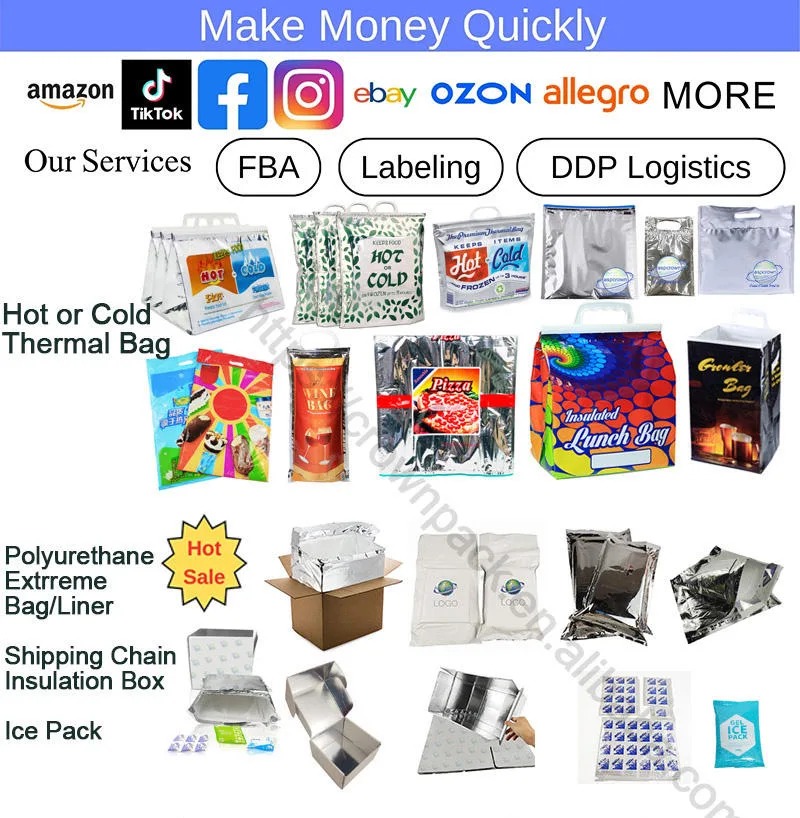
A physical sample is more reliable than a screen proof for approving colour and structure. Ecopack states that its in-house operations include structural development, printing, lamination, bag conversion, and quality inspection. Its rotogravure and flexographic production lines are reported to support more than 500,000 pouches per day.
Quality System and Factory Records
Ask the factory to demonstrate how materials and finished bags are controlled. Available records should cover incoming-material inspection, in-process checks, and pre-shipment approval. Typical inspection points include appearance, dimensions, print registration, seal strength, and lamination bond. The company reports an ISO 9001:2015 quality system and AQL sampling for final inspection.
If your organization uses a particular testing protocol, packaging standard, or nominated third-party inspection company, confirm these requirements before production begins. The factory should be able to explain which documents are issued, what sampling level is used, and how nonconforming products are isolated and corrected.
Production Capacity, Sampling, and Delivery Planning
Use the visit to review the full order process, including artwork approval, structural confirmation, sampling, mass production, packing, and export preparation. The stated sample lead time is 3–5 working days, while production generally takes 15–25 days after artwork approval. Custom orders commonly begin at approximately 5,000–10,000 pieces, depending on the material combination and specifications; stock sizes may be available from inventory.
A reported cooperation case involved a U.S. distributor purchasing insulated mailers for cold shipments at an annual volume of 10 million pieces. The project highlighted lower heat transfer, reduced storage and freight space compared with rigid foam packaging, and less packaging waste. During the visit, use this type of case to discuss repeat-order consistency, carton packing, capacity reservations, and quality control between production batches.
Factory Visit Inspection Table
| Inspection Category | Questions and Checks | Relevant Specification or Control |
|---|---|---|
| Construction | Are the square bottom, side gussets, folded base, and base depth correct? | 10, 12, or 15 cm base-depth options; customized structures supported |
| Insulation barrier | Are the foil laminate, insulation core, food-contact layer, and bonds consistent? | Aluminium foil laminate, 2–5 mm closed-cell EPE foam, food-grade PE sealant |
| Artwork and print | Do all panels match the approved coverage, Pantone colours, and registration? | Front, back, and both gussets; custom Pantone or silver foil available |
| Closure and handling | Are seals even, closures functional, and the moulded handle firmly attached? | Flat seal; optional slider zip or tear notch; handle integrated into the top band |
| Quality assurance | Can the factory show material, process, and final inspection records? | ISO 9001:2015 system and AQL final inspection |
| Order readiness | Are samples, production dates, and capacity commitments documented? | Samples in 3–5 working days; production in 15–25 days after artwork approval |
Additional Certification and Material Questions
The company also reports FSC Chain of Custody certification. This certification applies to specified FSC Mix and FSC Recycled wrapping and packaging paper, linerboard or testliner, paper sacks and bags, and advertising materials. If a paper-based component is included in the insulated packaging program, ask the factory to confirm whether the certification covers that specific material and supply chain.
Frequently Asked Questions
Which layers should be identified during the factory visit?
Ask the supplier to identify the aluminium foil laminate, insulation core, and food-grade PE contact layer. Confirm whether the order uses closed-cell EPE foam or an approved air-bubble alternative, then compare the production material with the approved construction sample.
How do I confirm that mass production matches the approved design?
Compare a physical production sample with the structural drawing, artwork, and colour reference. Verify dimensions, gusset depth, base shape, print coverage, Pantone colour, seal style, handle location, and any requested zip or tear notch. Physical approval should be completed before the production run rather than relying only on digital artwork.
What quality documents should the supplier provide?
Request incoming-material records, in-process inspection sheets, final inspection reports, and AQL sampling results. The documents should address appearance, dimensions, print registration, seal strength, and lamination bond, along with any buyer-specific testing requirements.
Conclusion
The most effective factory visit links the approved design to the actual manufacturing process. Confirm the structure, insulation core, food-contact layer, print panels, closure, handle, application requirements, inspection method, and delivery schedule before placing the order. Ecopack operates as a manufacturer and exporter with in-house R&D, printing, lamination, bag making, inspection, and export support. For technical guidance or a project quotation, contact manager@ecopack.com.
About Us
Huizhou Ecopack Packaging Products Co., Ltd. is a flexible packaging manufacturer located in Guangdong, China. Established in 2011, the company produces custom composite pouches and bags for insulated packaging, coffee, pet food, spout pouch, kraft, compostable, and ESD applications. Its 10,000+ square metre facility reports production capacity above 500,000 pouches per day through rotogravure and flexographic lines. The company exports to more than 40 countries, including the United States, Europe, Australia, Japan, and South Korea. Its certifications include ISO 9001:2015 Quality Management System and FSC Chain of Custody, and it serves customers across a range of industries.

REPORT