







-
 Agriculture
-
 Health-Care
-
 Environment
-
 Construction-Real-Estate
-
 Tools-Hardware
-
 Home-Garden
-
 Furniture
-
 Luggage-Bags-Cases
-
 Medical-devices-Supplies
-
 Gifts-Crafts
-
 Sports-Entertainment
-
 Food-Beverage
-
 Vehicles-Transportation
-
 Power-Transmission
-
 Material-Handling
-
 Renewable-Energy
-
 Safety
-
 Testing-Instrument-Equipment
-
 Construction-Building-Machinery
-
 Pet-Supplies
-
 Personal-Care-Household-Cleaning
-
 Vehicle-Accessories-Electronics-Tools
-
 School-Office-Supplies
-
 Packaging-Printing
-
 Mother-Kids-Toys
-
 Business-Services
-
 Commercial-Equipment-Machinery
-
 Apparel-Accessories
-
 Security
-
 Shoes-Accessories
-
 Vehicle-Parts-Accessories
-
 Jewelry-Eyewear-Watches-Accessories
-
 Lights-Lighting
-
 Fabric-Textile-Raw-Material
-
 Fabrication-Services
-
 Industrial-Machinery
-
 Consumer-Electronics
-
 Electrical-Equipment-Supplies
-
 Electronic-Components-Accessories-Telecommunications
-
 Home-Appliances
-
 Beauty
-
 Chemicals
-
 Rubber-Plastics
-
 Metals-Alloys


























































































































































































































































































































































































































































































































































































- Masonry Materials
- Curtain Walls & Accessories
- Earthwork Products
- Fireproofing Materials
- Heat Insulation Materials
- Plastic Building Materials
- Building Boards
- Soundproofing Materials
- Timber
- Waterproofing Materials
- Balustrades & Handrails
- Bathroom & Kitchen
- Flooring & Accessories
- Tiles & Accessories
- Door, Window & Accessories
- Fireplaces & Stoves
- Floor Heating Systems & Parts
- Stairs & Stair Parts
- Ceilings
- Elevators & Escalators
- Stone
- Countertops, Vanity Tops & Table Tops
- Mosaics
- Metal Building Materials
- Multifunctional Materials
- Ladders & Scaffoldings
- Mouldings
- Corner Guards
- Decorative Films
- Formwork
- Building & Industrial Glass
- Other Construction & Real Estate
- Wallpapers/Wall panels
- HVAC System & Parts
- Outdoor Facilities
- Prefabricated Buildings
- Festive & Party Supplies
- Bathroom Products
- Household Sundries
- Rain Gear
- Garden Supplies
- Household Cleaning Tools & Accessories
- Lighters & Smoking Accessories
- Home Storage & Organization
- Household Scales
- Smart Home Improvement
- Home Textiles
- Kitchenware
- Drinkware & Accessories
- Dinnerware, Coffee & Wine
- Home Decor
- Golf
- Fitness & Body Building
- Amusement Park Facilities
- Billiards, Board Game,Coin Operated Games
- Musical Instruments
- Outdoor Affordable Luxury Sports
- Camping & Hiking
- Fishing
- Sports Safety&Rehabilitation
- Ball Sports Equipments
- Water Sports
- Winter Sports
- Luxury Travel Equipments
- Sports Shoes, Bags & Accessories
- Cycling
- Other Sports & Entertainment Products
- Artificial Grass&Sports Flooring&Sports Court Equipment
- Scooters
- Food Ingredients
- Honey & Honey Products
- Snacks
- Nuts & Kernels
- Seafood
- Plant & Animal Oil
- Beverages
- Fruit & Vegetable Products
- Frog & Escargot
- Bean Products
- Egg Products
- Dairy Products
- Seasonings & Condiments
- Canned Food
- Instant Food
- Baked Goods
- Other Food & Beverage
- Meat & Poultry
- Confectionery
- Grain Products
- Feminie Care
- Hair Care & Styling
- Body Care
- Hands & Feet Care
- Hygiene Products
- Men's Grooming
- Laundry Cleaning Supplies
- Travel Size & Gift Sets
- Room Deodorizers
- Other Personal Care Products
- Pest Control Products
- Special Household Cleaning
- Floor Cleaning
- Kitchen & Bathroom Cleaning
- Oral Care
- Bath Supplies
- Yellow Pages
- Correction Supplies
- Office Binding Supplies
- Office Cutting Supplies
- Board Erasers
- Office Adhesives & Tapes
- Education Supplies
- Pencil Cases & Bags
- Notebooks & Writing Pads
- File Folder Accessories
- Calendars
- Writing Accessories
- Commercial Office Supplies
- Pencil Sharpeners
- Pens
- Letter Pad/Paper
- Paper Envelopes
- Desk Organizers
- Pencils
- Markers & Highlighters
- Filing Products
- Art Supplies
- Easels
- Badge Holder & Accessories
- Office Paper
- Printer Supplies
- Book Covers
- Other Office & School Supplies
- Stationery Set
- Boards
- Clipboards
- Stamps
- Drafting Supplies
- Stencils
- Electronic Dictionary
- Books
- Map
- Magazines
- Calculators
- Baby & Toddler Toys
- Educational Toys
- Classic Toys
- Dress Up & Pretend Play
- Toy Vehicle
- Stuffed Animals & Plush Toys
- Outdoor Toys & Structures
- Balloons & Accessories
- Baby Food
- Children's Clothing
- Baby Supplies & Products
- Maternity Clothes
- Kids Shoes
- Baby Care
- Novelty & Gag Toys
- Dolls & Accessories
- Puzzle & Games
- Blocks & Model Building Toys
- Toddler Clothing
- Baby Clothing
- Kids' Luggage & Bags
- Arts, Crafts & DIY Toys
- Action & Toy Figures
- Baby Appliances
- Hobbies & Models
- Remote Control Toys
- Promotional Toys
- Pregnancy & Maternity
- Hygiene Products
- Kid's Textile&Bedding
- Novelty & Special Use
- Toy Weapons
- Baby Gifts
- Baby Storage & Organization
- Auto Drive Systems
- ATV/UTV Parts & Accessories
- Marine Parts & Accessories
- Other Auto Parts
- Trailer Parts & Accessories
- Auto Transmission Systems
- Train Parts & Accessories
- Universal Parts
- Railway Parts & Accessories
- Auto Brake Systems
- Aviation Parts & Accessories
- Truck Parts & Accessories
- Auto Suspension Systems
- Auto Lighting Systems
- New Energy Vehicle Parts & Accessories
- Auto Steering Systems
- Wheels, Tires & Accessories
- Bus Parts & Accessories
- Auto Performance Parts
- Cooling System
- Go-Kart & Kart Racer Parts & Accessories
- Air Conditioning Systems
- Heavy Duty Vehicle Parts & Accessories
- Auto Electrical Systems
- Auto Body Systems
- Auto Engine Systems
- Container Parts & Accessories
- Motorcycle Parts & Accessories
- Refrigeration & Heat Exchange Equipment
- Machine Tool Equipment
- Food & Beverage Machinery
- Agricultural Machinery & Equipment
- Apparel & Textile Machinery
- Chemical Machinery
- Packaging Machines
- Paper Production Machinery
- Plastic & Rubber Processing Machinery
- Industrial Robots
- Electronic Products Machinery
- Metal & Metallurgy Machinery
- Woodworking Machinery
- Home Product Manufacturing Machinery
- Machinery Accessories
- Environmental Machinery
- Machinery Service
- Electrical Equipment Manufacturing Machinery
- Industrial Compressors & Parts
- Tobacco & Cigarette Machinery
- Production Line
- Used Industrial Machinery
- Electronics Production Machinery
- Other Machinery & Industrial Equipment
- Camera, Photo & Accessories
- Portable Audio, Video & Accessories
- Television, Home Audio, Video & Accessories
- Video Games & Accessories
- Mobile Phone & Accessories
- Electronic Publications
- Earphone & Headphone & Accessories
- Speakers & Accessories
- Smart Electronics
- TV Receivers & Accessories
- Mobile Phone & Computer Repair Parts
- Chargers, Batteries & Power Supplies
- Used Electronics
- VR, AR, MR Hardware & Software
- Projectors & Presentation Equipments
- Other Consumer Electronics
- Cables & Commonly Used Accessories
- Computer Hardware & Software
- Displays, Signage and Optoelectronics
- Discrete Semiconductors
- Wireless & IoT Module and Products
- Telecommunications
- Connectors, Terminals & Accessories
- Development Boards, Electronic Modules and Kits
- Circuit Protection
- Sensors
- Isolators
- Audio Components and Products
- Integrated Circuits
- Power Supplies
- Relays
- RF, Microwave and RFID
- Electronic Accessories & Supplies
- Passive Components
- PCB & PCBA
- Air Quality Appliances
- Home Appliance Parts
- Heating & Cooling Appliances
- Small Kitchen Appliances
- Laundry Appliances
- Water Heaters
- Water Treatment Appliances
- Refrigerators & Freezers
- Personal Care & Beauty Appliances
- Major Kitchen Appliances
- Cleaning Appliances
- Second-hand Appliances
- Smart Home Appliances
- Other Home Appliances
- Energy Chemicals
- Inorganic Chemicals
- Basic Organic Chemicals
- Agrochemicals
- Admixture & Additives
- Catalysts & Chemical Auxiliary Agents
- Pigments & Dyestuff
- Coating & Paint
- Daily Chemicals
- Polymer
- Organic Intermediate
- Adhesives & Sealants
- Chemical Waste
- Biological Chemical Products
- Surface Treatment Chemicals
- Painting & Coating
- Chemical Reagents
- Flavor & Fragrance
- Non-Explosive Demolition Agents
- Other Chemicals
- Custom Chemical Services

FOB or CIF: Which Shipping Term Is Better for Imported LED Profile Lights?
How to Select Between FOB and CIF
When purchasing LED Profile Lights internationally, FOB and CIF offer different ways to manage transportation, insurance, and import coordination. FOB is usually the better option for buyers who already have a freight forwarder and prefer to control international shipping. CIF can be more convenient when the supplier arranges ocean freight and cargo insurance to the agreed destination port.
Before confirming an order, compare the two terms against your logistics experience, shipment volume, project deadline, destination port, insurance requirements, and customs process. The quotation should clearly identify the selected Incoterm, product specifications, packaging details, payment schedule, delivery period, and costs excluded from the price.
FOB and CIF for Professional Lighting Projects
FOB and CIF are commercial shipping arrangements rather than product performance specifications. The main difference is the division of responsibility for freight booking, insurance, shipment coordination, and costs during transportation. Buyers should also verify when shipping risk transfers and which party is responsible for destination-side handling.
When FOB May Be the Better Choice
FOB is well suited to importers that have established relationships with freight forwarders, insurers, or customs agents. It allows the buyer to compare carriers, choose sailing schedules, manage cargo consolidation, and organize onward delivery independently under the agreed FOB terms. This level of control can be valuable for large architectural lighting projects or repeat purchasing programs.
However, the buyer must be prepared to coordinate international freight and arrange suitable cargo insurance. The exact loading point, documentation requirements, freight scope, and responsibilities after loading should be written into the sales confirmation.
When CIF May Be More Convenient
CIF is often preferred by buyers who want the supplier to coordinate ocean transportation and insurance up to the named destination port. This can reduce the number of logistics tasks handled by the importer, especially for a first order or for customers without a regular forwarding partner.
CIF does not normally mean delivery to the buyer's warehouse. Import customs clearance, duties, port handling, local transport, storage, and other destination charges should be confirmed separately. The buyer should also check the named port and the precise extent of the insurance coverage before making payment.
Product and Shipping Considerations
Color Imagination supports FOB, CIF, and EXW arrangements for international lighting orders. Sea transportation is available through FCL and LCL services, while the most appropriate method depends on order quantity, project timing, and the buyer's destination logistics capabilities.
The LEDARC 2420P is described as an IP66-rated LED wash fixture featuring a motorized 255-degree tilt, 24 20W RGBW LEDs, a 25-degree beam angle, a 30-degree field angle, and a net weight of 12.1 kg. It is intended for architectural lighting, theme parks, plant lighting, and large live concerts. These specifications influence packaging, cargo handling, freight planning, and installation schedules, but they do not independently determine whether FOB or CIF should be selected.
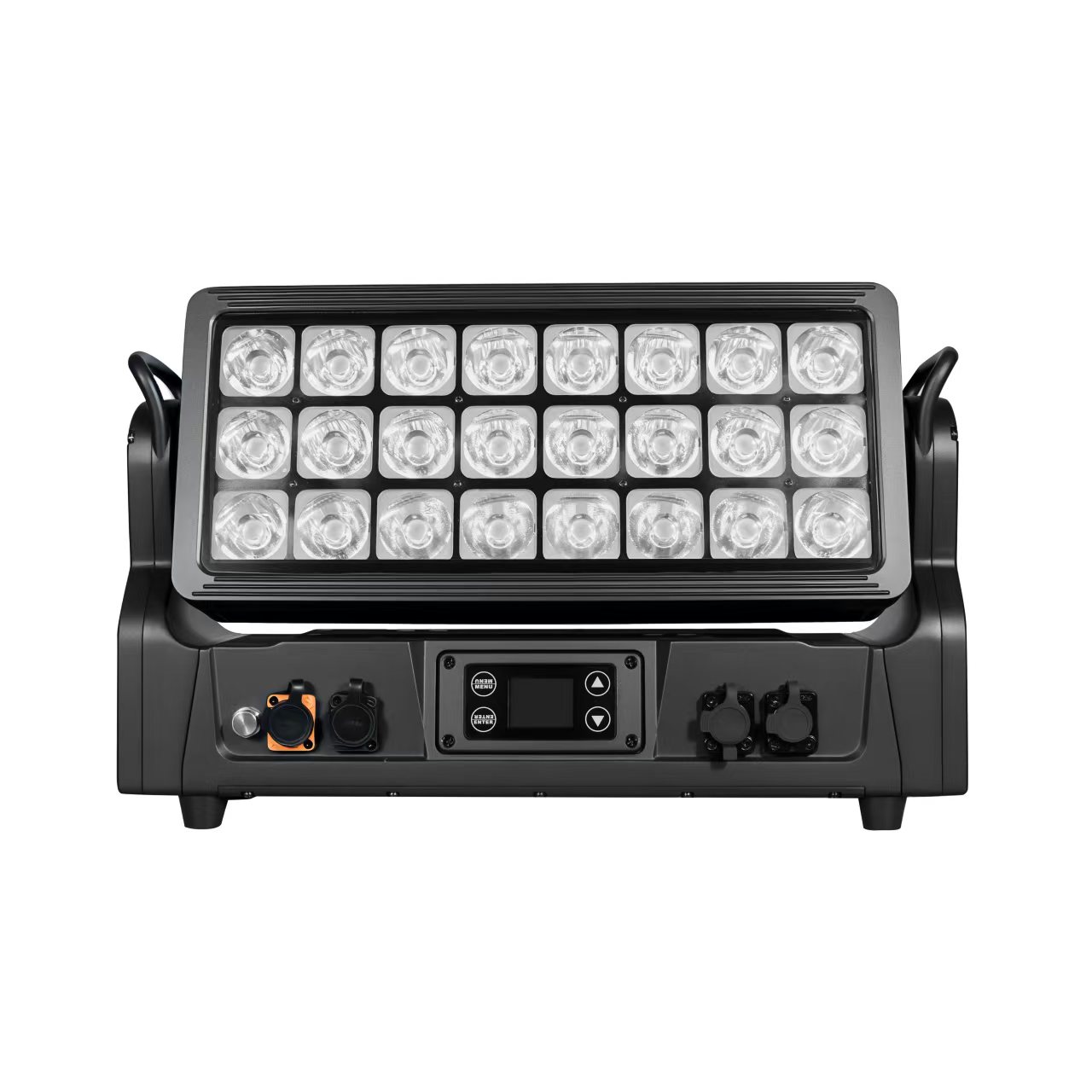
For samples, spare parts, smaller orders, or urgent project requirements, Color Imagination also lists air freight and express services through DHL, FedEx, UPS, and TNT. Bulk purchases can use FCL or LCL sea freight. Because CIF is associated with ocean shipping in the provided terms, buyers should compare the transport method with the delivery deadline instead of assuming that CIF is suitable for every shipment.
Supplier Evaluation and Order Planning
Color Imagination identifies CE certifications for applicable products and ISO certifications related to stage-light assembly and associated management activities. Importers should still confirm whether the exact lighting model and destination country require additional compliance documents, testing, or labeling.
The company reports capabilities in standard manufacturing, OEM production, ODM development, customized engineering, and project support. Its stated quality procedures include incoming material inspection, production process control, complete functional testing, burn-in testing, safety checks, and final inspection. Buyers should request that agreed specifications, inspection requirements, packaging standards, and shipping documents are reflected in the purchase order.
FOB vs. CIF Comparison
| Consideration | FOB | CIF |
|---|---|---|
| International freight | The buyer manages international freight arrangements under the agreed FOB conditions. | The supplier arranges ocean freight to the specified destination port. |
| Cargo insurance | The buyer arranges or confirms insurance according to the transaction agreement. | The supplier provides an insurance arrangement to the destination port, subject to the quotation and coverage terms. |
| Best fit | Importers with forwarding partners and established customs or shipping procedures. | Importers seeking supplier-coordinated sea transport and insurance. |
| Destination responsibilities | Confirm the loading point, freight scope, import costs, and onward delivery responsibilities. | Confirm port charges, customs clearance, duties, local transportation, and warehouse delivery separately. |
| Color Imagination availability | Supported. | Supported. |
| Payment arrangements | Standard T/T is 30% in advance and 70% before shipment; alternative terms require agreement. | Standard T/T is 30% in advance and 70% before shipment. An irrevocable L/C payable in 60–90 days may be considered for long-term partners or special projects by agreement. |
Frequently Asked Questions
Which term is easier for a first LED Profile Lights order?
CIF may be easier for a first-time importer because the supplier arranges ocean freight and insurance to the named destination port. FOB can be more advantageous when the buyer already has a dependable forwarder and wants greater control over shipping choices and costs.
Does CIF cover delivery from the port to my warehouse?
Not necessarily. The described CIF service covers transportation and insurance to the agreed destination port. Customs clearance, duties, terminal charges, local delivery, storage, and warehouse transportation should be listed separately in the quotation.
Can Color Imagination use air freight or express delivery?
Yes. The company lists FCL and LCL sea freight, air freight, and express courier services through DHL, FedEx, UPS, and TNT. The final choice should reflect the shipment size, urgency, sample or spare-part requirements, and project schedule.
Final Recommendation
Select FOB when your company can manage freight forwarding, insurance, and import coordination and wants direct control of the international shipment. Select CIF when supplier-arranged ocean freight to the destination port provides greater convenience. In either case, confirm the LED lighting model, packaging, named port, insurance scope, excluded destination costs, payment terms, and delivery date in writing.
Color Imagination states that its business model supports a minimum order quantity of one unit, while the LEDARC 2420P has a listed delivery time of 15–20 days after receipt of the deposit. For technical advice or project support, contact jack@color-imagination.com.
About Us
Guangzhou Color Imagination LED Lighting Limited, operating under the Color Imagination brand, is a Guangzhou-based manufacturer integrating R&D, production, sales, and technical services for professional stage, entertainment, broadcast, and architectural lighting. Established in 2010, the company reports a 6,000-square-meter factory and an 80% export ratio, with products supplied to Europe, North America, South America, Asia, and the Middle East. Its certifications include CE certificates and ISO certificates covering stage-light assembly and related management activities.

REPORT