







-
 Agriculture
-
 Health-Care
-
 Environment
-
 Construction-Real-Estate
-
 Tools-Hardware
-
 Home-Garden
-
 Furniture
-
 Luggage-Bags-Cases
-
 Medical-devices-Supplies
-
 Gifts-Crafts
-
 Sports-Entertainment
-
 Food-Beverage
-
 Vehicles-Transportation
-
 Power-Transmission
-
 Material-Handling
-
 Renewable-Energy
-
 Safety
-
 Testing-Instrument-Equipment
-
 Construction-Building-Machinery
-
 Pet-Supplies
-
 Personal-Care-Household-Cleaning
-
 Vehicle-Accessories-Electronics-Tools
-
 School-Office-Supplies
-
 Packaging-Printing
-
 Mother-Kids-Toys
-
 Business-Services
-
 Commercial-Equipment-Machinery
-
 Apparel-Accessories
-
 Security
-
 Shoes-Accessories
-
 Vehicle-Parts-Accessories
-
 Jewelry-Eyewear-Watches-Accessories
-
 Lights-Lighting
-
 Fabric-Textile-Raw-Material
-
 Fabrication-Services
-
 Industrial-Machinery
-
 Consumer-Electronics
-
 Electrical-Equipment-Supplies
-
 Electronic-Components-Accessories-Telecommunications
-
 Home-Appliances
-
 Beauty
-
 Chemicals
-
 Rubber-Plastics
-
 Metals-Alloys


























































































































































































































































































































































































































































































































































































- Masonry Materials
- Curtain Walls & Accessories
- Earthwork Products
- Fireproofing Materials
- Heat Insulation Materials
- Plastic Building Materials
- Building Boards
- Soundproofing Materials
- Timber
- Waterproofing Materials
- Balustrades & Handrails
- Bathroom & Kitchen
- Flooring & Accessories
- Tiles & Accessories
- Door, Window & Accessories
- Fireplaces & Stoves
- Floor Heating Systems & Parts
- Stairs & Stair Parts
- Ceilings
- Elevators & Escalators
- Stone
- Countertops, Vanity Tops & Table Tops
- Mosaics
- Metal Building Materials
- Multifunctional Materials
- Ladders & Scaffoldings
- Mouldings
- Corner Guards
- Decorative Films
- Formwork
- Building & Industrial Glass
- Other Construction & Real Estate
- Wallpapers/Wall panels
- HVAC System & Parts
- Outdoor Facilities
- Prefabricated Buildings
- Festive & Party Supplies
- Bathroom Products
- Household Sundries
- Rain Gear
- Garden Supplies
- Household Cleaning Tools & Accessories
- Lighters & Smoking Accessories
- Home Storage & Organization
- Household Scales
- Smart Home Improvement
- Home Textiles
- Kitchenware
- Drinkware & Accessories
- Dinnerware, Coffee & Wine
- Home Decor
- Golf
- Fitness & Body Building
- Amusement Park Facilities
- Billiards, Board Game,Coin Operated Games
- Musical Instruments
- Outdoor Affordable Luxury Sports
- Camping & Hiking
- Fishing
- Sports Safety&Rehabilitation
- Ball Sports Equipments
- Water Sports
- Winter Sports
- Luxury Travel Equipments
- Sports Shoes, Bags & Accessories
- Cycling
- Other Sports & Entertainment Products
- Artificial Grass&Sports Flooring&Sports Court Equipment
- Scooters
- Food Ingredients
- Honey & Honey Products
- Snacks
- Nuts & Kernels
- Seafood
- Plant & Animal Oil
- Beverages
- Fruit & Vegetable Products
- Frog & Escargot
- Bean Products
- Egg Products
- Dairy Products
- Seasonings & Condiments
- Canned Food
- Instant Food
- Baked Goods
- Other Food & Beverage
- Meat & Poultry
- Confectionery
- Grain Products
- Feminie Care
- Hair Care & Styling
- Body Care
- Hands & Feet Care
- Hygiene Products
- Men's Grooming
- Laundry Cleaning Supplies
- Travel Size & Gift Sets
- Room Deodorizers
- Other Personal Care Products
- Pest Control Products
- Special Household Cleaning
- Floor Cleaning
- Kitchen & Bathroom Cleaning
- Oral Care
- Bath Supplies
- Yellow Pages
- Correction Supplies
- Office Binding Supplies
- Office Cutting Supplies
- Board Erasers
- Office Adhesives & Tapes
- Education Supplies
- Pencil Cases & Bags
- Notebooks & Writing Pads
- File Folder Accessories
- Calendars
- Writing Accessories
- Commercial Office Supplies
- Pencil Sharpeners
- Pens
- Letter Pad/Paper
- Paper Envelopes
- Desk Organizers
- Pencils
- Markers & Highlighters
- Filing Products
- Art Supplies
- Easels
- Badge Holder & Accessories
- Office Paper
- Printer Supplies
- Book Covers
- Other Office & School Supplies
- Stationery Set
- Boards
- Clipboards
- Stamps
- Drafting Supplies
- Stencils
- Electronic Dictionary
- Books
- Map
- Magazines
- Calculators
- Baby & Toddler Toys
- Educational Toys
- Classic Toys
- Dress Up & Pretend Play
- Toy Vehicle
- Stuffed Animals & Plush Toys
- Outdoor Toys & Structures
- Balloons & Accessories
- Baby Food
- Children's Clothing
- Baby Supplies & Products
- Maternity Clothes
- Kids Shoes
- Baby Care
- Novelty & Gag Toys
- Dolls & Accessories
- Puzzle & Games
- Blocks & Model Building Toys
- Toddler Clothing
- Baby Clothing
- Kids' Luggage & Bags
- Arts, Crafts & DIY Toys
- Action & Toy Figures
- Baby Appliances
- Hobbies & Models
- Remote Control Toys
- Promotional Toys
- Pregnancy & Maternity
- Hygiene Products
- Kid's Textile&Bedding
- Novelty & Special Use
- Toy Weapons
- Baby Gifts
- Baby Storage & Organization
- Auto Drive Systems
- ATV/UTV Parts & Accessories
- Marine Parts & Accessories
- Other Auto Parts
- Trailer Parts & Accessories
- Auto Transmission Systems
- Train Parts & Accessories
- Universal Parts
- Railway Parts & Accessories
- Auto Brake Systems
- Aviation Parts & Accessories
- Truck Parts & Accessories
- Auto Suspension Systems
- Auto Lighting Systems
- New Energy Vehicle Parts & Accessories
- Auto Steering Systems
- Wheels, Tires & Accessories
- Bus Parts & Accessories
- Auto Performance Parts
- Cooling System
- Go-Kart & Kart Racer Parts & Accessories
- Air Conditioning Systems
- Heavy Duty Vehicle Parts & Accessories
- Auto Electrical Systems
- Auto Body Systems
- Auto Engine Systems
- Container Parts & Accessories
- Motorcycle Parts & Accessories
- Refrigeration & Heat Exchange Equipment
- Machine Tool Equipment
- Food & Beverage Machinery
- Agricultural Machinery & Equipment
- Apparel & Textile Machinery
- Chemical Machinery
- Packaging Machines
- Paper Production Machinery
- Plastic & Rubber Processing Machinery
- Industrial Robots
- Electronic Products Machinery
- Metal & Metallurgy Machinery
- Woodworking Machinery
- Home Product Manufacturing Machinery
- Machinery Accessories
- Environmental Machinery
- Machinery Service
- Electrical Equipment Manufacturing Machinery
- Industrial Compressors & Parts
- Tobacco & Cigarette Machinery
- Production Line
- Used Industrial Machinery
- Electronics Production Machinery
- Other Machinery & Industrial Equipment
- Camera, Photo & Accessories
- Portable Audio, Video & Accessories
- Television, Home Audio, Video & Accessories
- Video Games & Accessories
- Mobile Phone & Accessories
- Electronic Publications
- Earphone & Headphone & Accessories
- Speakers & Accessories
- Smart Electronics
- TV Receivers & Accessories
- Mobile Phone & Computer Repair Parts
- Chargers, Batteries & Power Supplies
- Used Electronics
- VR, AR, MR Hardware & Software
- Projectors & Presentation Equipments
- Other Consumer Electronics
- Cables & Commonly Used Accessories
- Computer Hardware & Software
- Displays, Signage and Optoelectronics
- Discrete Semiconductors
- Wireless & IoT Module and Products
- Telecommunications
- Connectors, Terminals & Accessories
- Development Boards, Electronic Modules and Kits
- Circuit Protection
- Sensors
- Isolators
- Audio Components and Products
- Integrated Circuits
- Power Supplies
- Relays
- RF, Microwave and RFID
- Electronic Accessories & Supplies
- Passive Components
- PCB & PCBA
- Air Quality Appliances
- Home Appliance Parts
- Heating & Cooling Appliances
- Small Kitchen Appliances
- Laundry Appliances
- Water Heaters
- Water Treatment Appliances
- Refrigerators & Freezers
- Personal Care & Beauty Appliances
- Major Kitchen Appliances
- Cleaning Appliances
- Second-hand Appliances
- Smart Home Appliances
- Other Home Appliances
- Energy Chemicals
- Inorganic Chemicals
- Basic Organic Chemicals
- Agrochemicals
- Admixture & Additives
- Catalysts & Chemical Auxiliary Agents
- Pigments & Dyestuff
- Coating & Paint
- Daily Chemicals
- Polymer
- Organic Intermediate
- Adhesives & Sealants
- Chemical Waste
- Biological Chemical Products
- Surface Treatment Chemicals
- Painting & Coating
- Chemical Reagents
- Flavor & Fragrance
- Non-Explosive Demolition Agents
- Other Chemicals
- Custom Chemical Services

Holland Velvet vs. Suede vs. Corduroy: Choosing the Best Packaging Material Value
Selecting a textile for packaging involves more than comparing appearance. Surface texture, fabric construction, lining requirements, and the intended packaging process all affect the practical value of Holland Velvet, Suede, and Corduroy. Among these options, Suede generally offers the broadest fit for packaging because its leather-like finish is specifically suited to packaging, decorative work, and interior linings.
Packaging Material Selection at a Glance
Suede is often the preferred choice when packaging needs a refined leather-style surface, especially for gift boxes, bags, decorative components, and protective linings. Holland Velvet is a strong alternative when a project requires a defined velvet construction, including 210 gsm, 280 gsm, or double-sided fabric options. Corduroy can provide a distinctive ribbed velvet effect, although its listed primary application is apparel rather than packaging.
- Use Suede for packaging and lining projects that require a soft, leather-like visual effect.
- Select Holland Velvet when fabric weight or a double-sided velvet construction is part of the specification.
- Choose Corduroy when its characteristic ribbed texture is central to the desired design.
- Use self-adhesive flocking fabric for packaging linings that need to be applied directly to a substrate.
How the Three Fabrics Compare for Packaging
Suede: Broad Application for Packaging and Linings
Suede, also known as faux suede, is directly associated with packaging, decoration, linings, apparel, and bags. Its leather-like hand feel and appearance make it particularly appropriate for premium packaging interiors or exterior decorative details. For projects that need both visual refinement and a stated packaging application, Suede has the clearest overall positioning among the three materials.
Holland Velvet: Construction-Driven Flexibility
Holland Velvet is supplied in 210 gsm, 280 gsm, and double-sided constructions. Its listed uses include apparel, bedding, sofas, curtains, and packaging. This makes it a suitable option when packaging designers need velvet texture together with a particular fabric weight or two-sided structure. The best value comes from matching the selected construction to the packaging design and converting process.
Corduroy: A Distinctive Ribbed Finish
Corduroy is a ribbed velvet textile mainly used for apparel. It may still be considered for packaging concepts that benefit from a pronounced linear velvet texture, but the available product information provides less packaging-specific support than it does for Suede or Holland Velvet. It should therefore be selected for its design effect rather than treated as a default packaging material.
When Self-Adhesive Flocking Fabric Is the Better Solution
Some packaging applications require a lining that can be mounted directly onto paperboard, wood, EVA, plastic, or similar materials. In these cases, Mingqian self-adhesive flocking fabric offers a practical alternative. It combines flocking fabric with a pressure-sensitive, water-based acrylic adhesive and a release liner, allowing direct application during packaging lining processing.
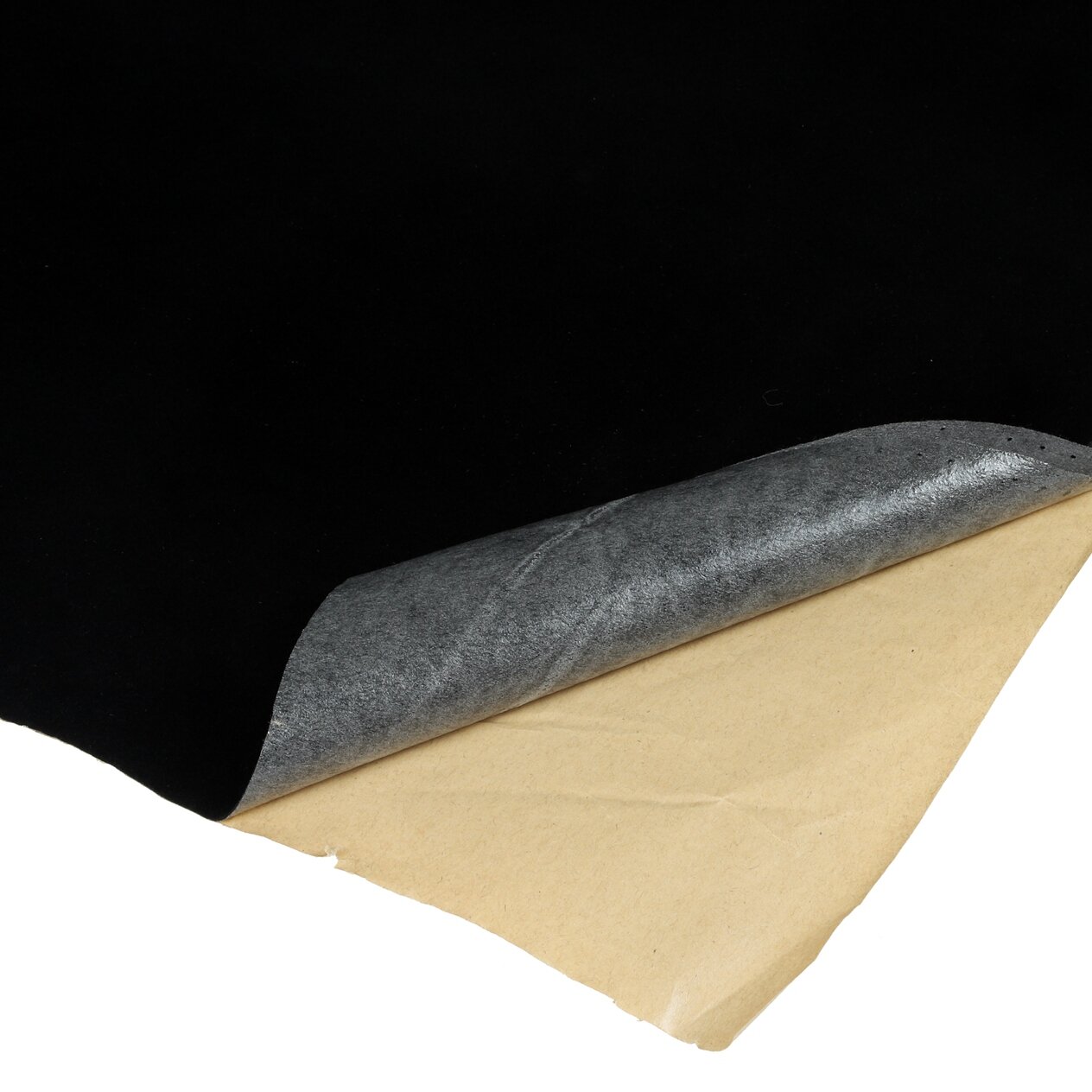
This solution is applicable across base-fabric and pile-type combinations and is relevant for protective interiors such as jewelry boxes and eyewear cases. Each batch of self-adhesive material is tested for peel strength, with a stated minimum requirement of 2 N per 25 mm. The adhesive is water-based and solvent-free, supporting direct, efficient lining assembly.
Quality Control and Packaging Experience
Mingqian's quality procedures include incoming material inspection, process monitoring, finished-product testing, and spot checks before shipment. The company lists ISO 9001 and GRS certifications, with GRS applicable to flocking fabrics made with recycled polyester and nylon fibers. REACH and RoHS test reports are also listed for applicable flocking fabric products.
Published cooperation cases include custom flocking materials for perfume gift-box linings, baijiu packaging pouches, eyewear case interiors, and jewelry-box linings. These cases demonstrate experience within luxury, liquor, eyewear, and jewelry packaging supply chains. However, project requirements should determine the final material selection, since no single textile is universally the lowest-cost or highest-value option.
Material Comparison Table
| Material or Solution | Surface or Construction | Relevant Packaging Positioning |
|---|---|---|
| Suede | Leather-like texture | Listed for packaging, decoration, and linings |
| Holland Velvet | 210 gsm, 280 gsm, and double-sided options | Packaging is among its listed applications |
| Corduroy | Ribbed velvet appearance | Primarily positioned for apparel use |
| Self-Adhesive Flocking Fabric | Flocking surface with pressure-sensitive adhesive and release liner | Designed for direct attachment to packaging substrates |
Frequently Asked Questions
Which material is most suitable for packaging linings?
Suede is the most directly supported option when a packaging lining needs a leather-like appearance because both packaging and linings are listed among its uses. Holland Velvet is also suitable for packaging where its specific construction is needed.
Is Holland Velvet suitable for packaging projects?
Yes. Holland Velvet is listed for packaging use and is available in 210 gsm, 280 gsm, and double-sided constructions, giving buyers options for different packaging specifications.
Why choose self-adhesive flocking fabric for a lining?
It is appropriate when the lining must adhere directly to a base material. Its release liner supports peel-and-stick processing, and the stated peel strength is at least 2 N per 25 mm.
Conclusion
For most packaging and lining applications requiring a leather-like finish, Suede provides the strongest overall material fit. Holland Velvet is recommended when a defined weight or double-sided velvet construction is required. Corduroy is best reserved for designs where its ribbed texture is a deliberate visual feature. For direct-mount packaging linings, self-adhesive flocking fabric provides a dedicated solution for bonding to common packaging substrates.
Guangdong Shunde Mingqian Flocking Co., Ltd. offers OEM and ODM production with a listed MOQ of 1,000 yards and a listed delivery time of 14 days under that business model. For technical support or project-specific material recommendations, contact 005@mingqianflocking.com.
About Us
Guangdong Shunde Mingqian Flocking Co., Ltd. is a Foshan, Guangdong, China-based manufacturer operating under the Mingqian brand. Founded in 2008, the company produces flocking fabrics and related textile materials for decorative and functional uses, including packaging applications. With five flocking lines, its stated monthly production capacity exceeds 3,000,000 yards. The company lists ISO 9001, GRS, REACH, and RoHS credentials and serves customers in a range of industries.

REPORT