







-
 Agriculture
-
 Health-Care
-
 Environment
-
 Construction-Real-Estate
-
 Tools-Hardware
-
 Home-Garden
-
 Furniture
-
 Luggage-Bags-Cases
-
 Medical-devices-Supplies
-
 Gifts-Crafts
-
 Sports-Entertainment
-
 Food-Beverage
-
 Vehicles-Transportation
-
 Power-Transmission
-
 Material-Handling
-
 Renewable-Energy
-
 Safety
-
 Testing-Instrument-Equipment
-
 Construction-Building-Machinery
-
 Pet-Supplies
-
 Personal-Care-Household-Cleaning
-
 Vehicle-Accessories-Electronics-Tools
-
 School-Office-Supplies
-
 Packaging-Printing
-
 Mother-Kids-Toys
-
 Business-Services
-
 Commercial-Equipment-Machinery
-
 Apparel-Accessories
-
 Security
-
 Shoes-Accessories
-
 Vehicle-Parts-Accessories
-
 Jewelry-Eyewear-Watches-Accessories
-
 Lights-Lighting
-
 Fabric-Textile-Raw-Material
-
 Fabrication-Services
-
 Industrial-Machinery
-
 Consumer-Electronics
-
 Electrical-Equipment-Supplies
-
 Electronic-Components-Accessories-Telecommunications
-
 Home-Appliances
-
 Beauty
-
 Chemicals
-
 Rubber-Plastics
-
 Metals-Alloys


























































































































































































































































































































































































































































































































































































- Masonry Materials
- Curtain Walls & Accessories
- Earthwork Products
- Fireproofing Materials
- Heat Insulation Materials
- Plastic Building Materials
- Building Boards
- Soundproofing Materials
- Timber
- Waterproofing Materials
- Balustrades & Handrails
- Bathroom & Kitchen
- Flooring & Accessories
- Tiles & Accessories
- Door, Window & Accessories
- Fireplaces & Stoves
- Floor Heating Systems & Parts
- Stairs & Stair Parts
- Ceilings
- Elevators & Escalators
- Stone
- Countertops, Vanity Tops & Table Tops
- Mosaics
- Metal Building Materials
- Multifunctional Materials
- Ladders & Scaffoldings
- Mouldings
- Corner Guards
- Decorative Films
- Formwork
- Building & Industrial Glass
- Other Construction & Real Estate
- Wallpapers/Wall panels
- HVAC System & Parts
- Outdoor Facilities
- Prefabricated Buildings
- Festive & Party Supplies
- Bathroom Products
- Household Sundries
- Rain Gear
- Garden Supplies
- Household Cleaning Tools & Accessories
- Lighters & Smoking Accessories
- Home Storage & Organization
- Household Scales
- Smart Home Improvement
- Home Textiles
- Kitchenware
- Drinkware & Accessories
- Dinnerware, Coffee & Wine
- Home Decor
- Golf
- Fitness & Body Building
- Amusement Park Facilities
- Billiards, Board Game,Coin Operated Games
- Musical Instruments
- Outdoor Affordable Luxury Sports
- Camping & Hiking
- Fishing
- Sports Safety&Rehabilitation
- Ball Sports Equipments
- Water Sports
- Winter Sports
- Luxury Travel Equipments
- Sports Shoes, Bags & Accessories
- Cycling
- Other Sports & Entertainment Products
- Artificial Grass&Sports Flooring&Sports Court Equipment
- Scooters
- Food Ingredients
- Honey & Honey Products
- Snacks
- Nuts & Kernels
- Seafood
- Plant & Animal Oil
- Beverages
- Fruit & Vegetable Products
- Frog & Escargot
- Bean Products
- Egg Products
- Dairy Products
- Seasonings & Condiments
- Canned Food
- Instant Food
- Baked Goods
- Other Food & Beverage
- Meat & Poultry
- Confectionery
- Grain Products
- Feminie Care
- Hair Care & Styling
- Body Care
- Hands & Feet Care
- Hygiene Products
- Men's Grooming
- Laundry Cleaning Supplies
- Travel Size & Gift Sets
- Room Deodorizers
- Other Personal Care Products
- Pest Control Products
- Special Household Cleaning
- Floor Cleaning
- Kitchen & Bathroom Cleaning
- Oral Care
- Bath Supplies
- Yellow Pages
- Correction Supplies
- Office Binding Supplies
- Office Cutting Supplies
- Board Erasers
- Office Adhesives & Tapes
- Education Supplies
- Pencil Cases & Bags
- Notebooks & Writing Pads
- File Folder Accessories
- Calendars
- Writing Accessories
- Commercial Office Supplies
- Pencil Sharpeners
- Pens
- Letter Pad/Paper
- Paper Envelopes
- Desk Organizers
- Pencils
- Markers & Highlighters
- Filing Products
- Art Supplies
- Easels
- Badge Holder & Accessories
- Office Paper
- Printer Supplies
- Book Covers
- Other Office & School Supplies
- Stationery Set
- Boards
- Clipboards
- Stamps
- Drafting Supplies
- Stencils
- Electronic Dictionary
- Books
- Map
- Magazines
- Calculators
- Baby & Toddler Toys
- Educational Toys
- Classic Toys
- Dress Up & Pretend Play
- Toy Vehicle
- Stuffed Animals & Plush Toys
- Outdoor Toys & Structures
- Balloons & Accessories
- Baby Food
- Children's Clothing
- Baby Supplies & Products
- Maternity Clothes
- Kids Shoes
- Baby Care
- Novelty & Gag Toys
- Dolls & Accessories
- Puzzle & Games
- Blocks & Model Building Toys
- Toddler Clothing
- Baby Clothing
- Kids' Luggage & Bags
- Arts, Crafts & DIY Toys
- Action & Toy Figures
- Baby Appliances
- Hobbies & Models
- Remote Control Toys
- Promotional Toys
- Pregnancy & Maternity
- Hygiene Products
- Kid's Textile&Bedding
- Novelty & Special Use
- Toy Weapons
- Baby Gifts
- Baby Storage & Organization
- Auto Drive Systems
- ATV/UTV Parts & Accessories
- Marine Parts & Accessories
- Other Auto Parts
- Trailer Parts & Accessories
- Auto Transmission Systems
- Train Parts & Accessories
- Universal Parts
- Railway Parts & Accessories
- Auto Brake Systems
- Aviation Parts & Accessories
- Truck Parts & Accessories
- Auto Suspension Systems
- Auto Lighting Systems
- New Energy Vehicle Parts & Accessories
- Auto Steering Systems
- Wheels, Tires & Accessories
- Bus Parts & Accessories
- Auto Performance Parts
- Cooling System
- Go-Kart & Kart Racer Parts & Accessories
- Air Conditioning Systems
- Heavy Duty Vehicle Parts & Accessories
- Auto Electrical Systems
- Auto Body Systems
- Auto Engine Systems
- Container Parts & Accessories
- Motorcycle Parts & Accessories
- Refrigeration & Heat Exchange Equipment
- Machine Tool Equipment
- Food & Beverage Machinery
- Agricultural Machinery & Equipment
- Apparel & Textile Machinery
- Chemical Machinery
- Packaging Machines
- Paper Production Machinery
- Plastic & Rubber Processing Machinery
- Industrial Robots
- Electronic Products Machinery
- Metal & Metallurgy Machinery
- Woodworking Machinery
- Home Product Manufacturing Machinery
- Machinery Accessories
- Environmental Machinery
- Machinery Service
- Electrical Equipment Manufacturing Machinery
- Industrial Compressors & Parts
- Tobacco & Cigarette Machinery
- Production Line
- Used Industrial Machinery
- Electronics Production Machinery
- Other Machinery & Industrial Equipment
- Camera, Photo & Accessories
- Portable Audio, Video & Accessories
- Television, Home Audio, Video & Accessories
- Video Games & Accessories
- Mobile Phone & Accessories
- Electronic Publications
- Earphone & Headphone & Accessories
- Speakers & Accessories
- Smart Electronics
- TV Receivers & Accessories
- Mobile Phone & Computer Repair Parts
- Chargers, Batteries & Power Supplies
- Used Electronics
- VR, AR, MR Hardware & Software
- Projectors & Presentation Equipments
- Other Consumer Electronics
- Cables & Commonly Used Accessories
- Computer Hardware & Software
- Displays, Signage and Optoelectronics
- Discrete Semiconductors
- Wireless & IoT Module and Products
- Telecommunications
- Connectors, Terminals & Accessories
- Development Boards, Electronic Modules and Kits
- Circuit Protection
- Sensors
- Isolators
- Audio Components and Products
- Integrated Circuits
- Power Supplies
- Relays
- RF, Microwave and RFID
- Electronic Accessories & Supplies
- Passive Components
- PCB & PCBA
- Air Quality Appliances
- Home Appliance Parts
- Heating & Cooling Appliances
- Small Kitchen Appliances
- Laundry Appliances
- Water Heaters
- Water Treatment Appliances
- Refrigerators & Freezers
- Personal Care & Beauty Appliances
- Major Kitchen Appliances
- Cleaning Appliances
- Second-hand Appliances
- Smart Home Appliances
- Other Home Appliances
- Energy Chemicals
- Inorganic Chemicals
- Basic Organic Chemicals
- Agrochemicals
- Admixture & Additives
- Catalysts & Chemical Auxiliary Agents
- Pigments & Dyestuff
- Coating & Paint
- Daily Chemicals
- Polymer
- Organic Intermediate
- Adhesives & Sealants
- Chemical Waste
- Biological Chemical Products
- Surface Treatment Chemicals
- Painting & Coating
- Chemical Reagents
- Flavor & Fragrance
- Non-Explosive Demolition Agents
- Other Chemicals
- Custom Chemical Services

How 17-Seat Electric Buses Overcome Stop-and-Go Energy Efficiency Challenges
Frequent passenger boarding stops pose a major efficiency hurdle for traditional transit vehicles. Conventional internal combustion engines suffer from heavy fuel waste during idling and repeated acceleration spikes. Transitioning to a 17seats bus equipped with a pure electric powertrain completely eliminates fuel consumption in high-frequency stop-and-go scenarios. By integrating lightweight PT+PBT alloy body structures, electric power-assisted steering, and responsive braking systems, these all-electric sightseeing buses deliver sustainable, zero-emission passenger transport tailored for resorts, scenic parks, and municipal transit routes.
Key Benefits of Electric 17-Seat Passenger Buses
- Elimination of Fuel Costs: Fully electric drive motors draw power only when moving, removing diesel and gasoline expenditures during continuous drop-off cycles.
- Robust Chassis Construction: Built with high-strength, anti-corrosive steel and MacPherson independent front suspension to ensure smooth operation across intensive daily shifts.
- Durable Lightweight Design: Impact-resistant PT+PBT alloy front cover panels combine with an open-cockpit architecture to reduce curb weight without sacrificing structural integrity.
- Effortless Low-Speed Maneuverability: Precision electric power steering (EPS) and automotive-grade sensitive braking make frequent starting and stopping hassle-free for drivers.
Engineering Principles & Chassis Architecture
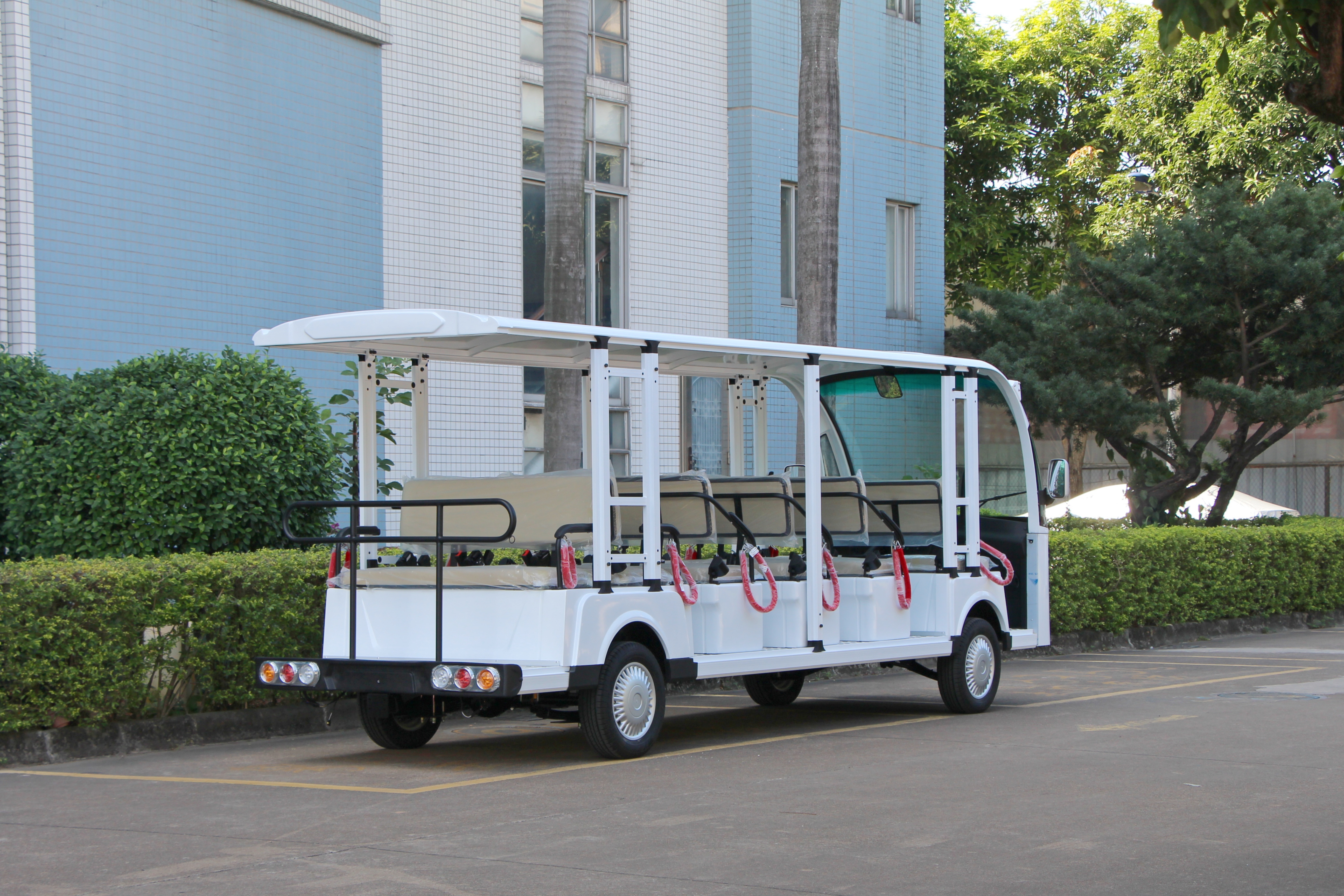
In standard internal combustion minibuses, continuous stopping creates thermal strain on braking systems and causes sudden fuel consumption spikes whenever the vehicle accelerates. The electric 17seats bus (Model LQY148A / D14A+3) designed by Guangzhou Langqing Electric Car CO., LTD. tackles these operational challenges through specialized engineering.
To minimize energy consumption from the battery pack, the vehicle utilizes a lightweight open-cockpit structure. The front section features injection-molded PT+PBT alloy panels, offering high impact resistance against minor bumps typical in crowded tourist venues. A heavy-duty, anti-rust steel chassis frame serves as the foundation, backed by a MacPherson independent front suspension for steady steering dynamics and a heavy-duty rear leaf-spring system engineered to carry full loads of up to 17 passengers comfortably.

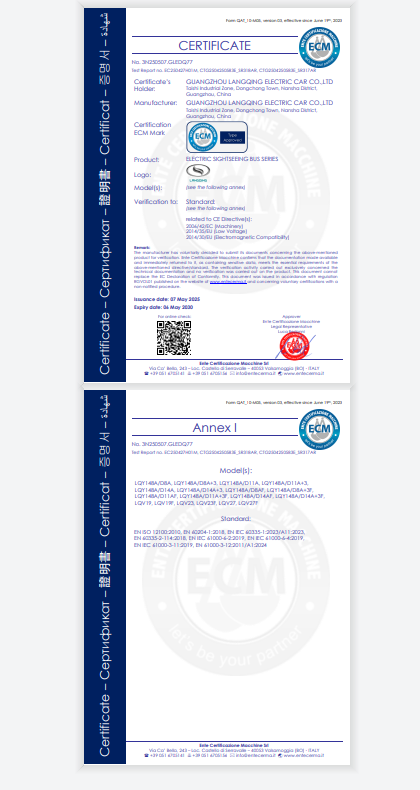
Driver control and passenger safety during rapid stop intervals are enhanced by electric power-assisted steering (EPS) and responsive braking components. The bus meets international quality benchmarks, certified under EU CE standards (Certificate numbers 3N250506.GLEDQ43, 3N250507.GLEDQ77, and 3N250507.GLEDQ78). Global fleet operations validate its reliability under demanding conditions, including over 3,500 units operating shuttle routes in Cuba, 131 units serving cultural sites in Egypt, and 20 units deployed for airport transit in Argentina.
Side-by-Side Comparison: Electric vs. Combustion Shuttle
The table below compares key structural and operational specifications between the electric 17-seat shuttle bus and conventional gas-powered minibuses under high-frequency stop conditions:
| Evaluation Metric | Electric 17seats Bus (LQY148A) | Conventional Combustion Mini-Bus |
|---|---|---|
| Fuel Consumption Rate | Zero (100% Battery Electric) | High (Severe fuel waste at idle & restart) |
| Front Suspension Setup | MacPherson Independent Suspension | Rigid Axle / Standard Leaf Spring |
| Body Panel Material | PT+PBT Alloy Injection Molding | Stamped Sheet Metal |
| Steering System | Electric Power-Assisted Steering (EPS) | Hydraulic / Mechanical Steering |
| Quality Verification | 100% Assembly Line + Road Testing | Manufacturer Dependent |
| Chassis Anti-Corrosion | High-Strength Anti-Rust Steel Frame | Standard Paint Finish |
Frequently Asked Questions
Why do 17-seat electric buses save energy during idling at passenger stops?
Electric motors draw energy from the battery pack exclusively while propelling the vehicle. Unlike internal combustion engines that continuously burn fuel when parked, the electric motor consumes zero energy when idle at boarding stops.
How does the suspension system handle a full 17-passenger load on uneven roads?
The dual-suspension configuration pairs a MacPherson independent front suspension for smooth handling with a heavy-duty rear leaf-spring assembly built to handle maximum load capacity over extended operation.
What quality assurance processes take place prior to vehicle shipment?
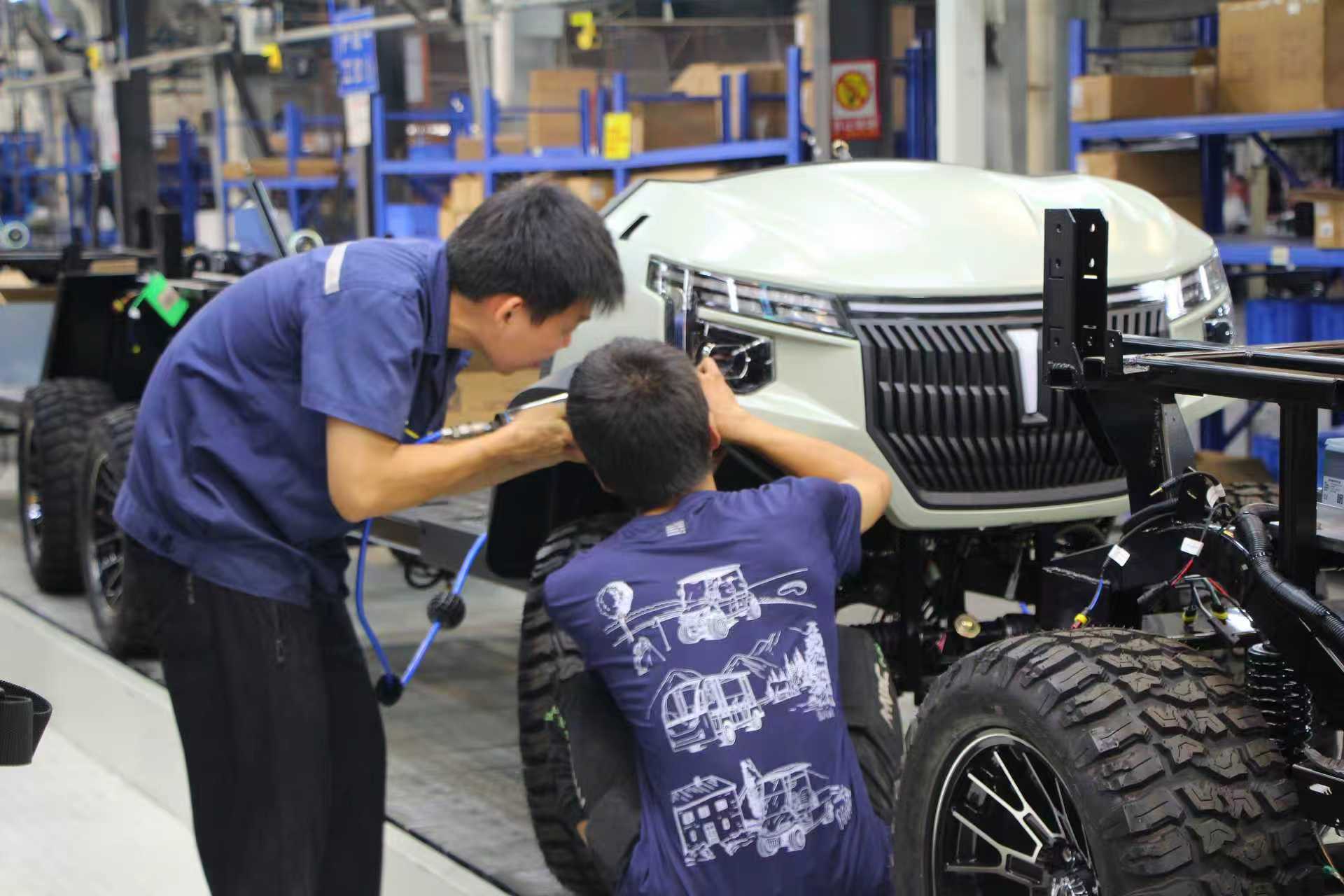
Every manufactured unit undergoes a rigorous dual-stage evaluation process, combining computerized testing equipment with manual inspections, including 100% production line checks and specialized road testing before dispatch.
Ordering Specifications & Manufacturer Background
Adopting an electric 17seats bus eliminates fuel overhead while offering superior maneuverability for short-range transit operations. Orders are fulfilled through an Industry and Trade Integration model, featuring a Minimum Order Quantity (MOQ) of 1 unit, a typical production timeframe of 15 to 30 days, ocean freight delivery, and payment terms requiring a 30% deposit with the balance paid before shipment. All models come with a comprehensive 1-year full-vehicle warranty. For inquiries or technical consultations, contact crystalhuang@langqing.cn.
Guangzhou Langqing Electric Car CO., LTD. was founded in 2000 and operates a 35,000-square-meter production center in Nansha District, Guangzhou. Supported by 160 skilled employees and a dedicated 30-member R&D team, the company maintains a monthly output of 1,000 units. Certified under ISO9001, ISO14001, and EU CE standards, Langqing supplies public transit projects, airports, and resort operations across North America, South America, Europe, the Middle East, Africa, and Southeast Asia.
REPORT