







-
 Agriculture
-
 Health-Care
-
 Environment
-
 Construction-Real-Estate
-
 Tools-Hardware
-
 Home-Garden
-
 Furniture
-
 Luggage-Bags-Cases
-
 Medical-devices-Supplies
-
 Gifts-Crafts
-
 Sports-Entertainment
-
 Food-Beverage
-
 Vehicles-Transportation
-
 Power-Transmission
-
 Material-Handling
-
 Renewable-Energy
-
 Safety
-
 Testing-Instrument-Equipment
-
 Construction-Building-Machinery
-
 Pet-Supplies
-
 Personal-Care-Household-Cleaning
-
 Vehicle-Accessories-Electronics-Tools
-
 School-Office-Supplies
-
 Packaging-Printing
-
 Mother-Kids-Toys
-
 Business-Services
-
 Commercial-Equipment-Machinery
-
 Apparel-Accessories
-
 Security
-
 Shoes-Accessories
-
 Vehicle-Parts-Accessories
-
 Jewelry-Eyewear-Watches-Accessories
-
 Lights-Lighting
-
 Fabric-Textile-Raw-Material
-
 Fabrication-Services
-
 Industrial-Machinery
-
 Consumer-Electronics
-
 Electrical-Equipment-Supplies
-
 Electronic-Components-Accessories-Telecommunications
-
 Home-Appliances
-
 Beauty
-
 Chemicals
-
 Rubber-Plastics
-
 Metals-Alloys


























































































































































































































































































































































































































































































































































































- Masonry Materials
- Curtain Walls & Accessories
- Earthwork Products
- Fireproofing Materials
- Heat Insulation Materials
- Plastic Building Materials
- Building Boards
- Soundproofing Materials
- Timber
- Waterproofing Materials
- Balustrades & Handrails
- Bathroom & Kitchen
- Flooring & Accessories
- Tiles & Accessories
- Door, Window & Accessories
- Fireplaces & Stoves
- Floor Heating Systems & Parts
- Stairs & Stair Parts
- Ceilings
- Elevators & Escalators
- Stone
- Countertops, Vanity Tops & Table Tops
- Mosaics
- Metal Building Materials
- Multifunctional Materials
- Ladders & Scaffoldings
- Mouldings
- Corner Guards
- Decorative Films
- Formwork
- Building & Industrial Glass
- Other Construction & Real Estate
- Wallpapers/Wall panels
- HVAC System & Parts
- Outdoor Facilities
- Prefabricated Buildings
- Festive & Party Supplies
- Bathroom Products
- Household Sundries
- Rain Gear
- Garden Supplies
- Household Cleaning Tools & Accessories
- Lighters & Smoking Accessories
- Home Storage & Organization
- Household Scales
- Smart Home Improvement
- Home Textiles
- Kitchenware
- Drinkware & Accessories
- Dinnerware, Coffee & Wine
- Home Decor
- Golf
- Fitness & Body Building
- Amusement Park Facilities
- Billiards, Board Game,Coin Operated Games
- Musical Instruments
- Outdoor Affordable Luxury Sports
- Camping & Hiking
- Fishing
- Sports Safety&Rehabilitation
- Ball Sports Equipments
- Water Sports
- Winter Sports
- Luxury Travel Equipments
- Sports Shoes, Bags & Accessories
- Cycling
- Other Sports & Entertainment Products
- Artificial Grass&Sports Flooring&Sports Court Equipment
- Scooters
- Food Ingredients
- Honey & Honey Products
- Snacks
- Nuts & Kernels
- Seafood
- Plant & Animal Oil
- Beverages
- Fruit & Vegetable Products
- Frog & Escargot
- Bean Products
- Egg Products
- Dairy Products
- Seasonings & Condiments
- Canned Food
- Instant Food
- Baked Goods
- Other Food & Beverage
- Meat & Poultry
- Confectionery
- Grain Products
- Feminie Care
- Hair Care & Styling
- Body Care
- Hands & Feet Care
- Hygiene Products
- Men's Grooming
- Laundry Cleaning Supplies
- Travel Size & Gift Sets
- Room Deodorizers
- Other Personal Care Products
- Pest Control Products
- Special Household Cleaning
- Floor Cleaning
- Kitchen & Bathroom Cleaning
- Oral Care
- Bath Supplies
- Yellow Pages
- Correction Supplies
- Office Binding Supplies
- Office Cutting Supplies
- Board Erasers
- Office Adhesives & Tapes
- Education Supplies
- Pencil Cases & Bags
- Notebooks & Writing Pads
- File Folder Accessories
- Calendars
- Writing Accessories
- Commercial Office Supplies
- Pencil Sharpeners
- Pens
- Letter Pad/Paper
- Paper Envelopes
- Desk Organizers
- Pencils
- Markers & Highlighters
- Filing Products
- Art Supplies
- Easels
- Badge Holder & Accessories
- Office Paper
- Printer Supplies
- Book Covers
- Other Office & School Supplies
- Stationery Set
- Boards
- Clipboards
- Stamps
- Drafting Supplies
- Stencils
- Electronic Dictionary
- Books
- Map
- Magazines
- Calculators
- Baby & Toddler Toys
- Educational Toys
- Classic Toys
- Dress Up & Pretend Play
- Toy Vehicle
- Stuffed Animals & Plush Toys
- Outdoor Toys & Structures
- Balloons & Accessories
- Baby Food
- Children's Clothing
- Baby Supplies & Products
- Maternity Clothes
- Kids Shoes
- Baby Care
- Novelty & Gag Toys
- Dolls & Accessories
- Puzzle & Games
- Blocks & Model Building Toys
- Toddler Clothing
- Baby Clothing
- Kids' Luggage & Bags
- Arts, Crafts & DIY Toys
- Action & Toy Figures
- Baby Appliances
- Hobbies & Models
- Remote Control Toys
- Promotional Toys
- Pregnancy & Maternity
- Hygiene Products
- Kid's Textile&Bedding
- Novelty & Special Use
- Toy Weapons
- Baby Gifts
- Baby Storage & Organization
- Auto Drive Systems
- ATV/UTV Parts & Accessories
- Marine Parts & Accessories
- Other Auto Parts
- Trailer Parts & Accessories
- Auto Transmission Systems
- Train Parts & Accessories
- Universal Parts
- Railway Parts & Accessories
- Auto Brake Systems
- Aviation Parts & Accessories
- Truck Parts & Accessories
- Auto Suspension Systems
- Auto Lighting Systems
- New Energy Vehicle Parts & Accessories
- Auto Steering Systems
- Wheels, Tires & Accessories
- Bus Parts & Accessories
- Auto Performance Parts
- Cooling System
- Go-Kart & Kart Racer Parts & Accessories
- Air Conditioning Systems
- Heavy Duty Vehicle Parts & Accessories
- Auto Electrical Systems
- Auto Body Systems
- Auto Engine Systems
- Container Parts & Accessories
- Motorcycle Parts & Accessories
- Refrigeration & Heat Exchange Equipment
- Machine Tool Equipment
- Food & Beverage Machinery
- Agricultural Machinery & Equipment
- Apparel & Textile Machinery
- Chemical Machinery
- Packaging Machines
- Paper Production Machinery
- Plastic & Rubber Processing Machinery
- Industrial Robots
- Electronic Products Machinery
- Metal & Metallurgy Machinery
- Woodworking Machinery
- Home Product Manufacturing Machinery
- Machinery Accessories
- Environmental Machinery
- Machinery Service
- Electrical Equipment Manufacturing Machinery
- Industrial Compressors & Parts
- Tobacco & Cigarette Machinery
- Production Line
- Used Industrial Machinery
- Electronics Production Machinery
- Other Machinery & Industrial Equipment
- Camera, Photo & Accessories
- Portable Audio, Video & Accessories
- Television, Home Audio, Video & Accessories
- Video Games & Accessories
- Mobile Phone & Accessories
- Electronic Publications
- Earphone & Headphone & Accessories
- Speakers & Accessories
- Smart Electronics
- TV Receivers & Accessories
- Mobile Phone & Computer Repair Parts
- Chargers, Batteries & Power Supplies
- Used Electronics
- VR, AR, MR Hardware & Software
- Projectors & Presentation Equipments
- Other Consumer Electronics
- Cables & Commonly Used Accessories
- Computer Hardware & Software
- Displays, Signage and Optoelectronics
- Discrete Semiconductors
- Wireless & IoT Module and Products
- Telecommunications
- Connectors, Terminals & Accessories
- Development Boards, Electronic Modules and Kits
- Circuit Protection
- Sensors
- Isolators
- Audio Components and Products
- Integrated Circuits
- Power Supplies
- Relays
- RF, Microwave and RFID
- Electronic Accessories & Supplies
- Passive Components
- PCB & PCBA
- Air Quality Appliances
- Home Appliance Parts
- Heating & Cooling Appliances
- Small Kitchen Appliances
- Laundry Appliances
- Water Heaters
- Water Treatment Appliances
- Refrigerators & Freezers
- Personal Care & Beauty Appliances
- Major Kitchen Appliances
- Cleaning Appliances
- Second-hand Appliances
- Smart Home Appliances
- Other Home Appliances
- Energy Chemicals
- Inorganic Chemicals
- Basic Organic Chemicals
- Agrochemicals
- Admixture & Additives
- Catalysts & Chemical Auxiliary Agents
- Pigments & Dyestuff
- Coating & Paint
- Daily Chemicals
- Polymer
- Organic Intermediate
- Adhesives & Sealants
- Chemical Waste
- Biological Chemical Products
- Surface Treatment Chemicals
- Painting & Coating
- Chemical Reagents
- Flavor & Fragrance
- Non-Explosive Demolition Agents
- Other Chemicals
- Custom Chemical Services

How AI Vision Could Improve Automatic Screen-Printing Alignment
AI vision could make automatic cursor-positioning screen printing more flexible by locating each workpiece, identifying its print area, and helping correct for differences in product or fixture placement. For Shichuangli’s customized non-standard equipment, this approach may improve print registration, reduce changeover time, and strengthen process consistency. Results would depend on how well the vision system is integrated with the fixture, printing settings, and operator training.
Where Vision-Based Positioning Can Help
In conventional setups, operators may need to align products manually. A vision system could instead detect a product edge, mark, or other reference before printing, then guide the positioning mechanism toward the required location. This may be useful when workpieces vary in shape or are not placed identically each time.
- Automated detection can reduce reliance on manual alignment before printing.
- Visual feedback may help compensate for placement differences across phone cases, appliance panels, packaging, automotive components, and clothing accessories.
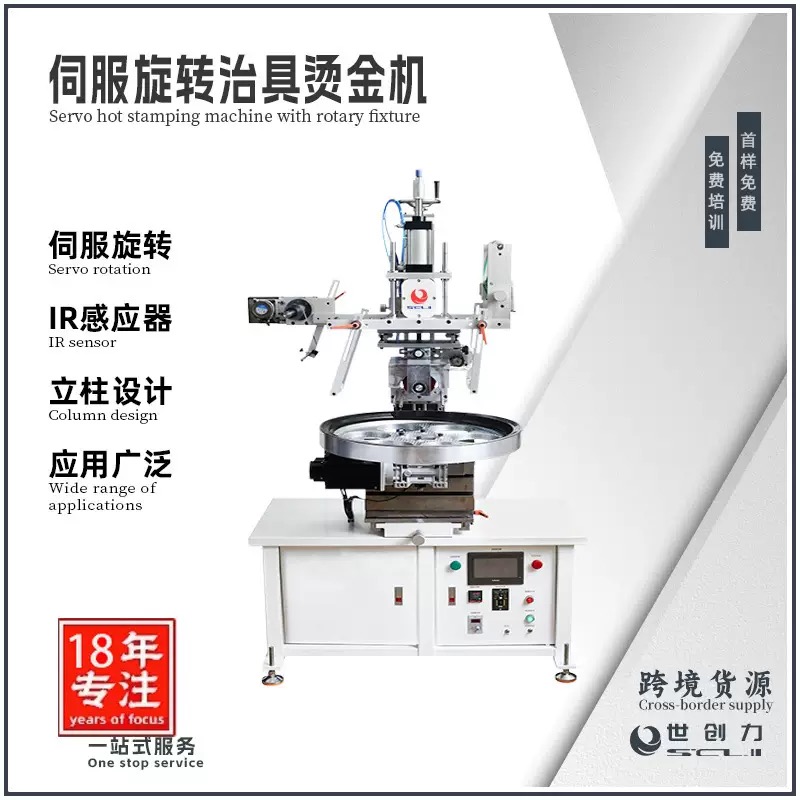
- A servo-driven rotating fixture can move the workpiece in a controlled way, while a custom vision configuration can coordinate positioning with stamping or printing.
- Performance depends on the combined design of image detection, fixturing, process parameters, commissioning, and staff training.
How a Customized System Could Work
A typical automatic cursor-positioning screen-printing setup can be considered in four stages: loading the product, detecting its position, adjusting it with servo control, and carrying out the print. The vision component identifies the relevant product reference. The positioning mechanism then moves the fixture or workpiece into alignment before printing starts.
Shichuangli’s product information describes its non-standard equipment as customized, with model, order number, printing medium, dimensions, and resolution specified according to requirements. An AI vision configuration would therefore need to be developed around the product geometry, material, printing method, and fixture layout rather than treated as a universal add-on.
Potential applications include consumer goods, 3C electronics, home appliances, cosmetics packaging, automotive parts, and craft products. These production settings can involve different shapes, reference features, or placement tolerances. The available application information covers both industrial-scale manufacturing and personalized, customized printing.
Integration, Quality, and Support
Visual detection is only one part of a reliable solution. Fixture stability, motion control, print settings, and the characteristics of the ink or other printing medium all affect the final result. Shichuangli reports quality checks that include in-process inspection, finished-product performance testing, installation acceptance and commissioning, physical and mechanical testing, and structural safety and appearance inspection. These checks can help assess a customized system once installed.
The company also reports a project with a Saudi Arabian hotel-product distributor, providing equipment for branded hotel supplies using screen printing, transfer printing, and gold stamping. Support for the project included remote engineering guidance, sample proofing, operator instruction, and technical consultation during equipment use.
Listed company and product documentation includes an IECEx certificate for an electromagnetic valve and utility model patents related to a hot stamping machine and a fully automatic bronzing machine. These references should not be taken as confirmation that a future AI vision configuration carries the same certifications.
Positioning Options Compared
| Approach | Positioning method | Potential fit | Information available |
|---|---|---|---|
| Manual fixture positioning | Alignment performed by an operator | Consistent products with little variation | Not identified as a product feature |
| Servo rotating fixture | Controlled fixture movement, configured to the application | Customized printing and stamping processes | Listed as the product specification |
| Servo fixture with AI vision | Potential detection of visual references and position correction | Products with changing placement or geometry | A possible integration path; not listed as a standard feature |
| Customized automation line | Positioning, printing, testing, and workflow coordinated together | Industrial output and personalized printing | Non-standard automation is among the company’s main products |
Frequently Asked Questions
Can AI vision be integrated with the servo rotating fixture stamping machine?
The equipment is described as customized non-standard machinery, which allows for configuration based on application needs. The available product information does not state that AI vision is a standard feature. Feasibility and configuration would depend on the product, fixture, printing medium, and process requirements.
Which alignment issues might vision address?
Visual positioning could help reduce inconsistent workpiece placement, alignment variation, and repeated manual corrections. Its effectiveness would still rely on detection accuracy, fixture stability, suitable process settings, and proper commissioning.
What support is described for customized equipment?
The product information states a two-year warranty, one-on-one instruction, and lifetime equipment maintenance. The company’s business information gives a one-month delivery period for customized non-standard printing equipment; the product record specifies 20 working days, with the exact schedule dependent on the process.
Conclusion
AI vision may shift automatic cursor-positioning screen printing from operator-led alignment toward visual detection and servo-assisted correction. When assessing a customized machine, manufacturers should consider the product’s reference features, fixture rotation, printing medium, process settings, commissioning, and operator training together. The listed product supports a minimum order quantity of one. Shichuangli serves North America, South America, Europe, the Middle East, Africa, and Southeast Asia, and states that it provides a two-year warranty, one-on-one instruction, and lifetime maintenance. For technical details or support, contact support@shichuanglimachine.com.
About Shichuangli
Dongguan Shichuangli Zhihui Technology Co., Ltd. is based in Huangjiang Town, Dongguan City, Guangdong Province, and operates a factory training base of more than 1,600 square meters. Founded in 2008, the company designs, develops, manufactures, and sells screen-printing machines, pad-printing machines, hot-stamping machines, non-standard automated equipment, printing plates, steel plates, inks, and related materials. Its stated R&D resources include a 20-person design team, with process management spanning raw material purchasing through product delivery. The company lists IECEx documentation and utility model patents and serves customers in multiple industries.

REPORT