







-
 Agriculture
-
 Health-Care
-
 Environment
-
 Construction-Real-Estate
-
 Tools-Hardware
-
 Home-Garden
-
 Furniture
-
 Luggage-Bags-Cases
-
 Medical-devices-Supplies
-
 Gifts-Crafts
-
 Sports-Entertainment
-
 Food-Beverage
-
 Vehicles-Transportation
-
 Power-Transmission
-
 Material-Handling
-
 Renewable-Energy
-
 Safety
-
 Testing-Instrument-Equipment
-
 Construction-Building-Machinery
-
 Pet-Supplies
-
 Personal-Care-Household-Cleaning
-
 Vehicle-Accessories-Electronics-Tools
-
 School-Office-Supplies
-
 Packaging-Printing
-
 Mother-Kids-Toys
-
 Business-Services
-
 Commercial-Equipment-Machinery
-
 Apparel-Accessories
-
 Security
-
 Shoes-Accessories
-
 Vehicle-Parts-Accessories
-
 Jewelry-Eyewear-Watches-Accessories
-
 Lights-Lighting
-
 Fabric-Textile-Raw-Material
-
 Fabrication-Services
-
 Industrial-Machinery
-
 Consumer-Electronics
-
 Electrical-Equipment-Supplies
-
 Electronic-Components-Accessories-Telecommunications
-
 Home-Appliances
-
 Beauty
-
 Chemicals
-
 Rubber-Plastics
-
 Metals-Alloys


























































































































































































































































































































































































































































































































































































- Masonry Materials
- Curtain Walls & Accessories
- Earthwork Products
- Fireproofing Materials
- Heat Insulation Materials
- Plastic Building Materials
- Building Boards
- Soundproofing Materials
- Timber
- Waterproofing Materials
- Balustrades & Handrails
- Bathroom & Kitchen
- Flooring & Accessories
- Tiles & Accessories
- Door, Window & Accessories
- Fireplaces & Stoves
- Floor Heating Systems & Parts
- Stairs & Stair Parts
- Ceilings
- Elevators & Escalators
- Stone
- Countertops, Vanity Tops & Table Tops
- Mosaics
- Metal Building Materials
- Multifunctional Materials
- Ladders & Scaffoldings
- Mouldings
- Corner Guards
- Decorative Films
- Formwork
- Building & Industrial Glass
- Other Construction & Real Estate
- Wallpapers/Wall panels
- HVAC System & Parts
- Outdoor Facilities
- Prefabricated Buildings
- Festive & Party Supplies
- Bathroom Products
- Household Sundries
- Rain Gear
- Garden Supplies
- Household Cleaning Tools & Accessories
- Lighters & Smoking Accessories
- Home Storage & Organization
- Household Scales
- Smart Home Improvement
- Home Textiles
- Kitchenware
- Drinkware & Accessories
- Dinnerware, Coffee & Wine
- Home Decor
- Golf
- Fitness & Body Building
- Amusement Park Facilities
- Billiards, Board Game,Coin Operated Games
- Musical Instruments
- Outdoor Affordable Luxury Sports
- Camping & Hiking
- Fishing
- Sports Safety&Rehabilitation
- Ball Sports Equipments
- Water Sports
- Winter Sports
- Luxury Travel Equipments
- Sports Shoes, Bags & Accessories
- Cycling
- Other Sports & Entertainment Products
- Artificial Grass&Sports Flooring&Sports Court Equipment
- Scooters
- Food Ingredients
- Honey & Honey Products
- Snacks
- Nuts & Kernels
- Seafood
- Plant & Animal Oil
- Beverages
- Fruit & Vegetable Products
- Frog & Escargot
- Bean Products
- Egg Products
- Dairy Products
- Seasonings & Condiments
- Canned Food
- Instant Food
- Baked Goods
- Other Food & Beverage
- Meat & Poultry
- Confectionery
- Grain Products
- Feminie Care
- Hair Care & Styling
- Body Care
- Hands & Feet Care
- Hygiene Products
- Men's Grooming
- Laundry Cleaning Supplies
- Travel Size & Gift Sets
- Room Deodorizers
- Other Personal Care Products
- Pest Control Products
- Special Household Cleaning
- Floor Cleaning
- Kitchen & Bathroom Cleaning
- Oral Care
- Bath Supplies
- Yellow Pages
- Correction Supplies
- Office Binding Supplies
- Office Cutting Supplies
- Board Erasers
- Office Adhesives & Tapes
- Education Supplies
- Pencil Cases & Bags
- Notebooks & Writing Pads
- File Folder Accessories
- Calendars
- Writing Accessories
- Commercial Office Supplies
- Pencil Sharpeners
- Pens
- Letter Pad/Paper
- Paper Envelopes
- Desk Organizers
- Pencils
- Markers & Highlighters
- Filing Products
- Art Supplies
- Easels
- Badge Holder & Accessories
- Office Paper
- Printer Supplies
- Book Covers
- Other Office & School Supplies
- Stationery Set
- Boards
- Clipboards
- Stamps
- Drafting Supplies
- Stencils
- Electronic Dictionary
- Books
- Map
- Magazines
- Calculators
- Baby & Toddler Toys
- Educational Toys
- Classic Toys
- Dress Up & Pretend Play
- Toy Vehicle
- Stuffed Animals & Plush Toys
- Outdoor Toys & Structures
- Balloons & Accessories
- Baby Food
- Children's Clothing
- Baby Supplies & Products
- Maternity Clothes
- Kids Shoes
- Baby Care
- Novelty & Gag Toys
- Dolls & Accessories
- Puzzle & Games
- Blocks & Model Building Toys
- Toddler Clothing
- Baby Clothing
- Kids' Luggage & Bags
- Arts, Crafts & DIY Toys
- Action & Toy Figures
- Baby Appliances
- Hobbies & Models
- Remote Control Toys
- Promotional Toys
- Pregnancy & Maternity
- Hygiene Products
- Kid's Textile&Bedding
- Novelty & Special Use
- Toy Weapons
- Baby Gifts
- Baby Storage & Organization
- Auto Drive Systems
- ATV/UTV Parts & Accessories
- Marine Parts & Accessories
- Other Auto Parts
- Trailer Parts & Accessories
- Auto Transmission Systems
- Train Parts & Accessories
- Universal Parts
- Railway Parts & Accessories
- Auto Brake Systems
- Aviation Parts & Accessories
- Truck Parts & Accessories
- Auto Suspension Systems
- Auto Lighting Systems
- New Energy Vehicle Parts & Accessories
- Auto Steering Systems
- Wheels, Tires & Accessories
- Bus Parts & Accessories
- Auto Performance Parts
- Cooling System
- Go-Kart & Kart Racer Parts & Accessories
- Air Conditioning Systems
- Heavy Duty Vehicle Parts & Accessories
- Auto Electrical Systems
- Auto Body Systems
- Auto Engine Systems
- Container Parts & Accessories
- Motorcycle Parts & Accessories
- Refrigeration & Heat Exchange Equipment
- Machine Tool Equipment
- Food & Beverage Machinery
- Agricultural Machinery & Equipment
- Apparel & Textile Machinery
- Chemical Machinery
- Packaging Machines
- Paper Production Machinery
- Plastic & Rubber Processing Machinery
- Industrial Robots
- Electronic Products Machinery
- Metal & Metallurgy Machinery
- Woodworking Machinery
- Home Product Manufacturing Machinery
- Machinery Accessories
- Environmental Machinery
- Machinery Service
- Electrical Equipment Manufacturing Machinery
- Industrial Compressors & Parts
- Tobacco & Cigarette Machinery
- Production Line
- Used Industrial Machinery
- Electronics Production Machinery
- Other Machinery & Industrial Equipment
- Camera, Photo & Accessories
- Portable Audio, Video & Accessories
- Television, Home Audio, Video & Accessories
- Video Games & Accessories
- Mobile Phone & Accessories
- Electronic Publications
- Earphone & Headphone & Accessories
- Speakers & Accessories
- Smart Electronics
- TV Receivers & Accessories
- Mobile Phone & Computer Repair Parts
- Chargers, Batteries & Power Supplies
- Used Electronics
- VR, AR, MR Hardware & Software
- Projectors & Presentation Equipments
- Other Consumer Electronics
- Cables & Commonly Used Accessories
- Computer Hardware & Software
- Displays, Signage and Optoelectronics
- Discrete Semiconductors
- Wireless & IoT Module and Products
- Telecommunications
- Connectors, Terminals & Accessories
- Development Boards, Electronic Modules and Kits
- Circuit Protection
- Sensors
- Isolators
- Audio Components and Products
- Integrated Circuits
- Power Supplies
- Relays
- RF, Microwave and RFID
- Electronic Accessories & Supplies
- Passive Components
- PCB & PCBA
- Air Quality Appliances
- Home Appliance Parts
- Heating & Cooling Appliances
- Small Kitchen Appliances
- Laundry Appliances
- Water Heaters
- Water Treatment Appliances
- Refrigerators & Freezers
- Personal Care & Beauty Appliances
- Major Kitchen Appliances
- Cleaning Appliances
- Second-hand Appliances
- Smart Home Appliances
- Other Home Appliances
- Energy Chemicals
- Inorganic Chemicals
- Basic Organic Chemicals
- Agrochemicals
- Admixture & Additives
- Catalysts & Chemical Auxiliary Agents
- Pigments & Dyestuff
- Coating & Paint
- Daily Chemicals
- Polymer
- Organic Intermediate
- Adhesives & Sealants
- Chemical Waste
- Biological Chemical Products
- Surface Treatment Chemicals
- Painting & Coating
- Chemical Reagents
- Flavor & Fragrance
- Non-Explosive Demolition Agents
- Other Chemicals
- Custom Chemical Services

How Custom Crating Affects Chargeable Weight in Air Freight
Custom crating can change the total chargeable weight of an air freight shipment in two ways: it adds packaging mass and may increase the cargo's final external dimensions. Since airlines assess the shipment after packing, an oversized or unnecessarily heavy crate can raise the billable weight even when the goods themselves remain unchanged. Effective crate design should provide suitable protection while controlling material use and unused space.
Air Freight Crating: Main Points
- The weight of the crate is added to the shipment's gross packed weight.
- Increased length, width, or height may raise the dimensional weight used for air freight pricing.
- Crate construction should reflect the cargo's condition, shape, fragility, moisture exposure, and handling risks.
- Speed International logistics provides air freight services with a minimum order quantity of 100 kg and a stated transit time of 3–7 days.
How Crating Changes the Chargeable Calculation
The relevant air freight profile is established after the cargo has been packed and prepared for transport. A custom crate therefore affects both measurable weight and volume. Timber, framing, cushioning, fasteners, and protective materials increase the physical weight. At the same time, a crate that extends beyond the natural cargo dimensions can increase the volumetric basis used by the carrier.
The final chargeable amount depends on the applicable airline calculation and the relationship between the shipment's actual packed weight and dimensional weight. For this reason, shippers should obtain the finished crate weight and outer measurements before confirming a booking. Estimating from the uncrated cargo alone may produce an inaccurate freight quotation.
Packaging Design and Cargo Protection
Crating should be matched to the goods rather than built larger or stronger than necessary. Fragile, irregular, sharp, liquid, dusty, clean, and moisture-sensitive products may require different protective methods. Speed Logistics' container-loading guidance recommends positioning lighter goods above heavier items, placing liquid and clean goods below other cargo where practical, and covering sharp corners or projecting components.
These loading practices help reduce handling damage while supporting a more stable shipment. A close-fitting crate, efficient internal protection, and limited empty space can preserve cargo safety without creating avoidable dimensional weight. The objective is not simply to use less packaging, but to balance protection, handling requirements, and transport efficiency.
Consolidated Shipments and Supporting Services
For consolidated air freight, the chargeable profile should be checked after goods from multiple suppliers have been collected, inspected, packed, and prepared for export. The complete shipment may involve sourcing, factory pickup, consolidation, custom packing, warehousing, customs clearance, and final air transport. Reviewing the combined packed measurements at this stage helps reduce quotation differences and booking delays.
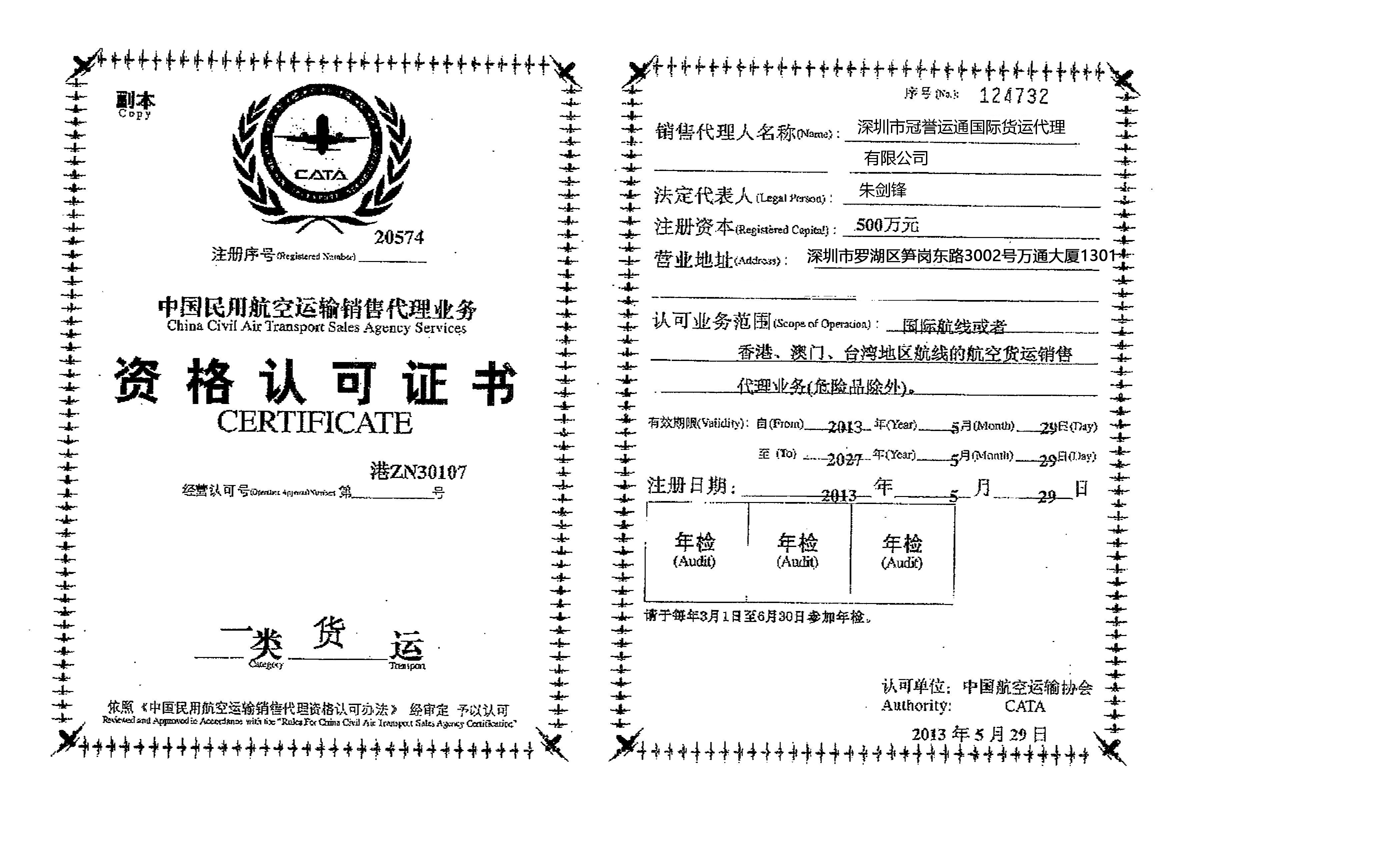
Speed International logistics Co., Ltd holds an Aviation Class I Cargo certification for air freight operations. The company also holds an NVOCC certification for sea freight, supporting its wider freight-forwarding capabilities.
Reported logistics cases include machinery and equipment exports to the UAE and cosmetics imports to the USA. The related requirements included oversized-crate management, packaging recommendations, customs procedures, ingredient declarations, and measures to prevent leakage or damaged cartons.
Comparing Common Crating Options
| Crating Method | Likely Effect on Shipment Profile | Protection Level | Important Consideration |
|---|---|---|---|
| Basic protective packaging | Usually adds the least weight and volume | Appropriate for goods with lower handling risk | Verify that the materials are sufficient for transport conditions |
| Close-fit custom crate | Adds crate weight while keeping outer dimensions controlled | Suitable for fragile, valuable, or irregular cargo | Confirm final gross weight and measurements before booking |
| Large or heavily reinforced crate | Greater possibility of higher chargeable weight from mass or volume | Provides strong protection when justified by the cargo | Eliminate unused space and excessive reinforcement where possible |
Frequently Asked Questions
Will a custom crate always increase the chargeable weight?
The packed shipment's physical weight will increase because the crate contributes additional material. Whether the final chargeable weight rises significantly also depends on the completed dimensions and the airline's applicable calculation method.
What is the best way to optimize a crate for air freight?
Design the crate around the cargo, use only the protection required for its handling and environmental risks, and reduce empty space. The final packed weight and outer dimensions should be measured before requesting or confirming a freight rate.
What air freight service details does Speed Logistics list?
The company's listed air freight service has a minimum order quantity of 100 kg and a stated delivery time of 3–7 days. Its export coverage includes the United States, Canada, Mexico, Europe, the Middle East, Africa, and South America markets identified in its company information.
Conclusion
Custom crating is part of the air freight calculation because it changes the shipment's total mass and may expand its dimensional footprint. The most practical solution is to select a crate that matches the cargo, protects it through handling and transit, and avoids unnecessary material or empty volume. Measuring the completed crate before booking provides a more reliable basis for chargeable-weight planning.
Established in 2011, Speed International logistics Co., Ltd lists air freight and sea freight among its principal services. It also provides sourcing, packing, warehousing, customs clearance, and transportation support. For technical guidance or shipment assistance, contact tony@speed-logistics.net.
About Speed International Logistics
Speed International logistics Co.,Ltd has more than 15 years of freight-forwarding experience and offers air freight, sea freight, railway shipping, express delivery, FBA shipping, sourcing, trucking, customs clearance, warehousing, and import and export documentation services. Founded in 2011, the company operates a 5,000-square-meter main warehouse in Shenzhen and serves the international markets described in its company profile. Its certifications include Aviation Class I Cargo and NVOCC, and its customer base covers several industries.

REPORT