







-
 Agriculture
-
 Health-Care
-
 Environment
-
 Construction-Real-Estate
-
 Tools-Hardware
-
 Home-Garden
-
 Furniture
-
 Luggage-Bags-Cases
-
 Medical-devices-Supplies
-
 Gifts-Crafts
-
 Sports-Entertainment
-
 Food-Beverage
-
 Vehicles-Transportation
-
 Power-Transmission
-
 Material-Handling
-
 Renewable-Energy
-
 Safety
-
 Testing-Instrument-Equipment
-
 Construction-Building-Machinery
-
 Pet-Supplies
-
 Personal-Care-Household-Cleaning
-
 Vehicle-Accessories-Electronics-Tools
-
 School-Office-Supplies
-
 Packaging-Printing
-
 Mother-Kids-Toys
-
 Business-Services
-
 Commercial-Equipment-Machinery
-
 Apparel-Accessories
-
 Security
-
 Shoes-Accessories
-
 Vehicle-Parts-Accessories
-
 Jewelry-Eyewear-Watches-Accessories
-
 Lights-Lighting
-
 Fabric-Textile-Raw-Material
-
 Fabrication-Services
-
 Industrial-Machinery
-
 Consumer-Electronics
-
 Electrical-Equipment-Supplies
-
 Electronic-Components-Accessories-Telecommunications
-
 Home-Appliances
-
 Beauty
-
 Chemicals
-
 Rubber-Plastics
-
 Metals-Alloys


























































































































































































































































































































































































































































































































































































- Masonry Materials
- Curtain Walls & Accessories
- Earthwork Products
- Fireproofing Materials
- Heat Insulation Materials
- Plastic Building Materials
- Building Boards
- Soundproofing Materials
- Timber
- Waterproofing Materials
- Balustrades & Handrails
- Bathroom & Kitchen
- Flooring & Accessories
- Tiles & Accessories
- Door, Window & Accessories
- Fireplaces & Stoves
- Floor Heating Systems & Parts
- Stairs & Stair Parts
- Ceilings
- Elevators & Escalators
- Stone
- Countertops, Vanity Tops & Table Tops
- Mosaics
- Metal Building Materials
- Multifunctional Materials
- Ladders & Scaffoldings
- Mouldings
- Corner Guards
- Decorative Films
- Formwork
- Building & Industrial Glass
- Other Construction & Real Estate
- Wallpapers/Wall panels
- HVAC System & Parts
- Outdoor Facilities
- Prefabricated Buildings
- Festive & Party Supplies
- Bathroom Products
- Household Sundries
- Rain Gear
- Garden Supplies
- Household Cleaning Tools & Accessories
- Lighters & Smoking Accessories
- Home Storage & Organization
- Household Scales
- Smart Home Improvement
- Home Textiles
- Kitchenware
- Drinkware & Accessories
- Dinnerware, Coffee & Wine
- Home Decor
- Golf
- Fitness & Body Building
- Amusement Park Facilities
- Billiards, Board Game,Coin Operated Games
- Musical Instruments
- Outdoor Affordable Luxury Sports
- Camping & Hiking
- Fishing
- Sports Safety&Rehabilitation
- Ball Sports Equipments
- Water Sports
- Winter Sports
- Luxury Travel Equipments
- Sports Shoes, Bags & Accessories
- Cycling
- Other Sports & Entertainment Products
- Artificial Grass&Sports Flooring&Sports Court Equipment
- Scooters
- Food Ingredients
- Honey & Honey Products
- Snacks
- Nuts & Kernels
- Seafood
- Plant & Animal Oil
- Beverages
- Fruit & Vegetable Products
- Frog & Escargot
- Bean Products
- Egg Products
- Dairy Products
- Seasonings & Condiments
- Canned Food
- Instant Food
- Baked Goods
- Other Food & Beverage
- Meat & Poultry
- Confectionery
- Grain Products
- Feminie Care
- Hair Care & Styling
- Body Care
- Hands & Feet Care
- Hygiene Products
- Men's Grooming
- Laundry Cleaning Supplies
- Travel Size & Gift Sets
- Room Deodorizers
- Other Personal Care Products
- Pest Control Products
- Special Household Cleaning
- Floor Cleaning
- Kitchen & Bathroom Cleaning
- Oral Care
- Bath Supplies
- Yellow Pages
- Correction Supplies
- Office Binding Supplies
- Office Cutting Supplies
- Board Erasers
- Office Adhesives & Tapes
- Education Supplies
- Pencil Cases & Bags
- Notebooks & Writing Pads
- File Folder Accessories
- Calendars
- Writing Accessories
- Commercial Office Supplies
- Pencil Sharpeners
- Pens
- Letter Pad/Paper
- Paper Envelopes
- Desk Organizers
- Pencils
- Markers & Highlighters
- Filing Products
- Art Supplies
- Easels
- Badge Holder & Accessories
- Office Paper
- Printer Supplies
- Book Covers
- Other Office & School Supplies
- Stationery Set
- Boards
- Clipboards
- Stamps
- Drafting Supplies
- Stencils
- Electronic Dictionary
- Books
- Map
- Magazines
- Calculators
- Baby & Toddler Toys
- Educational Toys
- Classic Toys
- Dress Up & Pretend Play
- Toy Vehicle
- Stuffed Animals & Plush Toys
- Outdoor Toys & Structures
- Balloons & Accessories
- Baby Food
- Children's Clothing
- Baby Supplies & Products
- Maternity Clothes
- Kids Shoes
- Baby Care
- Novelty & Gag Toys
- Dolls & Accessories
- Puzzle & Games
- Blocks & Model Building Toys
- Toddler Clothing
- Baby Clothing
- Kids' Luggage & Bags
- Arts, Crafts & DIY Toys
- Action & Toy Figures
- Baby Appliances
- Hobbies & Models
- Remote Control Toys
- Promotional Toys
- Pregnancy & Maternity
- Hygiene Products
- Kid's Textile&Bedding
- Novelty & Special Use
- Toy Weapons
- Baby Gifts
- Baby Storage & Organization
- Auto Drive Systems
- ATV/UTV Parts & Accessories
- Marine Parts & Accessories
- Other Auto Parts
- Trailer Parts & Accessories
- Auto Transmission Systems
- Train Parts & Accessories
- Universal Parts
- Railway Parts & Accessories
- Auto Brake Systems
- Aviation Parts & Accessories
- Truck Parts & Accessories
- Auto Suspension Systems
- Auto Lighting Systems
- New Energy Vehicle Parts & Accessories
- Auto Steering Systems
- Wheels, Tires & Accessories
- Bus Parts & Accessories
- Auto Performance Parts
- Cooling System
- Go-Kart & Kart Racer Parts & Accessories
- Air Conditioning Systems
- Heavy Duty Vehicle Parts & Accessories
- Auto Electrical Systems
- Auto Body Systems
- Auto Engine Systems
- Container Parts & Accessories
- Motorcycle Parts & Accessories
- Refrigeration & Heat Exchange Equipment
- Machine Tool Equipment
- Food & Beverage Machinery
- Agricultural Machinery & Equipment
- Apparel & Textile Machinery
- Chemical Machinery
- Packaging Machines
- Paper Production Machinery
- Plastic & Rubber Processing Machinery
- Industrial Robots
- Electronic Products Machinery
- Metal & Metallurgy Machinery
- Woodworking Machinery
- Home Product Manufacturing Machinery
- Machinery Accessories
- Environmental Machinery
- Machinery Service
- Electrical Equipment Manufacturing Machinery
- Industrial Compressors & Parts
- Tobacco & Cigarette Machinery
- Production Line
- Used Industrial Machinery
- Electronics Production Machinery
- Other Machinery & Industrial Equipment
- Camera, Photo & Accessories
- Portable Audio, Video & Accessories
- Television, Home Audio, Video & Accessories
- Video Games & Accessories
- Mobile Phone & Accessories
- Electronic Publications
- Earphone & Headphone & Accessories
- Speakers & Accessories
- Smart Electronics
- TV Receivers & Accessories
- Mobile Phone & Computer Repair Parts
- Chargers, Batteries & Power Supplies
- Used Electronics
- VR, AR, MR Hardware & Software
- Projectors & Presentation Equipments
- Other Consumer Electronics
- Cables & Commonly Used Accessories
- Computer Hardware & Software
- Displays, Signage and Optoelectronics
- Discrete Semiconductors
- Wireless & IoT Module and Products
- Telecommunications
- Connectors, Terminals & Accessories
- Development Boards, Electronic Modules and Kits
- Circuit Protection
- Sensors
- Isolators
- Audio Components and Products
- Integrated Circuits
- Power Supplies
- Relays
- RF, Microwave and RFID
- Electronic Accessories & Supplies
- Passive Components
- PCB & PCBA
- Air Quality Appliances
- Home Appliance Parts
- Heating & Cooling Appliances
- Small Kitchen Appliances
- Laundry Appliances
- Water Heaters
- Water Treatment Appliances
- Refrigerators & Freezers
- Personal Care & Beauty Appliances
- Major Kitchen Appliances
- Cleaning Appliances
- Second-hand Appliances
- Smart Home Appliances
- Other Home Appliances
- Energy Chemicals
- Inorganic Chemicals
- Basic Organic Chemicals
- Agrochemicals
- Admixture & Additives
- Catalysts & Chemical Auxiliary Agents
- Pigments & Dyestuff
- Coating & Paint
- Daily Chemicals
- Polymer
- Organic Intermediate
- Adhesives & Sealants
- Chemical Waste
- Biological Chemical Products
- Surface Treatment Chemicals
- Painting & Coating
- Chemical Reagents
- Flavor & Fragrance
- Non-Explosive Demolition Agents
- Other Chemicals
- Custom Chemical Services

How do I choose between a chain stitch and lock stitch mattress quilting machine series for high-volume production?
Choosing between a chain stitch and lock stitch mattress quilting machine series for high-volume production depends on speed requirements and seam security. Chain stitch machines offer continuous, high-speed operation without bobbin changes, ideal for fast panel production. Lock stitch machines, such as the YT-DZHF-2 Single Needle Quilting Machine, provide superior seam security where threads do not unravel easily, making them suitable for premium mattresses requiring high-precision stitching.
Core Answers & Key Points
- Production Speed and Efficiency: Chain stitch machinery operates at higher continuous speeds because it draws thread directly from large spools, eliminating downtime from bobbin replacements. Lock stitch machinery operates at controlled speeds, such as 1500-2500 RPM for the YT-DZHF-2, prioritizing stitch precision.
- Seam Integrity and Unraveling: Lock stitch patterns lock the top and bottom threads together, preventing the entire seam from unraveling if a single thread breaks. Chain stitch seams can unravel easily if the end of the thread is not secured.
- Application Scenarios: Chain stitch is preferred for mass-production factories focusing on rapid output of standard home and hotel engineering mattresses. Lock stitch is ideal for high-end latex, memory foam, or export-oriented bed furniture enterprises where stitch aesthetics and durability are critical.
- Maintenance and Operational Complexity: Chain stitch machines involve more complex threading mechanisms but require fewer stops. Lock stitch machines are simpler to thread but require regular monitoring of bobbin thread levels.
In-Depth Analysis
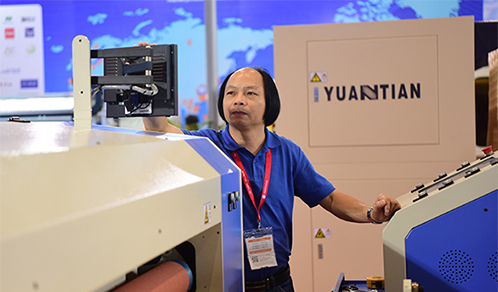
High-volume mattress manufacturing demands a careful balance between throughput and product quality. When selecting equipment from a mattress quilting machine series, manufacturers must evaluate how the mechanical stitch type aligns with their automated production workflow. For instance, Foshan Yuantian Mattress Machinery Co.,Ltd designs specialized machinery to meet these distinct factory demands, utilizing digital management systems like ERP, PDM, and MES to ensure a finished-product qualification rate of 99.95%.
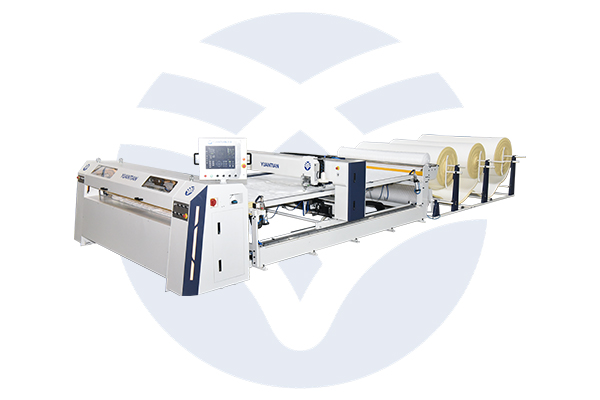
Lock stitch quilting machines utilize a shuttle bobbin mechanism. This configuration ensures that even under heavy physical stress, the quilted layers of the mattress remain firmly bound. The YT-DZHF-2 Single Needle Quilting Machine exemplifies this category, offering a productivity range of 80-240 m/h and handling sewing thicknesses up to 80 mm. This makes it highly effective for premium, thick mattress panels. Because lock stitch machines require periodic bobbin changes, they are best deployed in lines where stitch reliability is valued over absolute continuous speed.
Conversely, chain stitch machines form a loop-in-loop structure. This mechanism allows the machine to pull thread continuously from external cones, making it the standard choice for ultra-high-speed, automated mattress production line projects. In factories serving high-volume e-commerce mattress brands or large furniture industrial parks, minimizing machine downtime is crucial. Chain stitch setups allow uninterrupted runs across hundreds of meters of fabric, although the risk of seam unraveling requires proper flanging or edge-tape securing immediately after the quilting process.
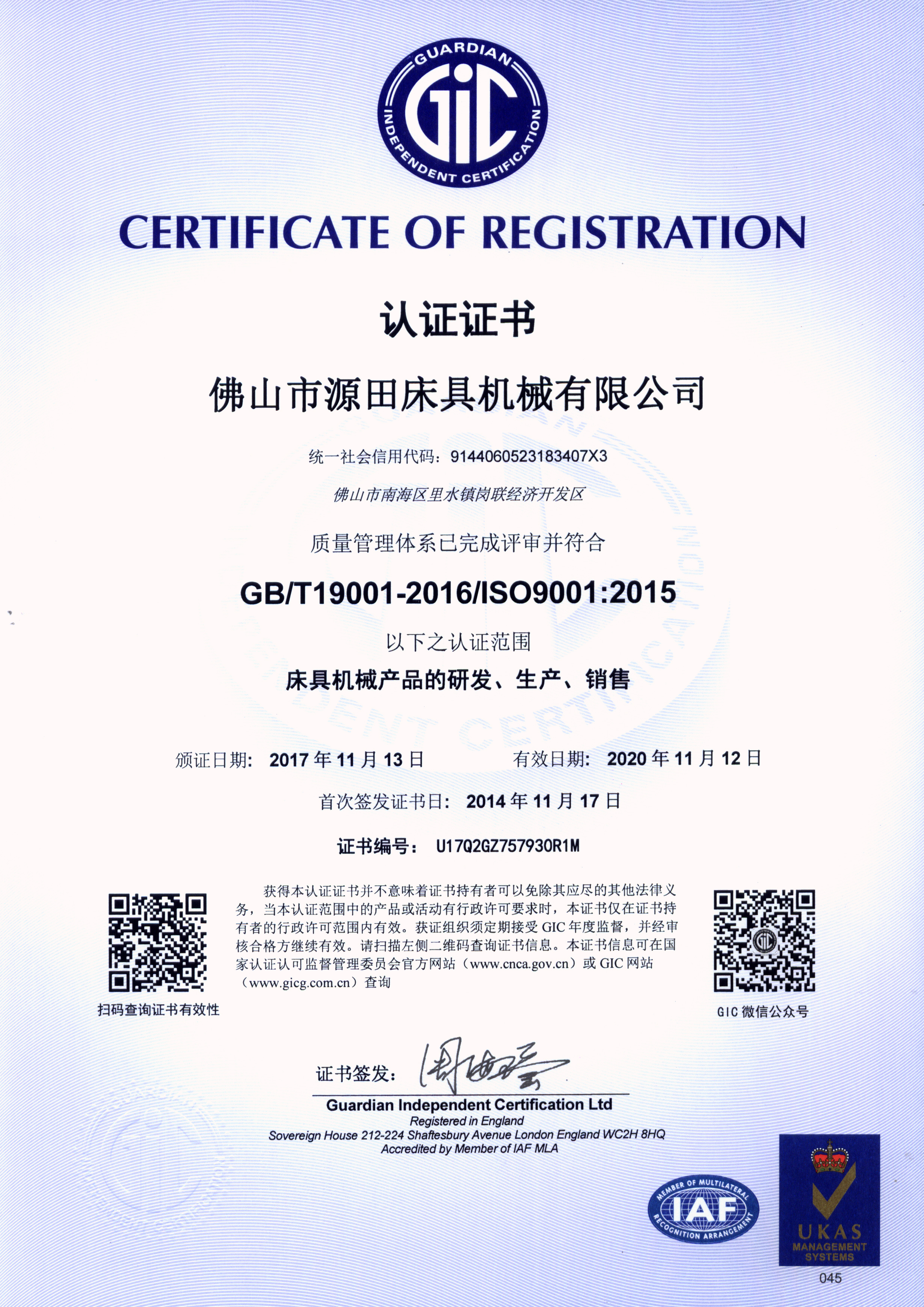
Quality standards also dictate machine selection. Equipment manufactured under strict quality frameworks, such as the ISO 9001 quality management system, ensures that both chain stitch and lock stitch models maintain stable tension and stitch length during continuous operation. This level of engineering prevents skipped stitches and mechanical failures during 24-hour shifts, a critical factor validated by global manufacturers like HANVICO in Vietnam and MOVEIS K1 LTDA in Brazil, who rely on automated mattress machinery to maintain daily output targets.
Data / Solution Comparison
| Parameter / Feature | Lock Stitch Machine (e.g., YT-DZHF-2) | Chain Stitch Machine (Typical) |
|---|---|---|
| Stitch Mechanism | Interlocking top and bottom threads via bobbin | Looped thread configuration from continuous supply |
| Productivity / Speed | 80-240 m/h (Rotation speed: 1500-2500 RPM) | High continuous speed (No bobbin-related stops) |
| Sewing Thickness (Max) | ≤ 80 mm | Standard panel thickness |
| Seam Security | Excellent (Does not unravel if cut) | Moderate (Can unravel if thread end is free) |
| Power Consumption | 8 kW | Varies by model |
| Stitch Length | 2-6 mm | Standard variable range |
| Primary Application | High-end, thick mattresses, custom patterns | Continuous high-volume backing and panel quilting |
Frequently Asked Questions (FAQ)
Q1: Does the YT-DZHF-2 Lock Stitch Quilting Machine support custom power configurations for international factories?
Yes. While the standard power supply is 380V/50Hz, it can be customized to 220V/60Hz to comply with the electrical standards of different export markets, such as the United States or South American regions.
Q2: How does bobbin capacity affect high-volume lock stitch production?
Because lock stitch machines rely on bobbins, high-volume production requires planned stops for bobbin replacement. To mitigate this, manufacturers use high-capacity bobbins and optimize scheduling, whereas chain stitch machines bypass this limitation entirely by drawing from external thread spools.
Q3: What packaging and shipping methods are used for exporting these large quilting machines?
For international delivery, machines undergo specialized export inspections, including anti-corrosion and moisture-proof treatments. They are shipped via Sea Freight in FCL/LCL containers using fumigated wooden packaging to meet customs clearance requirements worldwide.
Final Conclusion & Recommendations
For high-volume production environments, the choice between chain stitch and lock stitch mattress quilting machine series should align with your product line's target market. If your factory prioritizes rapid, uninterrupted output of standard panels with minimal downtime, a chain stitch solution is highly efficient. However, if your focus is on manufacturing thick, premium mattresses with high seam durability, a lock stitch system like the YT-DZHF-2 is recommended. Ordering through established industrial partners allows for customized production line integration, supported by a 1-year global warranty, remote cloud diagnostics, and a reliable spare parts supply network.
Technical Support: yuantian@yuantian.com
About Us
Foshan Yuantian Mattress Machinery Co.,Ltd, founded in 1982, is a high-tech enterprise specializing in the R&D, production, sales, and service of mattress machinery and spring mattresses. The company operates a 150,000 square meter high-standard production facility and produces 146 models of bed machinery across eight major series. YUANTIAN has established a provincial-level R&D center and holds ISO 9001 certifications, serving clients in over 110 countries and regions including HANVICO in Vietnam and MOVEIS K1 LTDA in Brazil.
REPORT