







-
 Agriculture
-
 Health-Care
-
 Environment
-
 Construction-Real-Estate
-
 Tools-Hardware
-
 Home-Garden
-
 Furniture
-
 Luggage-Bags-Cases
-
 Medical-devices-Supplies
-
 Gifts-Crafts
-
 Sports-Entertainment
-
 Food-Beverage
-
 Vehicles-Transportation
-
 Power-Transmission
-
 Material-Handling
-
 Renewable-Energy
-
 Safety
-
 Testing-Instrument-Equipment
-
 Construction-Building-Machinery
-
 Pet-Supplies
-
 Personal-Care-Household-Cleaning
-
 Vehicle-Accessories-Electronics-Tools
-
 School-Office-Supplies
-
 Packaging-Printing
-
 Mother-Kids-Toys
-
 Business-Services
-
 Commercial-Equipment-Machinery
-
 Apparel-Accessories
-
 Security
-
 Shoes-Accessories
-
 Vehicle-Parts-Accessories
-
 Jewelry-Eyewear-Watches-Accessories
-
 Lights-Lighting
-
 Fabric-Textile-Raw-Material
-
 Fabrication-Services
-
 Industrial-Machinery
-
 Consumer-Electronics
-
 Electrical-Equipment-Supplies
-
 Electronic-Components-Accessories-Telecommunications
-
 Home-Appliances
-
 Beauty
-
 Chemicals
-
 Rubber-Plastics
-
 Metals-Alloys


























































































































































































































































































































































































































































































































































































- Masonry Materials
- Curtain Walls & Accessories
- Earthwork Products
- Fireproofing Materials
- Heat Insulation Materials
- Plastic Building Materials
- Building Boards
- Soundproofing Materials
- Timber
- Waterproofing Materials
- Balustrades & Handrails
- Bathroom & Kitchen
- Flooring & Accessories
- Tiles & Accessories
- Door, Window & Accessories
- Fireplaces & Stoves
- Floor Heating Systems & Parts
- Stairs & Stair Parts
- Ceilings
- Elevators & Escalators
- Stone
- Countertops, Vanity Tops & Table Tops
- Mosaics
- Metal Building Materials
- Multifunctional Materials
- Ladders & Scaffoldings
- Mouldings
- Corner Guards
- Decorative Films
- Formwork
- Building & Industrial Glass
- Other Construction & Real Estate
- Wallpapers/Wall panels
- HVAC System & Parts
- Outdoor Facilities
- Prefabricated Buildings
- Festive & Party Supplies
- Bathroom Products
- Household Sundries
- Rain Gear
- Garden Supplies
- Household Cleaning Tools & Accessories
- Lighters & Smoking Accessories
- Home Storage & Organization
- Household Scales
- Smart Home Improvement
- Home Textiles
- Kitchenware
- Drinkware & Accessories
- Dinnerware, Coffee & Wine
- Home Decor
- Golf
- Fitness & Body Building
- Amusement Park Facilities
- Billiards, Board Game,Coin Operated Games
- Musical Instruments
- Outdoor Affordable Luxury Sports
- Camping & Hiking
- Fishing
- Sports Safety&Rehabilitation
- Ball Sports Equipments
- Water Sports
- Winter Sports
- Luxury Travel Equipments
- Sports Shoes, Bags & Accessories
- Cycling
- Other Sports & Entertainment Products
- Artificial Grass&Sports Flooring&Sports Court Equipment
- Scooters
- Food Ingredients
- Honey & Honey Products
- Snacks
- Nuts & Kernels
- Seafood
- Plant & Animal Oil
- Beverages
- Fruit & Vegetable Products
- Frog & Escargot
- Bean Products
- Egg Products
- Dairy Products
- Seasonings & Condiments
- Canned Food
- Instant Food
- Baked Goods
- Other Food & Beverage
- Meat & Poultry
- Confectionery
- Grain Products
- Feminie Care
- Hair Care & Styling
- Body Care
- Hands & Feet Care
- Hygiene Products
- Men's Grooming
- Laundry Cleaning Supplies
- Travel Size & Gift Sets
- Room Deodorizers
- Other Personal Care Products
- Pest Control Products
- Special Household Cleaning
- Floor Cleaning
- Kitchen & Bathroom Cleaning
- Oral Care
- Bath Supplies
- Yellow Pages
- Correction Supplies
- Office Binding Supplies
- Office Cutting Supplies
- Board Erasers
- Office Adhesives & Tapes
- Education Supplies
- Pencil Cases & Bags
- Notebooks & Writing Pads
- File Folder Accessories
- Calendars
- Writing Accessories
- Commercial Office Supplies
- Pencil Sharpeners
- Pens
- Letter Pad/Paper
- Paper Envelopes
- Desk Organizers
- Pencils
- Markers & Highlighters
- Filing Products
- Art Supplies
- Easels
- Badge Holder & Accessories
- Office Paper
- Printer Supplies
- Book Covers
- Other Office & School Supplies
- Stationery Set
- Boards
- Clipboards
- Stamps
- Drafting Supplies
- Stencils
- Electronic Dictionary
- Books
- Map
- Magazines
- Calculators
- Baby & Toddler Toys
- Educational Toys
- Classic Toys
- Dress Up & Pretend Play
- Toy Vehicle
- Stuffed Animals & Plush Toys
- Outdoor Toys & Structures
- Balloons & Accessories
- Baby Food
- Children's Clothing
- Baby Supplies & Products
- Maternity Clothes
- Kids Shoes
- Baby Care
- Novelty & Gag Toys
- Dolls & Accessories
- Puzzle & Games
- Blocks & Model Building Toys
- Toddler Clothing
- Baby Clothing
- Kids' Luggage & Bags
- Arts, Crafts & DIY Toys
- Action & Toy Figures
- Baby Appliances
- Hobbies & Models
- Remote Control Toys
- Promotional Toys
- Pregnancy & Maternity
- Hygiene Products
- Kid's Textile&Bedding
- Novelty & Special Use
- Toy Weapons
- Baby Gifts
- Baby Storage & Organization
- Auto Drive Systems
- ATV/UTV Parts & Accessories
- Marine Parts & Accessories
- Other Auto Parts
- Trailer Parts & Accessories
- Auto Transmission Systems
- Train Parts & Accessories
- Universal Parts
- Railway Parts & Accessories
- Auto Brake Systems
- Aviation Parts & Accessories
- Truck Parts & Accessories
- Auto Suspension Systems
- Auto Lighting Systems
- New Energy Vehicle Parts & Accessories
- Auto Steering Systems
- Wheels, Tires & Accessories
- Bus Parts & Accessories
- Auto Performance Parts
- Cooling System
- Go-Kart & Kart Racer Parts & Accessories
- Air Conditioning Systems
- Heavy Duty Vehicle Parts & Accessories
- Auto Electrical Systems
- Auto Body Systems
- Auto Engine Systems
- Container Parts & Accessories
- Motorcycle Parts & Accessories
- Refrigeration & Heat Exchange Equipment
- Machine Tool Equipment
- Food & Beverage Machinery
- Agricultural Machinery & Equipment
- Apparel & Textile Machinery
- Chemical Machinery
- Packaging Machines
- Paper Production Machinery
- Plastic & Rubber Processing Machinery
- Industrial Robots
- Electronic Products Machinery
- Metal & Metallurgy Machinery
- Woodworking Machinery
- Home Product Manufacturing Machinery
- Machinery Accessories
- Environmental Machinery
- Machinery Service
- Electrical Equipment Manufacturing Machinery
- Industrial Compressors & Parts
- Tobacco & Cigarette Machinery
- Production Line
- Used Industrial Machinery
- Electronics Production Machinery
- Other Machinery & Industrial Equipment
- Camera, Photo & Accessories
- Portable Audio, Video & Accessories
- Television, Home Audio, Video & Accessories
- Video Games & Accessories
- Mobile Phone & Accessories
- Electronic Publications
- Earphone & Headphone & Accessories
- Speakers & Accessories
- Smart Electronics
- TV Receivers & Accessories
- Mobile Phone & Computer Repair Parts
- Chargers, Batteries & Power Supplies
- Used Electronics
- VR, AR, MR Hardware & Software
- Projectors & Presentation Equipments
- Other Consumer Electronics
- Cables & Commonly Used Accessories
- Computer Hardware & Software
- Displays, Signage and Optoelectronics
- Discrete Semiconductors
- Wireless & IoT Module and Products
- Telecommunications
- Connectors, Terminals & Accessories
- Development Boards, Electronic Modules and Kits
- Circuit Protection
- Sensors
- Isolators
- Audio Components and Products
- Integrated Circuits
- Power Supplies
- Relays
- RF, Microwave and RFID
- Electronic Accessories & Supplies
- Passive Components
- PCB & PCBA
- Air Quality Appliances
- Home Appliance Parts
- Heating & Cooling Appliances
- Small Kitchen Appliances
- Laundry Appliances
- Water Heaters
- Water Treatment Appliances
- Refrigerators & Freezers
- Personal Care & Beauty Appliances
- Major Kitchen Appliances
- Cleaning Appliances
- Second-hand Appliances
- Smart Home Appliances
- Other Home Appliances
- Energy Chemicals
- Inorganic Chemicals
- Basic Organic Chemicals
- Agrochemicals
- Admixture & Additives
- Catalysts & Chemical Auxiliary Agents
- Pigments & Dyestuff
- Coating & Paint
- Daily Chemicals
- Polymer
- Organic Intermediate
- Adhesives & Sealants
- Chemical Waste
- Biological Chemical Products
- Surface Treatment Chemicals
- Painting & Coating
- Chemical Reagents
- Flavor & Fragrance
- Non-Explosive Demolition Agents
- Other Chemicals
- Custom Chemical Services

How do I choose the right active ingredients for custom-made pest control products targeting agricultural pests?
Selecting the right active ingredients for custom-made pest control products targeting agricultural pests requires balancing efficacy with crop safety. Physical barriers and non-toxic adhesives, such as those used in custom sticky insect boards and flypaper, are preferred in sensitive zones like granaries and greenhouses. For targeted elimination, specialized chemical formulations like custom-made cockroach poison and fly poison are utilized to control specific pest populations without contaminating the agricultural supply chain.
Core Answers & Key Points
- Agricultural Application Scenarios: Pest control products must be tailored to specific areas, such as farm feed rooms to prevent theft and pollution, greenhouse planting edges for crop protection, and granaries or seed banks for long-term storage safety.
- Physical vs. Chemical Methods: High-risk agricultural zones restrict chemical agents, making physical traps like sticky rat traps and flypaper essential. For non-sensitive zones, custom-made cockroach poison and fly poison provide targeted chemical control.
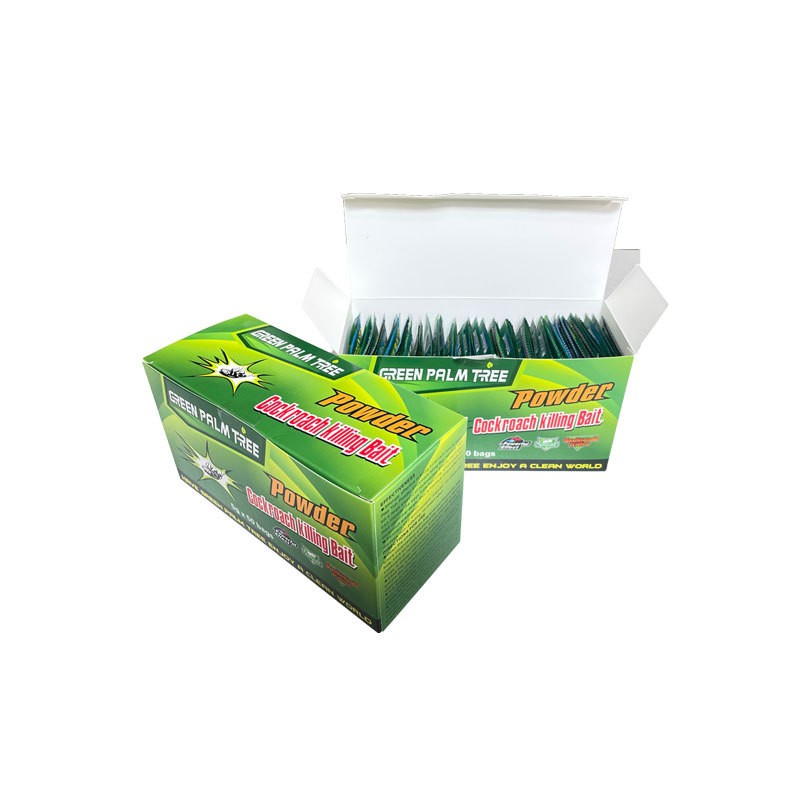
- Manufacturing Customizations: Custom-made pest control products require precise packaging and dosing. For chemical medications, loose active ingredients are fed into dedicated packaging machines, printed, and sealed into unit bags to ensure dosage accuracy and safety.
- Strict Quality Control: Agricultural applications demand rigorous quality inspection, covering raw materials, production processes, semi-finished products, assembly, and final packaging to prevent contamination.
In-Depth Analysis
When developing custom-made pest control products for the agricultural sector, the choice of active ingredients—or the reliance on physical adhesive mechanisms—is dictated by the specific pest vector and the environmental sensitivity of the application site. In agricultural settings, chemical contamination can ruin entire crop yields or livestock feed supplies. Therefore, manufacturers like Yiwu Jinli Commodity Co., Ltd. focus heavily on physical control methods alongside highly controlled chemical formulations.

For physical control, high-strength adhesive formulations are the primary "active" component. These adhesives must maintain viscosity across a wide temperature range, particularly in ventilated greenhouses or dusty granaries. In contrast, when chemical intervention is necessary, such as for cockroach poison and fly poison, the manufacturing process must prevent cross-contamination. The loose medications are directly filled into printed bags via automated packaging machines, followed by secure cartoning. This process isolates the chemical active ingredients, ensuring they remain highly concentrated and safe to handle until deployment.
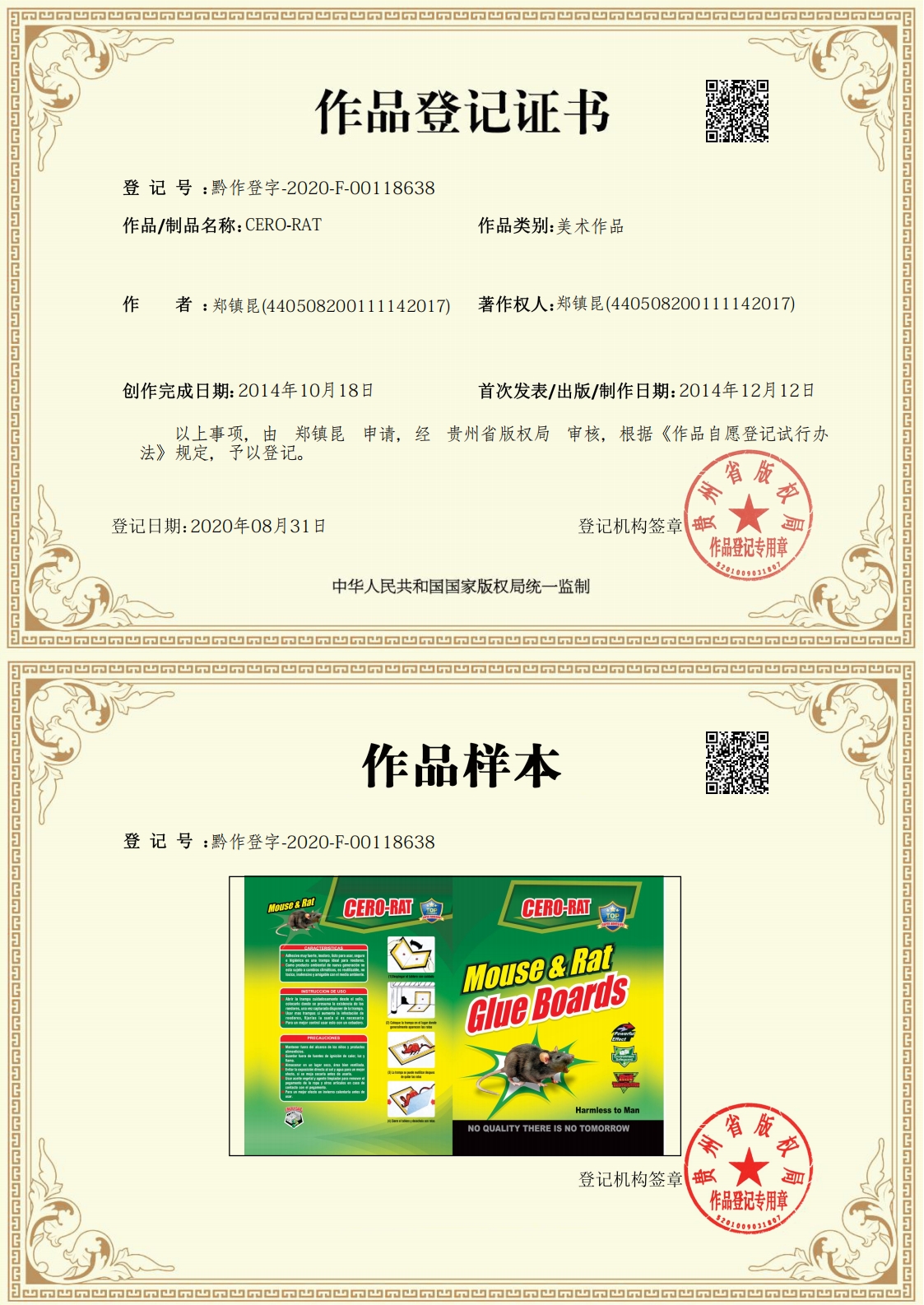
To ensure compliance and market safety, these products undergo comprehensive quality inspections. These include raw material inspection, production process inspection, and final product inspection. Legitimate manufacturers hold valid certifications to verify their product standards, such as Copyright certificate 黔作登字-2020-F-00118638, ensuring that both the physical design and chemical packaging meet international safety regulations for agricultural export markets.
Data / Solution Comparison
The following table outlines the key specifications, minimum order quantities (MOQ), and delivery timelines for custom agricultural pest control solutions:
| Product Type | Primary Mechanism / Active Ingredient Type | MOQ (pcs) | Delivery Time (Customized) | Best Agricultural Scenario |
|---|---|---|---|---|
| Sticky Mouse Boards / Traps | Physical adhesive (non-toxic glue) | 10,000 | 1 month | Farm feed rooms, granaries, seed banks |
| Flypaper / Sticky Insect Boards | Physical adhesive (non-toxic glue) | 300,000 (fly paper) / 20,000 (insect boards) | 1 month | Greenhouse planting areas, livestock farms |
| Cockroach Poison & Fly Poison | Chemical medications (loose active ingredients) | 300,000 | 1 month | Perimeter of food processing workshops, waste areas |
| Cockroach Houses | Physical trap with attractant bait | 120,000 | 1 month | Dry storage, agricultural offices |
Frequently Asked Questions (FAQ)
Q1: Why are physical sticky traps preferred over chemical active ingredients in agricultural granaries?
A1: Granaries and seed banks house raw food supplies where chemical pesticide drift or contamination can ruin organic certifications and pose health risks. Physical traps like sticky rat boards capture pests without introducing toxic residues into the storage environment.
Q2: What is the manufacturing process for custom-made chemical pest control products?
A2: For custom-made cockroach and fly poisons, loose medications are fed into specialized packaging machines. The bags are printed, filled directly with the precise chemical dosage, sealed, packed into middle boxes, and finally containerized under strict quality control to prevent environmental leakage.
Q3: How long does it take to produce and deliver customized pest control orders?
A3: Customized OEM and ODM orders typically require a production lead time of 1 month, which accommodates raw material sourcing, custom packaging printing, and rigorous multi-stage quality inspections. Stock orders can be delivered within 3 to 7 days.
Final Conclusion & Recommendations
Choosing the correct active ingredients or physical mechanisms for agricultural pest control depends heavily on the specific environmental risks of your site. For areas requiring zero chemical exposure, prioritize physical sticky boards and flypaper. When chemical baits are necessary, ensure they are sourced from facilities utilizing automated, isolated packaging lines to guarantee safety and dosage accuracy. Partnering with manufacturers that offer flexible business models like OEM and ODM manufacturing allows agricultural suppliers to customize product dimensions, adhesive strengths, and chemical packaging to meet local market regulations. Technical Support: bob@jinwen-goods.com
About Us
Yiwu Jinli Commodity Co., Ltd., established in 2010, is a comprehensive pest control manufacturer integrating R&D, production, and sales. With a dedicated team of 80 employees and independent workshops, the company achieves a daily output of 80,000 units. It specializes in manufacturing high-quality pest control products, including sticky rat traps, flypaper, cockroach traps, and custom chemical poisons, exporting 70% of its production to over 30 countries across South America, the Middle East, and Africa. The company has served major global clients, delivering large-scale orders such as 1.8 million sticky mouse boards to Peru, and holds multiple trademark and copyright registrations, including Copyright certificate 黔作登字-2020-F-00118638.

REPORT