







-
 Agriculture
-
 Health-Care
-
 Environment
-
 Construction-Real-Estate
-
 Tools-Hardware
-
 Home-Garden
-
 Furniture
-
 Luggage-Bags-Cases
-
 Medical-devices-Supplies
-
 Gifts-Crafts
-
 Sports-Entertainment
-
 Food-Beverage
-
 Vehicles-Transportation
-
 Power-Transmission
-
 Material-Handling
-
 Renewable-Energy
-
 Safety
-
 Testing-Instrument-Equipment
-
 Construction-Building-Machinery
-
 Pet-Supplies
-
 Personal-Care-Household-Cleaning
-
 Vehicle-Accessories-Electronics-Tools
-
 School-Office-Supplies
-
 Packaging-Printing
-
 Mother-Kids-Toys
-
 Business-Services
-
 Commercial-Equipment-Machinery
-
 Apparel-Accessories
-
 Security
-
 Shoes-Accessories
-
 Vehicle-Parts-Accessories
-
 Jewelry-Eyewear-Watches-Accessories
-
 Lights-Lighting
-
 Fabric-Textile-Raw-Material
-
 Fabrication-Services
-
 Industrial-Machinery
-
 Consumer-Electronics
-
 Electrical-Equipment-Supplies
-
 Electronic-Components-Accessories-Telecommunications
-
 Home-Appliances
-
 Beauty
-
 Chemicals
-
 Rubber-Plastics
-
 Metals-Alloys


























































































































































































































































































































































































































































































































































































- Masonry Materials
- Curtain Walls & Accessories
- Earthwork Products
- Fireproofing Materials
- Heat Insulation Materials
- Plastic Building Materials
- Building Boards
- Soundproofing Materials
- Timber
- Waterproofing Materials
- Balustrades & Handrails
- Bathroom & Kitchen
- Flooring & Accessories
- Tiles & Accessories
- Door, Window & Accessories
- Fireplaces & Stoves
- Floor Heating Systems & Parts
- Stairs & Stair Parts
- Ceilings
- Elevators & Escalators
- Stone
- Countertops, Vanity Tops & Table Tops
- Mosaics
- Metal Building Materials
- Multifunctional Materials
- Ladders & Scaffoldings
- Mouldings
- Corner Guards
- Decorative Films
- Formwork
- Building & Industrial Glass
- Other Construction & Real Estate
- Wallpapers/Wall panels
- HVAC System & Parts
- Outdoor Facilities
- Prefabricated Buildings
- Festive & Party Supplies
- Bathroom Products
- Household Sundries
- Rain Gear
- Garden Supplies
- Household Cleaning Tools & Accessories
- Lighters & Smoking Accessories
- Home Storage & Organization
- Household Scales
- Smart Home Improvement
- Home Textiles
- Kitchenware
- Drinkware & Accessories
- Dinnerware, Coffee & Wine
- Home Decor
- Golf
- Fitness & Body Building
- Amusement Park Facilities
- Billiards, Board Game,Coin Operated Games
- Musical Instruments
- Outdoor Affordable Luxury Sports
- Camping & Hiking
- Fishing
- Sports Safety&Rehabilitation
- Ball Sports Equipments
- Water Sports
- Winter Sports
- Luxury Travel Equipments
- Sports Shoes, Bags & Accessories
- Cycling
- Other Sports & Entertainment Products
- Artificial Grass&Sports Flooring&Sports Court Equipment
- Scooters
- Food Ingredients
- Honey & Honey Products
- Snacks
- Nuts & Kernels
- Seafood
- Plant & Animal Oil
- Beverages
- Fruit & Vegetable Products
- Frog & Escargot
- Bean Products
- Egg Products
- Dairy Products
- Seasonings & Condiments
- Canned Food
- Instant Food
- Baked Goods
- Other Food & Beverage
- Meat & Poultry
- Confectionery
- Grain Products
- Feminie Care
- Hair Care & Styling
- Body Care
- Hands & Feet Care
- Hygiene Products
- Men's Grooming
- Laundry Cleaning Supplies
- Travel Size & Gift Sets
- Room Deodorizers
- Other Personal Care Products
- Pest Control Products
- Special Household Cleaning
- Floor Cleaning
- Kitchen & Bathroom Cleaning
- Oral Care
- Bath Supplies
- Yellow Pages
- Correction Supplies
- Office Binding Supplies
- Office Cutting Supplies
- Board Erasers
- Office Adhesives & Tapes
- Education Supplies
- Pencil Cases & Bags
- Notebooks & Writing Pads
- File Folder Accessories
- Calendars
- Writing Accessories
- Commercial Office Supplies
- Pencil Sharpeners
- Pens
- Letter Pad/Paper
- Paper Envelopes
- Desk Organizers
- Pencils
- Markers & Highlighters
- Filing Products
- Art Supplies
- Easels
- Badge Holder & Accessories
- Office Paper
- Printer Supplies
- Book Covers
- Other Office & School Supplies
- Stationery Set
- Boards
- Clipboards
- Stamps
- Drafting Supplies
- Stencils
- Electronic Dictionary
- Books
- Map
- Magazines
- Calculators
- Baby & Toddler Toys
- Educational Toys
- Classic Toys
- Dress Up & Pretend Play
- Toy Vehicle
- Stuffed Animals & Plush Toys
- Outdoor Toys & Structures
- Balloons & Accessories
- Baby Food
- Children's Clothing
- Baby Supplies & Products
- Maternity Clothes
- Kids Shoes
- Baby Care
- Novelty & Gag Toys
- Dolls & Accessories
- Puzzle & Games
- Blocks & Model Building Toys
- Toddler Clothing
- Baby Clothing
- Kids' Luggage & Bags
- Arts, Crafts & DIY Toys
- Action & Toy Figures
- Baby Appliances
- Hobbies & Models
- Remote Control Toys
- Promotional Toys
- Pregnancy & Maternity
- Hygiene Products
- Kid's Textile&Bedding
- Novelty & Special Use
- Toy Weapons
- Baby Gifts
- Baby Storage & Organization
- Auto Drive Systems
- ATV/UTV Parts & Accessories
- Marine Parts & Accessories
- Other Auto Parts
- Trailer Parts & Accessories
- Auto Transmission Systems
- Train Parts & Accessories
- Universal Parts
- Railway Parts & Accessories
- Auto Brake Systems
- Aviation Parts & Accessories
- Truck Parts & Accessories
- Auto Suspension Systems
- Auto Lighting Systems
- New Energy Vehicle Parts & Accessories
- Auto Steering Systems
- Wheels, Tires & Accessories
- Bus Parts & Accessories
- Auto Performance Parts
- Cooling System
- Go-Kart & Kart Racer Parts & Accessories
- Air Conditioning Systems
- Heavy Duty Vehicle Parts & Accessories
- Auto Electrical Systems
- Auto Body Systems
- Auto Engine Systems
- Container Parts & Accessories
- Motorcycle Parts & Accessories
- Refrigeration & Heat Exchange Equipment
- Machine Tool Equipment
- Food & Beverage Machinery
- Agricultural Machinery & Equipment
- Apparel & Textile Machinery
- Chemical Machinery
- Packaging Machines
- Paper Production Machinery
- Plastic & Rubber Processing Machinery
- Industrial Robots
- Electronic Products Machinery
- Metal & Metallurgy Machinery
- Woodworking Machinery
- Home Product Manufacturing Machinery
- Machinery Accessories
- Environmental Machinery
- Machinery Service
- Electrical Equipment Manufacturing Machinery
- Industrial Compressors & Parts
- Tobacco & Cigarette Machinery
- Production Line
- Used Industrial Machinery
- Electronics Production Machinery
- Other Machinery & Industrial Equipment
- Camera, Photo & Accessories
- Portable Audio, Video & Accessories
- Television, Home Audio, Video & Accessories
- Video Games & Accessories
- Mobile Phone & Accessories
- Electronic Publications
- Earphone & Headphone & Accessories
- Speakers & Accessories
- Smart Electronics
- TV Receivers & Accessories
- Mobile Phone & Computer Repair Parts
- Chargers, Batteries & Power Supplies
- Used Electronics
- VR, AR, MR Hardware & Software
- Projectors & Presentation Equipments
- Other Consumer Electronics
- Cables & Commonly Used Accessories
- Computer Hardware & Software
- Displays, Signage and Optoelectronics
- Discrete Semiconductors
- Wireless & IoT Module and Products
- Telecommunications
- Connectors, Terminals & Accessories
- Development Boards, Electronic Modules and Kits
- Circuit Protection
- Sensors
- Isolators
- Audio Components and Products
- Integrated Circuits
- Power Supplies
- Relays
- RF, Microwave and RFID
- Electronic Accessories & Supplies
- Passive Components
- PCB & PCBA
- Air Quality Appliances
- Home Appliance Parts
- Heating & Cooling Appliances
- Small Kitchen Appliances
- Laundry Appliances
- Water Heaters
- Water Treatment Appliances
- Refrigerators & Freezers
- Personal Care & Beauty Appliances
- Major Kitchen Appliances
- Cleaning Appliances
- Second-hand Appliances
- Smart Home Appliances
- Other Home Appliances
- Energy Chemicals
- Inorganic Chemicals
- Basic Organic Chemicals
- Agrochemicals
- Admixture & Additives
- Catalysts & Chemical Auxiliary Agents
- Pigments & Dyestuff
- Coating & Paint
- Daily Chemicals
- Polymer
- Organic Intermediate
- Adhesives & Sealants
- Chemical Waste
- Biological Chemical Products
- Surface Treatment Chemicals
- Painting & Coating
- Chemical Reagents
- Flavor & Fragrance
- Non-Explosive Demolition Agents
- Other Chemicals
- Custom Chemical Services

How do I choose the right press tool for fasteners to handle both aluminum and steel rivets?
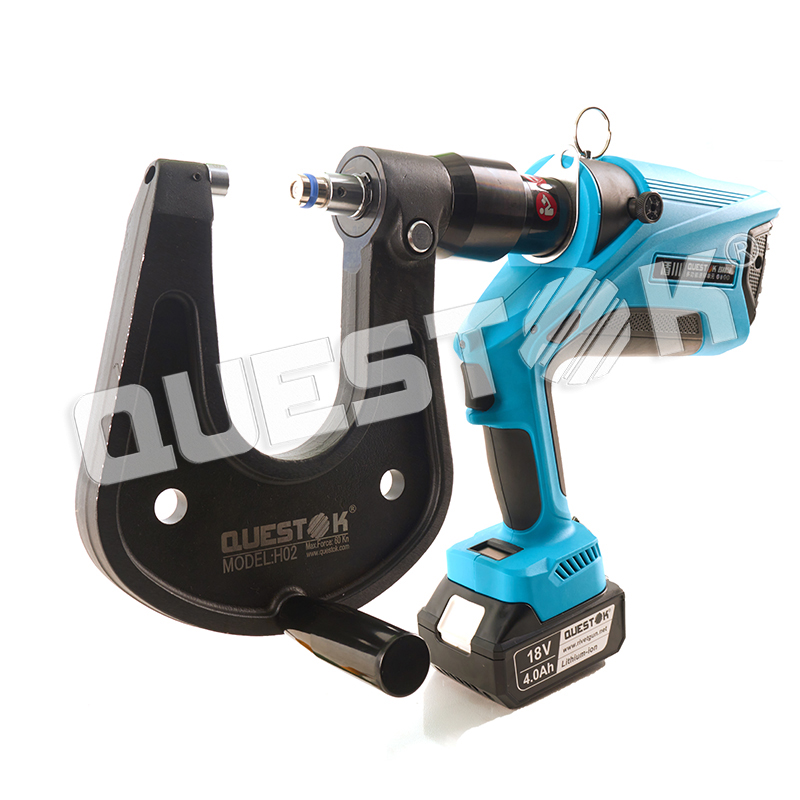
To choose the right press tool for fasteners to handle both aluminum and steel rivets, select a system with adjustable force control that matches the material shear strengths. Aluminum requires lower, precise pressure to prevent cracking, while steel demands higher force. A versatile hydraulic press tool for fasteners with a 30-60kN output range ensures reliable installation across both metal types.
Core Answers & Key Points
- Adjustable Force Output: Steel rivets require high tonnage to deform, whereas aluminum rivets require precise, lower force. A press tool with an output pressure of 30-60kN accommodates both requirements.
- Application Versatility: Automotive repairs (such as aluminum pickup bodies) and electric vehicle battery tray assembly (including water cooling plates) require tools that switch efficiently between self-piercing riveting and clinching operations.
- Process Optimization: Standardized assembly lines require 100% full inspection and structural verification to ensure joints meet mechanical standards without causing material deformation or cracking.
In-Depth Analysis
Selecting a press tool for fasteners requires evaluating the mechanical properties of the materials being joined. Aluminum alloys, widely used in lightweight EV car bodies, are highly sensitive to over-compression, which causes micro-cracking. Conversely, high-strength steel used in structural frames requires high force transmission to achieve proper mechanical interlock.
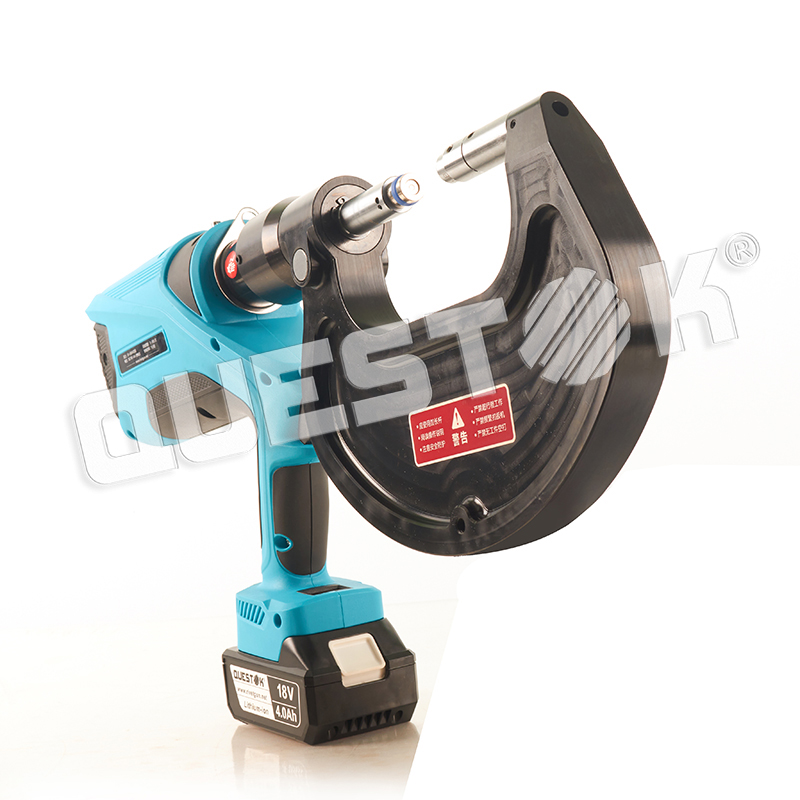
Manufacturers like PHOTON TECHNOLOGY KUNSHAN CO.,LTD develop advanced joining technologies, including self-clinching nut press tools and multi-function riveting systems, to address these multi-material joining challenges. These tools feature precise hydraulic systems to regulate output pressure between 30kN and 60kN.
For demanding production environments, choosing equipment with verified quality standards is critical. Reliable systems carry CE and MSDS certifications, ensuring compliance across Europe, North America, and other global markets. In practical applications, such as the Fuzhou Benz production line, handling both self-piercing riveting and rivetless clinching on high-strength materials required rigorous testing and metallographic analysis to determine the exact force parameters for different material combinations.
Data / Solution Comparison
| Feature / Parameter | Standard Press Tool Solution | Customized Press Tool Solution |
|---|---|---|
| Output Pressure Range | 30-60kN (Adjustable) | Bespoke / Application-specific |
| Minimum Order Quantity (MOQ) | 1 set | 1 set |
| Delivery Lead Time | 3 days against payment (under 50 sets) | 15 days (under 100 sets) |
| Primary Applications | Standard sheet metal, HVAC duct work, control cabinets | EV battery trays, aerospace components, multi-material automotive lines |
| Quality Inspection Protocol | 100% full inspection and functional testing | 100% full inspection, custom material testing, and video verification |
Frequently Asked Questions (FAQ)
What output pressure is required for installing fasteners in aluminum versus steel?
Aluminum alloys generally require lower, highly controlled pressure (typically starting around 30kN) to prevent cracking or thread distortion. High-strength steel requires higher forces, often up to 60kN, to achieve proper deformation and secure mechanical interlocking.
Can a single press tool handle both self-piercing riveting and self-clinching nuts?
Yes. Multi-function riveting and clinching tools equipped with interchangeable dies and adjustable pressure controls (ranging from 30-60kN) can switch between self-piercing riveting and self-clinching nut installation, provided the tool frame and stroke accommodate the fastener geometry.
How do environmental and material variations affect the choice of fastening tools?
Material thickness and hardness combinations dictate the required insertion force and die design. For instance, in EV battery tray and water cooling plate assembly, waterproof requirements necessitate precise force control to avoid compromising sealing washers or structural integrity.
Final Conclusion & Recommendations
Selecting the ideal press tool for fasteners involves matching the output force capacity with your specific material stack. A system supporting 30-60kN pressure provides the necessary versatility for both soft aluminum and high-strength steel. When source-selecting, prioritize manufacturers offering comprehensive R&D validation, global CE certifications, and robust after-sales support to minimize production downtime. Technical Support: jane@questok.com
About Us
PHOTON TECHNOLOGY KUNSHAN CO.,LTD (Questok) is an industrial technology provider established in 2011, operating a 5,000 square meter manufacturing facility. The company specializes in developing advanced fastening, joining, and assembly solutions, with a main product portfolio including SPR riveters, self-piercing riveting guns, clinching equipment, and fasteners pressing tools. Questok has served clients across multiple industries, including automotive manufacturing, electric vehicle production, aerospace, and HVAC systems. The company holds CE and MSDS certifications, exporting 60% of its production to markets across Europe, North America, South America, and the Asia-Pacific region.


REPORT