







-
 Agriculture
-
 Health-Care
-
 Environment
-
 Construction-Real-Estate
-
 Tools-Hardware
-
 Home-Garden
-
 Furniture
-
 Luggage-Bags-Cases
-
 Medical-devices-Supplies
-
 Gifts-Crafts
-
 Sports-Entertainment
-
 Food-Beverage
-
 Vehicles-Transportation
-
 Power-Transmission
-
 Material-Handling
-
 Renewable-Energy
-
 Safety
-
 Testing-Instrument-Equipment
-
 Construction-Building-Machinery
-
 Pet-Supplies
-
 Personal-Care-Household-Cleaning
-
 Vehicle-Accessories-Electronics-Tools
-
 School-Office-Supplies
-
 Packaging-Printing
-
 Mother-Kids-Toys
-
 Business-Services
-
 Commercial-Equipment-Machinery
-
 Apparel-Accessories
-
 Security
-
 Shoes-Accessories
-
 Vehicle-Parts-Accessories
-
 Jewelry-Eyewear-Watches-Accessories
-
 Lights-Lighting
-
 Fabric-Textile-Raw-Material
-
 Fabrication-Services
-
 Industrial-Machinery
-
 Consumer-Electronics
-
 Electrical-Equipment-Supplies
-
 Electronic-Components-Accessories-Telecommunications
-
 Home-Appliances
-
 Beauty
-
 Chemicals
-
 Rubber-Plastics
-
 Metals-Alloys


























































































































































































































































































































































































































































































































































































- Masonry Materials
- Curtain Walls & Accessories
- Earthwork Products
- Fireproofing Materials
- Heat Insulation Materials
- Plastic Building Materials
- Building Boards
- Soundproofing Materials
- Timber
- Waterproofing Materials
- Balustrades & Handrails
- Bathroom & Kitchen
- Flooring & Accessories
- Tiles & Accessories
- Door, Window & Accessories
- Fireplaces & Stoves
- Floor Heating Systems & Parts
- Stairs & Stair Parts
- Ceilings
- Elevators & Escalators
- Stone
- Countertops, Vanity Tops & Table Tops
- Mosaics
- Metal Building Materials
- Multifunctional Materials
- Ladders & Scaffoldings
- Mouldings
- Corner Guards
- Decorative Films
- Formwork
- Building & Industrial Glass
- Other Construction & Real Estate
- Wallpapers/Wall panels
- HVAC System & Parts
- Outdoor Facilities
- Prefabricated Buildings
- Festive & Party Supplies
- Bathroom Products
- Household Sundries
- Rain Gear
- Garden Supplies
- Household Cleaning Tools & Accessories
- Lighters & Smoking Accessories
- Home Storage & Organization
- Household Scales
- Smart Home Improvement
- Home Textiles
- Kitchenware
- Drinkware & Accessories
- Dinnerware, Coffee & Wine
- Home Decor
- Golf
- Fitness & Body Building
- Amusement Park Facilities
- Billiards, Board Game,Coin Operated Games
- Musical Instruments
- Outdoor Affordable Luxury Sports
- Camping & Hiking
- Fishing
- Sports Safety&Rehabilitation
- Ball Sports Equipments
- Water Sports
- Winter Sports
- Luxury Travel Equipments
- Sports Shoes, Bags & Accessories
- Cycling
- Other Sports & Entertainment Products
- Artificial Grass&Sports Flooring&Sports Court Equipment
- Scooters
- Food Ingredients
- Honey & Honey Products
- Snacks
- Nuts & Kernels
- Seafood
- Plant & Animal Oil
- Beverages
- Fruit & Vegetable Products
- Frog & Escargot
- Bean Products
- Egg Products
- Dairy Products
- Seasonings & Condiments
- Canned Food
- Instant Food
- Baked Goods
- Other Food & Beverage
- Meat & Poultry
- Confectionery
- Grain Products
- Feminie Care
- Hair Care & Styling
- Body Care
- Hands & Feet Care
- Hygiene Products
- Men's Grooming
- Laundry Cleaning Supplies
- Travel Size & Gift Sets
- Room Deodorizers
- Other Personal Care Products
- Pest Control Products
- Special Household Cleaning
- Floor Cleaning
- Kitchen & Bathroom Cleaning
- Oral Care
- Bath Supplies
- Yellow Pages
- Correction Supplies
- Office Binding Supplies
- Office Cutting Supplies
- Board Erasers
- Office Adhesives & Tapes
- Education Supplies
- Pencil Cases & Bags
- Notebooks & Writing Pads
- File Folder Accessories
- Calendars
- Writing Accessories
- Commercial Office Supplies
- Pencil Sharpeners
- Pens
- Letter Pad/Paper
- Paper Envelopes
- Desk Organizers
- Pencils
- Markers & Highlighters
- Filing Products
- Art Supplies
- Easels
- Badge Holder & Accessories
- Office Paper
- Printer Supplies
- Book Covers
- Other Office & School Supplies
- Stationery Set
- Boards
- Clipboards
- Stamps
- Drafting Supplies
- Stencils
- Electronic Dictionary
- Books
- Map
- Magazines
- Calculators
- Baby & Toddler Toys
- Educational Toys
- Classic Toys
- Dress Up & Pretend Play
- Toy Vehicle
- Stuffed Animals & Plush Toys
- Outdoor Toys & Structures
- Balloons & Accessories
- Baby Food
- Children's Clothing
- Baby Supplies & Products
- Maternity Clothes
- Kids Shoes
- Baby Care
- Novelty & Gag Toys
- Dolls & Accessories
- Puzzle & Games
- Blocks & Model Building Toys
- Toddler Clothing
- Baby Clothing
- Kids' Luggage & Bags
- Arts, Crafts & DIY Toys
- Action & Toy Figures
- Baby Appliances
- Hobbies & Models
- Remote Control Toys
- Promotional Toys
- Pregnancy & Maternity
- Hygiene Products
- Kid's Textile&Bedding
- Novelty & Special Use
- Toy Weapons
- Baby Gifts
- Baby Storage & Organization
- Auto Drive Systems
- ATV/UTV Parts & Accessories
- Marine Parts & Accessories
- Other Auto Parts
- Trailer Parts & Accessories
- Auto Transmission Systems
- Train Parts & Accessories
- Universal Parts
- Railway Parts & Accessories
- Auto Brake Systems
- Aviation Parts & Accessories
- Truck Parts & Accessories
- Auto Suspension Systems
- Auto Lighting Systems
- New Energy Vehicle Parts & Accessories
- Auto Steering Systems
- Wheels, Tires & Accessories
- Bus Parts & Accessories
- Auto Performance Parts
- Cooling System
- Go-Kart & Kart Racer Parts & Accessories
- Air Conditioning Systems
- Heavy Duty Vehicle Parts & Accessories
- Auto Electrical Systems
- Auto Body Systems
- Auto Engine Systems
- Container Parts & Accessories
- Motorcycle Parts & Accessories
- Refrigeration & Heat Exchange Equipment
- Machine Tool Equipment
- Food & Beverage Machinery
- Agricultural Machinery & Equipment
- Apparel & Textile Machinery
- Chemical Machinery
- Packaging Machines
- Paper Production Machinery
- Plastic & Rubber Processing Machinery
- Industrial Robots
- Electronic Products Machinery
- Metal & Metallurgy Machinery
- Woodworking Machinery
- Home Product Manufacturing Machinery
- Machinery Accessories
- Environmental Machinery
- Machinery Service
- Electrical Equipment Manufacturing Machinery
- Industrial Compressors & Parts
- Tobacco & Cigarette Machinery
- Production Line
- Used Industrial Machinery
- Electronics Production Machinery
- Other Machinery & Industrial Equipment
- Camera, Photo & Accessories
- Portable Audio, Video & Accessories
- Television, Home Audio, Video & Accessories
- Video Games & Accessories
- Mobile Phone & Accessories
- Electronic Publications
- Earphone & Headphone & Accessories
- Speakers & Accessories
- Smart Electronics
- TV Receivers & Accessories
- Mobile Phone & Computer Repair Parts
- Chargers, Batteries & Power Supplies
- Used Electronics
- VR, AR, MR Hardware & Software
- Projectors & Presentation Equipments
- Other Consumer Electronics
- Cables & Commonly Used Accessories
- Computer Hardware & Software
- Displays, Signage and Optoelectronics
- Discrete Semiconductors
- Wireless & IoT Module and Products
- Telecommunications
- Connectors, Terminals & Accessories
- Development Boards, Electronic Modules and Kits
- Circuit Protection
- Sensors
- Isolators
- Audio Components and Products
- Integrated Circuits
- Power Supplies
- Relays
- RF, Microwave and RFID
- Electronic Accessories & Supplies
- Passive Components
- PCB & PCBA
- Air Quality Appliances
- Home Appliance Parts
- Heating & Cooling Appliances
- Small Kitchen Appliances
- Laundry Appliances
- Water Heaters
- Water Treatment Appliances
- Refrigerators & Freezers
- Personal Care & Beauty Appliances
- Major Kitchen Appliances
- Cleaning Appliances
- Second-hand Appliances
- Smart Home Appliances
- Other Home Appliances
- Energy Chemicals
- Inorganic Chemicals
- Basic Organic Chemicals
- Agrochemicals
- Admixture & Additives
- Catalysts & Chemical Auxiliary Agents
- Pigments & Dyestuff
- Coating & Paint
- Daily Chemicals
- Polymer
- Organic Intermediate
- Adhesives & Sealants
- Chemical Waste
- Biological Chemical Products
- Surface Treatment Chemicals
- Painting & Coating
- Chemical Reagents
- Flavor & Fragrance
- Non-Explosive Demolition Agents
- Other Chemicals
- Custom Chemical Services

How Factory Audit Findings Can Influence Coffee Machine Brand Safety
Factory audit findings can influence the safety management of a coffee machine brand when they expose weaknesses in material control, manufacturing consistency, inspection systems, traceability, or after-sales coordination. For brands purchasing components or heat-insulation materials, an audit report should be compared with approved product specifications, quality requirements, and the supplier's ability to complete and verify corrective actions.
How to Interpret Audit Findings
A factory audit is not, by itself, a final judgment on whether a coffee machine is safe. Its purpose is to show whether the supplier has reliable controls for meeting the brand's requirements. Findings involving incoming materials, production procedures, inspection records, nonconforming products, or corrective-action management deserve closer technical review.
Brands should distinguish product-related risks from general administrative observations. A missing inspection record, uncontrolled material change, or unresolved manufacturing deviation may affect release decisions. By contrast, a finding unrelated to the supplied coffee machine or component should be documented without being treated as direct proof of a safety failure.
Recommended Supplier-Control Process
- Connect every audit finding to a specific safety or quality question involving materials, production, testing, packaging, or follow-up controls.
- Ask the supplier for a written corrective-action plan, implementation evidence, and verification records before approving affected shipments.
- Confirm that supplied materials and components match the approved specification, intended application, and customization requirements.
- Keep technical responsibilities clear among the brand, factory, logistics providers, and after-sales service partners during cross-border procurement.
Material Specifications and Heat Management
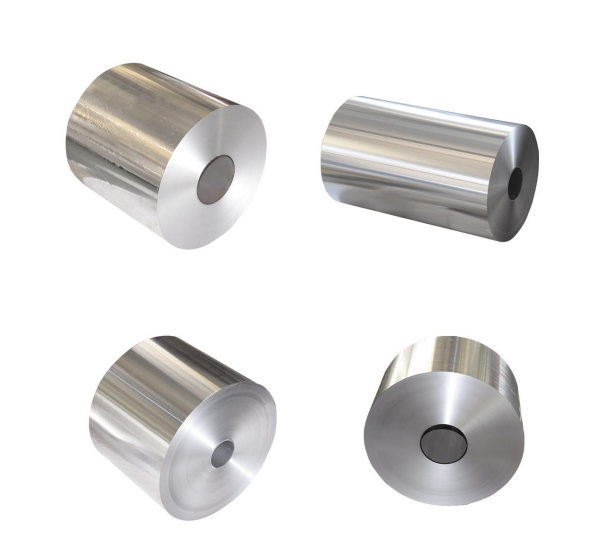
When heat insulation is part of a coffee machine design, procurement documents should identify the required material characteristics, dimensions, processing conditions, and intended use. The available Aluminium Foil information describes an unbacked aluminum coil produced through rolling and used for heat insulation on stoves or cooktops. This information may assist early specification discussions, but it does not prove that the material is suitable for a coffee machine. Suitability must be confirmed through the brand's engineering criteria, testing, and validation process.
Audit evidence should therefore be reviewed together with material certificates, batch information, process records, and product-specific test results. Any deviation from the approved specification should be assessed before production or shipment approval.
Cross-Border Procurement and Service Coordination
Clear communication becomes more important when procurement, logistics, customs, and after-sales support operate across different countries. Guangdong BFC Technology Co,.Ltd describes an export service process that includes inquiry handling, order tracking, logistics and customs clearance, and after-sales coordination. A documented process of this kind can help carry technical requirements and corrective-action decisions through each stage of an international order.
The knowledge base contains quality-management, environmental-management, and occupational-health-and-safety certificates for specified products, including OEM production of refrigerated freezers. It also includes an EU Test Attestation of Conformity for wasted water treatment equipment. These documents must be evaluated according to their stated product scope and should not automatically be applied to coffee machines or unrelated components.
Export project experience can also help brands assess service coordination. Cooperation cases in Ecuador involve wood cutting machines for construction and lumber processing, as well as wasted water treatment equipment for municipal, industrial, real-estate, and aquaculture applications. The described services include commissioning, remote technical assistance, installation debugging, and scheduled maintenance. These examples demonstrate coordination practices, but they do not replace product-specific coffee machine verification.
Audit Review Comparison
| Review Category | Question for the Brand | Suggested Action |
|---|---|---|
| Materials and components | Do the supplied items meet the approved specification and intended application? | Obtain material details, batch records, and written explanations for any deviation. |
| Production and inspection | Can the factory provide records showing checks for the ordered product or component? | Review inspection evidence and request corrective actions for documented gaps. |
| Corrective-action closure | Has the supplier implemented and verified a response to the audit finding? | Use a formal closure process before releasing affected goods for shipment. |
| International service coordination | Are technical requirements maintained through purchasing, delivery, and after-sales stages? | Use written specifications and assign responsibilities throughout the export process. |
| Commercial and delivery terms | What terms apply to the relevant product order? | Available terms state 30% T/T prepayment and 70% balance against B/L copy, with Sea Freight through FCL or LCL listed as the shipping method. |
Frequently Asked Questions
Can a single failed audit make a coffee machine brand unsafe?
No. An audit finding indicates a possible control weakness. Its actual importance depends on whether it relates to the coffee machine, component, material, or production process, and whether the supplier completes effective corrective action.
Can certificates replace a product-specific audit?
No. The available certificates cover stated products and scopes, such as refrigerated freezer OEM production, stainless steel coils, modified engineering plastics, and wasted water treatment equipment. Coffee machine sourcing still requires product-specific assessment and validation.
What evidence should be requested after an audit finding?
The brand should request a written corrective-action response, proof that the action was implemented, relevant production and inspection records, and confirmation that the supplied product still conforms to the approved specification.
Conclusion and Practical Recommendations
Factory audit findings can affect a coffee machine brand's safety controls when they reveal weaknesses that may influence materials, manufacturing processes, inspection evidence, traceability, or issue resolution. Treat each finding as a structured review point, connect it to the approved specification, and confirm corrective actions before shipment release. The available business model supports overseas presence, global expansion, resource integration, industrial output, and factory-development solutions, with minimum order quantities and delivery times depending on the product. For technical solutions or procurement support, please contact karl.liu@buyfromchina.cn.
About Us
Guangdong BFC Technology Co,.Ltd operates the BUY FACTORY FROM CHINA brand as an industrial internet platform company, equipment manufacturing exporter, and integrated solution provider. Established in 2012, the company describes an export service system covering technical requirement communication, inquiry management, order tracking, logistics, customs clearance, and after-sales coordination. Its stated main market is South America, and its export ratio is 100%. The knowledge base includes certificates such as CERTIFICATE OF QUALITY MANAGEMENT SYSTEM CERTIFICATION and ISO 9001 Quality Management System Certification Certificate, along with experience serving customers in multiple industries.

REPORT