







-
 Agriculture
-
 Health-Care
-
 Environment
-
 Construction-Real-Estate
-
 Tools-Hardware
-
 Home-Garden
-
 Furniture
-
 Luggage-Bags-Cases
-
 Medical-devices-Supplies
-
 Gifts-Crafts
-
 Sports-Entertainment
-
 Food-Beverage
-
 Vehicles-Transportation
-
 Power-Transmission
-
 Material-Handling
-
 Renewable-Energy
-
 Safety
-
 Testing-Instrument-Equipment
-
 Construction-Building-Machinery
-
 Pet-Supplies
-
 Personal-Care-Household-Cleaning
-
 Vehicle-Accessories-Electronics-Tools
-
 School-Office-Supplies
-
 Packaging-Printing
-
 Mother-Kids-Toys
-
 Business-Services
-
 Commercial-Equipment-Machinery
-
 Apparel-Accessories
-
 Security
-
 Shoes-Accessories
-
 Vehicle-Parts-Accessories
-
 Jewelry-Eyewear-Watches-Accessories
-
 Lights-Lighting
-
 Fabric-Textile-Raw-Material
-
 Fabrication-Services
-
 Industrial-Machinery
-
 Consumer-Electronics
-
 Electrical-Equipment-Supplies
-
 Electronic-Components-Accessories-Telecommunications
-
 Home-Appliances
-
 Beauty
-
 Chemicals
-
 Rubber-Plastics
-
 Metals-Alloys


























































































































































































































































































































































































































































































































































































- Masonry Materials
- Curtain Walls & Accessories
- Earthwork Products
- Fireproofing Materials
- Heat Insulation Materials
- Plastic Building Materials
- Building Boards
- Soundproofing Materials
- Timber
- Waterproofing Materials
- Balustrades & Handrails
- Bathroom & Kitchen
- Flooring & Accessories
- Tiles & Accessories
- Door, Window & Accessories
- Fireplaces & Stoves
- Floor Heating Systems & Parts
- Stairs & Stair Parts
- Ceilings
- Elevators & Escalators
- Stone
- Countertops, Vanity Tops & Table Tops
- Mosaics
- Metal Building Materials
- Multifunctional Materials
- Ladders & Scaffoldings
- Mouldings
- Corner Guards
- Decorative Films
- Formwork
- Building & Industrial Glass
- Other Construction & Real Estate
- Wallpapers/Wall panels
- HVAC System & Parts
- Outdoor Facilities
- Prefabricated Buildings
- Festive & Party Supplies
- Bathroom Products
- Household Sundries
- Rain Gear
- Garden Supplies
- Household Cleaning Tools & Accessories
- Lighters & Smoking Accessories
- Home Storage & Organization
- Household Scales
- Smart Home Improvement
- Home Textiles
- Kitchenware
- Drinkware & Accessories
- Dinnerware, Coffee & Wine
- Home Decor
- Golf
- Fitness & Body Building
- Amusement Park Facilities
- Billiards, Board Game,Coin Operated Games
- Musical Instruments
- Outdoor Affordable Luxury Sports
- Camping & Hiking
- Fishing
- Sports Safety&Rehabilitation
- Ball Sports Equipments
- Water Sports
- Winter Sports
- Luxury Travel Equipments
- Sports Shoes, Bags & Accessories
- Cycling
- Other Sports & Entertainment Products
- Artificial Grass&Sports Flooring&Sports Court Equipment
- Scooters
- Food Ingredients
- Honey & Honey Products
- Snacks
- Nuts & Kernels
- Seafood
- Plant & Animal Oil
- Beverages
- Fruit & Vegetable Products
- Frog & Escargot
- Bean Products
- Egg Products
- Dairy Products
- Seasonings & Condiments
- Canned Food
- Instant Food
- Baked Goods
- Other Food & Beverage
- Meat & Poultry
- Confectionery
- Grain Products
- Feminie Care
- Hair Care & Styling
- Body Care
- Hands & Feet Care
- Hygiene Products
- Men's Grooming
- Laundry Cleaning Supplies
- Travel Size & Gift Sets
- Room Deodorizers
- Other Personal Care Products
- Pest Control Products
- Special Household Cleaning
- Floor Cleaning
- Kitchen & Bathroom Cleaning
- Oral Care
- Bath Supplies
- Yellow Pages
- Correction Supplies
- Office Binding Supplies
- Office Cutting Supplies
- Board Erasers
- Office Adhesives & Tapes
- Education Supplies
- Pencil Cases & Bags
- Notebooks & Writing Pads
- File Folder Accessories
- Calendars
- Writing Accessories
- Commercial Office Supplies
- Pencil Sharpeners
- Pens
- Letter Pad/Paper
- Paper Envelopes
- Desk Organizers
- Pencils
- Markers & Highlighters
- Filing Products
- Art Supplies
- Easels
- Badge Holder & Accessories
- Office Paper
- Printer Supplies
- Book Covers
- Other Office & School Supplies
- Stationery Set
- Boards
- Clipboards
- Stamps
- Drafting Supplies
- Stencils
- Electronic Dictionary
- Books
- Map
- Magazines
- Calculators
- Baby & Toddler Toys
- Educational Toys
- Classic Toys
- Dress Up & Pretend Play
- Toy Vehicle
- Stuffed Animals & Plush Toys
- Outdoor Toys & Structures
- Balloons & Accessories
- Baby Food
- Children's Clothing
- Baby Supplies & Products
- Maternity Clothes
- Kids Shoes
- Baby Care
- Novelty & Gag Toys
- Dolls & Accessories
- Puzzle & Games
- Blocks & Model Building Toys
- Toddler Clothing
- Baby Clothing
- Kids' Luggage & Bags
- Arts, Crafts & DIY Toys
- Action & Toy Figures
- Baby Appliances
- Hobbies & Models
- Remote Control Toys
- Promotional Toys
- Pregnancy & Maternity
- Hygiene Products
- Kid's Textile&Bedding
- Novelty & Special Use
- Toy Weapons
- Baby Gifts
- Baby Storage & Organization
- Auto Drive Systems
- ATV/UTV Parts & Accessories
- Marine Parts & Accessories
- Other Auto Parts
- Trailer Parts & Accessories
- Auto Transmission Systems
- Train Parts & Accessories
- Universal Parts
- Railway Parts & Accessories
- Auto Brake Systems
- Aviation Parts & Accessories
- Truck Parts & Accessories
- Auto Suspension Systems
- Auto Lighting Systems
- New Energy Vehicle Parts & Accessories
- Auto Steering Systems
- Wheels, Tires & Accessories
- Bus Parts & Accessories
- Auto Performance Parts
- Cooling System
- Go-Kart & Kart Racer Parts & Accessories
- Air Conditioning Systems
- Heavy Duty Vehicle Parts & Accessories
- Auto Electrical Systems
- Auto Body Systems
- Auto Engine Systems
- Container Parts & Accessories
- Motorcycle Parts & Accessories
- Refrigeration & Heat Exchange Equipment
- Machine Tool Equipment
- Food & Beverage Machinery
- Agricultural Machinery & Equipment
- Apparel & Textile Machinery
- Chemical Machinery
- Packaging Machines
- Paper Production Machinery
- Plastic & Rubber Processing Machinery
- Industrial Robots
- Electronic Products Machinery
- Metal & Metallurgy Machinery
- Woodworking Machinery
- Home Product Manufacturing Machinery
- Machinery Accessories
- Environmental Machinery
- Machinery Service
- Electrical Equipment Manufacturing Machinery
- Industrial Compressors & Parts
- Tobacco & Cigarette Machinery
- Production Line
- Used Industrial Machinery
- Electronics Production Machinery
- Other Machinery & Industrial Equipment
- Camera, Photo & Accessories
- Portable Audio, Video & Accessories
- Television, Home Audio, Video & Accessories
- Video Games & Accessories
- Mobile Phone & Accessories
- Electronic Publications
- Earphone & Headphone & Accessories
- Speakers & Accessories
- Smart Electronics
- TV Receivers & Accessories
- Mobile Phone & Computer Repair Parts
- Chargers, Batteries & Power Supplies
- Used Electronics
- VR, AR, MR Hardware & Software
- Projectors & Presentation Equipments
- Other Consumer Electronics
- Cables & Commonly Used Accessories
- Computer Hardware & Software
- Displays, Signage and Optoelectronics
- Discrete Semiconductors
- Wireless & IoT Module and Products
- Telecommunications
- Connectors, Terminals & Accessories
- Development Boards, Electronic Modules and Kits
- Circuit Protection
- Sensors
- Isolators
- Audio Components and Products
- Integrated Circuits
- Power Supplies
- Relays
- RF, Microwave and RFID
- Electronic Accessories & Supplies
- Passive Components
- PCB & PCBA
- Air Quality Appliances
- Home Appliance Parts
- Heating & Cooling Appliances
- Small Kitchen Appliances
- Laundry Appliances
- Water Heaters
- Water Treatment Appliances
- Refrigerators & Freezers
- Personal Care & Beauty Appliances
- Major Kitchen Appliances
- Cleaning Appliances
- Second-hand Appliances
- Smart Home Appliances
- Other Home Appliances
- Energy Chemicals
- Inorganic Chemicals
- Basic Organic Chemicals
- Agrochemicals
- Admixture & Additives
- Catalysts & Chemical Auxiliary Agents
- Pigments & Dyestuff
- Coating & Paint
- Daily Chemicals
- Polymer
- Organic Intermediate
- Adhesives & Sealants
- Chemical Waste
- Biological Chemical Products
- Surface Treatment Chemicals
- Painting & Coating
- Chemical Reagents
- Flavor & Fragrance
- Non-Explosive Demolition Agents
- Other Chemicals
- Custom Chemical Services

How Long Does Sea Freight Take for Insulated Grocery Bags?
Shipping insulated grocery bags by ocean from Shenzhen or Guangzhou generally requires 14 to 18 days to the US West Coast, 30 to 35 days to Europe, and 12 to 16 days to Australia. These figures cover port-to-port sailing time and exclude customs clearance. Full-container-load (FCL) service is normally the most efficient sea option, while less-than-container-load (LCL) freight may require another 5 to 10 days for cargo consolidation.
Shipping Overview and Practical Recommendations
- FCL ocean freight offers a cost-effective solution for regular or high-volume insulated grocery bag orders.
- LCL is useful for initial purchases and market trials, although consolidation and extra handling extend the schedule.
- Insulated grocery bags can support grocery fulfillment and cold-chain last-mile delivery when designed with a separate gel-pack pocket and waterproof lining.
- Air freight and express delivery are better choices for samples, urgent restocking, or launches with fixed deadlines.
Product Construction for Cold-Chain Delivery
For chilled and frozen grocery distribution, the bag can include a dedicated sleeve for gel packs. Keeping the coolant in a separate compartment helps organize the load, while a waterproof inner membrane contains condensation and meltwater. This structure allows chilled, frozen, and ambient products to travel together in the same delivery vehicle.
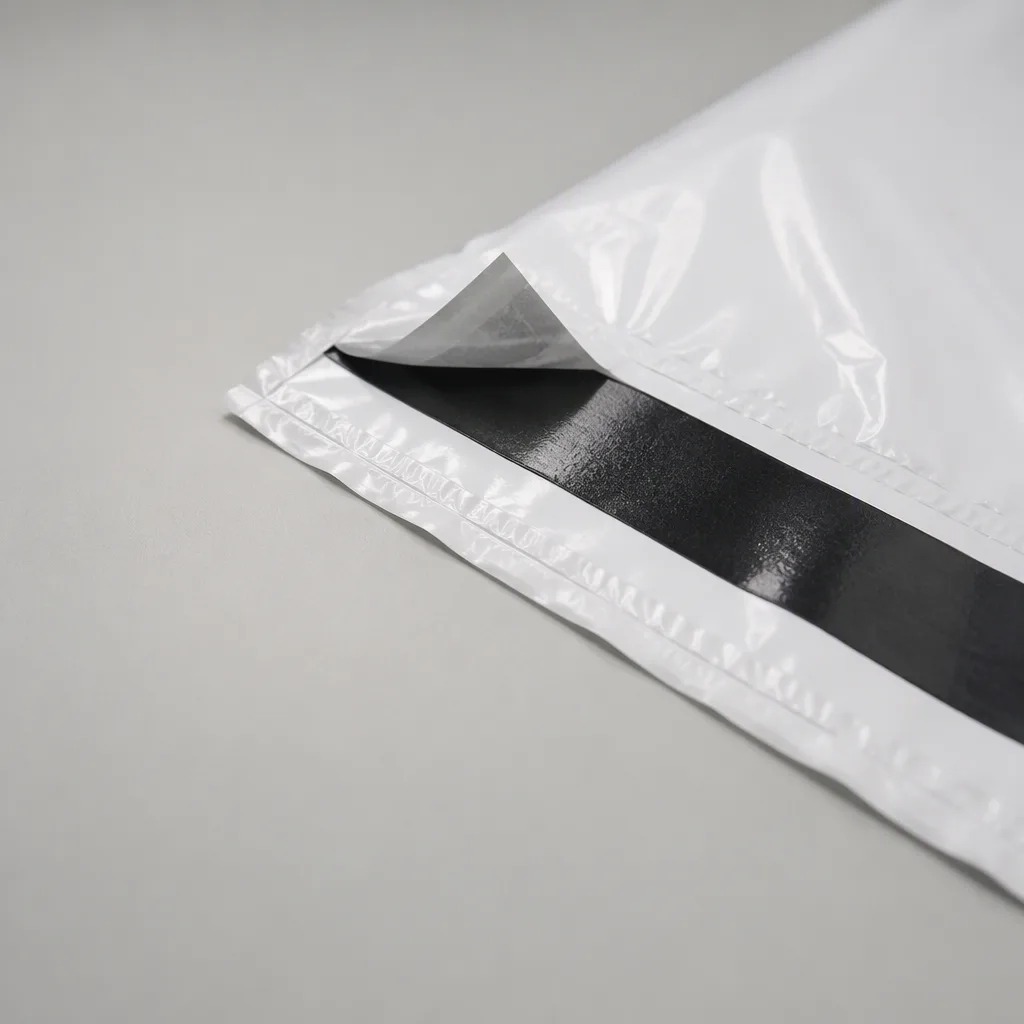
The featured product is a flat white PE foam insulated mailer. It uses a closed-cell sponge foam interior, three welded edges, and a permanent adhesive strip with a release liner and double-fold closure. Standard dimensions include 20 × 28, 25 × 33, 30 × 39, and 35 × 45 cm, with customized sizes available. Typical applications include food packaging, perishables, and ice-pack-assisted cold-chain shipping.
How Container Shipping Affects Transit Time
FCL rates and schedules depend on the selected service and the volume loaded. A 20-foot container provides approximately 28 cubic metres of space, while a 40-foot high-cube container holds about 68 cubic metres. Typical ocean transit is 14 to 18 days to the US West Coast, 30 to 35 days to Europe, and 12 to 16 days to Australia. Export and import customs procedures, port appointments, and inland delivery must be added to the sailing time.
LCL freight is charged by cubic metre and usually includes a minimum billable volume. Because cargo must be received, consolidated, deconsolidated, and sometimes transferred between facilities, it commonly adds 5 to 10 days compared with FCL. It remains a practical choice when the order is too small to fill a container.
Capacity, Quality, and Commercial Use
A US distributor reportedly uses Ecopack insulated mailers for cold shipments at an annual volume of 10 million pieces. The format replaces rigid foam packaging while reducing storage requirements, shipping space, and packaging waste.
Quality assurance is managed through three inspection stages within an ISO 9001:2015 Quality Management System: incoming material inspection, production-line checks, and pre-shipment inspection. Finished bags are assessed through AQL sampling for appearance, measurements, print alignment, seal strength, and lamination adhesion.
The company also maintains FSC Chain of Custody certification for designated FSC Mix and FSC Recycled paper wrapping and packaging products, including paper sacks and bags.
Comparison of Freight Methods
| Freight method | Typical timing and application | Cost or capacity profile |
|---|---|---|
| Ocean Freight (FCL) | 14–18 days to the US West Coast, 30–35 days to Europe, and 12–16 days to Australia, excluding clearance | Preferred for production orders with enough volume to use a container |
| Ocean Freight (LCL) | Standard ocean transit plus approximately 5–10 days for consolidation | Appropriate for smaller first orders and testing; billed by cubic metre with a minimum charge |
| Air Freight | Usually 2–4 days airport-to-airport to the US and Europe, or about 5–7 working days door-to-door | Higher cost but useful when delivery speed is the main priority |
| Express Courier | Generally 3–5 business days door-to-door to the US, Europe, and Australia | Best for samples, artwork proofs, and urgent parcels of approximately 100 kg or less |
| Rail Freight to Europe | Usually about 18–22 days door-to-door | A time and cost compromise between ocean and air service for European destinations |
Frequently Asked Questions
What is the transit time for FCL ocean freight?
Port-to-port sailing normally takes 14 to 18 days to the US West Coast, 30 to 35 days to Europe, and 12 to 16 days to Australia. Customs clearance at the origin and destination is additional.
Why does LCL take longer than FCL?
LCL cargo must be combined with shipments from other customers before sailing and separated after arrival. These handling steps typically add around 5 to 10 days and can increase the number of cargo transfers.
What details are needed for a shipping quotation?
Provide the bag dimensions, material or film structure, number of print colours, expected quantity, and delivery destination. The supplier can then recommend the appropriate production quantity, price, and freight method.
Planning the Best Delivery Method
FCL sea freight is generally the best fit for scheduled production because it combines predictable transit with a favorable cost per unit. LCL works when the shipment is too small for a container, provided the buyer allows extra consolidation time. For samples and urgent replenishment, express courier or air freight can meet tighter deadlines.
Ecopack manufactures and exports both stock and customized packaging. After artwork approval, standard production usually takes 15 to 25 days, while samples generally require 3 to 5 working days. For technical guidance or shipping support, contact manager@ecoppack.com.
About Us
Huizhou Ecopack Packaging Products Co., Ltd. is a flexible packaging manufacturer based in Guangdong, China, established in 2011. Its product range includes custom composite pouches and bags, insulated mailers, and thermal packaging, supplied to customers in more than 40 countries. The company operates a facility covering over 10,000 square metres, with rotogravure and flexographic production lines capable of producing more than 500,000 pouches per day.
Ecopack holds ISO 9001:2015 Quality Management System certification and FSC Chain of Custody certification. Its customers span several industries, including a US distributor that uses insulated mailers for cold-chain shipping.

REPORT