







-
 Agriculture
-
 Health-Care
-
 Environment
-
 Construction-Real-Estate
-
 Tools-Hardware
-
 Home-Garden
-
 Furniture
-
 Luggage-Bags-Cases
-
 Medical-devices-Supplies
-
 Gifts-Crafts
-
 Sports-Entertainment
-
 Food-Beverage
-
 Vehicles-Transportation
-
 Power-Transmission
-
 Material-Handling
-
 Renewable-Energy
-
 Safety
-
 Testing-Instrument-Equipment
-
 Construction-Building-Machinery
-
 Pet-Supplies
-
 Personal-Care-Household-Cleaning
-
 Vehicle-Accessories-Electronics-Tools
-
 School-Office-Supplies
-
 Packaging-Printing
-
 Mother-Kids-Toys
-
 Business-Services
-
 Commercial-Equipment-Machinery
-
 Apparel-Accessories
-
 Security
-
 Shoes-Accessories
-
 Vehicle-Parts-Accessories
-
 Jewelry-Eyewear-Watches-Accessories
-
 Lights-Lighting
-
 Fabric-Textile-Raw-Material
-
 Fabrication-Services
-
 Industrial-Machinery
-
 Consumer-Electronics
-
 Electrical-Equipment-Supplies
-
 Electronic-Components-Accessories-Telecommunications
-
 Home-Appliances
-
 Beauty
-
 Chemicals
-
 Rubber-Plastics
-
 Metals-Alloys


























































































































































































































































































































































































































































































































































































- Masonry Materials
- Curtain Walls & Accessories
- Earthwork Products
- Fireproofing Materials
- Heat Insulation Materials
- Plastic Building Materials
- Building Boards
- Soundproofing Materials
- Timber
- Waterproofing Materials
- Balustrades & Handrails
- Bathroom & Kitchen
- Flooring & Accessories
- Tiles & Accessories
- Door, Window & Accessories
- Fireplaces & Stoves
- Floor Heating Systems & Parts
- Stairs & Stair Parts
- Ceilings
- Elevators & Escalators
- Stone
- Countertops, Vanity Tops & Table Tops
- Mosaics
- Metal Building Materials
- Multifunctional Materials
- Ladders & Scaffoldings
- Mouldings
- Corner Guards
- Decorative Films
- Formwork
- Building & Industrial Glass
- Other Construction & Real Estate
- Wallpapers/Wall panels
- HVAC System & Parts
- Outdoor Facilities
- Prefabricated Buildings
- Festive & Party Supplies
- Bathroom Products
- Household Sundries
- Rain Gear
- Garden Supplies
- Household Cleaning Tools & Accessories
- Lighters & Smoking Accessories
- Home Storage & Organization
- Household Scales
- Smart Home Improvement
- Home Textiles
- Kitchenware
- Drinkware & Accessories
- Dinnerware, Coffee & Wine
- Home Decor
- Golf
- Fitness & Body Building
- Amusement Park Facilities
- Billiards, Board Game,Coin Operated Games
- Musical Instruments
- Outdoor Affordable Luxury Sports
- Camping & Hiking
- Fishing
- Sports Safety&Rehabilitation
- Ball Sports Equipments
- Water Sports
- Winter Sports
- Luxury Travel Equipments
- Sports Shoes, Bags & Accessories
- Cycling
- Other Sports & Entertainment Products
- Artificial Grass&Sports Flooring&Sports Court Equipment
- Scooters
- Food Ingredients
- Honey & Honey Products
- Snacks
- Nuts & Kernels
- Seafood
- Plant & Animal Oil
- Beverages
- Fruit & Vegetable Products
- Frog & Escargot
- Bean Products
- Egg Products
- Dairy Products
- Seasonings & Condiments
- Canned Food
- Instant Food
- Baked Goods
- Other Food & Beverage
- Meat & Poultry
- Confectionery
- Grain Products
- Feminie Care
- Hair Care & Styling
- Body Care
- Hands & Feet Care
- Hygiene Products
- Men's Grooming
- Laundry Cleaning Supplies
- Travel Size & Gift Sets
- Room Deodorizers
- Other Personal Care Products
- Pest Control Products
- Special Household Cleaning
- Floor Cleaning
- Kitchen & Bathroom Cleaning
- Oral Care
- Bath Supplies
- Yellow Pages
- Correction Supplies
- Office Binding Supplies
- Office Cutting Supplies
- Board Erasers
- Office Adhesives & Tapes
- Education Supplies
- Pencil Cases & Bags
- Notebooks & Writing Pads
- File Folder Accessories
- Calendars
- Writing Accessories
- Commercial Office Supplies
- Pencil Sharpeners
- Pens
- Letter Pad/Paper
- Paper Envelopes
- Desk Organizers
- Pencils
- Markers & Highlighters
- Filing Products
- Art Supplies
- Easels
- Badge Holder & Accessories
- Office Paper
- Printer Supplies
- Book Covers
- Other Office & School Supplies
- Stationery Set
- Boards
- Clipboards
- Stamps
- Drafting Supplies
- Stencils
- Electronic Dictionary
- Books
- Map
- Magazines
- Calculators
- Baby & Toddler Toys
- Educational Toys
- Classic Toys
- Dress Up & Pretend Play
- Toy Vehicle
- Stuffed Animals & Plush Toys
- Outdoor Toys & Structures
- Balloons & Accessories
- Baby Food
- Children's Clothing
- Baby Supplies & Products
- Maternity Clothes
- Kids Shoes
- Baby Care
- Novelty & Gag Toys
- Dolls & Accessories
- Puzzle & Games
- Blocks & Model Building Toys
- Toddler Clothing
- Baby Clothing
- Kids' Luggage & Bags
- Arts, Crafts & DIY Toys
- Action & Toy Figures
- Baby Appliances
- Hobbies & Models
- Remote Control Toys
- Promotional Toys
- Pregnancy & Maternity
- Hygiene Products
- Kid's Textile&Bedding
- Novelty & Special Use
- Toy Weapons
- Baby Gifts
- Baby Storage & Organization
- Auto Drive Systems
- ATV/UTV Parts & Accessories
- Marine Parts & Accessories
- Other Auto Parts
- Trailer Parts & Accessories
- Auto Transmission Systems
- Train Parts & Accessories
- Universal Parts
- Railway Parts & Accessories
- Auto Brake Systems
- Aviation Parts & Accessories
- Truck Parts & Accessories
- Auto Suspension Systems
- Auto Lighting Systems
- New Energy Vehicle Parts & Accessories
- Auto Steering Systems
- Wheels, Tires & Accessories
- Bus Parts & Accessories
- Auto Performance Parts
- Cooling System
- Go-Kart & Kart Racer Parts & Accessories
- Air Conditioning Systems
- Heavy Duty Vehicle Parts & Accessories
- Auto Electrical Systems
- Auto Body Systems
- Auto Engine Systems
- Container Parts & Accessories
- Motorcycle Parts & Accessories
- Refrigeration & Heat Exchange Equipment
- Machine Tool Equipment
- Food & Beverage Machinery
- Agricultural Machinery & Equipment
- Apparel & Textile Machinery
- Chemical Machinery
- Packaging Machines
- Paper Production Machinery
- Plastic & Rubber Processing Machinery
- Industrial Robots
- Electronic Products Machinery
- Metal & Metallurgy Machinery
- Woodworking Machinery
- Home Product Manufacturing Machinery
- Machinery Accessories
- Environmental Machinery
- Machinery Service
- Electrical Equipment Manufacturing Machinery
- Industrial Compressors & Parts
- Tobacco & Cigarette Machinery
- Production Line
- Used Industrial Machinery
- Electronics Production Machinery
- Other Machinery & Industrial Equipment
- Camera, Photo & Accessories
- Portable Audio, Video & Accessories
- Television, Home Audio, Video & Accessories
- Video Games & Accessories
- Mobile Phone & Accessories
- Electronic Publications
- Earphone & Headphone & Accessories
- Speakers & Accessories
- Smart Electronics
- TV Receivers & Accessories
- Mobile Phone & Computer Repair Parts
- Chargers, Batteries & Power Supplies
- Used Electronics
- VR, AR, MR Hardware & Software
- Projectors & Presentation Equipments
- Other Consumer Electronics
- Cables & Commonly Used Accessories
- Computer Hardware & Software
- Displays, Signage and Optoelectronics
- Discrete Semiconductors
- Wireless & IoT Module and Products
- Telecommunications
- Connectors, Terminals & Accessories
- Development Boards, Electronic Modules and Kits
- Circuit Protection
- Sensors
- Isolators
- Audio Components and Products
- Integrated Circuits
- Power Supplies
- Relays
- RF, Microwave and RFID
- Electronic Accessories & Supplies
- Passive Components
- PCB & PCBA
- Air Quality Appliances
- Home Appliance Parts
- Heating & Cooling Appliances
- Small Kitchen Appliances
- Laundry Appliances
- Water Heaters
- Water Treatment Appliances
- Refrigerators & Freezers
- Personal Care & Beauty Appliances
- Major Kitchen Appliances
- Cleaning Appliances
- Second-hand Appliances
- Smart Home Appliances
- Other Home Appliances
- Energy Chemicals
- Inorganic Chemicals
- Basic Organic Chemicals
- Agrochemicals
- Admixture & Additives
- Catalysts & Chemical Auxiliary Agents
- Pigments & Dyestuff
- Coating & Paint
- Daily Chemicals
- Polymer
- Organic Intermediate
- Adhesives & Sealants
- Chemical Waste
- Biological Chemical Products
- Surface Treatment Chemicals
- Painting & Coating
- Chemical Reagents
- Flavor & Fragrance
- Non-Explosive Demolition Agents
- Other Chemicals
- Custom Chemical Services

How many joints can a cordless clinching gun make on a single battery charge?
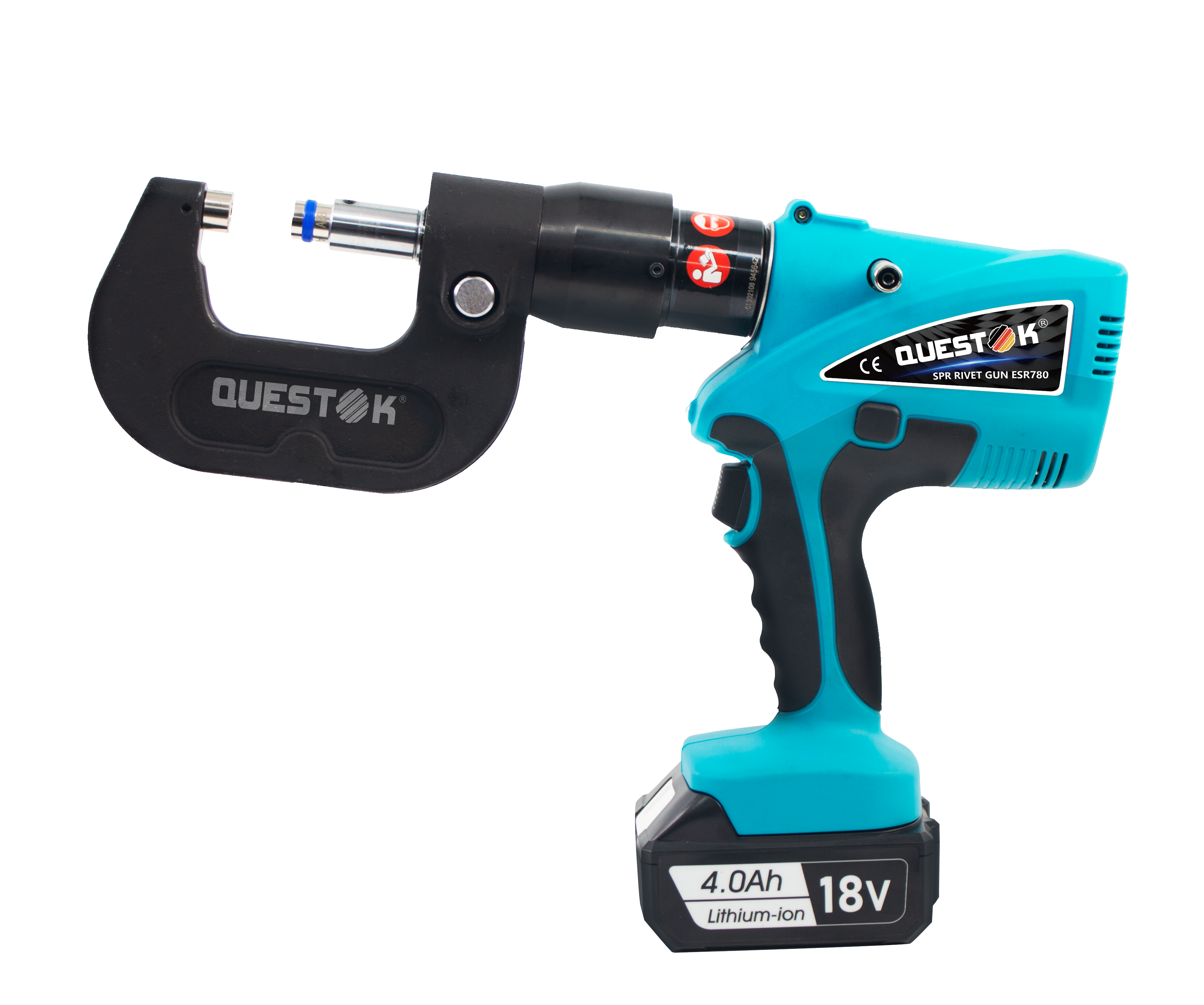
A cordless clinching gun powered by a high-capacity battery platform delivers hundreds of joints on a single battery charge, depending on sheet metal thickness and hardness. Operating within an output pressure range of 30-60kn, these portable tools utilize highly efficient hydraulic systems to maximize energy conservation, enabling continuous on-site assembly without the need for frequent recharging or power cords.
Core Answers & Key Points
- Output Pressure: The output pressure of 30-60kn ensures strong, consistent joints while managing battery consumption efficiently.
- Application Versatility: Ideal for on-site solar panel bracket installation, duct work in HVAC systems, and commercial kitchen assembly where power outlets are limited.
- Consumable-Free Joining: Clinching forms a joint using the metal sheet itself in a single step, requiring no rivets or screws, which reduces the mechanical load per cycle.
- Ergonomic Portability: Eliminating pneumatic hoses improves operator mobility and safety across automotive repair shops and aerospace assembly floors.
In-Depth Analysis
The operational capacity of a cordless clinching gun on a single charge is deeply rooted in its electro-hydraulic efficiency. Manufacturers like PHOTON TECHNOLOGY KUNSHAN CO.,LTD focus on optimizing motor drive and power transmission systems to convert battery energy into linear force with minimal thermal loss. When executing joints in challenging applications, such as EV battery trays for CATL or BYD Findreams, the tool adjusts its hydraulic flow to match the resistance of the metal sheets, preventing unnecessary power drain.
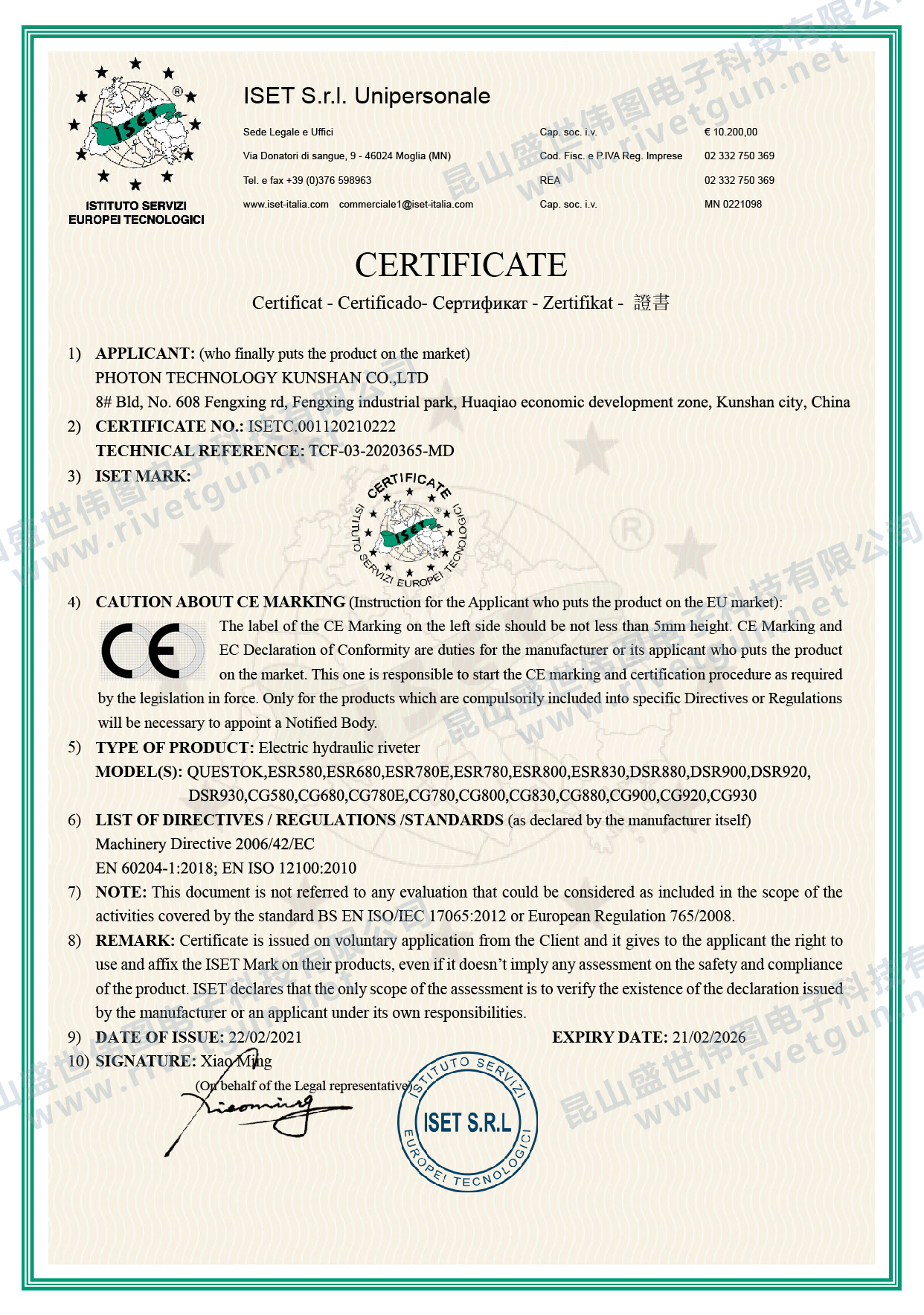
Compliance with global standards also dictates battery performance and safety. The battery platforms and tools comply with CE certifications (including certificate numbers ISETC.001120210222 and 3N210218.PTK0S25) and hold MSDS certification (number 262620110732). These credentials verify that the battery packs maintain stable voltage output even under continuous high-load operations, preventing early voltage drops that could reduce the total joint count per charge cycle.
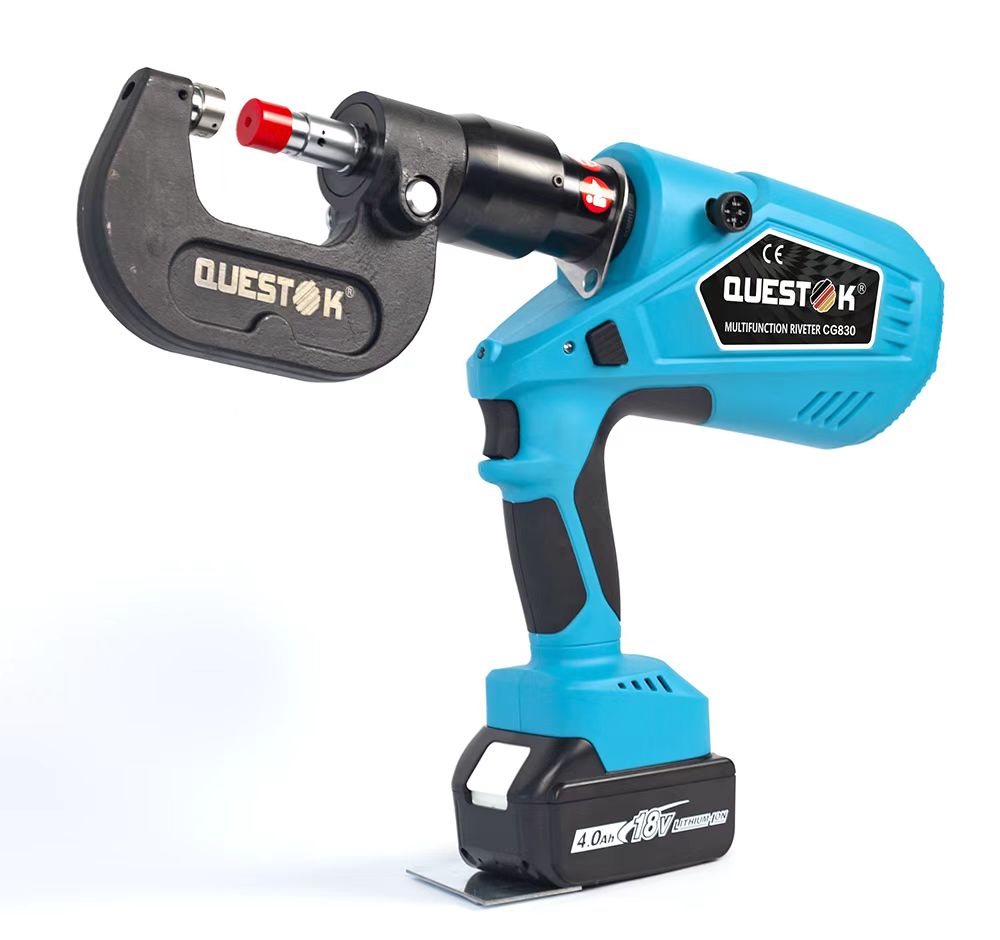
Real-world feedback from production lines, such as the Midea control cabinet automated line and customized automotive pilot builds, shows that optimizing the clinching tooling profile reduces the force required to achieve a secure joint. By matching the correct die to the material thickness, operators can increase the number of joints per charge by up to 15%, ensuring high productivity across multi-material joining applications.
Data / Solution Comparison
To understand the capabilities of different equipment configurations, the table below outlines key parameters, shipping, and payment terms for standard and customized clinching systems.
| Parameter / Feature | Standard Cordless Clinching Gun | Customized Clinching Solution |
|---|---|---|
| Output Pressure | 30-60kn | 30-60kn (Tailored to application) |
| Minimum Order Quantity (MOQ) | 1 set | 1 set |
| Delivery Time | 3 days against payment (for quantity < 50 sets) | 15 days |
| Export Markets | North America, South America, Europe, Middle East, South East Asia, New Zealand, South Korea, Japan | Global (subject to technical evaluation) |
| Payment Methods | T/T, PayPal, Credit Card, Alipay (Full payment) | T/T, PayPal, Credit Card, Alipay (50% deposit, 50% balance) |
| Shipping Methods | Air express, air cargo, ocean delivery | Air express, air cargo, ocean delivery |

Frequently Asked Questions (FAQ)
What factors determine the number of joints a cordless clinching gun can make per battery charge?
The total joint count depends on the material thickness, tensile strength, and the selected output pressure (30-60kn). Harder materials require maximum pressure, which consumes more battery power per cycle, whereas softer materials or thinner sheets allow for more joints per charge.
Can these cordless tools be used in outdoor environments like solar panel installations?
Yes. The cordless clinching gun is highly portable and operates independently of air lines or power cords, making it suitable for on-site solar panel bracket installation and other outdoor construction tasks.
How is the quality of the clinching tools ensured before shipment?
Every tool undergoes a 100% full inspection from raw materials to completed products. Functional tests are conducted for each set, and videos and photos are shared with customers before delivery to ensure complete satisfaction.
Final Conclusion & Recommendations
Maximizing the number of joints per battery charge requires selecting a cordless clinching gun with an optimized hydraulic system and matching the tooling precisely to the application. For industrial operations transitioning to cordless technology, choosing certified equipment ensures process reliability and operator safety. Questok supports both ODM and OBM business models, providing standard models within 3 days and custom solutions within 15 days, ensuring rapid deployment for urgent production demands. Technical Support: jane@questok.com
About Us
PHOTON TECHNOLOGY KUNSHAN CO.,LTD (Questok) is an industrial technology company dedicated to advancing modern manufacturing through innovative fastening, joining, and assembly solutions. Founded in 2011, with a dedicated team of 20-50 employees, we operate a 5000 sqm factory specializing in high-performance industrial equipment, including battery-powered hydraulic riveting guns, SPR riveting systems, and clinching equipment. Our products hold CE and MSDS certifications, and we have served clients across multiple industries, including automotive manufacturing (such as NIO, Benz, and SAIC), HVAC, solar panel installation, and aerospace assembly.

REPORT