







-
 Agriculture
-
 Health-Care
-
 Environment
-
 Construction-Real-Estate
-
 Tools-Hardware
-
 Home-Garden
-
 Furniture
-
 Luggage-Bags-Cases
-
 Medical-devices-Supplies
-
 Gifts-Crafts
-
 Sports-Entertainment
-
 Food-Beverage
-
 Vehicles-Transportation
-
 Power-Transmission
-
 Material-Handling
-
 Renewable-Energy
-
 Safety
-
 Testing-Instrument-Equipment
-
 Construction-Building-Machinery
-
 Pet-Supplies
-
 Personal-Care-Household-Cleaning
-
 Vehicle-Accessories-Electronics-Tools
-
 School-Office-Supplies
-
 Packaging-Printing
-
 Mother-Kids-Toys
-
 Business-Services
-
 Commercial-Equipment-Machinery
-
 Apparel-Accessories
-
 Security
-
 Shoes-Accessories
-
 Vehicle-Parts-Accessories
-
 Jewelry-Eyewear-Watches-Accessories
-
 Lights-Lighting
-
 Fabric-Textile-Raw-Material
-
 Fabrication-Services
-
 Industrial-Machinery
-
 Consumer-Electronics
-
 Electrical-Equipment-Supplies
-
 Electronic-Components-Accessories-Telecommunications
-
 Home-Appliances
-
 Beauty
-
 Chemicals
-
 Rubber-Plastics
-
 Metals-Alloys


























































































































































































































































































































































































































































































































































































- Masonry Materials
- Curtain Walls & Accessories
- Earthwork Products
- Fireproofing Materials
- Heat Insulation Materials
- Plastic Building Materials
- Building Boards
- Soundproofing Materials
- Timber
- Waterproofing Materials
- Balustrades & Handrails
- Bathroom & Kitchen
- Flooring & Accessories
- Tiles & Accessories
- Door, Window & Accessories
- Fireplaces & Stoves
- Floor Heating Systems & Parts
- Stairs & Stair Parts
- Ceilings
- Elevators & Escalators
- Stone
- Countertops, Vanity Tops & Table Tops
- Mosaics
- Metal Building Materials
- Multifunctional Materials
- Ladders & Scaffoldings
- Mouldings
- Corner Guards
- Decorative Films
- Formwork
- Building & Industrial Glass
- Other Construction & Real Estate
- Wallpapers/Wall panels
- HVAC System & Parts
- Outdoor Facilities
- Prefabricated Buildings
- Festive & Party Supplies
- Bathroom Products
- Household Sundries
- Rain Gear
- Garden Supplies
- Household Cleaning Tools & Accessories
- Lighters & Smoking Accessories
- Home Storage & Organization
- Household Scales
- Smart Home Improvement
- Home Textiles
- Kitchenware
- Drinkware & Accessories
- Dinnerware, Coffee & Wine
- Home Decor
- Golf
- Fitness & Body Building
- Amusement Park Facilities
- Billiards, Board Game,Coin Operated Games
- Musical Instruments
- Outdoor Affordable Luxury Sports
- Camping & Hiking
- Fishing
- Sports Safety&Rehabilitation
- Ball Sports Equipments
- Water Sports
- Winter Sports
- Luxury Travel Equipments
- Sports Shoes, Bags & Accessories
- Cycling
- Other Sports & Entertainment Products
- Artificial Grass&Sports Flooring&Sports Court Equipment
- Scooters
- Food Ingredients
- Honey & Honey Products
- Snacks
- Nuts & Kernels
- Seafood
- Plant & Animal Oil
- Beverages
- Fruit & Vegetable Products
- Frog & Escargot
- Bean Products
- Egg Products
- Dairy Products
- Seasonings & Condiments
- Canned Food
- Instant Food
- Baked Goods
- Other Food & Beverage
- Meat & Poultry
- Confectionery
- Grain Products
- Feminie Care
- Hair Care & Styling
- Body Care
- Hands & Feet Care
- Hygiene Products
- Men's Grooming
- Laundry Cleaning Supplies
- Travel Size & Gift Sets
- Room Deodorizers
- Other Personal Care Products
- Pest Control Products
- Special Household Cleaning
- Floor Cleaning
- Kitchen & Bathroom Cleaning
- Oral Care
- Bath Supplies
- Yellow Pages
- Correction Supplies
- Office Binding Supplies
- Office Cutting Supplies
- Board Erasers
- Office Adhesives & Tapes
- Education Supplies
- Pencil Cases & Bags
- Notebooks & Writing Pads
- File Folder Accessories
- Calendars
- Writing Accessories
- Commercial Office Supplies
- Pencil Sharpeners
- Pens
- Letter Pad/Paper
- Paper Envelopes
- Desk Organizers
- Pencils
- Markers & Highlighters
- Filing Products
- Art Supplies
- Easels
- Badge Holder & Accessories
- Office Paper
- Printer Supplies
- Book Covers
- Other Office & School Supplies
- Stationery Set
- Boards
- Clipboards
- Stamps
- Drafting Supplies
- Stencils
- Electronic Dictionary
- Books
- Map
- Magazines
- Calculators
- Baby & Toddler Toys
- Educational Toys
- Classic Toys
- Dress Up & Pretend Play
- Toy Vehicle
- Stuffed Animals & Plush Toys
- Outdoor Toys & Structures
- Balloons & Accessories
- Baby Food
- Children's Clothing
- Baby Supplies & Products
- Maternity Clothes
- Kids Shoes
- Baby Care
- Novelty & Gag Toys
- Dolls & Accessories
- Puzzle & Games
- Blocks & Model Building Toys
- Toddler Clothing
- Baby Clothing
- Kids' Luggage & Bags
- Arts, Crafts & DIY Toys
- Action & Toy Figures
- Baby Appliances
- Hobbies & Models
- Remote Control Toys
- Promotional Toys
- Pregnancy & Maternity
- Hygiene Products
- Kid's Textile&Bedding
- Novelty & Special Use
- Toy Weapons
- Baby Gifts
- Baby Storage & Organization
- Auto Drive Systems
- ATV/UTV Parts & Accessories
- Marine Parts & Accessories
- Other Auto Parts
- Trailer Parts & Accessories
- Auto Transmission Systems
- Train Parts & Accessories
- Universal Parts
- Railway Parts & Accessories
- Auto Brake Systems
- Aviation Parts & Accessories
- Truck Parts & Accessories
- Auto Suspension Systems
- Auto Lighting Systems
- New Energy Vehicle Parts & Accessories
- Auto Steering Systems
- Wheels, Tires & Accessories
- Bus Parts & Accessories
- Auto Performance Parts
- Cooling System
- Go-Kart & Kart Racer Parts & Accessories
- Air Conditioning Systems
- Heavy Duty Vehicle Parts & Accessories
- Auto Electrical Systems
- Auto Body Systems
- Auto Engine Systems
- Container Parts & Accessories
- Motorcycle Parts & Accessories
- Refrigeration & Heat Exchange Equipment
- Machine Tool Equipment
- Food & Beverage Machinery
- Agricultural Machinery & Equipment
- Apparel & Textile Machinery
- Chemical Machinery
- Packaging Machines
- Paper Production Machinery
- Plastic & Rubber Processing Machinery
- Industrial Robots
- Electronic Products Machinery
- Metal & Metallurgy Machinery
- Woodworking Machinery
- Home Product Manufacturing Machinery
- Machinery Accessories
- Environmental Machinery
- Machinery Service
- Electrical Equipment Manufacturing Machinery
- Industrial Compressors & Parts
- Tobacco & Cigarette Machinery
- Production Line
- Used Industrial Machinery
- Electronics Production Machinery
- Other Machinery & Industrial Equipment
- Camera, Photo & Accessories
- Portable Audio, Video & Accessories
- Television, Home Audio, Video & Accessories
- Video Games & Accessories
- Mobile Phone & Accessories
- Electronic Publications
- Earphone & Headphone & Accessories
- Speakers & Accessories
- Smart Electronics
- TV Receivers & Accessories
- Mobile Phone & Computer Repair Parts
- Chargers, Batteries & Power Supplies
- Used Electronics
- VR, AR, MR Hardware & Software
- Projectors & Presentation Equipments
- Other Consumer Electronics
- Cables & Commonly Used Accessories
- Computer Hardware & Software
- Displays, Signage and Optoelectronics
- Discrete Semiconductors
- Wireless & IoT Module and Products
- Telecommunications
- Connectors, Terminals & Accessories
- Development Boards, Electronic Modules and Kits
- Circuit Protection
- Sensors
- Isolators
- Audio Components and Products
- Integrated Circuits
- Power Supplies
- Relays
- RF, Microwave and RFID
- Electronic Accessories & Supplies
- Passive Components
- PCB & PCBA
- Air Quality Appliances
- Home Appliance Parts
- Heating & Cooling Appliances
- Small Kitchen Appliances
- Laundry Appliances
- Water Heaters
- Water Treatment Appliances
- Refrigerators & Freezers
- Personal Care & Beauty Appliances
- Major Kitchen Appliances
- Cleaning Appliances
- Second-hand Appliances
- Smart Home Appliances
- Other Home Appliances
- Energy Chemicals
- Inorganic Chemicals
- Basic Organic Chemicals
- Agrochemicals
- Admixture & Additives
- Catalysts & Chemical Auxiliary Agents
- Pigments & Dyestuff
- Coating & Paint
- Daily Chemicals
- Polymer
- Organic Intermediate
- Adhesives & Sealants
- Chemical Waste
- Biological Chemical Products
- Surface Treatment Chemicals
- Painting & Coating
- Chemical Reagents
- Flavor & Fragrance
- Non-Explosive Demolition Agents
- Other Chemicals
- Custom Chemical Services

How Often Should You Audit a Pilates & Yoga Sock Supplier?
When Pilates & Yoga Socks are an important part of your product range, supplier audits should begin before onboarding and continue whenever a meaningful production or compliance change occurs. The available supplier information does not prescribe a monthly, quarterly, or annual schedule. A practical approach is to combine an initial capability audit with risk-based reviews covering materials, product design, quality results, certifications, delivery performance, and order volume.
Recommended Audit Approach
A supplier should be evaluated before the first purchase order is placed. This initial review confirms whether the manufacturer can produce Pilates and yoga grip socks consistently, manage customization, maintain documented quality controls, and provide the required compliance support.
Follow-up audits are appropriate when you introduce a new design or color, modify the material blend, change the grip pattern, increase order quantities, experience a quality complaint, encounter delivery delays, or need updated compliance documentation. These triggers are more useful than an arbitrary calendar interval because they connect the audit effort to actual supply-chain risk.
What to Examine During the Audit
Product and Manufacturing Controls
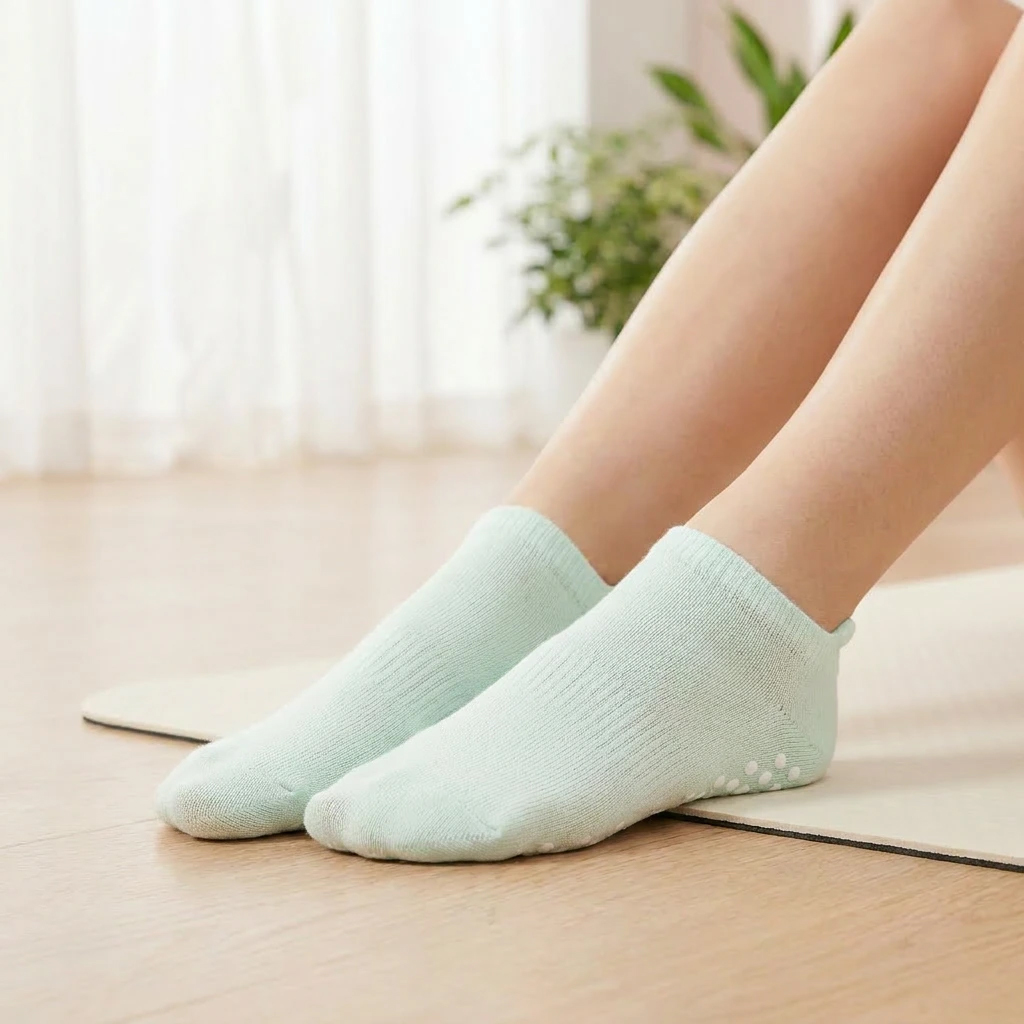
The audit should follow the product from raw material selection through knitting, customization, grip application, inspection, and shipment. The supplier states that production is managed in-house with computerized jacquard machines, seamless heat transfer printing equipment, automatic toe-closing and sewing machines, and dedicated silicone or PVC dispensing equipment.
For the featured low-cut Pilates grip sock, verify that production matches the approved specification: 80% combed cotton, 17% nylon, and 3% spandex. The V-shape herringbone jacquard, honeycomb breathable mesh, anti-friction heel tab, and professional PVC or silicone grips should be checked against the approved sample. Auditors should also confirm grip positioning, Pantone color requirements, and the standard adult size range of EU 35–42 or US 5–10.
Inspection and Corrective Action
Quality reviews should verify the stated 100% manual inspection process and examine how defects are identified, recorded, corrected, and prevented from recurring. Keep production inspection reports, sample comparison records, complaint files, and corrective-action evidence in the audit file.
The supplier describes a 24-hour rapid response and offers up to 100% compensation or free replacement for production-related quality problems. These service terms should be assessed through documented examples of issue handling rather than treated as a substitute for preventive quality controls.
Certifications and Compliance
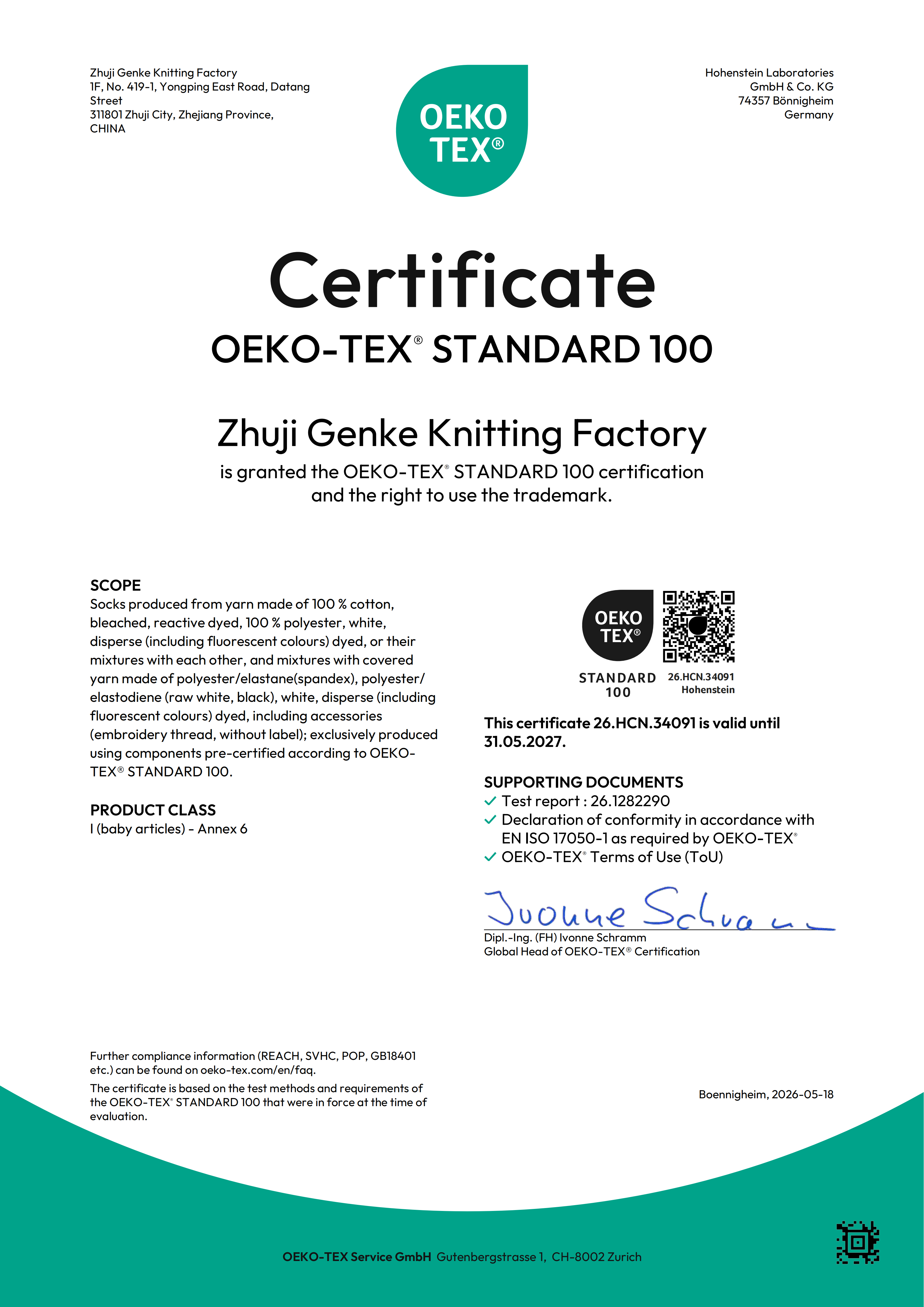
Certification documents should be checked during onboarding and reviewed again when they are renewed, when the production scope changes, or when a customer requests updated compliance evidence. The supplier lists Oeko-Tex 100 certificate 26.HCN.34091 and BSCI certificate 25-0339304. Oeko-Tex 100 is presented as covering textile products and skin-contact materials, while BSCI is associated with apparel and textile supply-chain practices.
Performance Indicators to Track
Supplier performance should be measured against the commercial terms connected to the sock program. These include a minimum order quantity of 100 pairs per design and color, a stated delivery time of 25 days, export support for the USA, Europe including the UK, Germany, and France, and Australia, and the reported 100% manual inspection rate.
For customized collections, the stated 3–7-day prototyping period should be checked during design approval and pre-production review. The supplier also reports experience with US boutique fitness chains, yoga and Pilates businesses, athletic teams, corporate marketing agencies, independent fashion retailers, and gift distributors. This background can help assess its ability to support both performance-focused grip socks and branded merchandise programs.
Audit Checklist by Trigger
| Audit Area | Evidence to Review | When to Review |
|---|---|---|
| Manufacturing capability | In-house production, equipment, customization workflow, capacity, and yarn-to-quality-control management | Before onboarding and after changes to order volume or product scope |
| Product conformity | Material blend, jacquard pattern, breathable mesh, heel tab, grip material, color, and sizing | Before approving each new design, color, or material |
| Quality management | 100% manual inspection, defect records, sample comparisons, corrective actions, and replacement or compensation records | At production checkpoints and after quality complaints |
| Compliance credentials | Oeko-Tex 100 certificate 26.HCN.34091 and BSCI certificate 25-0339304 | At onboarding, certification renewal, or customer compliance review |
| Delivery reliability | 25-day delivery statement, shipment history, export markets, and schedule performance | After late orders or repeated delivery changes |
Frequently Asked Questions
Is there a fixed audit frequency for this supplier?
No. The supplied information does not establish a fixed monthly, quarterly, or annual interval. Audit timing should be based on onboarding requirements and changes involving materials, designs, quality, certification, delivery, or order scale.
Which details matter most for custom Pilates grip socks?
Confirm the 80% combed cotton, 17% nylon, and 3% spandex blend; V-shape herringbone jacquard; honeycomb breathable mesh; anti-friction heel tab; PVC or silicone grip pattern; Pantone colors; EU 35–42 or US 5–10 sizing; and 100% manual inspection.
What credentials can be included in the supplier audit file?
The available credentials are Oeko-Tex 100 certificate 26.HCN.34091 and BSCI certificate 25-0339304. The supplier also describes work with yoga studios, Pilates clubs, athletic teams, retailers, and corporate marketing projects.
Conclusion
For a Pilates & Yoga Socks collection, complete a detailed audit before onboarding and repeat targeted reviews whenever production conditions or business requirements change. Maintain evidence for the approved product specifications, 100-pair design-and-color MOQ, 25-day delivery statement, manual inspection process, certification status, prototype timing, and quality remedies.
Yiwu Genke reports one-stop high-end customization and integrated manufacturing, with a stated monthly capacity of 1,000,000 pairs. For technical questions or supplier support, contact happygu@cnleyoyo.com.
About Us
Yiwu Genke Apparel Co., Ltd. has more than ten years of experience in customized sock manufacturing and provides one-stop solutions for clients worldwide. Founded in 2016, the company operates a 1,200 sqm factory and reports annual production capacity of 12,000,000 pairs. Its listed certifications include Oeko-Tex 100 and BSCI, while its customer experience spans several industries.
REPORT