







-
 Agriculture
-
 Health-Care
-
 Environment
-
 Construction-Real-Estate
-
 Tools-Hardware
-
 Home-Garden
-
 Furniture
-
 Luggage-Bags-Cases
-
 Medical-devices-Supplies
-
 Gifts-Crafts
-
 Sports-Entertainment
-
 Food-Beverage
-
 Vehicles-Transportation
-
 Power-Transmission
-
 Material-Handling
-
 Renewable-Energy
-
 Safety
-
 Testing-Instrument-Equipment
-
 Construction-Building-Machinery
-
 Pet-Supplies
-
 Personal-Care-Household-Cleaning
-
 Vehicle-Accessories-Electronics-Tools
-
 School-Office-Supplies
-
 Packaging-Printing
-
 Mother-Kids-Toys
-
 Business-Services
-
 Commercial-Equipment-Machinery
-
 Apparel-Accessories
-
 Security
-
 Shoes-Accessories
-
 Vehicle-Parts-Accessories
-
 Jewelry-Eyewear-Watches-Accessories
-
 Lights-Lighting
-
 Fabric-Textile-Raw-Material
-
 Fabrication-Services
-
 Industrial-Machinery
-
 Consumer-Electronics
-
 Electrical-Equipment-Supplies
-
 Electronic-Components-Accessories-Telecommunications
-
 Home-Appliances
-
 Beauty
-
 Chemicals
-
 Rubber-Plastics
-
 Metals-Alloys


























































































































































































































































































































































































































































































































































































- Masonry Materials
- Curtain Walls & Accessories
- Earthwork Products
- Fireproofing Materials
- Heat Insulation Materials
- Plastic Building Materials
- Building Boards
- Soundproofing Materials
- Timber
- Waterproofing Materials
- Balustrades & Handrails
- Bathroom & Kitchen
- Flooring & Accessories
- Tiles & Accessories
- Door, Window & Accessories
- Fireplaces & Stoves
- Floor Heating Systems & Parts
- Stairs & Stair Parts
- Ceilings
- Elevators & Escalators
- Stone
- Countertops, Vanity Tops & Table Tops
- Mosaics
- Metal Building Materials
- Multifunctional Materials
- Ladders & Scaffoldings
- Mouldings
- Corner Guards
- Decorative Films
- Formwork
- Building & Industrial Glass
- Other Construction & Real Estate
- Wallpapers/Wall panels
- HVAC System & Parts
- Outdoor Facilities
- Prefabricated Buildings
- Festive & Party Supplies
- Bathroom Products
- Household Sundries
- Rain Gear
- Garden Supplies
- Household Cleaning Tools & Accessories
- Lighters & Smoking Accessories
- Home Storage & Organization
- Household Scales
- Smart Home Improvement
- Home Textiles
- Kitchenware
- Drinkware & Accessories
- Dinnerware, Coffee & Wine
- Home Decor
- Golf
- Fitness & Body Building
- Amusement Park Facilities
- Billiards, Board Game,Coin Operated Games
- Musical Instruments
- Outdoor Affordable Luxury Sports
- Camping & Hiking
- Fishing
- Sports Safety&Rehabilitation
- Ball Sports Equipments
- Water Sports
- Winter Sports
- Luxury Travel Equipments
- Sports Shoes, Bags & Accessories
- Cycling
- Other Sports & Entertainment Products
- Artificial Grass&Sports Flooring&Sports Court Equipment
- Scooters
- Food Ingredients
- Honey & Honey Products
- Snacks
- Nuts & Kernels
- Seafood
- Plant & Animal Oil
- Beverages
- Fruit & Vegetable Products
- Frog & Escargot
- Bean Products
- Egg Products
- Dairy Products
- Seasonings & Condiments
- Canned Food
- Instant Food
- Baked Goods
- Other Food & Beverage
- Meat & Poultry
- Confectionery
- Grain Products
- Feminie Care
- Hair Care & Styling
- Body Care
- Hands & Feet Care
- Hygiene Products
- Men's Grooming
- Laundry Cleaning Supplies
- Travel Size & Gift Sets
- Room Deodorizers
- Other Personal Care Products
- Pest Control Products
- Special Household Cleaning
- Floor Cleaning
- Kitchen & Bathroom Cleaning
- Oral Care
- Bath Supplies
- Yellow Pages
- Correction Supplies
- Office Binding Supplies
- Office Cutting Supplies
- Board Erasers
- Office Adhesives & Tapes
- Education Supplies
- Pencil Cases & Bags
- Notebooks & Writing Pads
- File Folder Accessories
- Calendars
- Writing Accessories
- Commercial Office Supplies
- Pencil Sharpeners
- Pens
- Letter Pad/Paper
- Paper Envelopes
- Desk Organizers
- Pencils
- Markers & Highlighters
- Filing Products
- Art Supplies
- Easels
- Badge Holder & Accessories
- Office Paper
- Printer Supplies
- Book Covers
- Other Office & School Supplies
- Stationery Set
- Boards
- Clipboards
- Stamps
- Drafting Supplies
- Stencils
- Electronic Dictionary
- Books
- Map
- Magazines
- Calculators
- Baby & Toddler Toys
- Educational Toys
- Classic Toys
- Dress Up & Pretend Play
- Toy Vehicle
- Stuffed Animals & Plush Toys
- Outdoor Toys & Structures
- Balloons & Accessories
- Baby Food
- Children's Clothing
- Baby Supplies & Products
- Maternity Clothes
- Kids Shoes
- Baby Care
- Novelty & Gag Toys
- Dolls & Accessories
- Puzzle & Games
- Blocks & Model Building Toys
- Toddler Clothing
- Baby Clothing
- Kids' Luggage & Bags
- Arts, Crafts & DIY Toys
- Action & Toy Figures
- Baby Appliances
- Hobbies & Models
- Remote Control Toys
- Promotional Toys
- Pregnancy & Maternity
- Hygiene Products
- Kid's Textile&Bedding
- Novelty & Special Use
- Toy Weapons
- Baby Gifts
- Baby Storage & Organization
- Auto Drive Systems
- ATV/UTV Parts & Accessories
- Marine Parts & Accessories
- Other Auto Parts
- Trailer Parts & Accessories
- Auto Transmission Systems
- Train Parts & Accessories
- Universal Parts
- Railway Parts & Accessories
- Auto Brake Systems
- Aviation Parts & Accessories
- Truck Parts & Accessories
- Auto Suspension Systems
- Auto Lighting Systems
- New Energy Vehicle Parts & Accessories
- Auto Steering Systems
- Wheels, Tires & Accessories
- Bus Parts & Accessories
- Auto Performance Parts
- Cooling System
- Go-Kart & Kart Racer Parts & Accessories
- Air Conditioning Systems
- Heavy Duty Vehicle Parts & Accessories
- Auto Electrical Systems
- Auto Body Systems
- Auto Engine Systems
- Container Parts & Accessories
- Motorcycle Parts & Accessories
- Refrigeration & Heat Exchange Equipment
- Machine Tool Equipment
- Food & Beverage Machinery
- Agricultural Machinery & Equipment
- Apparel & Textile Machinery
- Chemical Machinery
- Packaging Machines
- Paper Production Machinery
- Plastic & Rubber Processing Machinery
- Industrial Robots
- Electronic Products Machinery
- Metal & Metallurgy Machinery
- Woodworking Machinery
- Home Product Manufacturing Machinery
- Machinery Accessories
- Environmental Machinery
- Machinery Service
- Electrical Equipment Manufacturing Machinery
- Industrial Compressors & Parts
- Tobacco & Cigarette Machinery
- Production Line
- Used Industrial Machinery
- Electronics Production Machinery
- Other Machinery & Industrial Equipment
- Camera, Photo & Accessories
- Portable Audio, Video & Accessories
- Television, Home Audio, Video & Accessories
- Video Games & Accessories
- Mobile Phone & Accessories
- Electronic Publications
- Earphone & Headphone & Accessories
- Speakers & Accessories
- Smart Electronics
- TV Receivers & Accessories
- Mobile Phone & Computer Repair Parts
- Chargers, Batteries & Power Supplies
- Used Electronics
- VR, AR, MR Hardware & Software
- Projectors & Presentation Equipments
- Other Consumer Electronics
- Cables & Commonly Used Accessories
- Computer Hardware & Software
- Displays, Signage and Optoelectronics
- Discrete Semiconductors
- Wireless & IoT Module and Products
- Telecommunications
- Connectors, Terminals & Accessories
- Development Boards, Electronic Modules and Kits
- Circuit Protection
- Sensors
- Isolators
- Audio Components and Products
- Integrated Circuits
- Power Supplies
- Relays
- RF, Microwave and RFID
- Electronic Accessories & Supplies
- Passive Components
- PCB & PCBA
- Air Quality Appliances
- Home Appliance Parts
- Heating & Cooling Appliances
- Small Kitchen Appliances
- Laundry Appliances
- Water Heaters
- Water Treatment Appliances
- Refrigerators & Freezers
- Personal Care & Beauty Appliances
- Major Kitchen Appliances
- Cleaning Appliances
- Second-hand Appliances
- Smart Home Appliances
- Other Home Appliances
- Energy Chemicals
- Inorganic Chemicals
- Basic Organic Chemicals
- Agrochemicals
- Admixture & Additives
- Catalysts & Chemical Auxiliary Agents
- Pigments & Dyestuff
- Coating & Paint
- Daily Chemicals
- Polymer
- Organic Intermediate
- Adhesives & Sealants
- Chemical Waste
- Biological Chemical Products
- Surface Treatment Chemicals
- Painting & Coating
- Chemical Reagents
- Flavor & Fragrance
- Non-Explosive Demolition Agents
- Other Chemicals
- Custom Chemical Services

How Sample Testing Identifies Color and Brightness Variations in RGB Laser Projectors
Reliable sample evaluation is essential for identifying differences in color, brightness, beam quality, and operating stability among RGB laser projectors. By testing red, green, and blue channels under identical conditions, buyers can compare 50W, 60W, and 80W configurations more accurately and determine whether variation comes from the laser source, optics, scanning system, or control settings.
What a Complete RGB Projector Comparison Should Cover
A meaningful comparison combines wavelength verification, laser power measurement, beam inspection, scanning tests, control response checks, environmental testing, and aging evaluation. Using the same test pattern, control signal, distance, and operating conditions prevents setup differences from being confused with actual product variation.
- Test the red, green, and blue channels using the reference wavelengths of 636±5nm, 525±5nm, and 455±5nm.
- Compare brightness across the 50W, 60W, and 80W laser power options under matched conditions.
- Measure beam size below 8×9mm and beam divergence below 1.2mrad.
- Check the 25KPPS scanning system with static graphics, moving patterns, and full-color effects.
- Evaluate performance for concerts, festivals, clubs, theme parks, landmark buildings, large shows, and other indoor or outdoor venues.
Testing Method for Color and Brightness Differences
1. Verify the Individual RGB Channels
Color assessment should begin with separate red, green, and blue output tests. The projector uses imported semiconductor solid-state laser sources with specified wavelength ranges: red at 636±5nm, green at 525±5nm, and blue at 455±5nm. Each channel should first be measured independently, followed by a combined RGB test using the same control signal. This process helps identify whether a visible color imbalance is caused by one laser channel or by the combined optical output.
2. Compare Brightness by Configuration
Brightness comparisons should distinguish laser output power from electrical power ratings. The available RGB laser configurations are 50W, 60W, and 80W, while the listed rated maximum power levels are 700W, 800W, and 1000W. These specifications describe different parameters and should be recorded separately in the sample report. Matching drive levels, test distance, projection pattern, and ambient conditions makes the brightness results more useful.
3. Inspect Beam Geometry and Optical Concentration
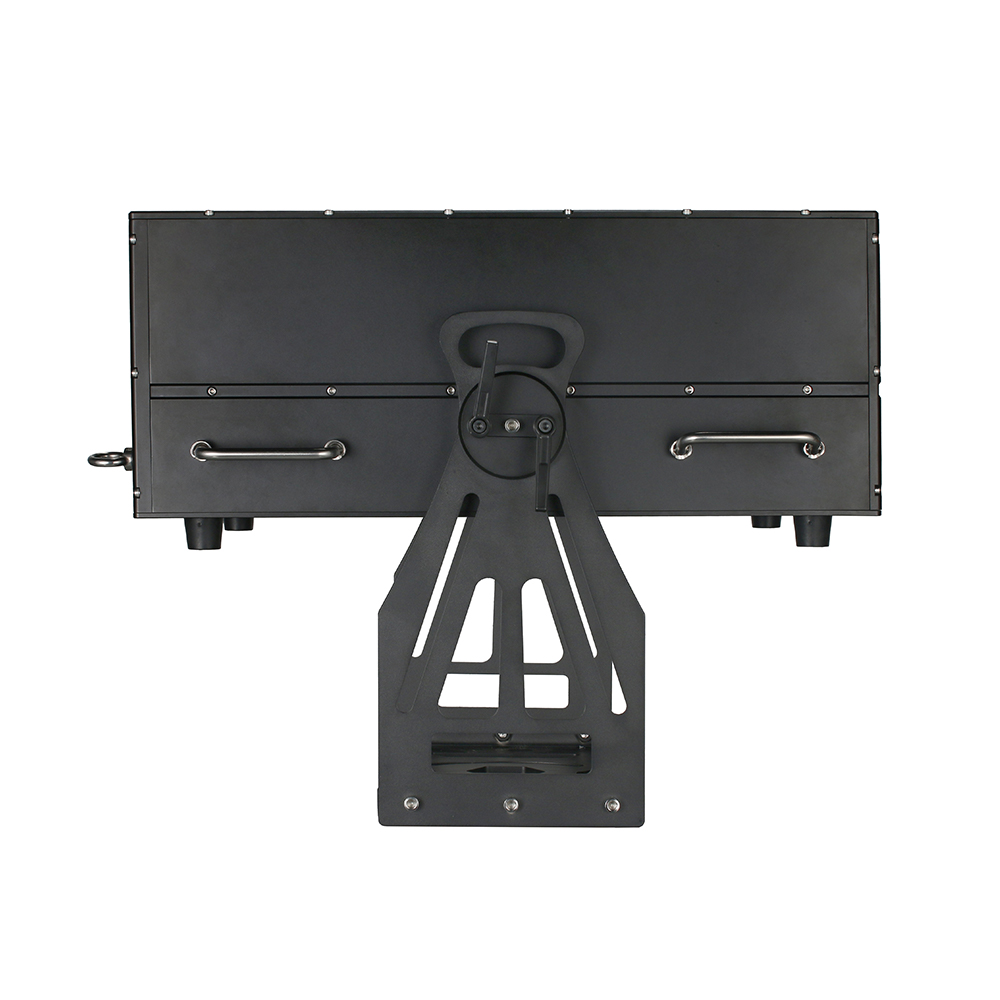
Beam characteristics can strongly influence perceived brightness, particularly over long distances. A sample should be checked for a beam size below 8×9mm and divergence below 1.2mrad. When two units produce similar laser power but have different beam spread, the projector with better concentration may appear brighter and deliver a sharper effect. Optical performance testing therefore belongs alongside direct output measurements.
4. Evaluate Scanning and Control Response
The 25KPPS high-speed scanning system should be tested with identical graphics and movement settings. Review line accuracy, pattern stability, color transitions, and output consistency during dynamic projection. The supported control modes include ILDA, DMX512, self-walk, and master-slave operation. The RJ45-ILDA DB25 interface can be used with Pangolin laser software as well as Tiger, Pearl, and MA controllers. Keeping the controller, signal, and operating mode consistent ensures that software settings do not create misleading color or brightness differences.
Quality and Reliability Checks
A complete sample review should include more than a visual comparison. NewFeel Lighting's inspection process covers laser module inspection, optical performance testing, scanner system testing, electronic component inspection, waterproof testing, control system testing, safety verification, aging testing, finished-product inspection, and pre-shipment inspection. Reviewing these records gives buyers a structured basis for judging consistency between units.
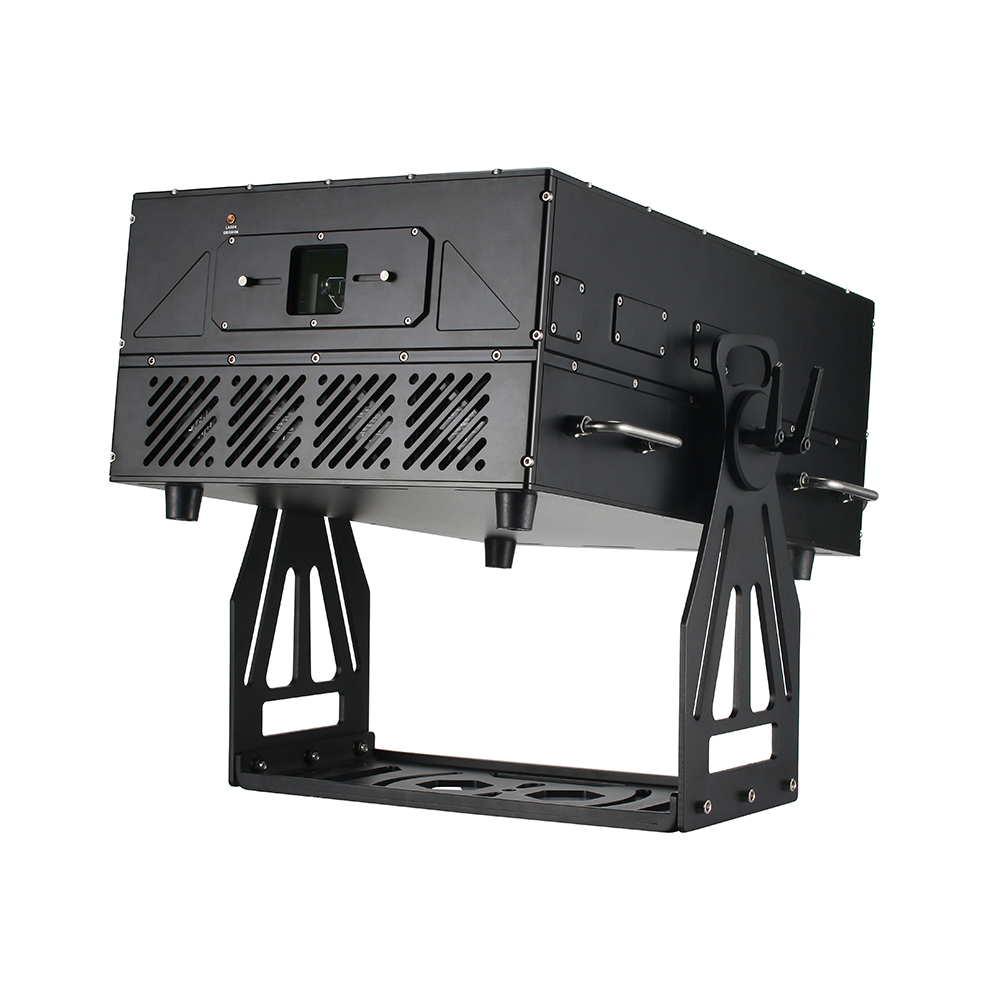
The projector is rated IP66 for indoor and outdoor use. Safety functions include one-beam protection and automatic light shutoff when no control signal is detected. During sample testing, each unit should be checked to confirm that these protections activate consistently. Long-duration aging tests are also useful for identifying output drift, unstable scanning, or changes in color balance after extended operation.
NewFeel Lighting holds CE certification for its laser light products under certificate number UTT202406076C. Customer applications include a United States lighting equipment distributor that used RGB laser lights, fog machines, and special effects equipment for weddings, private parties, DJ performances, and small entertainment venues. A French stage production company used the supplied lighting equipment for live shows, music festivals, corporate events, and entertainment venues, with stable effects reported during extended operation.
Sample Comparison Reference Table
| Test Category | Reference Specification | Result Shown by Sample Testing |
|---|---|---|
| RGB wavelength | Red 636±5nm, green 525±5nm, blue 455±5nm | Individual channel consistency and overall RGB color balance |
| Laser output configuration | 50W, 60W, or 80W RGB laser power | Relative brightness and output differences between samples |
| Beam quality | Beam size below 8×9mm; divergence below 1.2mrad | Beam concentration, sharpness, and distance-related brightness variation |
| Scanning system | 25KPPS high-speed scanning | Pattern stability and output uniformity during fast movement |
| Control compatibility | ILDA, DMX512, self-walk, and master-slave modes | Consistency under equivalent software and signal conditions |
| Protection and environment | IP66; indoor and outdoor operation | Stable operation during waterproof, safety, and long-run testing |
Frequently Asked Questions
Which test provides the clearest evidence of color variation?
Testing the red, green, and blue channels separately with the same control signal is the most direct method. The specified wavelength ranges provide reference values for checking channel consistency before evaluating the combined RGB image.
How should brightness differences between samples be measured?
Use the same test pattern, distance, controller settings, and environmental conditions for every unit. Then record whether the projector uses the 50W, 60W, or 80W laser configuration and review the beam size, divergence, optical test, and aging results together.
Which inspection documents should buyers request?
Useful records include laser module inspection, optical performance data, scanner testing, electronic inspection, waterproof testing, control-system testing, safety testing, aging results, finished-product inspection, and pre-shipment inspection.
Conclusion
RGB laser projector samples should be compared through a combination of wavelength checks, laser power evaluation, beam analysis, scanning tests, control-response verification, safety checks, and aging performance. The 50W, 60W, and 80W options provide practical brightness comparison points, while the specified wavelengths and beam parameters help establish color and optical consistency. Guangzhou New Feel Lighting And Audio Equipment Co., Ltd. combines R&D, manufacturing, sales, export, OEM/ODM, and customized lighting services. For technical support or project consultation, contact sunny@nfstagelight.com.
About NewFeel Lighting
Guangzhou New Feel Lighting And Audio Equipment Co., Ltd., operating under the NewFeel Lighting brand, was founded in 2008 in Guangzhou, China. The company manufactures stage lighting and special effects equipment, including RGB laser projectors, moving head lights, and special effects machines for performances, events, and entertainment venues.
Its professional R&D team focuses on optical design, electronic control, structural optimization, laser system development, moving head lighting, special effects equipment, and customized product solutions. The company holds CE certification for laser light products and supports customers in professional stage production, event lighting distribution, and related entertainment applications.

REPORT