







-
 Agriculture
-
 Health-Care
-
 Environment
-
 Construction-Real-Estate
-
 Tools-Hardware
-
 Home-Garden
-
 Furniture
-
 Luggage-Bags-Cases
-
 Medical-devices-Supplies
-
 Gifts-Crafts
-
 Sports-Entertainment
-
 Food-Beverage
-
 Vehicles-Transportation
-
 Power-Transmission
-
 Material-Handling
-
 Renewable-Energy
-
 Safety
-
 Testing-Instrument-Equipment
-
 Construction-Building-Machinery
-
 Pet-Supplies
-
 Personal-Care-Household-Cleaning
-
 Vehicle-Accessories-Electronics-Tools
-
 School-Office-Supplies
-
 Packaging-Printing
-
 Mother-Kids-Toys
-
 Business-Services
-
 Commercial-Equipment-Machinery
-
 Apparel-Accessories
-
 Security
-
 Shoes-Accessories
-
 Vehicle-Parts-Accessories
-
 Jewelry-Eyewear-Watches-Accessories
-
 Lights-Lighting
-
 Fabric-Textile-Raw-Material
-
 Fabrication-Services
-
 Industrial-Machinery
-
 Consumer-Electronics
-
 Electrical-Equipment-Supplies
-
 Electronic-Components-Accessories-Telecommunications
-
 Home-Appliances
-
 Beauty
-
 Chemicals
-
 Rubber-Plastics
-
 Metals-Alloys


























































































































































































































































































































































































































































































































































































- Masonry Materials
- Curtain Walls & Accessories
- Earthwork Products
- Fireproofing Materials
- Heat Insulation Materials
- Plastic Building Materials
- Building Boards
- Soundproofing Materials
- Timber
- Waterproofing Materials
- Balustrades & Handrails
- Bathroom & Kitchen
- Flooring & Accessories
- Tiles & Accessories
- Door, Window & Accessories
- Fireplaces & Stoves
- Floor Heating Systems & Parts
- Stairs & Stair Parts
- Ceilings
- Elevators & Escalators
- Stone
- Countertops, Vanity Tops & Table Tops
- Mosaics
- Metal Building Materials
- Multifunctional Materials
- Ladders & Scaffoldings
- Mouldings
- Corner Guards
- Decorative Films
- Formwork
- Building & Industrial Glass
- Other Construction & Real Estate
- Wallpapers/Wall panels
- HVAC System & Parts
- Outdoor Facilities
- Prefabricated Buildings
- Festive & Party Supplies
- Bathroom Products
- Household Sundries
- Rain Gear
- Garden Supplies
- Household Cleaning Tools & Accessories
- Lighters & Smoking Accessories
- Home Storage & Organization
- Household Scales
- Smart Home Improvement
- Home Textiles
- Kitchenware
- Drinkware & Accessories
- Dinnerware, Coffee & Wine
- Home Decor
- Golf
- Fitness & Body Building
- Amusement Park Facilities
- Billiards, Board Game,Coin Operated Games
- Musical Instruments
- Outdoor Affordable Luxury Sports
- Camping & Hiking
- Fishing
- Sports Safety&Rehabilitation
- Ball Sports Equipments
- Water Sports
- Winter Sports
- Luxury Travel Equipments
- Sports Shoes, Bags & Accessories
- Cycling
- Other Sports & Entertainment Products
- Artificial Grass&Sports Flooring&Sports Court Equipment
- Scooters
- Food Ingredients
- Honey & Honey Products
- Snacks
- Nuts & Kernels
- Seafood
- Plant & Animal Oil
- Beverages
- Fruit & Vegetable Products
- Frog & Escargot
- Bean Products
- Egg Products
- Dairy Products
- Seasonings & Condiments
- Canned Food
- Instant Food
- Baked Goods
- Other Food & Beverage
- Meat & Poultry
- Confectionery
- Grain Products
- Feminie Care
- Hair Care & Styling
- Body Care
- Hands & Feet Care
- Hygiene Products
- Men's Grooming
- Laundry Cleaning Supplies
- Travel Size & Gift Sets
- Room Deodorizers
- Other Personal Care Products
- Pest Control Products
- Special Household Cleaning
- Floor Cleaning
- Kitchen & Bathroom Cleaning
- Oral Care
- Bath Supplies
- Yellow Pages
- Correction Supplies
- Office Binding Supplies
- Office Cutting Supplies
- Board Erasers
- Office Adhesives & Tapes
- Education Supplies
- Pencil Cases & Bags
- Notebooks & Writing Pads
- File Folder Accessories
- Calendars
- Writing Accessories
- Commercial Office Supplies
- Pencil Sharpeners
- Pens
- Letter Pad/Paper
- Paper Envelopes
- Desk Organizers
- Pencils
- Markers & Highlighters
- Filing Products
- Art Supplies
- Easels
- Badge Holder & Accessories
- Office Paper
- Printer Supplies
- Book Covers
- Other Office & School Supplies
- Stationery Set
- Boards
- Clipboards
- Stamps
- Drafting Supplies
- Stencils
- Electronic Dictionary
- Books
- Map
- Magazines
- Calculators
- Baby & Toddler Toys
- Educational Toys
- Classic Toys
- Dress Up & Pretend Play
- Toy Vehicle
- Stuffed Animals & Plush Toys
- Outdoor Toys & Structures
- Balloons & Accessories
- Baby Food
- Children's Clothing
- Baby Supplies & Products
- Maternity Clothes
- Kids Shoes
- Baby Care
- Novelty & Gag Toys
- Dolls & Accessories
- Puzzle & Games
- Blocks & Model Building Toys
- Toddler Clothing
- Baby Clothing
- Kids' Luggage & Bags
- Arts, Crafts & DIY Toys
- Action & Toy Figures
- Baby Appliances
- Hobbies & Models
- Remote Control Toys
- Promotional Toys
- Pregnancy & Maternity
- Hygiene Products
- Kid's Textile&Bedding
- Novelty & Special Use
- Toy Weapons
- Baby Gifts
- Baby Storage & Organization
- Auto Drive Systems
- ATV/UTV Parts & Accessories
- Marine Parts & Accessories
- Other Auto Parts
- Trailer Parts & Accessories
- Auto Transmission Systems
- Train Parts & Accessories
- Universal Parts
- Railway Parts & Accessories
- Auto Brake Systems
- Aviation Parts & Accessories
- Truck Parts & Accessories
- Auto Suspension Systems
- Auto Lighting Systems
- New Energy Vehicle Parts & Accessories
- Auto Steering Systems
- Wheels, Tires & Accessories
- Bus Parts & Accessories
- Auto Performance Parts
- Cooling System
- Go-Kart & Kart Racer Parts & Accessories
- Air Conditioning Systems
- Heavy Duty Vehicle Parts & Accessories
- Auto Electrical Systems
- Auto Body Systems
- Auto Engine Systems
- Container Parts & Accessories
- Motorcycle Parts & Accessories
- Refrigeration & Heat Exchange Equipment
- Machine Tool Equipment
- Food & Beverage Machinery
- Agricultural Machinery & Equipment
- Apparel & Textile Machinery
- Chemical Machinery
- Packaging Machines
- Paper Production Machinery
- Plastic & Rubber Processing Machinery
- Industrial Robots
- Electronic Products Machinery
- Metal & Metallurgy Machinery
- Woodworking Machinery
- Home Product Manufacturing Machinery
- Machinery Accessories
- Environmental Machinery
- Machinery Service
- Electrical Equipment Manufacturing Machinery
- Industrial Compressors & Parts
- Tobacco & Cigarette Machinery
- Production Line
- Used Industrial Machinery
- Electronics Production Machinery
- Other Machinery & Industrial Equipment
- Camera, Photo & Accessories
- Portable Audio, Video & Accessories
- Television, Home Audio, Video & Accessories
- Video Games & Accessories
- Mobile Phone & Accessories
- Electronic Publications
- Earphone & Headphone & Accessories
- Speakers & Accessories
- Smart Electronics
- TV Receivers & Accessories
- Mobile Phone & Computer Repair Parts
- Chargers, Batteries & Power Supplies
- Used Electronics
- VR, AR, MR Hardware & Software
- Projectors & Presentation Equipments
- Other Consumer Electronics
- Cables & Commonly Used Accessories
- Computer Hardware & Software
- Displays, Signage and Optoelectronics
- Discrete Semiconductors
- Wireless & IoT Module and Products
- Telecommunications
- Connectors, Terminals & Accessories
- Development Boards, Electronic Modules and Kits
- Circuit Protection
- Sensors
- Isolators
- Audio Components and Products
- Integrated Circuits
- Power Supplies
- Relays
- RF, Microwave and RFID
- Electronic Accessories & Supplies
- Passive Components
- PCB & PCBA
- Air Quality Appliances
- Home Appliance Parts
- Heating & Cooling Appliances
- Small Kitchen Appliances
- Laundry Appliances
- Water Heaters
- Water Treatment Appliances
- Refrigerators & Freezers
- Personal Care & Beauty Appliances
- Major Kitchen Appliances
- Cleaning Appliances
- Second-hand Appliances
- Smart Home Appliances
- Other Home Appliances
- Energy Chemicals
- Inorganic Chemicals
- Basic Organic Chemicals
- Agrochemicals
- Admixture & Additives
- Catalysts & Chemical Auxiliary Agents
- Pigments & Dyestuff
- Coating & Paint
- Daily Chemicals
- Polymer
- Organic Intermediate
- Adhesives & Sealants
- Chemical Waste
- Biological Chemical Products
- Surface Treatment Chemicals
- Painting & Coating
- Chemical Reagents
- Flavor & Fragrance
- Non-Explosive Demolition Agents
- Other Chemicals
- Custom Chemical Services

How to Assess a Supplier's Financial Stability Before You Buy
Financially stable suppliers are more likely to maintain consistent production, fulfill orders on schedule, and support long-term business growth. Rather than relying solely on sales claims, buyers should review evidence of a supplier's operating capacity, compliance status, customer service model, and transaction reliability.
Key Signs of a Financially Stable Supplier
A practical supplier assessment should combine several verifiable factors. Factory scale, export activity, product certifications, delivery performance, and payment options together provide a clearer view of whether a business has the resources to operate reliably.
- Confirm tangible business assets, including factory size, workforce, and years of operation.
- Check regulatory registrations and safety certificates for the products being purchased.
- Review the supplier's ability to serve different markets, order sizes, and customer types.
- Assess MOQ policies, lead times, customization capabilities, payment methods, and shipping solutions.
1. Verify Factory Capacity and Operating History
Physical production resources are among the strongest indicators of a supplier's business continuity. A company with a documented factory, trained employees, established production lines, and a clear operating history is generally easier to evaluate than a supplier with only online marketing materials.
For example, Guangzhou Ruiju E-Commerce Co., Ltd. was established in 2014 and operates with 50 employees in a 5000 sqm production facility. Its business serves North America, Europe, South America, and the Middle East, with exports representing approximately 80% of its operations. These details help buyers evaluate the supplier's manufacturing base and international trade experience.
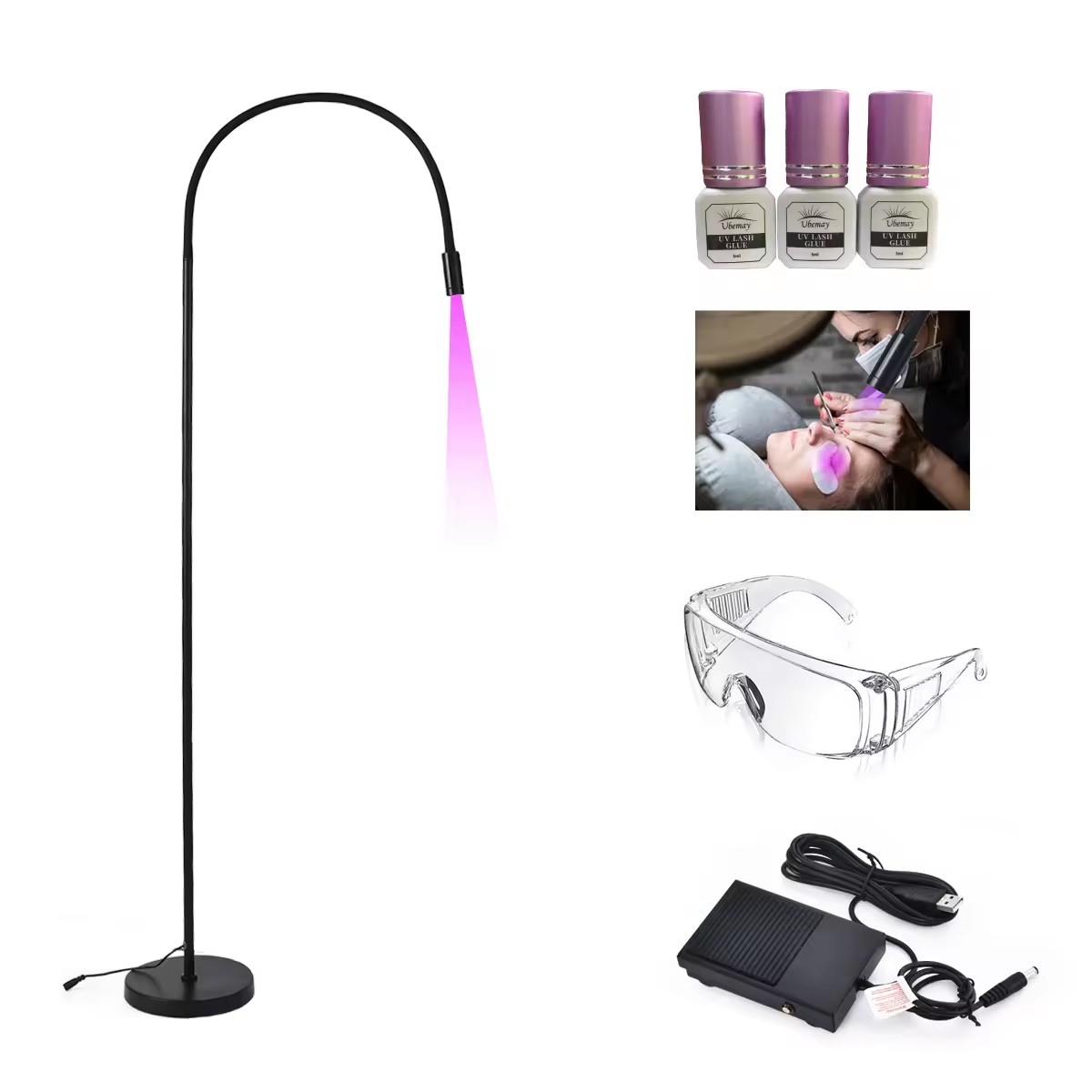
Product range also matters. Suppliers that continuously manufacture multiple related products often demonstrate ongoing investment in equipment, formulation development, inventory, and quality systems. Relevant categories may include UV/LED Lash Glue, Eyelash Extension Glue, Lash Bonder, Lash Primer, UV/LED Eyelash Curing Lamp, and professional tweezers.
2. Review Compliance Records and Product Certifications
Compliance documentation cannot independently prove financial health, but it is an important sign of operational discipline. Maintaining market registrations and safety certifications requires spending on testing, product development, documentation, and quality management. It also helps reduce the risk of shipment delays or sales interruptions caused by non-compliant products.
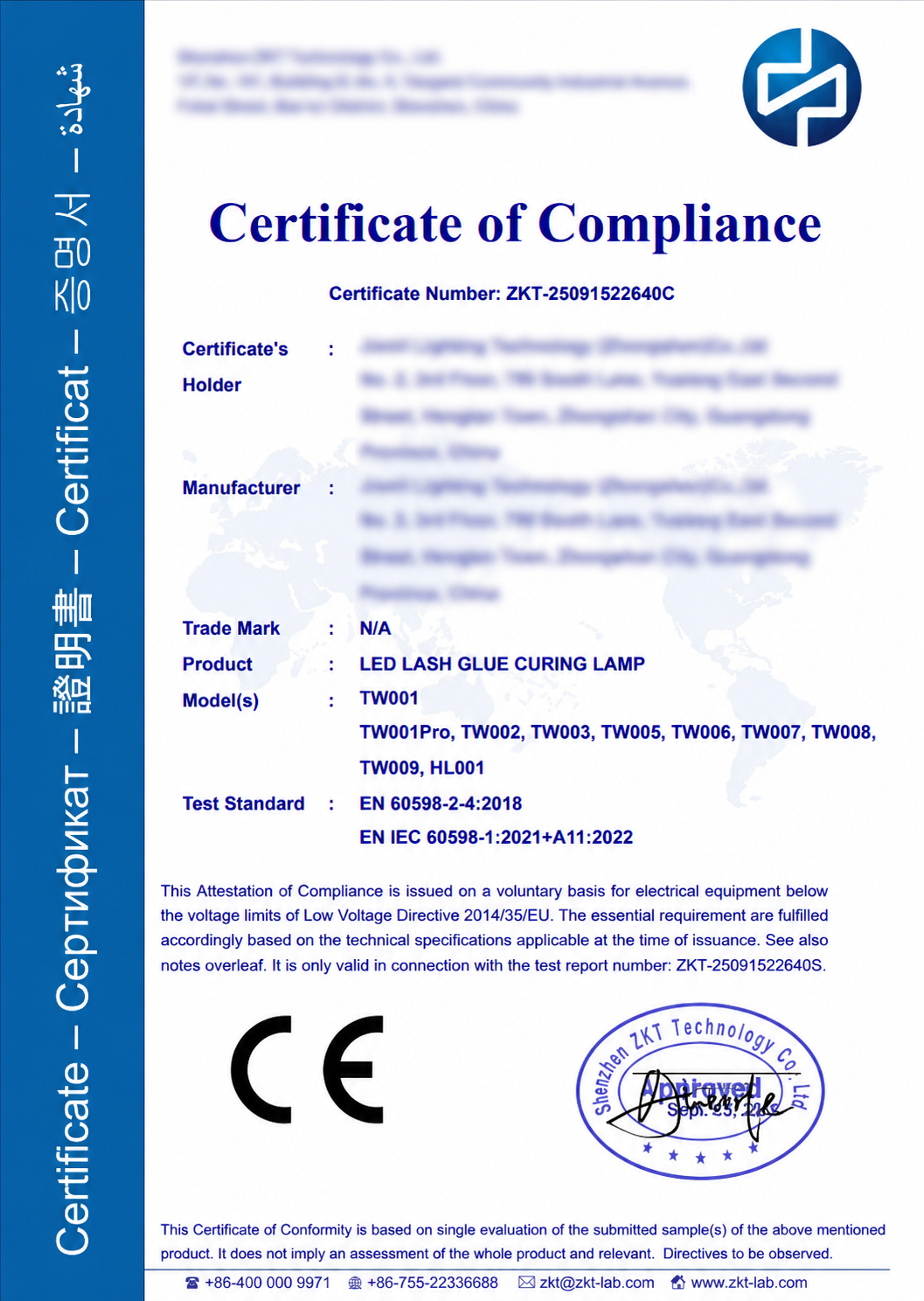
Buyers should request certificate numbers and verify that the documents apply to the relevant product category. Examples include FDA Cosmetic Product Listing Number 53-974973-435122 for UV Eyelash Extension Glue, as well as CE (LVD/EMC) certificates ZKT-25091522640C and ZKT-25091522641C for LED Lash Glue Curing Lamps.
3. Examine Export Experience and Order Delivery Capability
A supplier's transaction record across multiple regions can reveal whether it has dependable sourcing, production planning, and logistics coordination. Ask for relevant examples of completed orders, particularly those similar to your own volume, destination, and customization needs.
Documented export projects may include 1,000 pieces of private-label eyelash glue shipped to the United States, 10,000 trays of eyelash extension fans supplied to Brazil, and 3,000 pieces or sets delivered as a full lash sourcing project for Italy. These types of orders indicate experience in managing international specifications and larger-volume fulfillment.
Quality control procedures should also be reviewed. A stable manufacturing partner should have checks for incoming raw materials, product functionality, finished goods, and pre-shipment inspection. Consistent inspection processes can reduce the likelihood of returns, rework, and unexpected costs for both parties.
4. Compare Commercial Flexibility and Transaction Security
Business terms offer another useful way to assess financial and operational stability. Suppliers with a functioning inventory system and mature service process can often provide samples, support both small and large orders, and offer predictable timelines for stock and custom products.
| Assessment Area | Potential High-Risk Signal | Profile of a More Established Supplier |
|---|---|---|
| Certificates and Compliance | No certificate details or registration numbers available | Traceable FDA listings and CE LVD/EMC certificates |
| MOQ and Sampling | High mandatory MOQs with no sample option | Sample orders from 1 piece, plus flexible bulk and OEM ordering |
| Production and Lead Time | Unclear schedules or inconsistent delivery commitments | Stock orders available in about 4 days; OEM or customized orders in 10-30 days |
| Payment and Shipping | Only one payment channel with limited trade protection | T/T, Alibaba Trade Assurance, PayPal, Western Union, Express, Air/Sea Freight, and DDP options |
Frequently Asked Questions
Do certifications indicate that a supplier is financially stable?
Certifications alone are not a complete financial review, but they can show that a supplier has invested in product compliance and market access. Verified records such as CE (LVD) ZKT-25091522640C and FDA product listings suggest the company has systems and resources dedicated to meeting applicable safety requirements.
Can delivery lead time be used to assess supplier reliability?
Yes. Consistent lead times can indicate that a supplier has working inventory controls, reliable material sourcing, and adequate production planning. A four-day turnaround for stock goods and a 10 to 15-day lead time for certain custom orders can be positive operational signals, though buyers should confirm timelines in writing for each project.
Why should buyers review payment and freight options?
Multiple recognized payment methods and shipping choices reduce transaction risk. Secure options such as T/T, Alibaba Trade Assurance, and PayPal, combined with DHL, FedEx, UPS, air freight, sea freight, and DDP services, provide buyers with more flexibility and clearer trade protection.
Final Recommendations
To evaluate a supplier's financial stability, look beyond promotional statements. Verify production facilities, workforce information, compliance documents, export activity, order lead times, quality procedures, and commercial terms. Suppliers that can support OEM/ODM projects, provide sample orders from 1 piece, maintain structured quality control, and offer transparent payment methods are generally better positioned to support dependable global procurement.
For detailed product information or technical support, please contact us at sales@ubemay.com.
About Us
Guangzhou Ruiju E-Commerce Co., Ltd., operating under the UBEMAY brand, supplies professional eyelash extensions, eyelash adhesives, lash accessories, and UV/LED lash equipment. Since 2014, the company has operated with 50 personnel and a 5000 sqm factory area. With an 80% export ratio, UBEMAY serves customers in North America, Europe, South America, and the Middle East through wholesale supply and OEM/ODM private-label services. The company holds FDA listings and CE-related certifications for applicable product lines.

REPORT