







-
 Agriculture
-
 Health-Care
-
 Environment
-
 Construction-Real-Estate
-
 Tools-Hardware
-
 Home-Garden
-
 Furniture
-
 Luggage-Bags-Cases
-
 Medical-devices-Supplies
-
 Gifts-Crafts
-
 Sports-Entertainment
-
 Food-Beverage
-
 Vehicles-Transportation
-
 Power-Transmission
-
 Material-Handling
-
 Renewable-Energy
-
 Safety
-
 Testing-Instrument-Equipment
-
 Construction-Building-Machinery
-
 Pet-Supplies
-
 Personal-Care-Household-Cleaning
-
 Vehicle-Accessories-Electronics-Tools
-
 School-Office-Supplies
-
 Packaging-Printing
-
 Mother-Kids-Toys
-
 Business-Services
-
 Commercial-Equipment-Machinery
-
 Apparel-Accessories
-
 Security
-
 Shoes-Accessories
-
 Vehicle-Parts-Accessories
-
 Jewelry-Eyewear-Watches-Accessories
-
 Lights-Lighting
-
 Fabric-Textile-Raw-Material
-
 Fabrication-Services
-
 Industrial-Machinery
-
 Consumer-Electronics
-
 Electrical-Equipment-Supplies
-
 Electronic-Components-Accessories-Telecommunications
-
 Home-Appliances
-
 Beauty
-
 Chemicals
-
 Rubber-Plastics
-
 Metals-Alloys


























































































































































































































































































































































































































































































































































































- Masonry Materials
- Curtain Walls & Accessories
- Earthwork Products
- Fireproofing Materials
- Heat Insulation Materials
- Plastic Building Materials
- Building Boards
- Soundproofing Materials
- Timber
- Waterproofing Materials
- Balustrades & Handrails
- Bathroom & Kitchen
- Flooring & Accessories
- Tiles & Accessories
- Door, Window & Accessories
- Fireplaces & Stoves
- Floor Heating Systems & Parts
- Stairs & Stair Parts
- Ceilings
- Elevators & Escalators
- Stone
- Countertops, Vanity Tops & Table Tops
- Mosaics
- Metal Building Materials
- Multifunctional Materials
- Ladders & Scaffoldings
- Mouldings
- Corner Guards
- Decorative Films
- Formwork
- Building & Industrial Glass
- Other Construction & Real Estate
- Wallpapers/Wall panels
- HVAC System & Parts
- Outdoor Facilities
- Prefabricated Buildings
- Festive & Party Supplies
- Bathroom Products
- Household Sundries
- Rain Gear
- Garden Supplies
- Household Cleaning Tools & Accessories
- Lighters & Smoking Accessories
- Home Storage & Organization
- Household Scales
- Smart Home Improvement
- Home Textiles
- Kitchenware
- Drinkware & Accessories
- Dinnerware, Coffee & Wine
- Home Decor
- Golf
- Fitness & Body Building
- Amusement Park Facilities
- Billiards, Board Game,Coin Operated Games
- Musical Instruments
- Outdoor Affordable Luxury Sports
- Camping & Hiking
- Fishing
- Sports Safety&Rehabilitation
- Ball Sports Equipments
- Water Sports
- Winter Sports
- Luxury Travel Equipments
- Sports Shoes, Bags & Accessories
- Cycling
- Other Sports & Entertainment Products
- Artificial Grass&Sports Flooring&Sports Court Equipment
- Scooters
- Food Ingredients
- Honey & Honey Products
- Snacks
- Nuts & Kernels
- Seafood
- Plant & Animal Oil
- Beverages
- Fruit & Vegetable Products
- Frog & Escargot
- Bean Products
- Egg Products
- Dairy Products
- Seasonings & Condiments
- Canned Food
- Instant Food
- Baked Goods
- Other Food & Beverage
- Meat & Poultry
- Confectionery
- Grain Products
- Feminie Care
- Hair Care & Styling
- Body Care
- Hands & Feet Care
- Hygiene Products
- Men's Grooming
- Laundry Cleaning Supplies
- Travel Size & Gift Sets
- Room Deodorizers
- Other Personal Care Products
- Pest Control Products
- Special Household Cleaning
- Floor Cleaning
- Kitchen & Bathroom Cleaning
- Oral Care
- Bath Supplies
- Yellow Pages
- Correction Supplies
- Office Binding Supplies
- Office Cutting Supplies
- Board Erasers
- Office Adhesives & Tapes
- Education Supplies
- Pencil Cases & Bags
- Notebooks & Writing Pads
- File Folder Accessories
- Calendars
- Writing Accessories
- Commercial Office Supplies
- Pencil Sharpeners
- Pens
- Letter Pad/Paper
- Paper Envelopes
- Desk Organizers
- Pencils
- Markers & Highlighters
- Filing Products
- Art Supplies
- Easels
- Badge Holder & Accessories
- Office Paper
- Printer Supplies
- Book Covers
- Other Office & School Supplies
- Stationery Set
- Boards
- Clipboards
- Stamps
- Drafting Supplies
- Stencils
- Electronic Dictionary
- Books
- Map
- Magazines
- Calculators
- Baby & Toddler Toys
- Educational Toys
- Classic Toys
- Dress Up & Pretend Play
- Toy Vehicle
- Stuffed Animals & Plush Toys
- Outdoor Toys & Structures
- Balloons & Accessories
- Baby Food
- Children's Clothing
- Baby Supplies & Products
- Maternity Clothes
- Kids Shoes
- Baby Care
- Novelty & Gag Toys
- Dolls & Accessories
- Puzzle & Games
- Blocks & Model Building Toys
- Toddler Clothing
- Baby Clothing
- Kids' Luggage & Bags
- Arts, Crafts & DIY Toys
- Action & Toy Figures
- Baby Appliances
- Hobbies & Models
- Remote Control Toys
- Promotional Toys
- Pregnancy & Maternity
- Hygiene Products
- Kid's Textile&Bedding
- Novelty & Special Use
- Toy Weapons
- Baby Gifts
- Baby Storage & Organization
- Auto Drive Systems
- ATV/UTV Parts & Accessories
- Marine Parts & Accessories
- Other Auto Parts
- Trailer Parts & Accessories
- Auto Transmission Systems
- Train Parts & Accessories
- Universal Parts
- Railway Parts & Accessories
- Auto Brake Systems
- Aviation Parts & Accessories
- Truck Parts & Accessories
- Auto Suspension Systems
- Auto Lighting Systems
- New Energy Vehicle Parts & Accessories
- Auto Steering Systems
- Wheels, Tires & Accessories
- Bus Parts & Accessories
- Auto Performance Parts
- Cooling System
- Go-Kart & Kart Racer Parts & Accessories
- Air Conditioning Systems
- Heavy Duty Vehicle Parts & Accessories
- Auto Electrical Systems
- Auto Body Systems
- Auto Engine Systems
- Container Parts & Accessories
- Motorcycle Parts & Accessories
- Refrigeration & Heat Exchange Equipment
- Machine Tool Equipment
- Food & Beverage Machinery
- Agricultural Machinery & Equipment
- Apparel & Textile Machinery
- Chemical Machinery
- Packaging Machines
- Paper Production Machinery
- Plastic & Rubber Processing Machinery
- Industrial Robots
- Electronic Products Machinery
- Metal & Metallurgy Machinery
- Woodworking Machinery
- Home Product Manufacturing Machinery
- Machinery Accessories
- Environmental Machinery
- Machinery Service
- Electrical Equipment Manufacturing Machinery
- Industrial Compressors & Parts
- Tobacco & Cigarette Machinery
- Production Line
- Used Industrial Machinery
- Electronics Production Machinery
- Other Machinery & Industrial Equipment
- Camera, Photo & Accessories
- Portable Audio, Video & Accessories
- Television, Home Audio, Video & Accessories
- Video Games & Accessories
- Mobile Phone & Accessories
- Electronic Publications
- Earphone & Headphone & Accessories
- Speakers & Accessories
- Smart Electronics
- TV Receivers & Accessories
- Mobile Phone & Computer Repair Parts
- Chargers, Batteries & Power Supplies
- Used Electronics
- VR, AR, MR Hardware & Software
- Projectors & Presentation Equipments
- Other Consumer Electronics
- Cables & Commonly Used Accessories
- Computer Hardware & Software
- Displays, Signage and Optoelectronics
- Discrete Semiconductors
- Wireless & IoT Module and Products
- Telecommunications
- Connectors, Terminals & Accessories
- Development Boards, Electronic Modules and Kits
- Circuit Protection
- Sensors
- Isolators
- Audio Components and Products
- Integrated Circuits
- Power Supplies
- Relays
- RF, Microwave and RFID
- Electronic Accessories & Supplies
- Passive Components
- PCB & PCBA
- Air Quality Appliances
- Home Appliance Parts
- Heating & Cooling Appliances
- Small Kitchen Appliances
- Laundry Appliances
- Water Heaters
- Water Treatment Appliances
- Refrigerators & Freezers
- Personal Care & Beauty Appliances
- Major Kitchen Appliances
- Cleaning Appliances
- Second-hand Appliances
- Smart Home Appliances
- Other Home Appliances
- Energy Chemicals
- Inorganic Chemicals
- Basic Organic Chemicals
- Agrochemicals
- Admixture & Additives
- Catalysts & Chemical Auxiliary Agents
- Pigments & Dyestuff
- Coating & Paint
- Daily Chemicals
- Polymer
- Organic Intermediate
- Adhesives & Sealants
- Chemical Waste
- Biological Chemical Products
- Surface Treatment Chemicals
- Painting & Coating
- Chemical Reagents
- Flavor & Fragrance
- Non-Explosive Demolition Agents
- Other Chemicals
- Custom Chemical Services

How to Audit a Cup Printing Solution Factory for Safe and Reliable Production
When evaluating a cup printing solution factory, an effective audit should examine more than the machine's advertised output. Buyers should verify cylindrical printing capability, printhead protection, substrate control, ink documentation, quality testing, certifications, installation guidance, and after-sales response. For the NC-UVO609PEIII-II UV printer, the audit should also address 360-degree printing on mugs and vacuum flasks, carriage collision prevention, printhead positioning, and the records prepared before shipment.
What a Factory Audit Should Confirm
A practical audit connects the printer's design with the factory's documented procedures. The following questions help determine whether the supplier can support safe, repeatable cup printing:
- Is a motorized cylindrical fixture available for full-surface printing on mugs and vacuum flasks?
- Which systems prevent the carriage or printheads from contacting the product during operation?
- How does the machine keep cups and other substrates stable while printing?
- Can the supplier provide ink safety information, operating instructions, and maintenance procedures?
- What evidence demonstrates that each machine has completed aging tests and final inspection?
- Which certificates apply to the exact model, configuration, and destination market?
- What installation and technical support will be available after delivery?
Machine Design and Safe Material Handling
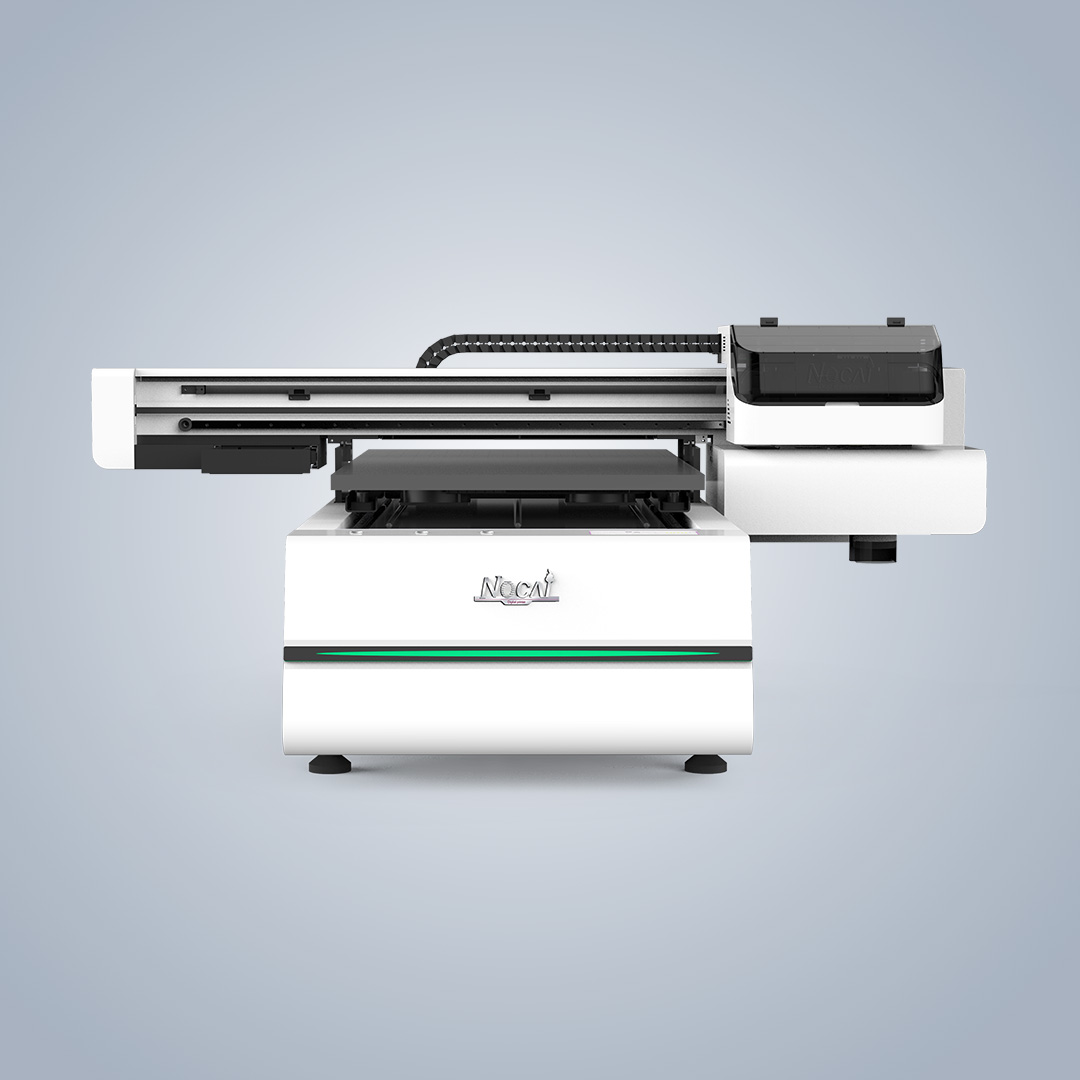
Substrate control is a fundamental part of a safe cup printing process. The NC-UVO609PEIII-II uses a rigid aluminum honeycomb vacuum bed with strong suction to hold materials flat and reduce movement or deformation during printing. Its print area measures 600 x 900 mm, and the adjustable print height of 0–180 mm accommodates products with different dimensions and thicknesses.
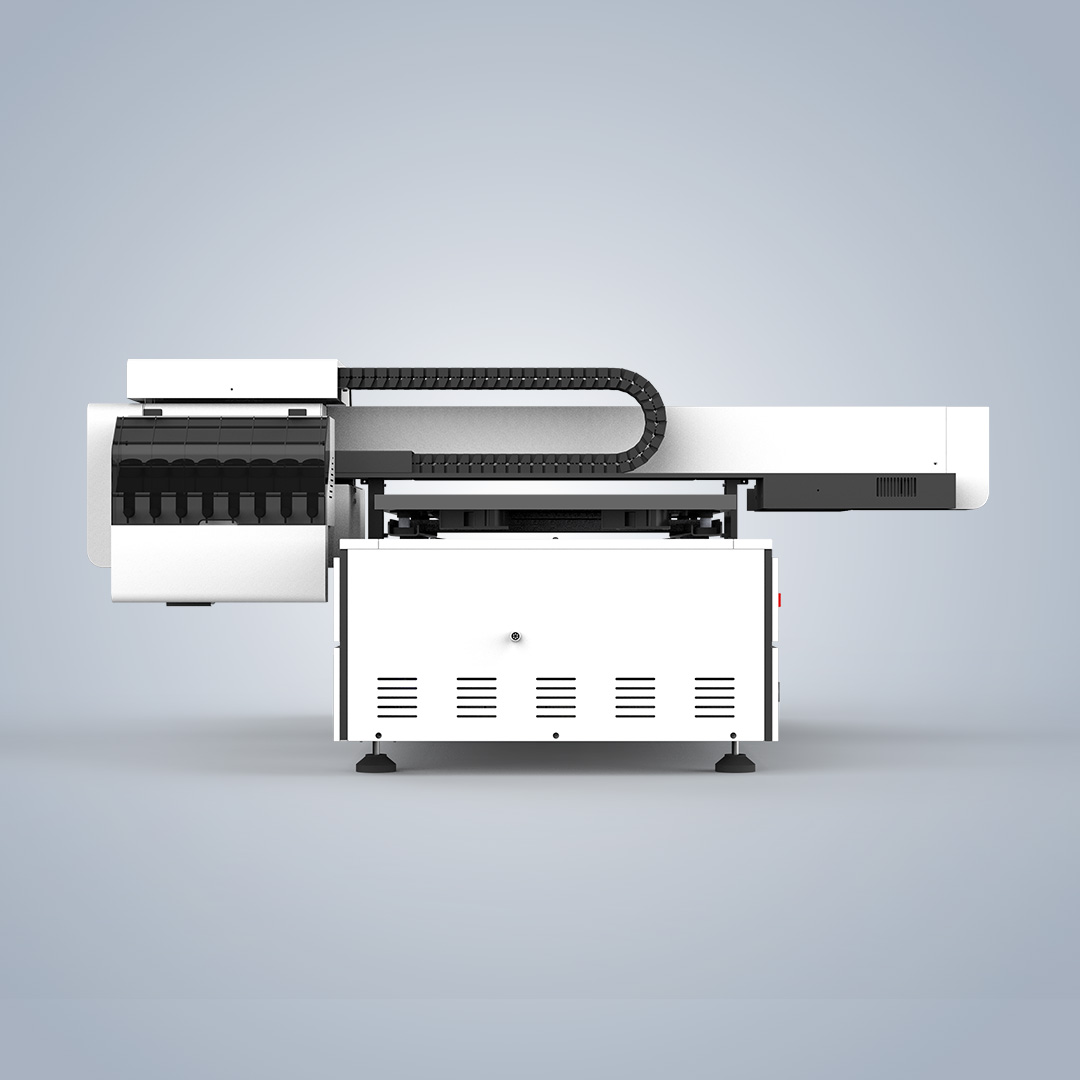
For curved drinkware, the factory should demonstrate a specific rotary-printing process instead of relying only on flatbed specifications. The product information identifies an optional motorized cylindrical fixture for 360-degree printing on mugs and vacuum flasks. During the audit, ask the supplier to explain fixture installation, product loading, alignment adjustment, supported shapes, and the inspection method used after rotary printing.
Printhead, Ink, and Collision Controls
Printhead protection should be reviewed as a distinct safety and maintenance issue. The printer includes a lifting ink station that helps control printhead positioning. It also uses an intelligent touch-sensitive anti-collision system designed to stop the carriage if contact is detected. The auditor should request a demonstration or operating record showing how the system works and ask how operators respond after an anti-collision event.
The machine supports CMYK, white, and varnish configurations, with options for single-pass color, color combined with white, and embossed varnish effects. The factory should provide the relevant operating instructions, ink handling information, cleaning schedule, and maintenance requirements. These documents help confirm that the stated eco-friendly UV printing process is supported by consistent operating controls.
Quality Assurance and Compliance Evidence
A supplier's quality claims should be supported by records rather than general statements. The listed production controls include an aging test and 100% inspection. Buyers should ask to see inspection documents linked to the NC-UVO609PEIII-II model and confirm which items are checked, including print quality, carriage movement, printhead performance, fixture operation, and machine safety functions.
The factory should also explain how nonconforming results are handled before shipment. A useful audit trail may include correction records, final acceptance results, packing checks, and confirmation that the delivered configuration matches the order. The stated comprehensive after-sales system and 100% inspection policy should be assessed through actual procedures and sample records.
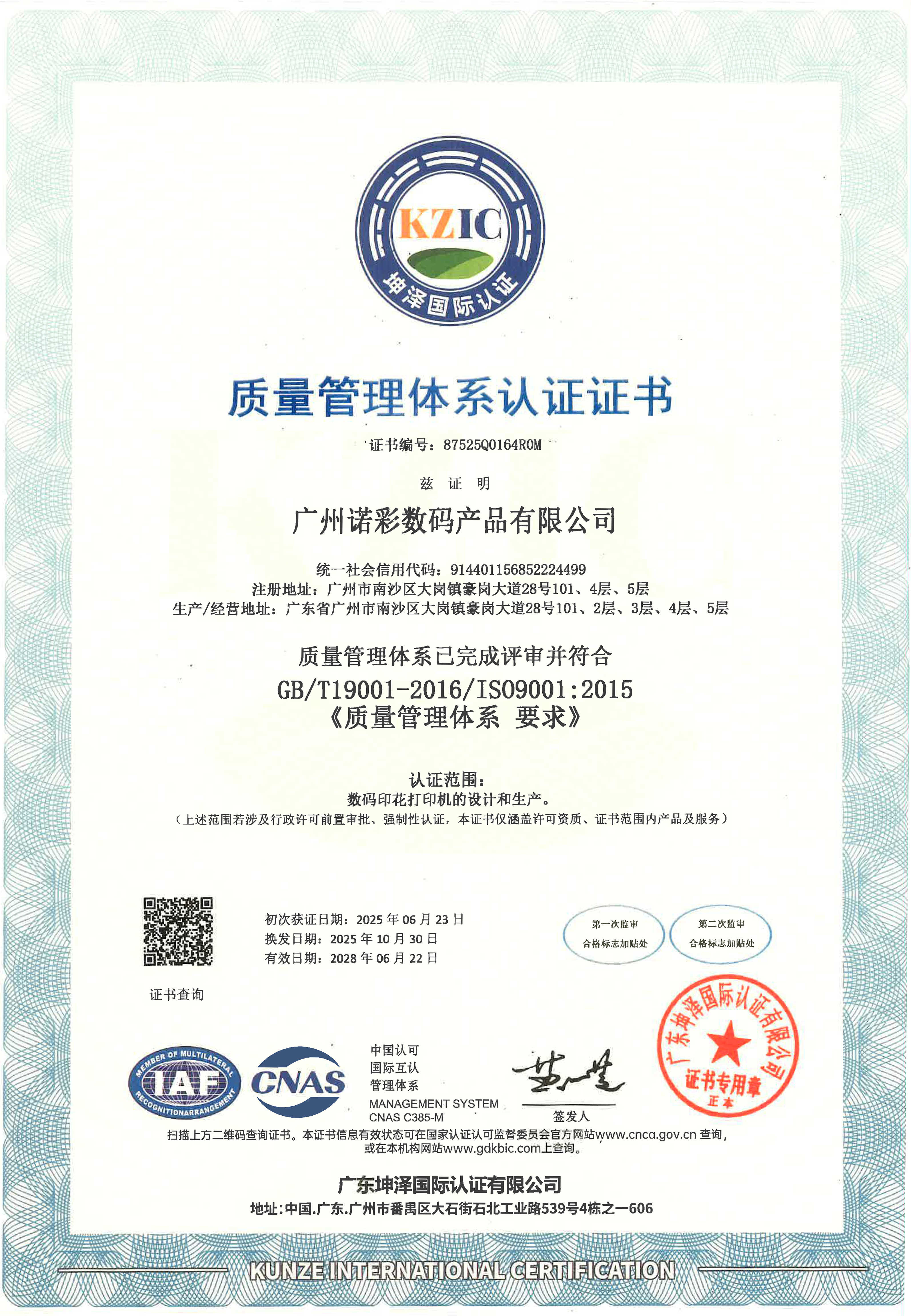
Certification documents require the same level of detail. The available information lists an ISO certificate covering the design and production of digital printers, a CE certificate for several listed models, and a TUV certificate for the NC-UV0609PROII in the United States. These documents should be checked for certificate number, validity, product scope, and market applicability. A certificate for one model should not automatically be treated as certification for every printer in the product range.
Installation, Service, and Reference Checks
Installation and maintenance support can directly affect safe machine operation. Service information for the NC-UVO609PEIII-II includes online support, video calls, remote control, a user manual, an installation video, and a spare-part replacement video. During the audit, confirm who handles technical incidents, how quickly support is provided, what information is required for remote diagnosis, and whether the documents are supplied before installation.
Customer references can add useful operational context, but they do not replace factory evidence. The company reports more than 10 years of cooperation with an agent in India, while customers in Indonesia, Poland, Turkey, Malaysia, and Korea have commented on machine stability, print quality, cooperation, or after-sales service. These references can support follow-up interviews, while model-specific inspection and service records remain essential.
Audit Checklist for the NC-UVO609PEIII-II
| Audit category | Question to ask | Available information to verify |
|---|---|---|
| Cylindrical product handling | Can the printer produce a controlled 360-degree print on cups and flasks? | Optional motorized cylindrical fixture for mugs and vacuum flasks |
| Printhead safety | How is contact damage detected and prevented? | Lifting ink station and intelligent touch-sensitive anti-collision system |
| Substrate positioning | What keeps the product stable during the print cycle? | Rigid aluminum honeycomb vacuum bed with strong suction |
| Performance verification | Which documents confirm consistent output before shipment? | Aging test, 100% inspection, and maximum resolution of 1200 dpi |
| Regulatory compliance | Do the certificates cover this model and the intended market? | ISO, CE, and TUV records with stated scopes |
| Technical assistance | What help is available for commissioning and repairs? | Online support, video calls, remote control, manuals, and service videos |
Frequently Asked Questions
What should be verified before printing on curved cups?
Confirm that the supplier can provide a motorized cylindrical fixture and explain the complete 360-degree printing procedure. Ask which mug and flask shapes are supported, how alignment is adjusted, and how finished products are inspected. The supplied product data identifies an optional fixture for mugs and vacuum flasks.
Which quality documents should buyers request?
Request aging-test results, 100% inspection records, printhead and carriage safety checks, fixture verification, and pre-shipment acceptance documents. Each record should clearly correspond to the NC-UVO609PEIII-II and the configuration being purchased.
How should certification claims be assessed?
Review the ISO record for digital printer design and production, the CE documentation for the listed models and European Union market, and the TUV record identified for the NC-UV0609PROII in the United States. Confirm the certificate number, validity, covered products, and destination region.
Conclusion
A dependable cup printing solution factory should be able to connect engineering features with verifiable production controls. The audit should cover rotary printing, printhead protection, substrate stability, ink and varnish management, aging tests, complete inspection, applicable certification, and technical support. Nocai also lists a full industrial chain, distribution and direct sales channels, a minimum order quantity of one unit, and a stated delivery period of 5–7 days. For technical solutions or support, contact nc05@gznuocai.com.
About the Manufacturer
Guangzhou Nuocai Digital Products Co., Ltd., known under the Nocai brand, was established in 2009. The company focuses on digital inkjet printing technology research and development, as well as the design, manufacturing, sales, and after-sales service of inkjet printers. It reports more than 50 professional R&D engineers and designers and operates five production lines. Its primary product categories include UV printers, UV DTF printers, and rotary printers.
The company lists ISO, CE, and TUV certifications among its credentials and reports serving customers in a range of industries and international markets.
REPORT