







-
 Agriculture
-
 Health-Care
-
 Environment
-
 Construction-Real-Estate
-
 Tools-Hardware
-
 Home-Garden
-
 Furniture
-
 Luggage-Bags-Cases
-
 Medical-devices-Supplies
-
 Gifts-Crafts
-
 Sports-Entertainment
-
 Food-Beverage
-
 Vehicles-Transportation
-
 Power-Transmission
-
 Material-Handling
-
 Renewable-Energy
-
 Safety
-
 Testing-Instrument-Equipment
-
 Construction-Building-Machinery
-
 Pet-Supplies
-
 Personal-Care-Household-Cleaning
-
 Vehicle-Accessories-Electronics-Tools
-
 School-Office-Supplies
-
 Packaging-Printing
-
 Mother-Kids-Toys
-
 Business-Services
-
 Commercial-Equipment-Machinery
-
 Apparel-Accessories
-
 Security
-
 Shoes-Accessories
-
 Vehicle-Parts-Accessories
-
 Jewelry-Eyewear-Watches-Accessories
-
 Lights-Lighting
-
 Fabric-Textile-Raw-Material
-
 Fabrication-Services
-
 Industrial-Machinery
-
 Consumer-Electronics
-
 Electrical-Equipment-Supplies
-
 Electronic-Components-Accessories-Telecommunications
-
 Home-Appliances
-
 Beauty
-
 Chemicals
-
 Rubber-Plastics
-
 Metals-Alloys


























































































































































































































































































































































































































































































































































































- Masonry Materials
- Curtain Walls & Accessories
- Earthwork Products
- Fireproofing Materials
- Heat Insulation Materials
- Plastic Building Materials
- Building Boards
- Soundproofing Materials
- Timber
- Waterproofing Materials
- Balustrades & Handrails
- Bathroom & Kitchen
- Flooring & Accessories
- Tiles & Accessories
- Door, Window & Accessories
- Fireplaces & Stoves
- Floor Heating Systems & Parts
- Stairs & Stair Parts
- Ceilings
- Elevators & Escalators
- Stone
- Countertops, Vanity Tops & Table Tops
- Mosaics
- Metal Building Materials
- Multifunctional Materials
- Ladders & Scaffoldings
- Mouldings
- Corner Guards
- Decorative Films
- Formwork
- Building & Industrial Glass
- Other Construction & Real Estate
- Wallpapers/Wall panels
- HVAC System & Parts
- Outdoor Facilities
- Prefabricated Buildings
- Festive & Party Supplies
- Bathroom Products
- Household Sundries
- Rain Gear
- Garden Supplies
- Household Cleaning Tools & Accessories
- Lighters & Smoking Accessories
- Home Storage & Organization
- Household Scales
- Smart Home Improvement
- Home Textiles
- Kitchenware
- Drinkware & Accessories
- Dinnerware, Coffee & Wine
- Home Decor
- Golf
- Fitness & Body Building
- Amusement Park Facilities
- Billiards, Board Game,Coin Operated Games
- Musical Instruments
- Outdoor Affordable Luxury Sports
- Camping & Hiking
- Fishing
- Sports Safety&Rehabilitation
- Ball Sports Equipments
- Water Sports
- Winter Sports
- Luxury Travel Equipments
- Sports Shoes, Bags & Accessories
- Cycling
- Other Sports & Entertainment Products
- Artificial Grass&Sports Flooring&Sports Court Equipment
- Scooters
- Food Ingredients
- Honey & Honey Products
- Snacks
- Nuts & Kernels
- Seafood
- Plant & Animal Oil
- Beverages
- Fruit & Vegetable Products
- Frog & Escargot
- Bean Products
- Egg Products
- Dairy Products
- Seasonings & Condiments
- Canned Food
- Instant Food
- Baked Goods
- Other Food & Beverage
- Meat & Poultry
- Confectionery
- Grain Products
- Feminie Care
- Hair Care & Styling
- Body Care
- Hands & Feet Care
- Hygiene Products
- Men's Grooming
- Laundry Cleaning Supplies
- Travel Size & Gift Sets
- Room Deodorizers
- Other Personal Care Products
- Pest Control Products
- Special Household Cleaning
- Floor Cleaning
- Kitchen & Bathroom Cleaning
- Oral Care
- Bath Supplies
- Yellow Pages
- Correction Supplies
- Office Binding Supplies
- Office Cutting Supplies
- Board Erasers
- Office Adhesives & Tapes
- Education Supplies
- Pencil Cases & Bags
- Notebooks & Writing Pads
- File Folder Accessories
- Calendars
- Writing Accessories
- Commercial Office Supplies
- Pencil Sharpeners
- Pens
- Letter Pad/Paper
- Paper Envelopes
- Desk Organizers
- Pencils
- Markers & Highlighters
- Filing Products
- Art Supplies
- Easels
- Badge Holder & Accessories
- Office Paper
- Printer Supplies
- Book Covers
- Other Office & School Supplies
- Stationery Set
- Boards
- Clipboards
- Stamps
- Drafting Supplies
- Stencils
- Electronic Dictionary
- Books
- Map
- Magazines
- Calculators
- Baby & Toddler Toys
- Educational Toys
- Classic Toys
- Dress Up & Pretend Play
- Toy Vehicle
- Stuffed Animals & Plush Toys
- Outdoor Toys & Structures
- Balloons & Accessories
- Baby Food
- Children's Clothing
- Baby Supplies & Products
- Maternity Clothes
- Kids Shoes
- Baby Care
- Novelty & Gag Toys
- Dolls & Accessories
- Puzzle & Games
- Blocks & Model Building Toys
- Toddler Clothing
- Baby Clothing
- Kids' Luggage & Bags
- Arts, Crafts & DIY Toys
- Action & Toy Figures
- Baby Appliances
- Hobbies & Models
- Remote Control Toys
- Promotional Toys
- Pregnancy & Maternity
- Hygiene Products
- Kid's Textile&Bedding
- Novelty & Special Use
- Toy Weapons
- Baby Gifts
- Baby Storage & Organization
- Auto Drive Systems
- ATV/UTV Parts & Accessories
- Marine Parts & Accessories
- Other Auto Parts
- Trailer Parts & Accessories
- Auto Transmission Systems
- Train Parts & Accessories
- Universal Parts
- Railway Parts & Accessories
- Auto Brake Systems
- Aviation Parts & Accessories
- Truck Parts & Accessories
- Auto Suspension Systems
- Auto Lighting Systems
- New Energy Vehicle Parts & Accessories
- Auto Steering Systems
- Wheels, Tires & Accessories
- Bus Parts & Accessories
- Auto Performance Parts
- Cooling System
- Go-Kart & Kart Racer Parts & Accessories
- Air Conditioning Systems
- Heavy Duty Vehicle Parts & Accessories
- Auto Electrical Systems
- Auto Body Systems
- Auto Engine Systems
- Container Parts & Accessories
- Motorcycle Parts & Accessories
- Refrigeration & Heat Exchange Equipment
- Machine Tool Equipment
- Food & Beverage Machinery
- Agricultural Machinery & Equipment
- Apparel & Textile Machinery
- Chemical Machinery
- Packaging Machines
- Paper Production Machinery
- Plastic & Rubber Processing Machinery
- Industrial Robots
- Electronic Products Machinery
- Metal & Metallurgy Machinery
- Woodworking Machinery
- Home Product Manufacturing Machinery
- Machinery Accessories
- Environmental Machinery
- Machinery Service
- Electrical Equipment Manufacturing Machinery
- Industrial Compressors & Parts
- Tobacco & Cigarette Machinery
- Production Line
- Used Industrial Machinery
- Electronics Production Machinery
- Other Machinery & Industrial Equipment
- Camera, Photo & Accessories
- Portable Audio, Video & Accessories
- Television, Home Audio, Video & Accessories
- Video Games & Accessories
- Mobile Phone & Accessories
- Electronic Publications
- Earphone & Headphone & Accessories
- Speakers & Accessories
- Smart Electronics
- TV Receivers & Accessories
- Mobile Phone & Computer Repair Parts
- Chargers, Batteries & Power Supplies
- Used Electronics
- VR, AR, MR Hardware & Software
- Projectors & Presentation Equipments
- Other Consumer Electronics
- Cables & Commonly Used Accessories
- Computer Hardware & Software
- Displays, Signage and Optoelectronics
- Discrete Semiconductors
- Wireless & IoT Module and Products
- Telecommunications
- Connectors, Terminals & Accessories
- Development Boards, Electronic Modules and Kits
- Circuit Protection
- Sensors
- Isolators
- Audio Components and Products
- Integrated Circuits
- Power Supplies
- Relays
- RF, Microwave and RFID
- Electronic Accessories & Supplies
- Passive Components
- PCB & PCBA
- Air Quality Appliances
- Home Appliance Parts
- Heating & Cooling Appliances
- Small Kitchen Appliances
- Laundry Appliances
- Water Heaters
- Water Treatment Appliances
- Refrigerators & Freezers
- Personal Care & Beauty Appliances
- Major Kitchen Appliances
- Cleaning Appliances
- Second-hand Appliances
- Smart Home Appliances
- Other Home Appliances
- Energy Chemicals
- Inorganic Chemicals
- Basic Organic Chemicals
- Agrochemicals
- Admixture & Additives
- Catalysts & Chemical Auxiliary Agents
- Pigments & Dyestuff
- Coating & Paint
- Daily Chemicals
- Polymer
- Organic Intermediate
- Adhesives & Sealants
- Chemical Waste
- Biological Chemical Products
- Surface Treatment Chemicals
- Painting & Coating
- Chemical Reagents
- Flavor & Fragrance
- Non-Explosive Demolition Agents
- Other Chemicals
- Custom Chemical Services

How to Audit an LED Flood Light Factory: Key Checks and Records
A thorough LED Flood Light factory audit should connect what the factory says it can do with evidence from production, testing, compliance, and customer support. Start by confirming the audited model and its intended use, then review the processes and records that control its materials, assembly, performance, and shipment. Product-specific evidence matters: documents for a moving head or laser fixture do not establish the specifications or compliance of an LED flood light.
Start with the Product and Its Scope
Before inspecting the production line, identify the exact LED Flood Light model, intended application, production batch, and technical requirements. Clarify any claimed ingress protection rating and the markets where the product will be sold. This gives the audit a clear reference point for checking drawings, test results, and certificates.
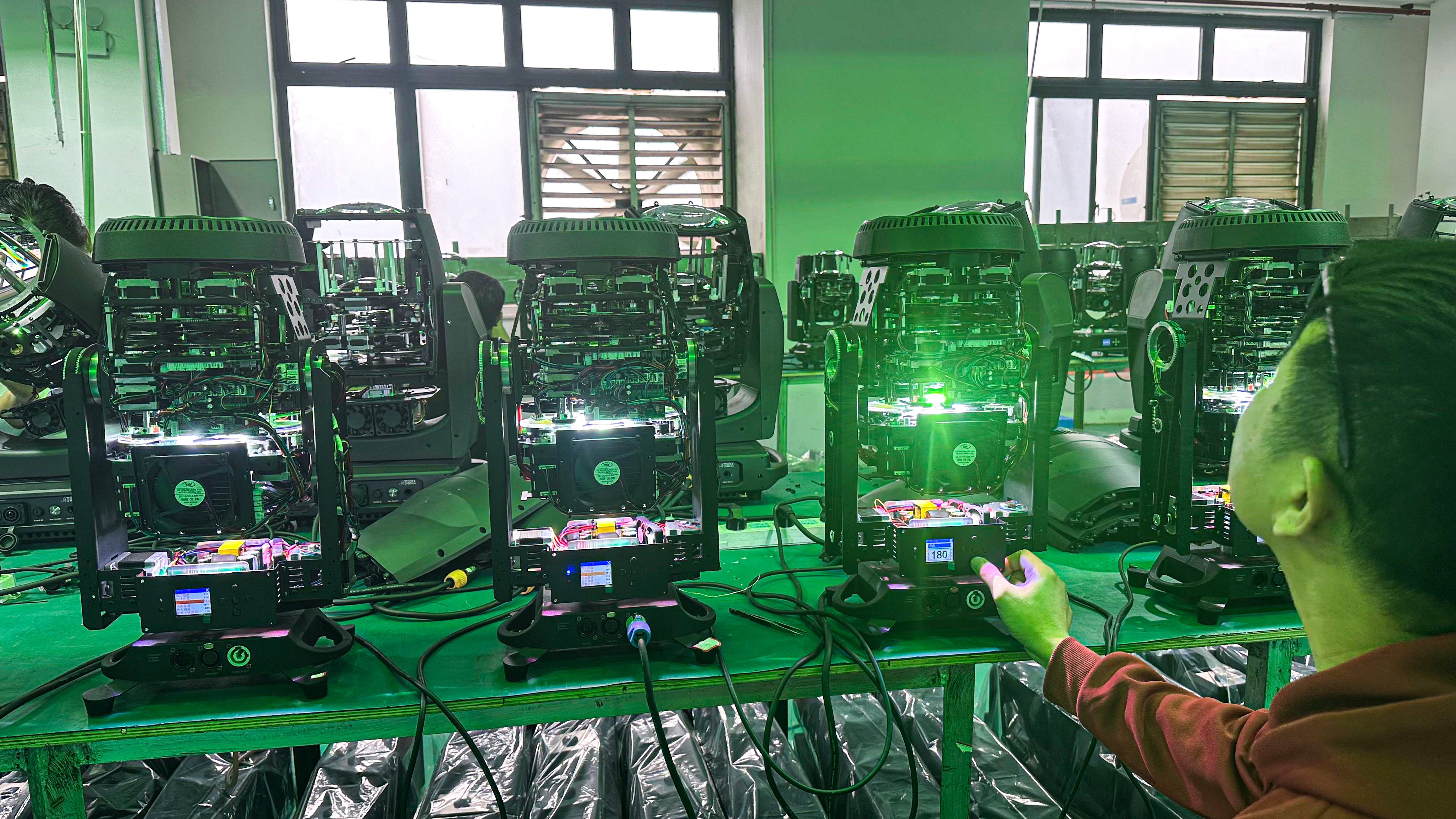
Color Imagination describes a 6000SQM manufacturing site with mechanical and electronic assembly, SMT and PCB integration, optical module assembly, calibration, programming, aging, reliability testing, final inspection, packaging, and logistics management. Verify which operations are performed in-house for the specific flood light and which, if any, are assigned to suppliers.
Review Materials, Assembly, and Traceability
Examine supplier approval, incoming inspection, component identification, and storage controls. For an LED Flood Light, focus on components that affect optical output, heat dissipation, electrical safety, and outdoor durability, including LED modules, drivers, housings, lenses or other optical parts, connectors, and seals.
Follow sample components through work orders or batch records to finished products. Records should make it possible to identify the materials and process history associated with a unit or production lot. Check in-process inspection points as well as how nonconforming parts and corrective actions are handled.
Evaluate Product Testing and Release Controls
Assess quality checks at incoming, in-process, and final stages. The company reports 100% functional testing, burn-in, safety inspection, and final checks before shipment. Review actual records for the model under audit, including the procedure used, acceptance limits, instrument status, sample or unit identification, results, and handling of failures.
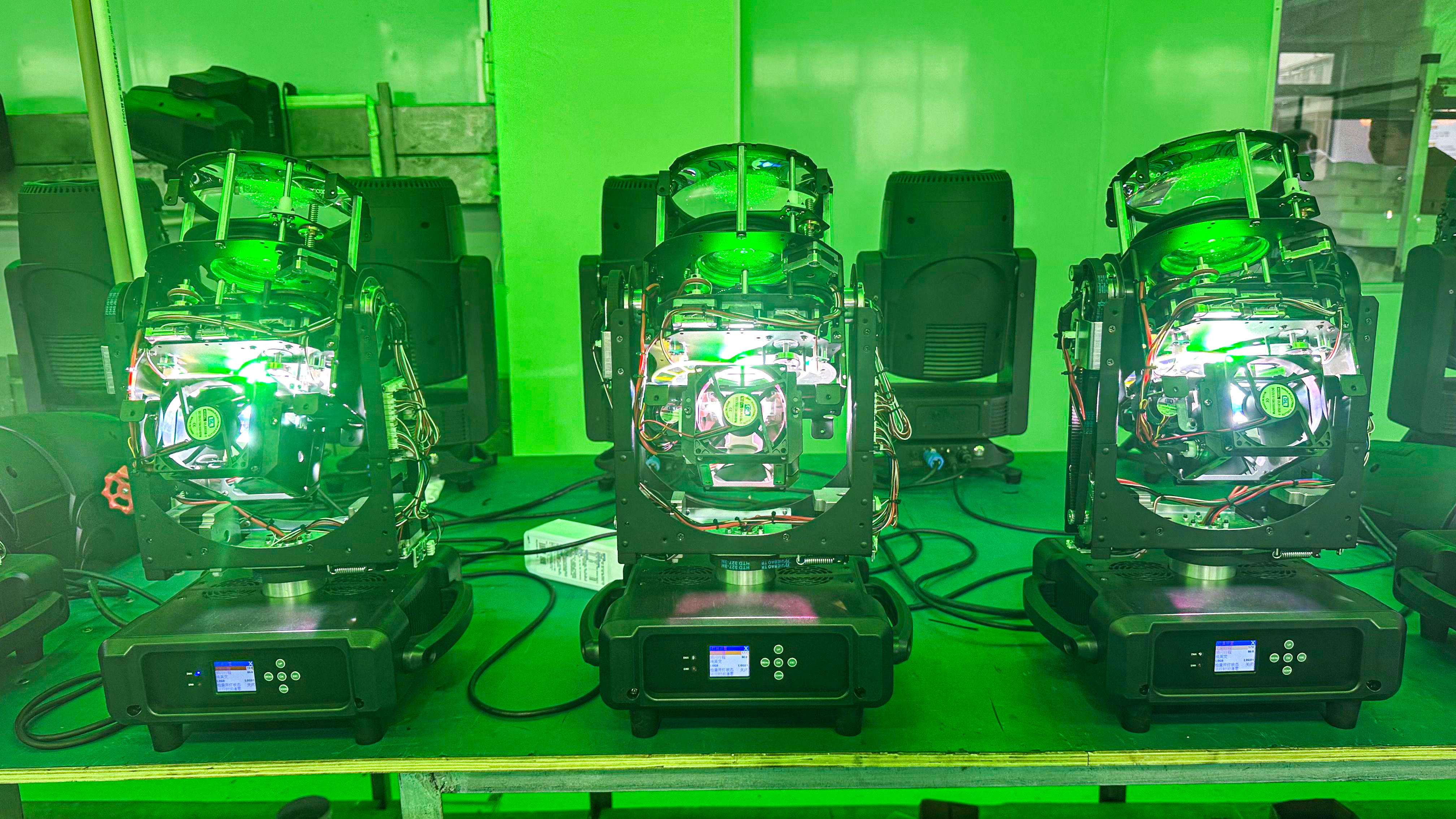
Where a product is rated for outdoor use, request the evidence behind its waterproof or ingress-protection claim. The available production information mentions waterproof testing for IP-rated products, but does not specify an IP rating for the flood light in question. Confirm the declared rating, test method and conditions, tested model or sample, and any related corrective-action records rather than assuming that all products share the same rating.
Check Engineering and Compliance Evidence
Engineering documentation should connect the released design to production and verification. Color Imagination says its engineers cover optical design, mechanical structure, electronics, embedded software, thermal management, industrial design, and lighting-control integration. For the audited flood light, look for corresponding drawings and design data, prototype results, thermal and electrical verification, reliability evidence, and controlled records of design changes.
The supplied product information for the SKYTOUCH 150 describes a 150W white laser moving head beam light, with a 1° beam angle, 185W power consumption, DMX/RDM support, and CE compliance. These are details for a different product category, not specifications for an LED Flood Light. Check that each technical claim and test report is filed under the correct model.
For certificates, verify the holder, certificate number, validity, product scope, and model coverage. The supplied records list CE certificates LCSB070523036E and LCSB070523041S, plus ISO certificates GH004-2023E0421 and GH004-2023Q0766. Confirm directly whether the relevant documents cover the flood light being evaluated and meet the requirements of its target market.

Assess Capacity, Delivery, and Service
Compare the factory's planning controls with the buyer's order size and delivery schedule. Color Imagination reports a maximum capacity of 7000 lights and offers high-volume manufacturing, OEM and ODM work, customized engineering, fast delivery, and parallel production of multiple products. During the audit, examine production schedules, bottleneck management, inspection staffing, and packaging capacity, including how controls are maintained during busy periods.
After-sales readiness is also part of supplier capability. The company lists technical consultation, remote troubleshooting, firmware updates, spare parts, repair and maintenance, commissioning, and user training. Ask for evidence of response procedures, warranty handling, failure analysis, parts availability, and the documentation provided to distributors, rental businesses, integrators, and contractors.
Color Imagination has reported supplying a large stage-lighting installation for a nightclub in Yunnan Province, China, using beam, wash, effect, and pixel fixtures. This offers an example of project coordination across fixture types, but it is not a substitute for production or outdoor-performance evidence specific to LED Flood Lights.
Audit Evidence at a Glance
| Audit area | Records and observations | What they establish |
|---|---|---|
| Production capability | Assembly operations, SMT and PCB integration, optical assembly, calibration, programming, packaging, and production records | Whether the factory controls the processes needed for the audited flood light |
| Quality testing | Incoming and in-process checks, functional and burn-in tests, electrical safety, optical verification, final inspection, and waterproof tests where applicable | Whether release controls are complete and tied to the specific model |
| Engineering | Optical, mechanical, electrical, and thermal files; prototype, reliability, and compliance results | Whether product claims have supporting, controlled technical evidence |
| Certification | Certificates, numbers, validity, scope, and model correspondence | Whether credentials apply to the product and intended market |
| Delivery and support | Capacity plans, schedules, spare-parts controls, troubleshooting, repair, training, and commissioning processes | Readiness to support the order and product over time |
Frequently Asked Questions
What should be confirmed before a flood light is tested?
Identify the model and batch, technical requirements, intended application, protection claims, applicable test methods, and certificate scope. This prevents records for another fixture from being used as evidence for the flood light.
Which quality records should receive the closest attention?
Review incoming inspection, in-process controls, functional and burn-in results, electrical safety checks, optical verification, waterproof testing when applicable, final inspection, packaging checks, and corrective-action records.
Can the factory handle a customized lighting project?
Color Imagination states that it provides OEM and ODM development, customized engineering, prototypes, mass production, and project services. Verify these capabilities against the flood light design, order quantity, schedule, and documentation needed for the project.
Conclusion
A useful LED Flood Light factory audit ties production capability to model-specific design records, testing, certification, traceability, delivery planning, and after-sales support. Color Imagination integrates R&D, manufacturing, sales, and technical services, and reports support for OEM/ODM and turnkey lighting projects. Its stated MOQ is 1, with delivery typically 20–30 days after deposit, depending on model and quantity. Check that any CE or ISO documents offered are applicable to the audited product. For technical information or support, contact jack@color-imagination.com.
About Color Imagination
Guangzhou Color Imagination LED Lighting Limited, also known as Color Imagination, is based in Guangzhou and provides R&D, production, sales, and technical services for stage, entertainment, broadcast, and architectural lighting. Founded in 2010, the company reports 130 employees and a 6000SQM manufacturing facility. Its customers include distributors, rental companies, system integrators, production houses, and project contractors worldwide. The company states that it holds CE and ISO certifications and serves clients across multiple industries.

REPORT