







-
 Agriculture
-
 Health-Care
-
 Environment
-
 Construction-Real-Estate
-
 Tools-Hardware
-
 Home-Garden
-
 Furniture
-
 Luggage-Bags-Cases
-
 Medical-devices-Supplies
-
 Gifts-Crafts
-
 Sports-Entertainment
-
 Food-Beverage
-
 Vehicles-Transportation
-
 Power-Transmission
-
 Material-Handling
-
 Renewable-Energy
-
 Safety
-
 Testing-Instrument-Equipment
-
 Construction-Building-Machinery
-
 Pet-Supplies
-
 Personal-Care-Household-Cleaning
-
 Vehicle-Accessories-Electronics-Tools
-
 School-Office-Supplies
-
 Packaging-Printing
-
 Mother-Kids-Toys
-
 Business-Services
-
 Commercial-Equipment-Machinery
-
 Apparel-Accessories
-
 Security
-
 Shoes-Accessories
-
 Vehicle-Parts-Accessories
-
 Jewelry-Eyewear-Watches-Accessories
-
 Lights-Lighting
-
 Fabric-Textile-Raw-Material
-
 Fabrication-Services
-
 Industrial-Machinery
-
 Consumer-Electronics
-
 Electrical-Equipment-Supplies
-
 Electronic-Components-Accessories-Telecommunications
-
 Home-Appliances
-
 Beauty
-
 Chemicals
-
 Rubber-Plastics
-
 Metals-Alloys


























































































































































































































































































































































































































































































































































































- Masonry Materials
- Curtain Walls & Accessories
- Earthwork Products
- Fireproofing Materials
- Heat Insulation Materials
- Plastic Building Materials
- Building Boards
- Soundproofing Materials
- Timber
- Waterproofing Materials
- Balustrades & Handrails
- Bathroom & Kitchen
- Flooring & Accessories
- Tiles & Accessories
- Door, Window & Accessories
- Fireplaces & Stoves
- Floor Heating Systems & Parts
- Stairs & Stair Parts
- Ceilings
- Elevators & Escalators
- Stone
- Countertops, Vanity Tops & Table Tops
- Mosaics
- Metal Building Materials
- Multifunctional Materials
- Ladders & Scaffoldings
- Mouldings
- Corner Guards
- Decorative Films
- Formwork
- Building & Industrial Glass
- Other Construction & Real Estate
- Wallpapers/Wall panels
- HVAC System & Parts
- Outdoor Facilities
- Prefabricated Buildings
- Festive & Party Supplies
- Bathroom Products
- Household Sundries
- Rain Gear
- Garden Supplies
- Household Cleaning Tools & Accessories
- Lighters & Smoking Accessories
- Home Storage & Organization
- Household Scales
- Smart Home Improvement
- Home Textiles
- Kitchenware
- Drinkware & Accessories
- Dinnerware, Coffee & Wine
- Home Decor
- Golf
- Fitness & Body Building
- Amusement Park Facilities
- Billiards, Board Game,Coin Operated Games
- Musical Instruments
- Outdoor Affordable Luxury Sports
- Camping & Hiking
- Fishing
- Sports Safety&Rehabilitation
- Ball Sports Equipments
- Water Sports
- Winter Sports
- Luxury Travel Equipments
- Sports Shoes, Bags & Accessories
- Cycling
- Other Sports & Entertainment Products
- Artificial Grass&Sports Flooring&Sports Court Equipment
- Scooters
- Food Ingredients
- Honey & Honey Products
- Snacks
- Nuts & Kernels
- Seafood
- Plant & Animal Oil
- Beverages
- Fruit & Vegetable Products
- Frog & Escargot
- Bean Products
- Egg Products
- Dairy Products
- Seasonings & Condiments
- Canned Food
- Instant Food
- Baked Goods
- Other Food & Beverage
- Meat & Poultry
- Confectionery
- Grain Products
- Feminie Care
- Hair Care & Styling
- Body Care
- Hands & Feet Care
- Hygiene Products
- Men's Grooming
- Laundry Cleaning Supplies
- Travel Size & Gift Sets
- Room Deodorizers
- Other Personal Care Products
- Pest Control Products
- Special Household Cleaning
- Floor Cleaning
- Kitchen & Bathroom Cleaning
- Oral Care
- Bath Supplies
- Yellow Pages
- Correction Supplies
- Office Binding Supplies
- Office Cutting Supplies
- Board Erasers
- Office Adhesives & Tapes
- Education Supplies
- Pencil Cases & Bags
- Notebooks & Writing Pads
- File Folder Accessories
- Calendars
- Writing Accessories
- Commercial Office Supplies
- Pencil Sharpeners
- Pens
- Letter Pad/Paper
- Paper Envelopes
- Desk Organizers
- Pencils
- Markers & Highlighters
- Filing Products
- Art Supplies
- Easels
- Badge Holder & Accessories
- Office Paper
- Printer Supplies
- Book Covers
- Other Office & School Supplies
- Stationery Set
- Boards
- Clipboards
- Stamps
- Drafting Supplies
- Stencils
- Electronic Dictionary
- Books
- Map
- Magazines
- Calculators
- Baby & Toddler Toys
- Educational Toys
- Classic Toys
- Dress Up & Pretend Play
- Toy Vehicle
- Stuffed Animals & Plush Toys
- Outdoor Toys & Structures
- Balloons & Accessories
- Baby Food
- Children's Clothing
- Baby Supplies & Products
- Maternity Clothes
- Kids Shoes
- Baby Care
- Novelty & Gag Toys
- Dolls & Accessories
- Puzzle & Games
- Blocks & Model Building Toys
- Toddler Clothing
- Baby Clothing
- Kids' Luggage & Bags
- Arts, Crafts & DIY Toys
- Action & Toy Figures
- Baby Appliances
- Hobbies & Models
- Remote Control Toys
- Promotional Toys
- Pregnancy & Maternity
- Hygiene Products
- Kid's Textile&Bedding
- Novelty & Special Use
- Toy Weapons
- Baby Gifts
- Baby Storage & Organization
- Auto Drive Systems
- ATV/UTV Parts & Accessories
- Marine Parts & Accessories
- Other Auto Parts
- Trailer Parts & Accessories
- Auto Transmission Systems
- Train Parts & Accessories
- Universal Parts
- Railway Parts & Accessories
- Auto Brake Systems
- Aviation Parts & Accessories
- Truck Parts & Accessories
- Auto Suspension Systems
- Auto Lighting Systems
- New Energy Vehicle Parts & Accessories
- Auto Steering Systems
- Wheels, Tires & Accessories
- Bus Parts & Accessories
- Auto Performance Parts
- Cooling System
- Go-Kart & Kart Racer Parts & Accessories
- Air Conditioning Systems
- Heavy Duty Vehicle Parts & Accessories
- Auto Electrical Systems
- Auto Body Systems
- Auto Engine Systems
- Container Parts & Accessories
- Motorcycle Parts & Accessories
- Refrigeration & Heat Exchange Equipment
- Machine Tool Equipment
- Food & Beverage Machinery
- Agricultural Machinery & Equipment
- Apparel & Textile Machinery
- Chemical Machinery
- Packaging Machines
- Paper Production Machinery
- Plastic & Rubber Processing Machinery
- Industrial Robots
- Electronic Products Machinery
- Metal & Metallurgy Machinery
- Woodworking Machinery
- Home Product Manufacturing Machinery
- Machinery Accessories
- Environmental Machinery
- Machinery Service
- Electrical Equipment Manufacturing Machinery
- Industrial Compressors & Parts
- Tobacco & Cigarette Machinery
- Production Line
- Used Industrial Machinery
- Electronics Production Machinery
- Other Machinery & Industrial Equipment
- Camera, Photo & Accessories
- Portable Audio, Video & Accessories
- Television, Home Audio, Video & Accessories
- Video Games & Accessories
- Mobile Phone & Accessories
- Electronic Publications
- Earphone & Headphone & Accessories
- Speakers & Accessories
- Smart Electronics
- TV Receivers & Accessories
- Mobile Phone & Computer Repair Parts
- Chargers, Batteries & Power Supplies
- Used Electronics
- VR, AR, MR Hardware & Software
- Projectors & Presentation Equipments
- Other Consumer Electronics
- Cables & Commonly Used Accessories
- Computer Hardware & Software
- Displays, Signage and Optoelectronics
- Discrete Semiconductors
- Wireless & IoT Module and Products
- Telecommunications
- Connectors, Terminals & Accessories
- Development Boards, Electronic Modules and Kits
- Circuit Protection
- Sensors
- Isolators
- Audio Components and Products
- Integrated Circuits
- Power Supplies
- Relays
- RF, Microwave and RFID
- Electronic Accessories & Supplies
- Passive Components
- PCB & PCBA
- Air Quality Appliances
- Home Appliance Parts
- Heating & Cooling Appliances
- Small Kitchen Appliances
- Laundry Appliances
- Water Heaters
- Water Treatment Appliances
- Refrigerators & Freezers
- Personal Care & Beauty Appliances
- Major Kitchen Appliances
- Cleaning Appliances
- Second-hand Appliances
- Smart Home Appliances
- Other Home Appliances
- Energy Chemicals
- Inorganic Chemicals
- Basic Organic Chemicals
- Agrochemicals
- Admixture & Additives
- Catalysts & Chemical Auxiliary Agents
- Pigments & Dyestuff
- Coating & Paint
- Daily Chemicals
- Polymer
- Organic Intermediate
- Adhesives & Sealants
- Chemical Waste
- Biological Chemical Products
- Surface Treatment Chemicals
- Painting & Coating
- Chemical Reagents
- Flavor & Fragrance
- Non-Explosive Demolition Agents
- Other Chemicals
- Custom Chemical Services

How to Audit Labor, Safety, and Quality Controls in a Servo Stamping Factory
How to Approach the Factory Audit
Auditing a servo stamping factory requires more than reviewing a product brochure. A reliable assessment should trace labor practices, operator qualifications, workplace safety, material controls, production inspections, final testing, installation, and after-sales service. The available company information describes these activities for printing equipment, but it does not verify servo-stamping-specific labor records, safety audits, or performance data. Those documents should therefore be requested before approval.
Key Verification Points
- Obtain evidence of workforce management, employee training, job responsibilities, technical qualifications, and labor compliance. The supplied information confirms technical training services but does not include labor audit results.
- Confirm that the factory controls incoming materials, production processes, finished-equipment performance, installation acceptance, commissioning, physical and mechanical safety, and structural appearance.
- Review the industries and applications served, including consumer products, 3C electronics and household appliances, cosmetic packaging, automotive components, food and beverage packaging, and garment accessories.
- Distinguish documented controls for printing equipment from the requirements of a servo stamping supplier. The identified product is a flat round dual-purpose screen printing machine rather than a servo stamping machine.
Labor and Workforce Documentation
The audit should first establish whether personnel responsible for operating, maintaining, and inspecting equipment are properly controlled. Request training matrices, onboarding records, competency assessments, authorization lists, maintenance assignments, and escalation procedures. These documents should show who is qualified to perform each task and how refresher training is managed.
The supplied information states that Shichuangli offers technical instruction covering equipment operation, routine maintenance, common fault diagnosis, and printing methods. This supports the existence of equipment-related training, but it does not confirm employee working conditions, labor certifications, shift-management procedures, or independent workforce audit findings. A servo stamping factory should provide equivalent evidence for servo press operators, electrical technicians, maintenance personnel, and quality inspectors.
Safety Controls Across the Equipment Lifecycle
Safety verification should cover every stage, from material receipt to production, testing, installation, commissioning, and field service. The listed quality activities include incoming-material inspection, process inspection, finished-product performance testing, installation acceptance and commissioning, chemical safety testing, physical and mechanical testing, and structural safety and appearance checks.
For a servo stamping line, the auditor should request model-specific risk assessments and safety records. These may include guarding verification, interlock inspections, emergency-stop tests, electrical protection checks, grounding records, noise or vibration assessments, and commissioning reports. Safety claims should be connected to the exact machine model and configuration under review rather than accepted solely on the basis of general company credentials.
Quality Assurance and Product Evidence
Quality controls are most useful when they are tied to measurable specifications and documented acceptance criteria. The available product information concerns a flat round dual-purpose screen printing machine that can print on circular and conical surfaces. It supports monochrome printing, glass and plastic materials, and automatic or semi-automatic operation. The listed models are SCL-300A, SCL-400A, and SCL-800A.
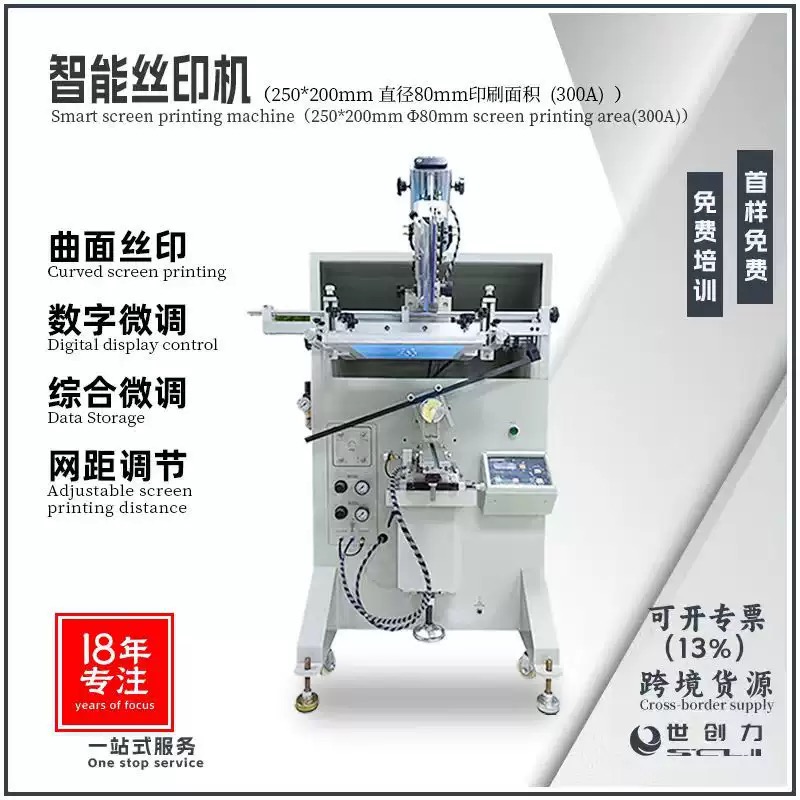
These specifications demonstrate that the supplier maintains product documentation and application information. They do not, however, establish the accuracy, cycle performance, force control, positioning repeatability, or safety compliance of a servo stamping machine. For that reason, request a servo-specific inspection plan, process-control records, final acceptance checklist, nonconformance history, corrective-action reports, and serial-number traceability.
Certificates, Patents, and Customer References
External records can add context to the audit when their scope is carefully checked. The supplied company data lists an IECEx certificate for an electromagnetic valve, CNAS certificates for SCOO6-501 Black, SCRS-501 Black, SC096-501 Black, and SCGJ-501 Black, along with utility model patents associated with a hot stamping machine and a fully automatic bronzing machine.
These records should be matched to the relevant products, manufacturing locations, certificate holders, and inspection boundaries. They should not automatically be treated as evidence of servo stamping compliance. The auditor should verify whether each certificate applies to the equipment being purchased and whether the related test reports are current.
One cooperation example concerns a Saudi Arabian high-end hotel product distributor that used equipment for screen printing, heat transfer printing, and gold stamping on hotel supplies. The stated requirements included accurate results, stable operation, repeatable reproduction, remote technical assistance, operator training, and continuing support. This case indicates experience in printing-related equipment service, but the supplied information does not identify the customer or provide a servo stamping factory audit.
Evidence Comparison for a Factory Review
| Audit category | Information currently available | Additional servo stamping evidence required |
|---|---|---|
| Labor management | Technical training is offered for operation, maintenance, fault handling, and printing techniques | Labor policies, operator qualification files, training completion records, job authorization, working-condition controls, and labor audit reports |
| Machine safety | Chemical safety, physical and mechanical testing, installation commissioning, and structural safety and appearance inspection are listed | Servo press risk assessments, guarding and interlock checks, emergency-stop verification, electrical safety tests, and model-specific commissioning records |
| Quality assurance | Incoming-material inspection, in-process inspection, finished-product performance testing, and installation acceptance are stated | Servo stamping control plans, inspection instructions, process logs, final acceptance standards, defect records, corrective actions, and traceability data |
| Technical service | One-to-one guidance, complimentary technical training, periodic follow-up inspections, and original replacement parts are described | Service response history, preventive-maintenance records, spare-part traceability, warranty terms, and field-support records for servo stamping equipment |
Frequently Asked Questions
Does the supplied information prove that the company manufactures servo stamping equipment?
No. The product range identified in the available data includes transfer printing machines, screen printing machines, hot stamping machines, tapping machines, non-standard automation, and printing auxiliary materials. It does not identify a servo stamping model, servo motor specification, or servo-specific inspection report.
Which quality activities are explicitly documented?
The stated activities include incoming-material inspection, production-process inspection, finished-product performance testing, installation acceptance and commissioning, chemical safety testing, physical and mechanical performance testing, and structural safety and appearance inspection.
What labor records should be requested?
Request employee training records, competency assessments, operator authorization, maintenance responsibility records, working-condition controls, and labor-compliance audit results. The information confirms technical training services but does not describe the company's labor policies or workforce compliance performance.
How should certificates and patents be evaluated?
Check the certificate scope, validity, issuing organization, covered product, and manufacturing site. Patents and certificates can support a supplier review, but they should not replace machine-specific safety testing, quality records, or servo stamping performance evidence.
Conclusion and Recommended Next Steps
A practical factory review should combine three checks: verify labor and competency documentation, follow safety controls from incoming materials through commissioning, and match every quality record to the exact equipment model. Shichuangli states that it provides a complete printing-application service ecosystem, with a minimum order quantity of one unit, standard equipment delivery within 48 hours, and a monthly capacity of 300 units.
Its listed inspection activities, certifications, and service commitments support an evaluation of printing equipment. They do not independently confirm servo stamping capability. Before placing an order, request servo-specific technical specifications, risk assessments, test reports, commissioning records, quality plans, labor documentation, and after-sales service evidence. For technical solutions or further support, contact support@shichuanglimachine.com.
About the Company
Dongguan Shichuangli Zhihui Technology Co., Ltd. is based in Huangjiang Town, Dongguan City, Guangdong Province. Established in 2008, the company combines the design, research and development, manufacturing, and sales of printing equipment and related materials. Its factory training base covers more than 1,600 square meters. The stated product portfolio includes transfer printing machines, screen printing machines, hot stamping machines, tapping machines, customized automation, and printing auxiliary materials. The company also lists IECEx and CNAS credentials and reports serving customers in several industries.

REPORT