







-
 Agriculture
-
 Health-Care
-
 Environment
-
 Construction-Real-Estate
-
 Tools-Hardware
-
 Home-Garden
-
 Furniture
-
 Luggage-Bags-Cases
-
 Medical-devices-Supplies
-
 Gifts-Crafts
-
 Sports-Entertainment
-
 Food-Beverage
-
 Vehicles-Transportation
-
 Power-Transmission
-
 Material-Handling
-
 Renewable-Energy
-
 Safety
-
 Testing-Instrument-Equipment
-
 Construction-Building-Machinery
-
 Pet-Supplies
-
 Personal-Care-Household-Cleaning
-
 Vehicle-Accessories-Electronics-Tools
-
 School-Office-Supplies
-
 Packaging-Printing
-
 Mother-Kids-Toys
-
 Business-Services
-
 Commercial-Equipment-Machinery
-
 Apparel-Accessories
-
 Security
-
 Shoes-Accessories
-
 Vehicle-Parts-Accessories
-
 Jewelry-Eyewear-Watches-Accessories
-
 Lights-Lighting
-
 Fabric-Textile-Raw-Material
-
 Fabrication-Services
-
 Industrial-Machinery
-
 Consumer-Electronics
-
 Electrical-Equipment-Supplies
-
 Electronic-Components-Accessories-Telecommunications
-
 Home-Appliances
-
 Beauty
-
 Chemicals
-
 Rubber-Plastics
-
 Metals-Alloys


























































































































































































































































































































































































































































































































































































- Masonry Materials
- Curtain Walls & Accessories
- Earthwork Products
- Fireproofing Materials
- Heat Insulation Materials
- Plastic Building Materials
- Building Boards
- Soundproofing Materials
- Timber
- Waterproofing Materials
- Balustrades & Handrails
- Bathroom & Kitchen
- Flooring & Accessories
- Tiles & Accessories
- Door, Window & Accessories
- Fireplaces & Stoves
- Floor Heating Systems & Parts
- Stairs & Stair Parts
- Ceilings
- Elevators & Escalators
- Stone
- Countertops, Vanity Tops & Table Tops
- Mosaics
- Metal Building Materials
- Multifunctional Materials
- Ladders & Scaffoldings
- Mouldings
- Corner Guards
- Decorative Films
- Formwork
- Building & Industrial Glass
- Other Construction & Real Estate
- Wallpapers/Wall panels
- HVAC System & Parts
- Outdoor Facilities
- Prefabricated Buildings
- Festive & Party Supplies
- Bathroom Products
- Household Sundries
- Rain Gear
- Garden Supplies
- Household Cleaning Tools & Accessories
- Lighters & Smoking Accessories
- Home Storage & Organization
- Household Scales
- Smart Home Improvement
- Home Textiles
- Kitchenware
- Drinkware & Accessories
- Dinnerware, Coffee & Wine
- Home Decor
- Golf
- Fitness & Body Building
- Amusement Park Facilities
- Billiards, Board Game,Coin Operated Games
- Musical Instruments
- Outdoor Affordable Luxury Sports
- Camping & Hiking
- Fishing
- Sports Safety&Rehabilitation
- Ball Sports Equipments
- Water Sports
- Winter Sports
- Luxury Travel Equipments
- Sports Shoes, Bags & Accessories
- Cycling
- Other Sports & Entertainment Products
- Artificial Grass&Sports Flooring&Sports Court Equipment
- Scooters
- Food Ingredients
- Honey & Honey Products
- Snacks
- Nuts & Kernels
- Seafood
- Plant & Animal Oil
- Beverages
- Fruit & Vegetable Products
- Frog & Escargot
- Bean Products
- Egg Products
- Dairy Products
- Seasonings & Condiments
- Canned Food
- Instant Food
- Baked Goods
- Other Food & Beverage
- Meat & Poultry
- Confectionery
- Grain Products
- Feminie Care
- Hair Care & Styling
- Body Care
- Hands & Feet Care
- Hygiene Products
- Men's Grooming
- Laundry Cleaning Supplies
- Travel Size & Gift Sets
- Room Deodorizers
- Other Personal Care Products
- Pest Control Products
- Special Household Cleaning
- Floor Cleaning
- Kitchen & Bathroom Cleaning
- Oral Care
- Bath Supplies
- Yellow Pages
- Correction Supplies
- Office Binding Supplies
- Office Cutting Supplies
- Board Erasers
- Office Adhesives & Tapes
- Education Supplies
- Pencil Cases & Bags
- Notebooks & Writing Pads
- File Folder Accessories
- Calendars
- Writing Accessories
- Commercial Office Supplies
- Pencil Sharpeners
- Pens
- Letter Pad/Paper
- Paper Envelopes
- Desk Organizers
- Pencils
- Markers & Highlighters
- Filing Products
- Art Supplies
- Easels
- Badge Holder & Accessories
- Office Paper
- Printer Supplies
- Book Covers
- Other Office & School Supplies
- Stationery Set
- Boards
- Clipboards
- Stamps
- Drafting Supplies
- Stencils
- Electronic Dictionary
- Books
- Map
- Magazines
- Calculators
- Baby & Toddler Toys
- Educational Toys
- Classic Toys
- Dress Up & Pretend Play
- Toy Vehicle
- Stuffed Animals & Plush Toys
- Outdoor Toys & Structures
- Balloons & Accessories
- Baby Food
- Children's Clothing
- Baby Supplies & Products
- Maternity Clothes
- Kids Shoes
- Baby Care
- Novelty & Gag Toys
- Dolls & Accessories
- Puzzle & Games
- Blocks & Model Building Toys
- Toddler Clothing
- Baby Clothing
- Kids' Luggage & Bags
- Arts, Crafts & DIY Toys
- Action & Toy Figures
- Baby Appliances
- Hobbies & Models
- Remote Control Toys
- Promotional Toys
- Pregnancy & Maternity
- Hygiene Products
- Kid's Textile&Bedding
- Novelty & Special Use
- Toy Weapons
- Baby Gifts
- Baby Storage & Organization
- Auto Drive Systems
- ATV/UTV Parts & Accessories
- Marine Parts & Accessories
- Other Auto Parts
- Trailer Parts & Accessories
- Auto Transmission Systems
- Train Parts & Accessories
- Universal Parts
- Railway Parts & Accessories
- Auto Brake Systems
- Aviation Parts & Accessories
- Truck Parts & Accessories
- Auto Suspension Systems
- Auto Lighting Systems
- New Energy Vehicle Parts & Accessories
- Auto Steering Systems
- Wheels, Tires & Accessories
- Bus Parts & Accessories
- Auto Performance Parts
- Cooling System
- Go-Kart & Kart Racer Parts & Accessories
- Air Conditioning Systems
- Heavy Duty Vehicle Parts & Accessories
- Auto Electrical Systems
- Auto Body Systems
- Auto Engine Systems
- Container Parts & Accessories
- Motorcycle Parts & Accessories
- Refrigeration & Heat Exchange Equipment
- Machine Tool Equipment
- Food & Beverage Machinery
- Agricultural Machinery & Equipment
- Apparel & Textile Machinery
- Chemical Machinery
- Packaging Machines
- Paper Production Machinery
- Plastic & Rubber Processing Machinery
- Industrial Robots
- Electronic Products Machinery
- Metal & Metallurgy Machinery
- Woodworking Machinery
- Home Product Manufacturing Machinery
- Machinery Accessories
- Environmental Machinery
- Machinery Service
- Electrical Equipment Manufacturing Machinery
- Industrial Compressors & Parts
- Tobacco & Cigarette Machinery
- Production Line
- Used Industrial Machinery
- Electronics Production Machinery
- Other Machinery & Industrial Equipment
- Camera, Photo & Accessories
- Portable Audio, Video & Accessories
- Television, Home Audio, Video & Accessories
- Video Games & Accessories
- Mobile Phone & Accessories
- Electronic Publications
- Earphone & Headphone & Accessories
- Speakers & Accessories
- Smart Electronics
- TV Receivers & Accessories
- Mobile Phone & Computer Repair Parts
- Chargers, Batteries & Power Supplies
- Used Electronics
- VR, AR, MR Hardware & Software
- Projectors & Presentation Equipments
- Other Consumer Electronics
- Cables & Commonly Used Accessories
- Computer Hardware & Software
- Displays, Signage and Optoelectronics
- Discrete Semiconductors
- Wireless & IoT Module and Products
- Telecommunications
- Connectors, Terminals & Accessories
- Development Boards, Electronic Modules and Kits
- Circuit Protection
- Sensors
- Isolators
- Audio Components and Products
- Integrated Circuits
- Power Supplies
- Relays
- RF, Microwave and RFID
- Electronic Accessories & Supplies
- Passive Components
- PCB & PCBA
- Air Quality Appliances
- Home Appliance Parts
- Heating & Cooling Appliances
- Small Kitchen Appliances
- Laundry Appliances
- Water Heaters
- Water Treatment Appliances
- Refrigerators & Freezers
- Personal Care & Beauty Appliances
- Major Kitchen Appliances
- Cleaning Appliances
- Second-hand Appliances
- Smart Home Appliances
- Other Home Appliances
- Energy Chemicals
- Inorganic Chemicals
- Basic Organic Chemicals
- Agrochemicals
- Admixture & Additives
- Catalysts & Chemical Auxiliary Agents
- Pigments & Dyestuff
- Coating & Paint
- Daily Chemicals
- Polymer
- Organic Intermediate
- Adhesives & Sealants
- Chemical Waste
- Biological Chemical Products
- Surface Treatment Chemicals
- Painting & Coating
- Chemical Reagents
- Flavor & Fragrance
- Non-Explosive Demolition Agents
- Other Chemicals
- Custom Chemical Services

How to Check Handle Adhesion on Plastic-Handle Full-Tang Cutlery Samples
A Practical Guide to Checking Handle Adhesion
When assessing plastic-handle full-tang cutlery samples, check that the ABS handle fits securely around the metal tang. Start by looking for gaps or molding defects, then apply moderate hand pressure to see whether the handle shifts, rattles, cracks, or separates. Comparing several pieces can also reveal differences in fit and finish before an order is approved.
Product Construction and Inspection Priorities
This cutlery uses a one-piece full-tang construction, with 430 stainless steel for spoons and forks, 420 stainless steel for knife blades, and an injection-molded food-grade ABS handle. The key point in an adhesion check is whether the molded handle sits evenly against the metal structure and remains stable during normal handling.
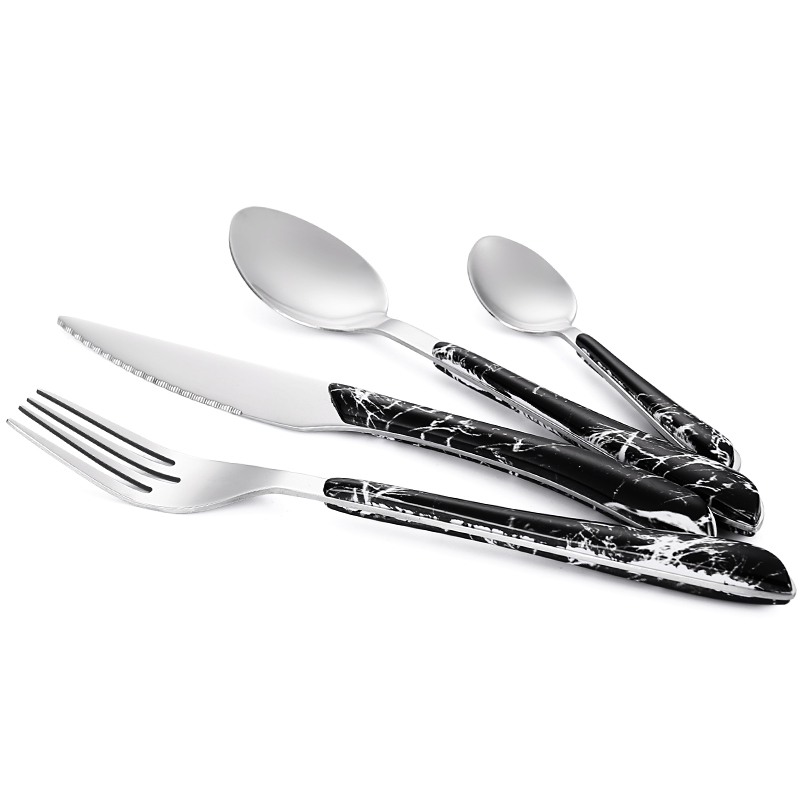
1. Examine the seam and molded surfaces
Under good lighting, inspect both sides of the handle seam, the neck where the handle meets the metal, and the handle end. Look for visible gaps, separation, flashing, cracks, or uneven edges. A well-fitted sample should have an even profile and aligned components, without an apparent opening between the ABS and stainless steel.
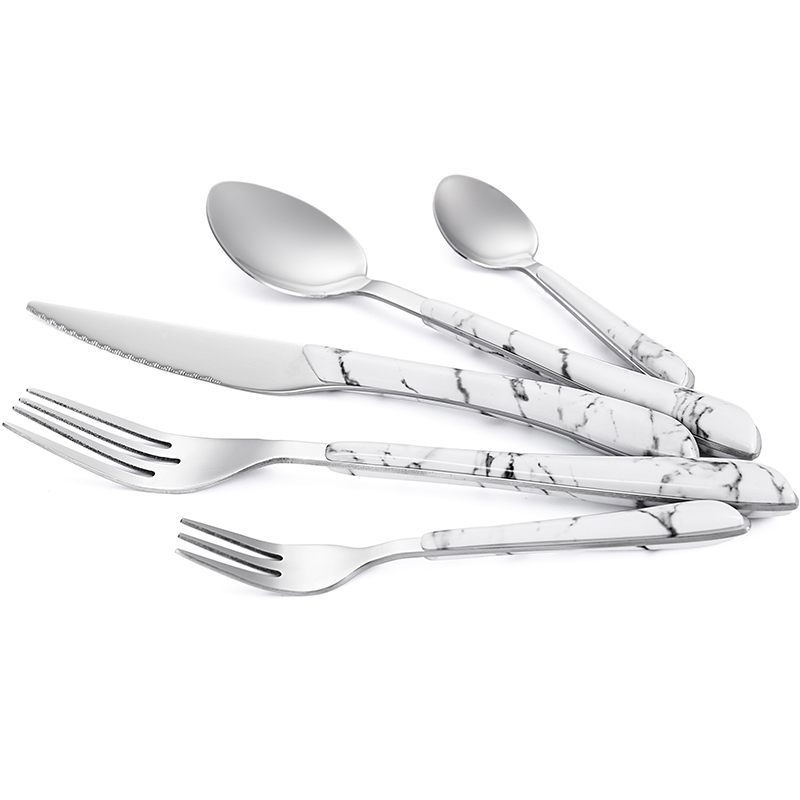
The specified handle design is white marble pattern; black marble and wood grain options are also available. Check that the pattern and overall appearance are consistent across the pieces being reviewed.
2. Check for movement by hand
Secure the metal portion and apply controlled, moderate pressure to the handle in several directions. A slight twisting motion can help reveal looseness. Note any movement, noise, exposed gaps, or stress marks. This is a practical screening check for samples, not a replacement for a laboratory method or an inspection protocol agreed with the buyer.
3. Compare a group of samples
Do not rely on a single utensil to represent a batch. Compare multiple knives, forks, and spoons for handle stability, uniform fit, marble-pattern appearance, and the mirror-polished metal finish. This is useful when evaluating products for supermarkets, western restaurants, catering groups, and hotel supply programs where items may be handled regularly.
Recording Results and Agreeing Acceptance Criteria
For a clear sample record, note the product model, handle color or pattern, number of pieces checked, visual findings, and any movement detected during manual testing. Before production, buyers and suppliers should agree on the inspection method, sample size, inspection level, and pass/fail requirements whenever formal acceptance criteria are needed.
The supplied records list BSCI, ISO9001, ISO14001, an SGS Test Report, and a TÜV SÜD Test Report covering plastic handle cutlery and cutlery sets. They also describe cooperation across retail, discount, homeware, cookware, and supermarket channels in several regions. The company states that its quality control includes raw-material inspection, production, assembly, and final testing.
Sample Check Reference
| Inspection point | What to look for | Related product details |
|---|---|---|
| Handle-to-metal seam | Check for gaps, separation, irregular edges, flashing, or incomplete molding. | Injection-molded food-grade ABS handle over a full-tang metal construction. |
| Handle stability | Apply normal hand pressure and controlled twisting; listen and feel for looseness or movement. | Useful for screening samples before order approval. |
| Appearance and finish | Compare the handle pattern and inspect the polished metal surface. | White marble is specified; black marble and wood grain are available. |
| Batch uniformity | Review several items for consistent fit, appearance, and finish. | MOQ: 2,000 sets; standard delivery: 30–40 days. |
Frequently Asked Questions
Can handle adhesion be screened without lab equipment?
Yes. Visual inspection and controlled manual pressure can help identify gaps, a loose handle, rattling, cracks, or separation. For contractual acceptance or compliance purposes, follow the test procedure approved by the buyer.
Which parts deserve the closest attention?
Check both sides of the handle seam, the transition near the metal neck, and the end of the handle. These areas make it easier to spot uneven molding or a poor fit around the full tang.
Is it necessary to inspect multiple pieces?
Yes. Comparing several knives, forks, and spoons from the sample group helps show whether handle fit, pattern, and stainless-steel finish are consistent across the batch.
Recommendations for Buyers
Use a combination of visual checks, a moderate manual stability test, and comparison across multiple samples to assess handle adhesion. Confirm acceptance requirements before production, particularly for OEM or ODM orders involving logo engraving or customized packaging. Huaqiang Metal offers direct factory supply, OEM/ODM customization, and mixed batches. The supplied records also list BSCI, ISO9001, ISO14001, LFGB, FDA, and REACH-related compliance information. For technical support or product details, contact eyas2018@126.com.
About the Manufacturer
JIEYANG CITY HUAQIANG METAL INDUSTRY CO., LTD. manufactures stainless steel tableware and kitchenware in Jieyang, Guangdong Province. The company reports a 16,000-square-meter factory, 280 employees, and integrated capabilities from design through mass production for OEM/ODM projects, logo engraving, and packaging customization. Its stated product range includes full-tang cutlery, colorful full-tang cutlery, plastic-handle full-tang cutlery, half-tang cutlery, and kitchen tools. The supplied records include BSCI and ISO9001 certifications and describe service to clients across multiple industries.

REPORT