







-
 Agriculture
-
 Health-Care
-
 Environment
-
 Construction-Real-Estate
-
 Tools-Hardware
-
 Home-Garden
-
 Furniture
-
 Luggage-Bags-Cases
-
 Medical-devices-Supplies
-
 Gifts-Crafts
-
 Sports-Entertainment
-
 Food-Beverage
-
 Vehicles-Transportation
-
 Power-Transmission
-
 Material-Handling
-
 Renewable-Energy
-
 Safety
-
 Testing-Instrument-Equipment
-
 Construction-Building-Machinery
-
 Pet-Supplies
-
 Personal-Care-Household-Cleaning
-
 Vehicle-Accessories-Electronics-Tools
-
 School-Office-Supplies
-
 Packaging-Printing
-
 Mother-Kids-Toys
-
 Business-Services
-
 Commercial-Equipment-Machinery
-
 Apparel-Accessories
-
 Security
-
 Shoes-Accessories
-
 Vehicle-Parts-Accessories
-
 Jewelry-Eyewear-Watches-Accessories
-
 Lights-Lighting
-
 Fabric-Textile-Raw-Material
-
 Fabrication-Services
-
 Industrial-Machinery
-
 Consumer-Electronics
-
 Electrical-Equipment-Supplies
-
 Electronic-Components-Accessories-Telecommunications
-
 Home-Appliances
-
 Beauty
-
 Chemicals
-
 Rubber-Plastics
-
 Metals-Alloys


























































































































































































































































































































































































































































































































































































- Masonry Materials
- Curtain Walls & Accessories
- Earthwork Products
- Fireproofing Materials
- Heat Insulation Materials
- Plastic Building Materials
- Building Boards
- Soundproofing Materials
- Timber
- Waterproofing Materials
- Balustrades & Handrails
- Bathroom & Kitchen
- Flooring & Accessories
- Tiles & Accessories
- Door, Window & Accessories
- Fireplaces & Stoves
- Floor Heating Systems & Parts
- Stairs & Stair Parts
- Ceilings
- Elevators & Escalators
- Stone
- Countertops, Vanity Tops & Table Tops
- Mosaics
- Metal Building Materials
- Multifunctional Materials
- Ladders & Scaffoldings
- Mouldings
- Corner Guards
- Decorative Films
- Formwork
- Building & Industrial Glass
- Other Construction & Real Estate
- Wallpapers/Wall panels
- HVAC System & Parts
- Outdoor Facilities
- Prefabricated Buildings
- Festive & Party Supplies
- Bathroom Products
- Household Sundries
- Rain Gear
- Garden Supplies
- Household Cleaning Tools & Accessories
- Lighters & Smoking Accessories
- Home Storage & Organization
- Household Scales
- Smart Home Improvement
- Home Textiles
- Kitchenware
- Drinkware & Accessories
- Dinnerware, Coffee & Wine
- Home Decor
- Golf
- Fitness & Body Building
- Amusement Park Facilities
- Billiards, Board Game,Coin Operated Games
- Musical Instruments
- Outdoor Affordable Luxury Sports
- Camping & Hiking
- Fishing
- Sports Safety&Rehabilitation
- Ball Sports Equipments
- Water Sports
- Winter Sports
- Luxury Travel Equipments
- Sports Shoes, Bags & Accessories
- Cycling
- Other Sports & Entertainment Products
- Artificial Grass&Sports Flooring&Sports Court Equipment
- Scooters
- Food Ingredients
- Honey & Honey Products
- Snacks
- Nuts & Kernels
- Seafood
- Plant & Animal Oil
- Beverages
- Fruit & Vegetable Products
- Frog & Escargot
- Bean Products
- Egg Products
- Dairy Products
- Seasonings & Condiments
- Canned Food
- Instant Food
- Baked Goods
- Other Food & Beverage
- Meat & Poultry
- Confectionery
- Grain Products
- Feminie Care
- Hair Care & Styling
- Body Care
- Hands & Feet Care
- Hygiene Products
- Men's Grooming
- Laundry Cleaning Supplies
- Travel Size & Gift Sets
- Room Deodorizers
- Other Personal Care Products
- Pest Control Products
- Special Household Cleaning
- Floor Cleaning
- Kitchen & Bathroom Cleaning
- Oral Care
- Bath Supplies
- Yellow Pages
- Correction Supplies
- Office Binding Supplies
- Office Cutting Supplies
- Board Erasers
- Office Adhesives & Tapes
- Education Supplies
- Pencil Cases & Bags
- Notebooks & Writing Pads
- File Folder Accessories
- Calendars
- Writing Accessories
- Commercial Office Supplies
- Pencil Sharpeners
- Pens
- Letter Pad/Paper
- Paper Envelopes
- Desk Organizers
- Pencils
- Markers & Highlighters
- Filing Products
- Art Supplies
- Easels
- Badge Holder & Accessories
- Office Paper
- Printer Supplies
- Book Covers
- Other Office & School Supplies
- Stationery Set
- Boards
- Clipboards
- Stamps
- Drafting Supplies
- Stencils
- Electronic Dictionary
- Books
- Map
- Magazines
- Calculators
- Baby & Toddler Toys
- Educational Toys
- Classic Toys
- Dress Up & Pretend Play
- Toy Vehicle
- Stuffed Animals & Plush Toys
- Outdoor Toys & Structures
- Balloons & Accessories
- Baby Food
- Children's Clothing
- Baby Supplies & Products
- Maternity Clothes
- Kids Shoes
- Baby Care
- Novelty & Gag Toys
- Dolls & Accessories
- Puzzle & Games
- Blocks & Model Building Toys
- Toddler Clothing
- Baby Clothing
- Kids' Luggage & Bags
- Arts, Crafts & DIY Toys
- Action & Toy Figures
- Baby Appliances
- Hobbies & Models
- Remote Control Toys
- Promotional Toys
- Pregnancy & Maternity
- Hygiene Products
- Kid's Textile&Bedding
- Novelty & Special Use
- Toy Weapons
- Baby Gifts
- Baby Storage & Organization
- Auto Drive Systems
- ATV/UTV Parts & Accessories
- Marine Parts & Accessories
- Other Auto Parts
- Trailer Parts & Accessories
- Auto Transmission Systems
- Train Parts & Accessories
- Universal Parts
- Railway Parts & Accessories
- Auto Brake Systems
- Aviation Parts & Accessories
- Truck Parts & Accessories
- Auto Suspension Systems
- Auto Lighting Systems
- New Energy Vehicle Parts & Accessories
- Auto Steering Systems
- Wheels, Tires & Accessories
- Bus Parts & Accessories
- Auto Performance Parts
- Cooling System
- Go-Kart & Kart Racer Parts & Accessories
- Air Conditioning Systems
- Heavy Duty Vehicle Parts & Accessories
- Auto Electrical Systems
- Auto Body Systems
- Auto Engine Systems
- Container Parts & Accessories
- Motorcycle Parts & Accessories
- Refrigeration & Heat Exchange Equipment
- Machine Tool Equipment
- Food & Beverage Machinery
- Agricultural Machinery & Equipment
- Apparel & Textile Machinery
- Chemical Machinery
- Packaging Machines
- Paper Production Machinery
- Plastic & Rubber Processing Machinery
- Industrial Robots
- Electronic Products Machinery
- Metal & Metallurgy Machinery
- Woodworking Machinery
- Home Product Manufacturing Machinery
- Machinery Accessories
- Environmental Machinery
- Machinery Service
- Electrical Equipment Manufacturing Machinery
- Industrial Compressors & Parts
- Tobacco & Cigarette Machinery
- Production Line
- Used Industrial Machinery
- Electronics Production Machinery
- Other Machinery & Industrial Equipment
- Camera, Photo & Accessories
- Portable Audio, Video & Accessories
- Television, Home Audio, Video & Accessories
- Video Games & Accessories
- Mobile Phone & Accessories
- Electronic Publications
- Earphone & Headphone & Accessories
- Speakers & Accessories
- Smart Electronics
- TV Receivers & Accessories
- Mobile Phone & Computer Repair Parts
- Chargers, Batteries & Power Supplies
- Used Electronics
- VR, AR, MR Hardware & Software
- Projectors & Presentation Equipments
- Other Consumer Electronics
- Cables & Commonly Used Accessories
- Computer Hardware & Software
- Displays, Signage and Optoelectronics
- Discrete Semiconductors
- Wireless & IoT Module and Products
- Telecommunications
- Connectors, Terminals & Accessories
- Development Boards, Electronic Modules and Kits
- Circuit Protection
- Sensors
- Isolators
- Audio Components and Products
- Integrated Circuits
- Power Supplies
- Relays
- RF, Microwave and RFID
- Electronic Accessories & Supplies
- Passive Components
- PCB & PCBA
- Air Quality Appliances
- Home Appliance Parts
- Heating & Cooling Appliances
- Small Kitchen Appliances
- Laundry Appliances
- Water Heaters
- Water Treatment Appliances
- Refrigerators & Freezers
- Personal Care & Beauty Appliances
- Major Kitchen Appliances
- Cleaning Appliances
- Second-hand Appliances
- Smart Home Appliances
- Other Home Appliances
- Energy Chemicals
- Inorganic Chemicals
- Basic Organic Chemicals
- Agrochemicals
- Admixture & Additives
- Catalysts & Chemical Auxiliary Agents
- Pigments & Dyestuff
- Coating & Paint
- Daily Chemicals
- Polymer
- Organic Intermediate
- Adhesives & Sealants
- Chemical Waste
- Biological Chemical Products
- Surface Treatment Chemicals
- Painting & Coating
- Chemical Reagents
- Flavor & Fragrance
- Non-Explosive Demolition Agents
- Other Chemicals
- Custom Chemical Services

How to Choose the Right Flash Rate and Output for an LED Strobe Light
Selecting an LED Strobe Light involves more than comparing wattage or product appearance. For reliable stage, event, and entertainment use, buyers should review the fixture’s flash-rate range, photometric output, dimming response, cooling design, and available control protocols.
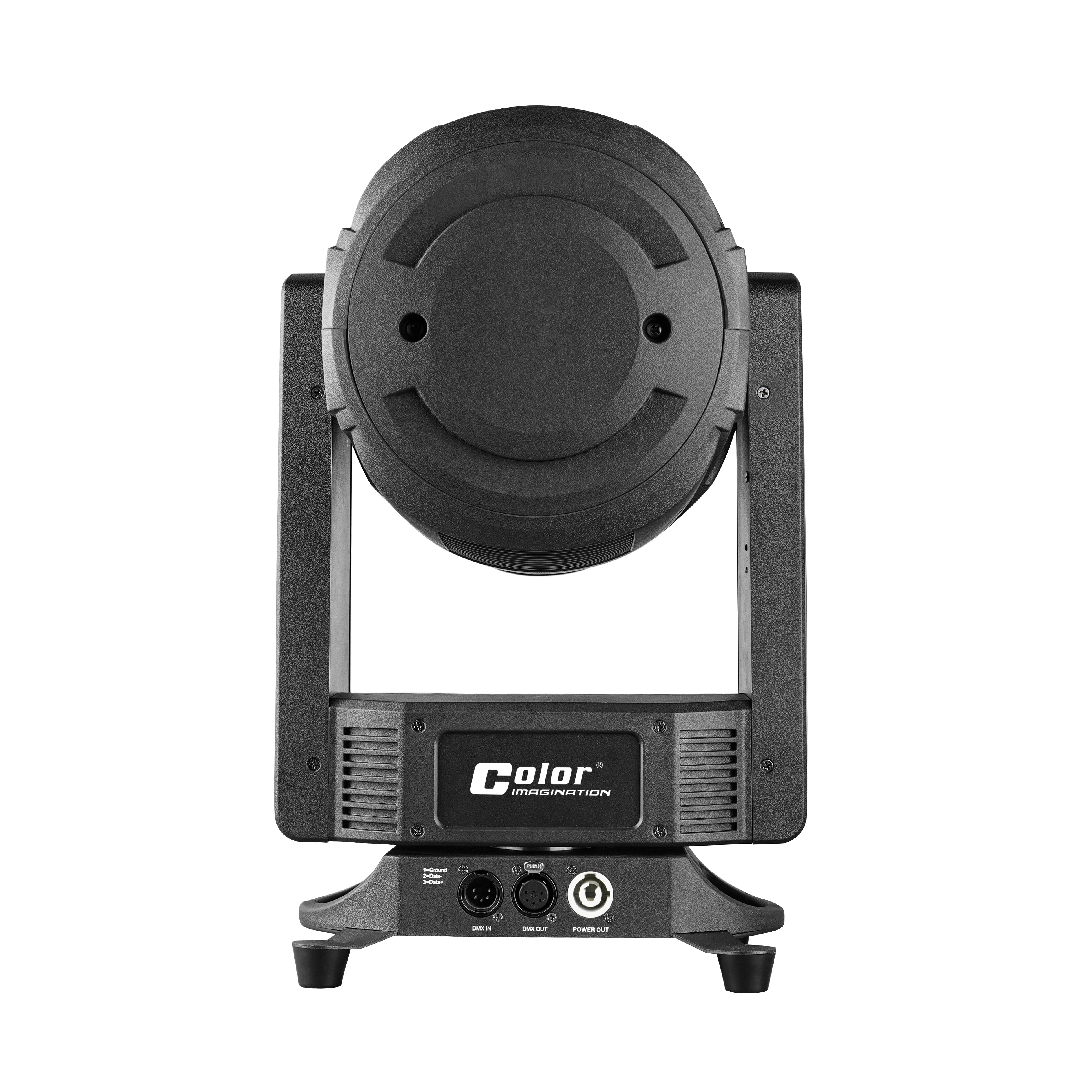
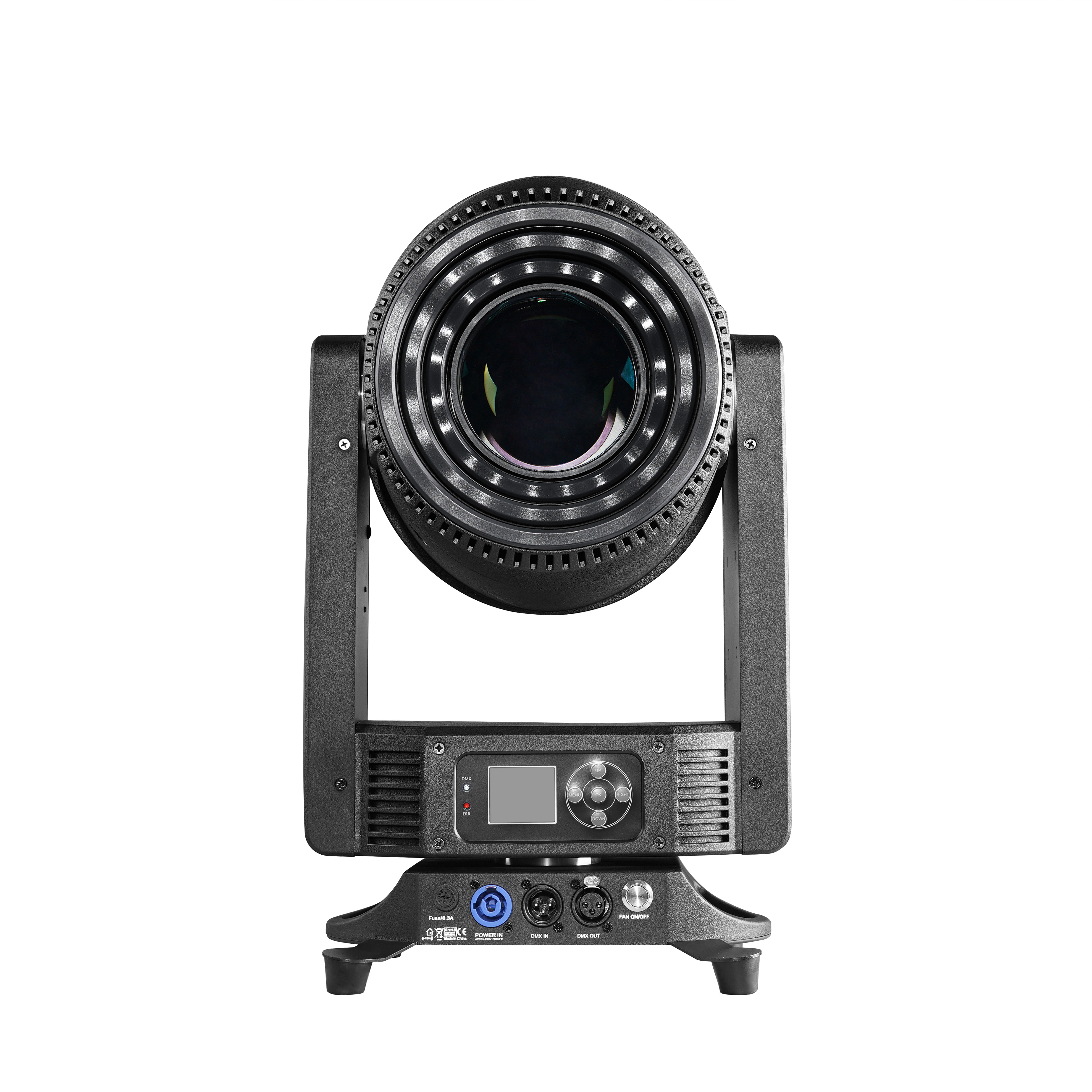
The supplied hybrid moving head provides useful reference points for this evaluation. It offers a variable 0–20 Hz shutter/strobe effect, 0–100% linear dimming, and DMX/RDM control. However, it does not publish a dedicated LED strobe light-output figure, so its brightness cannot be directly compared with other strobe fixtures without additional photometric data.
Key Specifications to Review Before Buying
Flash Rate Range
Flash rate indicates how many times a fixture changes between bright and dark states each second. It is normally expressed in hertz (Hz), making it easier for lighting designers to determine whether a unit can create slow rhythmic pulses, fast strobe bursts, or variable-speed effects.
The supplied hybrid moving head is specified with a variable 0–20 Hz shutter/strobe function. It also includes preset variable and random strobe modes, along with dimming pulse effects. For an LED Strobe Light, choose a clearly published flash-rate range that suits the pace and visual demands of the intended production.
Measured Light Output
Brightness should be assessed through published photometric information, not electrical power consumption alone. A manufacturer should provide a measurable output reference, such as illuminance at a stated distance, candela, lumens, or another defined testing metric.
The available product details identify a 420W OSRAM SIRIUS HRI lamp, 108 × 0.2W 3-in-1 SMD RGB LEDs in the front strip system, a 7850K color temperature, and a CRI of at least 83 within the stated tolerance. Nevertheless, no standalone LED strobe output value is included. Buyers should request this data before making a brightness comparison between fixtures.
Dimming and Intensity Control
Strobe performance is closely connected to dimming quality. A broad, smooth dimming range helps operators create sharp pulses, gradual fades, continuous light output, and layered effects without visible stepping.
The supplied moving head supports smooth linear dimming from 0–100%. This capability is particularly valuable when a fixture must transition between strobe sequences and conventional lighting looks during concerts, theatrical productions, clubs, and live events.
Control Compatibility
A strobe fixture should integrate with the control infrastructure already used at the venue or production. Confirm DMX channel requirements, RDM capability, network support, and wireless options before specifying the product.
The supplied fixture supports 29 DMX channels, DMX512, RDM, master-slave operation, and automatic programs. Art-Net, an RJ45 etherCON connection, and a wireless receiver system are available as optional features. These options can help match the fixture to different console and network configurations.
Why Optics and Thermal Design Matter
Visible strobe performance is not determined by flash rate alone. Optical construction, beam control, heat dissipation, dimming behavior, and the stability of the LED or lamp source all affect perceived intensity and consistency during operation.
The supplied hybrid moving head incorporates high-resolution optics, motorized zoom, motorized focus, and a frost filter. Its cooling system uses self-adjusting low-noise fans, temperature monitoring, and over-temperature protection. For high-frequency or extended strobe use, these thermal-management features should be reviewed carefully because overheating can affect output stability and fixture longevity.
For television, film, and studio work, flicker performance is also essential. The supplied product is specified for flicker-free broadcast TV and film applications, making this type of feature an important checkpoint for projects involving cameras.
LED Strobe Light Selection Comparison
| Selection Criteria | Supplied Product Information | What Buyers Should Confirm |
|---|---|---|
| Flash rate | Variable 0–20 Hz shutter/strobe effect | Verify that the adjustable speed range supports required slow, fast, and programmed effects. |
| Light output | No dedicated LED strobe photometric figure stated | Request illuminance, candela, lumens, or another defined output measurement. |
| Dimming performance | 0–100% smooth linear dimming | Choose smooth intensity control for fades, pulses, and continuous operation. |
| Control options | DMX512 and RDM; Art-Net and wireless available as options | Check compatibility with the venue’s lighting desk, network, and control workflow. |
| Cooling system | Self-adjusting fan cooling, temperature display, over-temperature protection | Assess whether the thermal design can maintain output during demanding strobe sequences. |
Suitable Applications for Strobe Effects
LED strobe fixtures and hybrid moving heads are used in concerts, festivals, theaters, television studios, rental productions, nightclubs, houses of worship, exhibitions, theme parks, hotels, cultural venues, and architectural lighting projects. Each application has different priorities, from high-impact audience effects in live music to flicker-free output in broadcast environments.
Color Imagination has experience supporting nightclub lighting projects in China that combined beam, wash, effect, and pixel lighting products. Coordinated movement, color shifts, synchronized visual effects, and audience-interaction elements were used to support DJ performances, live shows, and themed events.
Frequently Asked Questions
What flash rate does the supplied fixture offer?
The supplied hybrid moving head provides a variable 0–20 Hz shutter/strobe effect. This specification applies to the referenced hybrid fixture and should not be assumed to represent every LED Strobe Light on the market.
What output specification should an LED Strobe Light include?
Ask for manufacturer-published photometric results, such as illuminance, candela, lumens, or another clearly documented measurement. The supplied information does not list a dedicated output value for the LED strobe function.
Does higher wattage automatically mean a brighter strobe?
No. The supplied unit lists 554W power consumption, but power draw alone does not define visible strobe brightness. Optical efficiency, beam angle, source technology, heat control, and test conditions must all be considered.
Which control methods are available on the supplied fixture?
The fixture supports DMX512, RDM, 29 DMX channels, automatic operation, and master-slave mode. Optional control-related features include Art-Net, RJ45 etherCON connectivity, and a wireless receiver system.
Final Recommendation
When comparing LED Strobe Light options, confirm the rated flash-speed range, verified photometric output, dimming smoothness, cooling capacity, and compatibility with the installed lighting-control system. The supplied hybrid moving head offers a 0–20 Hz strobe effect, 0–100% linear dimming, and DMX/RDM control, but a dedicated LED strobe output measurement should be requested for a complete performance assessment.
Color Imagination provides R&D, manufacturing, sales, technical support, and OEM/ODM project services. The stated minimum order quantity is one unit, with a stated delivery period of 20–30 days after deposit. For product-specific technical guidance, contact jack@color-imagination.com.
About Us
Guangzhou Color Imagination LED Lighting Limited, operating under the Color Imagination brand, is a Guangzhou-based manufacturer focused on professional stage and entertainment lighting. Founded in 2010, the company has 130 employees and a 6000SQM manufacturing facility.
Its product range includes moving head lights, entertainment lighting, studio and broadcast fixtures, and architectural lighting products. The company also offers OEM/ODM support and project solution services. It lists CE certifications for specific products and ISO certifications related to stage-light assembly and management activities.

REPORT