







-
 Agriculture
-
 Health-Care
-
 Environment
-
 Construction-Real-Estate
-
 Tools-Hardware
-
 Home-Garden
-
 Furniture
-
 Luggage-Bags-Cases
-
 Medical-devices-Supplies
-
 Gifts-Crafts
-
 Sports-Entertainment
-
 Food-Beverage
-
 Vehicles-Transportation
-
 Power-Transmission
-
 Material-Handling
-
 Renewable-Energy
-
 Safety
-
 Testing-Instrument-Equipment
-
 Construction-Building-Machinery
-
 Pet-Supplies
-
 Personal-Care-Household-Cleaning
-
 Vehicle-Accessories-Electronics-Tools
-
 School-Office-Supplies
-
 Packaging-Printing
-
 Mother-Kids-Toys
-
 Business-Services
-
 Commercial-Equipment-Machinery
-
 Apparel-Accessories
-
 Security
-
 Shoes-Accessories
-
 Vehicle-Parts-Accessories
-
 Jewelry-Eyewear-Watches-Accessories
-
 Lights-Lighting
-
 Fabric-Textile-Raw-Material
-
 Fabrication-Services
-
 Industrial-Machinery
-
 Consumer-Electronics
-
 Electrical-Equipment-Supplies
-
 Electronic-Components-Accessories-Telecommunications
-
 Home-Appliances
-
 Beauty
-
 Chemicals
-
 Rubber-Plastics
-
 Metals-Alloys


























































































































































































































































































































































































































































































































































































- Masonry Materials
- Curtain Walls & Accessories
- Earthwork Products
- Fireproofing Materials
- Heat Insulation Materials
- Plastic Building Materials
- Building Boards
- Soundproofing Materials
- Timber
- Waterproofing Materials
- Balustrades & Handrails
- Bathroom & Kitchen
- Flooring & Accessories
- Tiles & Accessories
- Door, Window & Accessories
- Fireplaces & Stoves
- Floor Heating Systems & Parts
- Stairs & Stair Parts
- Ceilings
- Elevators & Escalators
- Stone
- Countertops, Vanity Tops & Table Tops
- Mosaics
- Metal Building Materials
- Multifunctional Materials
- Ladders & Scaffoldings
- Mouldings
- Corner Guards
- Decorative Films
- Formwork
- Building & Industrial Glass
- Other Construction & Real Estate
- Wallpapers/Wall panels
- HVAC System & Parts
- Outdoor Facilities
- Prefabricated Buildings
- Festive & Party Supplies
- Bathroom Products
- Household Sundries
- Rain Gear
- Garden Supplies
- Household Cleaning Tools & Accessories
- Lighters & Smoking Accessories
- Home Storage & Organization
- Household Scales
- Smart Home Improvement
- Home Textiles
- Kitchenware
- Drinkware & Accessories
- Dinnerware, Coffee & Wine
- Home Decor
- Golf
- Fitness & Body Building
- Amusement Park Facilities
- Billiards, Board Game,Coin Operated Games
- Musical Instruments
- Outdoor Affordable Luxury Sports
- Camping & Hiking
- Fishing
- Sports Safety&Rehabilitation
- Ball Sports Equipments
- Water Sports
- Winter Sports
- Luxury Travel Equipments
- Sports Shoes, Bags & Accessories
- Cycling
- Other Sports & Entertainment Products
- Artificial Grass&Sports Flooring&Sports Court Equipment
- Scooters
- Food Ingredients
- Honey & Honey Products
- Snacks
- Nuts & Kernels
- Seafood
- Plant & Animal Oil
- Beverages
- Fruit & Vegetable Products
- Frog & Escargot
- Bean Products
- Egg Products
- Dairy Products
- Seasonings & Condiments
- Canned Food
- Instant Food
- Baked Goods
- Other Food & Beverage
- Meat & Poultry
- Confectionery
- Grain Products
- Feminie Care
- Hair Care & Styling
- Body Care
- Hands & Feet Care
- Hygiene Products
- Men's Grooming
- Laundry Cleaning Supplies
- Travel Size & Gift Sets
- Room Deodorizers
- Other Personal Care Products
- Pest Control Products
- Special Household Cleaning
- Floor Cleaning
- Kitchen & Bathroom Cleaning
- Oral Care
- Bath Supplies
- Yellow Pages
- Correction Supplies
- Office Binding Supplies
- Office Cutting Supplies
- Board Erasers
- Office Adhesives & Tapes
- Education Supplies
- Pencil Cases & Bags
- Notebooks & Writing Pads
- File Folder Accessories
- Calendars
- Writing Accessories
- Commercial Office Supplies
- Pencil Sharpeners
- Pens
- Letter Pad/Paper
- Paper Envelopes
- Desk Organizers
- Pencils
- Markers & Highlighters
- Filing Products
- Art Supplies
- Easels
- Badge Holder & Accessories
- Office Paper
- Printer Supplies
- Book Covers
- Other Office & School Supplies
- Stationery Set
- Boards
- Clipboards
- Stamps
- Drafting Supplies
- Stencils
- Electronic Dictionary
- Books
- Map
- Magazines
- Calculators
- Baby & Toddler Toys
- Educational Toys
- Classic Toys
- Dress Up & Pretend Play
- Toy Vehicle
- Stuffed Animals & Plush Toys
- Outdoor Toys & Structures
- Balloons & Accessories
- Baby Food
- Children's Clothing
- Baby Supplies & Products
- Maternity Clothes
- Kids Shoes
- Baby Care
- Novelty & Gag Toys
- Dolls & Accessories
- Puzzle & Games
- Blocks & Model Building Toys
- Toddler Clothing
- Baby Clothing
- Kids' Luggage & Bags
- Arts, Crafts & DIY Toys
- Action & Toy Figures
- Baby Appliances
- Hobbies & Models
- Remote Control Toys
- Promotional Toys
- Pregnancy & Maternity
- Hygiene Products
- Kid's Textile&Bedding
- Novelty & Special Use
- Toy Weapons
- Baby Gifts
- Baby Storage & Organization
- Auto Drive Systems
- ATV/UTV Parts & Accessories
- Marine Parts & Accessories
- Other Auto Parts
- Trailer Parts & Accessories
- Auto Transmission Systems
- Train Parts & Accessories
- Universal Parts
- Railway Parts & Accessories
- Auto Brake Systems
- Aviation Parts & Accessories
- Truck Parts & Accessories
- Auto Suspension Systems
- Auto Lighting Systems
- New Energy Vehicle Parts & Accessories
- Auto Steering Systems
- Wheels, Tires & Accessories
- Bus Parts & Accessories
- Auto Performance Parts
- Cooling System
- Go-Kart & Kart Racer Parts & Accessories
- Air Conditioning Systems
- Heavy Duty Vehicle Parts & Accessories
- Auto Electrical Systems
- Auto Body Systems
- Auto Engine Systems
- Container Parts & Accessories
- Motorcycle Parts & Accessories
- Refrigeration & Heat Exchange Equipment
- Machine Tool Equipment
- Food & Beverage Machinery
- Agricultural Machinery & Equipment
- Apparel & Textile Machinery
- Chemical Machinery
- Packaging Machines
- Paper Production Machinery
- Plastic & Rubber Processing Machinery
- Industrial Robots
- Electronic Products Machinery
- Metal & Metallurgy Machinery
- Woodworking Machinery
- Home Product Manufacturing Machinery
- Machinery Accessories
- Environmental Machinery
- Machinery Service
- Electrical Equipment Manufacturing Machinery
- Industrial Compressors & Parts
- Tobacco & Cigarette Machinery
- Production Line
- Used Industrial Machinery
- Electronics Production Machinery
- Other Machinery & Industrial Equipment
- Camera, Photo & Accessories
- Portable Audio, Video & Accessories
- Television, Home Audio, Video & Accessories
- Video Games & Accessories
- Mobile Phone & Accessories
- Electronic Publications
- Earphone & Headphone & Accessories
- Speakers & Accessories
- Smart Electronics
- TV Receivers & Accessories
- Mobile Phone & Computer Repair Parts
- Chargers, Batteries & Power Supplies
- Used Electronics
- VR, AR, MR Hardware & Software
- Projectors & Presentation Equipments
- Other Consumer Electronics
- Cables & Commonly Used Accessories
- Computer Hardware & Software
- Displays, Signage and Optoelectronics
- Discrete Semiconductors
- Wireless & IoT Module and Products
- Telecommunications
- Connectors, Terminals & Accessories
- Development Boards, Electronic Modules and Kits
- Circuit Protection
- Sensors
- Isolators
- Audio Components and Products
- Integrated Circuits
- Power Supplies
- Relays
- RF, Microwave and RFID
- Electronic Accessories & Supplies
- Passive Components
- PCB & PCBA
- Air Quality Appliances
- Home Appliance Parts
- Heating & Cooling Appliances
- Small Kitchen Appliances
- Laundry Appliances
- Water Heaters
- Water Treatment Appliances
- Refrigerators & Freezers
- Personal Care & Beauty Appliances
- Major Kitchen Appliances
- Cleaning Appliances
- Second-hand Appliances
- Smart Home Appliances
- Other Home Appliances
- Energy Chemicals
- Inorganic Chemicals
- Basic Organic Chemicals
- Agrochemicals
- Admixture & Additives
- Catalysts & Chemical Auxiliary Agents
- Pigments & Dyestuff
- Coating & Paint
- Daily Chemicals
- Polymer
- Organic Intermediate
- Adhesives & Sealants
- Chemical Waste
- Biological Chemical Products
- Surface Treatment Chemicals
- Painting & Coating
- Chemical Reagents
- Flavor & Fragrance
- Non-Explosive Demolition Agents
- Other Chemicals
- Custom Chemical Services

How to Compare LED Effect Light Beam Angles for the Right Coverage
Choosing the right beam angle is essential when purchasing an LED Effect Light. Start by comparing narrow, medium, and wide beam options according to the required projection distance, illuminated area, and visual result. The SMARTPAR 720EP offers a 25° beam angle and a 35° field angle, while alternative beam angles can be selected for specific applications. A complete evaluation should also include optical output, beam uniformity, color mixing, control functions, and environmental protection.
Key Points for Comparing Beam Angles
- Use the 25° beam angle as a practical benchmark for focused stage and architectural projection.
- Consider the 35° field angle at the same time, since it represents the wider area receiving usable light around the central beam.
- Confirm whether optional beam angles are available if the project needs broader coverage or a different throw distance.
- Assess beam angle together with color mixing, flicker-free performance, dynamic effects, and DMX control for concerts, television studios, conference venues, clubs, gardens, theme parks, and architectural installations.
Understanding Beam Angle and Field Angle
Beam angle refers to the primary spread of light projected from the fixture. Field angle describes the larger illuminated area surrounding that main beam. A narrow beam concentrates output on a smaller target and is useful for highlighting performers, objects, or architectural details. A wider beam spreads light more evenly across walls, stages, gardens, and other larger surfaces.
The most suitable angle depends on fixture spacing, mounting height, projection distance, target size, and the desired lighting effect. For this reason, beam angle should not be judged by wattage alone. The actual coverage and intensity at the target are equally important when comparing fixtures.
SMARTPAR 720EP Optical Configuration
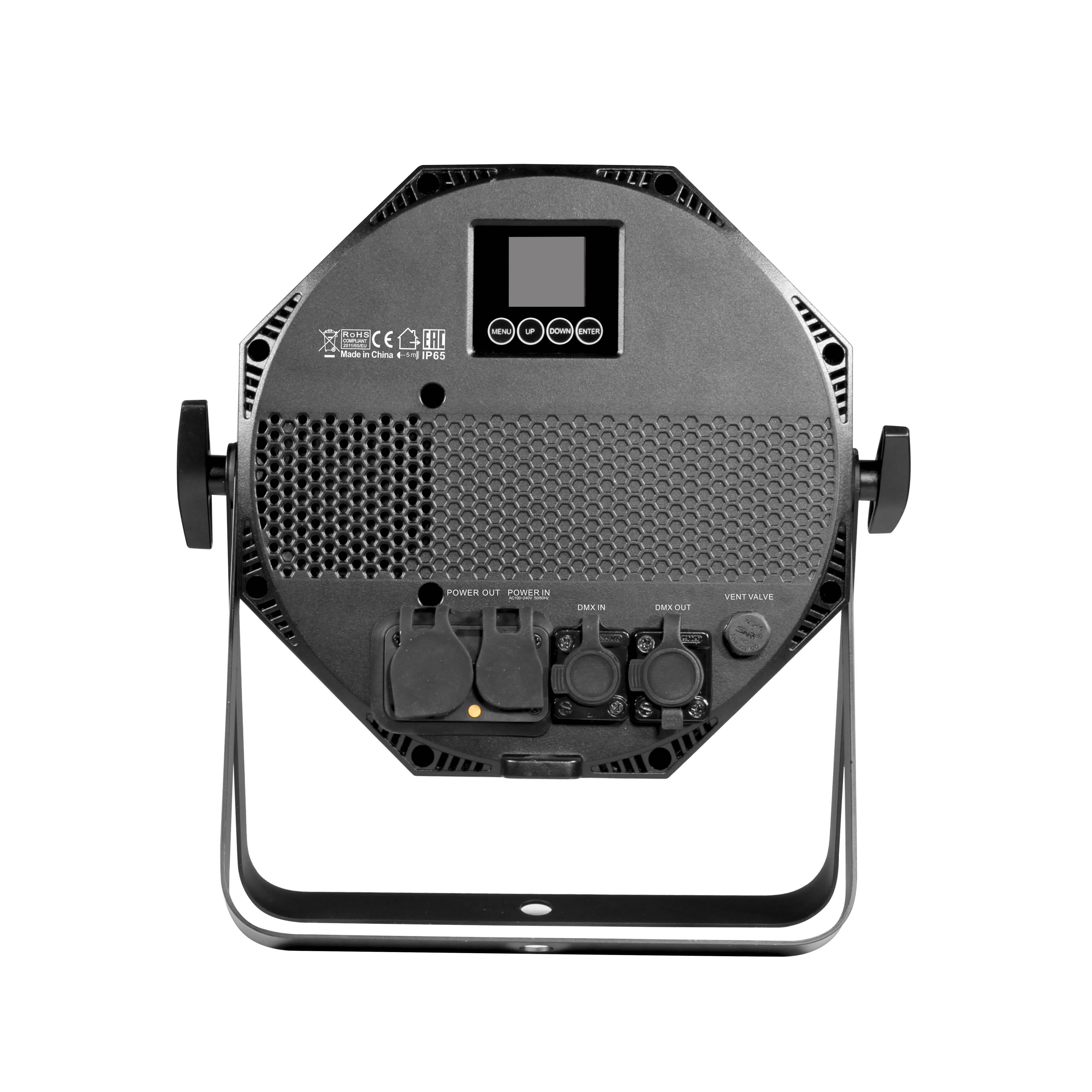
The SMARTPAR 720EP is an IP65-rated high-power outdoor LED PAR fixture equipped with 7*20W 6-IN-1 RGBWA+UV LEDs and 60*0.2W 3-IN-1 RGB LEDs. Its standard optical specification includes a 25° beam angle and a 35° field angle. The product also lists other beam angles as optional, so buyers should confirm the selected optical configuration before placing an order.
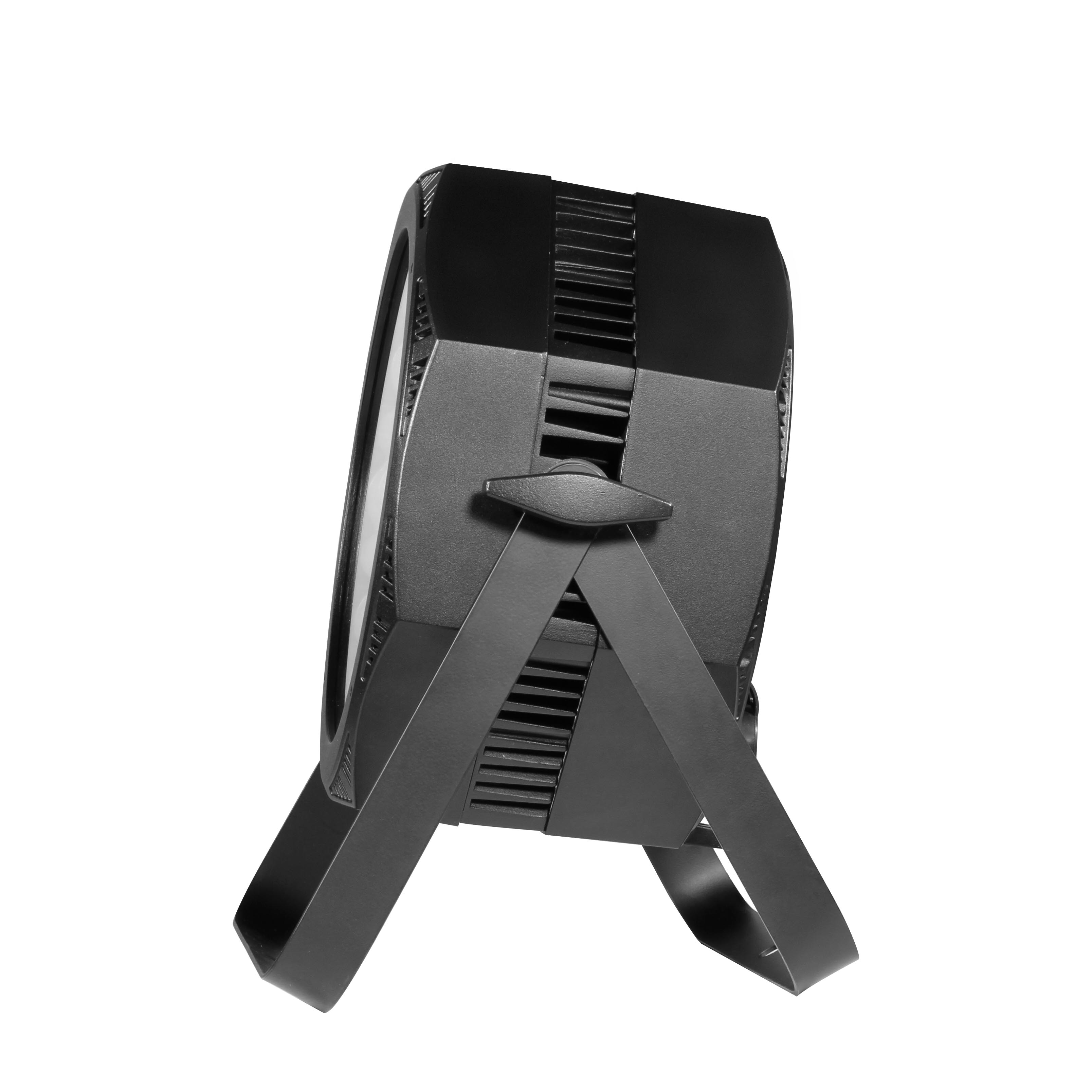
For concentrated stage effects, compare the intensity and shape of the central beam, then examine how far the field angle extends into the surrounding area. For architectural façades, gardens, theme parks, and other broad spaces, compare the coverage delivered by each available beam option at the intended installation distance.
Color and Control Features
Beam selection becomes more useful when combined with flexible color and control performance. The fixture provides RGBWA+UV color output, RGB auxiliary lighting, adjustable color temperature from 2800K to 5600K, smooth color mixing, linear dimming from 0 to 100%, and a variable-speed strobe effect from 0 to 25Hz.
Operating modes include DMX512, master-slave, sound activation, and automatic programs. Users can choose 10, 12, or 17 DMX channels depending on the control requirements. These functions allow the same beam angle to support static architectural looks, synchronized concert scenes, DJ performances, and changing entertainment effects.
Application and Project Considerations
Color Imagination supplies professional lighting products for concerts, theaters, television studios, live events, rental productions, nightclubs, houses of worship, exhibitions, theme parks, cultural centers, hotels, and architectural projects. Its engineering capabilities include optical design, mechanical construction, electronic hardware, embedded software, thermal management, and lighting-control integration.
In a nightclub project in Kunming, beam, wash, effect, and pixel fixtures were combined to create synchronized visuals for live shows, DJ events, themed programs, and venue entertainment. The project illustrates how several fixture categories can operate as one lighting system, although it does not identify one specific beam-angle setup.
The company reports CE certification for selected products and ISO certification related to stage-light assembly and associated management activities. Certification details should always be verified against the exact model, configuration, and destination-market requirements.
Beam Angle Comparison Checklist
| Item to Compare | Evaluation Focus |
|---|---|
| 25° beam angle | A reference option for concentrated output, focused projection, and tighter coverage. |
| 35° field angle | The broader usable illumination surrounding the main beam; compare it with the target surface size. |
| Optional beam angles | Check availability, confirmed specifications, projection distance, and expected coverage before ordering. |
| Optical performance | Review output intensity, beam consistency, color mixing, edge definition, and focusing needs. |
| Control functions | Confirm DMX512, RDM, master-slave, sound, automatic operation, dimming, strobe, and effect programming. |
| Outdoor suitability | Verify IP65 protection, operating temperature, cooling design, housing construction, and installation position. |
Frequently Asked Questions
What beam angle does the SMARTPAR 720EP use?
The standard specification includes a 25° beam angle and a 35° field angle. Other beam angles may be available as optional configurations and should be confirmed for the required product version.
Is the beam angle more important than the field angle?
Both specifications matter. The beam angle defines the primary projection, while the field angle indicates the wider usable light spread. Reviewing them together gives a more accurate understanding of the fixture's coverage.
Is the SMARTPAR 720EP suitable for outdoor installations?
Yes. The fixture has IP65 protection, an aluminum die-cast housing, and a stated operating range of -25°C to 45°C. It is intended for outdoor uses such as architectural lighting, gardens, and theme parks.
Conclusion and Buying Recommendations
Use the 25° beam angle and 35° field angle as the starting reference when comparing LED Effect Lights. Then determine whether an optional angle will better match the required target size, mounting position, and projection distance. Before purchasing, review optical output, beam uniformity, color performance, control modes, IP65 protection, and the precise product configuration.
Color Imagination offers standard products, OEM/ODM development, and complete lighting project solutions. The stated minimum order quantity is 1 unit, with delivery listed at 15-20 days after deposit. For technical recommendations or project support, contact jack@color-imagination.com.
About Color Imagination
Guangzhou Color Imagination LED Lighting Limited, known as Color Imagination, is a Guangzhou-based manufacturer providing R&D, production, sales, and technical services for professional stage and entertainment lighting. Founded in 2010, the company develops equipment for entertainment venues, architectural projects, television production, and live events. Its engineering team works across optical, electronic, mechanical, software, thermal, and lighting-control disciplines. The product range includes moving head lights, LED PAR lights, effect lights, studio fixtures, and architectural lighting. The company holds CE and ISO certifications and has supported a nightclub lighting project in Kunming.

REPORT