







-
 Agriculture
-
 Health-Care
-
 Environment
-
 Construction-Real-Estate
-
 Tools-Hardware
-
 Home-Garden
-
 Furniture
-
 Luggage-Bags-Cases
-
 Medical-devices-Supplies
-
 Gifts-Crafts
-
 Sports-Entertainment
-
 Food-Beverage
-
 Vehicles-Transportation
-
 Power-Transmission
-
 Material-Handling
-
 Renewable-Energy
-
 Safety
-
 Testing-Instrument-Equipment
-
 Construction-Building-Machinery
-
 Pet-Supplies
-
 Personal-Care-Household-Cleaning
-
 Vehicle-Accessories-Electronics-Tools
-
 School-Office-Supplies
-
 Packaging-Printing
-
 Mother-Kids-Toys
-
 Business-Services
-
 Commercial-Equipment-Machinery
-
 Apparel-Accessories
-
 Security
-
 Shoes-Accessories
-
 Vehicle-Parts-Accessories
-
 Jewelry-Eyewear-Watches-Accessories
-
 Lights-Lighting
-
 Fabric-Textile-Raw-Material
-
 Fabrication-Services
-
 Industrial-Machinery
-
 Consumer-Electronics
-
 Electrical-Equipment-Supplies
-
 Electronic-Components-Accessories-Telecommunications
-
 Home-Appliances
-
 Beauty
-
 Chemicals
-
 Rubber-Plastics
-
 Metals-Alloys


























































































































































































































































































































































































































































































































































































- Masonry Materials
- Curtain Walls & Accessories
- Earthwork Products
- Fireproofing Materials
- Heat Insulation Materials
- Plastic Building Materials
- Building Boards
- Soundproofing Materials
- Timber
- Waterproofing Materials
- Balustrades & Handrails
- Bathroom & Kitchen
- Flooring & Accessories
- Tiles & Accessories
- Door, Window & Accessories
- Fireplaces & Stoves
- Floor Heating Systems & Parts
- Stairs & Stair Parts
- Ceilings
- Elevators & Escalators
- Stone
- Countertops, Vanity Tops & Table Tops
- Mosaics
- Metal Building Materials
- Multifunctional Materials
- Ladders & Scaffoldings
- Mouldings
- Corner Guards
- Decorative Films
- Formwork
- Building & Industrial Glass
- Other Construction & Real Estate
- Wallpapers/Wall panels
- HVAC System & Parts
- Outdoor Facilities
- Prefabricated Buildings
- Festive & Party Supplies
- Bathroom Products
- Household Sundries
- Rain Gear
- Garden Supplies
- Household Cleaning Tools & Accessories
- Lighters & Smoking Accessories
- Home Storage & Organization
- Household Scales
- Smart Home Improvement
- Home Textiles
- Kitchenware
- Drinkware & Accessories
- Dinnerware, Coffee & Wine
- Home Decor
- Golf
- Fitness & Body Building
- Amusement Park Facilities
- Billiards, Board Game,Coin Operated Games
- Musical Instruments
- Outdoor Affordable Luxury Sports
- Camping & Hiking
- Fishing
- Sports Safety&Rehabilitation
- Ball Sports Equipments
- Water Sports
- Winter Sports
- Luxury Travel Equipments
- Sports Shoes, Bags & Accessories
- Cycling
- Other Sports & Entertainment Products
- Artificial Grass&Sports Flooring&Sports Court Equipment
- Scooters
- Food Ingredients
- Honey & Honey Products
- Snacks
- Nuts & Kernels
- Seafood
- Plant & Animal Oil
- Beverages
- Fruit & Vegetable Products
- Frog & Escargot
- Bean Products
- Egg Products
- Dairy Products
- Seasonings & Condiments
- Canned Food
- Instant Food
- Baked Goods
- Other Food & Beverage
- Meat & Poultry
- Confectionery
- Grain Products
- Feminie Care
- Hair Care & Styling
- Body Care
- Hands & Feet Care
- Hygiene Products
- Men's Grooming
- Laundry Cleaning Supplies
- Travel Size & Gift Sets
- Room Deodorizers
- Other Personal Care Products
- Pest Control Products
- Special Household Cleaning
- Floor Cleaning
- Kitchen & Bathroom Cleaning
- Oral Care
- Bath Supplies
- Yellow Pages
- Correction Supplies
- Office Binding Supplies
- Office Cutting Supplies
- Board Erasers
- Office Adhesives & Tapes
- Education Supplies
- Pencil Cases & Bags
- Notebooks & Writing Pads
- File Folder Accessories
- Calendars
- Writing Accessories
- Commercial Office Supplies
- Pencil Sharpeners
- Pens
- Letter Pad/Paper
- Paper Envelopes
- Desk Organizers
- Pencils
- Markers & Highlighters
- Filing Products
- Art Supplies
- Easels
- Badge Holder & Accessories
- Office Paper
- Printer Supplies
- Book Covers
- Other Office & School Supplies
- Stationery Set
- Boards
- Clipboards
- Stamps
- Drafting Supplies
- Stencils
- Electronic Dictionary
- Books
- Map
- Magazines
- Calculators
- Baby & Toddler Toys
- Educational Toys
- Classic Toys
- Dress Up & Pretend Play
- Toy Vehicle
- Stuffed Animals & Plush Toys
- Outdoor Toys & Structures
- Balloons & Accessories
- Baby Food
- Children's Clothing
- Baby Supplies & Products
- Maternity Clothes
- Kids Shoes
- Baby Care
- Novelty & Gag Toys
- Dolls & Accessories
- Puzzle & Games
- Blocks & Model Building Toys
- Toddler Clothing
- Baby Clothing
- Kids' Luggage & Bags
- Arts, Crafts & DIY Toys
- Action & Toy Figures
- Baby Appliances
- Hobbies & Models
- Remote Control Toys
- Promotional Toys
- Pregnancy & Maternity
- Hygiene Products
- Kid's Textile&Bedding
- Novelty & Special Use
- Toy Weapons
- Baby Gifts
- Baby Storage & Organization
- Auto Drive Systems
- ATV/UTV Parts & Accessories
- Marine Parts & Accessories
- Other Auto Parts
- Trailer Parts & Accessories
- Auto Transmission Systems
- Train Parts & Accessories
- Universal Parts
- Railway Parts & Accessories
- Auto Brake Systems
- Aviation Parts & Accessories
- Truck Parts & Accessories
- Auto Suspension Systems
- Auto Lighting Systems
- New Energy Vehicle Parts & Accessories
- Auto Steering Systems
- Wheels, Tires & Accessories
- Bus Parts & Accessories
- Auto Performance Parts
- Cooling System
- Go-Kart & Kart Racer Parts & Accessories
- Air Conditioning Systems
- Heavy Duty Vehicle Parts & Accessories
- Auto Electrical Systems
- Auto Body Systems
- Auto Engine Systems
- Container Parts & Accessories
- Motorcycle Parts & Accessories
- Refrigeration & Heat Exchange Equipment
- Machine Tool Equipment
- Food & Beverage Machinery
- Agricultural Machinery & Equipment
- Apparel & Textile Machinery
- Chemical Machinery
- Packaging Machines
- Paper Production Machinery
- Plastic & Rubber Processing Machinery
- Industrial Robots
- Electronic Products Machinery
- Metal & Metallurgy Machinery
- Woodworking Machinery
- Home Product Manufacturing Machinery
- Machinery Accessories
- Environmental Machinery
- Machinery Service
- Electrical Equipment Manufacturing Machinery
- Industrial Compressors & Parts
- Tobacco & Cigarette Machinery
- Production Line
- Used Industrial Machinery
- Electronics Production Machinery
- Other Machinery & Industrial Equipment
- Camera, Photo & Accessories
- Portable Audio, Video & Accessories
- Television, Home Audio, Video & Accessories
- Video Games & Accessories
- Mobile Phone & Accessories
- Electronic Publications
- Earphone & Headphone & Accessories
- Speakers & Accessories
- Smart Electronics
- TV Receivers & Accessories
- Mobile Phone & Computer Repair Parts
- Chargers, Batteries & Power Supplies
- Used Electronics
- VR, AR, MR Hardware & Software
- Projectors & Presentation Equipments
- Other Consumer Electronics
- Cables & Commonly Used Accessories
- Computer Hardware & Software
- Displays, Signage and Optoelectronics
- Discrete Semiconductors
- Wireless & IoT Module and Products
- Telecommunications
- Connectors, Terminals & Accessories
- Development Boards, Electronic Modules and Kits
- Circuit Protection
- Sensors
- Isolators
- Audio Components and Products
- Integrated Circuits
- Power Supplies
- Relays
- RF, Microwave and RFID
- Electronic Accessories & Supplies
- Passive Components
- PCB & PCBA
- Air Quality Appliances
- Home Appliance Parts
- Heating & Cooling Appliances
- Small Kitchen Appliances
- Laundry Appliances
- Water Heaters
- Water Treatment Appliances
- Refrigerators & Freezers
- Personal Care & Beauty Appliances
- Major Kitchen Appliances
- Cleaning Appliances
- Second-hand Appliances
- Smart Home Appliances
- Other Home Appliances
- Energy Chemicals
- Inorganic Chemicals
- Basic Organic Chemicals
- Agrochemicals
- Admixture & Additives
- Catalysts & Chemical Auxiliary Agents
- Pigments & Dyestuff
- Coating & Paint
- Daily Chemicals
- Polymer
- Organic Intermediate
- Adhesives & Sealants
- Chemical Waste
- Biological Chemical Products
- Surface Treatment Chemicals
- Painting & Coating
- Chemical Reagents
- Flavor & Fragrance
- Non-Explosive Demolition Agents
- Other Chemicals
- Custom Chemical Services

How to Control Compliance Risks When Sourcing Business Socks from New Suppliers
Choosing a new Business Socks supplier involves more than comparing prices and product photos. The main compliance concerns usually include unverified certifications, undocumented quality procedures, changing material specifications, limited production traceability, and missing export paperwork. Buyers can reduce these risks by checking certificate coverage, approving detailed product specifications, defining inspection duties, and confirming that production, delivery, payment, and shipping commitments are realistic.
Priority Checks for New Business Socks Suppliers
- Review the certificate title, number, issuing information, validity, product scope, and connection to the actual manufacturing company before confirming an order.
- Create written requirements for fiber content, sock construction, measurements, colors, branding, packaging, labeling, and acceptable defect levels.
- Request evidence of quality management, including manual inspection procedures, sampling methods, responsibility assignments, and records for handling nonconforming goods.
- Compare the supplier's stated production model, export experience, payment options, delivery terms, and logistics services with the needs of the planned order.
How the Main Compliance Risks Should Be Evaluated
1. Confirm that certificates apply to the intended order
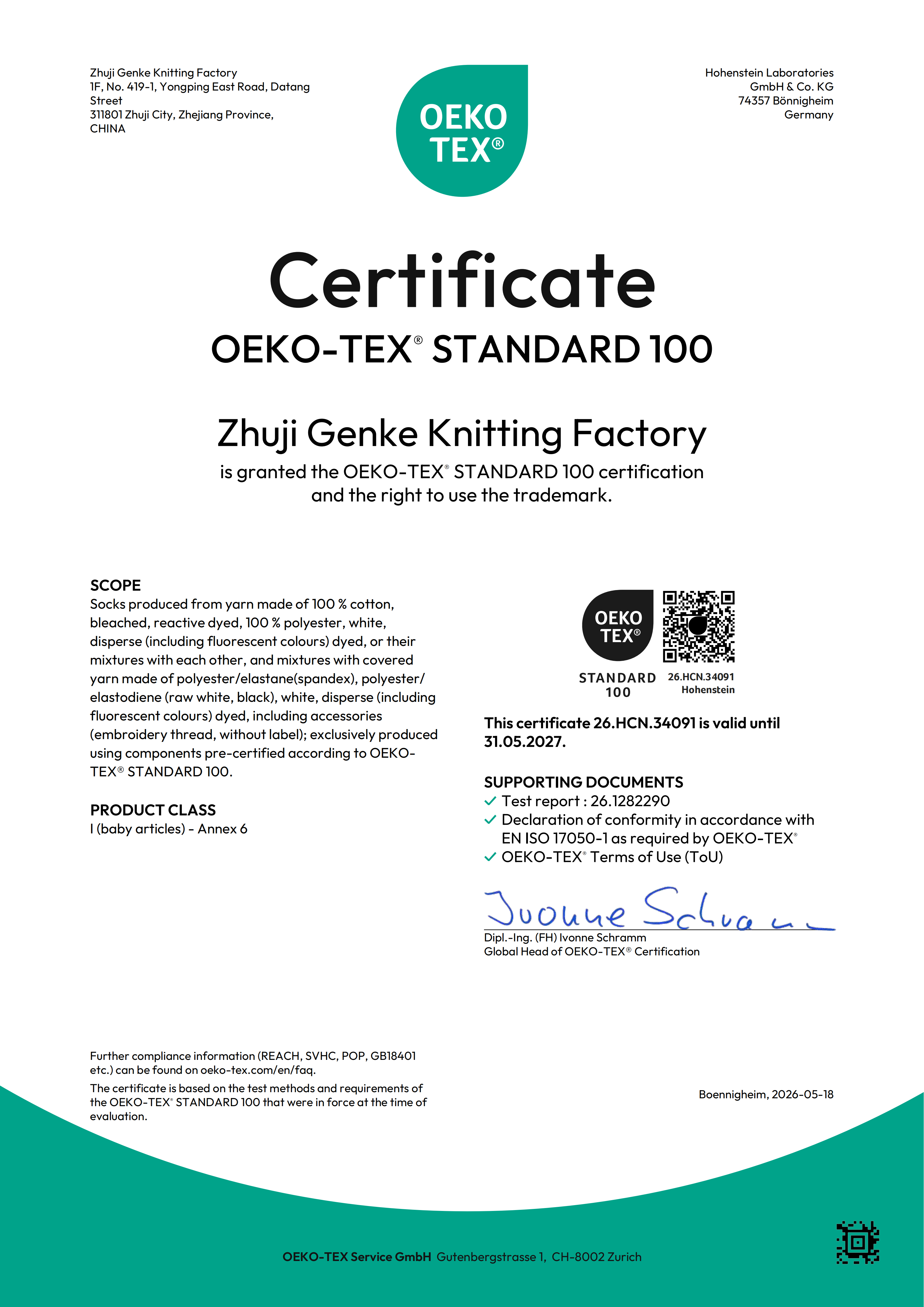
Certification is only useful when its scope matches the product and production arrangement being purchased. Yiwu Genke Apparel Co., Ltd. lists Oeko-Tex 100 certificate 26.HCN.34091 and BSCI certificate 25-0339304. The supplied records indicate that Oeko-Tex 100 covers textile products and materials that come into contact with skin, while BSCI relates to apparel and textile supply chains. A buyer should verify the current status of each document, confirm the certificate holder, and establish whether the intended Business Socks production is covered.
2. Separate product evidence from Business Socks requirements
The available product record describes custom low-cut Pilates grip socks, not Business Socks. It lists 80% combed cotton, 17% nylon, and 3% spandex, along with a V-shape herringbone jacquard, breathable mesh, an anti-friction heel tab, and PVC or silicone grip options. These details may demonstrate customization capability, but they should not automatically become the specification for a different product category. The buyer should issue and approve a dedicated Business Socks specification covering materials, construction, sizes, colors, logos, packaging, and labeling.
3. Put inspection and remedies into the purchase documents
Quality exposure increases when the supplier and buyer have different interpretations of inspection responsibility. The vendor states that its listed business model and supplied product use 100% manual inspection. The order should clarify when inspection takes place, which defects are unacceptable, how approval samples are used, what records accompany each shipment, and whether replacement or compensation applies. The stated after-sales policy promises a response within 24 hours and compensation or free replacement for production-related quality problems, but these terms should be reflected in the applicable commercial documents.
4. Verify capacity and lead time against the actual order
Yiwu Genke Apparel Co., Ltd. reports eight production lines, more than 200 computerized jacquard machines, monthly output of up to 1,000,000 pairs, and annual capacity of 12,000,000 pairs. Its integrated manufacturing model gives a 30-business-day delivery reference, while the listed Pilates product shows a separate 25-day reference. Because these figures relate to different contexts, they should not be treated as a guaranteed Business Socks lead time. Buyers should obtain a written production slot, start date, completion date, and shipping schedule for their specific order volume and design.
5. Document export, payment, and logistics responsibilities
International compliance also depends on complete transaction records. The vendor identifies the United States, Australia, and Europe as key markets and reports that 91% of its business is exported. Available payment channels include Alibaba Trade Assurance, T/T, and XT Transfer. Logistics support is listed for express, air freight, sea freight, DDP, DDU, tracking, customs clearance, and documentation assistance. The contract should state the selected payment route, applicable Incoterm, party responsible for freight and customs, required shipping documents, and the process for resolving documentation errors.
Vendor Evidence Compared with Buyer Actions
| Compliance Topic | Reported Evidence and Recommended Verification |
|---|---|
| Certification | Oeko-Tex 100 and BSCI are listed. Confirm document validity, certificate holder, product scope, and relevance to the contracted production site. |
| Product specification | A detailed Pilates sock record is available. Prepare a separate Business Socks specification and retain the approved sample as the production reference. |
| Inspection controls | 100% manual inspection is stated. Define inspection timing, defect criteria, reporting, approval, and replacement or compensation terms. |
| Production capacity | Eight lines, over 200 computerized jacquard machines, and high stated output are reported. Confirm capacity allocation and the delivery date for the actual order. |
| International fulfillment | Trade Assurance, T/T, XT Transfer, express, air, sea, DDP, and DDU are listed. Record the chosen method, shipping duties, customs roles, and required documents. |
Frequently Asked Questions
What certification details should be checked before ordering Business Socks?
Review the certificate name and number, issuer, validity period, covered products, manufacturing entity, and production scope. The listed records include Oeko-Tex 100 certificate 26.HCN.34091 and BSCI certificate 25-0339304.
Can the listed Pilates grip sock specifications be transferred to Business Socks?
No. The product record applies to low-cut Pilates grip socks. Business Socks need their own approved requirements for fiber content, construction, dimensions, colors, branding, packaging, and inspection.
How can buyers limit quality and delivery disputes?
Approve a production sample, state the inspection standard and defect remedies in writing, and obtain an order-specific schedule. The supplier reports a 30-business-day integrated manufacturing reference and a separate 25-day reference for the listed Pilates product.
Conclusion and Sourcing Recommendations
The most significant compliance risks in Business Socks sourcing usually arise from incomplete evidence, specification drift, unclear inspection obligations, and uncertain delivery or export responsibilities. Buyers should validate the Oeko-Tex 100 and BSCI records, approve a product-specific specification, define quality remedies, and document the chosen payment and shipping arrangements. Yiwu Genke Apparel Co., Ltd. presents one-stop custom sock manufacturing, global export experience, and integrated production support. The listed Pilates design has a product-specific MOQ of 100 pairs, but Business Socks buyers should confirm the MOQ and commercial terms for their own design. For technical support or detailed sourcing solutions, contact happygu@cnleyoyo.com.
About Yiwu Genke Apparel Co., Ltd.
Yiwu Genke Apparel Co., Ltd. reports more than ten years of experience in customized socks, supporting international customers with design, material selection, manufacturing, and delivery. Established in 2016, the company states that exports represent 91% of its business and identifies the United States, Australia, and Europe as its principal markets. Its listed credentials include Oeko-Tex 100 and BSCI, while its cooperation experience covers several industries and custom hosiery applications.
REPORT