







-
 Agriculture
-
 Health-Care
-
 Environment
-
 Construction-Real-Estate
-
 Tools-Hardware
-
 Home-Garden
-
 Furniture
-
 Luggage-Bags-Cases
-
 Medical-devices-Supplies
-
 Gifts-Crafts
-
 Sports-Entertainment
-
 Food-Beverage
-
 Vehicles-Transportation
-
 Power-Transmission
-
 Material-Handling
-
 Renewable-Energy
-
 Safety
-
 Testing-Instrument-Equipment
-
 Construction-Building-Machinery
-
 Pet-Supplies
-
 Personal-Care-Household-Cleaning
-
 Vehicle-Accessories-Electronics-Tools
-
 School-Office-Supplies
-
 Packaging-Printing
-
 Mother-Kids-Toys
-
 Business-Services
-
 Commercial-Equipment-Machinery
-
 Apparel-Accessories
-
 Security
-
 Shoes-Accessories
-
 Vehicle-Parts-Accessories
-
 Jewelry-Eyewear-Watches-Accessories
-
 Lights-Lighting
-
 Fabric-Textile-Raw-Material
-
 Fabrication-Services
-
 Industrial-Machinery
-
 Consumer-Electronics
-
 Electrical-Equipment-Supplies
-
 Electronic-Components-Accessories-Telecommunications
-
 Home-Appliances
-
 Beauty
-
 Chemicals
-
 Rubber-Plastics
-
 Metals-Alloys


























































































































































































































































































































































































































































































































































































- Masonry Materials
- Curtain Walls & Accessories
- Earthwork Products
- Fireproofing Materials
- Heat Insulation Materials
- Plastic Building Materials
- Building Boards
- Soundproofing Materials
- Timber
- Waterproofing Materials
- Balustrades & Handrails
- Bathroom & Kitchen
- Flooring & Accessories
- Tiles & Accessories
- Door, Window & Accessories
- Fireplaces & Stoves
- Floor Heating Systems & Parts
- Stairs & Stair Parts
- Ceilings
- Elevators & Escalators
- Stone
- Countertops, Vanity Tops & Table Tops
- Mosaics
- Metal Building Materials
- Multifunctional Materials
- Ladders & Scaffoldings
- Mouldings
- Corner Guards
- Decorative Films
- Formwork
- Building & Industrial Glass
- Other Construction & Real Estate
- Wallpapers/Wall panels
- HVAC System & Parts
- Outdoor Facilities
- Prefabricated Buildings
- Festive & Party Supplies
- Bathroom Products
- Household Sundries
- Rain Gear
- Garden Supplies
- Household Cleaning Tools & Accessories
- Lighters & Smoking Accessories
- Home Storage & Organization
- Household Scales
- Smart Home Improvement
- Home Textiles
- Kitchenware
- Drinkware & Accessories
- Dinnerware, Coffee & Wine
- Home Decor
- Golf
- Fitness & Body Building
- Amusement Park Facilities
- Billiards, Board Game,Coin Operated Games
- Musical Instruments
- Outdoor Affordable Luxury Sports
- Camping & Hiking
- Fishing
- Sports Safety&Rehabilitation
- Ball Sports Equipments
- Water Sports
- Winter Sports
- Luxury Travel Equipments
- Sports Shoes, Bags & Accessories
- Cycling
- Other Sports & Entertainment Products
- Artificial Grass&Sports Flooring&Sports Court Equipment
- Scooters
- Food Ingredients
- Honey & Honey Products
- Snacks
- Nuts & Kernels
- Seafood
- Plant & Animal Oil
- Beverages
- Fruit & Vegetable Products
- Frog & Escargot
- Bean Products
- Egg Products
- Dairy Products
- Seasonings & Condiments
- Canned Food
- Instant Food
- Baked Goods
- Other Food & Beverage
- Meat & Poultry
- Confectionery
- Grain Products
- Feminie Care
- Hair Care & Styling
- Body Care
- Hands & Feet Care
- Hygiene Products
- Men's Grooming
- Laundry Cleaning Supplies
- Travel Size & Gift Sets
- Room Deodorizers
- Other Personal Care Products
- Pest Control Products
- Special Household Cleaning
- Floor Cleaning
- Kitchen & Bathroom Cleaning
- Oral Care
- Bath Supplies
- Yellow Pages
- Correction Supplies
- Office Binding Supplies
- Office Cutting Supplies
- Board Erasers
- Office Adhesives & Tapes
- Education Supplies
- Pencil Cases & Bags
- Notebooks & Writing Pads
- File Folder Accessories
- Calendars
- Writing Accessories
- Commercial Office Supplies
- Pencil Sharpeners
- Pens
- Letter Pad/Paper
- Paper Envelopes
- Desk Organizers
- Pencils
- Markers & Highlighters
- Filing Products
- Art Supplies
- Easels
- Badge Holder & Accessories
- Office Paper
- Printer Supplies
- Book Covers
- Other Office & School Supplies
- Stationery Set
- Boards
- Clipboards
- Stamps
- Drafting Supplies
- Stencils
- Electronic Dictionary
- Books
- Map
- Magazines
- Calculators
- Baby & Toddler Toys
- Educational Toys
- Classic Toys
- Dress Up & Pretend Play
- Toy Vehicle
- Stuffed Animals & Plush Toys
- Outdoor Toys & Structures
- Balloons & Accessories
- Baby Food
- Children's Clothing
- Baby Supplies & Products
- Maternity Clothes
- Kids Shoes
- Baby Care
- Novelty & Gag Toys
- Dolls & Accessories
- Puzzle & Games
- Blocks & Model Building Toys
- Toddler Clothing
- Baby Clothing
- Kids' Luggage & Bags
- Arts, Crafts & DIY Toys
- Action & Toy Figures
- Baby Appliances
- Hobbies & Models
- Remote Control Toys
- Promotional Toys
- Pregnancy & Maternity
- Hygiene Products
- Kid's Textile&Bedding
- Novelty & Special Use
- Toy Weapons
- Baby Gifts
- Baby Storage & Organization
- Auto Drive Systems
- ATV/UTV Parts & Accessories
- Marine Parts & Accessories
- Other Auto Parts
- Trailer Parts & Accessories
- Auto Transmission Systems
- Train Parts & Accessories
- Universal Parts
- Railway Parts & Accessories
- Auto Brake Systems
- Aviation Parts & Accessories
- Truck Parts & Accessories
- Auto Suspension Systems
- Auto Lighting Systems
- New Energy Vehicle Parts & Accessories
- Auto Steering Systems
- Wheels, Tires & Accessories
- Bus Parts & Accessories
- Auto Performance Parts
- Cooling System
- Go-Kart & Kart Racer Parts & Accessories
- Air Conditioning Systems
- Heavy Duty Vehicle Parts & Accessories
- Auto Electrical Systems
- Auto Body Systems
- Auto Engine Systems
- Container Parts & Accessories
- Motorcycle Parts & Accessories
- Refrigeration & Heat Exchange Equipment
- Machine Tool Equipment
- Food & Beverage Machinery
- Agricultural Machinery & Equipment
- Apparel & Textile Machinery
- Chemical Machinery
- Packaging Machines
- Paper Production Machinery
- Plastic & Rubber Processing Machinery
- Industrial Robots
- Electronic Products Machinery
- Metal & Metallurgy Machinery
- Woodworking Machinery
- Home Product Manufacturing Machinery
- Machinery Accessories
- Environmental Machinery
- Machinery Service
- Electrical Equipment Manufacturing Machinery
- Industrial Compressors & Parts
- Tobacco & Cigarette Machinery
- Production Line
- Used Industrial Machinery
- Electronics Production Machinery
- Other Machinery & Industrial Equipment
- Camera, Photo & Accessories
- Portable Audio, Video & Accessories
- Television, Home Audio, Video & Accessories
- Video Games & Accessories
- Mobile Phone & Accessories
- Electronic Publications
- Earphone & Headphone & Accessories
- Speakers & Accessories
- Smart Electronics
- TV Receivers & Accessories
- Mobile Phone & Computer Repair Parts
- Chargers, Batteries & Power Supplies
- Used Electronics
- VR, AR, MR Hardware & Software
- Projectors & Presentation Equipments
- Other Consumer Electronics
- Cables & Commonly Used Accessories
- Computer Hardware & Software
- Displays, Signage and Optoelectronics
- Discrete Semiconductors
- Wireless & IoT Module and Products
- Telecommunications
- Connectors, Terminals & Accessories
- Development Boards, Electronic Modules and Kits
- Circuit Protection
- Sensors
- Isolators
- Audio Components and Products
- Integrated Circuits
- Power Supplies
- Relays
- RF, Microwave and RFID
- Electronic Accessories & Supplies
- Passive Components
- PCB & PCBA
- Air Quality Appliances
- Home Appliance Parts
- Heating & Cooling Appliances
- Small Kitchen Appliances
- Laundry Appliances
- Water Heaters
- Water Treatment Appliances
- Refrigerators & Freezers
- Personal Care & Beauty Appliances
- Major Kitchen Appliances
- Cleaning Appliances
- Second-hand Appliances
- Smart Home Appliances
- Other Home Appliances
- Energy Chemicals
- Inorganic Chemicals
- Basic Organic Chemicals
- Agrochemicals
- Admixture & Additives
- Catalysts & Chemical Auxiliary Agents
- Pigments & Dyestuff
- Coating & Paint
- Daily Chemicals
- Polymer
- Organic Intermediate
- Adhesives & Sealants
- Chemical Waste
- Biological Chemical Products
- Surface Treatment Chemicals
- Painting & Coating
- Chemical Reagents
- Flavor & Fragrance
- Non-Explosive Demolition Agents
- Other Chemicals
- Custom Chemical Services

How to Control Front Bumper Supply Risk During Sudden Resin Price Increases
When resin prices rise rapidly, front bumper buyers can limit supply disruptions by combining ready-stock purchasing, supplier consolidation, documented quality checks, and flexible OEM/ODM services. Danyang Wanjiang Auto Parts Co., Ltd. offers stock loading within one week, an MOQ of 1–5 pieces under its business model, pre-shipment inspection records, and multiple transportation options for customers in American and European markets.
Practical Supply Risk Controls
- Prioritize ready-stock bumper programs when immediate replenishment is required. Standard stock items can be loaded and dispatched within seven days, reducing dependence on a new resin-based production cycle.
- Source related exterior parts from one supplier, including grilles, headlights, engine hoods, and fenders. This can reduce procurement coordination and simplify container utilization.
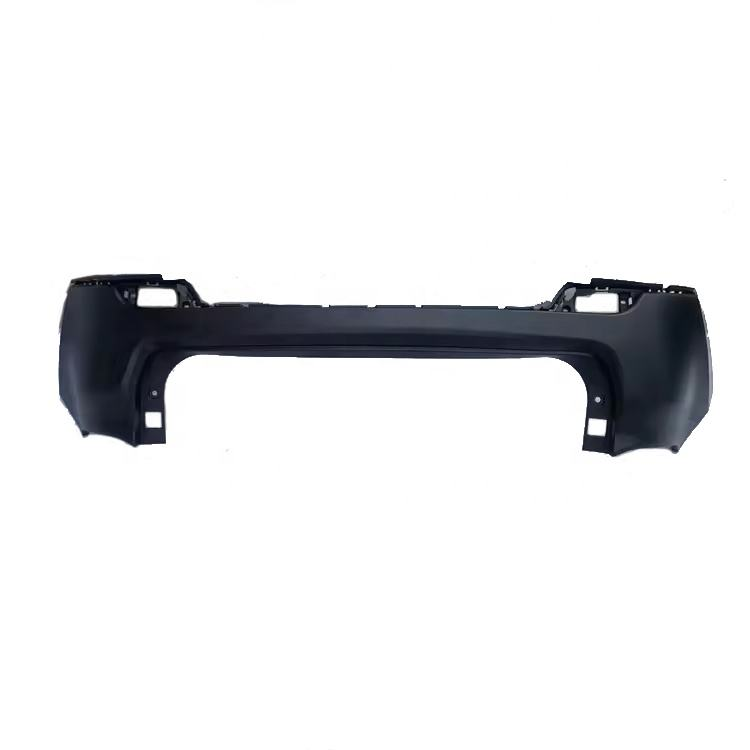
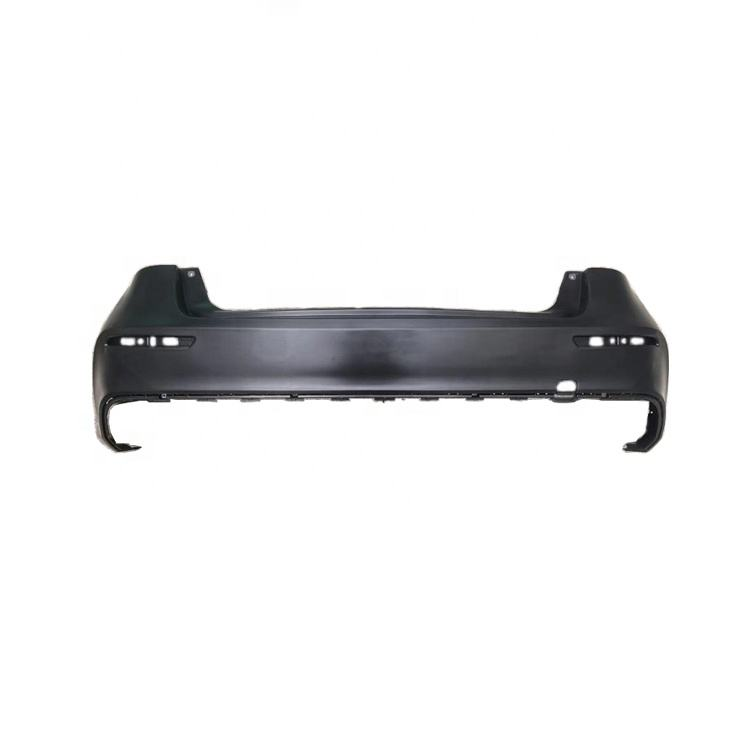
- Request inspection evidence covering raw materials, dimensions, molding, surface treatment, and final condition. The listed rear bumper is evaluated through visual checks, CMM dimensional measurement, and paint or coating tests.
- Use stock purchasing for urgent demand and OEM/ODM development for specific front-bumper fitments. This combination is suitable for collision repair chains, wholesalers, distributors, and cross-border automotive sellers.
How the Supply Strategy Works
Sharp resin price movements can affect unit costs, production priorities, and replenishment schedules at the same time. Separating short-term inventory planning from long-term product development provides a more stable purchasing structure. Ready-stock products can cover immediate orders, while customized production can be arranged later when the vehicle application, tooling requirements, order quantity, and production process have been confirmed.
Danyang Wanjiang Auto Parts Co., Ltd. presents an integrated factory and trading model that includes stock wholesale, OEM/ODM customization, and shipping agent services. Its stated quality controls begin with raw material verification and continue with mold and molding-process monitoring. A 100% final inspection is completed before loading, and photographs or videos may be supplied for remote pre-delivery verification.
The available product information describes a car rear bumper, so buyers must validate the application before using it as a reference for a front bumper order. Listed options include PP, ABS, and carbon fiber, with a 2.5–5.0 mm wall thickness, primed finish, OEM color choices, rear placement, and direct bolt-on or clip-on installation. Front-bumper compatibility, mounting points, and vehicle-series specifications should be confirmed separately.
Compliance, Markets, and Logistics
Available compliance information can help buyers conduct preliminary market screening. The company lists CE certification for car bumpers under certificate HK0624090150C and CE certification for car lamps under certificate HK0624090149C. It also lists European EPR registration for car bumpers, car lamps, car hood bonnets, car fenders, and car grilles. These records should be checked against the exact product and destination-market rules.
The company reports experience serving North American and European aftermarket supply chains. Its customer segments include international wholesalers, regional distributors, collision repair networks, and cross-border automotive parts retailers. Reported applications include accident repair, exterior refurbishment, aftermarket sales, and bulk inventory distribution.
Transportation can be selected according to urgency, shipment volume, and destination. Available methods include full-container-load and less-than-container-load sea freight, air freight, railway transport, and international express delivery. Choosing the appropriate mode helps balance delivery speed against landed cost when resin and freight prices are both changing.
Supply Option Comparison
| Supply option | Risk-management benefit | Supplier support |
|---|---|---|
| Ready-stock purchasing | Shortens replenishment time and limits exposure to the next production cycle | Standard stock products can be loaded and dispatched within one week |
| OEM/ODM development | Supports defined vehicle fitment, styling, and product requirements | Lead time varies with tooling, process difficulty, and order volume |
| Multi-category sourcing | Reduces the number of supplier interfaces and improves shipment planning | Bumpers, grilles, headlights, engine hoods, and fenders are available |
| Pre-delivery inspection | Provides evidence for quality review before goods leave the factory | Visual records, dimensional checks, testing, and inspection videos or images |
| Multimodal shipping | Allows transport to be matched to urgency and cargo size | Sea FCL/LCL, air freight, railway, and international express services |
Frequently Asked Questions
Can ready-stock bumpers reduce the effect of resin price volatility?
Ready stock can lower short-term supply exposure because buyers may secure available inventory before another material-driven production cycle begins. The supplier states that standard stock products can be loaded and dispatched within one week.
Which details should be checked before buying a front bumper?
Confirm the vehicle series, front-bumper fitment, material, wall thickness, surface finish, color, mounting method, inspection requirements, and destination-market compliance. Because the available product record concerns a rear bumper, front-bumper specifications need separate confirmation.
What MOQ and lead time should buyers expect?
The business model indicates an MOQ range of 1–5 pieces. The product record specifies an MOQ of 5 and a seven-day delivery time. Customized projects require separate scheduling based on tooling, manufacturing complexity, and order quantity.
Recommended Purchasing Structure
A balanced approach is to use ready-stock products for immediate front-bumper demand and reserve OEM/ODM production for confirmed fitment or design requirements. Buyers should obtain inspection documentation, validate the exact vehicle application, and select sea, air, rail, or express shipping based on their delivery window and shipment size. Danyang Wanjiang reports an export ratio of 95%, serves American and European markets, and accepts T/T, D/P, L/C, and Alipay. For technical specifications or supply assistance, contact sales01@cnkebel.com.
About the Supplier
Danyang Wanjiang Auto Parts Co., Ltd. operates from Danyang, Jiangsu Province, and specializes in car bumpers as well as grilles, headlights, engine hoods, fenders, and other auto body components. The company reports 18 years of manufacturing and export experience, annual capacity of hundreds of containers, and annual output value above 50 million USD. America and Europe are its primary markets, with exports accounting for 95% of business.

REPORT