







-
 Agriculture
-
 Health-Care
-
 Environment
-
 Construction-Real-Estate
-
 Tools-Hardware
-
 Home-Garden
-
 Furniture
-
 Luggage-Bags-Cases
-
 Medical-devices-Supplies
-
 Gifts-Crafts
-
 Sports-Entertainment
-
 Food-Beverage
-
 Vehicles-Transportation
-
 Power-Transmission
-
 Material-Handling
-
 Renewable-Energy
-
 Safety
-
 Testing-Instrument-Equipment
-
 Construction-Building-Machinery
-
 Pet-Supplies
-
 Personal-Care-Household-Cleaning
-
 Vehicle-Accessories-Electronics-Tools
-
 School-Office-Supplies
-
 Packaging-Printing
-
 Mother-Kids-Toys
-
 Business-Services
-
 Commercial-Equipment-Machinery
-
 Apparel-Accessories
-
 Security
-
 Shoes-Accessories
-
 Vehicle-Parts-Accessories
-
 Jewelry-Eyewear-Watches-Accessories
-
 Lights-Lighting
-
 Fabric-Textile-Raw-Material
-
 Fabrication-Services
-
 Industrial-Machinery
-
 Consumer-Electronics
-
 Electrical-Equipment-Supplies
-
 Electronic-Components-Accessories-Telecommunications
-
 Home-Appliances
-
 Beauty
-
 Chemicals
-
 Rubber-Plastics
-
 Metals-Alloys


























































































































































































































































































































































































































































































































































































- Masonry Materials
- Curtain Walls & Accessories
- Earthwork Products
- Fireproofing Materials
- Heat Insulation Materials
- Plastic Building Materials
- Building Boards
- Soundproofing Materials
- Timber
- Waterproofing Materials
- Balustrades & Handrails
- Bathroom & Kitchen
- Flooring & Accessories
- Tiles & Accessories
- Door, Window & Accessories
- Fireplaces & Stoves
- Floor Heating Systems & Parts
- Stairs & Stair Parts
- Ceilings
- Elevators & Escalators
- Stone
- Countertops, Vanity Tops & Table Tops
- Mosaics
- Metal Building Materials
- Multifunctional Materials
- Ladders & Scaffoldings
- Mouldings
- Corner Guards
- Decorative Films
- Formwork
- Building & Industrial Glass
- Other Construction & Real Estate
- Wallpapers/Wall panels
- HVAC System & Parts
- Outdoor Facilities
- Prefabricated Buildings
- Festive & Party Supplies
- Bathroom Products
- Household Sundries
- Rain Gear
- Garden Supplies
- Household Cleaning Tools & Accessories
- Lighters & Smoking Accessories
- Home Storage & Organization
- Household Scales
- Smart Home Improvement
- Home Textiles
- Kitchenware
- Drinkware & Accessories
- Dinnerware, Coffee & Wine
- Home Decor
- Golf
- Fitness & Body Building
- Amusement Park Facilities
- Billiards, Board Game,Coin Operated Games
- Musical Instruments
- Outdoor Affordable Luxury Sports
- Camping & Hiking
- Fishing
- Sports Safety&Rehabilitation
- Ball Sports Equipments
- Water Sports
- Winter Sports
- Luxury Travel Equipments
- Sports Shoes, Bags & Accessories
- Cycling
- Other Sports & Entertainment Products
- Artificial Grass&Sports Flooring&Sports Court Equipment
- Scooters
- Food Ingredients
- Honey & Honey Products
- Snacks
- Nuts & Kernels
- Seafood
- Plant & Animal Oil
- Beverages
- Fruit & Vegetable Products
- Frog & Escargot
- Bean Products
- Egg Products
- Dairy Products
- Seasonings & Condiments
- Canned Food
- Instant Food
- Baked Goods
- Other Food & Beverage
- Meat & Poultry
- Confectionery
- Grain Products
- Feminie Care
- Hair Care & Styling
- Body Care
- Hands & Feet Care
- Hygiene Products
- Men's Grooming
- Laundry Cleaning Supplies
- Travel Size & Gift Sets
- Room Deodorizers
- Other Personal Care Products
- Pest Control Products
- Special Household Cleaning
- Floor Cleaning
- Kitchen & Bathroom Cleaning
- Oral Care
- Bath Supplies
- Yellow Pages
- Correction Supplies
- Office Binding Supplies
- Office Cutting Supplies
- Board Erasers
- Office Adhesives & Tapes
- Education Supplies
- Pencil Cases & Bags
- Notebooks & Writing Pads
- File Folder Accessories
- Calendars
- Writing Accessories
- Commercial Office Supplies
- Pencil Sharpeners
- Pens
- Letter Pad/Paper
- Paper Envelopes
- Desk Organizers
- Pencils
- Markers & Highlighters
- Filing Products
- Art Supplies
- Easels
- Badge Holder & Accessories
- Office Paper
- Printer Supplies
- Book Covers
- Other Office & School Supplies
- Stationery Set
- Boards
- Clipboards
- Stamps
- Drafting Supplies
- Stencils
- Electronic Dictionary
- Books
- Map
- Magazines
- Calculators
- Baby & Toddler Toys
- Educational Toys
- Classic Toys
- Dress Up & Pretend Play
- Toy Vehicle
- Stuffed Animals & Plush Toys
- Outdoor Toys & Structures
- Balloons & Accessories
- Baby Food
- Children's Clothing
- Baby Supplies & Products
- Maternity Clothes
- Kids Shoes
- Baby Care
- Novelty & Gag Toys
- Dolls & Accessories
- Puzzle & Games
- Blocks & Model Building Toys
- Toddler Clothing
- Baby Clothing
- Kids' Luggage & Bags
- Arts, Crafts & DIY Toys
- Action & Toy Figures
- Baby Appliances
- Hobbies & Models
- Remote Control Toys
- Promotional Toys
- Pregnancy & Maternity
- Hygiene Products
- Kid's Textile&Bedding
- Novelty & Special Use
- Toy Weapons
- Baby Gifts
- Baby Storage & Organization
- Auto Drive Systems
- ATV/UTV Parts & Accessories
- Marine Parts & Accessories
- Other Auto Parts
- Trailer Parts & Accessories
- Auto Transmission Systems
- Train Parts & Accessories
- Universal Parts
- Railway Parts & Accessories
- Auto Brake Systems
- Aviation Parts & Accessories
- Truck Parts & Accessories
- Auto Suspension Systems
- Auto Lighting Systems
- New Energy Vehicle Parts & Accessories
- Auto Steering Systems
- Wheels, Tires & Accessories
- Bus Parts & Accessories
- Auto Performance Parts
- Cooling System
- Go-Kart & Kart Racer Parts & Accessories
- Air Conditioning Systems
- Heavy Duty Vehicle Parts & Accessories
- Auto Electrical Systems
- Auto Body Systems
- Auto Engine Systems
- Container Parts & Accessories
- Motorcycle Parts & Accessories
- Refrigeration & Heat Exchange Equipment
- Machine Tool Equipment
- Food & Beverage Machinery
- Agricultural Machinery & Equipment
- Apparel & Textile Machinery
- Chemical Machinery
- Packaging Machines
- Paper Production Machinery
- Plastic & Rubber Processing Machinery
- Industrial Robots
- Electronic Products Machinery
- Metal & Metallurgy Machinery
- Woodworking Machinery
- Home Product Manufacturing Machinery
- Machinery Accessories
- Environmental Machinery
- Machinery Service
- Electrical Equipment Manufacturing Machinery
- Industrial Compressors & Parts
- Tobacco & Cigarette Machinery
- Production Line
- Used Industrial Machinery
- Electronics Production Machinery
- Other Machinery & Industrial Equipment
- Camera, Photo & Accessories
- Portable Audio, Video & Accessories
- Television, Home Audio, Video & Accessories
- Video Games & Accessories
- Mobile Phone & Accessories
- Electronic Publications
- Earphone & Headphone & Accessories
- Speakers & Accessories
- Smart Electronics
- TV Receivers & Accessories
- Mobile Phone & Computer Repair Parts
- Chargers, Batteries & Power Supplies
- Used Electronics
- VR, AR, MR Hardware & Software
- Projectors & Presentation Equipments
- Other Consumer Electronics
- Cables & Commonly Used Accessories
- Computer Hardware & Software
- Displays, Signage and Optoelectronics
- Discrete Semiconductors
- Wireless & IoT Module and Products
- Telecommunications
- Connectors, Terminals & Accessories
- Development Boards, Electronic Modules and Kits
- Circuit Protection
- Sensors
- Isolators
- Audio Components and Products
- Integrated Circuits
- Power Supplies
- Relays
- RF, Microwave and RFID
- Electronic Accessories & Supplies
- Passive Components
- PCB & PCBA
- Air Quality Appliances
- Home Appliance Parts
- Heating & Cooling Appliances
- Small Kitchen Appliances
- Laundry Appliances
- Water Heaters
- Water Treatment Appliances
- Refrigerators & Freezers
- Personal Care & Beauty Appliances
- Major Kitchen Appliances
- Cleaning Appliances
- Second-hand Appliances
- Smart Home Appliances
- Other Home Appliances
- Energy Chemicals
- Inorganic Chemicals
- Basic Organic Chemicals
- Agrochemicals
- Admixture & Additives
- Catalysts & Chemical Auxiliary Agents
- Pigments & Dyestuff
- Coating & Paint
- Daily Chemicals
- Polymer
- Organic Intermediate
- Adhesives & Sealants
- Chemical Waste
- Biological Chemical Products
- Surface Treatment Chemicals
- Painting & Coating
- Chemical Reagents
- Flavor & Fragrance
- Non-Explosive Demolition Agents
- Other Chemicals
- Custom Chemical Services

How to Detect Quality Gaps Between Invisible Bra Pad Samples and Bulk Production
Comparing an approved sample with mass-produced invisible bra pads requires more than a visual check. Material identity, dimensions, color, shape, comfort, care performance, packaging, and inspection records should all be reviewed. For non-adhesive silicone nipple covers, buyers should confirm the stated 100% solid silicone construction, available sizes, surface consistency, wearing experience, and condition after hand washing.
Sample-to-Bulk Quality Control Priorities
The approved sample should serve as the fixed reference throughout production. Every important characteristic recorded during sampling should be checked again on bulk goods, including the material, color, size, profile, edge finish, package format, and care instructions.
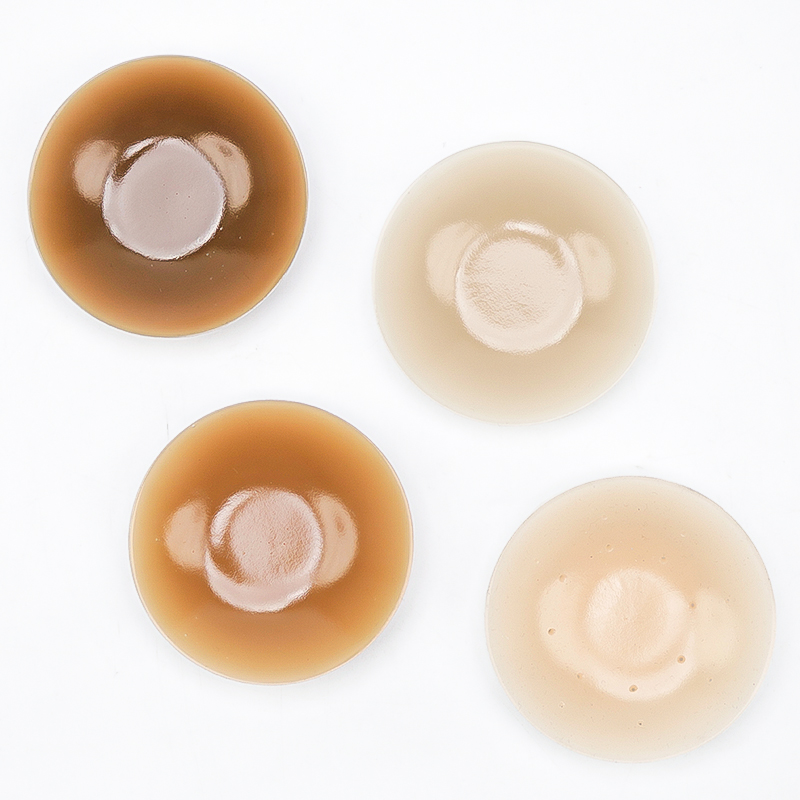
- Confirm that the bulk product uses the specified 100% solid silicone and matches the approved nude, khaki, brown, or coco color.
- Measure both listed size options, 8 cm and 10 cm, and compare several finished units rather than relying on one piece.
- Examine symmetry, surface smoothness, edge finishing, coverage, fit, and comfort before and after the specified hand-wash process.
- Compare the approved OPP bag or customized package with bulk packaging, including labels, sealing, quantity, and presentation.
How to Structure the Comparison
1. Begin with Material Verification
Material confirmation is the first step because a difference in raw material can affect flexibility, touch, appearance, comfort, and durability. The product specification identifies the nipple covers as 100% solid silicone. The approved sample should therefore be retained as the reference for material feel, elasticity, surface finish, and visible uniformity.
Production records should also identify the approved color, size, product name, and packaging format. This information gives the inspection team a clear baseline when evaluating bulk goods and helps prevent an acceptable-looking product from being compared against incomplete specifications.
2. Check Size, Shape, and Finish
Dimensional inspection should cover the two stated sizes: 8 cm and 10 cm. Measure multiple pieces from production and compare them with the sample. Diameter, overall profile, symmetry, thickness, and edge treatment can reveal molding or finishing variation that may not be obvious during a quick visual review.
Surface consistency is equally important. Check for uneven texture, visible marks, deformation, or differences in softness. A sample and bulk unit may share the same nominal material while still producing different wearing results because of changes in molding, trimming, or finishing conditions.
3. Assess Wear and Care Performance
Wear testing should reflect the product's intended applications, including summer daily wear, casual home clothing, bridal and wedding apparel, swimwear, vacation clothing, fitness, and yoga wear. Compare sample and bulk units for coverage, fit, comfort, appearance under clothing, and general usability.
The listed care method is hand washing only. Apply the same hand-wash process to the approved sample and selected bulk units, then compare their shape, color, surface condition, and comfort. Any change should be documented. An unlisted machine-washing or chemical test should not be used as the primary acceptance standard because it would not represent the stated care instruction.
4. Inspect Packaging Execution
Packaging can create a quality gap even when the physical product meets its specification. The product supports an OPP bag or a customized package, so the sample and shipment should be compared for package material, dimensions, artwork, labeling, sealing, unit quantity, and overall presentation.
This check is particularly relevant when the nipple covers are supplied for apparel brands, bridal collections, swimwear, or daily-wear product lines. Incorrect labeling, poor sealing, or inconsistent quantities can affect the buyer's launch process and customer experience.
Inspection Evidence Across Production
A dependable sample-to-bulk review should connect three quality checkpoints: incoming raw-material inspection, in-process production inspection, and finished-goods inspection. Bulk variation may arise when raw materials change, molding parameters shift, finishing is inconsistent, or packaging instructions are not followed during scale-up.
Request records from each stage and compare them with the approved sample. Finished-goods inspection should confirm the actual result, while incoming and in-process records help identify where a difference first appeared. This approach provides stronger evidence than approving a single bulk unit based only on appearance.
Xinrui lists certification coverage for products such as nipple covers, boob tape, silicone bras, adhesive bras, and bra pads. Its stated credentials include BSCI and ISO 10993. These documents can support supplier qualification, but direct sample and bulk inspection remains the primary evidence of production consistency.
A reported cooperation case involves a US-based online women's apparel seller that uses invisible breast pasties for formalwear, bridal clothing, camisoles, yoga, and everyday wear. The case emphasizes product quality, compliance documentation, and reliable repeat supply. The product reference image below shows the non-adhesive silicone nipple cover format used for comparison.
Comparison Checklist
| Inspection category | Sample and bulk evidence | Variation it may reveal |
|---|---|---|
| Material | 100% solid silicone specification, flexibility, and surface feel | Raw-material or texture inconsistency |
| Dimensions and form | 8 cm and 10 cm references, profile, symmetry, and edge quality | Size, molding, or finishing variation |
| Color | Nude, khaki, brown, or coco reference samples | Shade differences between approved sample and bulk goods |
| Wear performance | Coverage, comfort, fit, and appearance in intended clothing categories | Inconsistent user experience or visible performance |
| Care result | Condition before and after the same hand-wash procedure | Change in shape, color, surface, or usability |
| Packaging | Approved OPP bag or customized package, labels, seals, and quantity | Packaging, presentation, or packing-count errors |
| Quality records | Incoming, in-process, and finished-goods inspection reports | Weak control during the transition to mass production |
Frequently Asked Questions
Which details should be approved before bulk production starts?
Approve the material, color, size, shape, surface finish, package format, and care method. For this product, the stated references are 100% solid silicone; nude, khaki, brown, or coco colors; 8 cm or 10 cm sizes; OPP bag or customized packaging; and hand washing only.
What is the most effective way to find production variation?
Ask for inspection evidence from incoming materials, production processes, and finished goods. Then inspect multiple bulk units against the approved sample for material feel, measurements, shape, color, surface condition, wear performance, washing results, and packaging details.
Should buyers perform an adhesive test on this item?
No adhesive performance is specified. The item is described as a non-adhesive silicone nipple cover, so validation should concentrate on material, coverage, fit, comfort, shape retention, care performance, and packaging accuracy.
Conclusion
The clearest way to expose a gap between an invisible bra pad sample and bulk production is to compare the same approved characteristics at every quality stage. Check material, dimensions, color, shape, surface, wearing performance, hand-wash results, packaging, and inspection records before accepting the shipment. Using several bulk units and reviewing incoming, in-process, and finished-goods evidence provides a more reliable decision than checking one item.
Xinrui operates as an integrated manufacturing and trading enterprise and supports OEM/ODM development and packaging customization. The company lists BSCI and ISO 10993 among its credentials. For technical solutions or product support, contact judy@xinruibra.com.
About Us
Dongguan Xinrui Underwear Co., Ltd. is a factory-based supplier of women's invisible underwear and intimate apparel, providing product development, mass production, OEM/ODM customization, and packaging customization for overseas brand owners, wholesalers, e-commerce sellers, and distribution buyers. Established in 2007, the company has 150 employees and a 10,000 sqm factory area. Its R&D team includes five experienced engineers, with customized items developed in 20 to 50 days, supported by molding and silicone filling equipment and four QC inspectors. The company lists BSCI and ISO 10993 credentials and has served clients across multiple industries.

REPORT