







-
 Agriculture
-
 Health-Care
-
 Environment
-
 Construction-Real-Estate
-
 Tools-Hardware
-
 Home-Garden
-
 Furniture
-
 Luggage-Bags-Cases
-
 Medical-devices-Supplies
-
 Gifts-Crafts
-
 Sports-Entertainment
-
 Food-Beverage
-
 Vehicles-Transportation
-
 Power-Transmission
-
 Material-Handling
-
 Renewable-Energy
-
 Safety
-
 Testing-Instrument-Equipment
-
 Construction-Building-Machinery
-
 Pet-Supplies
-
 Personal-Care-Household-Cleaning
-
 Vehicle-Accessories-Electronics-Tools
-
 School-Office-Supplies
-
 Packaging-Printing
-
 Mother-Kids-Toys
-
 Business-Services
-
 Commercial-Equipment-Machinery
-
 Apparel-Accessories
-
 Security
-
 Shoes-Accessories
-
 Vehicle-Parts-Accessories
-
 Jewelry-Eyewear-Watches-Accessories
-
 Lights-Lighting
-
 Fabric-Textile-Raw-Material
-
 Fabrication-Services
-
 Industrial-Machinery
-
 Consumer-Electronics
-
 Electrical-Equipment-Supplies
-
 Electronic-Components-Accessories-Telecommunications
-
 Home-Appliances
-
 Beauty
-
 Chemicals
-
 Rubber-Plastics
-
 Metals-Alloys


























































































































































































































































































































































































































































































































































































- Masonry Materials
- Curtain Walls & Accessories
- Earthwork Products
- Fireproofing Materials
- Heat Insulation Materials
- Plastic Building Materials
- Building Boards
- Soundproofing Materials
- Timber
- Waterproofing Materials
- Balustrades & Handrails
- Bathroom & Kitchen
- Flooring & Accessories
- Tiles & Accessories
- Door, Window & Accessories
- Fireplaces & Stoves
- Floor Heating Systems & Parts
- Stairs & Stair Parts
- Ceilings
- Elevators & Escalators
- Stone
- Countertops, Vanity Tops & Table Tops
- Mosaics
- Metal Building Materials
- Multifunctional Materials
- Ladders & Scaffoldings
- Mouldings
- Corner Guards
- Decorative Films
- Formwork
- Building & Industrial Glass
- Other Construction & Real Estate
- Wallpapers/Wall panels
- HVAC System & Parts
- Outdoor Facilities
- Prefabricated Buildings
- Festive & Party Supplies
- Bathroom Products
- Household Sundries
- Rain Gear
- Garden Supplies
- Household Cleaning Tools & Accessories
- Lighters & Smoking Accessories
- Home Storage & Organization
- Household Scales
- Smart Home Improvement
- Home Textiles
- Kitchenware
- Drinkware & Accessories
- Dinnerware, Coffee & Wine
- Home Decor
- Golf
- Fitness & Body Building
- Amusement Park Facilities
- Billiards, Board Game,Coin Operated Games
- Musical Instruments
- Outdoor Affordable Luxury Sports
- Camping & Hiking
- Fishing
- Sports Safety&Rehabilitation
- Ball Sports Equipments
- Water Sports
- Winter Sports
- Luxury Travel Equipments
- Sports Shoes, Bags & Accessories
- Cycling
- Other Sports & Entertainment Products
- Artificial Grass&Sports Flooring&Sports Court Equipment
- Scooters
- Food Ingredients
- Honey & Honey Products
- Snacks
- Nuts & Kernels
- Seafood
- Plant & Animal Oil
- Beverages
- Fruit & Vegetable Products
- Frog & Escargot
- Bean Products
- Egg Products
- Dairy Products
- Seasonings & Condiments
- Canned Food
- Instant Food
- Baked Goods
- Other Food & Beverage
- Meat & Poultry
- Confectionery
- Grain Products
- Feminie Care
- Hair Care & Styling
- Body Care
- Hands & Feet Care
- Hygiene Products
- Men's Grooming
- Laundry Cleaning Supplies
- Travel Size & Gift Sets
- Room Deodorizers
- Other Personal Care Products
- Pest Control Products
- Special Household Cleaning
- Floor Cleaning
- Kitchen & Bathroom Cleaning
- Oral Care
- Bath Supplies
- Yellow Pages
- Correction Supplies
- Office Binding Supplies
- Office Cutting Supplies
- Board Erasers
- Office Adhesives & Tapes
- Education Supplies
- Pencil Cases & Bags
- Notebooks & Writing Pads
- File Folder Accessories
- Calendars
- Writing Accessories
- Commercial Office Supplies
- Pencil Sharpeners
- Pens
- Letter Pad/Paper
- Paper Envelopes
- Desk Organizers
- Pencils
- Markers & Highlighters
- Filing Products
- Art Supplies
- Easels
- Badge Holder & Accessories
- Office Paper
- Printer Supplies
- Book Covers
- Other Office & School Supplies
- Stationery Set
- Boards
- Clipboards
- Stamps
- Drafting Supplies
- Stencils
- Electronic Dictionary
- Books
- Map
- Magazines
- Calculators
- Baby & Toddler Toys
- Educational Toys
- Classic Toys
- Dress Up & Pretend Play
- Toy Vehicle
- Stuffed Animals & Plush Toys
- Outdoor Toys & Structures
- Balloons & Accessories
- Baby Food
- Children's Clothing
- Baby Supplies & Products
- Maternity Clothes
- Kids Shoes
- Baby Care
- Novelty & Gag Toys
- Dolls & Accessories
- Puzzle & Games
- Blocks & Model Building Toys
- Toddler Clothing
- Baby Clothing
- Kids' Luggage & Bags
- Arts, Crafts & DIY Toys
- Action & Toy Figures
- Baby Appliances
- Hobbies & Models
- Remote Control Toys
- Promotional Toys
- Pregnancy & Maternity
- Hygiene Products
- Kid's Textile&Bedding
- Novelty & Special Use
- Toy Weapons
- Baby Gifts
- Baby Storage & Organization
- Auto Drive Systems
- ATV/UTV Parts & Accessories
- Marine Parts & Accessories
- Other Auto Parts
- Trailer Parts & Accessories
- Auto Transmission Systems
- Train Parts & Accessories
- Universal Parts
- Railway Parts & Accessories
- Auto Brake Systems
- Aviation Parts & Accessories
- Truck Parts & Accessories
- Auto Suspension Systems
- Auto Lighting Systems
- New Energy Vehicle Parts & Accessories
- Auto Steering Systems
- Wheels, Tires & Accessories
- Bus Parts & Accessories
- Auto Performance Parts
- Cooling System
- Go-Kart & Kart Racer Parts & Accessories
- Air Conditioning Systems
- Heavy Duty Vehicle Parts & Accessories
- Auto Electrical Systems
- Auto Body Systems
- Auto Engine Systems
- Container Parts & Accessories
- Motorcycle Parts & Accessories
- Refrigeration & Heat Exchange Equipment
- Machine Tool Equipment
- Food & Beverage Machinery
- Agricultural Machinery & Equipment
- Apparel & Textile Machinery
- Chemical Machinery
- Packaging Machines
- Paper Production Machinery
- Plastic & Rubber Processing Machinery
- Industrial Robots
- Electronic Products Machinery
- Metal & Metallurgy Machinery
- Woodworking Machinery
- Home Product Manufacturing Machinery
- Machinery Accessories
- Environmental Machinery
- Machinery Service
- Electrical Equipment Manufacturing Machinery
- Industrial Compressors & Parts
- Tobacco & Cigarette Machinery
- Production Line
- Used Industrial Machinery
- Electronics Production Machinery
- Other Machinery & Industrial Equipment
- Camera, Photo & Accessories
- Portable Audio, Video & Accessories
- Television, Home Audio, Video & Accessories
- Video Games & Accessories
- Mobile Phone & Accessories
- Electronic Publications
- Earphone & Headphone & Accessories
- Speakers & Accessories
- Smart Electronics
- TV Receivers & Accessories
- Mobile Phone & Computer Repair Parts
- Chargers, Batteries & Power Supplies
- Used Electronics
- VR, AR, MR Hardware & Software
- Projectors & Presentation Equipments
- Other Consumer Electronics
- Cables & Commonly Used Accessories
- Computer Hardware & Software
- Displays, Signage and Optoelectronics
- Discrete Semiconductors
- Wireless & IoT Module and Products
- Telecommunications
- Connectors, Terminals & Accessories
- Development Boards, Electronic Modules and Kits
- Circuit Protection
- Sensors
- Isolators
- Audio Components and Products
- Integrated Circuits
- Power Supplies
- Relays
- RF, Microwave and RFID
- Electronic Accessories & Supplies
- Passive Components
- PCB & PCBA
- Air Quality Appliances
- Home Appliance Parts
- Heating & Cooling Appliances
- Small Kitchen Appliances
- Laundry Appliances
- Water Heaters
- Water Treatment Appliances
- Refrigerators & Freezers
- Personal Care & Beauty Appliances
- Major Kitchen Appliances
- Cleaning Appliances
- Second-hand Appliances
- Smart Home Appliances
- Other Home Appliances
- Energy Chemicals
- Inorganic Chemicals
- Basic Organic Chemicals
- Agrochemicals
- Admixture & Additives
- Catalysts & Chemical Auxiliary Agents
- Pigments & Dyestuff
- Coating & Paint
- Daily Chemicals
- Polymer
- Organic Intermediate
- Adhesives & Sealants
- Chemical Waste
- Biological Chemical Products
- Surface Treatment Chemicals
- Painting & Coating
- Chemical Reagents
- Flavor & Fragrance
- Non-Explosive Demolition Agents
- Other Chemicals
- Custom Chemical Services

How to Document Ownership of Custom Serving Tray Molds
Ownership of custom serving tray molds should be established through a clear written agreement. The document should identify every mold, name the legal owner, explain how design and tooling costs affect title, restrict access and production use, assign storage and maintenance duties, and define what happens when the project or business relationship ends. It should also address confidentiality and whether the manufacturer may use the mold for products made for other customers.
Key Contract Requirements
- Describe each mold using its identification number, drawings, material, dimensions, approved sample, and related serving tray specification.
- State directly whether ownership rests with the buyer, Gold Spark Global Souricng Co., Ltd., or both parties under specifically stated conditions.
- Distinguish product pricing from charges for mold design, development, fabrication, storage, servicing, repair, and replacement.
- Set rules for authorized users, permitted production, subcontractor access, maintenance, return, transfer, destruction, and post-termination storage.
How to Structure a Mold Ownership Clause
1. Link the Mold to a Specific Project
A mold should never be identified only as a “custom tray mold.” A tooling schedule or contract appendix should connect the physical item to the relevant project by recording its mold code, drawing number, approved prototype, cavity or component details, storage site, and modification history. This record helps the parties determine exactly which tooling is covered if several serving tray designs are developed over time.
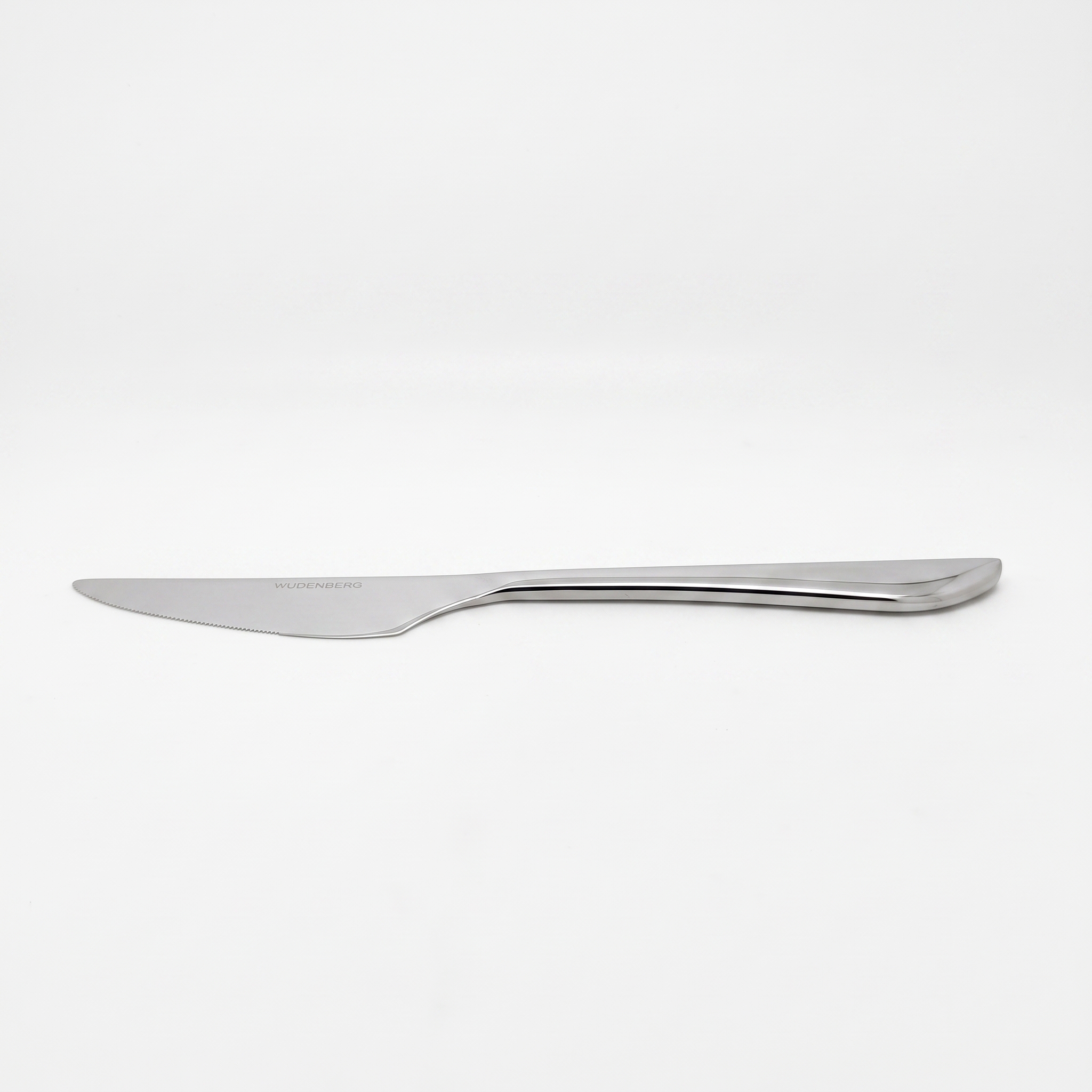
The available product information refers to a dinner knife and does not establish ownership for serving tray tooling. Accordingly, ownership of tray molds should be documented in a separate project record rather than inferred from an unrelated product order.
2. Separate Ownership from Physical Possession
The party that owns a mold may not be the party that holds it. A buyer may pay for and own the tooling while the manufacturer retains it for production, inspection, and maintenance. The agreement should identify who may access the mold, whether subcontractors may use it, how access is approved, and whether production is limited to the named buyer and project.
Unless the parties agree otherwise in writing, the mold should not be used to manufacture serving trays or related goods for another customer. Any broader use should identify the permitted products, customers, duration, and approval process.
3. Connect Payment to Title and Responsibilities
Payment alone should not be treated as automatic proof of ownership. The contract should state whether tooling fees are paid separately from product orders and whether full payment, partial payment, or reimbursement creates ownership rights. It should also explain who owns later modifications, replacement tooling, inserts, and related engineering files.
Responsibility should be allocated for storage, inspection, preventive maintenance, repair, damage, loss, and replacement. If the manufacturer must maintain the mold, the agreement can specify inspection intervals, acceptable operating condition, reporting duties, and the party responsible for extraordinary costs.
4. Set Rules for Return and Final Disposition
The agreement should specify when the mold must be returned, transferred, destroyed, or retained in storage. Possible triggers include completion of the project, a written demand, termination of the supply relationship, or a period of inactivity. The parties should also define transportation costs, notice periods, storage charges, and the records required when custody changes.
A condition report, photographs, delivery receipt, and updated inventory entry can document the mold’s condition and location. These records reduce disputes over whether the tooling was complete, damaged, obsolete, or returned in an acceptable state.
Supplier Context and Commercial Application
Gold Spark Global Souricng Co., Ltd. reports that it operates one professional research and development and design team together with ten factories. The company offers customization based on customer requirements and indicates a general standard lead time of 30–45 days, depending on order volume and project needs. These capabilities make it useful to record design approvals, tooling changes, factory custody, and production authorization as separate contractual matters.
The company supplies hotel products, kitchen equipment, daily necessities, hardware, electronic products, ceramic goods, glassware, plastic products, and related services. Its stated application scenarios include five-star hotels and resorts, premium Western restaurants, fine-dining venues, Chinese restaurants, clubs, yachts, corporate events, and banquets. In these environments, clearly documented serving tray tooling can support repeat orders and consistent product quality.
The company’s knowledge base lists SGS certification for table knives in the European Union and SGS certification for table spoons and table forks in the European Union. It also records cooperation with hotels in China, Hong Kong, Cambodia, Mongolia, and Macao for hotel operation equipment supply.
Contract Checklist and Risk Comparison
| Contract Topic | Recommended Provision | Potential Problem if Missing |
|---|---|---|
| Title and Ownership | Name the owner and explain whether payment or reimbursement transfers title. | The parties may disagree about ownership after tooling is completed or paid for. |
| Mold Identification | Attach codes, drawings, samples, specifications, and modification records. | It may be unclear which physical mold is covered by the agreement. |
| Authorized Use | Restrict production to the identified project unless another use is approved in writing. | Unauthorized production or use for another customer may become difficult to challenge. |
| Custody and Care | Assign storage, inspection, maintenance, repair, loss, and replacement duties. | Damage and related costs may have no agreed allocation. |
| Disposition | Define the process and timing for return, transfer, destruction, or continued storage. | The mold may remain with the manufacturer without a clear exit procedure. |
| Confidential Information | Protect drawings, dimensions, prototypes, tooling data, and production records. | Important design and manufacturing information may lack express protection. |
Frequently Asked Questions
Does paying for a custom mold automatically make the customer its owner?
No. The contract should clarify whether the payment covers products, tooling, or both, and whether ownership transfers after full payment, after a deposit, or at another defined milestone.
May a manufacturer retain a customer-owned mold after production?
It may do so only under agreed storage terms. Those terms should cover access restrictions, maintenance, insurance, storage fees, return timing, and the procedure for requesting delivery or transfer.
Which documents should accompany the ownership provision?
The file should include the mold code, drawings, approved sample, specifications, modification log, invoices or payment records, storage information, and production-use restrictions. Because the current product record identifies a dinner knife, serving tray tooling should be listed separately.
Conclusion and Practical Recommendation
The most reliable approach is to use a dedicated tooling schedule or a detailed contract section for every custom serving tray mold. It should identify the tooling, name the owner, connect title to payment, limit authorized use, assign custody and maintenance, protect confidential design information, and create a documented process for the end of the relationship.
Gold Spark Global Souricng Co., Ltd. supports order-based supply with a one-piece minimum order, a listed 90-day delivery period for the dinner knife product, SGS report inspection, and exchange for quality issues reported within seven days after receipt. For technical solutions or support, contact goldspark@vip.163.com.
About Gold Spark Global Souricng Co., Ltd.
Gold Spark Global Souricng Co., Ltd. is a Hong Kong-headquartered and Shenzhen-supported specialist serving high-end hotel supply chains. Established in 2002, the company combines Hong Kong sourcing resources with Shenzhen manufacturing capabilities and supplies hotel products, kitchen equipment, and related services. It reports one professional research and development and design team, ten factories, and customized production for customer requirements. Its listed credentials include SGS certifications for table knives, table spoons, and table forks for the European Union, along with cooperation cases across several markets and industries.

REPORT