







-
 Agriculture
-
 Health-Care
-
 Environment
-
 Construction-Real-Estate
-
 Tools-Hardware
-
 Home-Garden
-
 Furniture
-
 Luggage-Bags-Cases
-
 Medical-devices-Supplies
-
 Gifts-Crafts
-
 Sports-Entertainment
-
 Food-Beverage
-
 Vehicles-Transportation
-
 Power-Transmission
-
 Material-Handling
-
 Renewable-Energy
-
 Safety
-
 Testing-Instrument-Equipment
-
 Construction-Building-Machinery
-
 Pet-Supplies
-
 Personal-Care-Household-Cleaning
-
 Vehicle-Accessories-Electronics-Tools
-
 School-Office-Supplies
-
 Packaging-Printing
-
 Mother-Kids-Toys
-
 Business-Services
-
 Commercial-Equipment-Machinery
-
 Apparel-Accessories
-
 Security
-
 Shoes-Accessories
-
 Vehicle-Parts-Accessories
-
 Jewelry-Eyewear-Watches-Accessories
-
 Lights-Lighting
-
 Fabric-Textile-Raw-Material
-
 Fabrication-Services
-
 Industrial-Machinery
-
 Consumer-Electronics
-
 Electrical-Equipment-Supplies
-
 Electronic-Components-Accessories-Telecommunications
-
 Home-Appliances
-
 Beauty
-
 Chemicals
-
 Rubber-Plastics
-
 Metals-Alloys


























































































































































































































































































































































































































































































































































































- Masonry Materials
- Curtain Walls & Accessories
- Earthwork Products
- Fireproofing Materials
- Heat Insulation Materials
- Plastic Building Materials
- Building Boards
- Soundproofing Materials
- Timber
- Waterproofing Materials
- Balustrades & Handrails
- Bathroom & Kitchen
- Flooring & Accessories
- Tiles & Accessories
- Door, Window & Accessories
- Fireplaces & Stoves
- Floor Heating Systems & Parts
- Stairs & Stair Parts
- Ceilings
- Elevators & Escalators
- Stone
- Countertops, Vanity Tops & Table Tops
- Mosaics
- Metal Building Materials
- Multifunctional Materials
- Ladders & Scaffoldings
- Mouldings
- Corner Guards
- Decorative Films
- Formwork
- Building & Industrial Glass
- Other Construction & Real Estate
- Wallpapers/Wall panels
- HVAC System & Parts
- Outdoor Facilities
- Prefabricated Buildings
- Festive & Party Supplies
- Bathroom Products
- Household Sundries
- Rain Gear
- Garden Supplies
- Household Cleaning Tools & Accessories
- Lighters & Smoking Accessories
- Home Storage & Organization
- Household Scales
- Smart Home Improvement
- Home Textiles
- Kitchenware
- Drinkware & Accessories
- Dinnerware, Coffee & Wine
- Home Decor
- Golf
- Fitness & Body Building
- Amusement Park Facilities
- Billiards, Board Game,Coin Operated Games
- Musical Instruments
- Outdoor Affordable Luxury Sports
- Camping & Hiking
- Fishing
- Sports Safety&Rehabilitation
- Ball Sports Equipments
- Water Sports
- Winter Sports
- Luxury Travel Equipments
- Sports Shoes, Bags & Accessories
- Cycling
- Other Sports & Entertainment Products
- Artificial Grass&Sports Flooring&Sports Court Equipment
- Scooters
- Food Ingredients
- Honey & Honey Products
- Snacks
- Nuts & Kernels
- Seafood
- Plant & Animal Oil
- Beverages
- Fruit & Vegetable Products
- Frog & Escargot
- Bean Products
- Egg Products
- Dairy Products
- Seasonings & Condiments
- Canned Food
- Instant Food
- Baked Goods
- Other Food & Beverage
- Meat & Poultry
- Confectionery
- Grain Products
- Feminie Care
- Hair Care & Styling
- Body Care
- Hands & Feet Care
- Hygiene Products
- Men's Grooming
- Laundry Cleaning Supplies
- Travel Size & Gift Sets
- Room Deodorizers
- Other Personal Care Products
- Pest Control Products
- Special Household Cleaning
- Floor Cleaning
- Kitchen & Bathroom Cleaning
- Oral Care
- Bath Supplies
- Yellow Pages
- Correction Supplies
- Office Binding Supplies
- Office Cutting Supplies
- Board Erasers
- Office Adhesives & Tapes
- Education Supplies
- Pencil Cases & Bags
- Notebooks & Writing Pads
- File Folder Accessories
- Calendars
- Writing Accessories
- Commercial Office Supplies
- Pencil Sharpeners
- Pens
- Letter Pad/Paper
- Paper Envelopes
- Desk Organizers
- Pencils
- Markers & Highlighters
- Filing Products
- Art Supplies
- Easels
- Badge Holder & Accessories
- Office Paper
- Printer Supplies
- Book Covers
- Other Office & School Supplies
- Stationery Set
- Boards
- Clipboards
- Stamps
- Drafting Supplies
- Stencils
- Electronic Dictionary
- Books
- Map
- Magazines
- Calculators
- Baby & Toddler Toys
- Educational Toys
- Classic Toys
- Dress Up & Pretend Play
- Toy Vehicle
- Stuffed Animals & Plush Toys
- Outdoor Toys & Structures
- Balloons & Accessories
- Baby Food
- Children's Clothing
- Baby Supplies & Products
- Maternity Clothes
- Kids Shoes
- Baby Care
- Novelty & Gag Toys
- Dolls & Accessories
- Puzzle & Games
- Blocks & Model Building Toys
- Toddler Clothing
- Baby Clothing
- Kids' Luggage & Bags
- Arts, Crafts & DIY Toys
- Action & Toy Figures
- Baby Appliances
- Hobbies & Models
- Remote Control Toys
- Promotional Toys
- Pregnancy & Maternity
- Hygiene Products
- Kid's Textile&Bedding
- Novelty & Special Use
- Toy Weapons
- Baby Gifts
- Baby Storage & Organization
- Auto Drive Systems
- ATV/UTV Parts & Accessories
- Marine Parts & Accessories
- Other Auto Parts
- Trailer Parts & Accessories
- Auto Transmission Systems
- Train Parts & Accessories
- Universal Parts
- Railway Parts & Accessories
- Auto Brake Systems
- Aviation Parts & Accessories
- Truck Parts & Accessories
- Auto Suspension Systems
- Auto Lighting Systems
- New Energy Vehicle Parts & Accessories
- Auto Steering Systems
- Wheels, Tires & Accessories
- Bus Parts & Accessories
- Auto Performance Parts
- Cooling System
- Go-Kart & Kart Racer Parts & Accessories
- Air Conditioning Systems
- Heavy Duty Vehicle Parts & Accessories
- Auto Electrical Systems
- Auto Body Systems
- Auto Engine Systems
- Container Parts & Accessories
- Motorcycle Parts & Accessories
- Refrigeration & Heat Exchange Equipment
- Machine Tool Equipment
- Food & Beverage Machinery
- Agricultural Machinery & Equipment
- Apparel & Textile Machinery
- Chemical Machinery
- Packaging Machines
- Paper Production Machinery
- Plastic & Rubber Processing Machinery
- Industrial Robots
- Electronic Products Machinery
- Metal & Metallurgy Machinery
- Woodworking Machinery
- Home Product Manufacturing Machinery
- Machinery Accessories
- Environmental Machinery
- Machinery Service
- Electrical Equipment Manufacturing Machinery
- Industrial Compressors & Parts
- Tobacco & Cigarette Machinery
- Production Line
- Used Industrial Machinery
- Electronics Production Machinery
- Other Machinery & Industrial Equipment
- Camera, Photo & Accessories
- Portable Audio, Video & Accessories
- Television, Home Audio, Video & Accessories
- Video Games & Accessories
- Mobile Phone & Accessories
- Electronic Publications
- Earphone & Headphone & Accessories
- Speakers & Accessories
- Smart Electronics
- TV Receivers & Accessories
- Mobile Phone & Computer Repair Parts
- Chargers, Batteries & Power Supplies
- Used Electronics
- VR, AR, MR Hardware & Software
- Projectors & Presentation Equipments
- Other Consumer Electronics
- Cables & Commonly Used Accessories
- Computer Hardware & Software
- Displays, Signage and Optoelectronics
- Discrete Semiconductors
- Wireless & IoT Module and Products
- Telecommunications
- Connectors, Terminals & Accessories
- Development Boards, Electronic Modules and Kits
- Circuit Protection
- Sensors
- Isolators
- Audio Components and Products
- Integrated Circuits
- Power Supplies
- Relays
- RF, Microwave and RFID
- Electronic Accessories & Supplies
- Passive Components
- PCB & PCBA
- Air Quality Appliances
- Home Appliance Parts
- Heating & Cooling Appliances
- Small Kitchen Appliances
- Laundry Appliances
- Water Heaters
- Water Treatment Appliances
- Refrigerators & Freezers
- Personal Care & Beauty Appliances
- Major Kitchen Appliances
- Cleaning Appliances
- Second-hand Appliances
- Smart Home Appliances
- Other Home Appliances
- Energy Chemicals
- Inorganic Chemicals
- Basic Organic Chemicals
- Agrochemicals
- Admixture & Additives
- Catalysts & Chemical Auxiliary Agents
- Pigments & Dyestuff
- Coating & Paint
- Daily Chemicals
- Polymer
- Organic Intermediate
- Adhesives & Sealants
- Chemical Waste
- Biological Chemical Products
- Surface Treatment Chemicals
- Painting & Coating
- Chemical Reagents
- Flavor & Fragrance
- Non-Explosive Demolition Agents
- Other Chemicals
- Custom Chemical Services

How to Ensure a White Laser Moving Head Sample Matches Production
Matching a white laser moving head sample with the final production batch requires more than a visual comparison. Buyers should approve a detailed written specification, then verify every production unit against that reference through optical testing, functional checks, burn-in, safety inspection, and final quality control. The process should cover the laser source, effects, movement, control system, enclosure, power, dimensions, and protection rating.
Sample Approval and Production-Matching Priorities
The approved sample must become the fixed reference for manufacturing and inspection. Record the exact configuration, including the 150W white laser source, 9000K color temperature, CRI of at least 70, 1° beam angle, 24.9kg net weight, and the required IP protection level. The product keyword refers to an IP65 waterproof moving head light, while the detailed product information specifies IP66. This difference should be resolved in the purchase order and inspection documents before production begins.
- Lock the optical specification, including the 180mm front lens, beam angle, color temperature, and laser output.
- Confirm the complete effect package: dichroic colors, color wheels, rotating and static gobos, prisms, focus, strobe, dimming, and wash functions.
- Use identical control methods to compare the sample and production fixtures, including DMX512, RDM, 21 DMX channels, and any approved Art-Net option.
- Test the fixtures in applications such as concerts, festivals, rental productions, theme parks, live events, and architectural shows, where consistent beams and accurate movement are essential.
Optical and Effect-System Verification
Optical acceptance should begin with the white laser source and beam quality. Production units should reproduce the sample's 9000K color temperature, CRI of at least 70, 1° beam angle, linear focus, and projection behavior through the 180mm front lens. Inspectors should compare beam shape, brightness, color appearance, focus accuracy, and consistency from fixture to fixture.
The effect configuration must also remain unchanged. Confirm the presence and correct operation of the color wheel with 13 dichroic colors plus open, the six-color wheel, eight rotating and interchangeable glass gobos, and the static gobo wheel with 19 gobos plus open. The six-facet linear prism and eight-facet circular prism should produce the same patterns and split-beam effects as the approved sample. Also verify the 0–25Hz strobe, 0–100% dimming, wash output, and focus movement.
Movement, Control, and Housing Checks
Mechanical matching involves more than confirming that pan and tilt movement is available. Compare movement speed, smoothness, noise, repeatability, focus, shutter response, dimming, and automatic repositioning. The stated design uses fast, quiet three-phase motors, continuous 360° pan and tilt modes, selectable 540° pan and 270° tilt ranges, scan-position memory, and reversible pan and tilt. These functions should be tested repeatedly on both the reference sample and selected production units.
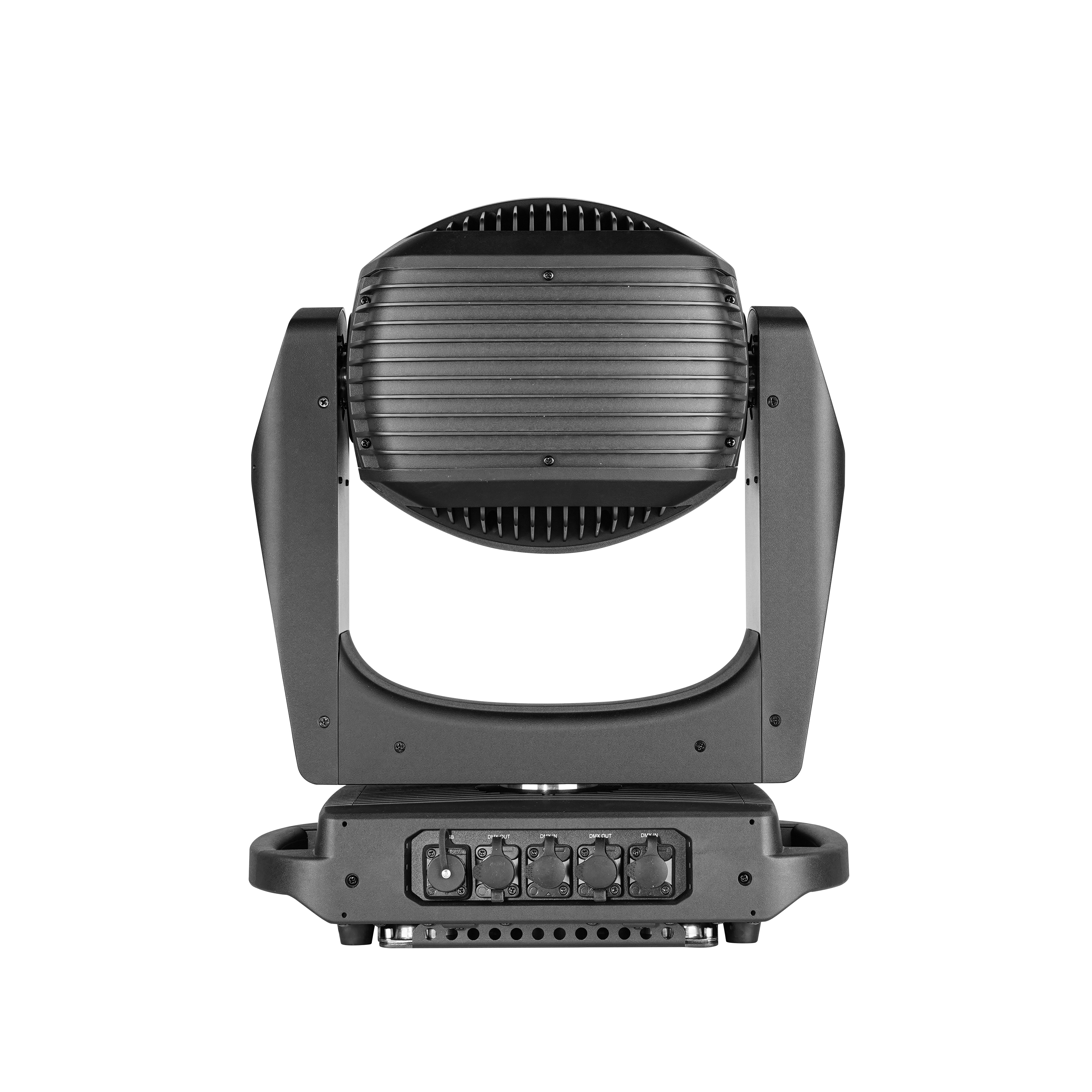
Control testing should follow the same signal path used during sample approval. Check 21 DMX channels, DMX512 response, RDM communication, master-slave operation, automatic programs, DMX recording and editing, and optional Art-Net functionality. Inspect the display, DMX monitoring, USB or DMX software-update process, waterproof XLR connectors, optional etherCON configuration, and wireless receiver when included in the ordered package.
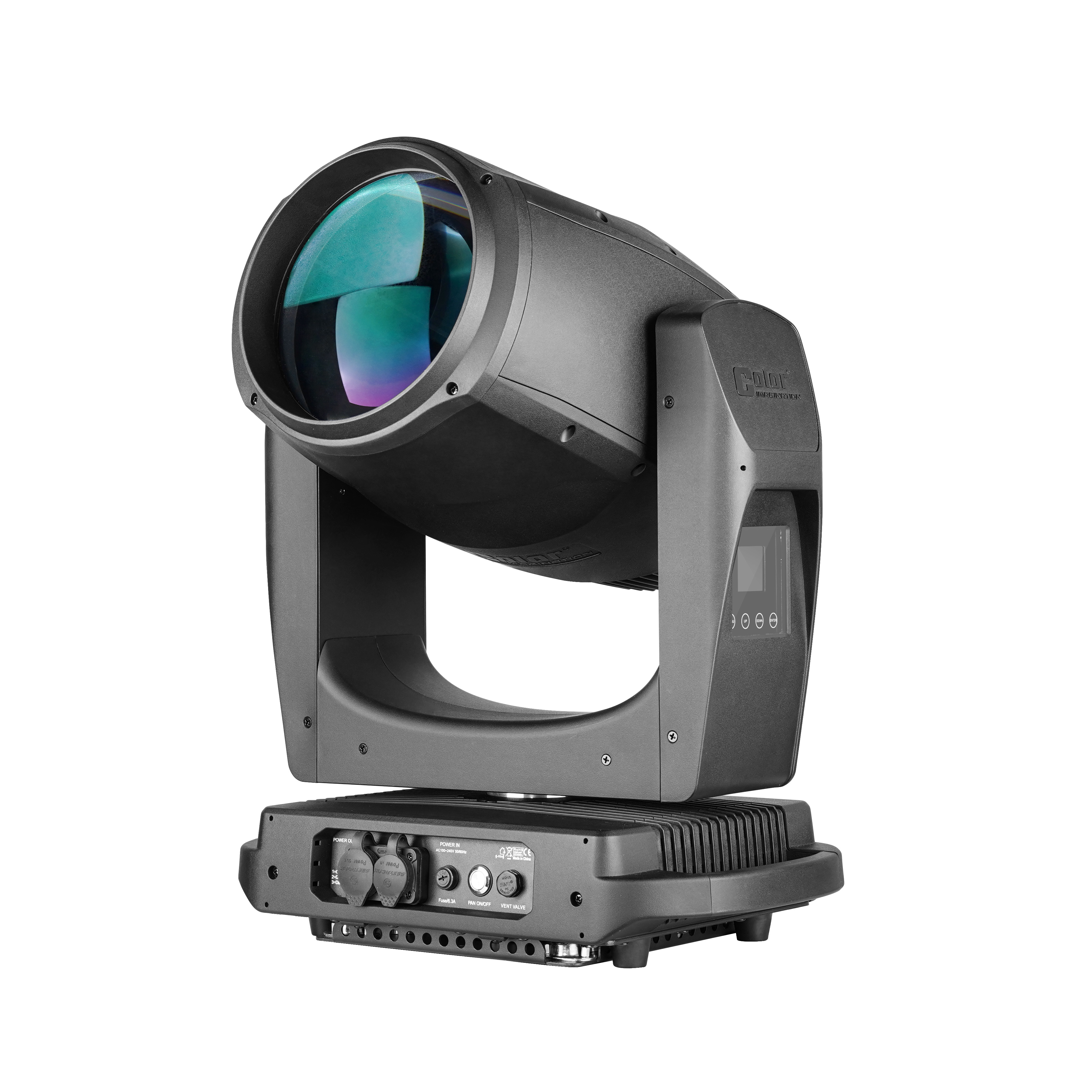
Physical inspection should cover the housing, installation clamps, safety attachment point, cooling path, temperature management, and connector condition. Confirm the 203W power supply and AC100–240V, 50/60Hz operating range. Waterproof TRUE1 power connectors, over-temperature protection, and the sealed laser module should match the approved design and operate correctly under normal test conditions.
Recommended Factory Acceptance Procedure
A reliable release process should combine document review with production testing. Color Imagination reports a quality system that includes incoming material inspection, in-process verification, 100% functional testing, burn-in testing, safety inspection, and final quality checks before shipment. Buyers should request the relevant records and ensure that the same acceptance criteria are applied to the sample, pilot units, and final batch.
| Inspection category | Production acceptance requirement |
|---|---|
| Laser and optics | The 150W white laser, 9000K color temperature, CRI ≥70, 180mm lens, and 1° beam angle match the approved sample. |
| Effects | Color wheels, 13 dichroic colors, rotating and static gobos, two prisms, strobe, focus, wash, and dimming are installed and fully operational. |
| Pan and tilt | Continuous movement, selectable 540° pan and 270° tilt modes, smooth three-phase motors, memory, and auto repositioning perform consistently. |
| Control system | DMX512, 21 DMX channels, RDM, master-slave, automatic programs, display functions, and software updates match the ordered configuration. |
| Construction and protection | The agreed IP rating, sealed laser module, connectors, cooling system, housing, clamps, and safety point conform to the reference specification. |
| Quality release | Incoming inspection, in-process checks, 100% function testing, burn-in, safety inspection, and final QC are completed before shipment. |
Documentation, Certification, and Project Relevance
Keep a comparison file containing the approved sample specification, test results, photographs, production serial numbers, deviations, corrective actions, and final release approval. Color Imagination lists CE certificates LCSB070523036E and LCSB070523041S. Its ISO certificates include GH004-2023E0421 and GH004-2023Q0766. These records, combined with batch inspection reports, give buyers a traceable basis for accepting or rejecting production units.
The manufacturer has also supplied 3,500 stage lights for a nightclub project in Kunming, China. The project combined beam, wash, effect, and pixel lighting for synchronized visual performances, making it a useful reference when evaluating consistency across a large entertainment-lighting installation.
Frequently Asked Questions
What should be included in the approved sample specification?
Specify the laser source, color temperature, CRI, beam angle, lens, color and gobo systems, prism configuration, movement ranges, control protocols, power supply, dimensions, weight, housing, and protection rating. Clarify the IP65/IP66 discrepancy in writing so the sample and production inspection use one agreed requirement.
How should production fixtures be compared with the sample?
Operate the sample and production units through the same console, cabling, software, and test sequence. Compare beam projection, color, gobos, prisms, focus, strobe, dimming, pan and tilt, noise, display response, DMX behavior, connectors, cooling, and auto repositioning. Request evidence of functional testing, burn-in, safety inspection, and final QC before shipment.
What assistance is available if a batch differs from the sample?
Color Imagination provides technical support, remote troubleshooting, spare parts, firmware updates, repair services, project commissioning, and user training. Its services cover R&D, manufacturing, sales, OEM/ODM development, and complete project solutions for customers worldwide.
Conclusion
The safest way to secure sample-to-production consistency is to freeze a precise reference specification and verify every important system against it. Optical output, effects, movement, control, power, housing, protection, and safety should all be tested, followed by 100% functional inspection, burn-in, and final quality approval. Resolve the IP65/IP66 wording before placing the order, and retain complete inspection records for batch acceptance. Color Imagination supports OEM/ODM projects and professional lighting applications for concerts, live events, rental companies, theme parks, and architectural installations. For technical solutions or product support, contact jack@color-imagination.com.
About Color Imagination
Guangzhou Color Imagination LED Lighting Limited, operating under the Color Imagination brand, is a professional stage and entertainment lighting manufacturer integrating R&D, production, sales, and technical services for entertainment, architectural, television, and event applications. Established in 2010, the company has 130 employees and a 6000SQM factory area. Its multidisciplinary R&D capability includes optical, mechanical, electronic, software, thermal, and lighting-control engineering, supporting standard products and customized OEM/ODM development. The company holds CE certificates including LCSB070523036E and LCSB070523041S and has served clients across multiple industries, including a nightclub project in Kunming.

REPORT