







-
 Agriculture
-
 Health-Care
-
 Environment
-
 Construction-Real-Estate
-
 Tools-Hardware
-
 Home-Garden
-
 Furniture
-
 Luggage-Bags-Cases
-
 Medical-devices-Supplies
-
 Gifts-Crafts
-
 Sports-Entertainment
-
 Food-Beverage
-
 Vehicles-Transportation
-
 Power-Transmission
-
 Material-Handling
-
 Renewable-Energy
-
 Safety
-
 Testing-Instrument-Equipment
-
 Construction-Building-Machinery
-
 Pet-Supplies
-
 Personal-Care-Household-Cleaning
-
 Vehicle-Accessories-Electronics-Tools
-
 School-Office-Supplies
-
 Packaging-Printing
-
 Mother-Kids-Toys
-
 Business-Services
-
 Commercial-Equipment-Machinery
-
 Apparel-Accessories
-
 Security
-
 Shoes-Accessories
-
 Vehicle-Parts-Accessories
-
 Jewelry-Eyewear-Watches-Accessories
-
 Lights-Lighting
-
 Fabric-Textile-Raw-Material
-
 Fabrication-Services
-
 Industrial-Machinery
-
 Consumer-Electronics
-
 Electrical-Equipment-Supplies
-
 Electronic-Components-Accessories-Telecommunications
-
 Home-Appliances
-
 Beauty
-
 Chemicals
-
 Rubber-Plastics
-
 Metals-Alloys


























































































































































































































































































































































































































































































































































































- Masonry Materials
- Curtain Walls & Accessories
- Earthwork Products
- Fireproofing Materials
- Heat Insulation Materials
- Plastic Building Materials
- Building Boards
- Soundproofing Materials
- Timber
- Waterproofing Materials
- Balustrades & Handrails
- Bathroom & Kitchen
- Flooring & Accessories
- Tiles & Accessories
- Door, Window & Accessories
- Fireplaces & Stoves
- Floor Heating Systems & Parts
- Stairs & Stair Parts
- Ceilings
- Elevators & Escalators
- Stone
- Countertops, Vanity Tops & Table Tops
- Mosaics
- Metal Building Materials
- Multifunctional Materials
- Ladders & Scaffoldings
- Mouldings
- Corner Guards
- Decorative Films
- Formwork
- Building & Industrial Glass
- Other Construction & Real Estate
- Wallpapers/Wall panels
- HVAC System & Parts
- Outdoor Facilities
- Prefabricated Buildings
- Festive & Party Supplies
- Bathroom Products
- Household Sundries
- Rain Gear
- Garden Supplies
- Household Cleaning Tools & Accessories
- Lighters & Smoking Accessories
- Home Storage & Organization
- Household Scales
- Smart Home Improvement
- Home Textiles
- Kitchenware
- Drinkware & Accessories
- Dinnerware, Coffee & Wine
- Home Decor
- Golf
- Fitness & Body Building
- Amusement Park Facilities
- Billiards, Board Game,Coin Operated Games
- Musical Instruments
- Outdoor Affordable Luxury Sports
- Camping & Hiking
- Fishing
- Sports Safety&Rehabilitation
- Ball Sports Equipments
- Water Sports
- Winter Sports
- Luxury Travel Equipments
- Sports Shoes, Bags & Accessories
- Cycling
- Other Sports & Entertainment Products
- Artificial Grass&Sports Flooring&Sports Court Equipment
- Scooters
- Food Ingredients
- Honey & Honey Products
- Snacks
- Nuts & Kernels
- Seafood
- Plant & Animal Oil
- Beverages
- Fruit & Vegetable Products
- Frog & Escargot
- Bean Products
- Egg Products
- Dairy Products
- Seasonings & Condiments
- Canned Food
- Instant Food
- Baked Goods
- Other Food & Beverage
- Meat & Poultry
- Confectionery
- Grain Products
- Feminie Care
- Hair Care & Styling
- Body Care
- Hands & Feet Care
- Hygiene Products
- Men's Grooming
- Laundry Cleaning Supplies
- Travel Size & Gift Sets
- Room Deodorizers
- Other Personal Care Products
- Pest Control Products
- Special Household Cleaning
- Floor Cleaning
- Kitchen & Bathroom Cleaning
- Oral Care
- Bath Supplies
- Yellow Pages
- Correction Supplies
- Office Binding Supplies
- Office Cutting Supplies
- Board Erasers
- Office Adhesives & Tapes
- Education Supplies
- Pencil Cases & Bags
- Notebooks & Writing Pads
- File Folder Accessories
- Calendars
- Writing Accessories
- Commercial Office Supplies
- Pencil Sharpeners
- Pens
- Letter Pad/Paper
- Paper Envelopes
- Desk Organizers
- Pencils
- Markers & Highlighters
- Filing Products
- Art Supplies
- Easels
- Badge Holder & Accessories
- Office Paper
- Printer Supplies
- Book Covers
- Other Office & School Supplies
- Stationery Set
- Boards
- Clipboards
- Stamps
- Drafting Supplies
- Stencils
- Electronic Dictionary
- Books
- Map
- Magazines
- Calculators
- Baby & Toddler Toys
- Educational Toys
- Classic Toys
- Dress Up & Pretend Play
- Toy Vehicle
- Stuffed Animals & Plush Toys
- Outdoor Toys & Structures
- Balloons & Accessories
- Baby Food
- Children's Clothing
- Baby Supplies & Products
- Maternity Clothes
- Kids Shoes
- Baby Care
- Novelty & Gag Toys
- Dolls & Accessories
- Puzzle & Games
- Blocks & Model Building Toys
- Toddler Clothing
- Baby Clothing
- Kids' Luggage & Bags
- Arts, Crafts & DIY Toys
- Action & Toy Figures
- Baby Appliances
- Hobbies & Models
- Remote Control Toys
- Promotional Toys
- Pregnancy & Maternity
- Hygiene Products
- Kid's Textile&Bedding
- Novelty & Special Use
- Toy Weapons
- Baby Gifts
- Baby Storage & Organization
- Auto Drive Systems
- ATV/UTV Parts & Accessories
- Marine Parts & Accessories
- Other Auto Parts
- Trailer Parts & Accessories
- Auto Transmission Systems
- Train Parts & Accessories
- Universal Parts
- Railway Parts & Accessories
- Auto Brake Systems
- Aviation Parts & Accessories
- Truck Parts & Accessories
- Auto Suspension Systems
- Auto Lighting Systems
- New Energy Vehicle Parts & Accessories
- Auto Steering Systems
- Wheels, Tires & Accessories
- Bus Parts & Accessories
- Auto Performance Parts
- Cooling System
- Go-Kart & Kart Racer Parts & Accessories
- Air Conditioning Systems
- Heavy Duty Vehicle Parts & Accessories
- Auto Electrical Systems
- Auto Body Systems
- Auto Engine Systems
- Container Parts & Accessories
- Motorcycle Parts & Accessories
- Refrigeration & Heat Exchange Equipment
- Machine Tool Equipment
- Food & Beverage Machinery
- Agricultural Machinery & Equipment
- Apparel & Textile Machinery
- Chemical Machinery
- Packaging Machines
- Paper Production Machinery
- Plastic & Rubber Processing Machinery
- Industrial Robots
- Electronic Products Machinery
- Metal & Metallurgy Machinery
- Woodworking Machinery
- Home Product Manufacturing Machinery
- Machinery Accessories
- Environmental Machinery
- Machinery Service
- Electrical Equipment Manufacturing Machinery
- Industrial Compressors & Parts
- Tobacco & Cigarette Machinery
- Production Line
- Used Industrial Machinery
- Electronics Production Machinery
- Other Machinery & Industrial Equipment
- Camera, Photo & Accessories
- Portable Audio, Video & Accessories
- Television, Home Audio, Video & Accessories
- Video Games & Accessories
- Mobile Phone & Accessories
- Electronic Publications
- Earphone & Headphone & Accessories
- Speakers & Accessories
- Smart Electronics
- TV Receivers & Accessories
- Mobile Phone & Computer Repair Parts
- Chargers, Batteries & Power Supplies
- Used Electronics
- VR, AR, MR Hardware & Software
- Projectors & Presentation Equipments
- Other Consumer Electronics
- Cables & Commonly Used Accessories
- Computer Hardware & Software
- Displays, Signage and Optoelectronics
- Discrete Semiconductors
- Wireless & IoT Module and Products
- Telecommunications
- Connectors, Terminals & Accessories
- Development Boards, Electronic Modules and Kits
- Circuit Protection
- Sensors
- Isolators
- Audio Components and Products
- Integrated Circuits
- Power Supplies
- Relays
- RF, Microwave and RFID
- Electronic Accessories & Supplies
- Passive Components
- PCB & PCBA
- Air Quality Appliances
- Home Appliance Parts
- Heating & Cooling Appliances
- Small Kitchen Appliances
- Laundry Appliances
- Water Heaters
- Water Treatment Appliances
- Refrigerators & Freezers
- Personal Care & Beauty Appliances
- Major Kitchen Appliances
- Cleaning Appliances
- Second-hand Appliances
- Smart Home Appliances
- Other Home Appliances
- Energy Chemicals
- Inorganic Chemicals
- Basic Organic Chemicals
- Agrochemicals
- Admixture & Additives
- Catalysts & Chemical Auxiliary Agents
- Pigments & Dyestuff
- Coating & Paint
- Daily Chemicals
- Polymer
- Organic Intermediate
- Adhesives & Sealants
- Chemical Waste
- Biological Chemical Products
- Surface Treatment Chemicals
- Painting & Coating
- Chemical Reagents
- Flavor & Fragrance
- Non-Explosive Demolition Agents
- Other Chemicals
- Custom Chemical Services

How to Evaluate Non-Shedding Performance on a Small Fabric Sample
A small flocked fabric sample can be evaluated for non-shedding performance through a controlled adhesive-tape test followed by close visual inspection. Apply and remove 3M tape from the flocked surface for 10 repeated cycles, then check for loose fibers, thin pile, exposed base fabric, or uneven areas. When the material includes a self-adhesive backing, also verify that its peel strength reaches at least 2 N per 25 mm.
Practical Testing Method and Main Findings
- Perform a 10-cycle 3M tape peel test on a representative flocked area to evaluate fiber retention.
- Examine the tape and fabric after testing for transferred fibers, bare patches, reduced pile density, and inconsistent surface coverage.
- For self-adhesive flocking fabric, assess the flocked face and the pressure-sensitive adhesive backing as separate performance layers.
- Use this small-sample check for jewelry box interiors, eyewear cases, premium packaging, and other products where loose fibers or surface defects are unacceptable.
How Flocked Fibers Remain Attached
Non-shedding behavior is mainly determined by the bond between the flock fibers, the adhesive layer, and the base fabric. Mingqian Flocking produces flocked materials through an electrostatic process. Short fibers are aligned vertically and driven into an adhesive-coated substrate under a high-voltage electrostatic field. Subsequent drying and curing stabilize the fiber position and help maintain consistent pile adhesion during use.
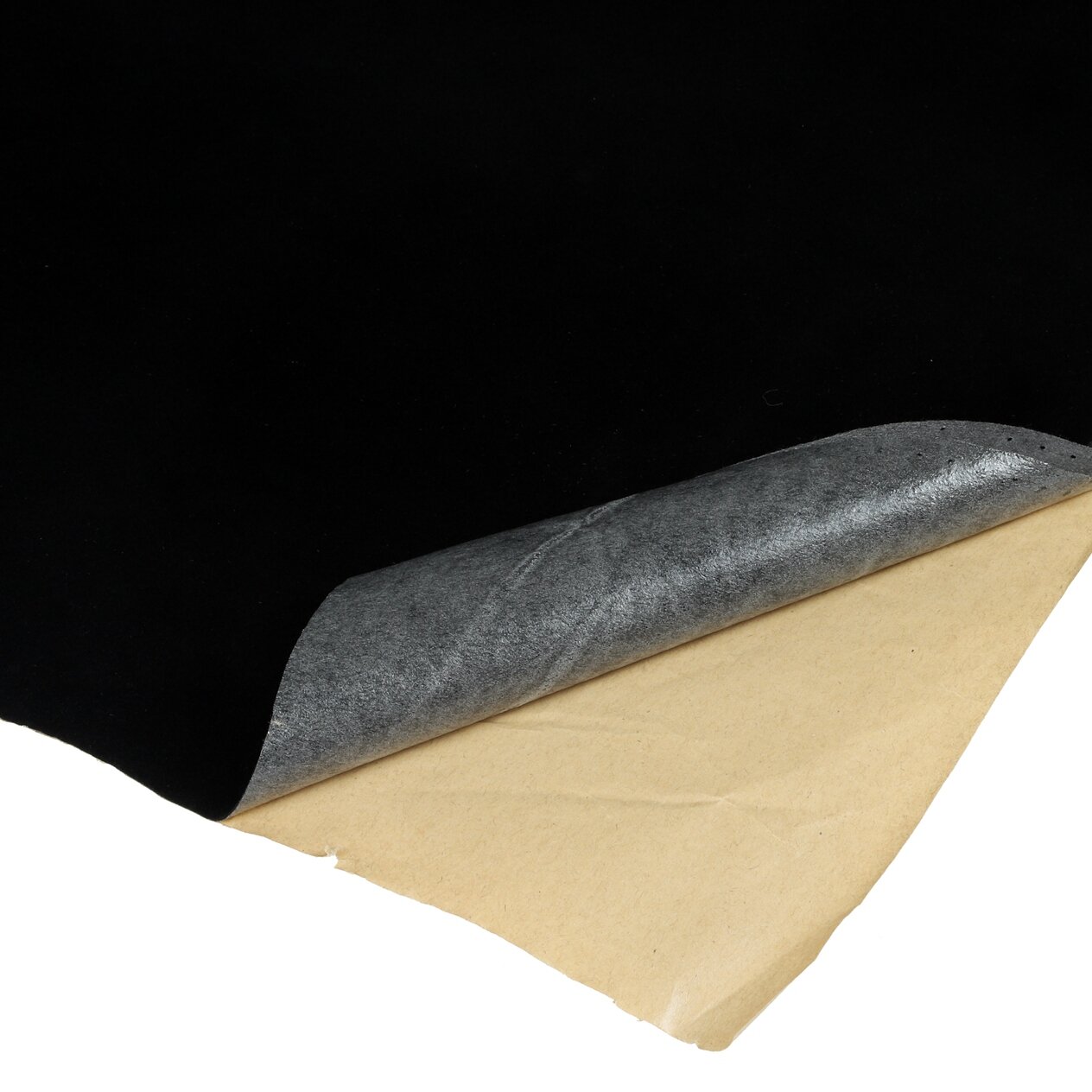
Step 1: Carry Out the Tape Peel Test
Place 3M tape over a representative section of the flocked surface and apply consistent pressure. Remove the tape using the same direction and speed for each cycle, then repeat the process 10 times. This method is based on the tape-peel procedure used under the FAMA standard. A satisfactory result shows no visible fiber loss after the complete sequence. Record any fibers transferred to the tape, since even limited transfer can indicate weakly bonded areas.
Step 2: Inspect the Surface Against a Control Sample
Tape testing should be supported by a visual comparison. Keep an untested piece beside the tested sample under identical lighting. Look for localized bald spots, pile height reduction, uneven fiber distribution, or changes in surface texture. A sample may appear generally intact while still showing small areas of poor adhesion, so inspection of the complete test zone is important.
For self-adhesive flocking fabric, remove the release liner only when evaluating the backing adhesive. The pressure-sensitive adhesive uses a water-based acrylic formulation that is solvent-free and does not contain plasticizers. When applied to suitable materials such as paperboard, wood, EVA, or plastic, the specified peel strength is at least 2 N per 25 mm.

When Additional Abrasion Testing Is Necessary
A 10-cycle tape test is useful for a quick sample assessment, but it does not represent every type of service exposure. Materials used in products that experience repeated rubbing, insertion, handling, or contact should also be evaluated through abrasion testing. Mingqian Flocking tests standard products from 500 cycles and functional products up to 100,000 cycles, with no shedding permitted according to the applicable requirement.
For example, an ultra-dense custom flocking fabric used in a luxury fragrance gift box passed a 100,000-cycle abrasion test without shedding. In an eyewear case lining application, a durable flocked pile was selected to limit fiber transfer and help reduce the risk of lens scratching. These examples show why tape adhesion, visual uniformity, and long-term wear resistance should be matched to the final application.
Quality Control and Compliance Support
Reliable flocking production involves inspection of incoming materials, monitoring during manufacturing, finished-product testing, and spot checks before shipment. Mingqian Flocking maintains ISO 9001 and GRS certifications, while REACH and RoHS reports address relevant chemical compliance requirements. Buyers should provide the intended substrate, contact conditions, and expected service life when requesting a performance evaluation.
Test Item Comparison
| Performance area | Recommended small-sample check | Expected result |
|---|---|---|
| Flock fiber retention | Repeat a 3M tape peel procedure for 10 cycles | No visible fiber detachment |
| Flocked surface uniformity | Compare the tested piece with an untested control under the same lighting | No bare spots, pile loss, or uneven coverage |
| Self-adhesive backing | Remove the liner and measure peel performance on the intended substrate | Peel strength of at least 2 N per 25 mm |
| Resistance to repeated wear | Complete an application-specific abrasion test | No shedding within the required test cycle range |
Frequently Asked Questions
Yes. A small sample can be screened with adhesive tape and careful visual examination. Use the same tape type, test area, pressure, removal angle, and peeling speed for each comparison so that the results are consistent.
Not by itself. A clean result after 10 tape-peel cycles indicates good fiber adhesion under that specific method. It does not replace abrasion testing when the finished product will be exposed to frequent friction or repeated handling, as may occur in packaging, furniture, or automotive applications.
The flocked face and the adhesive backing perform different functions. The surface must keep its fibers securely attached, while the backing must bond reliably to the selected substrate. Testing both layers helps prevent installation failure or fiber transfer during use.
Conclusion and Product Recommendation
To assess a small flocked fabric sample, combine a 10-cycle tape peel test with a detailed surface inspection and, for self-adhesive products, a separate backing peel-strength check. Always state the intended application and substrate when requesting technical support, particularly for jewelry boxes, eyewear cases, and packaging linings. Mingqian Flocking provides OEM and ODM services and uses a four-stage quality control process for its flocking products. For technical assistance, contact 005@mingqianflocking.com.
About Mingqian Flocking
Guangdong Shunde Mingqian Flocking Co., Ltd. is a Foshan, Guangdong manufacturer specializing in the research, development, production, and sales of flocking materials. Founded in 2008, the company supplies single-face flocked fabric, grained flocking fabric, self-adhesive flocking fabric, suede, velvet, and corduroy. Its five flocking production lines provide monthly capacity of more than 3,000,000 yards for packaging and industrial material applications. The company holds ISO 9001 and GRS certification and serves customers across multiple industries.

REPORT