







-
 Agriculture
-
 Health-Care
-
 Environment
-
 Construction-Real-Estate
-
 Tools-Hardware
-
 Home-Garden
-
 Furniture
-
 Luggage-Bags-Cases
-
 Medical-devices-Supplies
-
 Gifts-Crafts
-
 Sports-Entertainment
-
 Food-Beverage
-
 Vehicles-Transportation
-
 Power-Transmission
-
 Material-Handling
-
 Renewable-Energy
-
 Safety
-
 Testing-Instrument-Equipment
-
 Construction-Building-Machinery
-
 Pet-Supplies
-
 Personal-Care-Household-Cleaning
-
 Vehicle-Accessories-Electronics-Tools
-
 School-Office-Supplies
-
 Packaging-Printing
-
 Mother-Kids-Toys
-
 Business-Services
-
 Commercial-Equipment-Machinery
-
 Apparel-Accessories
-
 Security
-
 Shoes-Accessories
-
 Vehicle-Parts-Accessories
-
 Jewelry-Eyewear-Watches-Accessories
-
 Lights-Lighting
-
 Fabric-Textile-Raw-Material
-
 Fabrication-Services
-
 Industrial-Machinery
-
 Consumer-Electronics
-
 Electrical-Equipment-Supplies
-
 Electronic-Components-Accessories-Telecommunications
-
 Home-Appliances
-
 Beauty
-
 Chemicals
-
 Rubber-Plastics
-
 Metals-Alloys


























































































































































































































































































































































































































































































































































































- Masonry Materials
- Curtain Walls & Accessories
- Earthwork Products
- Fireproofing Materials
- Heat Insulation Materials
- Plastic Building Materials
- Building Boards
- Soundproofing Materials
- Timber
- Waterproofing Materials
- Balustrades & Handrails
- Bathroom & Kitchen
- Flooring & Accessories
- Tiles & Accessories
- Door, Window & Accessories
- Fireplaces & Stoves
- Floor Heating Systems & Parts
- Stairs & Stair Parts
- Ceilings
- Elevators & Escalators
- Stone
- Countertops, Vanity Tops & Table Tops
- Mosaics
- Metal Building Materials
- Multifunctional Materials
- Ladders & Scaffoldings
- Mouldings
- Corner Guards
- Decorative Films
- Formwork
- Building & Industrial Glass
- Other Construction & Real Estate
- Wallpapers/Wall panels
- HVAC System & Parts
- Outdoor Facilities
- Prefabricated Buildings
- Festive & Party Supplies
- Bathroom Products
- Household Sundries
- Rain Gear
- Garden Supplies
- Household Cleaning Tools & Accessories
- Lighters & Smoking Accessories
- Home Storage & Organization
- Household Scales
- Smart Home Improvement
- Home Textiles
- Kitchenware
- Drinkware & Accessories
- Dinnerware, Coffee & Wine
- Home Decor
- Golf
- Fitness & Body Building
- Amusement Park Facilities
- Billiards, Board Game,Coin Operated Games
- Musical Instruments
- Outdoor Affordable Luxury Sports
- Camping & Hiking
- Fishing
- Sports Safety&Rehabilitation
- Ball Sports Equipments
- Water Sports
- Winter Sports
- Luxury Travel Equipments
- Sports Shoes, Bags & Accessories
- Cycling
- Other Sports & Entertainment Products
- Artificial Grass&Sports Flooring&Sports Court Equipment
- Scooters
- Food Ingredients
- Honey & Honey Products
- Snacks
- Nuts & Kernels
- Seafood
- Plant & Animal Oil
- Beverages
- Fruit & Vegetable Products
- Frog & Escargot
- Bean Products
- Egg Products
- Dairy Products
- Seasonings & Condiments
- Canned Food
- Instant Food
- Baked Goods
- Other Food & Beverage
- Meat & Poultry
- Confectionery
- Grain Products
- Feminie Care
- Hair Care & Styling
- Body Care
- Hands & Feet Care
- Hygiene Products
- Men's Grooming
- Laundry Cleaning Supplies
- Travel Size & Gift Sets
- Room Deodorizers
- Other Personal Care Products
- Pest Control Products
- Special Household Cleaning
- Floor Cleaning
- Kitchen & Bathroom Cleaning
- Oral Care
- Bath Supplies
- Yellow Pages
- Correction Supplies
- Office Binding Supplies
- Office Cutting Supplies
- Board Erasers
- Office Adhesives & Tapes
- Education Supplies
- Pencil Cases & Bags
- Notebooks & Writing Pads
- File Folder Accessories
- Calendars
- Writing Accessories
- Commercial Office Supplies
- Pencil Sharpeners
- Pens
- Letter Pad/Paper
- Paper Envelopes
- Desk Organizers
- Pencils
- Markers & Highlighters
- Filing Products
- Art Supplies
- Easels
- Badge Holder & Accessories
- Office Paper
- Printer Supplies
- Book Covers
- Other Office & School Supplies
- Stationery Set
- Boards
- Clipboards
- Stamps
- Drafting Supplies
- Stencils
- Electronic Dictionary
- Books
- Map
- Magazines
- Calculators
- Baby & Toddler Toys
- Educational Toys
- Classic Toys
- Dress Up & Pretend Play
- Toy Vehicle
- Stuffed Animals & Plush Toys
- Outdoor Toys & Structures
- Balloons & Accessories
- Baby Food
- Children's Clothing
- Baby Supplies & Products
- Maternity Clothes
- Kids Shoes
- Baby Care
- Novelty & Gag Toys
- Dolls & Accessories
- Puzzle & Games
- Blocks & Model Building Toys
- Toddler Clothing
- Baby Clothing
- Kids' Luggage & Bags
- Arts, Crafts & DIY Toys
- Action & Toy Figures
- Baby Appliances
- Hobbies & Models
- Remote Control Toys
- Promotional Toys
- Pregnancy & Maternity
- Hygiene Products
- Kid's Textile&Bedding
- Novelty & Special Use
- Toy Weapons
- Baby Gifts
- Baby Storage & Organization
- Auto Drive Systems
- ATV/UTV Parts & Accessories
- Marine Parts & Accessories
- Other Auto Parts
- Trailer Parts & Accessories
- Auto Transmission Systems
- Train Parts & Accessories
- Universal Parts
- Railway Parts & Accessories
- Auto Brake Systems
- Aviation Parts & Accessories
- Truck Parts & Accessories
- Auto Suspension Systems
- Auto Lighting Systems
- New Energy Vehicle Parts & Accessories
- Auto Steering Systems
- Wheels, Tires & Accessories
- Bus Parts & Accessories
- Auto Performance Parts
- Cooling System
- Go-Kart & Kart Racer Parts & Accessories
- Air Conditioning Systems
- Heavy Duty Vehicle Parts & Accessories
- Auto Electrical Systems
- Auto Body Systems
- Auto Engine Systems
- Container Parts & Accessories
- Motorcycle Parts & Accessories
- Refrigeration & Heat Exchange Equipment
- Machine Tool Equipment
- Food & Beverage Machinery
- Agricultural Machinery & Equipment
- Apparel & Textile Machinery
- Chemical Machinery
- Packaging Machines
- Paper Production Machinery
- Plastic & Rubber Processing Machinery
- Industrial Robots
- Electronic Products Machinery
- Metal & Metallurgy Machinery
- Woodworking Machinery
- Home Product Manufacturing Machinery
- Machinery Accessories
- Environmental Machinery
- Machinery Service
- Electrical Equipment Manufacturing Machinery
- Industrial Compressors & Parts
- Tobacco & Cigarette Machinery
- Production Line
- Used Industrial Machinery
- Electronics Production Machinery
- Other Machinery & Industrial Equipment
- Camera, Photo & Accessories
- Portable Audio, Video & Accessories
- Television, Home Audio, Video & Accessories
- Video Games & Accessories
- Mobile Phone & Accessories
- Electronic Publications
- Earphone & Headphone & Accessories
- Speakers & Accessories
- Smart Electronics
- TV Receivers & Accessories
- Mobile Phone & Computer Repair Parts
- Chargers, Batteries & Power Supplies
- Used Electronics
- VR, AR, MR Hardware & Software
- Projectors & Presentation Equipments
- Other Consumer Electronics
- Cables & Commonly Used Accessories
- Computer Hardware & Software
- Displays, Signage and Optoelectronics
- Discrete Semiconductors
- Wireless & IoT Module and Products
- Telecommunications
- Connectors, Terminals & Accessories
- Development Boards, Electronic Modules and Kits
- Circuit Protection
- Sensors
- Isolators
- Audio Components and Products
- Integrated Circuits
- Power Supplies
- Relays
- RF, Microwave and RFID
- Electronic Accessories & Supplies
- Passive Components
- PCB & PCBA
- Air Quality Appliances
- Home Appliance Parts
- Heating & Cooling Appliances
- Small Kitchen Appliances
- Laundry Appliances
- Water Heaters
- Water Treatment Appliances
- Refrigerators & Freezers
- Personal Care & Beauty Appliances
- Major Kitchen Appliances
- Cleaning Appliances
- Second-hand Appliances
- Smart Home Appliances
- Other Home Appliances
- Energy Chemicals
- Inorganic Chemicals
- Basic Organic Chemicals
- Agrochemicals
- Admixture & Additives
- Catalysts & Chemical Auxiliary Agents
- Pigments & Dyestuff
- Coating & Paint
- Daily Chemicals
- Polymer
- Organic Intermediate
- Adhesives & Sealants
- Chemical Waste
- Biological Chemical Products
- Surface Treatment Chemicals
- Painting & Coating
- Chemical Reagents
- Flavor & Fragrance
- Non-Explosive Demolition Agents
- Other Chemicals
- Custom Chemical Services

How to Keep Flame-Retardant Fabric Samples Consistent with Bulk Production
Reliable sample-to-bulk consistency begins before the first sample is produced. Buyers should establish a complete specification covering the base fabric, fiber, pile style and height, color, adhesive, backing, width, flame-retardant treatment, and finishing method. The approved sample should then become the physical benchmark for production. For applications requiring enhanced fire performance, confirm the relevant UL94 V-0 requirement and verify every production batch through documented inspection and traceability procedures.
How to Build a Reliable Sample Approval Process
A sample can represent future bulk goods only when its construction and processing conditions are clearly defined. The specification should identify the base fabric, fiber composition, pile type, pile height, backing, width, cutting format, embossing, adhesive system, and all finishing operations. This prevents seemingly minor changes from affecting surface appearance, adhesion, dimensions, or test results.
For pearl velvet flocking fabric, the surface has a distinctive granular, bead-like appearance. Bead sizes can range from 0.3 to 1 millimeter, and buyers may select a standard or embossed finish. The selected texture, bead arrangement, and process should be fixed in the approval record so the bulk team does not substitute a visually similar but technically different construction.
Write Flame-Retardant Requirements as Testable Criteria
Terms such as flame-retardant or fire-resistant are not sufficient on their own. The purchase specification should state the required test method and performance level. Mingqian Flocking offers customized flocking fabrics with flame-retardant treatment up to UL94 V-0. For automotive materials, the approval file may also need to cover abrasion resistance, weatherability, moisture absorption, noise reduction, and the expected operating range of -30°C to 80°C.
These requirements should be confirmed on the approved sample and repeated on production material where applicable. The same test scope must be used for sample evaluation and bulk release; otherwise, a passing sample may not provide a meaningful comparison with the final shipment.
Control Color, Surface Appearance, and Process Variables
Color approval should include both a physical reference and an identified color standard. Mingqian Flocking provides in-house dyeing and Pantone matching, with a stated color difference of no more than Delta E 2.0 for standard orders and no more than Delta E 0.5 for custom projects. The record should also describe pile density, surface uniformity, texture, embossing, and hand feel.
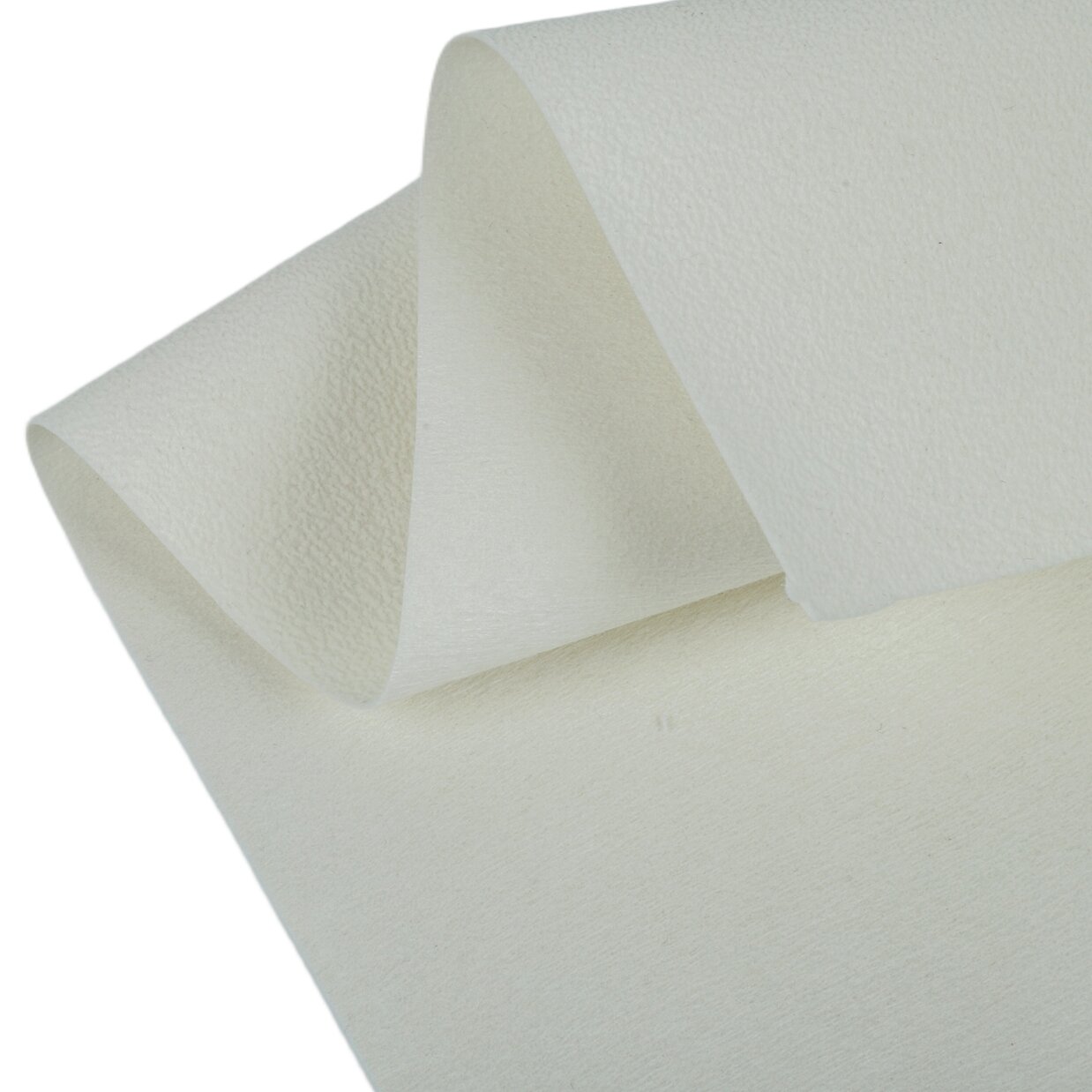
Process stability is equally important. Mingqian Flocking manages base-fabric pretreatment, in-house dyeing, water-based acrylic adhesive coating, electrostatic flocking, drying and curing, post-finishing, and final inspection. Key variables such as electrostatic voltage, adhesive coating weight, and oven temperature are monitored and recorded. Production teams also compare color with Pantone standards at scheduled intervals and inspect finished rolls for appearance and dimensional accuracy.
Testing and Documentation Before Bulk Release
Before approving a bulk order, buyer and supplier should agree on the required physical and functional tests. Mingqian Flocking’s quality program includes checks for color fastness, peel strength, pile adhesion, abrasion resistance, dimensional accuracy, formaldehyde, and azo dyes, according to the product application. For self-adhesive materials, the stated peel-strength requirement is at least 2 newtons per 25 millimeters. The 3M tape test covers 10 cycles with no fiber loss in accordance with the FAMA standard. The stated overall defect-rate target is no more than 0.5 percent.
The approved sample should be retained together with the signed specification, test results, color reference, and packaging instructions. Any change involving the fiber, base cloth, dye, adhesive, embossing pattern, backing, or finishing process should trigger a new review before production continues. Mingqian Flocking digitally archives quality information by batch number, allowing finished fabric to be traced back to its raw materials and processing records.
Application Experience and Certification Scope
Flame-retardant flocking fabrics are used in automotive sun visors, door-panel armrests, and other interior components. In one reported BYD supply case, a nonwoven-based flocking fabric combined flame-retardant treatment with moisture absorption and noise reduction. The material passed the customer’s supplier audit and proceeded to bulk supply. A separate Volkswagen packaging project used a UL94 V-0-rated flocking fabric composite and included environmental testing for formaldehyde, azo substances, and sulfur content.
Mingqian Flocking holds ISO 9001:2015 certification. Its GRS certificate, SGC-GRC01308-GRS-2026-05R3, covers flocking fabrics made with recycled polyester and nylon fibers. These certifications describe the company’s quality-management system and recycled-material scope; the flame-retardant performance of an individual order must still be confirmed against its approved specification and test requirements.
Sample-to-Bulk Control Checklist
| Control item | What to approve with the sample | What to verify during bulk production |
|---|---|---|
| Construction | Base fabric, fiber, pile type and height, backing, width, and finishing details | Follow the approved construction and document every proposed material or process change |
| Flame performance | Applicable UL94 V-0 requirement and other application-specific test conditions | Test production material against the agreed flame-retardant specification |
| Color and appearance | Physical reference, Pantone code, pile surface, texture, and embossing pattern | Compare color and visual quality by batch; standard matching is Delta E no more than 2.0 and custom matching is Delta E no more than 0.5 |
| Adhesion and durability | Required peel, pile-adhesion, abrasion, and dimensional tests | Apply batch testing; self-adhesive products require at least 2 N per 25 mm peel strength, and the 3M test covers 10 cycles with no fiber loss |
| Traceability | Retained sample, signed specification, and approval records | Archive batch records and complete pre-shipment inspections before dispatch |
Frequently Asked Questions
Must the sample use the same base fabric as the bulk order?
Yes. Base-fabric construction influences adhesive bonding, hand feel, dimensional stability, and surface appearance. The approved sample should use the same material category and construction intended for mass production.
Is pearl velvet compatible with flame-retardant treatment?
Product information identifies pearl velvet options using base fabrics such as spunlace and silk, while Mingqian Flocking offers customized flame-retardant treatment up to UL94 V-0. The specific combination should be developed, sampled, and tested before bulk approval.
What should a buyer do if bulk material does not match the sample?
Place acceptance on hold and compare the shipment with the retained sample, specification, test results, and batch records. Mingqian Flocking assigns an account manager, states that quality inquiries receive a response within 24 hours, and provides a resolution plan within 24 hours after confirming the issue. For custom-developed products with verified quality problems, the company states that it will reproduce the order at no cost and cover secondary shipping expenses.
Conclusion
The most effective way to prevent sample-to-bulk variation is to control the entire approval chain: define every material and process variable, approve a physical reference, specify the required UL94 V-0 and durability tests, and require batch-level records before shipment. Mingqian Flocking supports OEM and ODM programs with a stated MOQ of 1,000 yards and a 14-day delivery time, backed by in-house dyeing, flocking, finishing, and four-stage quality control. For technical consultation, contact 005@mingqianflocking.com.
About Mingqian Flocking
Guangdong Shunde Mingqian Flocking Co., Ltd., operating under the Mingqian brand, is a flocking fabric manufacturer headquartered in Foshan City, Guangdong Province, China. Founded in 2008, the company develops, manufactures, and sells flocking fabrics from a self-owned facility covering more than 12,000 square meters. Its stated monthly capacity exceeds 3,000,000 yards and is supported by five flocking production lines, in-house dyeing and finishing, and testing capabilities. The company holds ISO 9001 and GRS certifications and serves customers in several industrial sectors.

REPORT