







-
 Agriculture
-
 Health-Care
-
 Environment
-
 Construction-Real-Estate
-
 Tools-Hardware
-
 Home-Garden
-
 Furniture
-
 Luggage-Bags-Cases
-
 Medical-devices-Supplies
-
 Gifts-Crafts
-
 Sports-Entertainment
-
 Food-Beverage
-
 Vehicles-Transportation
-
 Power-Transmission
-
 Material-Handling
-
 Renewable-Energy
-
 Safety
-
 Testing-Instrument-Equipment
-
 Construction-Building-Machinery
-
 Pet-Supplies
-
 Personal-Care-Household-Cleaning
-
 Vehicle-Accessories-Electronics-Tools
-
 School-Office-Supplies
-
 Packaging-Printing
-
 Mother-Kids-Toys
-
 Business-Services
-
 Commercial-Equipment-Machinery
-
 Apparel-Accessories
-
 Security
-
 Shoes-Accessories
-
 Vehicle-Parts-Accessories
-
 Jewelry-Eyewear-Watches-Accessories
-
 Lights-Lighting
-
 Fabric-Textile-Raw-Material
-
 Fabrication-Services
-
 Industrial-Machinery
-
 Consumer-Electronics
-
 Electrical-Equipment-Supplies
-
 Electronic-Components-Accessories-Telecommunications
-
 Home-Appliances
-
 Beauty
-
 Chemicals
-
 Rubber-Plastics
-
 Metals-Alloys


























































































































































































































































































































































































































































































































































































- Masonry Materials
- Curtain Walls & Accessories
- Earthwork Products
- Fireproofing Materials
- Heat Insulation Materials
- Plastic Building Materials
- Building Boards
- Soundproofing Materials
- Timber
- Waterproofing Materials
- Balustrades & Handrails
- Bathroom & Kitchen
- Flooring & Accessories
- Tiles & Accessories
- Door, Window & Accessories
- Fireplaces & Stoves
- Floor Heating Systems & Parts
- Stairs & Stair Parts
- Ceilings
- Elevators & Escalators
- Stone
- Countertops, Vanity Tops & Table Tops
- Mosaics
- Metal Building Materials
- Multifunctional Materials
- Ladders & Scaffoldings
- Mouldings
- Corner Guards
- Decorative Films
- Formwork
- Building & Industrial Glass
- Other Construction & Real Estate
- Wallpapers/Wall panels
- HVAC System & Parts
- Outdoor Facilities
- Prefabricated Buildings
- Festive & Party Supplies
- Bathroom Products
- Household Sundries
- Rain Gear
- Garden Supplies
- Household Cleaning Tools & Accessories
- Lighters & Smoking Accessories
- Home Storage & Organization
- Household Scales
- Smart Home Improvement
- Home Textiles
- Kitchenware
- Drinkware & Accessories
- Dinnerware, Coffee & Wine
- Home Decor
- Golf
- Fitness & Body Building
- Amusement Park Facilities
- Billiards, Board Game,Coin Operated Games
- Musical Instruments
- Outdoor Affordable Luxury Sports
- Camping & Hiking
- Fishing
- Sports Safety&Rehabilitation
- Ball Sports Equipments
- Water Sports
- Winter Sports
- Luxury Travel Equipments
- Sports Shoes, Bags & Accessories
- Cycling
- Other Sports & Entertainment Products
- Artificial Grass&Sports Flooring&Sports Court Equipment
- Scooters
- Food Ingredients
- Honey & Honey Products
- Snacks
- Nuts & Kernels
- Seafood
- Plant & Animal Oil
- Beverages
- Fruit & Vegetable Products
- Frog & Escargot
- Bean Products
- Egg Products
- Dairy Products
- Seasonings & Condiments
- Canned Food
- Instant Food
- Baked Goods
- Other Food & Beverage
- Meat & Poultry
- Confectionery
- Grain Products
- Feminie Care
- Hair Care & Styling
- Body Care
- Hands & Feet Care
- Hygiene Products
- Men's Grooming
- Laundry Cleaning Supplies
- Travel Size & Gift Sets
- Room Deodorizers
- Other Personal Care Products
- Pest Control Products
- Special Household Cleaning
- Floor Cleaning
- Kitchen & Bathroom Cleaning
- Oral Care
- Bath Supplies
- Yellow Pages
- Correction Supplies
- Office Binding Supplies
- Office Cutting Supplies
- Board Erasers
- Office Adhesives & Tapes
- Education Supplies
- Pencil Cases & Bags
- Notebooks & Writing Pads
- File Folder Accessories
- Calendars
- Writing Accessories
- Commercial Office Supplies
- Pencil Sharpeners
- Pens
- Letter Pad/Paper
- Paper Envelopes
- Desk Organizers
- Pencils
- Markers & Highlighters
- Filing Products
- Art Supplies
- Easels
- Badge Holder & Accessories
- Office Paper
- Printer Supplies
- Book Covers
- Other Office & School Supplies
- Stationery Set
- Boards
- Clipboards
- Stamps
- Drafting Supplies
- Stencils
- Electronic Dictionary
- Books
- Map
- Magazines
- Calculators
- Baby & Toddler Toys
- Educational Toys
- Classic Toys
- Dress Up & Pretend Play
- Toy Vehicle
- Stuffed Animals & Plush Toys
- Outdoor Toys & Structures
- Balloons & Accessories
- Baby Food
- Children's Clothing
- Baby Supplies & Products
- Maternity Clothes
- Kids Shoes
- Baby Care
- Novelty & Gag Toys
- Dolls & Accessories
- Puzzle & Games
- Blocks & Model Building Toys
- Toddler Clothing
- Baby Clothing
- Kids' Luggage & Bags
- Arts, Crafts & DIY Toys
- Action & Toy Figures
- Baby Appliances
- Hobbies & Models
- Remote Control Toys
- Promotional Toys
- Pregnancy & Maternity
- Hygiene Products
- Kid's Textile&Bedding
- Novelty & Special Use
- Toy Weapons
- Baby Gifts
- Baby Storage & Organization
- Auto Drive Systems
- ATV/UTV Parts & Accessories
- Marine Parts & Accessories
- Other Auto Parts
- Trailer Parts & Accessories
- Auto Transmission Systems
- Train Parts & Accessories
- Universal Parts
- Railway Parts & Accessories
- Auto Brake Systems
- Aviation Parts & Accessories
- Truck Parts & Accessories
- Auto Suspension Systems
- Auto Lighting Systems
- New Energy Vehicle Parts & Accessories
- Auto Steering Systems
- Wheels, Tires & Accessories
- Bus Parts & Accessories
- Auto Performance Parts
- Cooling System
- Go-Kart & Kart Racer Parts & Accessories
- Air Conditioning Systems
- Heavy Duty Vehicle Parts & Accessories
- Auto Electrical Systems
- Auto Body Systems
- Auto Engine Systems
- Container Parts & Accessories
- Motorcycle Parts & Accessories
- Refrigeration & Heat Exchange Equipment
- Machine Tool Equipment
- Food & Beverage Machinery
- Agricultural Machinery & Equipment
- Apparel & Textile Machinery
- Chemical Machinery
- Packaging Machines
- Paper Production Machinery
- Plastic & Rubber Processing Machinery
- Industrial Robots
- Electronic Products Machinery
- Metal & Metallurgy Machinery
- Woodworking Machinery
- Home Product Manufacturing Machinery
- Machinery Accessories
- Environmental Machinery
- Machinery Service
- Electrical Equipment Manufacturing Machinery
- Industrial Compressors & Parts
- Tobacco & Cigarette Machinery
- Production Line
- Used Industrial Machinery
- Electronics Production Machinery
- Other Machinery & Industrial Equipment
- Camera, Photo & Accessories
- Portable Audio, Video & Accessories
- Television, Home Audio, Video & Accessories
- Video Games & Accessories
- Mobile Phone & Accessories
- Electronic Publications
- Earphone & Headphone & Accessories
- Speakers & Accessories
- Smart Electronics
- TV Receivers & Accessories
- Mobile Phone & Computer Repair Parts
- Chargers, Batteries & Power Supplies
- Used Electronics
- VR, AR, MR Hardware & Software
- Projectors & Presentation Equipments
- Other Consumer Electronics
- Cables & Commonly Used Accessories
- Computer Hardware & Software
- Displays, Signage and Optoelectronics
- Discrete Semiconductors
- Wireless & IoT Module and Products
- Telecommunications
- Connectors, Terminals & Accessories
- Development Boards, Electronic Modules and Kits
- Circuit Protection
- Sensors
- Isolators
- Audio Components and Products
- Integrated Circuits
- Power Supplies
- Relays
- RF, Microwave and RFID
- Electronic Accessories & Supplies
- Passive Components
- PCB & PCBA
- Air Quality Appliances
- Home Appliance Parts
- Heating & Cooling Appliances
- Small Kitchen Appliances
- Laundry Appliances
- Water Heaters
- Water Treatment Appliances
- Refrigerators & Freezers
- Personal Care & Beauty Appliances
- Major Kitchen Appliances
- Cleaning Appliances
- Second-hand Appliances
- Smart Home Appliances
- Other Home Appliances
- Energy Chemicals
- Inorganic Chemicals
- Basic Organic Chemicals
- Agrochemicals
- Admixture & Additives
- Catalysts & Chemical Auxiliary Agents
- Pigments & Dyestuff
- Coating & Paint
- Daily Chemicals
- Polymer
- Organic Intermediate
- Adhesives & Sealants
- Chemical Waste
- Biological Chemical Products
- Surface Treatment Chemicals
- Painting & Coating
- Chemical Reagents
- Flavor & Fragrance
- Non-Explosive Demolition Agents
- Other Chemicals
- Custom Chemical Services

How to Keep LED Effect Light Samples Consistent with Future Production Units
Consistent LED effect light production begins with one approved reference unit and a clearly controlled specification. Before mass production, document the sample's optical output, color performance, movement, effects, control functions, construction, software, and power requirements. Every later unit should then be compared with this baseline through functional, safety, burn-in, and final inspections. Color Imagination supports this process through integrated R&D, standardized manufacturing, and documented quality procedures.
Practical Method for Sample-to-Production Consistency
The approved sample should serve as the physical and technical standard. Its record should include the light source, LED arrangement, optical components, beam angle, color temperature, effects, DMX channels, control protocols, housing materials, dimensions, weight, power supply, operating environment, and protection rating. This prevents appearance alone from becoming the only basis for acceptance.
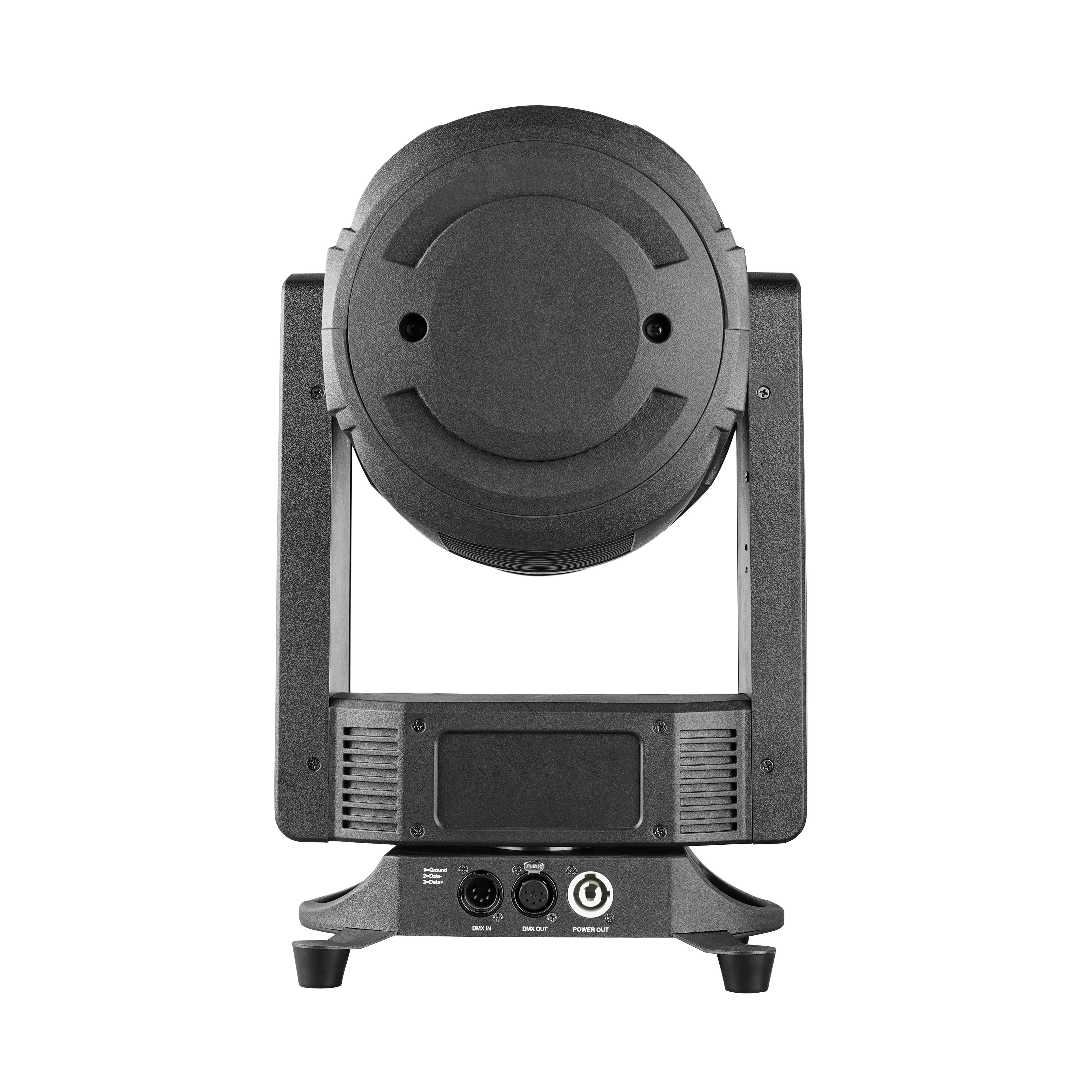
For the SKYTOUCH 150, the stated baseline includes a 150W white laser source, 30 3-in-1 RGB LEDs, a 9000K color temperature, a 1-degree beam angle, DMX512, RDM, and flicker-free performance suitable for television and film applications. These characteristics should be confirmed on production units rather than assumed from the product name or external appearance.
Lock the Product Definition
Create a signed sample approval document identifying the product version, software or firmware revision, accepted finish, component configuration, packaging condition, and inspection results. It should also state which substitutions, if any, are allowed. Any change involving optics, electronics, mechanics, thermal design, software, or materials should be reviewed against the approved sample before production release.
The reference specification should also describe the fixture's operating behavior. The listed unit provides 21 DMX channels, DMX512 control, RDM, master-slave operation, automatic programs, DMX recording and editing, and software updates through the DMX connectors. Optional Art-Net and wireless reception may also be evaluated when included in the agreed configuration.
Match the Intended Application
Sample approval should take place under conditions that reflect the final use. Check beam behavior, color consistency, movement accuracy, effect timing, noise, control response, and thermal performance in the expected environment. Color Imagination products are used for concerts, festivals, theaters, television studios, live events, rental productions, nightclubs, houses of worship, exhibitions, theme parks, cultural venues, hotels, and architectural projects, so the acceptance criteria should reflect the relevant application.
Production Inspection and Quality Control
To identify deviations before shipment, inspection must cover the same functions represented by the reference unit. A complete process can include incoming material checks, PCB functional testing, optical measurement, electrical safety verification, waterproof testing for IP-rated products, burn-in and aging tests, final product inspection, and packaging quality control. Color Imagination states that each product receives 100% functional testing before delivery.
Optical and effect testing should confirm the approved light source, beam profile, focus, color output, gobos, dichroic colors, color wheels, prisms, neon ring effect, strobe, dimming, wash, and other programmed functions. Movement tests should verify continuous rotation, indexed positioning, speed response, repeatability, and operating noise.
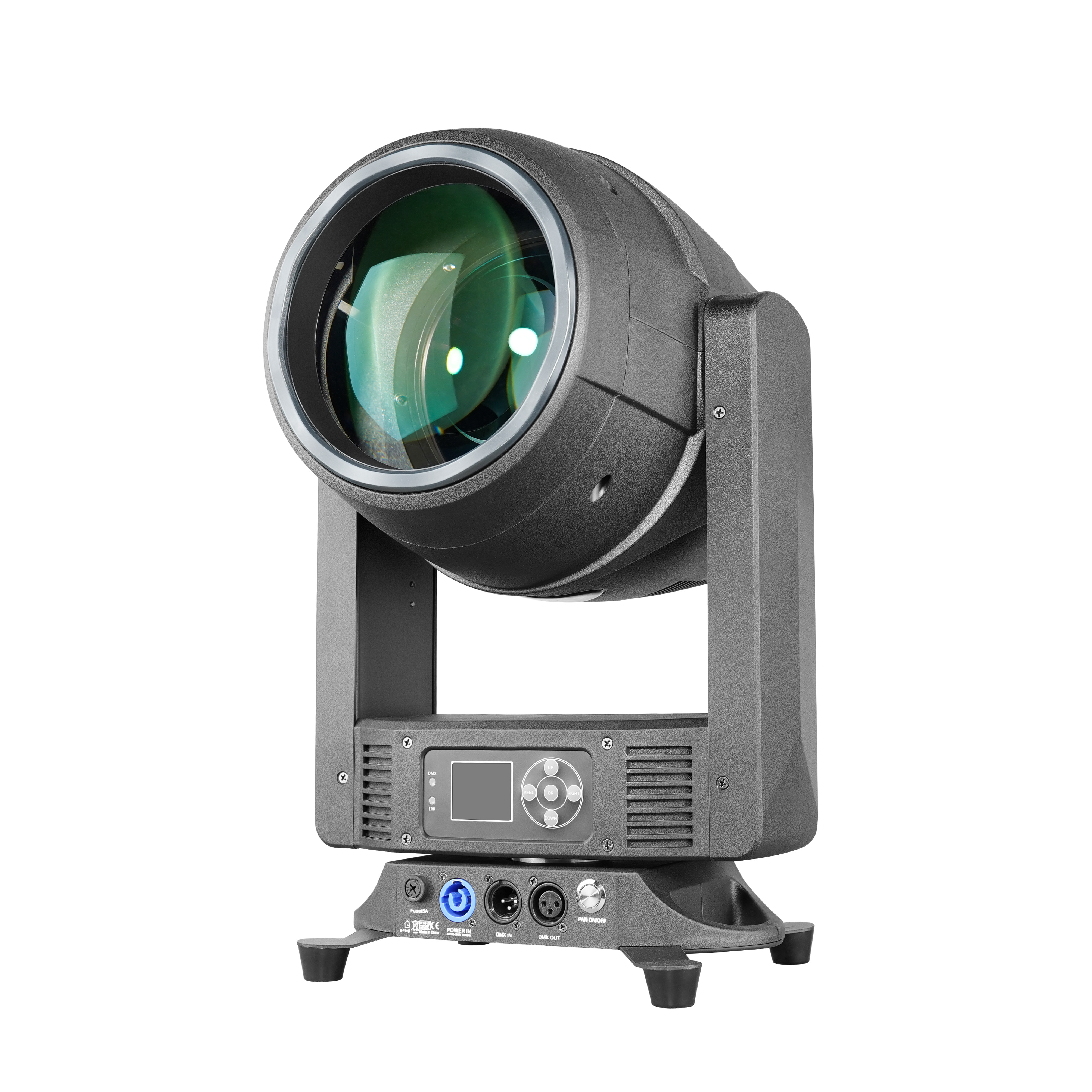
Electrical and mechanical checks should compare the production unit's connectors, cooling system, housing, mounting hardware, power consumption, and operating voltage with the reference. The stated SKYTOUCH 150 specifications include 185W power consumption, AC100-240V at 50/60Hz, an aluminum and steel structure, a PA6 and fiber housing, and an IP20 rating.
Reference Specification Checklist
| Control category | Approved sample baseline | Required production verification |
|---|---|---|
| Light source and optics | 150W white laser, 30 RGB LEDs, 9000K, 1-degree beam, and high-resolution optical system | Measure the light source, beam behavior, focus, optical output, and color performance against the reference |
| Effects and movement | Gobos, dichroic colors, color wheels, prisms, neon ring, strobe, dimming, wash, and continuous or indexed movement | Run every approved effect and movement mode while checking speed, positioning, repeatability, and noise |
| Control and software | 21 DMX channels, DMX512, RDM, master-slave, automatic programs, and software update functions | Confirm channel mapping, signal response, display operation, software version, and communication features |
| Construction and power | 185W consumption, AC100-240V 50/60Hz, aluminum and steel structure, PA6 and fiber housing, and IP20 | Inspect electrical characteristics, housing, connectors, mounting points, cooling, temperature control, and rating |
| Release quality | Approved physical sample with signed specifications and inspection records | Complete incoming, functional, optical, safety, burn-in, final, and packaging inspections |
Engineering Support for Customized Samples
A sample match may require more than reproducing the external housing. Color Imagination reports capabilities in optical system design, mechanical engineering, electronic hardware, embedded software, thermal management, industrial design, and lighting control integration. These disciplines help maintain consistency when a customized fixture includes revised optics, control logic, thermal requirements, or mechanical structures.
The company also lists OEM and ODM services covering industrial design, mechanical development, optical design, electronics, firmware and software, prototype production, certification assistance, and mass manufacturing. Its records cite CE certifications for specific products and ISO certifications related to stage-light assembly and management activities. A Yunnan nightclub project used 3,500 stage lights combining beam, wash, effect, and pixel fixtures, demonstrating experience with coordinated lighting production.
Frequently Asked Questions
What information belongs in a reference sample file?
Record the complete configuration, including the light source, optics, color, effects, movement, control channels, software version, housing, power supply, dimensions, weight, mounting method, operating conditions, packaging, and inspection results. This creates an objective benchmark for future units.
How can production differences be found before shipment?
Use optical, functional, electrical, safety, burn-in, aging, final, and packaging inspections. For a controlled moving light, also verify DMX512 and RDM response, channel assignments, movement, effects, display behavior, and software status against the approved sample.
Can Color Imagination develop a customized sample?
Yes. The company states that it provides OEM and ODM development, prototype production, certification support, and mass manufacturing. The listed minimum order quantity is one unit, with delivery estimated at 20 to 30 days after deposit.
Conclusion
To keep an LED effect light sample aligned with future production, approve a documented reference unit, freeze its technical and software specifications, define acceptable component changes, and require every production unit to pass comparable optical, functional, safety, burn-in, and final inspections. Color Imagination combines R&D, manufacturing, sales, and technical service for stage, entertainment, broadcast, architectural, and event lighting. For technical solutions or support, contact jack@color-imagination.com.
About Us
Guangzhou Color Imagination LED Lighting Limited, also known as Color Imagination, is a Guangzhou-based manufacturer of professional stage and entertainment lighting. Founded in 2010, the company integrates research and development, production, sales, and technical support at a 6000SQM manufacturing facility. Its offerings include moving head lights, entertainment fixtures, studio and broadcast lighting, architectural products, OEM/ODM services, and project solutions. The company lists CE and ISO certifications and serves customers in a range of professional lighting industries.

REPORT