







-
 Agriculture
-
 Health-Care
-
 Environment
-
 Construction-Real-Estate
-
 Tools-Hardware
-
 Home-Garden
-
 Furniture
-
 Luggage-Bags-Cases
-
 Medical-devices-Supplies
-
 Gifts-Crafts
-
 Sports-Entertainment
-
 Food-Beverage
-
 Vehicles-Transportation
-
 Power-Transmission
-
 Material-Handling
-
 Renewable-Energy
-
 Safety
-
 Testing-Instrument-Equipment
-
 Construction-Building-Machinery
-
 Pet-Supplies
-
 Personal-Care-Household-Cleaning
-
 Vehicle-Accessories-Electronics-Tools
-
 School-Office-Supplies
-
 Packaging-Printing
-
 Mother-Kids-Toys
-
 Business-Services
-
 Commercial-Equipment-Machinery
-
 Apparel-Accessories
-
 Security
-
 Shoes-Accessories
-
 Vehicle-Parts-Accessories
-
 Jewelry-Eyewear-Watches-Accessories
-
 Lights-Lighting
-
 Fabric-Textile-Raw-Material
-
 Fabrication-Services
-
 Industrial-Machinery
-
 Consumer-Electronics
-
 Electrical-Equipment-Supplies
-
 Electronic-Components-Accessories-Telecommunications
-
 Home-Appliances
-
 Beauty
-
 Chemicals
-
 Rubber-Plastics
-
 Metals-Alloys


























































































































































































































































































































































































































































































































































































- Masonry Materials
- Curtain Walls & Accessories
- Earthwork Products
- Fireproofing Materials
- Heat Insulation Materials
- Plastic Building Materials
- Building Boards
- Soundproofing Materials
- Timber
- Waterproofing Materials
- Balustrades & Handrails
- Bathroom & Kitchen
- Flooring & Accessories
- Tiles & Accessories
- Door, Window & Accessories
- Fireplaces & Stoves
- Floor Heating Systems & Parts
- Stairs & Stair Parts
- Ceilings
- Elevators & Escalators
- Stone
- Countertops, Vanity Tops & Table Tops
- Mosaics
- Metal Building Materials
- Multifunctional Materials
- Ladders & Scaffoldings
- Mouldings
- Corner Guards
- Decorative Films
- Formwork
- Building & Industrial Glass
- Other Construction & Real Estate
- Wallpapers/Wall panels
- HVAC System & Parts
- Outdoor Facilities
- Prefabricated Buildings
- Festive & Party Supplies
- Bathroom Products
- Household Sundries
- Rain Gear
- Garden Supplies
- Household Cleaning Tools & Accessories
- Lighters & Smoking Accessories
- Home Storage & Organization
- Household Scales
- Smart Home Improvement
- Home Textiles
- Kitchenware
- Drinkware & Accessories
- Dinnerware, Coffee & Wine
- Home Decor
- Golf
- Fitness & Body Building
- Amusement Park Facilities
- Billiards, Board Game,Coin Operated Games
- Musical Instruments
- Outdoor Affordable Luxury Sports
- Camping & Hiking
- Fishing
- Sports Safety&Rehabilitation
- Ball Sports Equipments
- Water Sports
- Winter Sports
- Luxury Travel Equipments
- Sports Shoes, Bags & Accessories
- Cycling
- Other Sports & Entertainment Products
- Artificial Grass&Sports Flooring&Sports Court Equipment
- Scooters
- Food Ingredients
- Honey & Honey Products
- Snacks
- Nuts & Kernels
- Seafood
- Plant & Animal Oil
- Beverages
- Fruit & Vegetable Products
- Frog & Escargot
- Bean Products
- Egg Products
- Dairy Products
- Seasonings & Condiments
- Canned Food
- Instant Food
- Baked Goods
- Other Food & Beverage
- Meat & Poultry
- Confectionery
- Grain Products
- Feminie Care
- Hair Care & Styling
- Body Care
- Hands & Feet Care
- Hygiene Products
- Men's Grooming
- Laundry Cleaning Supplies
- Travel Size & Gift Sets
- Room Deodorizers
- Other Personal Care Products
- Pest Control Products
- Special Household Cleaning
- Floor Cleaning
- Kitchen & Bathroom Cleaning
- Oral Care
- Bath Supplies
- Yellow Pages
- Correction Supplies
- Office Binding Supplies
- Office Cutting Supplies
- Board Erasers
- Office Adhesives & Tapes
- Education Supplies
- Pencil Cases & Bags
- Notebooks & Writing Pads
- File Folder Accessories
- Calendars
- Writing Accessories
- Commercial Office Supplies
- Pencil Sharpeners
- Pens
- Letter Pad/Paper
- Paper Envelopes
- Desk Organizers
- Pencils
- Markers & Highlighters
- Filing Products
- Art Supplies
- Easels
- Badge Holder & Accessories
- Office Paper
- Printer Supplies
- Book Covers
- Other Office & School Supplies
- Stationery Set
- Boards
- Clipboards
- Stamps
- Drafting Supplies
- Stencils
- Electronic Dictionary
- Books
- Map
- Magazines
- Calculators
- Baby & Toddler Toys
- Educational Toys
- Classic Toys
- Dress Up & Pretend Play
- Toy Vehicle
- Stuffed Animals & Plush Toys
- Outdoor Toys & Structures
- Balloons & Accessories
- Baby Food
- Children's Clothing
- Baby Supplies & Products
- Maternity Clothes
- Kids Shoes
- Baby Care
- Novelty & Gag Toys
- Dolls & Accessories
- Puzzle & Games
- Blocks & Model Building Toys
- Toddler Clothing
- Baby Clothing
- Kids' Luggage & Bags
- Arts, Crafts & DIY Toys
- Action & Toy Figures
- Baby Appliances
- Hobbies & Models
- Remote Control Toys
- Promotional Toys
- Pregnancy & Maternity
- Hygiene Products
- Kid's Textile&Bedding
- Novelty & Special Use
- Toy Weapons
- Baby Gifts
- Baby Storage & Organization
- Auto Drive Systems
- ATV/UTV Parts & Accessories
- Marine Parts & Accessories
- Other Auto Parts
- Trailer Parts & Accessories
- Auto Transmission Systems
- Train Parts & Accessories
- Universal Parts
- Railway Parts & Accessories
- Auto Brake Systems
- Aviation Parts & Accessories
- Truck Parts & Accessories
- Auto Suspension Systems
- Auto Lighting Systems
- New Energy Vehicle Parts & Accessories
- Auto Steering Systems
- Wheels, Tires & Accessories
- Bus Parts & Accessories
- Auto Performance Parts
- Cooling System
- Go-Kart & Kart Racer Parts & Accessories
- Air Conditioning Systems
- Heavy Duty Vehicle Parts & Accessories
- Auto Electrical Systems
- Auto Body Systems
- Auto Engine Systems
- Container Parts & Accessories
- Motorcycle Parts & Accessories
- Refrigeration & Heat Exchange Equipment
- Machine Tool Equipment
- Food & Beverage Machinery
- Agricultural Machinery & Equipment
- Apparel & Textile Machinery
- Chemical Machinery
- Packaging Machines
- Paper Production Machinery
- Plastic & Rubber Processing Machinery
- Industrial Robots
- Electronic Products Machinery
- Metal & Metallurgy Machinery
- Woodworking Machinery
- Home Product Manufacturing Machinery
- Machinery Accessories
- Environmental Machinery
- Machinery Service
- Electrical Equipment Manufacturing Machinery
- Industrial Compressors & Parts
- Tobacco & Cigarette Machinery
- Production Line
- Used Industrial Machinery
- Electronics Production Machinery
- Other Machinery & Industrial Equipment
- Camera, Photo & Accessories
- Portable Audio, Video & Accessories
- Television, Home Audio, Video & Accessories
- Video Games & Accessories
- Mobile Phone & Accessories
- Electronic Publications
- Earphone & Headphone & Accessories
- Speakers & Accessories
- Smart Electronics
- TV Receivers & Accessories
- Mobile Phone & Computer Repair Parts
- Chargers, Batteries & Power Supplies
- Used Electronics
- VR, AR, MR Hardware & Software
- Projectors & Presentation Equipments
- Other Consumer Electronics
- Cables & Commonly Used Accessories
- Computer Hardware & Software
- Displays, Signage and Optoelectronics
- Discrete Semiconductors
- Wireless & IoT Module and Products
- Telecommunications
- Connectors, Terminals & Accessories
- Development Boards, Electronic Modules and Kits
- Circuit Protection
- Sensors
- Isolators
- Audio Components and Products
- Integrated Circuits
- Power Supplies
- Relays
- RF, Microwave and RFID
- Electronic Accessories & Supplies
- Passive Components
- PCB & PCBA
- Air Quality Appliances
- Home Appliance Parts
- Heating & Cooling Appliances
- Small Kitchen Appliances
- Laundry Appliances
- Water Heaters
- Water Treatment Appliances
- Refrigerators & Freezers
- Personal Care & Beauty Appliances
- Major Kitchen Appliances
- Cleaning Appliances
- Second-hand Appliances
- Smart Home Appliances
- Other Home Appliances
- Energy Chemicals
- Inorganic Chemicals
- Basic Organic Chemicals
- Agrochemicals
- Admixture & Additives
- Catalysts & Chemical Auxiliary Agents
- Pigments & Dyestuff
- Coating & Paint
- Daily Chemicals
- Polymer
- Organic Intermediate
- Adhesives & Sealants
- Chemical Waste
- Biological Chemical Products
- Surface Treatment Chemicals
- Painting & Coating
- Chemical Reagents
- Flavor & Fragrance
- Non-Explosive Demolition Agents
- Other Chemicals
- Custom Chemical Services

How to Keep Mineral Wash Vintage Fleece Hoodie Bulk Production Consistent With the Approved Sample
Matching a mineral wash vintage fleece hoodie sample to bulk production depends on establishing one clear, approved production standard before cutting begins. The reference must include more than the physical hoodie: it should also cover fabric weight, measurements, wash character, color variation, distressing, artwork, embroidery, labels, and trims. Every production and inspection decision should be measured against this agreed benchmark.
Start With a Controlled Approval Standard
The approved sample is the visual and construction target for the full order, but it must be supported by detailed documentation. A complete Tech Pack translates the sample into instructions that production teams can repeat consistently across bulk garments. It should identify the approved sample version and record all critical specifications, including garment measurements, tolerances, fleece composition and weight, stitch details, pocket dimensions, hood construction, rib specifications, artwork placement, and packaging requirements.
For a vintage fleece hoodie, the wash reference deserves particular attention. Mineral wash results can vary according to fabric, dye, garment treatment time, and finishing conditions. Although in-house vintage wash capability is available, the intended mineral wash appearance should be clearly described and visually approved before bulk production. Define the expected base color, fade level, mottling, seam contrast, wash irregularity, and any planned distressed areas so that the factory has an objective target to follow.
Key Steps for Sample-to-Bulk Consistency
- Keep one signed-off hoodie sample as the master reference for production, quality control, and future repeat orders.
- Prepare a detailed Tech Pack that records fabric, fit, grading, wash effect, color reference, artwork, embroidery, labels, trims, and finishing expectations.
- Approve a pre-production sample before authorizing bulk fabric cutting and full-scale manufacturing.
- Inspect garments during production instead of waiting until the order is complete to identify deviations.
- Complete final inspection at AQL 2.5 under ISO 2859-1 standards, with third-party inspection available when requested.
Use Pre-Production Approval to Prevent Costly Variations
A pre-production sample, often called a PP sample, is the most important checkpoint before bulk work begins. It confirms that the factory has correctly interpreted the Tech Pack and that the actual combination of fleece, wash process, decoration, trims, and construction delivers the intended result. This step is especially important for a garment with a vintage surface treatment, because wash effects may affect color depth, hand feel, shrinkage, and the appearance of printed or embroidered details.
Review the PP sample against the master sample for overall silhouette, chest and body measurements, sleeve proportions, hood shape, fleece weight, color tone, wash distribution, and finishing quality. Also check placement and execution of puff print, 3D embroidery, woven labels, neck labels, care labels, drawcords, eyelets, and other accessories. Any approved adjustment should be added to the final production file rather than left as an informal verbal instruction.
Manage Wash, Artwork, and Decorative Treatments in One Workflow
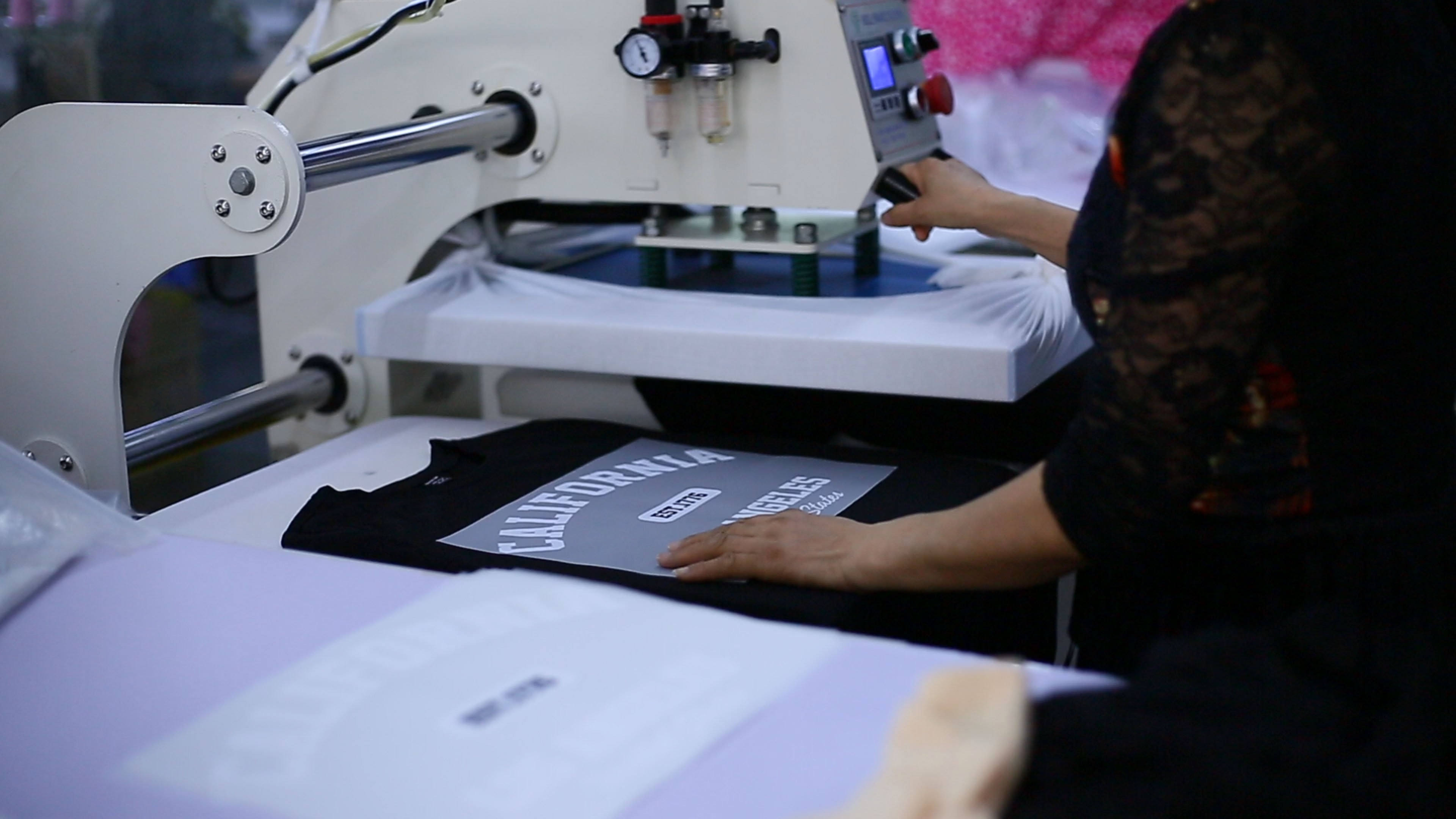
DOLUXE provides Tech Pack reproduction along with in-house vintage wash, puff print, and 3D embroidery capabilities. Keeping these processes within one production workflow can reduce handoffs and help preserve control over the appearance of a hoodie that combines garment washing with dimensional decoration. However, the requested mineral wash effect must still be defined through a visual reference and written specification, since mineral wash is not separately listed in the available manufacturing information.
For the best comparison process, retain swatches, artwork files, color references, and close-up photographs of the approved garment. These materials help inspectors assess not only whether the bulk hoodies look generally similar, but whether their key details match the intended vintage character. Acceptable wash variation can be expected in a garment-treated product, but the approved standard should establish the limits of that variation.
Apply Quality Checks Throughout Bulk Manufacturing
Quality control should be a sequence of checks rather than a single final review. First, pre-production approval sets the standard. Next, mid-production inspection evaluates whether the factory is maintaining that standard while the order is in progress. This is the time to identify issues such as inconsistent wash intensity, measurement drift, uneven print placement, embroidery defects, trim differences, or construction problems before they affect a large percentage of the order.
After production is complete, final inspection assesses finished goods against the approved sample and documented specifications. The stated process uses final AQL 2.5 inspection based on ISO 2859-1. Buyers that require an additional layer of oversight can also arrange third-party QC inspection upon request. All findings, approvals, and corrective actions should be documented for use on reorders and future seasonal drops.

Production Control Overview
| Production Area | Before Bulk Manufacturing | During and After Bulk Manufacturing |
|---|---|---|
| Reference materials | Approve the master sample, Tech Pack, artwork, and design concept. | Use the approved materials as the comparison standard for every inspection stage. |
| Wash and finishing | Specify the mineral wash visual target, fade level, distressing, and expected variation. | Compare wash appearance and garment finishing with the approved reference; vintage wash is available in-house. |
| Quality assurance | Approve the pre-production sample before bulk cutting. | Conduct mid-production checks and final AQL 2.5 inspection in accordance with ISO 2859-1. |
| Estimated timing | Sample development is stated at 3 to 15 days. | Bulk production is generally stated at 20 to 35 days, depending on complexity, sourcing, and wash processes. |
Planning for Reorders and Ongoing Collections
This control method works for independent designers testing limited runs, streetwear labels releasing seasonal collections, and established brands managing replenishment programs. A documented workflow for a United Kingdom online retailer and direct-to-consumer brand includes private-label development, recurring drops, fast reorders, and replenishment of best-selling items. For any repeat vintage hoodie style, the original approved sample and its final production documentation should remain on file as the reorder baseline.
Lead times should also be considered early in the development schedule. Sample development is stated as taking approximately 3 to 15 days, while bulk manufacturing is generally stated as 20 to 35 days. Actual timing can change based on style complexity, fabric availability, sourcing requirements, and the washing process required for the garment.
Frequently Asked Questions
What details need approval before producing bulk mineral wash hoodies?
Approve the physical sample together with the final Tech Pack. This should include fit, measurement specifications, fleece material and weight, wash appearance, color, artwork, embroidery, labels, trims, distressing, and all finishing requirements. The approved set becomes the standard for bulk comparison.
Can the factory manage vintage wash and decoration for the same hoodie?
DOLUXE lists complete in-house vintage wash, puff print, and 3D embroidery capabilities. When a mineral wash look is required, provide a precise visual target in the approved sample and written documentation so the production team can evaluate the result against the intended appearance.
Which inspection stages are most useful for catching sample-to-bulk differences?
Use pre-production sample approval to establish the standard, mid-production inspection to monitor active manufacturing, and final AQL 2.5 inspection to evaluate completed goods. Third-party QC can be requested for additional verification.
Conclusion
The most reliable way to make bulk mineral wash vintage fleece hoodies match the approved sample is to control the process from the beginning. Preserve one master sample, create a complete Tech Pack, define the wash appearance in measurable visual terms, approve the PP sample, and maintain inspections during and after production. DOLUXE supports OEM manufacturing, ODM design and manufacturing, and private-label customization from sample development through shipment. For detailed technical support, please reach out via yutianfang88@gmail.com.
About Us
Dongguan City Dule Garment Co., Ltd is a streetwear and heavyweight apparel manufacturer founded in 2015 in Humen Town, Dongguan. The company operates a 5,000 square meter facility with more than 150 skilled workers and manufactures heavyweight hoodies and sweatpants ranging from 480 to 1,000 GSM, including its latest 1,000 GSM research and development offering. Its independent design and research team develops more than 500 new designs each year and supports in-house garment production from development through completion. The company serves clients in various sectors, including private-label online retailers and direct-to-consumer brands.

REPORT