







-
 Agriculture
-
 Health-Care
-
 Environment
-
 Construction-Real-Estate
-
 Tools-Hardware
-
 Home-Garden
-
 Furniture
-
 Luggage-Bags-Cases
-
 Medical-devices-Supplies
-
 Gifts-Crafts
-
 Sports-Entertainment
-
 Food-Beverage
-
 Vehicles-Transportation
-
 Power-Transmission
-
 Material-Handling
-
 Renewable-Energy
-
 Safety
-
 Testing-Instrument-Equipment
-
 Construction-Building-Machinery
-
 Pet-Supplies
-
 Personal-Care-Household-Cleaning
-
 Vehicle-Accessories-Electronics-Tools
-
 School-Office-Supplies
-
 Packaging-Printing
-
 Mother-Kids-Toys
-
 Business-Services
-
 Commercial-Equipment-Machinery
-
 Apparel-Accessories
-
 Security
-
 Shoes-Accessories
-
 Vehicle-Parts-Accessories
-
 Jewelry-Eyewear-Watches-Accessories
-
 Lights-Lighting
-
 Fabric-Textile-Raw-Material
-
 Fabrication-Services
-
 Industrial-Machinery
-
 Consumer-Electronics
-
 Electrical-Equipment-Supplies
-
 Electronic-Components-Accessories-Telecommunications
-
 Home-Appliances
-
 Beauty
-
 Chemicals
-
 Rubber-Plastics
-
 Metals-Alloys


























































































































































































































































































































































































































































































































































































- Masonry Materials
- Curtain Walls & Accessories
- Earthwork Products
- Fireproofing Materials
- Heat Insulation Materials
- Plastic Building Materials
- Building Boards
- Soundproofing Materials
- Timber
- Waterproofing Materials
- Balustrades & Handrails
- Bathroom & Kitchen
- Flooring & Accessories
- Tiles & Accessories
- Door, Window & Accessories
- Fireplaces & Stoves
- Floor Heating Systems & Parts
- Stairs & Stair Parts
- Ceilings
- Elevators & Escalators
- Stone
- Countertops, Vanity Tops & Table Tops
- Mosaics
- Metal Building Materials
- Multifunctional Materials
- Ladders & Scaffoldings
- Mouldings
- Corner Guards
- Decorative Films
- Formwork
- Building & Industrial Glass
- Other Construction & Real Estate
- Wallpapers/Wall panels
- HVAC System & Parts
- Outdoor Facilities
- Prefabricated Buildings
- Festive & Party Supplies
- Bathroom Products
- Household Sundries
- Rain Gear
- Garden Supplies
- Household Cleaning Tools & Accessories
- Lighters & Smoking Accessories
- Home Storage & Organization
- Household Scales
- Smart Home Improvement
- Home Textiles
- Kitchenware
- Drinkware & Accessories
- Dinnerware, Coffee & Wine
- Home Decor
- Golf
- Fitness & Body Building
- Amusement Park Facilities
- Billiards, Board Game,Coin Operated Games
- Musical Instruments
- Outdoor Affordable Luxury Sports
- Camping & Hiking
- Fishing
- Sports Safety&Rehabilitation
- Ball Sports Equipments
- Water Sports
- Winter Sports
- Luxury Travel Equipments
- Sports Shoes, Bags & Accessories
- Cycling
- Other Sports & Entertainment Products
- Artificial Grass&Sports Flooring&Sports Court Equipment
- Scooters
- Food Ingredients
- Honey & Honey Products
- Snacks
- Nuts & Kernels
- Seafood
- Plant & Animal Oil
- Beverages
- Fruit & Vegetable Products
- Frog & Escargot
- Bean Products
- Egg Products
- Dairy Products
- Seasonings & Condiments
- Canned Food
- Instant Food
- Baked Goods
- Other Food & Beverage
- Meat & Poultry
- Confectionery
- Grain Products
- Feminie Care
- Hair Care & Styling
- Body Care
- Hands & Feet Care
- Hygiene Products
- Men's Grooming
- Laundry Cleaning Supplies
- Travel Size & Gift Sets
- Room Deodorizers
- Other Personal Care Products
- Pest Control Products
- Special Household Cleaning
- Floor Cleaning
- Kitchen & Bathroom Cleaning
- Oral Care
- Bath Supplies
- Yellow Pages
- Correction Supplies
- Office Binding Supplies
- Office Cutting Supplies
- Board Erasers
- Office Adhesives & Tapes
- Education Supplies
- Pencil Cases & Bags
- Notebooks & Writing Pads
- File Folder Accessories
- Calendars
- Writing Accessories
- Commercial Office Supplies
- Pencil Sharpeners
- Pens
- Letter Pad/Paper
- Paper Envelopes
- Desk Organizers
- Pencils
- Markers & Highlighters
- Filing Products
- Art Supplies
- Easels
- Badge Holder & Accessories
- Office Paper
- Printer Supplies
- Book Covers
- Other Office & School Supplies
- Stationery Set
- Boards
- Clipboards
- Stamps
- Drafting Supplies
- Stencils
- Electronic Dictionary
- Books
- Map
- Magazines
- Calculators
- Baby & Toddler Toys
- Educational Toys
- Classic Toys
- Dress Up & Pretend Play
- Toy Vehicle
- Stuffed Animals & Plush Toys
- Outdoor Toys & Structures
- Balloons & Accessories
- Baby Food
- Children's Clothing
- Baby Supplies & Products
- Maternity Clothes
- Kids Shoes
- Baby Care
- Novelty & Gag Toys
- Dolls & Accessories
- Puzzle & Games
- Blocks & Model Building Toys
- Toddler Clothing
- Baby Clothing
- Kids' Luggage & Bags
- Arts, Crafts & DIY Toys
- Action & Toy Figures
- Baby Appliances
- Hobbies & Models
- Remote Control Toys
- Promotional Toys
- Pregnancy & Maternity
- Hygiene Products
- Kid's Textile&Bedding
- Novelty & Special Use
- Toy Weapons
- Baby Gifts
- Baby Storage & Organization
- Auto Drive Systems
- ATV/UTV Parts & Accessories
- Marine Parts & Accessories
- Other Auto Parts
- Trailer Parts & Accessories
- Auto Transmission Systems
- Train Parts & Accessories
- Universal Parts
- Railway Parts & Accessories
- Auto Brake Systems
- Aviation Parts & Accessories
- Truck Parts & Accessories
- Auto Suspension Systems
- Auto Lighting Systems
- New Energy Vehicle Parts & Accessories
- Auto Steering Systems
- Wheels, Tires & Accessories
- Bus Parts & Accessories
- Auto Performance Parts
- Cooling System
- Go-Kart & Kart Racer Parts & Accessories
- Air Conditioning Systems
- Heavy Duty Vehicle Parts & Accessories
- Auto Electrical Systems
- Auto Body Systems
- Auto Engine Systems
- Container Parts & Accessories
- Motorcycle Parts & Accessories
- Refrigeration & Heat Exchange Equipment
- Machine Tool Equipment
- Food & Beverage Machinery
- Agricultural Machinery & Equipment
- Apparel & Textile Machinery
- Chemical Machinery
- Packaging Machines
- Paper Production Machinery
- Plastic & Rubber Processing Machinery
- Industrial Robots
- Electronic Products Machinery
- Metal & Metallurgy Machinery
- Woodworking Machinery
- Home Product Manufacturing Machinery
- Machinery Accessories
- Environmental Machinery
- Machinery Service
- Electrical Equipment Manufacturing Machinery
- Industrial Compressors & Parts
- Tobacco & Cigarette Machinery
- Production Line
- Used Industrial Machinery
- Electronics Production Machinery
- Other Machinery & Industrial Equipment
- Camera, Photo & Accessories
- Portable Audio, Video & Accessories
- Television, Home Audio, Video & Accessories
- Video Games & Accessories
- Mobile Phone & Accessories
- Electronic Publications
- Earphone & Headphone & Accessories
- Speakers & Accessories
- Smart Electronics
- TV Receivers & Accessories
- Mobile Phone & Computer Repair Parts
- Chargers, Batteries & Power Supplies
- Used Electronics
- VR, AR, MR Hardware & Software
- Projectors & Presentation Equipments
- Other Consumer Electronics
- Cables & Commonly Used Accessories
- Computer Hardware & Software
- Displays, Signage and Optoelectronics
- Discrete Semiconductors
- Wireless & IoT Module and Products
- Telecommunications
- Connectors, Terminals & Accessories
- Development Boards, Electronic Modules and Kits
- Circuit Protection
- Sensors
- Isolators
- Audio Components and Products
- Integrated Circuits
- Power Supplies
- Relays
- RF, Microwave and RFID
- Electronic Accessories & Supplies
- Passive Components
- PCB & PCBA
- Air Quality Appliances
- Home Appliance Parts
- Heating & Cooling Appliances
- Small Kitchen Appliances
- Laundry Appliances
- Water Heaters
- Water Treatment Appliances
- Refrigerators & Freezers
- Personal Care & Beauty Appliances
- Major Kitchen Appliances
- Cleaning Appliances
- Second-hand Appliances
- Smart Home Appliances
- Other Home Appliances
- Energy Chemicals
- Inorganic Chemicals
- Basic Organic Chemicals
- Agrochemicals
- Admixture & Additives
- Catalysts & Chemical Auxiliary Agents
- Pigments & Dyestuff
- Coating & Paint
- Daily Chemicals
- Polymer
- Organic Intermediate
- Adhesives & Sealants
- Chemical Waste
- Biological Chemical Products
- Surface Treatment Chemicals
- Painting & Coating
- Chemical Reagents
- Flavor & Fragrance
- Non-Explosive Demolition Agents
- Other Chemicals
- Custom Chemical Services

How to Measure Per-Unit Savings on Higher-Volume White Cardboard Bag Orders
Ordering more white cardboard bags may reduce the unit cost, but the available product information does not show enough pricing detail to confirm the actual saving. No volume-based price tiers, material charges, freight rates, tooling fees, or quantities above the minimum order level are listed. A supplier quotation is therefore needed before calculating a reliable per-unit reduction.
What the Current Product Information Confirms
- The customized gift paper bag product has a minimum order quantity of 5,000 PCS.
- Customization is available for the bag design and specifications.
- The stated production or delivery schedule is 12–15 days.
- White card paper and kraft paper bags are presented for retail shopping, product packaging, store displays, gifts, and brand promotion.
- FOB, EXW, DDP, and CIF shipping terms are available, but destination-specific costs are not provided.
These details establish a useful purchasing baseline, but they do not represent a confirmed discount structure for larger orders.
How to Calculate the Volume Discount
A per-unit saving can only be determined by comparing two quotations based on the same bag specifications. The basic calculation is:
Per-unit saving = lower-volume unit price − higher-volume unit price
To express the result as a percentage, use:
Percentage saving = per-unit saving ÷ lower-volume unit price × 100
For example, quotations could be requested for 5,000, 10,000, and 20,000 bags. The price comparison will only be meaningful if dimensions, paper weight, printing, handles, finishing, packing, destination, and delivery terms remain consistent across all volume levels.
Information Required for a Comparable Quotation
When asking for volume pricing, specify the bag width, height, gusset, paper type, paper weight, printing colors, handle construction, surface finishing, inner packing, carton details, delivery destination, and required shipment date. These factors can influence both manufacturing cost and the final landed price.
The listed payment arrangements are either a 30% deposit with the remaining 70% payable before delivery, or a 50% deposit followed by a 50% balance before delivery. Since payment terms may affect cash flow but no associated price adjustment is stated, they should be recorded separately when comparing supplier offers.
Unit Price Compared with Total Landed Cost
A lower factory unit price does not always produce the lowest purchasing cost. Buyers should compare production charges, packaging, inland transport, international freight, insurance where applicable, duties, and destination delivery. EXW, FOB, CIF, and DDP quotations can include different cost responsibilities, so the destination and quotation basis must be identical for a fair evaluation.
Higher volume may improve production efficiency or reduce the freight cost per bag, but the supplied data does not quantify either effect. The 5,000-piece MOQ should therefore be treated as the initial reference point rather than evidence of a fixed discount.
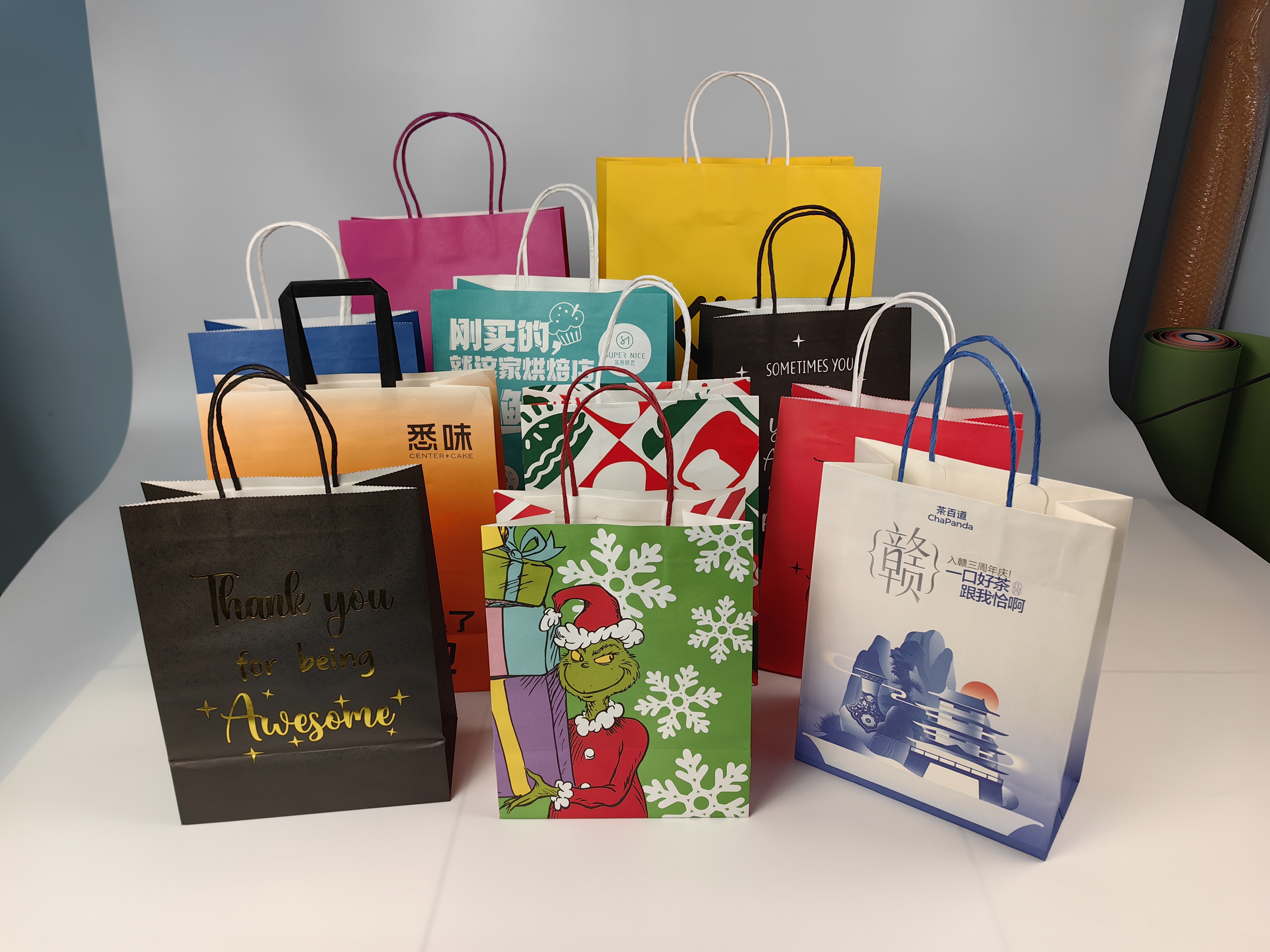
Purchasing Data Comparison
| Item | Information currently available | Importance for volume-savings analysis |
|---|---|---|
| MOQ | 5,000 PCS for the customized gift paper bag | Defines the starting order quantity, but no larger-volume price levels are listed |
| Customization | Available | All design and material specifications must match when comparing prices |
| Delivery schedule | 12–15 days | Provides a stated lead-time reference; no volume-related change is confirmed |
| Payment options | 30% deposit/70% balance or 50% deposit/50% balance before delivery | Supports cash-flow planning; no discount tied to payment terms is stated |
| Shipping options | FOB, EXW, DDP, and CIF | A complete destination-based quotation is needed to compare delivered cost |
Frequently Asked Questions
Is a specific saving per white cardboard bag available from the current data?
No. The information does not include comparable unit prices, volume rebates, freight charges, material costs, or tooling expenses. At least two matching quotations are required.
What is the minimum order quantity?
The listed MOQ for the customized gift paper bag is 5,000 PCS. The product also supports customization.
What volumes should be included in a quotation request?
Ask for pricing at the MOQ and at the planned higher quantities, such as 10,000 or 20,000 pieces. Include complete product specifications and request the same shipping basis for every tier.
Which bag applications are identified?
The listed applications include retail shopping, commodity packaging, in-store presentation, gift packaging, and brand promotion. Both kraft paper and white card paper bags are described for these types of uses.
Conclusion and Recommended Next Steps
The available information cannot verify a precise per-unit saving from increasing the order volume of white cardboard bags. Begin with the 5,000-piece MOQ and the stated 12–15-day schedule, then request tiered quotations for the expected quantities. Compare both the quoted unit price and the total landed cost under matching FOB, EXW, CIF, or DDP conditions.
The supplier lists factory-direct sales, OEM and ODM services, bulk wholesale, direct end-customer supply, distributor support, and international trade. Its certifications and experience may also be considered during supplier evaluation. For product quotations or technical assistance, contact sales01@ywccpackage.com.
About Zhejiang Chuancheng Packaging Products Co., Ltd.
Zhejiang Chuancheng Packaging Products Co., Ltd. is a packaging manufacturer based in Jinhua, China. Founded in 2001, the company produces poly mailers, zipper bags, laminated bags, paper bags, plastic bags, and other packaging solutions for retail, apparel, toys, food, logistics, and related industries. It reports a monthly capacity of 180 million bags and offers OEM and ODM production. Listed credentials include ISO 9001 Quality Management System Certification and FSC CoC Forest Chain of Custody Certification, with cooperation cases spanning several industries and international markets.

REPORT