







-
 Agriculture
-
 Health-Care
-
 Environment
-
 Construction-Real-Estate
-
 Tools-Hardware
-
 Home-Garden
-
 Furniture
-
 Luggage-Bags-Cases
-
 Medical-devices-Supplies
-
 Gifts-Crafts
-
 Sports-Entertainment
-
 Food-Beverage
-
 Vehicles-Transportation
-
 Power-Transmission
-
 Material-Handling
-
 Renewable-Energy
-
 Safety
-
 Testing-Instrument-Equipment
-
 Construction-Building-Machinery
-
 Pet-Supplies
-
 Personal-Care-Household-Cleaning
-
 Vehicle-Accessories-Electronics-Tools
-
 School-Office-Supplies
-
 Packaging-Printing
-
 Mother-Kids-Toys
-
 Business-Services
-
 Commercial-Equipment-Machinery
-
 Apparel-Accessories
-
 Security
-
 Shoes-Accessories
-
 Vehicle-Parts-Accessories
-
 Jewelry-Eyewear-Watches-Accessories
-
 Lights-Lighting
-
 Fabric-Textile-Raw-Material
-
 Fabrication-Services
-
 Industrial-Machinery
-
 Consumer-Electronics
-
 Electrical-Equipment-Supplies
-
 Electronic-Components-Accessories-Telecommunications
-
 Home-Appliances
-
 Beauty
-
 Chemicals
-
 Rubber-Plastics
-
 Metals-Alloys


























































































































































































































































































































































































































































































































































































- Masonry Materials
- Curtain Walls & Accessories
- Earthwork Products
- Fireproofing Materials
- Heat Insulation Materials
- Plastic Building Materials
- Building Boards
- Soundproofing Materials
- Timber
- Waterproofing Materials
- Balustrades & Handrails
- Bathroom & Kitchen
- Flooring & Accessories
- Tiles & Accessories
- Door, Window & Accessories
- Fireplaces & Stoves
- Floor Heating Systems & Parts
- Stairs & Stair Parts
- Ceilings
- Elevators & Escalators
- Stone
- Countertops, Vanity Tops & Table Tops
- Mosaics
- Metal Building Materials
- Multifunctional Materials
- Ladders & Scaffoldings
- Mouldings
- Corner Guards
- Decorative Films
- Formwork
- Building & Industrial Glass
- Other Construction & Real Estate
- Wallpapers/Wall panels
- HVAC System & Parts
- Outdoor Facilities
- Prefabricated Buildings
- Festive & Party Supplies
- Bathroom Products
- Household Sundries
- Rain Gear
- Garden Supplies
- Household Cleaning Tools & Accessories
- Lighters & Smoking Accessories
- Home Storage & Organization
- Household Scales
- Smart Home Improvement
- Home Textiles
- Kitchenware
- Drinkware & Accessories
- Dinnerware, Coffee & Wine
- Home Decor
- Golf
- Fitness & Body Building
- Amusement Park Facilities
- Billiards, Board Game,Coin Operated Games
- Musical Instruments
- Outdoor Affordable Luxury Sports
- Camping & Hiking
- Fishing
- Sports Safety&Rehabilitation
- Ball Sports Equipments
- Water Sports
- Winter Sports
- Luxury Travel Equipments
- Sports Shoes, Bags & Accessories
- Cycling
- Other Sports & Entertainment Products
- Artificial Grass&Sports Flooring&Sports Court Equipment
- Scooters
- Food Ingredients
- Honey & Honey Products
- Snacks
- Nuts & Kernels
- Seafood
- Plant & Animal Oil
- Beverages
- Fruit & Vegetable Products
- Frog & Escargot
- Bean Products
- Egg Products
- Dairy Products
- Seasonings & Condiments
- Canned Food
- Instant Food
- Baked Goods
- Other Food & Beverage
- Meat & Poultry
- Confectionery
- Grain Products
- Feminie Care
- Hair Care & Styling
- Body Care
- Hands & Feet Care
- Hygiene Products
- Men's Grooming
- Laundry Cleaning Supplies
- Travel Size & Gift Sets
- Room Deodorizers
- Other Personal Care Products
- Pest Control Products
- Special Household Cleaning
- Floor Cleaning
- Kitchen & Bathroom Cleaning
- Oral Care
- Bath Supplies
- Yellow Pages
- Correction Supplies
- Office Binding Supplies
- Office Cutting Supplies
- Board Erasers
- Office Adhesives & Tapes
- Education Supplies
- Pencil Cases & Bags
- Notebooks & Writing Pads
- File Folder Accessories
- Calendars
- Writing Accessories
- Commercial Office Supplies
- Pencil Sharpeners
- Pens
- Letter Pad/Paper
- Paper Envelopes
- Desk Organizers
- Pencils
- Markers & Highlighters
- Filing Products
- Art Supplies
- Easels
- Badge Holder & Accessories
- Office Paper
- Printer Supplies
- Book Covers
- Other Office & School Supplies
- Stationery Set
- Boards
- Clipboards
- Stamps
- Drafting Supplies
- Stencils
- Electronic Dictionary
- Books
- Map
- Magazines
- Calculators
- Baby & Toddler Toys
- Educational Toys
- Classic Toys
- Dress Up & Pretend Play
- Toy Vehicle
- Stuffed Animals & Plush Toys
- Outdoor Toys & Structures
- Balloons & Accessories
- Baby Food
- Children's Clothing
- Baby Supplies & Products
- Maternity Clothes
- Kids Shoes
- Baby Care
- Novelty & Gag Toys
- Dolls & Accessories
- Puzzle & Games
- Blocks & Model Building Toys
- Toddler Clothing
- Baby Clothing
- Kids' Luggage & Bags
- Arts, Crafts & DIY Toys
- Action & Toy Figures
- Baby Appliances
- Hobbies & Models
- Remote Control Toys
- Promotional Toys
- Pregnancy & Maternity
- Hygiene Products
- Kid's Textile&Bedding
- Novelty & Special Use
- Toy Weapons
- Baby Gifts
- Baby Storage & Organization
- Auto Drive Systems
- ATV/UTV Parts & Accessories
- Marine Parts & Accessories
- Other Auto Parts
- Trailer Parts & Accessories
- Auto Transmission Systems
- Train Parts & Accessories
- Universal Parts
- Railway Parts & Accessories
- Auto Brake Systems
- Aviation Parts & Accessories
- Truck Parts & Accessories
- Auto Suspension Systems
- Auto Lighting Systems
- New Energy Vehicle Parts & Accessories
- Auto Steering Systems
- Wheels, Tires & Accessories
- Bus Parts & Accessories
- Auto Performance Parts
- Cooling System
- Go-Kart & Kart Racer Parts & Accessories
- Air Conditioning Systems
- Heavy Duty Vehicle Parts & Accessories
- Auto Electrical Systems
- Auto Body Systems
- Auto Engine Systems
- Container Parts & Accessories
- Motorcycle Parts & Accessories
- Refrigeration & Heat Exchange Equipment
- Machine Tool Equipment
- Food & Beverage Machinery
- Agricultural Machinery & Equipment
- Apparel & Textile Machinery
- Chemical Machinery
- Packaging Machines
- Paper Production Machinery
- Plastic & Rubber Processing Machinery
- Industrial Robots
- Electronic Products Machinery
- Metal & Metallurgy Machinery
- Woodworking Machinery
- Home Product Manufacturing Machinery
- Machinery Accessories
- Environmental Machinery
- Machinery Service
- Electrical Equipment Manufacturing Machinery
- Industrial Compressors & Parts
- Tobacco & Cigarette Machinery
- Production Line
- Used Industrial Machinery
- Electronics Production Machinery
- Other Machinery & Industrial Equipment
- Camera, Photo & Accessories
- Portable Audio, Video & Accessories
- Television, Home Audio, Video & Accessories
- Video Games & Accessories
- Mobile Phone & Accessories
- Electronic Publications
- Earphone & Headphone & Accessories
- Speakers & Accessories
- Smart Electronics
- TV Receivers & Accessories
- Mobile Phone & Computer Repair Parts
- Chargers, Batteries & Power Supplies
- Used Electronics
- VR, AR, MR Hardware & Software
- Projectors & Presentation Equipments
- Other Consumer Electronics
- Cables & Commonly Used Accessories
- Computer Hardware & Software
- Displays, Signage and Optoelectronics
- Discrete Semiconductors
- Wireless & IoT Module and Products
- Telecommunications
- Connectors, Terminals & Accessories
- Development Boards, Electronic Modules and Kits
- Circuit Protection
- Sensors
- Isolators
- Audio Components and Products
- Integrated Circuits
- Power Supplies
- Relays
- RF, Microwave and RFID
- Electronic Accessories & Supplies
- Passive Components
- PCB & PCBA
- Air Quality Appliances
- Home Appliance Parts
- Heating & Cooling Appliances
- Small Kitchen Appliances
- Laundry Appliances
- Water Heaters
- Water Treatment Appliances
- Refrigerators & Freezers
- Personal Care & Beauty Appliances
- Major Kitchen Appliances
- Cleaning Appliances
- Second-hand Appliances
- Smart Home Appliances
- Other Home Appliances
- Energy Chemicals
- Inorganic Chemicals
- Basic Organic Chemicals
- Agrochemicals
- Admixture & Additives
- Catalysts & Chemical Auxiliary Agents
- Pigments & Dyestuff
- Coating & Paint
- Daily Chemicals
- Polymer
- Organic Intermediate
- Adhesives & Sealants
- Chemical Waste
- Biological Chemical Products
- Surface Treatment Chemicals
- Painting & Coating
- Chemical Reagents
- Flavor & Fragrance
- Non-Explosive Demolition Agents
- Other Chemicals
- Custom Chemical Services

How to Minimize Payment Risk for Overseas Custom Architectural Aluminium Profiles
Ordering custom architectural aluminium profiles from overseas suppliers involves more than agreeing on a price. Because each extrusion may require a specific alloy, die, finish, length, and packing method, buyers should connect every payment obligation to clear technical and logistics evidence. A well-prepared contract can substantially reduce exposure before production starts and before the final balance is released.
Start with a Complete Technical and Commercial Agreement
The first safeguard is to finalize the profile specification before making an advance payment. The purchase agreement should reference the approved drawing or cross-section and state the required alloy, temper, quantity, dimensions, surface treatment, tolerances, delivery date, packaging method, inspection procedure, payment method, and transfer of responsibility.
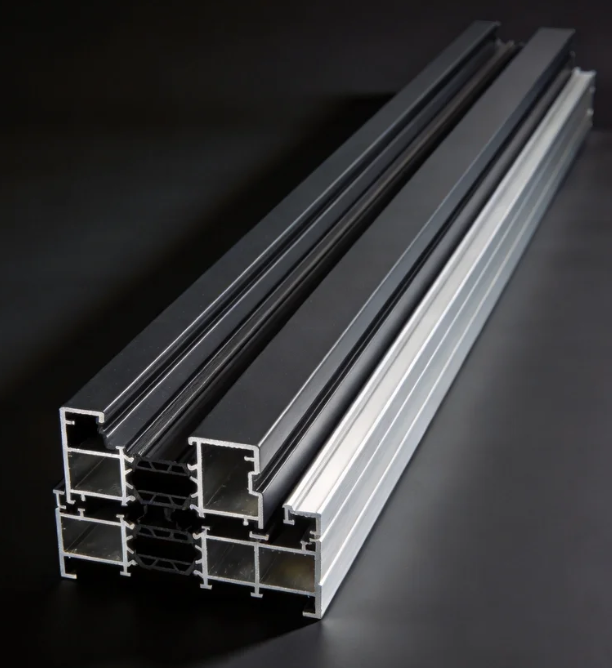
For architectural applications, alloy and temper selection directly influence extrusion performance and finished-product suitability. Xinhe Aluminium lists 6063, 6060, 6061, 6463, 6005, 6082, and 6106 aluminium alloys for architectural profiles, with T5 and T6 temper options. These profiles may be used for curtain walls, aluminium casement windows, sliding windows, and other building-system applications.
Link Payment Stages to Verifiable Milestones
Payment risk is lower when funds are released only after the supplier has completed defined stages of work. For aluminium profiles, the stated T/T arrangement is 30% D/P before manufacture and 70% balance before loading. Rather than treating these amounts as simple dates on a calendar, buyers should specify what proof is required at each point.
Before paying the initial amount, confirm the approved profile drawing, production scope, commercial terms, and any tooling requirements. Before releasing the balance, request agreed evidence that the profiles have passed inspection, are packed according to the order requirements, and are ready for container loading. If a sight L/C is selected instead, all parties should confirm the required documents, document wording, and presentation conditions before the instrument is issued.
Custom Dies Require Additional Upfront Control
Special architectural sections may require custom mold opening, which creates an additional payment and production risk if the design is not fully approved. A documented Philippines contractor case notes support for custom molds used for special cross-sections, narrow-frame profiles, and large-section curtain-wall profiles. For these orders, the contract should clearly identify who approves the die design, how samples are evaluated, whether die charges apply, and what happens if the finished section does not match the agreed drawing.
Make Quality Inspection Part of the Payment Plan
Inspection provisions should be written into the order rather than handled informally after production. The stated quality-control process includes incoming raw-material inspection, 100% production-line inspection, and laboratory sampling and testing. Buyers can incorporate these checkpoints into the acceptance process and require inspection records before final payment or shipment authorization.
Supplier qualifications may provide useful background, but they do not replace product-specific acceptance terms. Xinhe Aluminium holds Qualicoat certificate No. 3419 for aluminium profile powder coating in Europe, and its laboratory holds CNAS Laboratory Accreditation Certificate No. L 10434. Buyers should still define the applicable coating, colour, dimensional, appearance, and performance criteria for the individual order.

Protect the Goods Through Packing and Loading
For long architectural extrusions, shipping arrangements are as important as manufacturing controls. Sea freight is the listed transportation method because it offers substantial loading capacity and a lower unit freight cost for long-shaped materials. However, inadequate packing or container securing can cause scratches, bending, corner damage, or deformation during transit.
The order should therefore identify wrapping materials, foam corner protection, bundle arrangement, container fixing, loading responsibility, and the point at which shipping risk transfers. In a Singapore data-centre project, profiles were wrapped in kraft paper and protected with foam corner guards. Another referenced case included firm fixing inside the container. These measures should be described in the purchase documentation before the balance is paid.
Risk-Control Checklist for Overseas Orders
| Control Area | Recommended Contract Requirement |
|---|---|
| Technical specification | Attach the approved cross-section or drawing and define alloy, temper, dimensions, tolerances, finish, quantity, and acceptance criteria. |
| T/T payment terms | The stated arrangement is 30% D/P before manufacture and 70% before loading. Specify the production, inspection, packing, and loading evidence required for each release. |
| Sight L/C | Confirm all documentary conditions, issuing-bank requirements, and presentation terms with the relevant parties before opening the L/C. |
| Quality assurance | Include raw-material inspection, 100% line inspection, laboratory sampling, testing requirements, and procedures for handling non-conforming goods. |
| Timing and quantity | The stated MOQ is 3 tons and normal delivery time is 15 to 20 days. Confirm whether die development, finishing, or design changes will alter the schedule. |
| Packing and shipping | Define protective wrapping, edge protection, container loading, cargo securing, sea-freight responsibilities, and risk-transfer terms. |
Frequently Asked Questions
Is it advisable to pay in full before custom profiles are manufactured?
Full prepayment increases buyer exposure. The listed T/T arrangement for aluminium profiles is 30% D/P before manufacturing and a 70% balance before loading. Payment should be tied to written specifications, documented inspection stages, and confirmed packing and loading conditions.
What information should be included in an architectural profile order?
At a minimum, include the profile drawing or section, alloy, temper, quantity, surface treatment, inspection standards, packaging method, shipping requirements, and delivery schedule. Available architectural-profile alloys include 6063, 6060, 6061, 6463, 6005, 6082, and 6106, with T5 or T6 temper options.
Can a sight L/C be used for custom aluminium profile purchases?
Yes. Sight L/C is listed as an available payment method. Before placing the order, the buyer and supplier should agree on the documents that must be presented and the conditions that trigger payment.
Conclusion
The most effective way to reduce payment risk when importing custom architectural aluminium profiles is to treat technical approval, quality control, payment milestones, packing, and loading as one connected process. Do not release funds based solely on verbal assurances; rely on documented drawings, inspection requirements, production records, and shipment evidence.
Xinhe Aluminium operates under a full industrial-chain model with distribution and direct sales, lists sea freight as a suitable option for long-shaped materials, and holds ISO 9001:2015 Quality Management System certification. For technical support or detailed profile solutions, please contact xh@xinhealuminium.com.
About Us
Guangdong Xinhe Aluminium Co., Ltd develops and manufactures aluminium profiles for building, decorative, and industrial applications. Founded in 1998, the company operates 60 modern extrusion lines ranging from 1,100 to 5,000 tons and has an annual production capacity of 200,000 tons. Its products are exported to markets including the Philippines, Malaysia, Singapore, Japan, South Korea, Vietnam, India, South Africa, Australia, Europe, Russia, and Kazakhstan. The company is supported by an independent nationally recognized laboratory, research cooperation with institutions and universities, and certifications including SIRIM and ISO 9001:2015.

REPORT