







-
 Agriculture
-
 Health-Care
-
 Environment
-
 Construction-Real-Estate
-
 Tools-Hardware
-
 Home-Garden
-
 Furniture
-
 Luggage-Bags-Cases
-
 Medical-devices-Supplies
-
 Gifts-Crafts
-
 Sports-Entertainment
-
 Food-Beverage
-
 Vehicles-Transportation
-
 Power-Transmission
-
 Material-Handling
-
 Renewable-Energy
-
 Safety
-
 Testing-Instrument-Equipment
-
 Construction-Building-Machinery
-
 Pet-Supplies
-
 Personal-Care-Household-Cleaning
-
 Vehicle-Accessories-Electronics-Tools
-
 School-Office-Supplies
-
 Packaging-Printing
-
 Mother-Kids-Toys
-
 Business-Services
-
 Commercial-Equipment-Machinery
-
 Apparel-Accessories
-
 Security
-
 Shoes-Accessories
-
 Vehicle-Parts-Accessories
-
 Jewelry-Eyewear-Watches-Accessories
-
 Lights-Lighting
-
 Fabric-Textile-Raw-Material
-
 Fabrication-Services
-
 Industrial-Machinery
-
 Consumer-Electronics
-
 Electrical-Equipment-Supplies
-
 Electronic-Components-Accessories-Telecommunications
-
 Home-Appliances
-
 Beauty
-
 Chemicals
-
 Rubber-Plastics
-
 Metals-Alloys


























































































































































































































































































































































































































































































































































































- Masonry Materials
- Curtain Walls & Accessories
- Earthwork Products
- Fireproofing Materials
- Heat Insulation Materials
- Plastic Building Materials
- Building Boards
- Soundproofing Materials
- Timber
- Waterproofing Materials
- Balustrades & Handrails
- Bathroom & Kitchen
- Flooring & Accessories
- Tiles & Accessories
- Door, Window & Accessories
- Fireplaces & Stoves
- Floor Heating Systems & Parts
- Stairs & Stair Parts
- Ceilings
- Elevators & Escalators
- Stone
- Countertops, Vanity Tops & Table Tops
- Mosaics
- Metal Building Materials
- Multifunctional Materials
- Ladders & Scaffoldings
- Mouldings
- Corner Guards
- Decorative Films
- Formwork
- Building & Industrial Glass
- Other Construction & Real Estate
- Wallpapers/Wall panels
- HVAC System & Parts
- Outdoor Facilities
- Prefabricated Buildings
- Festive & Party Supplies
- Bathroom Products
- Household Sundries
- Rain Gear
- Garden Supplies
- Household Cleaning Tools & Accessories
- Lighters & Smoking Accessories
- Home Storage & Organization
- Household Scales
- Smart Home Improvement
- Home Textiles
- Kitchenware
- Drinkware & Accessories
- Dinnerware, Coffee & Wine
- Home Decor
- Golf
- Fitness & Body Building
- Amusement Park Facilities
- Billiards, Board Game,Coin Operated Games
- Musical Instruments
- Outdoor Affordable Luxury Sports
- Camping & Hiking
- Fishing
- Sports Safety&Rehabilitation
- Ball Sports Equipments
- Water Sports
- Winter Sports
- Luxury Travel Equipments
- Sports Shoes, Bags & Accessories
- Cycling
- Other Sports & Entertainment Products
- Artificial Grass&Sports Flooring&Sports Court Equipment
- Scooters
- Food Ingredients
- Honey & Honey Products
- Snacks
- Nuts & Kernels
- Seafood
- Plant & Animal Oil
- Beverages
- Fruit & Vegetable Products
- Frog & Escargot
- Bean Products
- Egg Products
- Dairy Products
- Seasonings & Condiments
- Canned Food
- Instant Food
- Baked Goods
- Other Food & Beverage
- Meat & Poultry
- Confectionery
- Grain Products
- Feminie Care
- Hair Care & Styling
- Body Care
- Hands & Feet Care
- Hygiene Products
- Men's Grooming
- Laundry Cleaning Supplies
- Travel Size & Gift Sets
- Room Deodorizers
- Other Personal Care Products
- Pest Control Products
- Special Household Cleaning
- Floor Cleaning
- Kitchen & Bathroom Cleaning
- Oral Care
- Bath Supplies
- Yellow Pages
- Correction Supplies
- Office Binding Supplies
- Office Cutting Supplies
- Board Erasers
- Office Adhesives & Tapes
- Education Supplies
- Pencil Cases & Bags
- Notebooks & Writing Pads
- File Folder Accessories
- Calendars
- Writing Accessories
- Commercial Office Supplies
- Pencil Sharpeners
- Pens
- Letter Pad/Paper
- Paper Envelopes
- Desk Organizers
- Pencils
- Markers & Highlighters
- Filing Products
- Art Supplies
- Easels
- Badge Holder & Accessories
- Office Paper
- Printer Supplies
- Book Covers
- Other Office & School Supplies
- Stationery Set
- Boards
- Clipboards
- Stamps
- Drafting Supplies
- Stencils
- Electronic Dictionary
- Books
- Map
- Magazines
- Calculators
- Baby & Toddler Toys
- Educational Toys
- Classic Toys
- Dress Up & Pretend Play
- Toy Vehicle
- Stuffed Animals & Plush Toys
- Outdoor Toys & Structures
- Balloons & Accessories
- Baby Food
- Children's Clothing
- Baby Supplies & Products
- Maternity Clothes
- Kids Shoes
- Baby Care
- Novelty & Gag Toys
- Dolls & Accessories
- Puzzle & Games
- Blocks & Model Building Toys
- Toddler Clothing
- Baby Clothing
- Kids' Luggage & Bags
- Arts, Crafts & DIY Toys
- Action & Toy Figures
- Baby Appliances
- Hobbies & Models
- Remote Control Toys
- Promotional Toys
- Pregnancy & Maternity
- Hygiene Products
- Kid's Textile&Bedding
- Novelty & Special Use
- Toy Weapons
- Baby Gifts
- Baby Storage & Organization
- Auto Drive Systems
- ATV/UTV Parts & Accessories
- Marine Parts & Accessories
- Other Auto Parts
- Trailer Parts & Accessories
- Auto Transmission Systems
- Train Parts & Accessories
- Universal Parts
- Railway Parts & Accessories
- Auto Brake Systems
- Aviation Parts & Accessories
- Truck Parts & Accessories
- Auto Suspension Systems
- Auto Lighting Systems
- New Energy Vehicle Parts & Accessories
- Auto Steering Systems
- Wheels, Tires & Accessories
- Bus Parts & Accessories
- Auto Performance Parts
- Cooling System
- Go-Kart & Kart Racer Parts & Accessories
- Air Conditioning Systems
- Heavy Duty Vehicle Parts & Accessories
- Auto Electrical Systems
- Auto Body Systems
- Auto Engine Systems
- Container Parts & Accessories
- Motorcycle Parts & Accessories
- Refrigeration & Heat Exchange Equipment
- Machine Tool Equipment
- Food & Beverage Machinery
- Agricultural Machinery & Equipment
- Apparel & Textile Machinery
- Chemical Machinery
- Packaging Machines
- Paper Production Machinery
- Plastic & Rubber Processing Machinery
- Industrial Robots
- Electronic Products Machinery
- Metal & Metallurgy Machinery
- Woodworking Machinery
- Home Product Manufacturing Machinery
- Machinery Accessories
- Environmental Machinery
- Machinery Service
- Electrical Equipment Manufacturing Machinery
- Industrial Compressors & Parts
- Tobacco & Cigarette Machinery
- Production Line
- Used Industrial Machinery
- Electronics Production Machinery
- Other Machinery & Industrial Equipment
- Camera, Photo & Accessories
- Portable Audio, Video & Accessories
- Television, Home Audio, Video & Accessories
- Video Games & Accessories
- Mobile Phone & Accessories
- Electronic Publications
- Earphone & Headphone & Accessories
- Speakers & Accessories
- Smart Electronics
- TV Receivers & Accessories
- Mobile Phone & Computer Repair Parts
- Chargers, Batteries & Power Supplies
- Used Electronics
- VR, AR, MR Hardware & Software
- Projectors & Presentation Equipments
- Other Consumer Electronics
- Cables & Commonly Used Accessories
- Computer Hardware & Software
- Displays, Signage and Optoelectronics
- Discrete Semiconductors
- Wireless & IoT Module and Products
- Telecommunications
- Connectors, Terminals & Accessories
- Development Boards, Electronic Modules and Kits
- Circuit Protection
- Sensors
- Isolators
- Audio Components and Products
- Integrated Circuits
- Power Supplies
- Relays
- RF, Microwave and RFID
- Electronic Accessories & Supplies
- Passive Components
- PCB & PCBA
- Air Quality Appliances
- Home Appliance Parts
- Heating & Cooling Appliances
- Small Kitchen Appliances
- Laundry Appliances
- Water Heaters
- Water Treatment Appliances
- Refrigerators & Freezers
- Personal Care & Beauty Appliances
- Major Kitchen Appliances
- Cleaning Appliances
- Second-hand Appliances
- Smart Home Appliances
- Other Home Appliances
- Energy Chemicals
- Inorganic Chemicals
- Basic Organic Chemicals
- Agrochemicals
- Admixture & Additives
- Catalysts & Chemical Auxiliary Agents
- Pigments & Dyestuff
- Coating & Paint
- Daily Chemicals
- Polymer
- Organic Intermediate
- Adhesives & Sealants
- Chemical Waste
- Biological Chemical Products
- Surface Treatment Chemicals
- Painting & Coating
- Chemical Reagents
- Flavor & Fragrance
- Non-Explosive Demolition Agents
- Other Chemicals
- Custom Chemical Services

How to Prevent Seasonal Stockouts in Front Bumper Assembly Inventory
Seasonal front bumper assembly planning should combine vehicle-specific demand forecasting, the five-unit minimum order quantity, and the stated seven-day product delivery period. Buyers should separate available, committed, and replenishment stock, establish a clear reorder point, and reserve inventory before demand rises in American and European aftermarket channels. Weekly reviews, inspection records, and shipment tracking can help reduce both stockout and unusable-inventory risks.
Inventory Planning Priorities
- Review front bumper assembly stock at least once a week and calculate replenishment around the seven-day supplier delivery reference.
- Use five units as the product MOQ for standard replenishment, while confirming whether mixed-category purchases qualify for the broader one-to-five-piece business MOQ.
- Organize stock by American and European vehicle series, material, finish, color, and fitment instead of relying only on total unit counts.
- Build a seasonal reserve before collision repair, aftermarket, wholesale, or e-commerce demand reaches its peak.
- Request inspection images or videos, dimensional verification, and shipment updates before releasing or receiving reserved stock.
Build a Fitment-Based Stock System
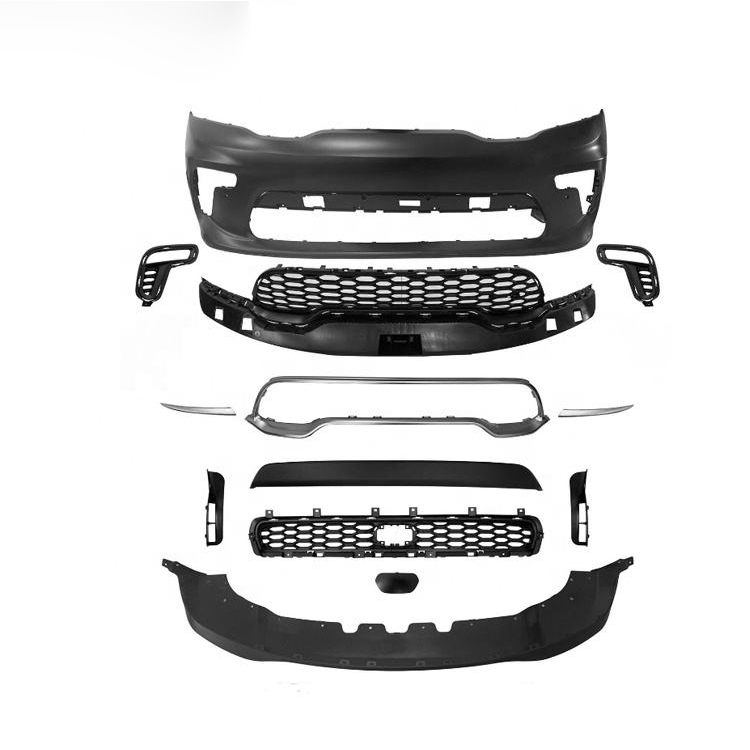
A front bumper assembly may be physically available but commercially unusable if it does not match the required vehicle series or specification. For this reason, each inventory record should identify the applicable American or European vehicle series, front mounting position, material, OEM color, primed finish, and bolt-on or clip-on installation method. The listed material options include PP, ABS, and carbon fiber, while wall thickness ranges from 2.5 to 5.0 mm.
These attributes should be treated as stock-control fields rather than general product notes. A bumper with the wrong material, finish, color, or fitment should not be counted as protection against a shortage for another application. Separating these configurations allows buyers to see whether the actual problem is insufficient overall volume or a shortage affecting one specific vehicle series.
Use Three Stock Categories
A practical control model divides inventory into available stock, committed stock, and replenishment stock. Available stock can be allocated to new confirmed orders. Committed stock is already reserved for existing customers and must be excluded from the quantity available for seasonal protection. Replenishment stock covers expected sales during the supplier lead-time window, together with an additional buffer based on the buyer's sales history.
Because the product information indicates a seven-day delivery time, the reorder calculation should cover forecast demand for the next seven days. The reorder point should also include a contingency allowance for demand variation, inspection delays, freight scheduling, and fitment-specific sales. Buyers should trigger replenishment before usable available stock falls below the projected requirement for that period.
Seasonal Reservation and Supplier Coordination
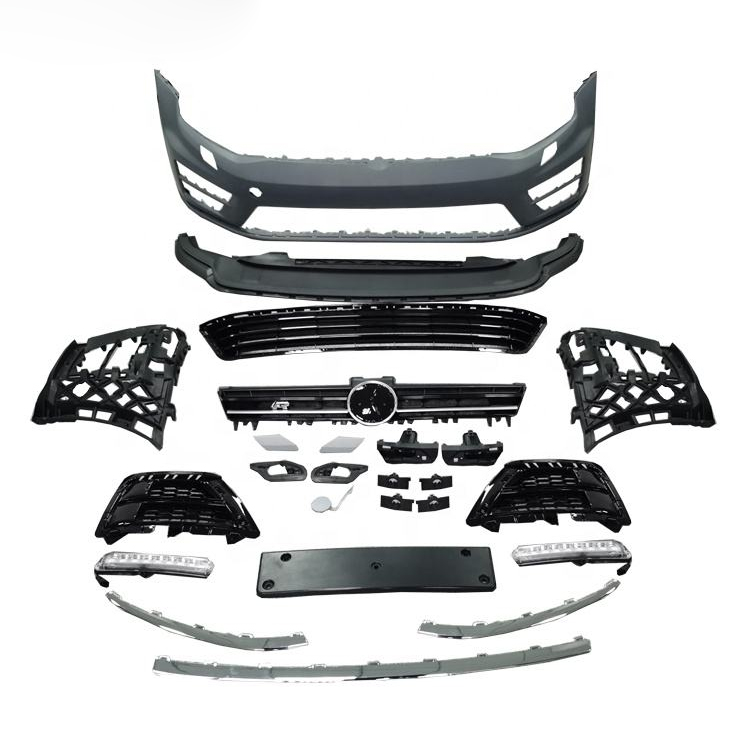
Before a forecasted increase in demand, confirm the vehicle series, quantity, material, surface treatment, color, installation method, inspection requirements, loading date, and destination. A five-unit MOQ can serve as the minimum reference for regular replenishment, but larger seasonal purchases should be based on historical sales, confirmed customer orders, and the expected demand of each fitment.
Standard stock products are described as available for efficient loading and dispatch within approximately one week. However, when freight booking, export documents, and customs procedures are included, buyers should allow up to 14 days for standard-stock loading and dispatch. This longer planning window is especially important for container orders or shipments scheduled before a seasonal peak.
For larger procurement programs, combine ready-to-ship bumper inventory with container planning for related body parts such as grilles, headlights, engine hoods, and fenders. Predictable container demand can be managed separately from short-cycle replenishment for online sellers, repair chains, or distributors that need smaller quantities more frequently.

Quality and Compliance Before Stock Release
Seasonal inventory should not be released for sale until its quality status is confirmed. The stated inspection process includes visual examination, CMM dimensional measurement, and paint and coating tests. Buyers can request inspection pictures or videos before shipment and should retain the evidence with the relevant purchase order or shipment file.
The supplier's production controls also include raw-material verification, process monitoring, and 100% final inspection before loading. Linking these records to individual products or batches helps collision repair chains, wholesalers, distributors, and cross-border sellers reduce the risk of receiving parts that cannot be installed or marketed.
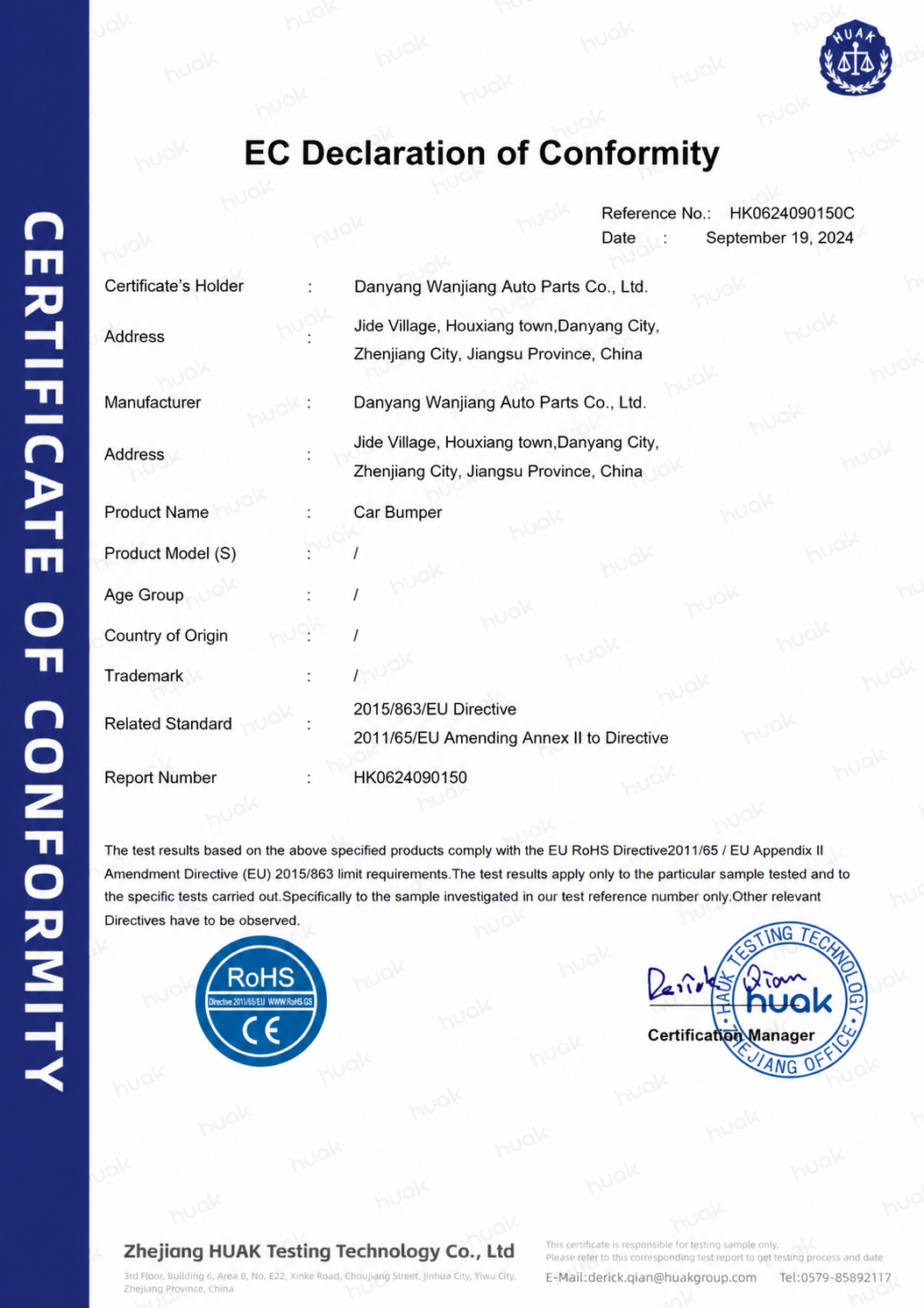
Compliance documentation should be stored alongside product and shipping records. The front bumper assembly information includes CE certification and Germany EPR compliance under VerpackG. The referenced certification records include CE certificate HK0624090150C for car bumpers in Europe and EPR certificate DE1123252940071 covering car bumpers, lamps, hood bonnets, fenders, and grilles in Europe.
Match the Stock Plan to the Customer Type
Different aftermarket customers require different inventory rhythms. Collision repair networks often need dependable availability for a specific vehicle application. Wholesalers and distributors may combine several body-part categories into one larger order, while cross-border e-commerce sellers may prefer smaller and faster replenishment cycles. Independent sellers may need sample quantities before committing to a broader range.
The supplier reports experience with North American and European aftermarket channels, including international wholesalers, regional distributors, professional repair chains, and automotive e-commerce brands. Typical applications include collision repair, exterior restoration, aftermarket retail, and batch commercial distribution. Fitment accuracy, stock visibility, quick turnaround, inspection evidence, OEM/ODM support, and shipping coordination are therefore important factors in the purchasing decision.
Logistics and Purchasing Options
Payment and transport arrangements should be agreed before seasonal stock is reserved. Available payment methods include T/T, D/P, L/C, Alipay, and Alibaba Trade Assurance. For bulky body parts, FCL or LCL sea freight and railway transport are suitable options. Air freight and international express services such as DHL, FedEx, UPS, and TNT can be considered for samples or urgent components.
Stock wholesale, OEM/ODM customization, and shipping-agent services follow different lead-time patterns. Customized products may require mold development and additional production time, depending on craftsmanship complexity and order volume. They should therefore be planned separately from ready-to-ship inventory intended to protect a near-term seasonal requirement.
Recommended Planning Framework
| Planning Item | Recommended Approach |
|---|---|
| Routine replenishment | Review stock weekly, use the seven-day delivery reference, and apply the five-unit product MOQ as the minimum order guide. |
| Seasonal reserve | Calculate demand by vehicle series and keep committed stock separate from available and protected inventory. |
| Large procurement | Combine ready-to-ship products with container planning for bumpers and related body-part categories; confirm loading schedules in advance. |
| Quality release | Verify visual condition, CMM dimensions, paint, and coating performance before placing units into saleable or reserved stock. |
| Compliance file | Maintain CE documentation for car bumpers and Germany EPR records under VerpackG with the applicable shipment information. |
| Transport selection | Use sea or railway transport for bulky orders and air freight or express services for samples and urgent parts. |
Frequently Asked Questions
How many front bumper assemblies should be reordered?
Start with the five-unit product MOQ, then calculate the quantity required for confirmed orders, forecast sales during the seven-day supplier window, and the seasonal buffer for the relevant vehicle series. Since no universal seasonal volume is provided, the reserve should be based on the buyer's sales history and current order pipeline.
When should seasonal stock be reserved?
Reserve inventory before available stock falls below the forecast requirement for the next seven days. For orders involving freight booking, export documentation, and customs clearance, allow up to 14 days for standard-stock loading and dispatch.
How can buyers avoid receiving unusable inventory?
List the vehicle series, front position, material, OEM color, primed finish, and bolt-on or clip-on installation method in the purchase documentation. Before shipment, request available inspection images or videos and confirm visual, dimensional, paint, and coating checks.
Conclusion
To avoid seasonal front bumper assembly stockouts, review inventory weekly, use the seven-day delivery reference, and treat five units as the standard product MOQ. Maintain separate quantities for available, committed, and replenishment stock, and create a fitment-specific reserve before demand increases. For container-based purchasing, allow up to 14 days for loading and international logistics. Quality inspections, CE and Germany EPR records, accurate vehicle application data, and suitable freight planning provide additional protection against delays and incorrect stock.
For technical guidance, product specifications, or seasonal purchasing support, contact sales01@cnkebel.com.
About the Supplier
Danyang Wanjiang Auto Parts Co., Ltd. is based in Danyang, Jiangsu Province, and manufactures car bumpers and other exterior body parts, including grilles, headlights, engine hoods, and fenders. Founded in 2023, the company operates a 10,000-square-meter factory and supplies customers in American and European markets. Its services cover production, OEM/ODM projects, stock supply, and shipping-agent support for international buyers. The company lists CE certification for car bumpers and Germany EPR compliance, and serves customers across several automotive aftermarket sectors.

REPORT