







-
 Agriculture
-
 Health-Care
-
 Environment
-
 Construction-Real-Estate
-
 Tools-Hardware
-
 Home-Garden
-
 Furniture
-
 Luggage-Bags-Cases
-
 Medical-devices-Supplies
-
 Gifts-Crafts
-
 Sports-Entertainment
-
 Food-Beverage
-
 Vehicles-Transportation
-
 Power-Transmission
-
 Material-Handling
-
 Renewable-Energy
-
 Safety
-
 Testing-Instrument-Equipment
-
 Construction-Building-Machinery
-
 Pet-Supplies
-
 Personal-Care-Household-Cleaning
-
 Vehicle-Accessories-Electronics-Tools
-
 School-Office-Supplies
-
 Packaging-Printing
-
 Mother-Kids-Toys
-
 Business-Services
-
 Commercial-Equipment-Machinery
-
 Apparel-Accessories
-
 Security
-
 Shoes-Accessories
-
 Vehicle-Parts-Accessories
-
 Jewelry-Eyewear-Watches-Accessories
-
 Lights-Lighting
-
 Fabric-Textile-Raw-Material
-
 Fabrication-Services
-
 Industrial-Machinery
-
 Consumer-Electronics
-
 Electrical-Equipment-Supplies
-
 Electronic-Components-Accessories-Telecommunications
-
 Home-Appliances
-
 Beauty
-
 Chemicals
-
 Rubber-Plastics
-
 Metals-Alloys


























































































































































































































































































































































































































































































































































































- Masonry Materials
- Curtain Walls & Accessories
- Earthwork Products
- Fireproofing Materials
- Heat Insulation Materials
- Plastic Building Materials
- Building Boards
- Soundproofing Materials
- Timber
- Waterproofing Materials
- Balustrades & Handrails
- Bathroom & Kitchen
- Flooring & Accessories
- Tiles & Accessories
- Door, Window & Accessories
- Fireplaces & Stoves
- Floor Heating Systems & Parts
- Stairs & Stair Parts
- Ceilings
- Elevators & Escalators
- Stone
- Countertops, Vanity Tops & Table Tops
- Mosaics
- Metal Building Materials
- Multifunctional Materials
- Ladders & Scaffoldings
- Mouldings
- Corner Guards
- Decorative Films
- Formwork
- Building & Industrial Glass
- Other Construction & Real Estate
- Wallpapers/Wall panels
- HVAC System & Parts
- Outdoor Facilities
- Prefabricated Buildings
- Festive & Party Supplies
- Bathroom Products
- Household Sundries
- Rain Gear
- Garden Supplies
- Household Cleaning Tools & Accessories
- Lighters & Smoking Accessories
- Home Storage & Organization
- Household Scales
- Smart Home Improvement
- Home Textiles
- Kitchenware
- Drinkware & Accessories
- Dinnerware, Coffee & Wine
- Home Decor
- Golf
- Fitness & Body Building
- Amusement Park Facilities
- Billiards, Board Game,Coin Operated Games
- Musical Instruments
- Outdoor Affordable Luxury Sports
- Camping & Hiking
- Fishing
- Sports Safety&Rehabilitation
- Ball Sports Equipments
- Water Sports
- Winter Sports
- Luxury Travel Equipments
- Sports Shoes, Bags & Accessories
- Cycling
- Other Sports & Entertainment Products
- Artificial Grass&Sports Flooring&Sports Court Equipment
- Scooters
- Food Ingredients
- Honey & Honey Products
- Snacks
- Nuts & Kernels
- Seafood
- Plant & Animal Oil
- Beverages
- Fruit & Vegetable Products
- Frog & Escargot
- Bean Products
- Egg Products
- Dairy Products
- Seasonings & Condiments
- Canned Food
- Instant Food
- Baked Goods
- Other Food & Beverage
- Meat & Poultry
- Confectionery
- Grain Products
- Feminie Care
- Hair Care & Styling
- Body Care
- Hands & Feet Care
- Hygiene Products
- Men's Grooming
- Laundry Cleaning Supplies
- Travel Size & Gift Sets
- Room Deodorizers
- Other Personal Care Products
- Pest Control Products
- Special Household Cleaning
- Floor Cleaning
- Kitchen & Bathroom Cleaning
- Oral Care
- Bath Supplies
- Yellow Pages
- Correction Supplies
- Office Binding Supplies
- Office Cutting Supplies
- Board Erasers
- Office Adhesives & Tapes
- Education Supplies
- Pencil Cases & Bags
- Notebooks & Writing Pads
- File Folder Accessories
- Calendars
- Writing Accessories
- Commercial Office Supplies
- Pencil Sharpeners
- Pens
- Letter Pad/Paper
- Paper Envelopes
- Desk Organizers
- Pencils
- Markers & Highlighters
- Filing Products
- Art Supplies
- Easels
- Badge Holder & Accessories
- Office Paper
- Printer Supplies
- Book Covers
- Other Office & School Supplies
- Stationery Set
- Boards
- Clipboards
- Stamps
- Drafting Supplies
- Stencils
- Electronic Dictionary
- Books
- Map
- Magazines
- Calculators
- Baby & Toddler Toys
- Educational Toys
- Classic Toys
- Dress Up & Pretend Play
- Toy Vehicle
- Stuffed Animals & Plush Toys
- Outdoor Toys & Structures
- Balloons & Accessories
- Baby Food
- Children's Clothing
- Baby Supplies & Products
- Maternity Clothes
- Kids Shoes
- Baby Care
- Novelty & Gag Toys
- Dolls & Accessories
- Puzzle & Games
- Blocks & Model Building Toys
- Toddler Clothing
- Baby Clothing
- Kids' Luggage & Bags
- Arts, Crafts & DIY Toys
- Action & Toy Figures
- Baby Appliances
- Hobbies & Models
- Remote Control Toys
- Promotional Toys
- Pregnancy & Maternity
- Hygiene Products
- Kid's Textile&Bedding
- Novelty & Special Use
- Toy Weapons
- Baby Gifts
- Baby Storage & Organization
- Auto Drive Systems
- ATV/UTV Parts & Accessories
- Marine Parts & Accessories
- Other Auto Parts
- Trailer Parts & Accessories
- Auto Transmission Systems
- Train Parts & Accessories
- Universal Parts
- Railway Parts & Accessories
- Auto Brake Systems
- Aviation Parts & Accessories
- Truck Parts & Accessories
- Auto Suspension Systems
- Auto Lighting Systems
- New Energy Vehicle Parts & Accessories
- Auto Steering Systems
- Wheels, Tires & Accessories
- Bus Parts & Accessories
- Auto Performance Parts
- Cooling System
- Go-Kart & Kart Racer Parts & Accessories
- Air Conditioning Systems
- Heavy Duty Vehicle Parts & Accessories
- Auto Electrical Systems
- Auto Body Systems
- Auto Engine Systems
- Container Parts & Accessories
- Motorcycle Parts & Accessories
- Refrigeration & Heat Exchange Equipment
- Machine Tool Equipment
- Food & Beverage Machinery
- Agricultural Machinery & Equipment
- Apparel & Textile Machinery
- Chemical Machinery
- Packaging Machines
- Paper Production Machinery
- Plastic & Rubber Processing Machinery
- Industrial Robots
- Electronic Products Machinery
- Metal & Metallurgy Machinery
- Woodworking Machinery
- Home Product Manufacturing Machinery
- Machinery Accessories
- Environmental Machinery
- Machinery Service
- Electrical Equipment Manufacturing Machinery
- Industrial Compressors & Parts
- Tobacco & Cigarette Machinery
- Production Line
- Used Industrial Machinery
- Electronics Production Machinery
- Other Machinery & Industrial Equipment
- Camera, Photo & Accessories
- Portable Audio, Video & Accessories
- Television, Home Audio, Video & Accessories
- Video Games & Accessories
- Mobile Phone & Accessories
- Electronic Publications
- Earphone & Headphone & Accessories
- Speakers & Accessories
- Smart Electronics
- TV Receivers & Accessories
- Mobile Phone & Computer Repair Parts
- Chargers, Batteries & Power Supplies
- Used Electronics
- VR, AR, MR Hardware & Software
- Projectors & Presentation Equipments
- Other Consumer Electronics
- Cables & Commonly Used Accessories
- Computer Hardware & Software
- Displays, Signage and Optoelectronics
- Discrete Semiconductors
- Wireless & IoT Module and Products
- Telecommunications
- Connectors, Terminals & Accessories
- Development Boards, Electronic Modules and Kits
- Circuit Protection
- Sensors
- Isolators
- Audio Components and Products
- Integrated Circuits
- Power Supplies
- Relays
- RF, Microwave and RFID
- Electronic Accessories & Supplies
- Passive Components
- PCB & PCBA
- Air Quality Appliances
- Home Appliance Parts
- Heating & Cooling Appliances
- Small Kitchen Appliances
- Laundry Appliances
- Water Heaters
- Water Treatment Appliances
- Refrigerators & Freezers
- Personal Care & Beauty Appliances
- Major Kitchen Appliances
- Cleaning Appliances
- Second-hand Appliances
- Smart Home Appliances
- Other Home Appliances
- Energy Chemicals
- Inorganic Chemicals
- Basic Organic Chemicals
- Agrochemicals
- Admixture & Additives
- Catalysts & Chemical Auxiliary Agents
- Pigments & Dyestuff
- Coating & Paint
- Daily Chemicals
- Polymer
- Organic Intermediate
- Adhesives & Sealants
- Chemical Waste
- Biological Chemical Products
- Surface Treatment Chemicals
- Painting & Coating
- Chemical Reagents
- Flavor & Fragrance
- Non-Explosive Demolition Agents
- Other Chemicals
- Custom Chemical Services

How to Protect a Custom Pilates Sock Design from Competitor Resale
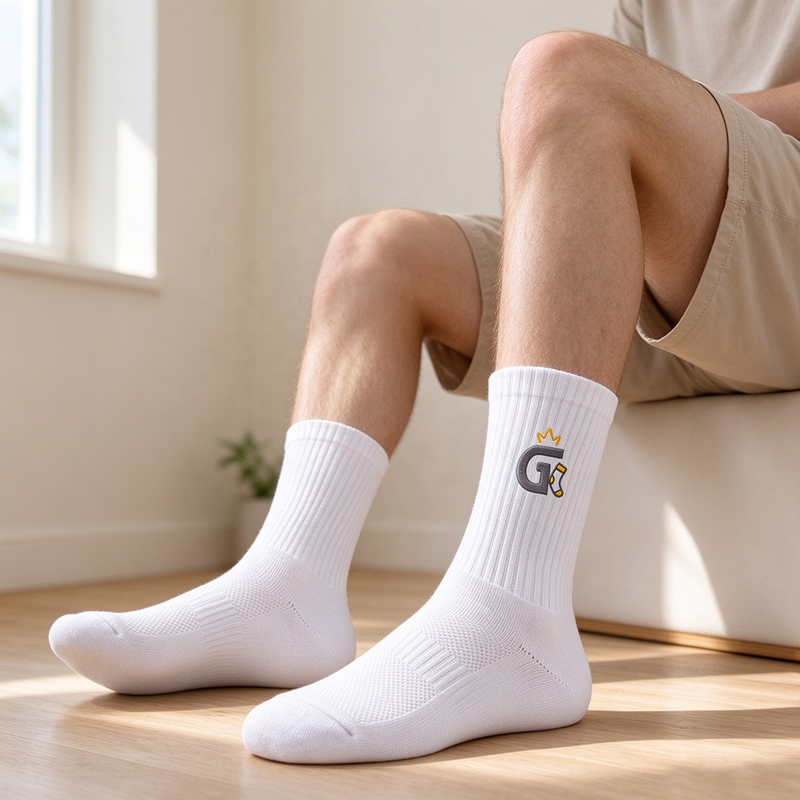
Protecting a custom Pilates sock design requires more than selecting a unique pattern or logo. Buyers should identify the design as project-specific, keep complete records of the approved artwork and specifications, and obtain written conditions that prohibit unauthorized reuse, resale, sampling, display, or private-label manufacturing. Choosing a supplier with direct production oversight, custom packaging, and traceable quality records adds another layer of control.
Key Protection Measures
- Label the Pilates sock design as exclusive to the customer and record the approved logo, colors, yarn combinations, sock length, knit structure, grip details, packaging, and private-label instructions.
- Add written restrictions covering the reproduction, resale, public display, sampling, and manufacture of the approved design for other buyers.
- Select a manufacturer that controls the process from yarn selection and sampling through production and final inspection.
- Use customized grip or athletic socks for Pilates studios, wellness brands, fitness teams, promotional campaigns, and private-label retail collections.
How to Create a Reliable Design-Control Process
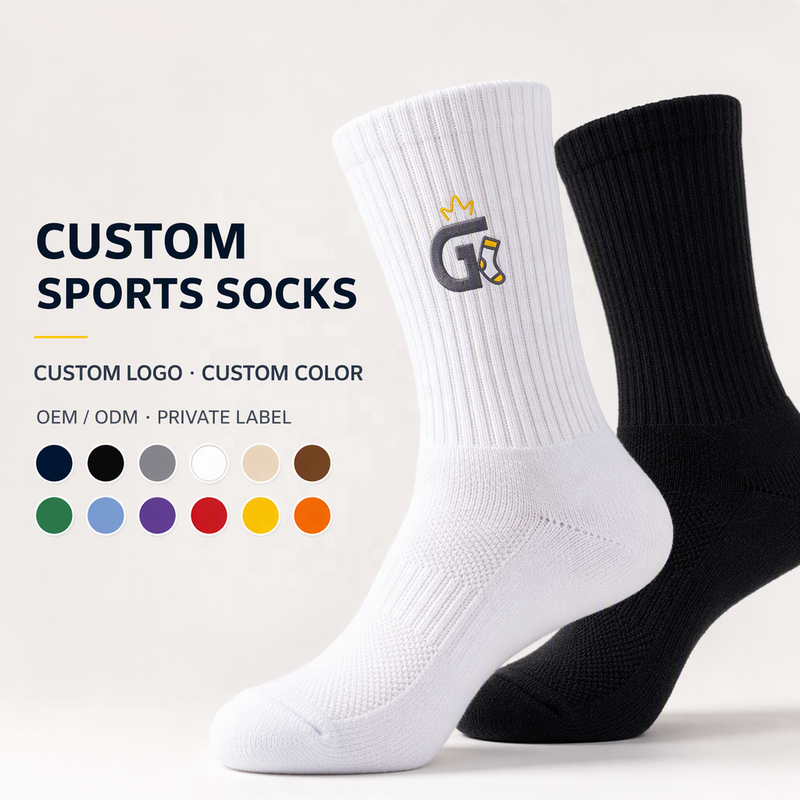
The foundation of design protection is an accurate production file. Custom sports socks can include branded logos, selected colors and yarn combinations, customized lengths, special knit structures, private labels, custom packaging, embroidery, jacquard patterns, and printed elements. Each approved detail should appear in the order documents and sample records so the supplier can clearly distinguish the project from its standard sock range.
Use Sample Approval as a Formal Control Point
Sample approval is an important stage for preventing unauthorized changes or accidental reuse. The product information indicates that sampling normally takes 7–10 business days, with bulk production arranged after the sample has been approved and the deposit received. Keep the approved artwork, color references, packaging files, sample images, and revision history in one project record. Any modification should be reviewed and approved in writing before production starts.
Choose a Supplier with Production Visibility
End-to-end production oversight makes it easier to track which materials and files belong to a specific customer project. Yiwu Genke Apparel Co., Ltd. states that it manages production in-house from yarn selection through final quality control. Its service model includes one-on-one assistance, fast sampling, customized manufacturing, and 100% manual inspection. These capabilities can help buyers compare finished Pilates socks against the approved sample and maintain consistent project documentation.
Supplier credentials and relevant customer experience can also help with evaluation. The company lists Oeko-Tex 100, BSCI, and GRS certifications. Its cooperation examples include United States fitness studios, athletic teams, corporate marketing agencies, fashion retailers, and gift distributors, with projects involving customized grip socks and premium retail products. However, experience with multiple customer groups does not automatically create exclusivity, so design ownership and non-reuse requirements must be stated separately in the order agreement.
Design Protection Checklist
| Control area | Relevant product or service capability | Recommended buyer action |
|---|---|---|
| Design documentation | Custom logos, colors, yarn combinations, sock lengths, and knit structures are supported. | Record every approved design component in the project and purchase documents. |
| Private-label protection | Private labeling and customized packaging are available. | State that the labels, packaging, and related artwork are reserved for the named customer or project. |
| Production traceability | In-house management extends from yarn selection to final quality control. | Store the approved sample, artwork, material details, and all revision records. |
| Inspection reference | 100% manual inspection is described as part of the production process. | Use the signed or otherwise approved sample as the quality reference for finished goods. |
| Minimum order quantity | The product listing states a 100-pair MOQ, while the business model states an MOQ of 1. | Confirm which MOQ applies to the specific custom Pilates sock order before payment. |
Frequently Asked Questions
Does private-label production prevent a Pilates sock design from being sold elsewhere?
Private-label manufacturing helps distinguish a customer project from a supplier's standard products, but it does not replace a written protection agreement. Identify the approved artwork, packaging, specifications, and sample, then include clear restrictions against reuse, resale, display, and production for other customers.
What should be included in the approved design file?
Include the logo, Pantone or other color references, yarn combinations, sock length, knit structure, grip or print specifications, labels, packaging, approved sample, and every subsequent revision. The product supports custom branding, colors, structures, and packaging, so these details should be recorded individually.
How does quality inspection help protect the design?
When the approved sample is used as the inspection benchmark, the buyer has a documented reference for checking the finished socks. The supplier describes in-house control from yarn selection to final quality inspection, which supports consistency between the approved Pilates design and the delivered order.
Conclusion and Practical Recommendations
Create a complete project file for the custom Pilates sock, approve all artwork and specifications before bulk production, and require written consent for every later change. The supplier supports OEM and ODM manufacturing, private labeling, custom packaging, and a stated 100-pair product MOQ. Its business model separately lists one-stop high-end customization with an MOQ of 1, so the applicable quantity should be confirmed for each order. The company also lists Oeko-Tex 100, BSCI, and GRS certifications, along with one-on-one service and 100% manual inspection. For technical guidance or project support, contact us at happygu@cnleyoyo.com.
About Yiwu Genke Apparel Co., Ltd.
Yiwu Genke Apparel Co., Ltd. has more than ten years of experience in customized socks and provides one-stop sock manufacturing solutions for customers worldwide. Founded in 2016, the company reports a 1,200 sqm factory and an annual capacity of 12,000,000 pairs. Its primary markets include the United States, Australia, and Europe. The company lists Oeko-Tex 100 and BSCI certifications and has worked with customers from a range of industries.
REPORT