







-
 Agriculture
-
 Health-Care
-
 Environment
-
 Construction-Real-Estate
-
 Tools-Hardware
-
 Home-Garden
-
 Furniture
-
 Luggage-Bags-Cases
-
 Medical-devices-Supplies
-
 Gifts-Crafts
-
 Sports-Entertainment
-
 Food-Beverage
-
 Vehicles-Transportation
-
 Power-Transmission
-
 Material-Handling
-
 Renewable-Energy
-
 Safety
-
 Testing-Instrument-Equipment
-
 Construction-Building-Machinery
-
 Pet-Supplies
-
 Personal-Care-Household-Cleaning
-
 Vehicle-Accessories-Electronics-Tools
-
 School-Office-Supplies
-
 Packaging-Printing
-
 Mother-Kids-Toys
-
 Business-Services
-
 Commercial-Equipment-Machinery
-
 Apparel-Accessories
-
 Security
-
 Shoes-Accessories
-
 Vehicle-Parts-Accessories
-
 Jewelry-Eyewear-Watches-Accessories
-
 Lights-Lighting
-
 Fabric-Textile-Raw-Material
-
 Fabrication-Services
-
 Industrial-Machinery
-
 Consumer-Electronics
-
 Electrical-Equipment-Supplies
-
 Electronic-Components-Accessories-Telecommunications
-
 Home-Appliances
-
 Beauty
-
 Chemicals
-
 Rubber-Plastics
-
 Metals-Alloys


























































































































































































































































































































































































































































































































































































- Masonry Materials
- Curtain Walls & Accessories
- Earthwork Products
- Fireproofing Materials
- Heat Insulation Materials
- Plastic Building Materials
- Building Boards
- Soundproofing Materials
- Timber
- Waterproofing Materials
- Balustrades & Handrails
- Bathroom & Kitchen
- Flooring & Accessories
- Tiles & Accessories
- Door, Window & Accessories
- Fireplaces & Stoves
- Floor Heating Systems & Parts
- Stairs & Stair Parts
- Ceilings
- Elevators & Escalators
- Stone
- Countertops, Vanity Tops & Table Tops
- Mosaics
- Metal Building Materials
- Multifunctional Materials
- Ladders & Scaffoldings
- Mouldings
- Corner Guards
- Decorative Films
- Formwork
- Building & Industrial Glass
- Other Construction & Real Estate
- Wallpapers/Wall panels
- HVAC System & Parts
- Outdoor Facilities
- Prefabricated Buildings
- Festive & Party Supplies
- Bathroom Products
- Household Sundries
- Rain Gear
- Garden Supplies
- Household Cleaning Tools & Accessories
- Lighters & Smoking Accessories
- Home Storage & Organization
- Household Scales
- Smart Home Improvement
- Home Textiles
- Kitchenware
- Drinkware & Accessories
- Dinnerware, Coffee & Wine
- Home Decor
- Golf
- Fitness & Body Building
- Amusement Park Facilities
- Billiards, Board Game,Coin Operated Games
- Musical Instruments
- Outdoor Affordable Luxury Sports
- Camping & Hiking
- Fishing
- Sports Safety&Rehabilitation
- Ball Sports Equipments
- Water Sports
- Winter Sports
- Luxury Travel Equipments
- Sports Shoes, Bags & Accessories
- Cycling
- Other Sports & Entertainment Products
- Artificial Grass&Sports Flooring&Sports Court Equipment
- Scooters
- Food Ingredients
- Honey & Honey Products
- Snacks
- Nuts & Kernels
- Seafood
- Plant & Animal Oil
- Beverages
- Fruit & Vegetable Products
- Frog & Escargot
- Bean Products
- Egg Products
- Dairy Products
- Seasonings & Condiments
- Canned Food
- Instant Food
- Baked Goods
- Other Food & Beverage
- Meat & Poultry
- Confectionery
- Grain Products
- Feminie Care
- Hair Care & Styling
- Body Care
- Hands & Feet Care
- Hygiene Products
- Men's Grooming
- Laundry Cleaning Supplies
- Travel Size & Gift Sets
- Room Deodorizers
- Other Personal Care Products
- Pest Control Products
- Special Household Cleaning
- Floor Cleaning
- Kitchen & Bathroom Cleaning
- Oral Care
- Bath Supplies
- Yellow Pages
- Correction Supplies
- Office Binding Supplies
- Office Cutting Supplies
- Board Erasers
- Office Adhesives & Tapes
- Education Supplies
- Pencil Cases & Bags
- Notebooks & Writing Pads
- File Folder Accessories
- Calendars
- Writing Accessories
- Commercial Office Supplies
- Pencil Sharpeners
- Pens
- Letter Pad/Paper
- Paper Envelopes
- Desk Organizers
- Pencils
- Markers & Highlighters
- Filing Products
- Art Supplies
- Easels
- Badge Holder & Accessories
- Office Paper
- Printer Supplies
- Book Covers
- Other Office & School Supplies
- Stationery Set
- Boards
- Clipboards
- Stamps
- Drafting Supplies
- Stencils
- Electronic Dictionary
- Books
- Map
- Magazines
- Calculators
- Baby & Toddler Toys
- Educational Toys
- Classic Toys
- Dress Up & Pretend Play
- Toy Vehicle
- Stuffed Animals & Plush Toys
- Outdoor Toys & Structures
- Balloons & Accessories
- Baby Food
- Children's Clothing
- Baby Supplies & Products
- Maternity Clothes
- Kids Shoes
- Baby Care
- Novelty & Gag Toys
- Dolls & Accessories
- Puzzle & Games
- Blocks & Model Building Toys
- Toddler Clothing
- Baby Clothing
- Kids' Luggage & Bags
- Arts, Crafts & DIY Toys
- Action & Toy Figures
- Baby Appliances
- Hobbies & Models
- Remote Control Toys
- Promotional Toys
- Pregnancy & Maternity
- Hygiene Products
- Kid's Textile&Bedding
- Novelty & Special Use
- Toy Weapons
- Baby Gifts
- Baby Storage & Organization
- Auto Drive Systems
- ATV/UTV Parts & Accessories
- Marine Parts & Accessories
- Other Auto Parts
- Trailer Parts & Accessories
- Auto Transmission Systems
- Train Parts & Accessories
- Universal Parts
- Railway Parts & Accessories
- Auto Brake Systems
- Aviation Parts & Accessories
- Truck Parts & Accessories
- Auto Suspension Systems
- Auto Lighting Systems
- New Energy Vehicle Parts & Accessories
- Auto Steering Systems
- Wheels, Tires & Accessories
- Bus Parts & Accessories
- Auto Performance Parts
- Cooling System
- Go-Kart & Kart Racer Parts & Accessories
- Air Conditioning Systems
- Heavy Duty Vehicle Parts & Accessories
- Auto Electrical Systems
- Auto Body Systems
- Auto Engine Systems
- Container Parts & Accessories
- Motorcycle Parts & Accessories
- Refrigeration & Heat Exchange Equipment
- Machine Tool Equipment
- Food & Beverage Machinery
- Agricultural Machinery & Equipment
- Apparel & Textile Machinery
- Chemical Machinery
- Packaging Machines
- Paper Production Machinery
- Plastic & Rubber Processing Machinery
- Industrial Robots
- Electronic Products Machinery
- Metal & Metallurgy Machinery
- Woodworking Machinery
- Home Product Manufacturing Machinery
- Machinery Accessories
- Environmental Machinery
- Machinery Service
- Electrical Equipment Manufacturing Machinery
- Industrial Compressors & Parts
- Tobacco & Cigarette Machinery
- Production Line
- Used Industrial Machinery
- Electronics Production Machinery
- Other Machinery & Industrial Equipment
- Camera, Photo & Accessories
- Portable Audio, Video & Accessories
- Television, Home Audio, Video & Accessories
- Video Games & Accessories
- Mobile Phone & Accessories
- Electronic Publications
- Earphone & Headphone & Accessories
- Speakers & Accessories
- Smart Electronics
- TV Receivers & Accessories
- Mobile Phone & Computer Repair Parts
- Chargers, Batteries & Power Supplies
- Used Electronics
- VR, AR, MR Hardware & Software
- Projectors & Presentation Equipments
- Other Consumer Electronics
- Cables & Commonly Used Accessories
- Computer Hardware & Software
- Displays, Signage and Optoelectronics
- Discrete Semiconductors
- Wireless & IoT Module and Products
- Telecommunications
- Connectors, Terminals & Accessories
- Development Boards, Electronic Modules and Kits
- Circuit Protection
- Sensors
- Isolators
- Audio Components and Products
- Integrated Circuits
- Power Supplies
- Relays
- RF, Microwave and RFID
- Electronic Accessories & Supplies
- Passive Components
- PCB & PCBA
- Air Quality Appliances
- Home Appliance Parts
- Heating & Cooling Appliances
- Small Kitchen Appliances
- Laundry Appliances
- Water Heaters
- Water Treatment Appliances
- Refrigerators & Freezers
- Personal Care & Beauty Appliances
- Major Kitchen Appliances
- Cleaning Appliances
- Second-hand Appliances
- Smart Home Appliances
- Other Home Appliances
- Energy Chemicals
- Inorganic Chemicals
- Basic Organic Chemicals
- Agrochemicals
- Admixture & Additives
- Catalysts & Chemical Auxiliary Agents
- Pigments & Dyestuff
- Coating & Paint
- Daily Chemicals
- Polymer
- Organic Intermediate
- Adhesives & Sealants
- Chemical Waste
- Biological Chemical Products
- Surface Treatment Chemicals
- Painting & Coating
- Chemical Reagents
- Flavor & Fragrance
- Non-Explosive Demolition Agents
- Other Chemicals
- Custom Chemical Services

How to Reduce Energy Costs When Upgrading a Mattress Quilting Series Line
Planning an Energy-Efficient Mattress Quilting Line Upgrade
Reducing energy costs during an upgrade to a Mattress Quilting Series line starts with accurate measurement and practical equipment selection. Before investing in new machinery, assess the current line's electrical demand, production schedule, operating load, idle time, and maintenance history. This information helps determine which improvements can reduce energy waste without compromising output.
The available product information does not provide a power rating or energy-saving percentage for a Mattress Quilting Series line. Therefore, any energy reduction estimate must be based on machine-specific measurements and the actual operating conditions of the factory.
Key Measures for Controlling Energy Use
- Conduct an energy audit of the existing quilting line before finalizing the upgrade plan.
- Select equipment capacity according to actual production volume, product mix, and operating hours.
- Include intelligent operation, parameter control, and digital production records in the technical specification.
- Use preventive maintenance and process quality controls to limit downtime, rework, and inefficient machine operation.
- Review workshop layout and production flow so upgraded modules operate efficiently within the available space.
Understanding the Available Power Reference
The documented electrical data applies to the YT-PJ-2A Automatic Mattress Spraying Line, not to the Mattress Quilting Series. The spraying line uses a 3-phase, 380 V, 50 Hz power supply and has a listed total power of 17 kW. This value can be used when evaluating the spraying line only and should not be treated as the energy consumption of a quilting machine.
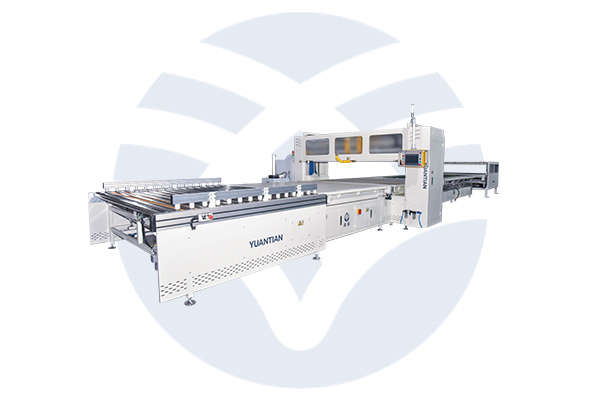
For a quilting-line project, the factory should record real operating data from each major machine or production module. Useful information includes rated electrical specifications, measured load during normal production, standby consumption, daily operating hours, product specifications, and output targets. Comparing these figures before and after an upgrade provides a more reliable basis for evaluating energy costs.
Capacity Matching and Digital Operation
Oversized equipment may increase the initial investment and create unnecessary energy demand, particularly when the line frequently operates below its maximum capacity. The upgrade should therefore be matched to the factory's planned output, product range, shift pattern, and future growth requirements. Foshan Yuantian Mattress Machinery Co.,Ltd produces eight major series and 146 bed machinery specifications, allowing equipment selection to be based on the required production configuration rather than maximum capacity alone.
Digital production management can also support more consistent operation. The company describes the use of ERP, PDM, and MES systems, together with intelligent equipment functions. These tools may help manufacturers organize machine parameters, production records, maintenance schedules, fault information, and equipment-status data. Although the supplied information does not claim a specific energy-saving result, better visibility can help identify idle operation, abnormal settings, and avoidable production losses.
Application Conditions and Operating Efficiency
Potential users include high-volume mattress factories, hotel and home mattress manufacturers, latex and spring mattress producers, memory foam businesses, automated mattress production projects, and workshops serving online mattress brands or export-oriented bed furniture companies. Each application has different production volumes, product mixes, workshop layouts, and operating schedules. These factors should be included in the energy and capacity assessment before equipment is selected.
Production quality and after-sales support also influence the total operating cost. Incoming-material inspection, component testing, complete-machine testing, export-adaptation checks, and production traceability can help reduce defects and rework. Yuantian states that it provides installation, commissioning, operator training, remote diagnosis, parameter adjustment, system upgrades, and lifelong maintenance services. These services can help keep equipment settings stable and reduce extended downtime.
Upgrade Factors at a Glance
| Evaluation area | Recommended approach or available information |
|---|---|
| Mattress Quilting Series power demand | No specific figure is provided; obtain electrical specifications and measured operating-load data for the selected machine. |
| YT-PJ-2A Spraying Line reference | The listed total power is 17 kW and applies only to the automatic spraying line. |
| Capacity planning | Base the selection on production targets, product mix, shift schedules, workshop conditions, and expected growth. |
| Intelligent operation | Consider parameter management, production monitoring, and digital systems such as ERP, PDM, and MES. |
| Cost-control support | Use installation, commissioning, training, remote diagnosis, parameter adjustment, and maintenance services to support stable operation. |
Frequently Asked Questions
Is the 17 kW rating applicable to a Mattress Quilting Series line?
No. The 17 kW specification belongs to the YT-PJ-2A Automatic Mattress Spraying Line. The available information does not state the power consumption of the Mattress Quilting Series, so a separate machine-specific assessment is required.
What should be measured before upgrading the quilting line?
Measure the existing line's voltage and electrical demand, normal operating load, standby periods, production hours, output, product types, workshop conditions, downtime, and maintenance history. These records provide the baseline needed for capacity and energy comparisons.
How can intelligent controls help manage energy costs?
Digital controls can organize operating parameters, production data, maintenance records, and equipment-status information. This may make it easier to find inefficient settings, unnecessary idle time, and recurring faults. The supplied company information confirms intelligent operation and digital management capabilities but does not provide a guaranteed energy-saving percentage.
Conclusion
The most dependable way to lower energy costs during a Mattress Quilting Series upgrade is to combine measured energy data with accurate capacity planning and suitable process controls. The 17 kW figure should be retained as a reference for the YT-PJ-2A Spraying Line only, not used as an estimate for quilting equipment.
Yuantian provides factory-layout and capacity consultation, installation, commissioning, operator training, remote technical assistance, and maintenance support. Its stated business model combines manufacturing and trade, with a minimum order quantity of one and a listed 30-day delivery time for the business model. The YT-PJ-2A product record specifies a 50-day delivery time. For a detailed technical proposal, contact yuantian@yuantian.com.
About Foshan Yuantian Mattress Machinery Co.,Ltd
Foshan Yuantian Mattress Machinery Co.,Ltd was established in Foshan in 1982 and focuses on the research, development, manufacture, sale, and service of mattress machinery and spring mattresses. The company operates a 150,000-square-meter production facility and offers eight major product series covering 146 bed machinery specifications. Its services include pre-sales consultation, installation, commissioning, and after-sales maintenance, and it launches two to three new products annually. The company holds ISO 9001 certifications related to bed machinery products and environmental management activities for mattress machinery, and has supplied equipment to customers in several industries and international markets.

REPORT