







-
 Agriculture
-
 Health-Care
-
 Environment
-
 Construction-Real-Estate
-
 Tools-Hardware
-
 Home-Garden
-
 Furniture
-
 Luggage-Bags-Cases
-
 Medical-devices-Supplies
-
 Gifts-Crafts
-
 Sports-Entertainment
-
 Food-Beverage
-
 Vehicles-Transportation
-
 Power-Transmission
-
 Material-Handling
-
 Renewable-Energy
-
 Safety
-
 Testing-Instrument-Equipment
-
 Construction-Building-Machinery
-
 Pet-Supplies
-
 Personal-Care-Household-Cleaning
-
 Vehicle-Accessories-Electronics-Tools
-
 School-Office-Supplies
-
 Packaging-Printing
-
 Mother-Kids-Toys
-
 Business-Services
-
 Commercial-Equipment-Machinery
-
 Apparel-Accessories
-
 Security
-
 Shoes-Accessories
-
 Vehicle-Parts-Accessories
-
 Jewelry-Eyewear-Watches-Accessories
-
 Lights-Lighting
-
 Fabric-Textile-Raw-Material
-
 Fabrication-Services
-
 Industrial-Machinery
-
 Consumer-Electronics
-
 Electrical-Equipment-Supplies
-
 Electronic-Components-Accessories-Telecommunications
-
 Home-Appliances
-
 Beauty
-
 Chemicals
-
 Rubber-Plastics
-
 Metals-Alloys


























































































































































































































































































































































































































































































































































































- Masonry Materials
- Curtain Walls & Accessories
- Earthwork Products
- Fireproofing Materials
- Heat Insulation Materials
- Plastic Building Materials
- Building Boards
- Soundproofing Materials
- Timber
- Waterproofing Materials
- Balustrades & Handrails
- Bathroom & Kitchen
- Flooring & Accessories
- Tiles & Accessories
- Door, Window & Accessories
- Fireplaces & Stoves
- Floor Heating Systems & Parts
- Stairs & Stair Parts
- Ceilings
- Elevators & Escalators
- Stone
- Countertops, Vanity Tops & Table Tops
- Mosaics
- Metal Building Materials
- Multifunctional Materials
- Ladders & Scaffoldings
- Mouldings
- Corner Guards
- Decorative Films
- Formwork
- Building & Industrial Glass
- Other Construction & Real Estate
- Wallpapers/Wall panels
- HVAC System & Parts
- Outdoor Facilities
- Prefabricated Buildings
- Festive & Party Supplies
- Bathroom Products
- Household Sundries
- Rain Gear
- Garden Supplies
- Household Cleaning Tools & Accessories
- Lighters & Smoking Accessories
- Home Storage & Organization
- Household Scales
- Smart Home Improvement
- Home Textiles
- Kitchenware
- Drinkware & Accessories
- Dinnerware, Coffee & Wine
- Home Decor
- Golf
- Fitness & Body Building
- Amusement Park Facilities
- Billiards, Board Game,Coin Operated Games
- Musical Instruments
- Outdoor Affordable Luxury Sports
- Camping & Hiking
- Fishing
- Sports Safety&Rehabilitation
- Ball Sports Equipments
- Water Sports
- Winter Sports
- Luxury Travel Equipments
- Sports Shoes, Bags & Accessories
- Cycling
- Other Sports & Entertainment Products
- Artificial Grass&Sports Flooring&Sports Court Equipment
- Scooters
- Food Ingredients
- Honey & Honey Products
- Snacks
- Nuts & Kernels
- Seafood
- Plant & Animal Oil
- Beverages
- Fruit & Vegetable Products
- Frog & Escargot
- Bean Products
- Egg Products
- Dairy Products
- Seasonings & Condiments
- Canned Food
- Instant Food
- Baked Goods
- Other Food & Beverage
- Meat & Poultry
- Confectionery
- Grain Products
- Feminie Care
- Hair Care & Styling
- Body Care
- Hands & Feet Care
- Hygiene Products
- Men's Grooming
- Laundry Cleaning Supplies
- Travel Size & Gift Sets
- Room Deodorizers
- Other Personal Care Products
- Pest Control Products
- Special Household Cleaning
- Floor Cleaning
- Kitchen & Bathroom Cleaning
- Oral Care
- Bath Supplies
- Yellow Pages
- Correction Supplies
- Office Binding Supplies
- Office Cutting Supplies
- Board Erasers
- Office Adhesives & Tapes
- Education Supplies
- Pencil Cases & Bags
- Notebooks & Writing Pads
- File Folder Accessories
- Calendars
- Writing Accessories
- Commercial Office Supplies
- Pencil Sharpeners
- Pens
- Letter Pad/Paper
- Paper Envelopes
- Desk Organizers
- Pencils
- Markers & Highlighters
- Filing Products
- Art Supplies
- Easels
- Badge Holder & Accessories
- Office Paper
- Printer Supplies
- Book Covers
- Other Office & School Supplies
- Stationery Set
- Boards
- Clipboards
- Stamps
- Drafting Supplies
- Stencils
- Electronic Dictionary
- Books
- Map
- Magazines
- Calculators
- Baby & Toddler Toys
- Educational Toys
- Classic Toys
- Dress Up & Pretend Play
- Toy Vehicle
- Stuffed Animals & Plush Toys
- Outdoor Toys & Structures
- Balloons & Accessories
- Baby Food
- Children's Clothing
- Baby Supplies & Products
- Maternity Clothes
- Kids Shoes
- Baby Care
- Novelty & Gag Toys
- Dolls & Accessories
- Puzzle & Games
- Blocks & Model Building Toys
- Toddler Clothing
- Baby Clothing
- Kids' Luggage & Bags
- Arts, Crafts & DIY Toys
- Action & Toy Figures
- Baby Appliances
- Hobbies & Models
- Remote Control Toys
- Promotional Toys
- Pregnancy & Maternity
- Hygiene Products
- Kid's Textile&Bedding
- Novelty & Special Use
- Toy Weapons
- Baby Gifts
- Baby Storage & Organization
- Auto Drive Systems
- ATV/UTV Parts & Accessories
- Marine Parts & Accessories
- Other Auto Parts
- Trailer Parts & Accessories
- Auto Transmission Systems
- Train Parts & Accessories
- Universal Parts
- Railway Parts & Accessories
- Auto Brake Systems
- Aviation Parts & Accessories
- Truck Parts & Accessories
- Auto Suspension Systems
- Auto Lighting Systems
- New Energy Vehicle Parts & Accessories
- Auto Steering Systems
- Wheels, Tires & Accessories
- Bus Parts & Accessories
- Auto Performance Parts
- Cooling System
- Go-Kart & Kart Racer Parts & Accessories
- Air Conditioning Systems
- Heavy Duty Vehicle Parts & Accessories
- Auto Electrical Systems
- Auto Body Systems
- Auto Engine Systems
- Container Parts & Accessories
- Motorcycle Parts & Accessories
- Refrigeration & Heat Exchange Equipment
- Machine Tool Equipment
- Food & Beverage Machinery
- Agricultural Machinery & Equipment
- Apparel & Textile Machinery
- Chemical Machinery
- Packaging Machines
- Paper Production Machinery
- Plastic & Rubber Processing Machinery
- Industrial Robots
- Electronic Products Machinery
- Metal & Metallurgy Machinery
- Woodworking Machinery
- Home Product Manufacturing Machinery
- Machinery Accessories
- Environmental Machinery
- Machinery Service
- Electrical Equipment Manufacturing Machinery
- Industrial Compressors & Parts
- Tobacco & Cigarette Machinery
- Production Line
- Used Industrial Machinery
- Electronics Production Machinery
- Other Machinery & Industrial Equipment
- Camera, Photo & Accessories
- Portable Audio, Video & Accessories
- Television, Home Audio, Video & Accessories
- Video Games & Accessories
- Mobile Phone & Accessories
- Electronic Publications
- Earphone & Headphone & Accessories
- Speakers & Accessories
- Smart Electronics
- TV Receivers & Accessories
- Mobile Phone & Computer Repair Parts
- Chargers, Batteries & Power Supplies
- Used Electronics
- VR, AR, MR Hardware & Software
- Projectors & Presentation Equipments
- Other Consumer Electronics
- Cables & Commonly Used Accessories
- Computer Hardware & Software
- Displays, Signage and Optoelectronics
- Discrete Semiconductors
- Wireless & IoT Module and Products
- Telecommunications
- Connectors, Terminals & Accessories
- Development Boards, Electronic Modules and Kits
- Circuit Protection
- Sensors
- Isolators
- Audio Components and Products
- Integrated Circuits
- Power Supplies
- Relays
- RF, Microwave and RFID
- Electronic Accessories & Supplies
- Passive Components
- PCB & PCBA
- Air Quality Appliances
- Home Appliance Parts
- Heating & Cooling Appliances
- Small Kitchen Appliances
- Laundry Appliances
- Water Heaters
- Water Treatment Appliances
- Refrigerators & Freezers
- Personal Care & Beauty Appliances
- Major Kitchen Appliances
- Cleaning Appliances
- Second-hand Appliances
- Smart Home Appliances
- Other Home Appliances
- Energy Chemicals
- Inorganic Chemicals
- Basic Organic Chemicals
- Agrochemicals
- Admixture & Additives
- Catalysts & Chemical Auxiliary Agents
- Pigments & Dyestuff
- Coating & Paint
- Daily Chemicals
- Polymer
- Organic Intermediate
- Adhesives & Sealants
- Chemical Waste
- Biological Chemical Products
- Surface Treatment Chemicals
- Painting & Coating
- Chemical Reagents
- Flavor & Fragrance
- Non-Explosive Demolition Agents
- Other Chemicals
- Custom Chemical Services

How to Safeguard Custom Tooling Designs When Buying a Small Servo Die Press
Protecting a custom tooling design when purchasing a small servo die press requires more than selecting a customizable machine. Buyers should first verify the equipment scope, then define which technical information is shared, who owns the resulting design, and how the supplier may use or store the files. Shichuangli confirms OEM/ODM customization and technical support, but the supplied information does not establish a dedicated tooling-design confidentiality policy. Written confirmation should therefore be obtained before sending complete drawings or production-ready data.
Essential Steps for Design Protection
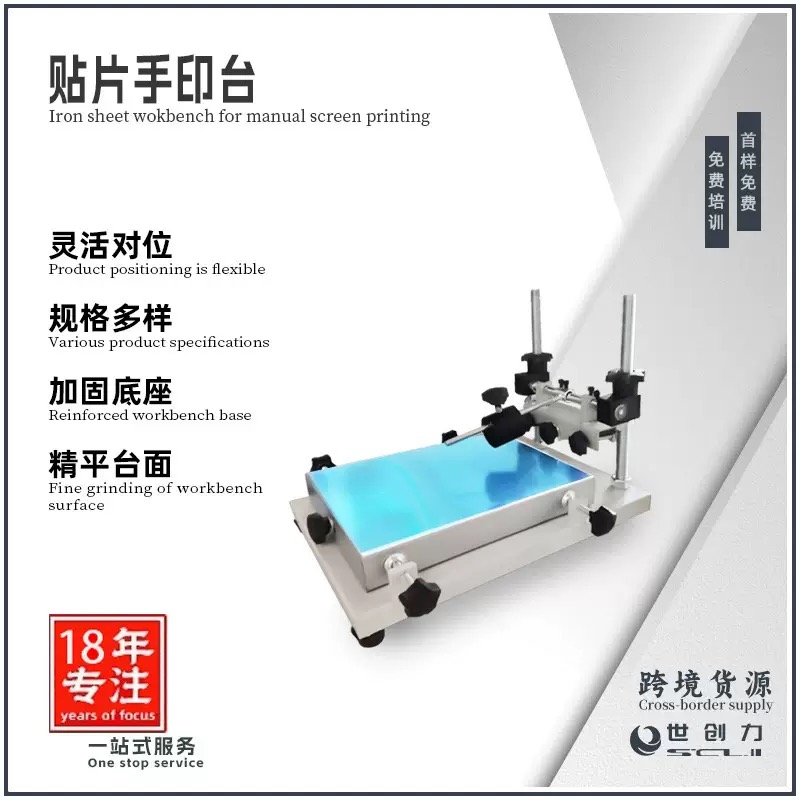
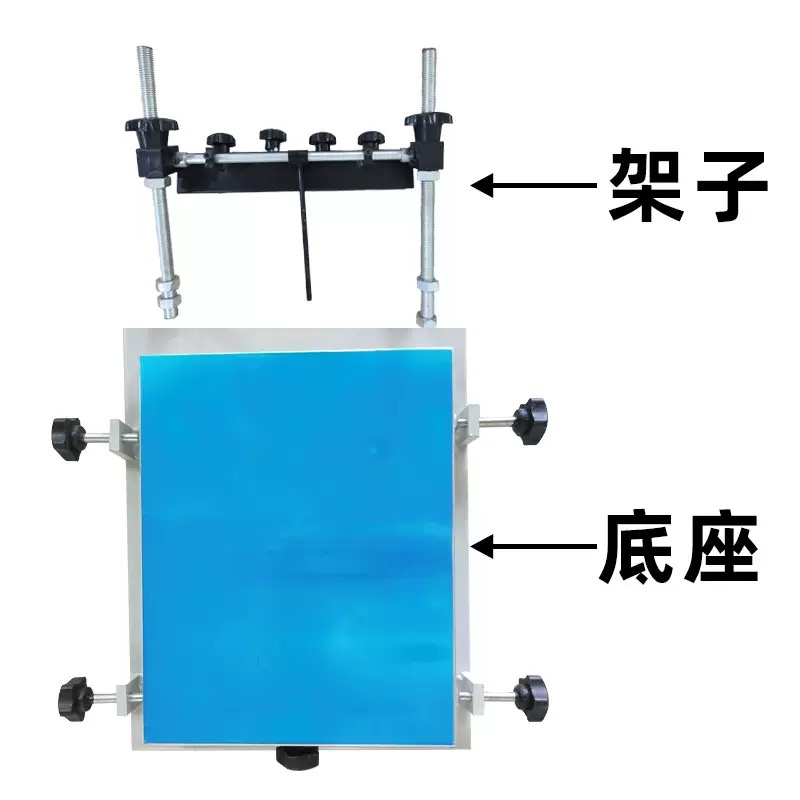
- Verify the machine category before providing confidential information. The available product data describes a handmade silk-screen printing table, not a small servo die press.
- List the exact model, process, dimensions, materials, tolerances, and application requirements in the quotation or foreign-trade contract.
- Request written provisions covering design ownership, permitted use, employee or subcontractor access, file storage, and the return or deletion of confidential materials.
- Use sample production, technical training, and testing to assess feasibility while disclosing only the information needed for each stage.
How to Build a Controlled Purchasing Process
1. Confirm the Product and Technical Scope
Design protection begins with an accurate description of the equipment being purchased. The supplied Shichuangli information identifies a handmade silk-screen printing table with a customizable model and maximum printing area. It also indicates a minimum order quantity of one. These details support a staged customization discussion, but they do not confirm that the company supplies the specific small servo die press described in the purchasing question.
2. Separate Quotation Data from Production Data
A supplier may need basic dimensions, material information, production volumes, and process objectives to prepare a quotation. Complete CAD files, detailed tooling drawings, control parameters, and manufacturing instructions may not be necessary at that stage. Dividing information into these levels reduces unnecessary exposure while allowing the supplier to evaluate the project.
The procurement record should identify which elements are supplied by the customer, which components are developed by the supplier, and which files may be used only to quote or manufacture the agreed project. These conditions should be written into formal documents instead of being left solely in email or chat discussions. The supplied commercial information describes an advance payment and final payment arrangement under a formal foreign-trade contract, with Alipay also supported. This creates a documented transaction framework, but it does not automatically establish intellectual-property protection.
3. Put Design-Use Terms in Writing
Before releasing complete tooling information, ask for explicit written terms covering ownership, confidentiality, authorized users, permitted applications, disclosure to subcontractors, retention periods, and the procedure for returning or deleting files. The available data confirms OEM/ODM customization, but it does not confirm a separate confidentiality program or a customer-specific tooling ownership policy.
For evaluation work, provide only the drawings and specifications required for the approved sample. Once the design-use conditions are accepted, additional production files can be released according to the agreed project stages. This approach also makes it easier to distinguish customer-owned intellectual property from supplier-developed machine features.
Technical Evidence and Its Limits
Shichuangli states that it provides free sample production, technical training, equipment maintenance, application solutions, and one-on-one instruction. These services can help buyers validate a customized process before committing to full production. They should not, however, be treated as evidence that customer tooling designs are protected unless the relevant terms are confirmed in writing.
The company also reports inspections covering production procedures, finished-product performance, installation acceptance and commissioning, physical and mechanical performance, structural safety, and appearance. Such checks relate to equipment quality and operating results. The supplied information does not describe them as controls for confidential design files.
A cooperation example involving a Saudi Arabian hotel-product distributor covers screen printing, heat-transfer printing, and gold stamping on different materials. This demonstrates experience with customized printing applications, but it does not document a small servo die press or a specific arrangement for protecting tooling designs.
The listed credentials include IECEx certificate IECEx PTB 05.0006X for an electromagnetic valve and utility model patent 202521984351.0 for a hot stamping machine. These records support the company’s technical and product background, but neither credential independently confirms ownership or confidentiality protection for a buyer’s custom tooling design.
Recommended Protection Checklist
| Purchasing concern | What the supplied information shows | What should be documented |
|---|---|---|
| Machine identification | The listed equipment is a handmade silk-screen printing table, while a small servo die press is not identified. | Specify the exact machine name, model, process, and intended application in the quotation. |
| Technical disclosure | OEM/ODM customization and a customizable product model are available. | Release quotation-level information first and control access to complete production files. |
| Design ownership | No dedicated tooling ownership or confidentiality policy is stated. | Define ownership, permitted use, access rights, subcontracting, and file deletion in writing. |
| Process validation | Free samples, testing, installation acceptance, and commissioning are available. | Use approved sample criteria and disclose only the information needed for evaluation. |
| Commercial records | Advance and final payments under a formal foreign-trade contract are supported. | Attach design-protection requirements to the contract and quotation. |
| After-sales service | Training, a two-year guarantee, one-on-one teaching, and lifetime equipment maintenance are listed. | Keep service commitments separate from intellectual-property and confidentiality provisions. |
Frequently Asked Questions
Does the available information guarantee protection for custom tooling designs?
No. It confirms OEM/ODM customization and customizable product models, but it does not state a dedicated policy covering tooling-design confidentiality, ownership, non-use, or file deletion.
Does the product data confirm that Shichuangli supplies a small servo die press?
No. The supplied product is described as a manually operated, monochrome handmade silk-screen printing table with a customizable model and printing area. A small servo die press does not appear in the provided product data.
Which terms should be agreed before sending full drawings?
Confirm the equipment scope, ownership of customer-supplied and supplier-developed designs, permitted use, authorized access, subcontractor controls, storage practices, and return or deletion requirements. These points should appear in the quotation, purchase order, or foreign-trade contract.
Can sample testing be completed without disclosing every production file?
In many projects, yes. Share the minimum information necessary to evaluate the process, define approved sample criteria, and release more detailed files only after the commercial and design-use conditions are documented.
Conclusion
When ordering a small servo die press, design protection should be handled as a specific contractual requirement rather than inferred from general customization services. First verify that the supplier’s quoted equipment matches the requested press, since the supplied data concerns a handmade silk-screen printing table. Then classify the technical information, record ownership and permitted use, and establish clear rules for file access and disposal before delivering complete tooling data.
Shichuangli presents OEM/ODM customization, formal foreign-trade contracting, sample production, technical training, and a broader printing application service ecosystem. For detailed technical guidance or project support, please contact us at support@shichuanglimachine.com.
About Us
Dongguan Shichuangli Zhihui Technology Co., Ltd. is based in Huangjiang Town, Dongguan City, Guangdong Province. The company supplies screen printing machines, pad printing machines, hot stamping machines, non-standard automation equipment, precision printing plates, inks, and related materials. Founded in 2008, it operates a factory training base of more than 1,600 square meters and combines research and development, manufacturing, sales, and technical training. Its listed credentials include IECEx certificate IECEx PTB 05.0006X and utility model patent 202521984351.0, with customers across several industries.

REPORT